Henry: Portrait of a Serial Killer (1986)

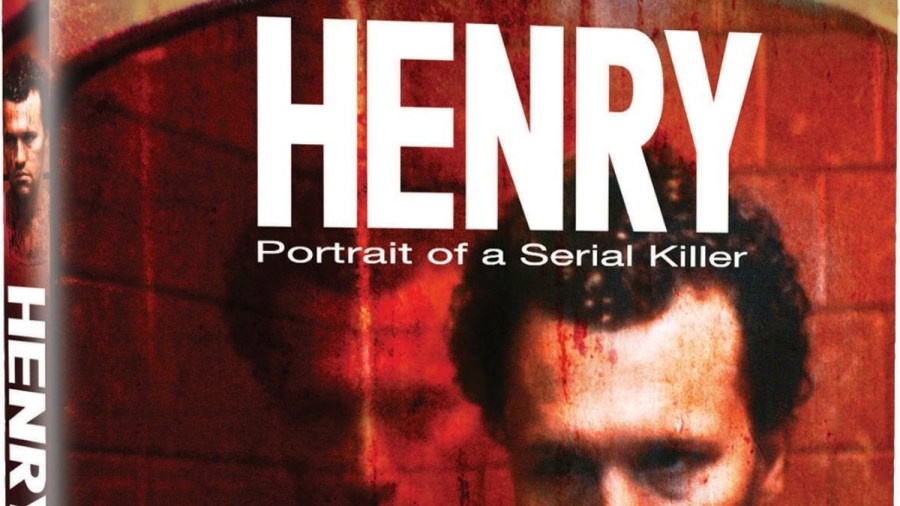
Henry: Portrait of a Serial Killer is an American psychological crime film directed and co-written by John McNaughton that depicts a random crime spree by Henry and his protégé Otis, who torture and kill with impunity. Michael Rooker in his debut film plays the nomadic killer Henry, Tom Towles plays Otis, a prison ‘friend’ who lives with Henry, and Tracy Arnold is Becky, Otis’s sister.

The characters of Henry and Otis are loosely based on convicted real life serial killers Henry Lee Lucas and Ottis Toole, who was famous for his claims to have cannibalised many of their victims, claiming that they also supplied women and children for human sacrifice to a cult called “The Hand of Death”.

Henry confessed to over 600 murders, which supposedly were committed between his release from prison in 1975 to his arrest in 1983, a pace that would have required a murder every week. A detailed investigation by the Texas attorney general’s office ruled out Lucas as a suspect in most of his confessions by comparing his known whereabouts to the dates of the murders to which he had confessed. It appears that the police would bring any cold case to his attention, feed him information about it, and then let him take responsibility. He had nothing to lose, and global fame and notoriety to gain. He was convicted of 11 murders and sentenced to death for the murder of an unidentified female victim known only as “Orange Socks.” His death sentence was commuted to life in prison by Texas Governor George W. Bush in 1998 due to evidence that Lucas was in Florida at the time “Orange Socks” was killed in Texas. Lucas later recanted all his confessions except for the murder of his mother, and died in prison of heart failure on March 13, 2001.
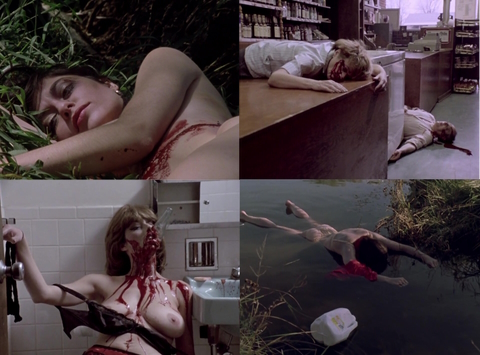
The film involves a lot of scenes of Henry driving his battered old Chevy Impala around the grey streets of Chicago, finding people to kill. Images of bloody mayhem are offered for their shock value and become repetitive, and rather fake, but then the film was made on a tiny budget.

Some narratives in the film run parallel to what we know of the real serial killers. Henry did meet Ottis, but in a soup kitchen in Jacksonville, Florida, not in prison. Henry’s father really did lose both of his legs after being struck by a freight train, leaving Henry at his mother’s mercy. But the film largely omits the long-term homosexual relationship between them (shyly hinting at it when they share the last can of beer) and, sadly, totally omits Ottis’ predilection for cannibalism.
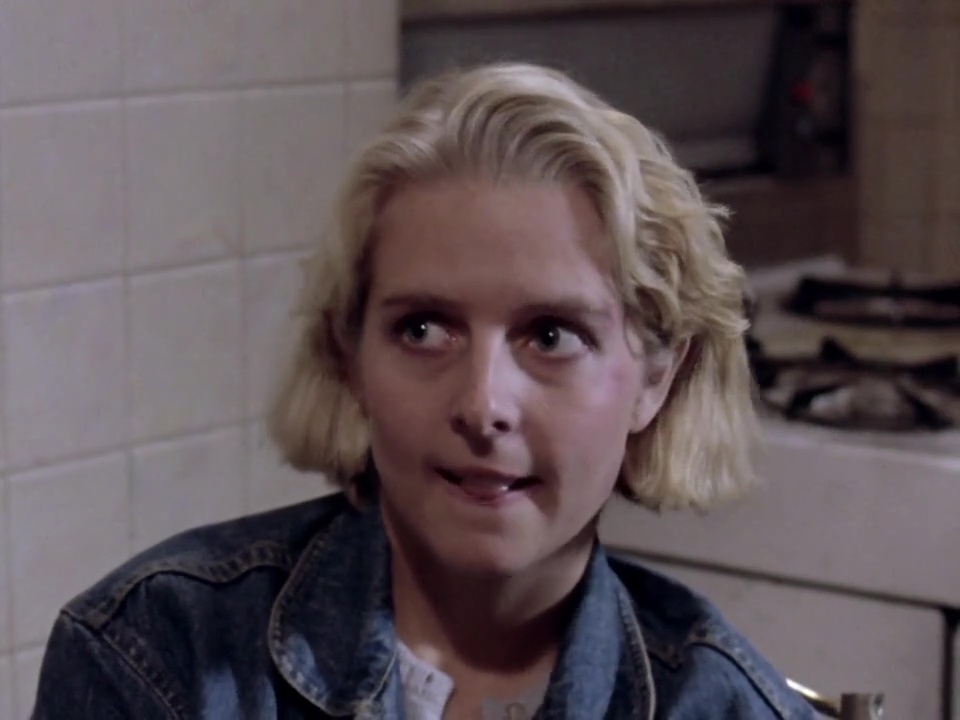
Henry did sexually abuse Ottis’ 12-year-old niece Frieda Powell, who lived with them for many years. As in the film, Powell preferred to be addressed as Becky rather than Frieda. However, in the film Becky is Otis’s younger sister, and is presented as a considerably older single mother, not the real 12-year-old Powell.
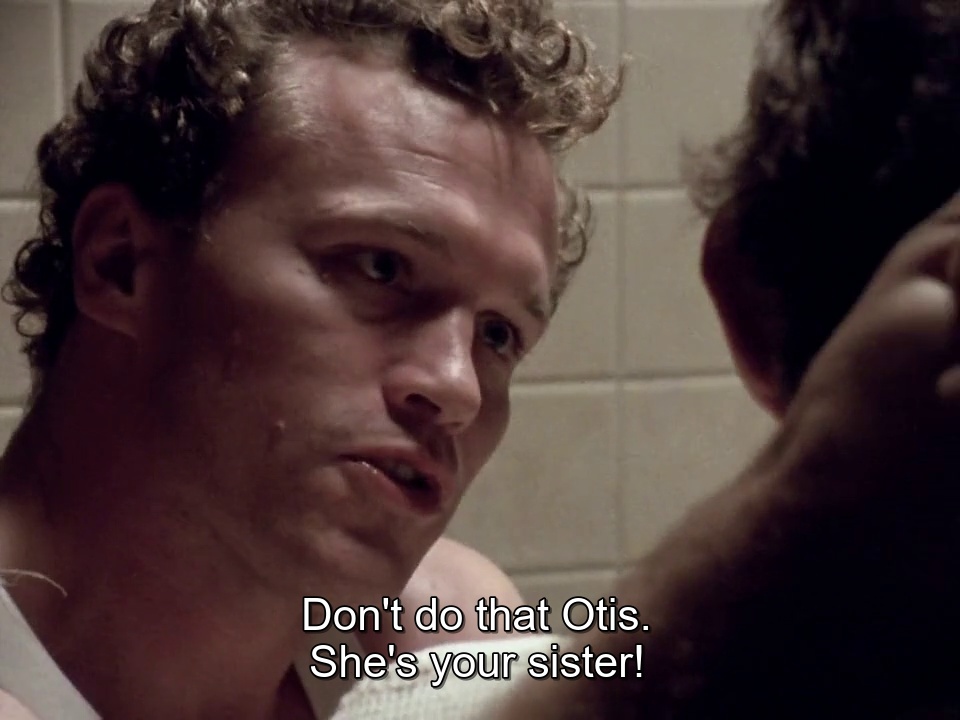
Sexual neurosis is presented as the root cause of the violent tendencies of both men. Otis, who is shown attempting to sexually abuse his sister, tells her that Henry killed his own mother, and when Becky asks Henry about it, he tells her his mother was a sadist and a “whore”, who forced him to watch her having sex with clients, sometimes making him wear girls’ clothing for further humiliation.
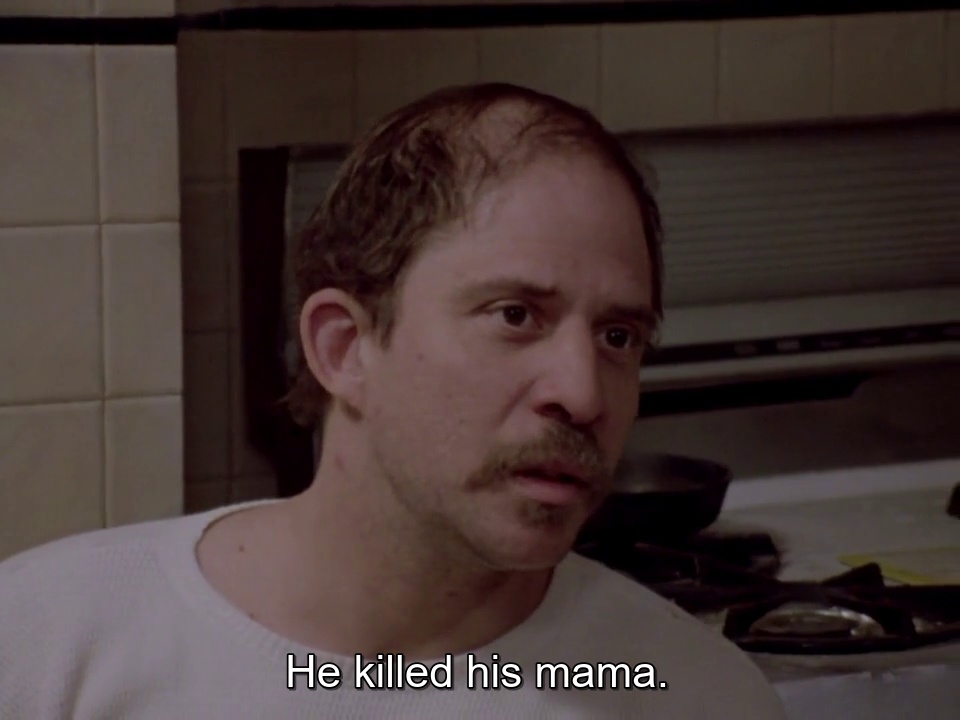
Becky in response tells Henry of her childhood, in which she was regularly raped by her father, with her mother claiming not to believe her.

“He told me he had a right, because he was my daddy and I was his daughter, and he fed me and let me live in his house, and he could do whatever he wanted. And he did… I didn’t fight him, because when I did he just hit me.”
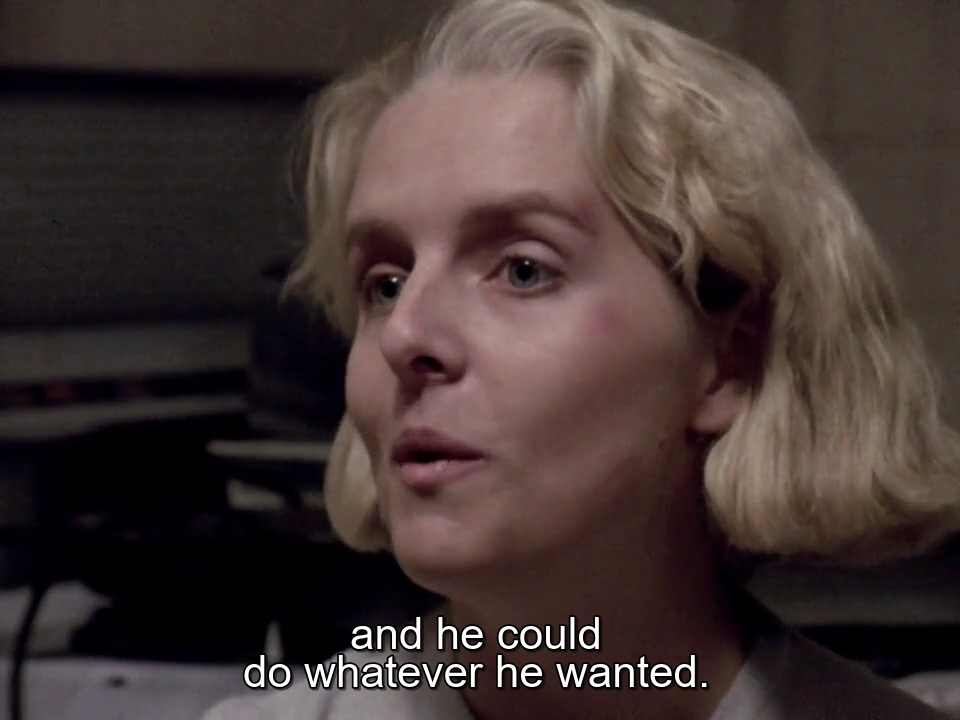
Henry introduces Otis to his world of serial killing when they pick up two sex workers and Henry snaps their necks during sex, suggesting that he is revenging his mother’s abuse. To Henry, the world is against him, and murder is “always the same, and it’s always different.”
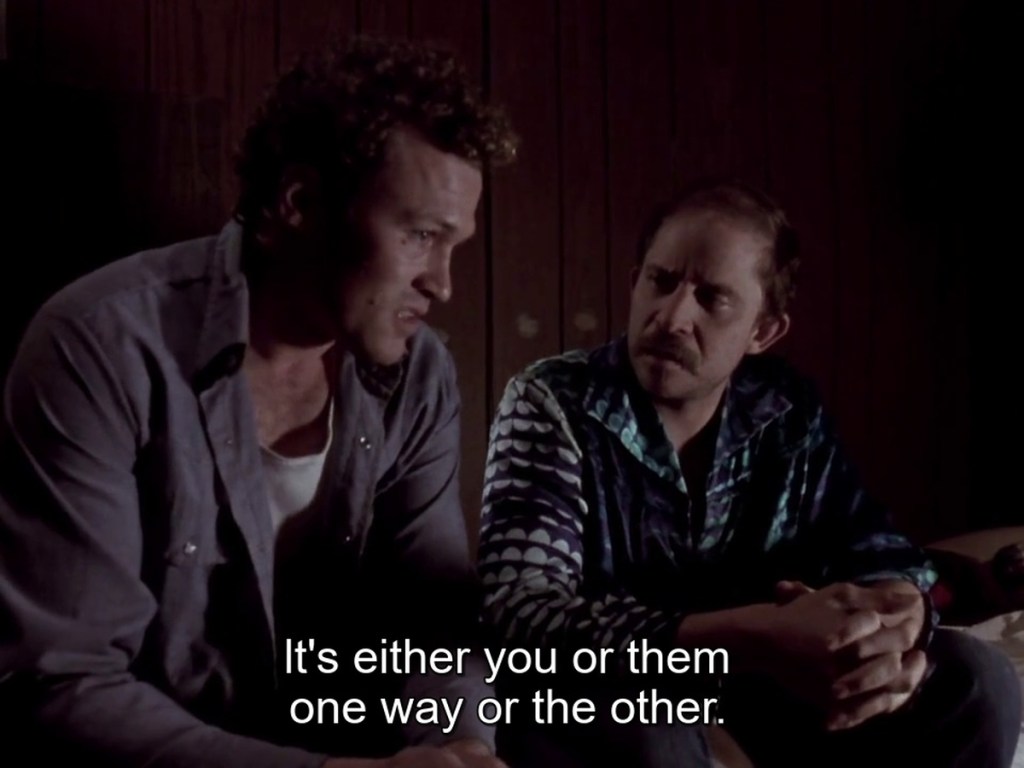
Otis gets a taste for murder when they kill a fence who mocks them when they try to buy a television from him, and then actively seeks out opportunities when a high school boy he comes on to punches him in the mouth. Henry says it would be a mistake to kill the boy, since they’ve been seen together, but Henry wants to kill someone. It’s the world being against them, again.
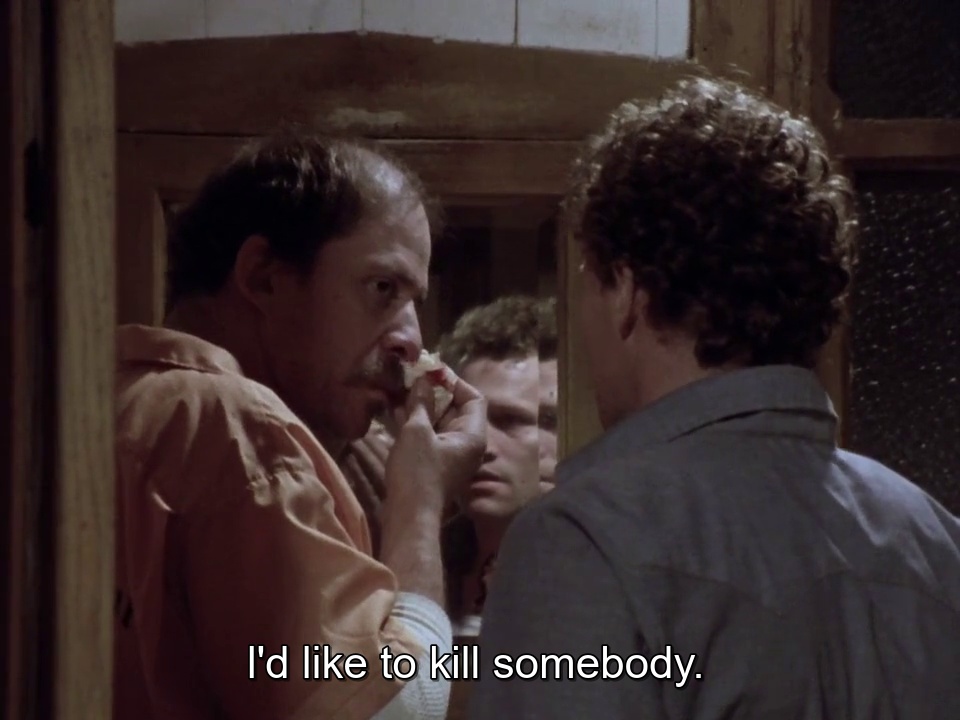
Henry schools Otis to make sure every murder is different – that way there can be no M.O. for the police to follow. A particularly brutal scene of the murder of a family is videotaped by the pair (on a camera stolen from the dead fence) and Otis enjoys re-watching himself molesting the screaming woman, breaking her neck and then attempting necrophilia, until Henry orders him to stop, just as he forced him to desist from molesting Becky when she arrived. When Henry finds Otis raping his own sister, he fights him and with Becky’s help, kills him.
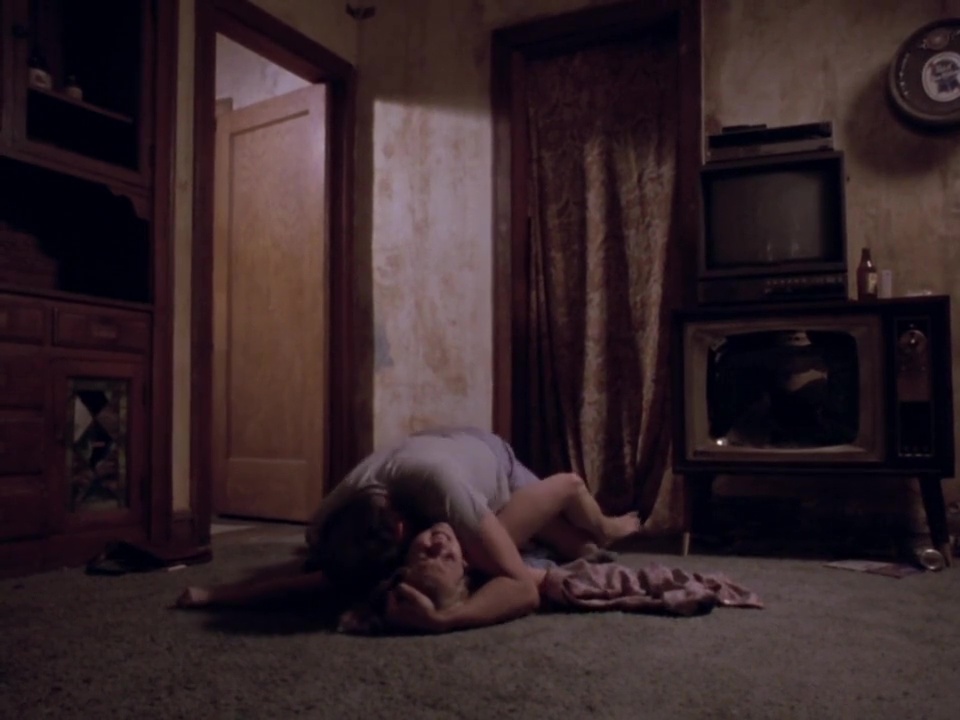
Henry has his own moral code, in which murder is fine, but incest, family violence and necrophilia are forbidden. The real Henry’s paedophilic involvement with twelve-year-old Becky, and the real Ottis’ interest in eating people, are never mentioned.

Incest, murder and cannibalism are the three great taboos of our civilisation according to Freud, the driving forces behind the creation of laws and morals, which stop us destroying our communities by doing those things. The movie sadly concentrates on the murders and has references to incest, but totally ignores the cannibalism.

Unlike the film, the real Henry did not kill Ottis – both men died in separate prisons, Ottis in Florida State Prison in 1996 and Henry in Ellis Unit, Huntsville, Texas in 2001.
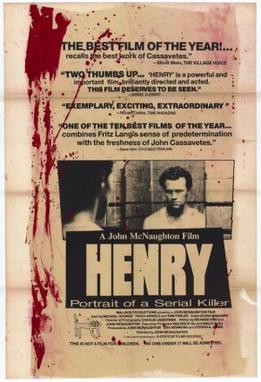
Due to the violent imagery, the film was censored in many markets and the original poster (above) was banned. The controversy brought it some very valuable publicity. The reviews were also mostly positive – it has an 89% “Fresh” rating on Rotten Tomatoes, with Roger Ebert observing that the film does not “sugar-coat” or trivialise violence as most slashers tend to do, and calling it:

“a very good film, a low-budget tour de force that provides an unforgettable portrait of the pathology of a man for whom killing is not a crime but simply a way of passing time and relieving boredom.”

It’s well made (considering the miniscule budget), the cast are terrific (in both senses of the word) and the plot, if somewhat out of step with the reality of the case, is well presented and never dull. But why should it stick to the “facts” of the case, when clearly neither Henry nor Ottis were too sure what was real and what simply bravado?
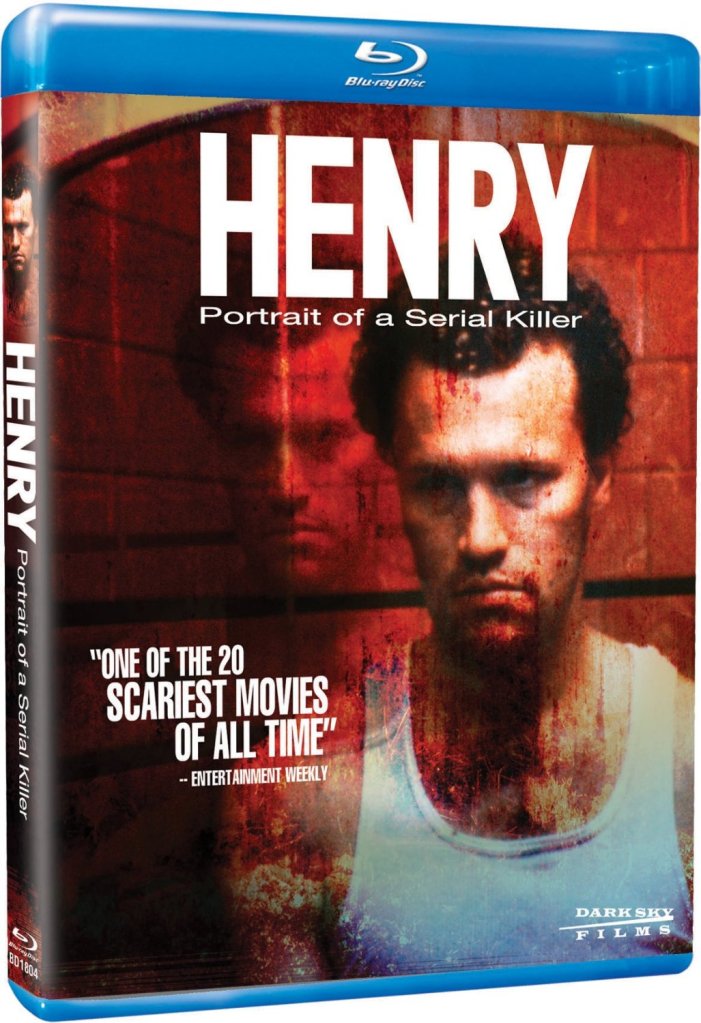
A sequel, Henry: Portrait of a Serial Killer Part II, was released in 1996, but without any of the cast or crew from the original.

Peter Kürten: THE VAMPIRE OF DÜSSELDORF (Robert Hossein, 1965)

Peter Kürten was a German serial killer, often called “The Vampire of Düsseldorf” and the “Düsseldorf Monster”. Described as “the king of sexual perverts”, Kürten was beheaded in July 1931 at the age of 48.

He perpetrated at least nine murders and a number of sexual assaults between February and November 1929 in the city of Düsseldorf. Previous to this, Kürten had accrued a long criminal record for offences including arson and attempted murder. He also confessed to the 1913 murder of a ten-year-old girl in Mülheim am Rhein and the attempted murder of a 17-year-old girl in Düsseldorf.

Kürten was called the “Vampire of Düsseldorf” because he occasionally drank the blood of his victims. He was also known for decapitating swans in the Düsseldorf Hofgarten to drink their blood.

This week’s movie, The Vampire of Düsseldorf or, in French, Le Vampire de Düsseldorf, was a joint production between Spain, France and Italy, filmed in 1964. Fritz Lang’s 1931 film M – Eine Stadt Sucht Einen Mörder was loosely based on Kürten (who had been beheaded the year the film was made), but also on the other German serial killers of the time: Haarmann, Großmann, and Denke. Fritz Haarmann had killed at least 24 boys and young men between 1918 and 1924, often by biting their throats, and then allegedly eating or selling the meat from their corpses as pork or horse-meat. Carl Großmann was arrested in 1921, suspected of up to 100 murders of women and girls, whose flesh he was supposedly selling on the black market and from a hot-dog stand in Berlin during the Great War. Karl Denke killed and sold the flesh of dozens of homeless vagrants and travellers from 1903-1924. So Peter Kürten was far from unique in famine-stricken Germany between the wars.

The Director of this film, Robert Hossein, cast himself in the title role of this and several of his films, which is not that unusual among auteur filmmakers. He didn’t look much like Peter Kürten, who was a remarkably nondescript individual (as are so many modern, domestic cannibals), but that’s not the problem. The film twists the story but ends up turning it into a fairly pedestrian slasher rather than the psychological profile of a cannibal serial killer, which it could have been. It also sanitises the story, ignoring the many murdered children and in fact the whole aspect of cannibalism by clinical vampirism (his consumption of blood).

Kürten started his killing well before anyone had heard of Hitler, and even before the First World War, which led to the economic crises that presaged fascism. But by 1929, when most of Kürten’s murders took place, the darkened streets of German cities were full of violence: fascists battling communists, unemployed workers demanding bread and work, and killers like Kürten taking advantage of the chaos.

It is not therefore totally unfair for the film to present Kürten as the embodiment of the sickness that led to the growth of totalitarianism. We see several faces of Europe between the wars – Kürten helping an old neighbour with her groceries, the crowded music halls so popular in Weimar Germany, and the killer, still dressed as respectable citizen, stalking the streets. Kürten, had he survived a bit longer, might have made a very powerful Nazi, with his penchants for smart clothes and extreme violence.

The plot is much simplified. Kürten kills young women and writes letters to the police boasting of his exploits (much as Jack the Ripper did around forty years before him).

He falls in love with a nightclub singer, Anna, who mocks him, sparking his misogynistic rage. He meets two young girls from the countryside who should know better than to open their doors to strangers.

Anna eventually becomes his lover, but then she finds the latest letter he is writing to the police.

Anna must die, much to Kürten’s regret, and his rage is expressed in arson attacks on the nightclub.

The real Kürten was of course a serial killer whose toll was far higher, and whose preferred victims were often very young girls. He was also an arsonist, and he achieved orgasm both through the act of killing and the burning of the body or buildings. Murderpedia has a full account of his acts if you want to read further. It’s pretty gruesome.

Little attempt is made in the film to portray the real Kürten, and even less to explain why he was the way he was. But the film was made in 1965 when sensitivities were somewhat more pronounced than now, particularly in Germany which had only shed the Nazis twenty years earlier. But it’s a masterfully made film, and the music by Hossein’s father, André, is particularly affecting. Worth seeing, if you can lay your hands on it.

As he was led to the guillotine, Kürten asked the prison psychiatrist,

“Tell me, after my head has been chopped off will I still be able to hear; at least for a moment, the sound of my own blood gushing from the stump of my neck? …That would be the pleasure to end all pleasures.”

After he was beheaded, Kürten’s head was preserved and his brain removed for examination, to see if there were any anatomical anomalies (there weren’t). The mummified and bisected head can still be viewed, if you feel so inclined, in the “Odditorium” of Ripley’s Believe It or Not! At 115 Broadway, Wisconsin Dells.

Love and cannibalism: BONES AND ALL (Luca Guadagnino, 2022)

The modern cannibal is usually hard to identify. Jeffrey Dahmer was the all-American boy next door. Armin Meiwes used to mow his neighbours’ lawns to be helpful. Issei Sagawa was so small and helpless that he seemed vulnerable rather than threatening. Albert Fish was a sweet old man, so charming that the Budd’s let him take their little girl to a party.

They were normal, everyday people, a bit weird, but not monsters.

At least, not in appearance. This is a recent phenomenon – the original cannibals were called anthropophagi (Greek for man-eaters) and were humanoid in shape, but were usually some sort of hybrid – a mix of humans and gods or other animals – strong, ferocious, and clearly not quite human. From the 15th century, the alleged cannibals found by Columbus and other explorers were different in culture and skin colouring, so were easily distinguished, defamed and exterminated. It is only recently, since Jack the Ripper in 1888, that the cannibal walked among us, undetected until the victims were found (or what was left of them).

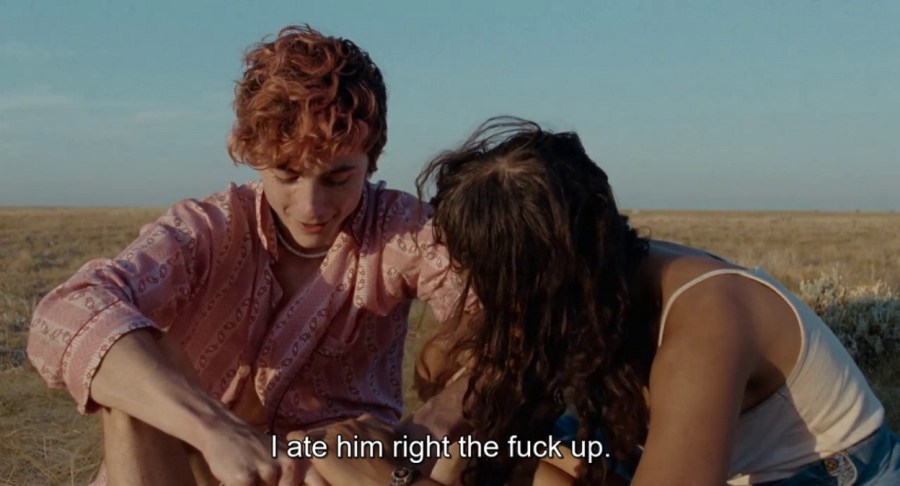
Bones and All presents as a coming of age cannibal romance, taking a sharp turn back into cannibal history for its themes. Maren (Taylor Russell from Lost in Space) is finishing high school, a spectacular end of term in which she is invited to her friend’s sleepover and bites a girl’s finger off, instead of, you know, just admiring the nail polish, as she had been invited to do.

She then goes on the run with her father, who has been keeping her ahead of the law as she grew up (her first human meat was her babysitter when she was three) but now ditches her, with a few hundred dollars and a birth certificate.

It then becomes a road movie, as she travels through the American Mid-West trying to find her mother, attracting suspicion not because of her eating habits but just because she looks too young to be on the road. She comes across another cannibal (they are called “eaters”) in the shape of a weird old man named Sully (Mark Rylance, Bridge of Spies) before meeting up with Lee, played by the love interest of seemingly everyone nowadays, Timothée Chalamet. Chalamet appeared in the third instalment of Guadagnino’s “Desire Trilogy”, Call Me by Your Name), in which he was the love interest of Oliver, played by Armie Hammer, who has recently been generating his own cannibalism headlines.

As a road movie it’s Thelma and Louise mixed with Romeo and Juliet, if they had been cannibals. In other words outsiders, star-crossed lovers, and lots of flesh being torn off dead (and sometimes living) bodies. Road movies rely on meeting new and weird people, and learning about the protagonists (and ourselves) from their stories.

Sully is a lonely old man who teaches Maren about being an eater, and how an eater has a super-power – like a vampire, they have a nose that can smell other eaters at great distances, and can also smell dying people, which allows him to feast on them fairly inculpably, although Maren rather wonders if they should be calling 911 rather than letting them gasp their last breaths. So they are anthropophagi, they smell different, have a strong sense of smell, and so are not quite human. We subsequently discover that the cannibal gene is passed on – Lee’s dad and Maren’s mother were also eaters. They are a breed apart, hybrid humans, who can mate with non-eaters.

They are also presented as ‘savages’ – related to the colonised peoples who were declared cannibal by the imperial powers. Maren is biracial, and Sully (although played by a classical British Shakespearean actor) seems to be presented as a Native American, with a long ponytail and a feather in his hat. The marginalised and disenfranchised are regularly presented as dangerous, thieves, murders, cannibals, regardless of any evidence.

An interesting character from colonial times is the wendigo, a figure from Algonquin mythology who eats his fellow humans and draws on their strength to grow huge and powerful, which only makes him hungrier and deadlier. Sully tells Maren that her fate is to need more and more flesh as she gets older.

Just like the wendigo, who is an indigenous version of the anthropophagus, and one that was used by the victims to characterise the European invaders and their voracious appetite for land and gold. The phrase “bones and all” reminds us of the colonial greed that denied the humanity of those invaded and insisted on taking everything, leaving nothing and nowhere to go but a few reservations or missions in remote, unprofitable areas. Eating bones and all is also a perfect way of getting rid of the evidence.

The title Bones and All is taken from the book of the same name by Camille DeAngelis, but the phrase was not used in the book – it just meant that Maren and the other eaters would automatically eat the whole person, bones and all. Except for her first, the babysitter, because she was too small to swallow bones – she left a pile of them, a pool of blood, and the hammer from an eardrum. In a movie, though, it can be harder for the viewer to maintain a willing suspension of disbelief, so eating the victim bones and all becomes a rite of passage – the next level of being an eater. Maren and Lee don’t know how to eat a person bones and all, so they are not yet postgrad eaters. Maren puts it succinctly – “that’s impossible.” But what about eating the flesh? Armin Meiwes took ten months to eat 20 kilograms (44 lb) of Brandes, but we are asked to accept that Maren and Lee can eat a whole body in a night.

But then, everything is ambiguous in this story, which has been widely described as a metaphor for otherness and queerness. The story is set in 1981, as Ronald Reagan is entering the White House. Being different, queer, compassionate, seeking social justice were all considered laughable or dangerous. Greed was good, and so eating a victim bones and all might have seemed laudable. Drug addiction was escalating, and some have seen the cannibalism in this film as a metaphor for this as well – Maren and Lee can’t go too long without their feed, and will do whatever they need to in order to get it.

Some of the ambiguities are more subtle: Maren looks young, which bothers various people she deals with, although she is 18 and technically an adult in most places. Lee falls in love with her, but is also capable of appearing to be cruising for gay sex.

He chooses a carnival worker who has been mean to a child, leads him into the bushes and masturbates him, slitting the man’s throat as he orgasms. It was not until twenty years later that gay sex was legalised in the US, and this man’s secret desire for same sex petite mort becomes his real mort. They then discover that the man had a wife and family, and are stricken with guilt, because apparently eating some people is OK, but not family people.

Then we have the eaters – Maren is naïve and caring, horrified by her need to feed. Lee is a puny dude who kills seemingly effortlessly, but like Hannibal Lecter, Lee prefers to eat rude people – when we first meet him, he challenges a rude person in a supermarket and leads him to a deserted shed where he kills and eats him. Sully is an senior eater, so has to eat regularly, but says he tries not to kill people – sniffs out those who are dying, but later he gets violent when Maren rejects his advances.

Jake (Michael Stuhlbarg) is an eater who has graduated to eating bones and all, but he is accompanied by a friend named Brad (David Gordon Green), a cop (!), who is not a natural eater, but just likes doing it. Maren accepts that she and Lee have to eat people, but is revolted by Jake’s wish to do the same. We’re back to the old debate of nature versus nurture. Are people born queer? Or with addictive personalities? Or psychopathic? Or cannibalistic?

The Director, Luca Guadagnino, has made a number of changes from the book, which are examined elsewhere. The most obvious one, though, is that Maren is brought up and then eventually abandoned by her mother in the book, but her father in the film. This changes the dynamic considerably, because we now have two eaters in the family, both female. The eater parent in both versions is locked up in an asylum, having eaten their own hands, but in the movie it’s her mother, (a short but superb appearance by Chloë Sevigny). We arrive at last at the modern horror archetype, the “monstrous-feminine”, the figure that confronts the male viewer with his fears of being castrated (Freud’s favourite explanation), as well as “the monstrous womb” – a terrifying image of a “black hole which threatens to reabsorb what it once birthed” (Creed, The Monstrous-Feminine, p. 27). The female cannibal is quintessentially monstrous-feminine, terrifying men with the antithesis of popular female stereotypes of giving life and nurturing. In the book, Maren only eats boys or men (after the initial babysitter) – she is drawn to eat those who seek to be close to her. In both versions of the story, the ambiguity is clear to us and the female cannibals – they have a compulsion to eat, but don’t want to hurt others.

Maren’s solution is to try to act normal, fall in love, get a job, get “clean” of the eating. Her mother’s was to lock herself away, and even then she chewed off her own hands.

To me, the most fascinating ambiguity in this film and in our societies generally is the question “who can you eat?” Eating some animals is considered just “normal” – Lee is chewing on bacon (pig flesh) served to him in a very respectable café, and has been working in an abattoir. When they need money, he and Maren rob the abattoir at night, later sitting on the overhead walkway watching the cows who are to be killed for legal, non-controversial eating, when Maren observes

“every one of them has a mom and a dad, sisters, brothers, cousins, kids. Friends even.”

The real question, Derrida says, is not what to eat but how to eat well. Perhaps, as Chalamet has said, it is impossible to live ethically – every act of consumption or energy usage wrecks the environment a little bit more. For some carnivores, this is seen as a ‘bones and all’ issue, they call it “nose to tail” – killing is OK, but wasting any part of the animal is the real crime. But as Maren says, cows also feel terror, pain, bereavement when their babies are taken from them. The author of the book, Camille DeAngelis, went vegan before writing it, indicating that the problem of who to eat, the rude or dying, the human or the cow, weighed on her, and the scene filmed in the slaughterhouse indicates that Guadagnino may have felt the same. Cat Woods’ review in Salon reminds us that Brad, the off duty policeman, chooses to be a cannibal:

“Why would he hunt, slaughter, and feast upon human flesh if he doesn’t need to?
And, if we the audience can be repulsed by that – and his evident choice to slaughter and eat flesh when there is abundant satiety that doesn’t cause violence, pain and loss – then perhaps we need to venture a little deeper into our own psyches and ask: Why would we feast upon flesh if we don’t need to?”

This is a seriously good film, with a great cast and, in the midst of all this carnage, we are treated to magnificent scenery beautifully captured by cinematographer Arseni Khachaturan. I have not revealed the ending, and hope I have not revealed too many other plot points. I recommend you go see it.

BLACK CHRISTMAS (Glen Morgan, 2006)

Black Christmas is the middle film in what is sometimes called the “Black Christmas series” – three films that actually have very little to do with each other, except that they bear the same title, one made in 1974, one in 2006, and one in 2019. The original was made in 1974 and widely panned, but has since been revived as the proverbial “cult classic” and hailed as one of the earliest slasher movies – it was released on the same day as The Texas Chain Saw Massacre, and is considered an influence on the making of the Halloween series (crazy killer, young women, buckets of gore). The remake in 2019 presented a completely different story and character list.

I am reviewing the middle, 2006 movie not because it’s the best of them, but it is the only one featuring CANNIBALISM, which is what this blog is all about. Also because I needed something uplifting to review on Christmas Day, 2022.

The films all involve a group of co-eds (young female college students for those of you who don’t speak American) being slaughtered by a serial killer. The 1974 film was about to be released for television in 1978 but was withdrawn because serial killer Ted Bundy had just murdered two young co-eds sleeping in their sorority house on the campus of Florida State University in Tallahassee. Bundy had started his killing spree in 1974 before being captured in 1975, incarcerated and then escaping, and there is some speculation that the film was based around his brutal murders, and that he in turn, might have been motivated to escape and return to his pathological ways by the imminent TV release of the film. The film may also be partly based on the exploits of Ed Kemper, who killed his family and then a number of co-eds in 1972-73, although his M.O. was to offer them lifts as they hitchhiked which, as we all know (I hope), is a very bad choice of transportation.

But Bundy was not a cannibal to the best of our knowledge, and nor was cannibalism mentioned in the 1974 film. Ed Kemper did admit under truth serum to slicing flesh from the legs of his victims and eating it in a casserole, although he later changed his mind and denied it. So Kemper, who is still locked up the California Medical Facility in Vacaville, may well have been an inspiration for this 2006 version. It is a very loose reimagining of the 1974 film, with the added frisson of child abuse and a bit of paedophilia, as well as incest and cannibalism – the taboos that Freud described as “the two original prohibitions of mankind”. Director Glen Morgan, who wrote several episodes of X-Files and The Twilight Zone reboot, is not skimping on any taboos in this one.

It starts off with a murder of course, then moves swiftly to an asylum for the criminally insane (a nice nod to Hannibal’s residence through all of Red Dragon and most of Silence of the Lambs, and quite a bit of the third season of Hannibal too). Here we come across Santa Claus, as you’d expect in a movie called Black Christmas, and we get the back story on the dude who killed his family many years ago, and is, we expect, going to kill lots more people before this movie drags itself to a gruesome end.

The asylum caterer, a very careless man who lets the high security door get jammed open with a carton of milk, says they are giving him a special Christmas dinner.

“It tastes like chicken, because it’s chicken. It’s the closest we could get to how Mom used to taste.”

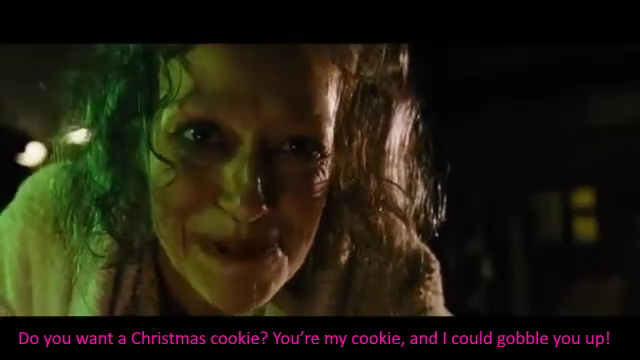
Billy Lenz is clinically insane, so that may explain why he thinks his Mom tasted like chicken (humans are red meat, and most cannibals claim the taste is like pork or veal). Anyway, he scoffs his chicken/Mom substitute through the feed-hole on his door, pockets the candy cane as a handy weapon, and we are told that he tries to escape each year; he wants to go home for Christmas. And the Delta Alpha Kappa co-eds, whose sorority house at Clement University in New Hampshire is Billy’s old house, are not going to enjoy his visit.

Well, we don’t have to sit through all the jump scares, because they are just slasher gore with no one getting eaten (as far as we can see). There are some amusing rants against Christmas though. The girls know the history of the house, and their “Secret Santa” ritual includes someone having to buy a present for Billy each year. It’s a pagan sacrifice to ward off evil spirits on Christmas.

“What Christmas shit in this room resembles anything Christian, huh? It’s all neo-pagan magic. Christmas tree – a magical rite ensuring the return of the crops. The mistletoe is nothing but a conception charm. Fifth century Christians jacked a Roman winter festival – twelve days in December where the nights were long – and the Earth was roamed by the demons of chaos.
And fucking Santa Claus? This fat voyeur that watches you all year long to make sure you live up to his standards of decency, before breaking into your house? And that is different from what Billy did – how?”

So what, we wonder, did Billy do?

“Billy Edward Lenz was born with a rare liver disease that gave him yellow skin. His parents hated each other. The mother hated Billy. He was not the child she always wanted.”

When Billy is five, on Christmas Eve, his mother tells him the Russians shot down Santa.

He then witnesses his mother’s new boyfriend kill Billy’s father, who is the only one who ever loved him. Realising he saw it all, they lock Billy in the basement (did they see Tommy?), where he spends his time rocking (as in, in a rocking chair, not engaging in popular music).

When he is twelve, his mother, frustrated by her new husband who falls asleep mid-coitus, climbs up into the basement, drops her gown and reinstates the original meaning of “rock and roll”, adding incest to insult and injury. Not to mention paedophilia. This show has it all!

So Billy has a sister and a daughter and Mom has a granddaughter and a daughter, and step-dad is still snoring through copulation, so everyone lives happily ever after.

Just kidding – nine years later, Billy has been driven insane by isolation, while his sister/daughter is doted on by his mother, who constantly tells her “you’re my family now”:

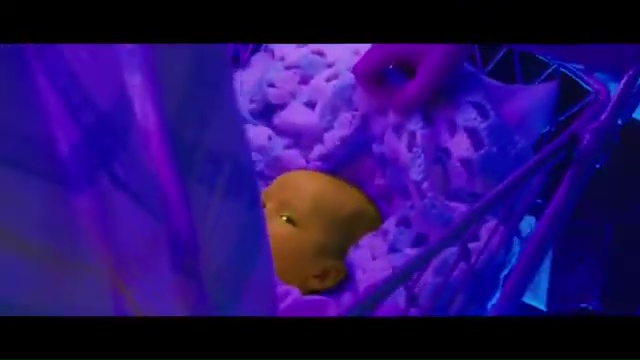
Billy escapes from the attic and disfigures his eight-year-old sister by gouging her eye out, and then eating it.

Much of the terminology of love and sex derives from cannibalism. When we tell a child “I could eat you up” or (at a different time and place presumably) perform oral sex on a lover, we use the metaphors of cannibalism.

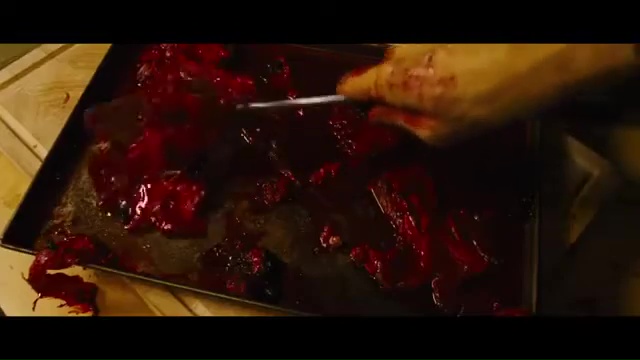
Billy murders his mother and her sleepy lover, and the cops find him eating cookies made out of his mother’s flesh. There’s a cookie-cutter involved, and a hot oven. Not sure where he got the recipe.

The rest is pretty standard slasher stuff, with some inventive deaths, but at least Billy has qualified as a cannibal, and it’s about time, because we’re 36 minutes into the film by now. If you can’t be bothered watching the whole thing, there is a trailer at the top of this blog that covers a lot of the good bits, plus a whole lot of other stuff that never made it into the movie, apparently filmed at the insistence of the distributor, Dimension Films, run by Bob and Harvey Weinstein, who have, between them, much expertise on matters of horror, family discord, and the abuse of young women.

Look, if you want an entertaining slasher with lots of gore, you might like this. From the point of view of Cannibal Studies, the film is interesting mainly as an example of revenge cannibalism – eating the rude and abusive, like Son or Titus or even Sweeney Todd. Also, horror movies timed to coincide with Christmas are very often based on some aspect of revenge, such as The Twelve Deaths of Christmas, also featuring a cookie-cutter used to make people-bread men. It’s a fascinating genre, in which the audience is offered the opportunity to sympathise with, or at least understand, the act of cannibalism as homicide and anthropophagy justified by grievance.

Not so much with Billy. The sorority sisters are treated the way humans treat animals contingently labelled as “vermin” – they are swarming around his house, and he exterminates them but, significantly, he doesn’t eat them. His Mom and his sister/daughter, though, they’re family, and the only way to keep them with him, restrained, constrained and compliant, is to eat them. It’s Billy’s version of love.

Merry Christmas and Gory in Excelsis to all my readers!

The full movie is available (at the time of writing) on YouTube:

Appalachian sin eaters: “FRANK AND PENELOPE” (Sean Patrick Flanery, 2022)

I must admit a bit of a soft spot for road movies, although they have been a little overdone in the cannibalism genre (how many Wrong Turn, Hills Have Eyes, Texas Chain Saw, etc sequels and prequels have there been so far?) But this one seems fresh, mostly due to undeniable talent of the two stars. Caylee Cowan is Penelope, a “doe-eyed femme fatale” who effortlessly channels Marilyn Monroe with a blend of innocence and raw sensuality, and chisel-jawed Billy Budinich, perhaps himself channelling James Dean, is Frank, a man who has lived his life by logic and rules and suddenly breaks out of his self-limitations to live life for himself, but only because he falls for Penelope.

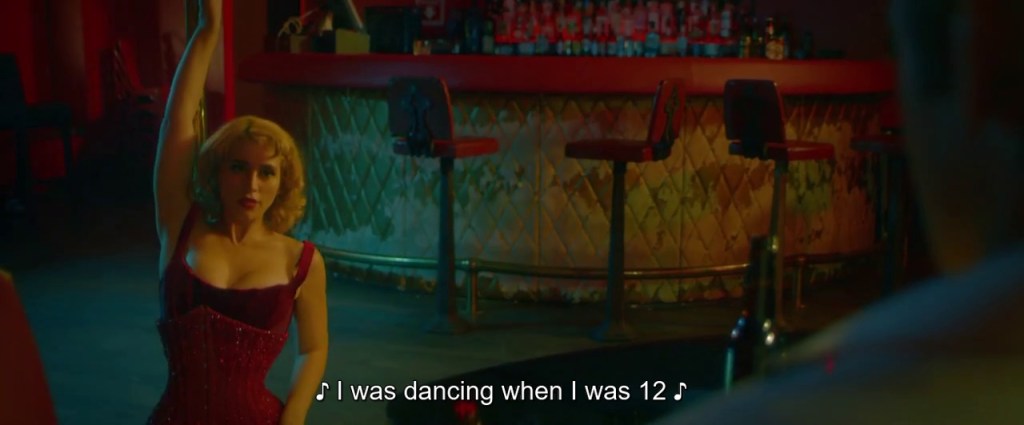
Frank’s world of law and rationality is shattered when he sees his wife having sex with her cross-training instructor, and heads out; he’s not sure where, just heading west. He stops at a strip club where he is taken in by Penelope – pole dancing to Marc Bolan’s song Cosmic Dancer hauntingly performed by Valerie June:

Is it wrong to understand
The fear that dwells inside a man?
What’s it like to be a loon?
I liken it to a balloon

Penelope gets her hands on Frank’s credit card on the pretence that she is willing to abscond with him, but then she has a row with the club owner, played by Sean Patrick Flanery, who also directed and wrote the screenplay (he’s a man of many talents!) When Frank intervenes in Penelope’s fight with the boss, she goes on the run with him, and their fate is sealed. When Frank asks Penelope if she has ever seen the classic 1991 road movie Thelma and Louise, we know this is most likely not going to end well.

There are plots and sub-plots and even a quite unnecessary Greek Chorus in the shape of a nurse (Sonya Eddy from General Hospital) reading Frank’s diary over a brain-dead body, but let’s just get to the cannibalism, because that’s what keeps this blog rolling along each week.

It’s a road movie, so there are lots of cars on roads, and cars stopped on roads, with weirdo’s peering in at the drivers.

The first face is Cleve (Brian Maillard, who’s also done a fair bit of acting, directing and writing) – Cleve is a devout follower of a cannibal cult which collects travellers off the road or in their motel. He appears at first as a whack job, but turns out to have a conscience, of sorts.

The second face at a window is the local Sheriff (Kevin Dillon from Platoon and Entourage) who tries to warn Frank and Penelope against stopping on that track of road. This warning, before the blood starts flowing, is a regular trope for cannibal films, although it’s usually a gas station dude who is dismissed as plumb crazy – e.g. the Wes Craven classic The Hills Have Eyes. In that film, the cannibals were mutants who had been too close to a nuclear bomb-testing site, in Texas Chain Saw Massacre they were unemployed slaughterhouse workers. In The Farm, they are animal liberation activists revenging the depredations humans commit on farmed animals. Every cannibal has a motive. In this film, the Sheriff tells them that:

“You’re about to hit a stretch of about thirty miles with no cell phone towers, and no gas for about forty miles after that. You may want to keep a close eye on that gauge. I mean, you can get gas in Quicksilver, about twelve miles in, but get in and get out of there. Mercury got in the water from that mine, and left them Appalachian transplants bat shit crazy.”

So what do our romantic couple do? Why, head straight for the bat shit crazy Appalachian transplants in Quicksilver, looking for a motel room in which they can practice all the sexual positions Frank has promised to perform. Of course, they could just pay attention to the Sheriff who gave them good advice (while drooling over Penelope), but then it would be a very short movie.

On the way, they run across Chisos (Johnathon Schaech, another writer and actor, you may have seen him in How to Make an American Quilt). He puts his face into the car, pretending he needs a lift, but Penelope turns him down. She can see he is up to no good, even with a name that everyone else pronounces with reverence (as in Jesus) but which she persists in saying as “Cheese Sauce”! This is actually quite a funny film, and Caylee Cowan is a comedy genius.

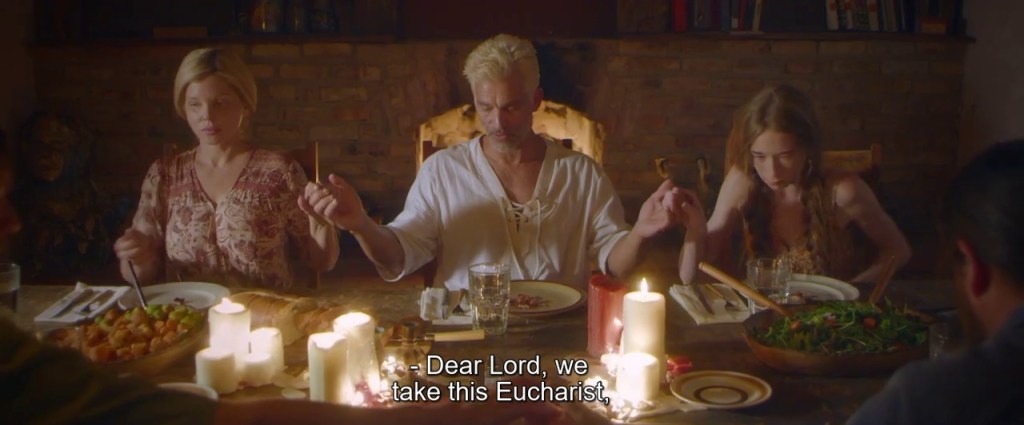
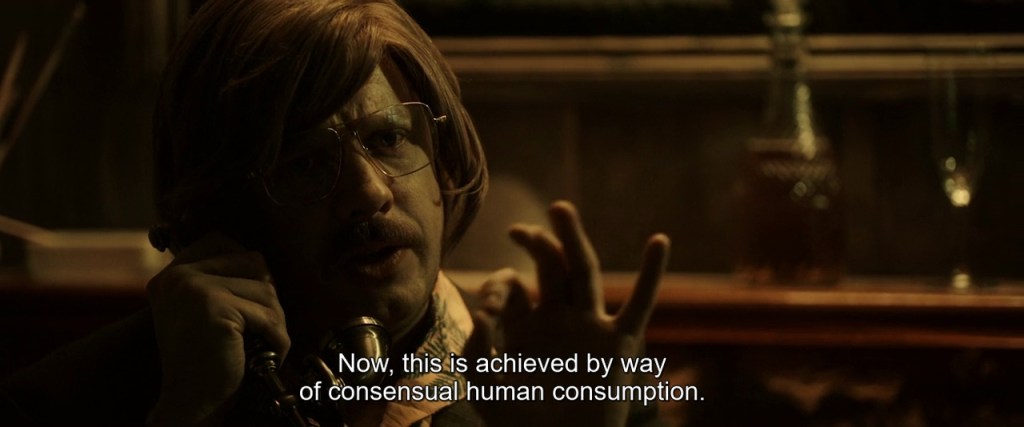
Chisos is the leader of the cannibal cult, and when they meet up at the motel, explains it all to them, in the standard (I’ll tell you everything Mr Bond/Batman/Spiderman since you won’t be alive to tell anyone else) method of horror movie explication. He explains that his grandfather owned the biggest mercury mine in the world, in which he was leading a prison work-release program for a whole bunch of felons – “murderers, rapists, all kinds of filth”. His grandfather survived a cave-in by “eating those sinners, organs and all.” He and his clan are now “Appalachian sin eaters at our core!”

Travellers are tested for their virtue, and eaten for their sins. He shows them his leg, which has a crucifix shaped scar. Yep, he’s been snacking on his own sins. What sin has a man like Cheese Sauce committed? Well, he’s been at it with Cleve’s wife, plus he really wants kids.

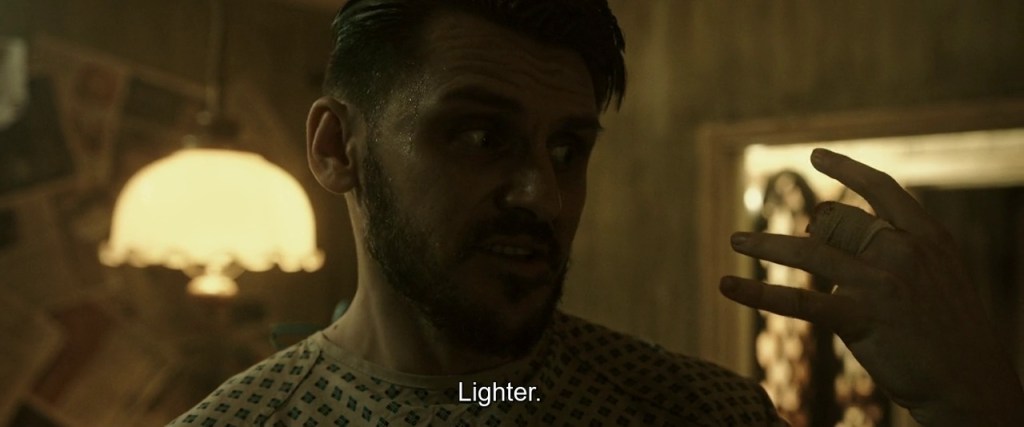
And he has decided he really wants those kids with Penelope, so he tosses Frank into a pit with unclimbable sides. There are corpses in there, people who have died in it previously, and there is plenty of water, so Frank won’t die of thirst; but he has to make a choice: he can starve or “take a bite and become one of us.”

The rest of the movie is a suspense story – will Frank die or become a cannibal? Will Penelope agree to become “a vessel” for Chisos’ progeny? What’s the story with her old boss from the strip club, who is still plenty sore at them?

The answers to all these questions you won’t hear from me, because that would be spoiler territory, and you really should see this movie. Admittedly, the critics who have reviewed it so far gave it a cumulative “rotten” score of 25% on Rotten Tomatoes, but the audience rating was a “fresh” 83%. So you’ll have to judge for yourselves. I thought the plot was good, the actors were great, the cars scintillating (if you’re interested in that sort of thing) and the soundtrack outstanding. The cannibalism is not gore based (well, just a bit) but more along the lines of abjection, watching the cult members tucking in to their sacred meal – the flesh of a woman who had admitted to abandoning her children years before.

The Eucharist, as I understand it, is the eating of the blood and body of Jesus to cleanse the sinner of their sin. Chisos has turned this on its head – cut out the middle man and just eat the sinner. Makes a lot of sense, especially if you’re a cult with a lot of mercury in your water supply.

Cannibalism as eating disorder: FEED ME (2022)

So, the buzz for this movie is ‘Ted Lasso goes cannibal’. By that, they don’t imply we will need to sit through any football matches, but that there is going to be a lot of American “can-do” ardour, conflicting with British reticence and melancholy. Also some dark humour, and a whole lot of gore, which some may find objectionable. Consider yourselves warned.

Feed Me is directed by Adam Leader and Richard Oakes (Hosts). XYZ Films released the horror-comedy on October 27 2022 on digital and on demand platforms. Feed Me follows Jed (Christopher Mulvin) whose life is shattered when his wife Olivia (Samantha Loxley) suddenly dies, leaving him feeling guilty. The blurb says:

“Spiralling into an abyss of depression, he finds himself in a bar with a deranged cannibal, Lionel Flack (Neal Ward) who convinces him he can redeem himself through the glorious act of allowing himself to be slowly eaten to death.”

Suicide, usually unassisted, is sadly common in modern society, and besides making the relatives wretched, it is also an enormous inconvenience to the police, medics and trauma-cleaners who have to deal with it. So why not benefit someone – the local cannibal who promises a painless death that will not require housekeeping, because he will eat the resulting mess? Jed moves in with Lionel, whose tiny house is filthy and full of body parts. But Jed is ready, eager to die, and Lionel is tremblingly eager to eat him.

Cannibalism, particularly vorarephilia (the erotic desire to consume or be consumed by another) can be seen as a type of eating disorder, particularly in cases where there are other foods readily available, but if that is the case, so can any form of carnivory. The film starts and finishes with such reflections – Jed’s wife is a beautiful young woman who is convinced she is fat and ugly, and eventually dies from the effects of bulimia – she starves herself and vomits out whatever nourishment she does eat, until her body closes down.

As Jed explains it, her mental illness meant that she “was eaten from the inside out.” Lionel’s solution is that, if Jed is determined to kill himself, he should do it from the outside in.

Lionel quotes some fake anthropology – a tribe called the Yiurkun who, he says, live in perpetual happiness,

His offer (and there is a written contract involved) is to eat Jed, quickly and painlessly, so he can join his beloved. Why not, Jed thinks, since Olivia has effectively (in his dreams) eaten his heart?

Lionel starts small – local anaesthetic, one finger chopped off with secateurs and carefully cooked, the wound cauterised with a hot clothes iron. “How do you feel?” Lionel asks.

But of course you can’t eat a whole person one finger at a time, and it’s not long before Lionel is removing limbs, but now without anaesthetic, because he gets mad at Jed.

Lionel says he has heard that

“some cultures believe that torturing the animal alive improves the taste and quality of the meat.”

This is not an invention of the director – it’s well known that dogs and cats and other animals are often beaten or burnt or at least made to watch the death of other animals, to make the terror and agony generate adrenalin, which is supposed to add flavour. Astonishingly, Hillary Clinton was accused of doing the same to small children. Other politicians have had the same accusations hurled at them. While these are almost certainly nonsense, it is true that almost every one of the seventy billion land animals humans eat each year will go through extremely painful ordeals, and all of the trillions of sea creatures. Jed is just one more animal in agony.

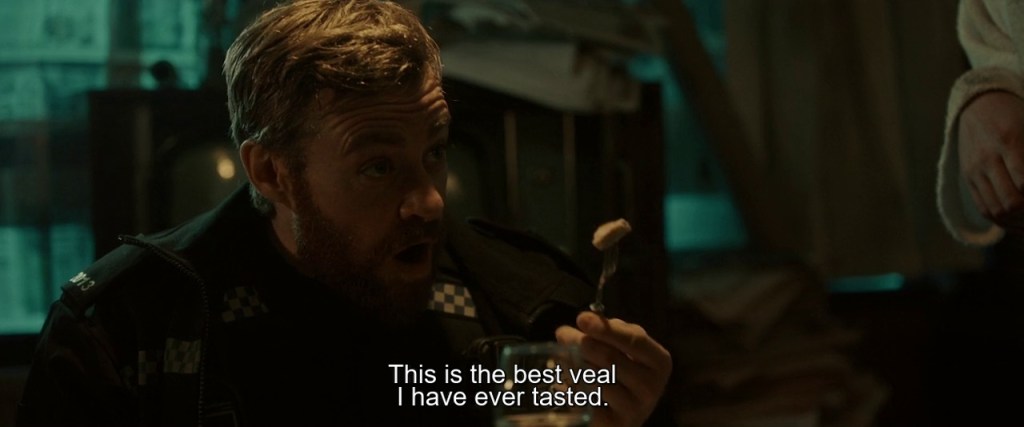
When the neighbour calls police about all the screaming going on, Lionel invites them in and feeds them some of his “mild veal”.

The enjoyment of food depends largely on what we believe about it. The actor playing the cop is probably in fact eating a piece of veal. His character, the cop, believes he is indeed eating veal. The audience, us, suspends disbelief so we can imagine that he is actually eating part of Jed’s leg. This turns the meal from gourmet to horror – a simple change of species, entirely within our imagination. The title, FEED ME, challenges the assumption that food will be prepared and served with our preconceptions catered for – it will be tasty and uncontroversial. In this society, eating a baby cow who wanted to live is praiseworthy; eating a man who wants to die is horrific.

The title reminded me of a foodie show called “Somebody Feed Phil” which sees writer and producer Phil Rosenthal (Everybody Loves Raymond) travelling around the world eating huge dishes of food while adding no weight to his irritatingly slim frame. In a recent episode, Phil lands in Madrid and apologises to a suckling (newborn) pig –

“you’re very cute, but I’m going to eat you.”

Most cannibals, like carnivores everywhere, do not usually have their victim’s permission, and usually do not apologise either, although they may feel some cognitive dissonance, knowing that their meal required the suffering and slaughter of the animal whose flesh is involved. Phil didn’t kill the new-born baby pig, but did apologise for eating him. Jeffrey Dahmer killed seventeen men and boys and also didn’t apologise (until it was far too late). The closest parallel to the plot of this film (the trailer above states it was “inspired by true events”) is the true case of Armin Meiwes, who advertised for a man who wished to be killed and eaten, had dinner and sex with the only genuine respondent, and then killed and ate him. He felt there was no apology needed, since Jorgen Brandes had wanted, indeed demanded, to be eaten. So it is with Lionel, who offers to kill and eat Jed, and then slowly and gradually makes good on his promise.

Neal Ward plays Lionel as an over the top, twitchy, verbose American con-man, the kind of man we like to think serial killers and cannibals look like, because that would make them easy to spot. Yet the essence of the real modern cannibal is his (or sometimes her) completely normal and unremarkable appearance – they walk among their peers, unknown and unidentified until their arrest (if they are ever found). Neighbours, for example, praised Meiwes as a nice young man who would mow the lawn for them. Issei Sagawa was so small and apparently innocuous that the young woman he killed and ate had been happy to come to his apartment to read poetry together.

The tagline for this movie is

“You are who you eat…”

The concept is interesting – if you are who/what you eat, do you want to eat pigs or chickens or sheep, all of whom are used, quite unjustly, as common insults (for gluttons, cowards or mindless followers). If you are what you eat, Lionel tells us, you should eat humans.

The anthropologist Marvin Harris wrote in his book Good to Eat: Riddles of Food and Culture that, while humans are clearly not obligate carnivores, “our species-given physiology and digestive processes predispose us to learn to prefer animal foods”. This presents a problem for him, since “strictly speaking, human flesh itself contains the highest-quality protein that one can eat”. Lionel’s pathology stems from his calculating, impeccable logic.

The film is a fascinating study of love, loss, despair, friendship, loneliness and appetite. The gore is perhaps a bit over the top, but no longer unusual in modern films. The acting, despite what other reviewers have said, is great and the story compelling. Neal Ward plays Lionel as both a monster and a clown, a hard role to portray, but he is, in the end, seeking the same as all of us – self-acceptance, love, a validation of his humanity, and a good meal.

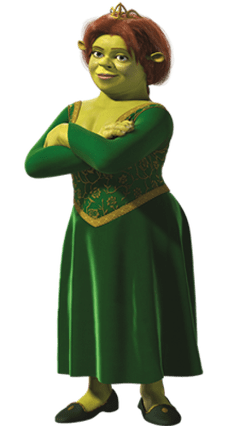
The cannibal ogre – PRINCESS FIONA (Andy Chen, 2022)

Last week we reviewed a fan-fiction prequel of the cannibalism classic The Texas Chain Saw Massacre. Fan-fiction allows anyone with a keyboard or, in these cases, a camera, to tell alternative versions, or fill in story elements that seem to be missing from their favourite narratives. Future targets of horror remakes include The Grinch and Winnie the Pooh!

This week’s short fan-fiction fills in the back-story of Princess Fiona from the Shrek movies.

Fans of the SHREK films will remember from the first movie in 2001 that Princess Fiona who had been imprisoned in a tower and with whom Shrek the ogre had fallen in love, turned out also to be an ogre. Fiona was voiced by Cameron Diaz who became one of Hollywood’s highest-paid actresses due to her role in the Shrek franchise, earning three million dollars for the first film and around ten million for each sequel.

Ogres are usually presented as cannibals, often eaters of babies and children as their first choice (see Marina Warner’s study of the ogre as the symbol of “monstrous paternity”). Shrek himself doesn’t really do that, although he does mention in the 2007 third movie, Shrek The Third, that he does not want to be a parent because his own father “tried to eat me”. Nonetheless, Fiona and Shrek end up with little ogre triplets at the end of the third movie.

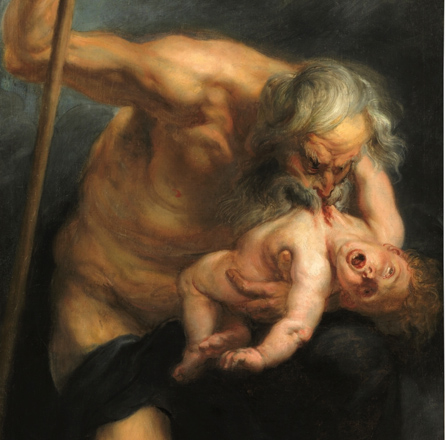
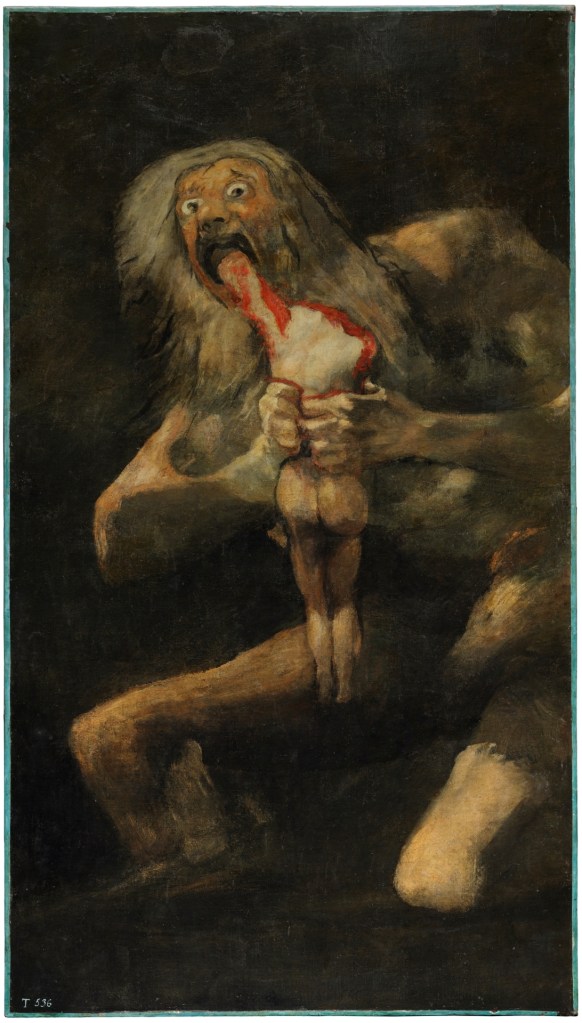
“Ogre” comes from the Italian word OGRO meaning monster, which in turn came from the Latin word ORCUS (fans of Tolkien will recognise this etymological hint). Ogres have been eating children, sometimes their own, since the tale of Kronos, the king of the Greek gods, who was told that he would be overthrown by his own child, and proceeded to eat each baby as it was born (much like Shrek’s dad). Rubens painted a ferocious image of Kronos (identified as Saturn) eating his child in 1636.

Goya created a dark, even more desperate late painting, around 1821-3.

Kronos’ wife, Rhea, saved the last child, Zeus, by wrapping up a stone which Kronos ate, leaving Zeus to kill his father and become supreme deity. Such are the role models of Western civilisation.

Charles Perrault wrote a series of fairy stories that were published in French in 1697, and included such perennials as Puss in Boots, Cinderella and Sleeping Beauty (later adaptations have taken a lot of the violence and gore out of the narratives). In one called Hop O’My Thumb (Le Petit Poucet), the hero is lost in the forest with his brothers and sisters and takes shelter in the house of an ogre, who is fond of eating small children. In the English version of the story, the ogre growl:

Fee, fau, fum, I smell the blood of an English man,
Be he alive or be he dead,
I’ll grind his bones to make my bread.

Hop notices that the baby ogres wear crowns on their heads, which he puts on his own brothers, so when the ogre wakes up and fancies a snack, he slits the throats of his own daughters instead of the boys.

But what happens when ogres grow up (assuming no unintentional paternal consumption)? We rarely see female ogres, and the Shrek story seems to imply that perhaps female ogres are as violent and dangerous as their male counterparts, or even more so. Fiona has been put under a spell, which we are led to believe turns her into an ogre at night, necessitating her imprisonment in a tower. This spell is broken when Shrek kisses her, returning her to her proper self, but it turns out that her real self is ogre, and the only reason she appeared human during the day was the magic spell. She would become her true self, presumably a violent ogre, at night.

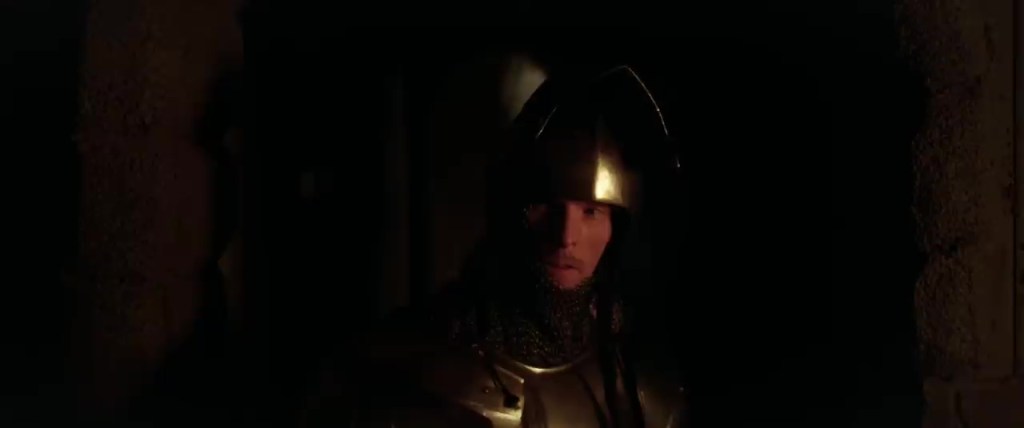
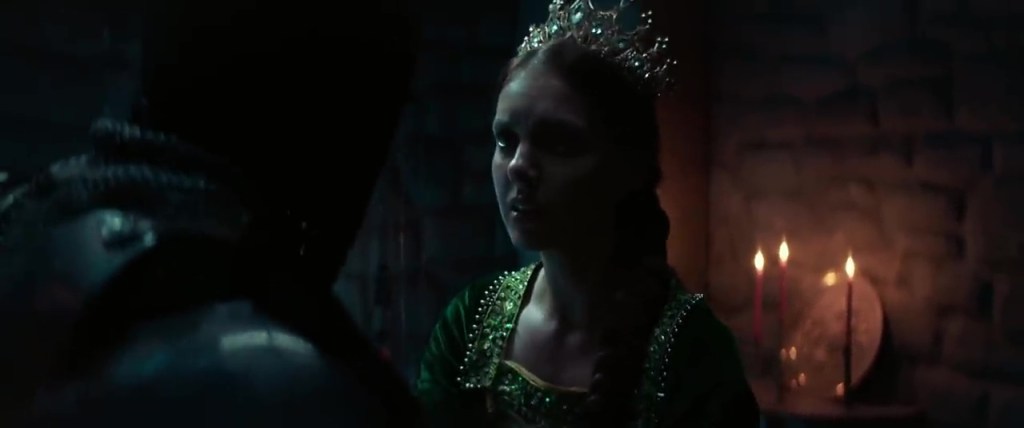
So we come to our short fan-fiction film made in Los Angeles by director and writer Andy Chen. A brave knight in armour explores a castle, eventually finding the beautiful princess, Fiona.

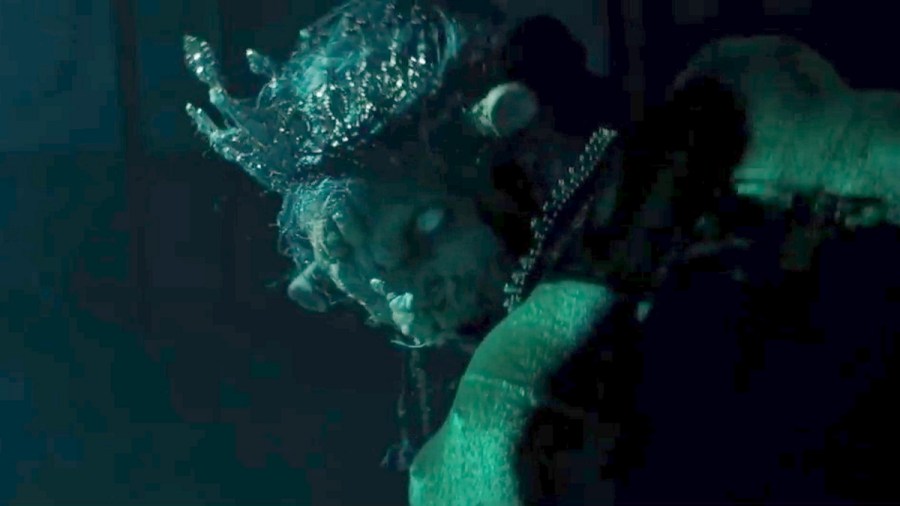
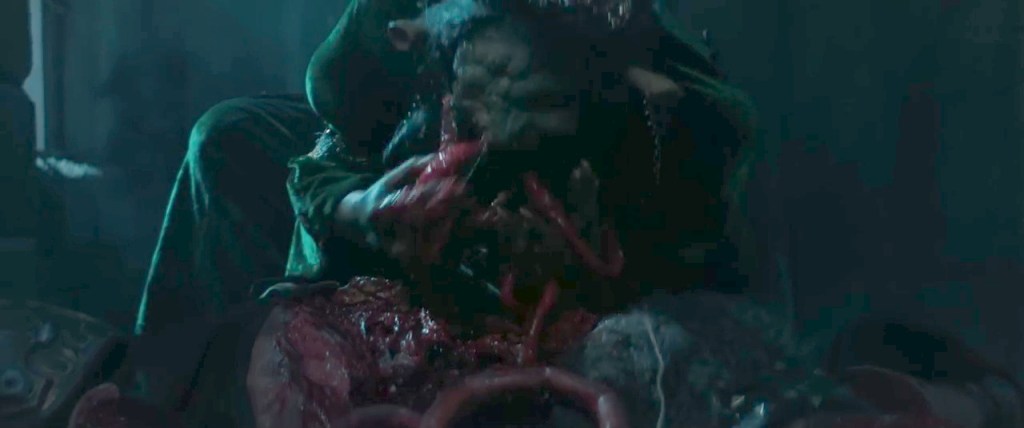
But when he offers to rescue her, night is falling, and she tells him it’s too late, and she turns into an ogre (wearing a crown still, like the ogrelings in Perrault’s story). Well, you can guess the rest. Fiona has been kept locked away at night for good reason. Everyone has a dark side, a hidden cannibal, even a beautiful princess. Perhaps especially a beautiful princess.

The film is quite splendidly put together, with plenty of dark, gothic imagery. The full film (it’s only four minutes, unfortunately) is on the locustgarden YouTube site, below.

Young Leatherface: THE SAWYER MASSACRE (Steve Merlo, 2022)

This full-length feature was released on YouTube on 21 October 2022. It is a “fan film” – you’ve heard of fan fiction, where people like Fannibals extend the stories they love into new avenues (often erotic ones). Well, this team made a whole tribute movie to the cannibalism classic, The Texas Chain Saw Massacre.

The Texas Chain Saw Massacre (TCSM) came out almost fifty years ago, and was named by Total Film as number one of the fifty greatest horror movies of all time, as well as being the one that began the boom in slasher movies.

The Sawyer Massacre is the brainchild of Steve Merlo, a Canadian Musician from Kelowna British Columbia, who also wrote the score. Merlo described the original TCSM as “the first film to truly give him nightmares”. He financed the production through crowd-funding site Indiegogo, and somehow produced a film at least as well made and arguably better written and acted than the other sequels and reboots that have come out in the past several decades.

Presented as a prequel to the original TCSM, the film is set during the Vietnam War, as America fed half a million young soldiers into a futile conflict, thousands of whom did not come home alive. The pointless violence of that war and the battles between young counter-culture demonstrators and Establishment law enforcement is reflected in the gore that this film so generously doles out. The original TCSM was set in the Nixon years as the “silent majority” was taking control, the hippie dream having died at Altamont, in the streets of Chicago and on the campus of Kent State. This is a prequel, so it’s set a bit earlier – LBJ is in the White House and America still thinks its invincible military can defeat the Viet Cong. The young people who blunder into the wilds of Texas are not looking for gravestones as in the original movie, they are looking for themselves, seeking enlightenment and adventure. Jimmy has gone away with his friends to seek redemption for a family tragedy for which he blames himself, another family is looking for a camping site where they can get away from it all, and they certainly do. They inevitably end up on the point of the same knives, meat-hooks, and chainsaws as in the original. Some things remain constant, regardless of politics. And of course, movies like this always start off with a decrepit, run-down gas station.

If you’re not familiar with the TCSM, there is a review at this site, but basically it involves a lot of young city folks blundering in to an inhospitable part of Texas, where a family of killers, formerly abattoir workers, now ply their trade by slaughtering passing visitors and selling their meat to other tourists. In other words, they have done what business coaches always tell us to do – they have diversified. They are still killing animals for food, but now a different species – Homo sapiens. The original film did not go much into explanations, but the characters are there – Leatherface, the hitchhiker, even grandpa, who is rather more sprightly in this version.

In fact, the characterisation is far better in this one than the original, in which few characters lived long enough to have a back-story. And this Leatherface, with his range of masks for any occasion (including, shall we say, love interest) is much more a real person, showing not just the expected psychotic rage but fear, disappointment and even lust.

I’m trying to avoid any spoilers because the film is meant to be seen – it is available on YouTube in its entirety. If you loved the original TCSM, I think you’ll love this one too – for a film made on a tiny budget, it feels well made – the cinematography, direction, scenery, special effects, even the acting (which was pretty woeful in some of the sequels) is spot on. The feeling of claustrophobia inside the house is palpable and dials up the suspense – watching the film requires some restraint to avoid yelling at the victims to get the hell out of there – in that sense, it’s like the old pantomimes. The film also works well as a prequel – it feels like you could finish it, have a strong drink, and move straight into watching the original TCSM without losing any continuity, a tribute to the esteem in which the director holds the original.
 Steve Merlo also has a YouTube session in which he comments on the making of the film and explains some of the questions you may have, but [spoiler alert] don’t watch it until you’ve seen the movie at least once.

The full movie is currently available to watch at https://www.youtube.com/watch?v=a-GssBcG5fk

Butchering vegans: SOME LIKE IT RARE – Barbaque (Eboué, 2021)

The French are sticklers for correct grammar. Bien sûr! Grammar, and particularly syntax, are importants! For example, there is a tendency in animal rights literature for people to declare: “I am vegan.” Simply untrue – you are made of meat, comrade, red meat to be precise, as this film sets out to demonstrate, and at some length.

The correct syntax is “I am A vegan”, that is, a person who tries to avoid eating the flesh of, or otherwise exploiting, any animal. This is usually for ethical reasons to do with the undoubted suffering caused by the modern industrial animal businesses, but sometimes for health reasons (e.g. Bill Clinton) or the environment, because the animal industries cause massive amounts of greenhouse emissions, use absurd amounts of land and water, and are the main cause of deforestation, particularly in the Amazon.
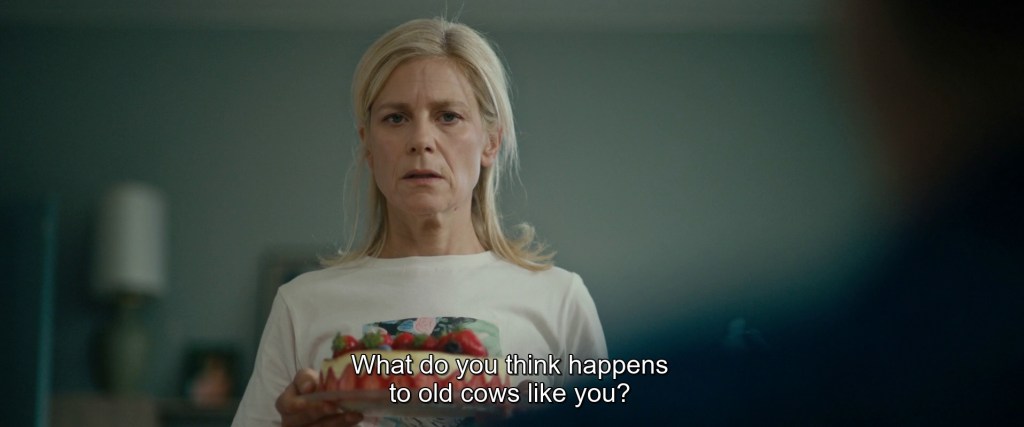
But none of these arguments are likely to persuade the protagonists of this quirky French comedy Barbaque released, for those of us outside of France, under the title Some Like it Rare. Husband-and-wife Vincent (Fabrice Éboué who also wrote and directed the film) and Sophie (Marina Foïs, who managed to make three other movies in that same year) are running a failing butcher shop called Pascal Boucherie, assailed by vegan activists who throw blood (I guess red paint) around their store in protest at their bloody business.

When they see the man who threw the paint riding his bike on the road (of course he rides a bike – this is satire), they stop their van suddenly and reverse, unintentionally (perhaps) causing him to crash into their vehicle and die.

What to do with the corpse? They can’t call the police, because Vincent has already reported the damage done to his store by the dead vegan activist, and it would be assumed to be a revenge murder. But alors, they run a butcher shop, so they have all the tools to dispose of the evidence. Sophie is watching true crime documentaries on TV (aren’t we all?) and tells Vincent to chop the body up and dump the pieces in the garbage. Vincent starts chopping, watched by his dog, who eagerly gobbles up a piece of the vegan that falls onto the floor. Vincent gives the dog an ear, then realises – hey, humans are made of meat!

Chopping up bodies is easy for a butcher, but then Sophie, thinking he has already thrown out the body parts, puts the meat on the shelves. Turns out the flesh of vegans is delicious (grain fed?) and there is a rush of customers seeking what Vincent decides to call “Iranian pork”. With enthusiastic customers in the store, Vincent does not stop Sophie tasting it. Afterwards, she asks

“Vegan” says Vincent.

It’s the perfect crime, the evidence is not just eaten but, as Sophie says, “shat out” afterwards. There are lots of cannibalism jokes, such as the local policeman promising to catch the vegans who attacked the store,

It’s not exactly a new idea. Mads Mikkelsen had the same problem and the same solution (after accidentally locking their electrician in the meat freezer) in the Danish movie The Green Butchers, together with a haircut that would have shocked the normally unshockable fans who loved him in Hannibal. And let us not forget the many variants of the Sweeney Todd story which saw the “demon barber of Fleet St” feeding meat pies filled with his hairdressing clients to the grateful populace of nineteenth century London, as well as a classic of kinky Hollywood cannibalism, Eating Raoul. Butchering people for meat has appeared in several other movies including the much-underrated film The Butchers and the animal revenge movie The Farm.
At first glance, this is a satire on veganism, but then there are all the references to how delicious their flesh tastes.

The only really dislikeable character in the film is their extremely carnivorous and insufferable friend who owns a chain of butcher shops and makes a fortune selling inferior and tainted cuts of meat. He is racist, sexist, and talks only about money. When Vincent has a scuffle with him and bites his ear off, he says “you taste disgusting – you should eat more veg.” Eating meat, Vincent has discovered, makes you taste bad. Maybe that’s why we don’t eat lions.

Vincent and Sophie discuss the logistics of their new business, in the same way other meat and dairy executives talk about the “growing” and “finishing” of the victim animals, as production units. They could farm vegans, they say, and she could milk them. Vincent points out that the best meat comes from castrated steers, he wants to find

There are references to Hitler being a vegetarian (it’s not true) and still being a butcher. Sophie tells how the rabbit she loves when she was little was turned into a stew by her father, and

“although I loved Thumper more than anything in the world, I loved him more as stew.”

They then proceed to kill a plump vegan who they’ve tied up in a bathtub. Most of the film’s action is slapstick hunting sequences as Vincent and Sophie stalk and kill vegans for their shop, interspersed with discussions about hunting a black woman, from which Vincent recoils, until Sophie tells him

They both spot a plump young boy, but Vincent draws the line at killing children, with Sophie complaining

It’s easy to see it as a commentary on the commercial meat corporations, which kill most animals when they are still little more than juveniles or (for veal) babies, and exploit female animals twice – for the production of their young (and sometimes their milk) and then for their flesh when they are worn out – what Carol Adams calls “feminized protein”. All Sophie wants to do (or wants Vincent to do) is apply the same methods to human meat.

The film currently has an unbeatable 100% “Fresh” rating on Rotten Tomatoes, with The Guardian critic Cath Clarke saying:

“Some Like It Rare is a tasty treat for herbivores and carnivores alike, and it honestly doesn’t feel like an anti-vegan film.”

Martin Unsworth in the Starburst magazine said:

Some Like it Rare is a non-meat eater’s idea of extreme horror, and if you’re upset by the sight of meat being prepared, you should avoid it at all costs.”

Yes, but that’s not really true. I know plenty of meat-eaters who scrupulously avoid knowing the source of their main course. That’s why animals are butchered in remote slaughterhouses with high walls and maximum security, by anonymous, minimum-wage workers. On the other hand, it is the vegans who climb those high walls and take videos (YouTube is full of them). So while they don’t like what’s going on, the “extreme horror” is probably more applicable to those who are assailed with the cognitive dissonance of knowing they support corporations that do what Vincent and Sophie do, albeit to other species (as far as we know).

If you don’t mind subtitles (or are fluent in French) this is well worth a viewing. Let me know what you think the message is.

Cannibalism in the Ukraine: GHOUL (Petr Jákl, 2015)

Ghoul is a “found footage” movie, a postmodern affectation that pretends it is a documentary that has been ‘found’ after some gruesome disaster. The genre was popularised (although not originated) by the Blair Witch Project in 1999 which, like Ghoul, had young film-makers heading off to investigate the paranormal, and wishing they hadn’t. One of its most famous antecedents was Cannibal Holocaust in 1980, which was purportedly a documentary about missing documentary makers, and was (purportedly) believable enough to lead to a court case in which the actors had to be produced to prove they had not in fact been killed in some sort of snuff movie. This was of course great publicity for the film, as was the fact that it had been banned in several jurisdictions. The very first film in the genre was probably Punishment Park in 1971, in which anti-Vietnam War demonstrators are supposedly dropped in the desert and hunted by Nixon’s cops.

The main point of interest in this film (the found footage itself being unoriginal and totally preposterous) is the fact that it is set in The Ukraine which, at the time of writing, is again suffering from decisions taken in Moscow. The “Holodomor” (literally “murder by starvation”) was an event that took place in the Ukraine in 1932-3, during which the population was deliberately decimated by the collectivisation of the farms and seizure of food stores. As starvation set in, corpses began to disappear, and the government response was simply to put up signs saying, “Eating dead children is barbarism”. Timothy Snyder’s Bloodlands, the history of Nazi and Soviet mass murders between the wars, examines the incidents of cannibalism in the Ukraine and Poland, and concludes “With starvation will come cannibalism”. When there is no bread or other meat, human flesh becomes the currency. Snyder describes several reports, including an orphanage in Kharkiv where the older children began eating the youngest, who himself joined in, “tearing strips from himself and eating them, he ate as much as he could.”

Pretty difficult to invent a story worse than such a reality. So to add some spice, we have in Ghoul an amateur film crew from America who are fascinated by cannibalism (as, apparently, are very many people: this blog is currently receiving over 10,000 views per month – THANK YOU for reading!) They are researching evidence of cannibalism during the Holodomor, as part of a planned television series on cannibals of the twentieth century. They are conducting interviews in Kyiv of elderly survivors of that time, but they are also hoping to interview a man named Boris who was arrested rather more recently for eating a colleague, confessed to the crime under hypnosis, but then was released, as the body was never found. He said that he was made to do it. By whom, they wonder.

The crew are taken to a local psychic/witch, who tells them that paranormal entities were behind that murder. The crew dismisses this as superstition, getting drunk and getting her to perform a séance involving a pentagram, in which they mockingly summon the ghost of Andrei Chikatilo, a notorious serial killer and cannibal who killed and partially consumed dozens of women and children in the late 1970s and 1980s.

The next morning is full of strange and uncanny events, but the crew are unable to leave for help. The Ukrainian psychic tries but fails to evict Chikatilo’s presence, with no luck: he’s back now, and killing again. The idea is that Chikatilo forced Boris, their reluctant interviewee, to kill and eat his victim. He possesses (as in takes over the body of) a cat, then Boris, who proceeds to chase the young filmmakers, screaming, through various dark, gothic passages.

WTF? (Or що за біса as they say in The Ukraine). The film’s poster (below) says “INSPIRED BY TRUE EVENTS”. But where is the connection between Stalin’s attempted genocide in the 1930s and the ghost of a cannibal who had been active in Russia in the 1970s and 80s and was executed by a bullet behind his ear in 1994? Well, turns out Chikatilo had a brother that disappeared during the famine, and his ever-loving mummy told him the brother had been kidnapped and eaten. This may have just been to make him behave better (spoiler: didn’t work very well). So anyway, he decided to become a cannibal, specialising in small children. A real piece of work, and not one you’d want to reawaken from the dead.

I find hand-held filming annoying even in the hands of an expert, and this lot are supposed to be a bit sloppy, so the picture is jumping all over the place, to the point of seasickness. Reminds me of my dad’s Super-8 home movies (although he didn’t have a cannibal ghost to film, just bored kids). If you are patient enough to put up with the soundtrack (annoying bangs meant to scare you) and the shaky camera, the concept of a massacre being presented through the dispassionate eye of a video camera is interesting, in that it could be interpreted as the way the universe indifferently watches the suffering of its animals as they eat each other or, more immediately, the way the world watches as Russia tries to cannibalise Ukraine.

But besides the irritating camera work and the noisy things that go bump in the night, the plot is absurd – you have a historical tragedy, an imaginary murderer and the supposed ghost of a real murderer, who is somehow able to take over cats, people (including during sex) and of course kill people. The whole thing is frankly a bit of a yawn. It somehow managed to get to 22% on Rotten Tomatoes, with the LA Times critic summing it up well:

“Ghoul” can’t decide whether it should be about cannibals, serial killers, ghosts or demons. The found footage trivializes rather than reflects the horrific events that serve as the film’s basis.

According to IMDB, Ghoul was the highest grossing horror in Czech history. It also won the Vicious Cat Award at the Grossmann film and wine festival. Not sure if that will impress you or not.

The full movie was available on YouTube last time I checked, but all the dialog is in Czech and Ukrainian. Even if you speak both fluently, I wouldn’t bother.