Texas embalmer cut off dead sex offender’s penis and stuffed it in his mouth

The ultimate story of our sins coming back to bite us?

Amber Paige Laudermilk, a 34-year-old licensed embalmer from Texas, has been accused of castrating the corpse of a sex offender.

Laudermilk is behind bars at the Harris County Jail after turning herself in on Tuesday. She’s been charged with Abuse of a Corpse – a felony – and remains in jail on a $5,000 bond.

According to a press release from Harris County Constable Alan Rosen, Laudermilk worked for Memorial Mortuary & Crematory and is accused of, in January 2025, “mutilating the body of a dead sex offender.”

The 58-year-old registered sex offender, Charles Roy Rodriguez, had received 10 years of Deferred Adjudication after being charged with Sexual Assault in 2001. Rodriguez died from natural causes in January.

Laudermilk’s alleged action, according to charging documents, was brought to the attention of the funeral director by two employees who said they witnessed the crime. One witness said they saw her stab Rodriguez’s body twice in the groin with a scalpel, before cutting off his penis, after learning Rodriguez was a sex offender.

She then “stuffed it in his mouth,” and allegedly told a trainee in the cremation room, who saw it happen, that they “didn’t see anything.” The witness reported that Laudermilk’s demeanour was threatening. When other employees went to see the body, Laudermilk allegedly covered his groin area with a sheet and said he had “a lot going on with him.”

Precinct One Constable Alan Rosen said in a statement:

“This case is about two troubled people: the victim who was a registered sex offender and the defendant, who is accused of viciously attacking his dead body. No matter what one thinks of his life, the law requires that he be treated with dignity in death.”

Laudermilk’s license was suspended by the Texas Funeral Service Commission, and the Memorial Mortuary & Crematory confirmed that Laudermilk is no longer employed by them.

In their statement, they said:

“We are deeply troubled and saddened by the unlawful and horrifying actions of this individual ex-employee. Our thoughts are with the family and loved ones of the deceased.”

Now, why is this story on a cannibalism blog, I hear you ask? Well, cannibalism is not just about swallowing another person’s flesh or organs. It is also an act of dominance, and often revenge or intimidation. Gerald Linderman in his book on Americans at war in WW2 writes that the Japanese would disembowel captured Americans and leave the bodies “with their severed genitals stuffed in their mouths.” Tim Blackmore, in his book detailing modern military technology and its dehumanising effects, comments,

“Where there was a tongue, now there is a useless penis, a double castration and silencing. Putting flesh in the mouth also suggests that the enemy can be eaten. Cannibalism makes the soldier strong at the attacker’s expense.”

So this was, in a way, the embalmer expressing her opinion, her freedom of speech, using a scalpel instead of a keyboard (which would have been protected by her First Amendment rights I guess). Plenty of written opinions deny the dignity or humanity of the person being described. Does a dead sex offender deserve “dignity in death”, even though he may have had little or none in life?

The fact is that the dead human is just meat. Starving survivors of catastrophes, ship wrecks or plane crashes quickly realise this and soon eat the dead and sometimes even the living – think the Donner Party. Remember the words of a famished Chris Hemsworth saying to his dying crewmen “No right minded sailor discards what might yet save him.” Or the debate in the crashed plane as a group of young men slowly starve to death surrounded by snap-frozen corpses:

“if the soul leaves the body when we die, then the body is just a carcass… What’s there in the snow is just meat, Antonio. Food.”

There are thousands of people dying of starvation every day around the globe, and what dignity do we offer them, even in their last moments of life? As for dignifying the dead, we casually torment, kill and then mutilate the corpses of billions of other animals every year for our food, our medical experiments, our clothing or our entertainment. Yet we are expected to weep for this sex offender’s insentient corpse?

Party at Donner Lake

A keen-eyed Cannibal Studies student spotted this sign on the Interstate 80 in California recently.

The lake is named after the Donner Party, a group of Midwestern pioneers who were forced to spend the winter of 1846–47 in the Sierra Nevada mountain range. They became snowbound in the bitter winter that year, and famously turned to cannibalism to survive. Only 48 of the original 87 members of the party endured and made it to California.

The best part of the sign is the symbol below it of a knife and fork. One presumes this was meant to advise weary travellers that there were restaurant facilities at the Lake, but it has caused some hilarity on Facebook where the poster tagged the picture,

Nicely played CalTrans, nicely played..

Many of the comments (and there are well over 3,000 of them when last checked) gloried in the cannibalism theme:

California Department of Transportation public information officer Steve Nelson said that there are 38 restaurants past the exit, “so the sign is appropriate to notify motorists, but [we] also understand the irony and that it may be considered insensitive.”

Well, the sensitive can always drive straight past the Donner Lake exit. But if they drive 8 miles beyond this sign, and take exit 188, they’ll see this one instead,

Nothing improves the appetite like a picnic in the snow.

What would you do? HUNGER (Steven Hentges, 2009)

People who automatically flinch at the idea of cannibal movies (or cannibalism generally) give a little mental shrug when the subject turns to starvation. What would you do if you had no food, nothing containing any life-giving nourishment except other human bodies? The honest answer to that is, usually, ‘I don’t know, and I hope never to find out’.

Several films considered in this blog have looked into what we might call “survival cannibalism”, a sub-group of the wider “castaway” genre—films like Hitchcock’s Lifeboat—which derive from the narrative of Robinson Crusoe. The most famous in Cannibal Studies is still Alive, which retold the story of the young footballers who survived a plane crash in the Andes, only to discover that the search had been called off and there was literally no food in the snow, except the bodies of their fellow passengers (most of whom were their friends). It was recently rebooted in Spanish in Bayona’s La sociedad de la nieve. Such stories are contemporary versions of the old shipwreck stories which motivated much of the cannibalism narratives of early modern Europe, horrifying the Europeans, when they weren’t accusing the colonialised of the same thing. A classic story is the whaling ship Essex, the wreck of which inspired Moby Dick. The film In the Heart of the Sea follows that story – what happened to them after the ship sunk? Well, weeks in a lifeboat with nothing but each other for company and no food…

Then we have the many, many post-apocalyptic stories, starting with Soylent Green, in which overpopulation and climate change have led to the recycling of dead people into delicious crackers. Other classics of this genre include Delicatessen, We Are The Flesh, Cadaver, and of course the bleak glimpse of the future, The Road. Such disasters can be intentionally created, such as Stalin’s famine in the Ukraine, during which the starving ate their own relatives. In the USA, the classic case of starvation cannibalism is the Donner Party.

This week’s film, Hunger, explores the same question: what would you do? If you were starving, what, or who, would you eat? An apocalypse is not the fault of the victims, and surviving any way you can, feeding yourself and your family, is difficult to criticise. It may still be gross to some (or most) people, but it is nevertheless, in some ways, understandable.

But this film complicates it by taking away the excuses of an indifferent nature or a catastrophic global event. In Hunger, there is no apocalypse. The characters are just five people who wake to find themselves in a dark dungeon, with no idea how they got there. It’s a cistern, a larger version of the abandoned well in which Catherine Martin found herself trapped in Silence of the Lambs. And, of course, like Catherine, there is no food being catered. Science hates anecdotal evidence, so in this film we have a scientist who has gathered ‘ordinary’ people in extraordinary circumstances, just to see what would happen. You may remember Mason Verger boasting of a similar experiment in Hannibal:

“I adopted some dogs from the shelter. Two dogs that were friends. I had them in a cage together with no food and fresh water. One of them died hungry. The other had a warm meal.”

They have access to four barrels of water, a toilet (of sorts, but only four toilet rolls) and a day-clock that marks off 30 days, the length of time the human body can survive without food.

On the second day, they find on their water barrels a scalpel, an instrument that Jordan, the doctor played by Lori Heuring (Mulholland Drive), calls “a human carving knife”. It soon becomes clear what that is for, and it ends up (after much discussion) being used for just that purpose – to kill and butcher each other.

We find out as they talk that they seem to have been chosen because they have all taken a life – one killed her abusive partner, another in a hold-up gone wrong, another through euthanasia. Doctors like Jordan handle life and death every day. But the scientist wants to know, are they willing to kill out of hunger alone?

Then there is that scientist who kidnapped them; we find that he had been a young boy who survived a car crash: we later discover he cannibalised his mother’s corpse to stay alive. Now he watches his captives, and takes careful notes.

He shares their predilection for taking life: when a couple come to have sex in the quiet country area and hear the pleas for help from their oubliette, he shoots them with tranquiliser darts and pushes their car into the river, but not until they wake up. He thereby reveals a sadistic streak, a psychopathy, or at least a disavowal of empathy, common in scientists who experiment on mice, rats, dogs, monkeys and other animals. Most of us react to seeing other sentient beings in pain by initiating an empathetic response called resonance in the inferior frontal gyrus and the inferior parietal lobule of our brains. Recent research in which rats were given electric shocks and responded similarly both to pain and to watching other rats in pain showed that this ability is not restricted to humans, and in fact may be better developed in rats than in some scientists. Like Descartes torturing dogs or Josef Mengele experimenting on camp inmates, a psychopathic scientist can justify any cruelty for the sake of research.

Cannibalism, the act of killing and eating another, is sometimes considered transcendent (by the cannibal), with one character making reference to cannibalism as a spiritual pursuit:

“Human flesh is essence. It captures a person’s soul!”

The scientist likes this idea, because he ate his mother, so it’s comforting to think that he now contains her soul. But the main theme of the film remains starvation cannibalism, in this case forced on the victims, as it was in the Ukrainian famines or the Nazi death camps. The counterpart of this cannibalism is happening in their bodies. As Dr Jordan tells us, the process of starvation progresses as “your body basically cannibalises itself.” The alternative is what the scientist hopes to witness, the choice to “become a savage”.

Jordan, the doctor, is the only character who refuses to consider cannibalism. Like “the Man” in The Road, she wants to “carry the fire”, and that anthropocentric ideal does not include eating humans. The others spurn such naïve ideology:

“You can hold on to your precious humanity. We’re doing what we have to do to survive.
And your boyfriend? He tasted surprisingly delicious.”

Cannibalism is usually depicted by society as a form of madness or monstrosity involving a devolution from civilised to savage, from enlightened to barbaric. Unless we pay someone else to do it for us—then it’s called animal husbandry.

The film was produced for a tiny $625,000, so the special effects and production time are limited (except for the buckets of gore), but it is still extremely effective. Hunger was released on Fangoria’s Frightfest DVD line, the same distributor as the (reworked) Armin Meiwes story Grimm Love. It does not seem to have received wide distribution, which is a shame, as it is well made, well acted (particularly Lori Heuring, who is quite incandescent) and is well worth your while chasing down. Moreover, it covers a crucial question that becomes more urgent as the world goes to hell in a handbasket – what would you do?

Donner Party revisited: snowstorm strands hundreds on the DONNER PASS

Videos such as the one above by freelance journalist Jonathan Petramala show hundreds of cars and trucks bogged in deep snow on the infamous Donner Pass, a stretch of road 7,088 feet above sea level over the Sierra Nevada mountains in Nevada County, California. On Saturday March 2 2024, more than three feet of snow fell on and around Interstate 80 northwest of Lake Tahoe, according to the Weather Channel. In winter, the old Donner Pass, now the historic US40, is often at risk of snow avalanches and blizzards, but this one was the strongest blizzard in California in years, and is being called a

‘Snowpocalypse”

Blizzard warnings have been issued with snowfall of up to twelve feet expected in some higher elevation locations. 

Many people would not associate the words “California” and “Snowpocalypse”, but that is exactly what happened in 1846-7 when a group of pioneers became snowbound in the Sierra Nevada over winter, and famously turned to cannibalism to survive. Only 48 of the original 87 members of the party survived. Many of the others were eaten after they died, and when they ran out of corpses, they murdered two of the Native American guides to use as protein.

There have been quite a few films and books about the events of that winter in 1846. Most emphasise the cannibalism that became inevitable, but omit any ethical discussion (probably no record was kept of it anyway) and gloss over the clearly racist decision to kill and eat the Native American guides in preference to “white” meat, even where the potential victim had volunteered. The movie Alive covered this rather better, showing a group of young men, all devout Catholics, debating how to justify eating their dead fellow passengers after the crash of a Uruguayan Air Force plane chartered by their football team in the Andes in 1972.

Back to the future – March 2024. The California Highway Patrol issued an appeal to people not to head out there, for obvious reasons.

The skiers, in particular, were not interested in listening to warnings – they wanted powder, and plenty of it. Despite snowfall of up to 12 feet being expected in some higher elevations, people headed out from San Francisco and all parts of the USA to find a mountain they could slide down. Many of them promptly got stuck in cars that would not respond in the freezing temperatures, and ski resorts had to shut down anyway. Big rigs also were stranded, blocked from moving (even if they had chains) by the inactive cars, or jack-knifing in the treacherous conditions.

Like 1846, this was a recipe for disaster. Residents of Truckee, California, one of the closest towns to Donner Pass, reported having inches of snow in front of their houses making it difficult to get out.

It did not take long for social media to pick up those reports of a “significant number of vehicles stranded over Donner Summit”. One headline read:

Untold Number of People Trapped at Site of Great American Tragedy

Some, of course, made the inevitable logical leap:

Sorry to disappoint, but there have been no reports of cannibalism from the stranded cars, trucks or town-folk. Unlike 1846, there are now emergency services available, including all sorts of technology from drones to snowploughs, and in fact emergency teams and tow services worked tirelessly to reach those affected.

While many had to leave their cars behind, no gnawed bones have been discovered so far. Maybe when the snow melts…

Serving your crew: DREAD HUNGER (eight-player cannibalism game)

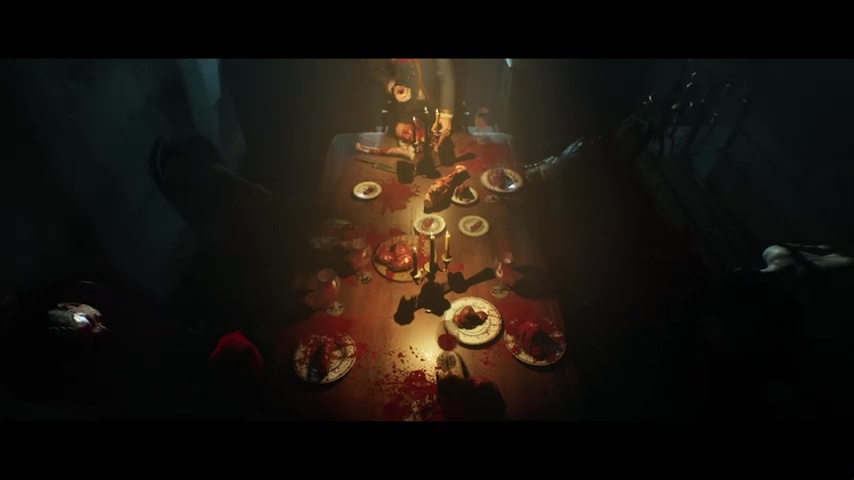
Imagine you are trapped on a ship surrounded by ice in the Arctic, and some of your friends might actually not be whom they seem. Dread Hunger, a New Zealand computer game in which players can cannibalise their friends, has become a huge success, mainly in China.

I usually blog about cannibal movies here, or news stories about cannibalism when they break. This is the first game I have covered, although I am waiting to see the game “Borneo: A Jungle Nightmare” which is due for release this year – it is scripted and directed by Ruggero Deodato, who brought us one of the seminal cannibal movies in 1980: CANNIBAL HOLOCAUST. This game was originally going to have the same title, but is not a remake (in game form) of the original, but more like fourth in Deodato’s cannibal saga. Due out sometime in 2022.

Anyway, back to DREAD HUNGER! When the Christchurch company, Digital Confectioners, released the game earlier this year, they were hoping they might reach 10,000 players in the US. To their surprise, they found that more than 260,000 people in China play the game every day. Due to time zones, says Director Sam Evans, the demand is mostly between the hours of 12.30am and 5am New Zealand time (which for computer nerds is a fairly normal operating time).

Dread Hunger is a survival game set during an Arctic exploration in 1847-48. Players can build fires, fight off wolves, and hunt for food, including, sometimes, human flesh from their shipmates.

There are various weapons, and the players can also “pick up severed heads and limbs and use them to kill.”

One of the strategies is:

Betray Your Friends
Feed them tainted food, lure animals to attack them, hex them with blood magic, or if all else fails… just shoot them in the back.”

The game has become a target of hackers, including DDOS attacks and “cheats” where hackers find a loophole in the game code they can exploit to give players an unfair advantage.

Dread Hunger has just passed 1 million copies sold, a figure Evans called “insane”. The graphics are splendid and, well, graphic.

This has led to some new, if profitable, challenges.

“The American market largely treats games like a product. They buy the game, they play the game on average 10-15 hours over a few weeks, then they move on. But in China when they find a game they like, they play it for hundreds of hours, for years and years. This forced us to treat the game like a service. We now have to focus on continual development and regularly updating the game to add more cool features over time.”

The game is mainly based on the 1845 expedition of 129 men led by explorer Sir John Franklin, which left Britain for the Canadian Arctic in search of the elusive Northwest Passage. Their ships, the H.M.S. Erebus and the H.M.S. Terror never returned.

Rumours that the crew resorted to cannibalism have swirled around the doomed expedition since the nineteenth century. Evidence suggests that Franklin’s crew may have not only consumed the flesh of deceased compatriots, but also cracked their bones, to eat the marrow inside. In 1854, interviews with local Inuits described piles of human bones, cracked in half.

In 1864, Sir Edwin Landseer‘s painting Man Proposes, God Disposes caused a stir at the Royal Academy exhibition for its depiction of two polar bears, one chewing on a tattered ship’s ensign, the other gnawing on a human ribcage. Cannibalism did not get a mention – yet. 

More recently, in the 1980s and 1990s, researchers recovered remains of the crew on King William Island. Knife marks on the bones backed up early accounts of human cannibalism. A newer analysis of 35 bones by anthropologists Simon Mays and Owen Beattie suggests that the men did indeed eat each other. The bones showed signs of breakage and heating—indicating that the crew members probably cooked them to extract the marrow. Mays and Beattie published their results in 2015 in the International Journal of Osteology.

Horror writer Dan Simmons‘s 2007 book The Terror was developed as a 2018 AMC television series also called The Terror. The expedition has, over the years, taken on the mythic value to the British that the Donner Party holds in the USA.

One of the lines from the launch trailer (above):

“I have heard it said that this land can change a man. Turn him into a beast. Well, to that I would say—men were always beasts. Some you see, well, they’re just better at hiding it than others.”

Dread Hunger is what is called in games parlance a “social deduction game”. This is a category of game in which players attempt to uncover each other’s hidden role or team allegiance. It’s an ideal formula for a population who never know quite who the agents of their government might be. And also an ideal cannibalism game for the recent history of man-eating, in which the cannibals like Albert Fish, Jeffrey Dahmer, Issei Sagawa and Armin Meiwes all appeared as very ordinary, normal neighbours.

We all need to do some social deductions, it seems.

“A spoiled bloodline of inbred animals”: BONE TOMAHAWK (S. Craig Zahler, 2015)

This is a cannibal film, also a Western and a horror movie, so it has something for (almost) everyone. Although a low budget work by a first-time film-maker, the film has been widely recognised for the excellence of the script and direction, and the characterisation by a team of top actors. And the graphic nature of its climax.

Bone Tomahawk is set in a small town in the last days of the Old West, a frontier society held together by a sheriff, Franklin Hunt, played by Kurt Russell (who managed to fit in a starring role in Tarantino’s The Hateful Eight that year as well), with an understated calm and a brooding power. A drifter comes into town and Hunt shoots him when he tries to run from the saloon, necessitating Samantha (Lili Simmons from Banshee), who practices medicine, to treat him in the jail. She, the drifter and a deputy are all abducted during the night – the only evidence is an arrow in the wall, and a dead African-American stable boy. Who could have done that?

We assume ‘Indians’, but a Native American they trust, “the Professor” (Zahn McClarnon, from Longmire and Fargo), tells them these are not the ‘Indians’, or at least the ones with whom the American invaders have been at war. They are a tribe with no name, no language (i.e. less than human). The local Indians call them “troglodytes”, cave dwellers,

The Sheriff, his “back-up deputy” and comic relief, Chicory (Richard Jenkins from Six Feet Under and Shape of Water), the mysterious Indian-fighter Brooder (Matthew Fox from Party of Five and Lost) and Samantha’s husband Arthur (Patrick Wilson from Fargo) with a broken leg that is fast turning gangrenous, set out in pursuit. Most of the film, until the climax when they meet the trogs, is more a road movie than a Western or a cannibal horror film. It’s four cowboys against the elements. On the long ride out to the land of the trogs, they come across two Mexicans and Brooder kills them, suspecting that they are scouts for a bandit gang. Chicory explains,

“Mr Brooder just educated two Mexicans on the meaning of manifest destiny”.

Manifest destiny was a widely held cultural ideology that proposed that the culturally and racially superior American settlers were destined to expand across North America. Inferior, backward, savage peoples were meant to get out of the way, or be exterminated. Even the horses were supposed to be racially intolerant. When the rest of the gang comes in the night and steals their horses, Brooder is incredulous that his horse would allow a Mexican to ride her.

Discrimination, be it racism, speciesism, ageism, ableism or any other, is never all-encompassing. Most racists don’t hate everyone, or at least not equally. The settlers in areas like the old West hated the ‘Indians’ for defending their lands, which the white men wanted. Even in the era when this movie is set, sometime in the late nineteenth century, some Native Americans like the Professor were accepted as, if not equals, at least semi-civilised negotiating partners, while others, who maintained their resistance, were considered bloodthirsty savages, and portrayed as killers, rapists and sometimes cannibals.

In this film, this second group is distilled into a people so inhuman that they do not even have language, which is often the first thing quoted in defining the supposed gulf between humans and other animals. They are accused of raping and killing their mothers and, worse yet, abducting and raping white women, requiring the gallant sacrifice of heroes such as those depicted here. One of the party, Brooder, boasts of having killed more Indians than all the rest of the town put together. When pressed, he admits that not all were men, as Indian women and children can also handle an arrow or a spear, and he tells of losing his mother and sisters to an Indian massacre when he was ten. For Brooder, white vs red, civilised vs savage is no different to good vs evil. He is an absolute racist, but for what he considers good reasons.

Yet even these less-than-human troglodytes are racists – they left the black stable-boy behind, because “they don’t eat Negroes”. No explanation is given, and it makes no sense since, under the skin (of whatever colour) we are all red meat. Yet their refusal to eat black people paints the white supremacism of the others as less vile somehow – look, these brutal savages must be exterminated – and they’re racists too, so it’s OK for us to discriminate against them.

Of course, those we wish to destroy must be dehumanised, vilified, and preferably accused of vile crimes, of which cannibalism usually seems to be the leading contender. But there is little evidence of Native Americans indulging in the flesh of their victims, whereas only fifty years before the demise of the Old West, the Donner Party had tucked into the remains of the members of their party who had died in the bitter winter snows of the Sierra Nevada in 1846-47. When they ran out of corpses, they murdered and ate their Native American guides.

The film is written and directed by S. Craig Zahler who also wrote the music with Jeff Herriott. It is a tour de force, a modern film that manages to bring to life the Western, a genre that, like its heroes, does not ever seem to die. American Frontier scholar Matthew Carter points out that this story is

“informed by one of white America’s oldest and most paranoiac of racist-psychosexual myths: the captivity narrative

In these narratives, civilised society is threatened by an evil outside force, and something precious (usually a woman, seen as a possession) is stolen and must be recovered. In Bone Tomahawk, traditional narratives are challenged to some extent – the women are not passive, Brooder’s prejudice is challenged, the savages are motivated by the drifters desecrating their burial ground. But the heroes are white men, the story is told from their perspective, the fear of the outsider or alien (remember this is only a few years after 9/11) offers a stark binary which equates civilised with good and savage with evil. It is the myth that was used to justify manifest destiny and the genocide of the Native American tribes. The trogs are barely human – they are covered in white mud which disguises their humanity and they have whistles implanted in their throats instead of having voices, so they cannot be engaged in rational discussion. We see a prisoner scalped and then cut open while alive, to establish their monstrosity.

Their own women, we see at the end, are heavily pregnant, blinded and their limbs removed, so they are simply breeding machines for more warriors, a reference, intentional or not, to the way anti-Islamic propaganda depicts Moslem women as blinded by fundamentalist controls and their burqa.

But perhaps the Professor is the most interesting character. In Westerns, there were ‘good Indians’ who were assimilated into the dominant culture, often assisted in spreading ‘civilisation’ (think Tonto in The Lone Ranger).

Then there were the ‘bad Indians’ – the outsiders, vicious and merciless, uninterested in accommodating the invaders on their land, and often (although not always) portrayed as cannibals.

Trey Parker and Matt Stone’s CANNIBAL THE MUSICAL (Trey Parker, 1993)

Ever wondered what Trey Parker and Matt Stone did before South Park? Here’s a surprise – they went to college, where they wrote, directed, produced, co-scored and acted in a musical about cannibalism. This is it.

How’s your American history? It’s certainly never dull – full of wars, insurrections, and also a good deal of cannibalism – historical and contemporary. Probably the most famous incident is the Donner Party, a group of families who became snowbound in the Sierra Nevada over winter 1846-47, and famously turned to cannibalism to survive. Also up there in the mythology is the story of the famous typo, Alferd Packer, a prospector and self-proclaimed wilderness guide, who confessed to cannibalism during the harsh winter of 1874. Packer and five other men had attempted to travel across the San Juan Mountains of Colorado through the bitter winter snow, and Packer was the only one to arrive, some two months later, at the Los Pinós Indian Agency, near Saguache, Colorado. He first claimed the other men had abandoned him, then changed his story to tell of shared cannibalism of the men who had died of the cold, but was eventually charged with murder.

The real Alferd (Alfred) Packer

Incidentally, in case you’re wondering, his name was probably Alfred, but according to some sources, he changed it to Alferd after a mix up with a tattoo. Don’t know if that’s true, but just think of Jame Gumb in Silence of the Lambs, who refused to correct his birth certificate by adding an S to his first name. The author of that book, the meticulous researcher Thomas Harris, may have been having a wink at Alferd with that one.

According to a book on Packer, the judge at his trial sentenced him to death, saying:

Stand up yah voracious man-eatin’ sonofabitch and receive yir sintince. When yah came to Hinsdale County, there was siven Dimmycrats. But you, yah et five of ’em, goddam yah. I sintince yah t’ be hanged by th’ neck ontil yer dead, dead, dead, as a warnin’ ag’in reducin’ th’ Dimmycratic populayshun of this county. Packer, you Republican cannibal, I would sintince ya ta hell but the statutes forbid it.

Packer was not hanged, due to a legal technicality – he was sentenced under state law, but Colorado was not a state at the time of the cannibalism. Antonia Bird’s film Ravenous was also partly based on Packer.

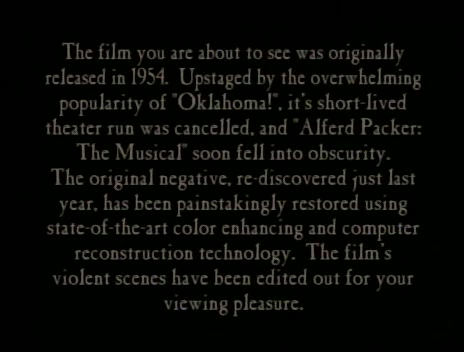
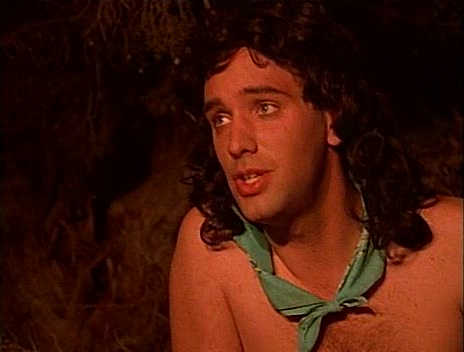
That is pretty much the story that Trey Parker tells, using the names, dates and versions of the events that happened, and even in musical form, he tells it rather more accurately than an earlier biopic called The Legend of Alfred Packer (1980); also a lot more accurately than a later film called Devoured: The Legend of Alferd Packer (2005), which offered audiences the ghost of Alferd eating people in the modern day. Parker and Stone add lots of humour and gore and some very impressive and catchy songs, all written by, and mostly sung by, Trey Parker. Parker and Stone are masters of irony, and it is laid on thick, starting with the card at the beginning saying that the film was originally released in 1954 (some 15 years before Parker and Stone were born) but was eclipsed by the release of Oklahoma. The card goes on to claim that the violence has been edited out, and they follow this with a scene showing Packer killing the other members of his group by biting their necks and tearing off their arms.

The film moves between Packer’s trial (the bloody scene at the start is the prosecution lawyer re-enacting the alleged crime) and Packer’s description of the actual events, complete with dance routines and love songs to his horse, Liane.

The group who persuade Packer to be their guide are totally unprepared for the march from Utah to the Colorado gold fields over the snowbound Rockies, and are warned not to proceed into a big storm by a tribe of Indians, played by Japanese foreign exchange students, who speak Japanese, and even carry Samurai swords.

In a nice bit of cannibal intertextuality (Homer’s Odyssey), they try to kill a sheep belonging to a one-eyed cyclops (actually a Confederate soldier who lost his eye in the civil war). Early shades of South Park, as the cyclops squirts pus from his missing eye.

Sitting around the campfire, starving, they recall the story of the Donner party, and that gives them an idea. Yeah, they eat the guy who was an incurable optimist, who they shot for wanting to build a snowman. Look, it makes sense at the time. They even discuss not exactly the ethics of cannibalism, but at least the aesthetics – they won’t eat the dead guy’s butt, and Packer (Parker) is sick at what part Humphrey (Stone) chooses to eat.

There’s a ballet dream with Alfred dreaming of a reunion with Lianne (the horse), who has run away with a gang of trappers. Yeah, you’ll have to see it.

But the snow has them trapped, and they run out of food, and now the discussion is not which parts of a corpse to eat, but which member of the team should be sacrificed for the next meal. There is a hugely extravagant massacre, following which Packer waits out the winter, but now with plenty of meat, and then heads into town with his story of losing the rest of his party. That doesn’t wash, particularly when the well chewed bodies are found.

There’s a bar fight, pretty much de rigueur in Westerns, and Packer escapes to Wyoming, which he says is worse than being torn apart by the furious townspeople. Eventually he is arrested and brought back to Colorado. During his trial, there is a love interest, Polly (Toddy Walters), who interviews Packer through the bars of his cell in a scene that kept reminding me of Clarice Starling interviewing Hannibal Lecter in Silence of the Lambs, which had swept the Oscars in 1992, the year before this was made. She becomes convinced of his innocence and – well, it’s complicated. But the film is well worth your 100 minutes, just to see what Parker and Stone could do with real people instead of simulated cut-outs.

The film had mixed reviews, with some of the reviewers not knowing what to make of it. The critic score on Rotten Tomatoes is only 65%, but the audience score is 82%. The critic from Empire said: “there’s an air of genial enthusiasm, tempered by sick humour, that is surprisingly engaging”.

The tagline for the film is:

“In the tradition of Friday the 13th Part 2… and Oklahoma… comes the first intelligent movie about cannibalism!”

Parker and Stone are not shy about their fascination with cannibalism, for example, check out the South Park episode “Scott Tenorman Must Die”, in which Cartman takes revenge on a boy by killing the boy’s parents, and cooking and feeding them to him.

vlcsnap-00012.jpg

For a movie made by a couple of students at the University of Colorado, this is very impressive. It’s well made, the cast is great and the music is hard to get out of your head afterwards. I guess not so surprising, when we consider that four years later, in 1997, Parker and Stone launched South Park, which has been running ever since with over 300 episodes shown so far, and more seasons booked until at least 2022.

Modern geniuses.

American cannibal: THE DONNER PARTY (T.J. Martin, 2009)

The Donner Party was the name given to a group of pioneers heading from Missouri to California in 1846. They became snowbound in the Sierra Nevada over winter, and famously turned to cannibalism to survive. Only 48 of the original 87 members of the party survived.

There have been quite a few films and books about the events of that winter, including documentaries such as “Trail of Tragedy: The Excavation of the Donner Party Site by US Forest Service” and an episode of the PBS series American Experience (Season 5 Episode 3) called “The Donner Party” (you’ll need a VPN if you are outside the US). There are also a few supernatural potboilers like Donner Pass, about evil forces that turned poor George Donner and his mates into ravenous cannibals, and will do the same to any nice-looking millennials who stumble into the region. I am not intending to write about them until I run out of movies about “real” cannibals, which looks like it will be in several years, at the present rate.

Look, this movie doesn’t mess about with any set up. The opening is some written explanation of how they got into that mess

vlcsnap-00001.jpg

Then there’s a dude, who turns out to be William Eddy (Clayne Crawford) pointing a gun, with his voiceover

“In situations like this, some men may abandon their obligations. This being said, I am resolved to provide for my family.”

vlcsnap-00002.jpg

He goes back to camp with some meat (a bear? In winter?) which he shares with William Foster (Crispin Glover from lots of things including Back to the Future and American Gods). Eddy is the group’s guide, and feels that he was pressured to lead them the wrong way, onto the Hastings Cutoff; Foster argues that they all agreed to take the “short cut”. The audience by this point is yawning. From there, as Homer says, “it just gets worse and worse”. The Foster camp is running out of food when the “rescue party” reappears – with no rescue and no food. One of them dies on arrival and they bury him in the snow. Clearly, they had never seen Alive! Once you die, you’re assigned to the frozen food department.

vlcsnap-00003.jpg

But as they set out for a last ditch expedition, later called “The Forlorn Hope”, Foster boasts that they have maintained a “clear line of civility”. We know from history that this won’t last.

vlcsnap-00004.jpg

There is talk of going back to the camp, but Franklin Graves (Mark Boone Jnr from Sons of Anarchy and Memento) disagrees.

vlcsnap-00006.jpg

As they get colder, hungrier and weaker, Foster suggests what we’ve been waiting 51 minutes to hear:

“In the misfortune that one of us should pass, in death we may save the living.”

vlcsnap-00007.jpg

In a scene worthy of Monty Python, they all start volunteering. Eddy suggests he and Foster

“fight to the death, the loser dies like a man, feeds the group”.

Instead, they draw straws – Dolan (Crispian Belfrage – who is a bit wasted in this flick) gets the shortest stick and Foster shoots him (not what really happened, BTW). Eddy refuses to join in the lottery or the meal, but then it turns out he has a lump of bear that his wife smuggled into his backpack, so he’s doing OK.

vlcsnap-00008.jpg

Graves stabs himself and becomes the next course. Before each meal, they say grace and thank God for what they have received. When they run out of those guys, Foster decides, against Eddy’s opposition, that the “Indian” guide will be the next course. This is the hierarchy of eating – the plant, the animal, the human, with the sub-human squeezed in there, defined by layers of contemptuous racism that was standard procedure in 19th century America (and in some places still is). Rather than wasting bullets, he uses the gun as a club.

vlcsnap-00017.jpg

There are long scenes of the group trudging through the snow, interspersed with the survivors sitting around the campfire chewing on some guy and looking vaguely disgusted, but not looking all that gaunt. I guess it would require some pretty good makeup or CGI to make someone look to be genuinely starving, so I can accept that.

What I found disappointing was the total lack of moral debate – one person complains “we’ll go to hell” and Eddy points out that the “Indian” is a man, but still hands the rifle to Foster so he can do the deed. Foster, the gentleman, points out that he is their only hope because he is the only one willing to do whatever it takes. The fascination of the movie Alive! was the deliberation in the plane of the ethical situation, the immortal soul having fled, etc. This lot are devout enough that they could make it a lively discussion, the nature of humanity, why they think it’s wrong to eat white people but not “Indians”, but it never gets past the look of distaste as they chew on bits of other humans. The best scene is the long shot of Foster, the man of God, the keeper of civility, turning into a cannibal king as he watches his flock, waiting to see who will die next.

vlcsnap-00015.jpg

It’s a fictionalisation of a true event, which is always fraught, because the historians will object to the inaccuracies, and everyone else to the squalid reality. But as an imagining of one incident from the Donner story (Donner himself never gets a look in) it’s not a bad taste of nineteenth century morality and its fragility. The disappointment is that the cannibalism is direct and honest, but never considered as anything other than abject but necessary. This is one of the defining stories of modern America, and much more could have been made of it. However.

Now, I’ve seen some great cannibal films and some pretty awful ones, and I don’t always agree with the verdicts of the reviewers on Rotten Tomatoes, but I think this is the first one I have seen where none of the reviewers even bothered to see it.

HorrorNews.Net gave the film a positive review, writing

“Overall The Donner Party was a nice change from the hard core horror films that I usually watch. … I also recommend that you have something to eat on hand while watching it as I was starving by the time I was done watching it. Then again, maybe I have issues.”

Incidentally, Horrornews.net has released their comprehensive survey of the favourite horror movies of each (US) State:

Best Horror Movies: Which Does Each US State Love Most?

donnerparty2.jpg

The log line “They survived by doing the unthinkable” is clearly borrowed from Alive! (“They overcame the impossible by doing the unthinkable”).