The silence of the lambs (Jonathan Demme, 1991)

The silence of the lambs is celebrating its 35th anniversary this year. It was released on Valentine’s Day 1991 (I swear I didn’t make that up). As a birthday treat, the film was re-released to cinemas in April 2026. It was also, not surprisingly perhaps, the subject of the very first blog I uploaded to this site some eight years ago.

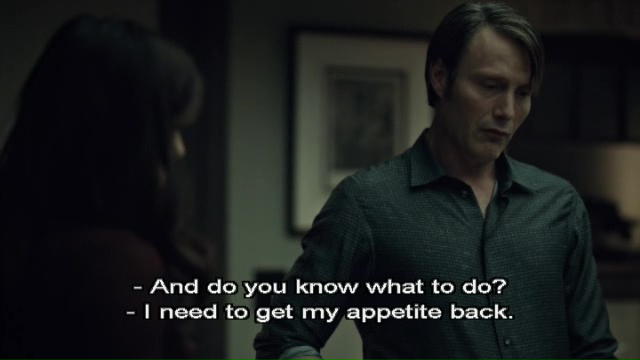
The film is, almost without exception, the movie that people first mention when I talk to them about cannibalism (yes I do, which is probably why I don’t have many friends). This is actually a little surprising as, although the male lead, Hannibal Lecter (Anthony Hopkins), is a cannibal, for most of the film he is incarcerated, and even on the loose he is not seen actually eating anyone (although he certainly discusses the idea with some gusto). In the sequel, Hannibal (Scott 2001), he is indeed shown serving human flesh – the brain of Clarice’s nemesis – to its owner. In a later prequel, Hannibal rising (Webber 2008), an attempt is made to trace Lecter’s psychopathy to childhood trauma: the cannibalism of his sister during the war, much to the displeasure of many of his fans, who complained of the loss of the nuance and the mystery.

The silence of the lambs has become something of a cinematic classic, while the sequels and prequels have largely faded from memory. Robert Butler in the Chicago Tribune credited the film with legitimising cannibalism in the movies, with its star cast and its haul of all five major Academy Awards – best picture, best actor, best actress, best director and best adapted screenplay. Before this, Butler claimed, cannibalism was limited to exploitation films. No doubt directors from Luis Buñuel to Peter Greenaway might demur.

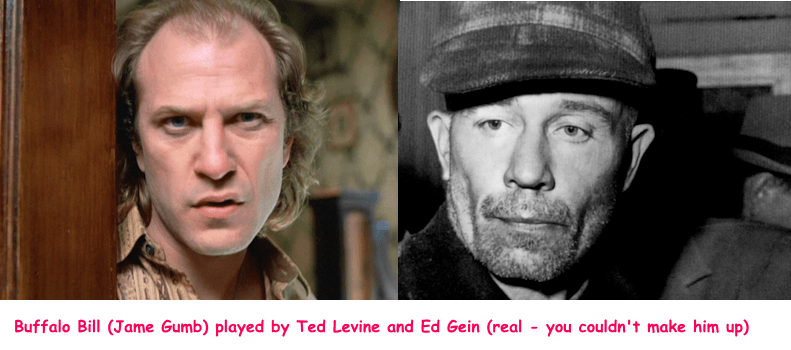
The film is a psychological thriller with Hannibal Lecter, presented as an evil genius, trading insights into the most private neuroses of FBI trainee Clarice Starling (Jodie Foster) in exchange for his profiling of the serial killer, called by the police and media Buffalo Bill, whose epithet is designed to animalise him. Bill is killing and skinning women to make a woman suit. He is pure monster, closer to the gender-challenged Leatherface of The Texas chain saw massacre than the urbane, sophisticated, civilised psychiatrist Lecter, who remains a mystery. Bill and Leatherface are in fact both based on the real-life murderer and grave robber Ed Gein (as was Norman Bates from Psycho), who was very keen on making things out of human bodies, although whether he was a cannibal is still uncertain (and he’s not telling).
Lecter’s jailer, Dr Chilton, comes closest to attempting a diagnosis, saying:

“Oh, he’s a monster. A pure psychopath. So rare to capture one alive”

Starling, asked by a young policeman if Lecter is a vampire, simply replies

“they don’t have a name for what he is”

Maggie Kilgour, who wrote an excellent book on cannibalism as a “metaphor of communication”, wrote that Hannibal is defined by “rhyming logic” – anyone named “Hannibal” must end up a “cannibal”. That is good enough for the viewers – the man is presented as pure evil, but deliciously, he is not a monster in the sense of Leatherface or even Sweeney Todd: we appreciate his style and wit, we even like him in contrast to the other psychopaths we meet in the film: Buffalo Bill, and Multiple Miggs, who ejaculates on Starling on her way out of the asylum, a dastardly act that the chivalrous Lecter abhors, and because of which he chooses to assist her (or perhaps it’s love at first bite).
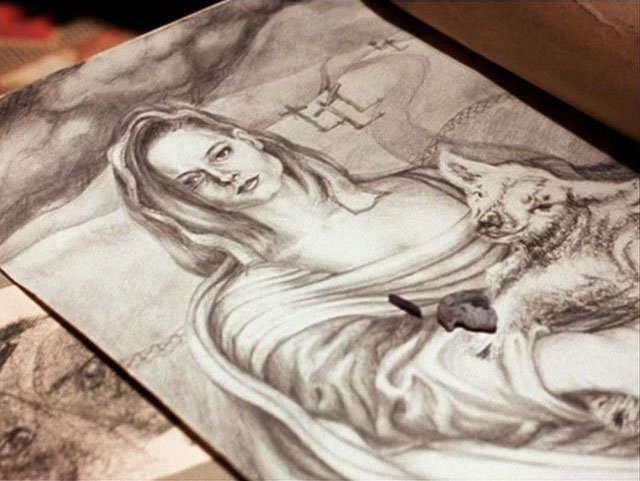
The psychological or legal techniques of modern society are useless against his brilliance and primitive, raw power; Staring is sent to interview him like the lamb of the title being led to slaughter. Buffalo Bill has captured his latest victim, Catherine Martin, daughter of a powerful US Senator, and there are only days or hours before he kills and skins her to make his “woman suit”.

The opening of the film finds Starling running in the woods, small and alone like Red Riding Hood, yet we soon find that she is on an FBI obstacle course in Quantico, running past the motto “hurt, agony, pain – love it”. Starling is not one of the screaming victims that we find in Texas chain saw massacre: Starling is still a victim, though, of chauvinism from her colleagues, mental probing from Lecter and stalking in the dark by Bill, but she is smart, well trained, strong and sassy, standing up to her boss when he uses the chauvinist card: she is the perfect example of the prey woman becoming the avenging hero.

‘Slasher’ films like Texas chain saw massacre routinely pit the redneck monster against the civilised hero. The silence of the lambs turns the ‘slasher’ order on its head: Lecter is the city sophisticate, Starling the West Virginia redneck – he skewers her with the observation “you’re not more than one generation from poor, white trash, are you Agent Starling?” Yet when the psycho in the neighbouring cell splashes her with his semen, Lecter tells her that “discourtesy is unspeakably ugly to me”.
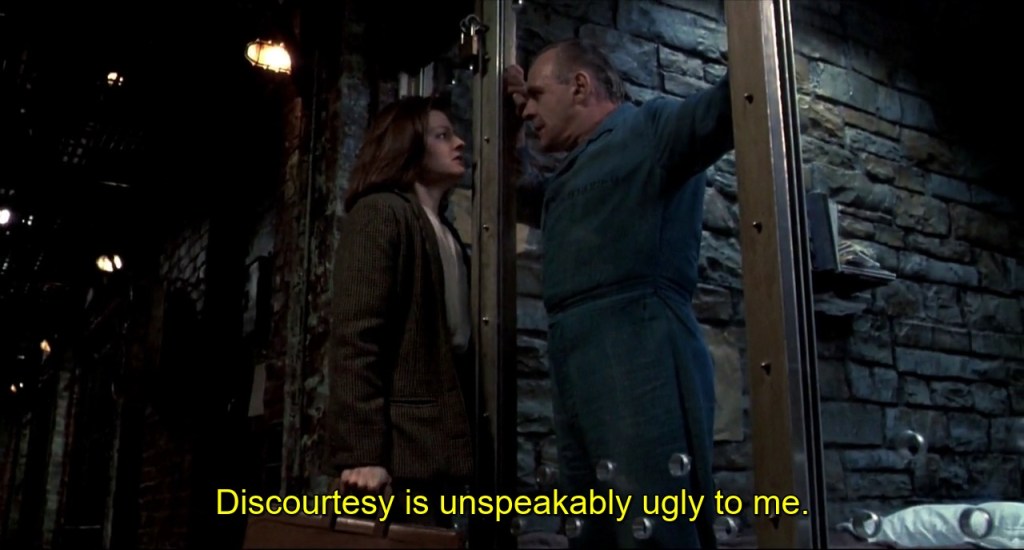
Lecter is a pastiche of classical monsters: Dracula’s hunger for blood (amid exaggerated courtesy), Dr Frankenstein scientific insight, Dr Jekyll’s secret identity; his power to terrify is precisely his amiable, civilised charm: we should be scared of cannibals who wear leather masks and grunt than those who eat us with fava beans and a nice chianti, but we’re not.

Clarice Starling has to overcome not just the mind games of Lecter, who psychoanalyses her through the bars of his cage, but also the political ineptitude of the men around her, in order to blow away the antagonist, psycho-sexual killer Buffalo Bill, who is not a cannibal, at least not in gustatory terms. Bill is a depraved cannibal in the sense that he incorporates human skin into his persona, but it is Hannibal, the deprived cannibal in the asylum, who becomes the protagonist in partnership with the unwilling Clarice.
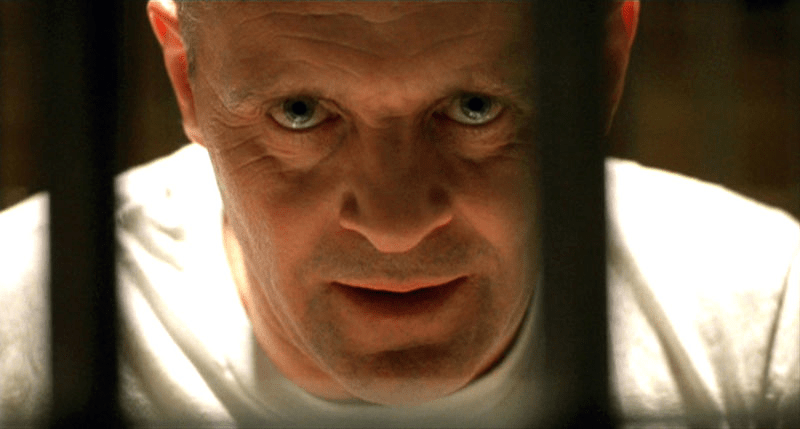
The silence of the lambs trades in close-ups: Starling usually pensive, Bill leering and imagining a valid sexuality, Lecter directly threatening, staring, unblinking, in extreme close up, straight into the audience’s eyes. It is us that he is addressing, analysing, threatening. Under the menace is a keen humour, often rare in the genre. Besides Lecter’s pun about “having an old friend for dinner”, he also reflects on Starling’s offer that, in return for helping catch Bill, he will be allowed to use a beach (under SWAT surveillance of course) where there are terns. Terns – the word suggests to him that he and Starling should have “turns” at sharing information. Starling’s turn will not relate to the case, but to her life, her childhood traumas. Despite her boss’ instruction to tell him nothing personal – “you don’t want Hannibal Lecter inside your head” – she describes her worst memory: the death of her father, a town marshal gunned down while on duty, and her subsequent life on an relative’s ranch, where she found the truth of animal agriculture, being awoken one night by the screaming of the spring lambs as they were slaughtered. She tried to free the lambs, took one and ran, but was caught and sent to an orphanage. Since then, Starling has been struggling with the contradictory messages given to children that harming animals is wrong, but eating them is fine. Lecter’s speculative diagnosis is that she believes that if she saves Catherine, the lambs will stop screaming in her dreams. She has made the lambs subjects, while Bill makes his human victims objects. As Starling tears up under the intense and massively magnified gaze of Hannibal Lecter, she gives a glimpse into the abyss of what Carol Adams calls the “absent referent”, the process that objectifies animals (and women) who are the victims of violence.

Starling’s lambs are not the only part of modern civilisation scrutinised and turned inside out by The silence of the lambs. The social order is very commonly defined in film by showing not examples of it but characters or events that transgress it. The strength of Lecter’s character is his ability not just to offend the social order but to be an extreme example of it: like modern liberal society, he is educated, rational, even enlightened, yet, also like modern society, there is an undercurrent of voracious appetite and extreme violence. Similarly, Starling transgresses social boundaries with her challenge to masculine power structures and her role as the rescuing hero rather than the hero-victim.
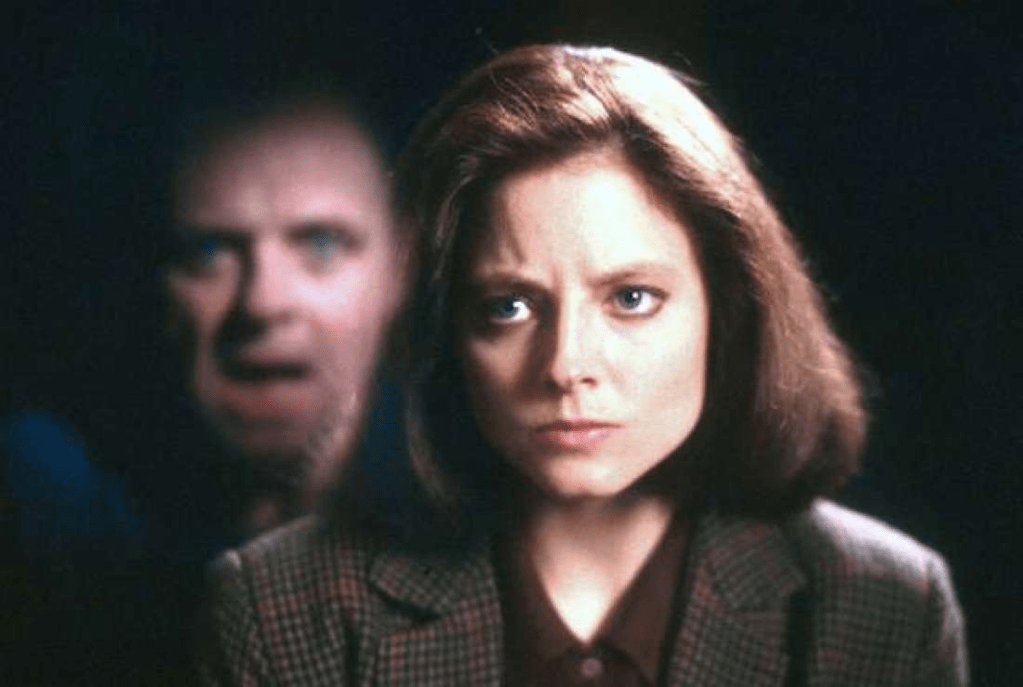
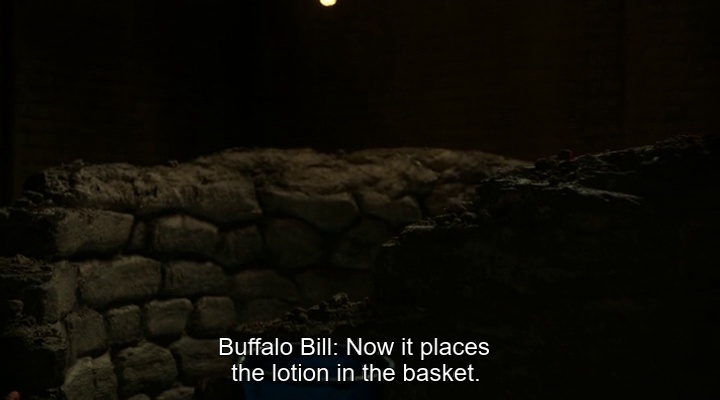
Cary Wolfe believes that the most important discourse in this film is that of species. While cross-gender conflicts are examined through the minor character of Bill and to some extent Starling, and class issues in the clash of the civilised Lecter with the often inept and backward authority figures, at the heart of the film (reflected in its title) is the struggle of Starling to come to terms with the objectification of the innocents – the lambs of her childhood or the women Bill is skinning. Objectification is seen throughout: Bill speaks to Catherine in the third person: “it rubs the lotion on its skin; it does this whenever it’s told”; Lecter speaks of his victims by function: “A census taker once tried to test me. I ate his liver with some fava beans and a nice chianti”.

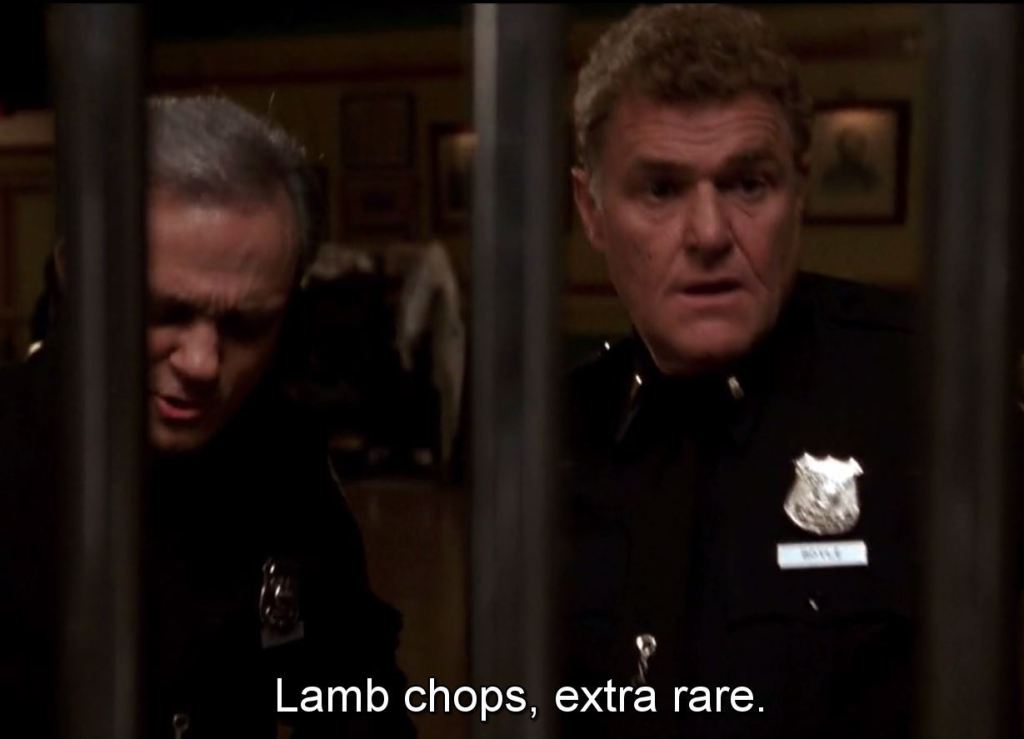
One critic went so far as to say that Hopkin’s brilliance in the role makes Lecter “the cannibal we all want to be”. Lecter does not resist humanist symbology, he takes it to its logical extreme: he orders rare lamb chops, (a reference to Starling’s trauma), in his cell before he slaughters his jailers and escapes, as if to say that he does not eat animals instead of humans: he eats animals, so why not eat humans?
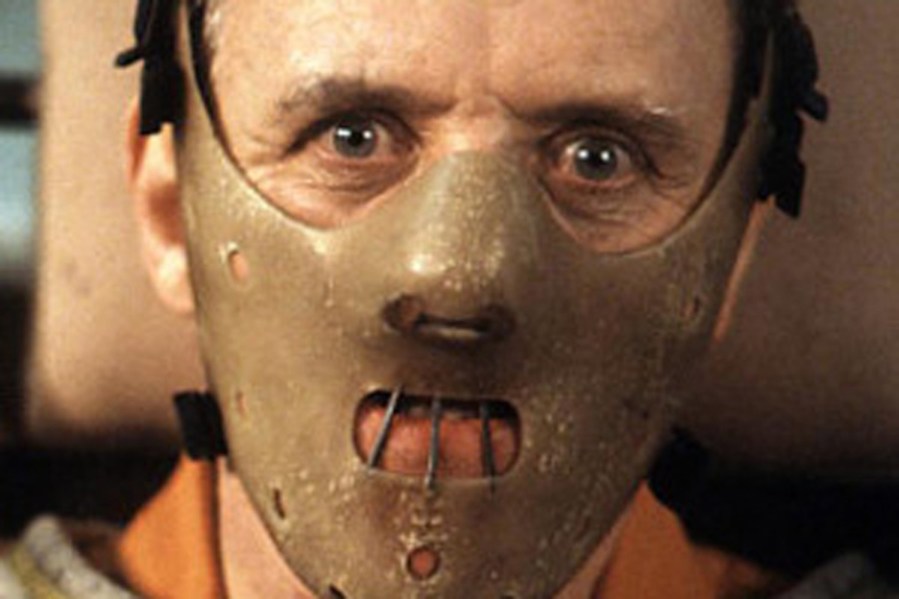
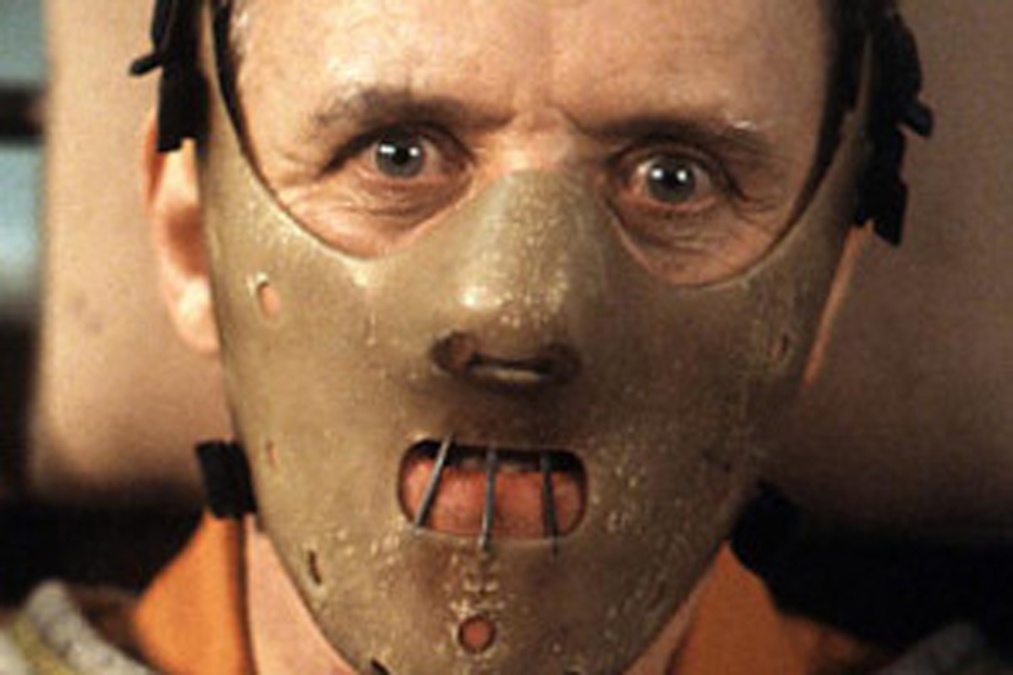
Lecter represents consumerism and carnivorous virility taken to their logical conclusion – uncontrolled, voracious hunger, only controlled by extreme measures. As Maggie Kilgour summarised, the film demonstrates the continuing power of primal appetites: “man-eating is a reality – it is civilisation that is the myth”. The thin veneer of cultural sophistication is just a hockey mask covering a terrifying appetite.
The Silence of Hannibal: CLARICE episode 1 (CBS 2021)

So first the bad news – due to contractual arrangements, Hannibal Lecter does not make an appearance in the new TV series called Clarice. He can’t – the DeLaurentiis company (which produced Bryan Fuller’s Hannibal as well as the movies Manhunter, Hannibal, Red Dragon and Hannibal Rising) has exclusive rights to the characters originating in the novels Red Dragon, Hannibal and Hannibal Rising, and MGM have exclusive rights to The Silence of the Lambs, and own the movie too. Clarice Starling first appeared in Silence of the Lambs, so can be revisited in this series, while Hannibal and Will Graham originated in Red Dragon, so can come to life in Fuller’s brilliant series, but the three of them cannot ever meet. With intellectual property as hot as the characters that came from the Promethean mind of Thomas Harris, sharing it around among production companies is about as likely as two dogs with one bone.

The good news is that Clarice is a damn good show, and Rebecca Breeds, the Aussie actor with the West Virginia accent (it sounded good to me, although I’ve never been to WV) is just right in the role. In the pilot, she manages to convey a complex picture of a young woman who is smart, resourceful and tough, fighting for her place in a man’s world, while still haunted by untreated PTSD from her run-in with Buffalo Bill in the movie.

This is a sequel to Silence of the Lambs, and while there is no appearance from Hannibal (who, after all, was on the run after his gory escape in the movie), there are plenty of references to the film, particularly Buffalo Bill (Jame Gumb), the serial killer whom Clarice killed at the climax of the film.

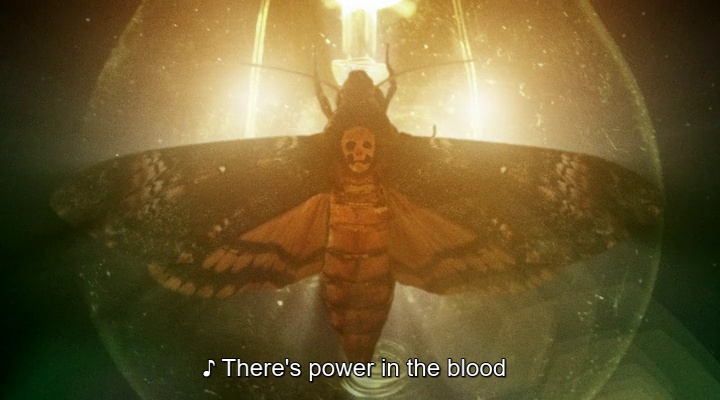
A year after the events of the film, Clarice is waking up at night from nightmares full of violence and deaths-head moths.

She is attending mandatory psychiatric sessions, which she is not happy about, and tries to joke, argue and obfuscate her way out. The therapist says that is

“understandable, given that your last therapist was an inmate in the Baltimore Hospital for the Criminally Insane,”

If you remember Silence of the Lambs, you will recall that the serial killer, Jame Gumb, had captured Catherine Martin, whose mother was a US Senator, and was about to skin her to make a “vest with tits” as Hannibal so elegantly put it. The mother, Ruth Martin (Jayne Atkinson), is now Attorney General of the US, and determined that a new serial killer will not be running wild on her watch.

Ruth Martin drags Clarice out of the Quantico FBI HQ where she has been hiding and doing data entry, and attaches her to the new ViCAP (Violent Crime Apprehension Program) task force. She tells Clarice,

“You saved my little girl. You are a woman with a very public reputation for hunting monsters, Clarice.”

The pilot episode is largely procedural, as was Hannibal when Season one started. Someone is killing women and mutilating them. Is it a crazed serial killer? Well, he is biting them, so that qualifies him for this cannibalism blog, but Clarice notices something odd about the wounds. There’s no intimacy. No frenzy.

 “A true psychopath? We’d still be looking. But a true sociopath – they wouldn’t have left their faces.”

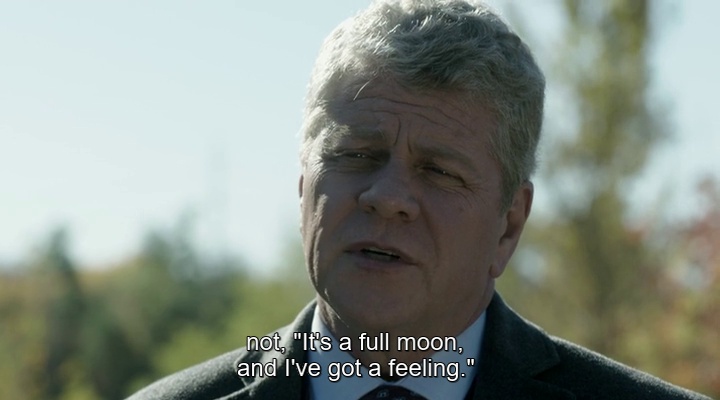
The ongoing antagonist in this is Paul Krendler (Michael Cudlitz from Walking Dead) who barely appeared in the film Silence of the Lambs, although he was an important opponent in the book, and became more important as he destroyed her career in the book and film Hannibal in revenge for her unwillingness to indulge his sexual appetites. In this series, he is a cranky old man, dubious of her talents (he thinks she just got lucky in pursuit of Buffalo Bill) and not willing to let her play hunches.

The FBI grunts play tricks on her, putting lotion on the handles of her desk drawers and telling her

Which of course were Gumb’s instructions to Catherine, using the impersonal pronoun ‘it’ to dehumanise her.

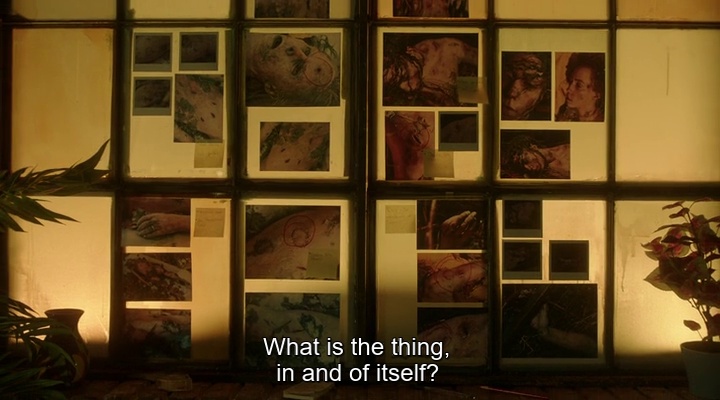
Clarice remembers what Hannibal taught her about the Emperor Marcus Aurelius, with a little prompting from her friend Ardelia (Devyn A. Tyler).

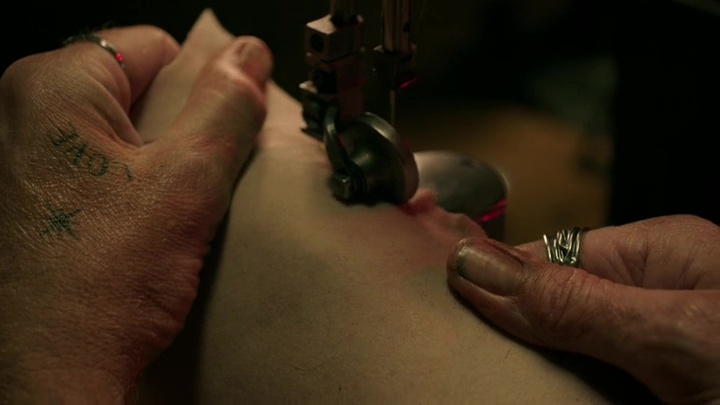
She works out that the wounds are “desperately random”, which is what Hannibal told her about the apparently random dumping of the bodies by Jame Gumb. She realises that the murderer is not a crazy serial killer but is cold, calculating and has a set of targets. The rest of the episode is about her tracking him down, while still haunted by her past. Meanwhile, Catherine Martin is frantic to talk to her; Catherine is now an anorexic recluse, because Gumb only took big girls, whose skin would fit on his frame (but at least she has Gumb’s dog Precious, who I always thought was a nod to Tolkein). Clarice suffers flashbacks and nightmares: Catherine in the oubliette, Jame Gumb sewing a garment of human hide.

The press are obsessed with Clarice, the National Tattler calling her (as in the movie), the “Bride of Frankenstein”.

Krendler wants her to toe the official line and tell the press that this is a crazy guy. But this is Clarice. She’s going to tell it like it is.

Now, I know a lot of Fannibals would have preferred a fourth season of Hannibal to a new series about Clarice (and have said so quite vociferously). But let us not forget what Clarice meant to Hannibal, or at least Hannibal in his twentieth century persona. She was one of the first to interview him successfully in his solitary cell. He found her fascinating and was, let us admit it, somewhat smitten with her, in the books and the films. Remember Hannibal’s words:

“I think it would be quite something to know you in private life.”

So let’s not disparage our opportunity to know her. In the movie Hannibal, he points out that he has travelled half way around the world to watch her run, and wonders why she won’t now let him run, then chops off his own hand rather than harm her.

vlcsnap-00135

Unlike many male authors, Thomas Harris can write female protagonists as real, complex people, and he does it so well; not just Clarice Starling, but also the central characters of his first and most recent novels (both non-Hannibal stories) – Dahlia Iyad in Black Sunday (1975) and the eponymous protagonist of Cari Mora (2019).

Hollywood was not willing to countenance a romance between a law officer and (as they saw it) a psychopathic serial killer. But in the novel, the relationships are far more complex: Hannibal hopes Clarice might provide a position in the world for Mischa, his sister, who was eaten by Nazi collaborators during the war. Clarice suggests an alternative: Mischa can live through him, Hannibal, instead, and “she” and Clarice can be like sisters. Remembering Hannibal’s question to Senator Martin (in Silence of the Lambs), she asks if he was breastfed, and if he ever felt that Mischa had made him give up the breast when she was born. Well, he won’t have to give up this one: she offers him her breast, with a warm drop of Chateau d’Yquem suspended from the nipple. He sucks it, but not as a cannibal; as a child, or as a lover. Freud of course would wonder if there is actually a difference.

Unlike the film, in the book Hannibal and Clarice are presumed live happily ever after; the asylum guard Barney sees them at the Teatro Colon, the opera house in Buenos Aires. They are watching Tamerlane, an opera that starts with an Emperor in chains, and ends with a love duet.

This new series, Clarice, is what happens between Hannibal`s escape at the end of Silence of the Lambs and their renewed encounters in Hannibal. It’s important history, one which those of us who loved the books and movies need to explore, even if we loved the Hannibal TV series too.

Clarice is on CBS (where you can watch the first episode if you are in the USA or have a VPN) and streaming on Stan in Australia.

A complete listing of my Hannibal film and TV blogs is at https://thecannibalguy.com/2020/07/08/hannibal-film-and-tv-blogs/

The First and Last Hannibal movie: HANNIBAL RISING (Webber, 2007)

Well, it’s the first Hannibal movie, because it starts with him as a child, and it’s chronologically the last one released. Unless #BryanFuller makes a movie, instead of Season 4 of the TV show. Or Sir Anthony Hopkins comes back as an octogenarian Hannibal, with his wife (Clarice – Jodie Foster or Julianne Moore would both be fine) running the meat business. Martha De Laurentiis @neoprod – I have a script treatment ready!

vlcsnap-00002.jpg

This is the Hannibal film everyone loves to hate. We are treated to a sweet young Hannibal (Aaran Thomas) having to watch his beloved little sister Mischa being eaten by Nazi collaborators and deserters, and then discovering that he himself unwittingly joined the feast.

vlcsnap-00003.jpg

From this, we deduce, came his hunger for human flesh. Like the desperate young crash survivors carving meat from the corpses of their dead teammates in Alive, his subsequent actions may not be acceptable, but become at least partially understandable. Psychopathy founded in trauma.
Hannibal of course would have hated this – remember that he told Clarice in Silence of the Lambs

“You can’t reduce me to a set of influences. You’ve given up good and evil for behaviourism… Look at me, Officer Starling. Can you stand to say I’m evil?”

Or as the 21st century Hannibal said:

when it comes to nature versus nurture I choose neither. We are built from a DNA blueprint and born into a world of scenario and circumstance we don’t control.

There are two streams of thought on the subject of evil: one, from Rousseau to Arendt, is adamant that morality requires an explanation for evil, while an alternative stream from Voltaire to Jean Améry, insists that it be left unaccountable. Clarice Starling and Dino De Laurentiis would seem to favour the side of Rousseau, while Harris and Hannibal, and many critics of the film, seem more aligned with Voltaire. Harris apparently faced the awful choice of accepting large sums of money to divulge the origin story, or else see it betrayed by another writer.

The opening image of a film, they tell you in film studies, sets the mood and the theme. This one opens with a spider-web.

vlcsnap-00001.jpg

People are afraid of spiders, for reasons that I have never quite understood. Beware, this one seems to be saying, and we hear childish Hannibal in the background, telling Mischa to run and hide! But it’s just a game. Until the Nazis appear, with their Hiwis, or Lithuanian collaborators, led by the irredeemably despicable Grutas (Rhys Ifans), bandits who are all too willing to assist the SS, for their own profit.

vlcsnap-00011.jpg

Hannibal’s parents are killed, and the Hiwis take over the lodge, desperate for food, and finding none.

vlcsnap-00014.jpg

Except for the children.

vlcsnap-00013.jpg

We do not witness the cannibal acts then, but in nightmare flashbacks eight years later. Hannibal (Gaspard Ulliel) is now a teenager, still mute from PTSD, in an orphanage which uses the former Lecter Castle. He is accused of not honouring “the human pecking order”

vlcsnap-00017.jpg

Yes, he hates discourtesy. He won’t swallow bullying. Yet.

He escapes the orphanage, crosses Lithuania, Poland, East Germany (hops over the Wall, easy as anything) and arrives in his uncle’s home in Paris. Uncle is dead, and he moves in with his beautiful young Japanese aunt, Lady Murasaki (Gong Li, who is Chinese, but, ah well). Will there be romance as she helps him recover his voice?

vlcsnap-00018.jpg

She teaches him about the Samurai code, in front of the armour of her ancestors, strangely evocative of a later Hannibal.

vlcsnap-00021.jpgvlcsnap-00006.jpg

She teaches him the art of fighting. And the treatment of enemies.

vlcsnap-00020.jpg

A butcher in the marketplace insults Murasaki, and Hannibal is enraged. The butcher (a Nazi collaborator) becomes Hannibal’s first kill, and then his first human meat, after the chef explains the delights of eating cheeks.

vlcsnap-00025.jpg

vlcsnap-00026.jpg

Hannibal presents Murasaki with the butcher’s head. When she objects that he did not need to do that for her, he replies

vlcsnap-00028.jpg

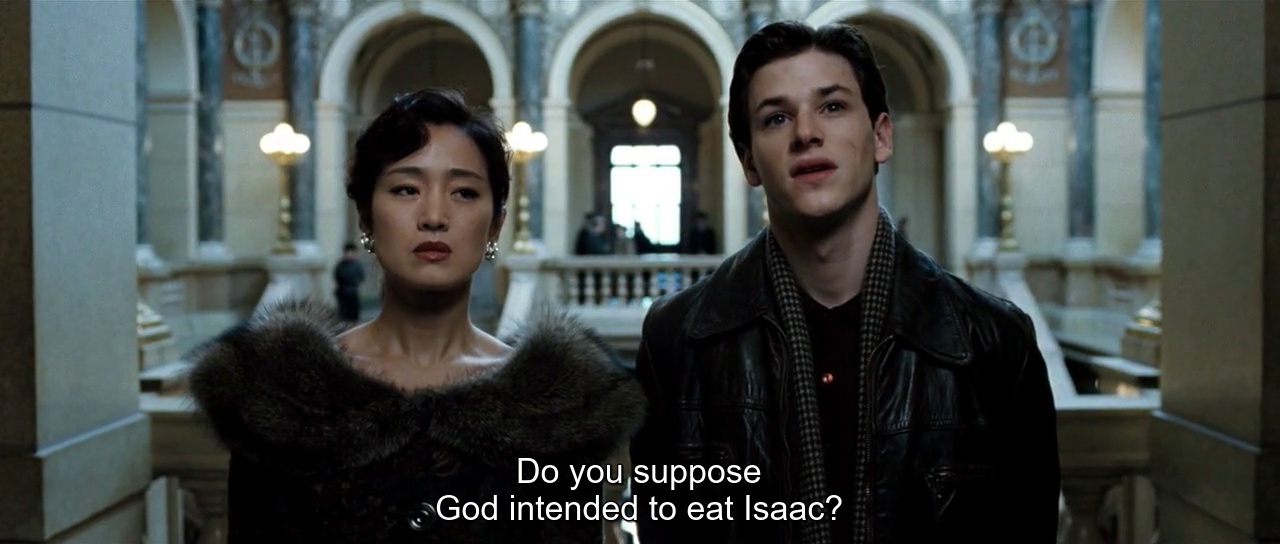
Discourtesy is unspeakably ugly to Hannibal. Ah, so young, and already eating the rude. And already seeing cannibalism everywhere – looking at a fresco of Abraham on the mount, about to sacrifice his son, he asks

vlcsnap-00032.jpg

So much about older Hannibal is revealed – the police inspector (Dominic West from The Wire) gives him a lie detector test – but he responds to nothing.

vlcsnap-00030.jpg

Hannibal is also brilliant – the youngest student ever admitted into medical school. But he is still obsessed with Mischa and the men who took her from him. He can draw their faces from memory, but cannot remember their names. A dose of sodium thiopental, truth serum, with the Goldberg Variations (another Silence of the Lambs reference) playing in the background, gives him his mental break. Or maybe breaks something in him, depending on your propensity for behaviourism. He remembers that there was a bag of dog-tags left in the lodge, returns to the Soviet Union (no problem crossing the Iron Curtain for Hannibal apparently) and finds all the names. And Mischa’s teddy bear, and her bones. And one of the Hiwis, whom he dispatches, much as Will later dreams of dispatching Hannibal.

vlcsnap-00039.jpg

Pic-00010.jpg

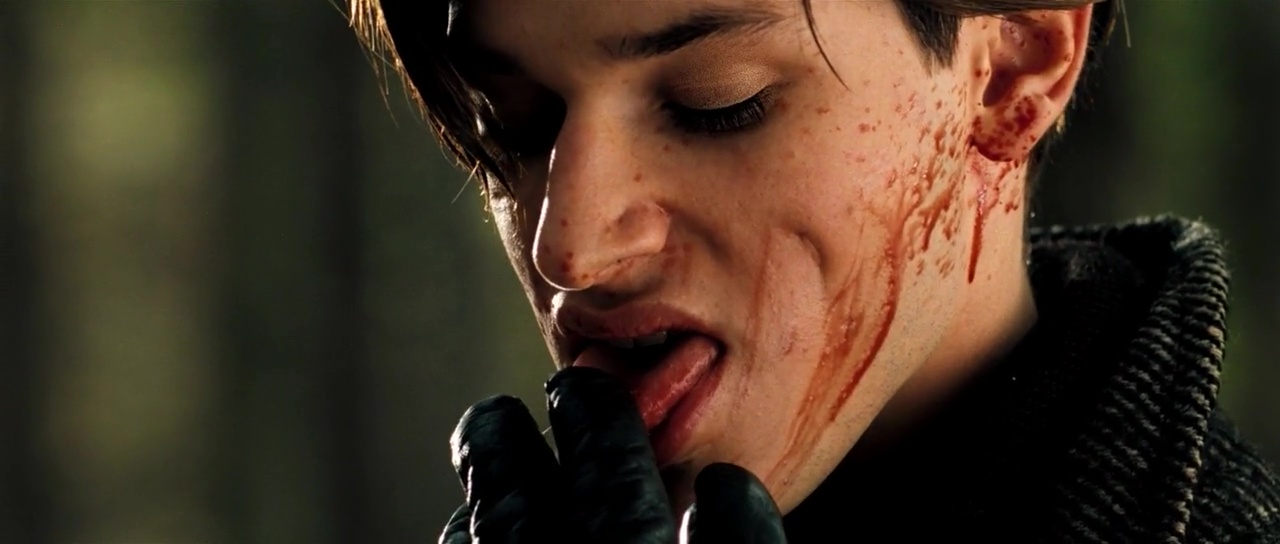
He licks the blood off his glove, with some gusto, and prepares the cheeks for a fresh-air feast.

vlcsnap-00040.jpg

vlcsnap-00043.jpg

Hannibal spends the rest of the movie tracking down the rest of the gang, who are now into respectable industries like human trafficking and drowning ortolans for lunch.

Along the way, there are interesting discussions of our topic – cannibalism. One of the gang tell Hannibal, as he is about to be killed:

vlcsnap-00044.jpg

Survival cannibalism. Common in the days of sail, and in various famines. But the Inspector knows what happened, back in the USSR.

vlcsnap-00046.jpg

vlcsnap-00047.jpg

Cannibalism happened on the Eastern Front, says the Inspector. This is not news to Hannibal. He is determined to find the gang leader, Grutas. The Inspector tells him (us) what a lovely guy Grutas is. He sawed off the head of the Rabbi at Kaunas.

vlcsnap-00048.jpg

He walked away from his war crime trial because a witness got acid poured down her throat. So really, whatever Hannibal does, well, it’s OK with us. But the Inspector has decided Hannibal is insane.

vlcsnap-00049.jpg

vlcsnap-00050.jpg

vlcsnap-00051.jpg

Murasaki tries to persuade him to give the gang up to the police. She can be quite persuasive.

vlcsnap-00052.jpg

But Hannibal cannot make that promise. He has already promised Mischa – revenge.

At his first encounter with the villain, Grutas, he has an interesting outlook on cannibalism too.

vlcsnap-00054.jpg

vlcsnap-00053.jpg

There you have it. Cannibalism is about love.

vlcsnap-00057.jpg

Then the big reveal. Lady Murasaki is a captured by Grutas, Hannibal comes to the rescue and has Grutas at his mercy. Mercy is not a word Hannibal uses much, and when Murasaki asks him to stop, he says

vlcsnap-00058.jpg

Grutas replies:

So did you. You ate her too. So why don’t you kill yourself? Pot Watcher fed her to you in a broth. You have to kill everyone who knows it, don’t you? You ate her, half conscious…

vlcsnap-00067.jpg

Hannibal snaps, and carves M for Mischa on Grutas’ chest.

vlcsnap-00069.jpg

vlcsnap-00070.jpg

Murasaki gives up, despite Hannibal’s protestations of love.

vlcsnap-00072.jpg

Instead of following her, Hannibal stops for a quick snack on Grutas’ cheeks.

vlcsnap-00076.jpg

Trivia time: Hannibal is not only a brilliant doctor, musician and cook, but he is also apparently ambidextrous. Check him out writing left-handed in this movie, whereas he is right-handed in all the others, and in the TV series.

vlcsnap-00031.jpg

The film got a measly 16% on Rotten Tomatoes. Most criticism centres on the fact that it is not particularly scary, but that rather misses the point, IMHO. The question the film asks is: how do people overcome the social conditioning of their childhoods to become what they are – killers, cannibals, rapists, politicians? It may be genetic, as Hannibal tells Clarice: “nothing happened. I happened”. Or maybe the childhood itself offers a clue to how, as Clarice asked “you got that way”. The film offers a view of the latter – a gentle, loving little boy with, clearly, a brilliant mind, but so traumatised that he can think of nothing but revenge. His target – rude people and bullies. No one minds seeing them get their comeuppance. But you take a bite out of their cheeks, and suddenly everyone is convinced you’re a monster.

But here’s why I like this film:

  • The book and the screenplay are both written by the brilliant Thomas Harris, who of course created Hannibal. This is the only film in the series for which Harris wrote the screenplay
  • The Director is Peter Webber (Girl with a Pearl Earring)
  • There are two Hannibals in this movie (a 100% increase on all the other movies)! One at age eight, and the other a young man
  • It only takes Hannibal’s story up to his arrival in North America, leaving a nice narrative gap between that and his eventual capture and captivity by Will Graham in Red Dragon, which was perfectly filled by Bryan Fuller’s Hannibal (even if time shifted by a few decades)
  • It shows the humanity of Hannibal, his devotion to his sister, and his determination to hunt down her killers. If you don’t want your Hannibal to show humanity, then this can be a problem
  • It was a prequel. Every great character gets a prequel – Darth Vader, Indiana Jones, Vito Corleone, Mr Spock, Zorro, Batman – even Jesus has scored a few. Why not Hannibal?

Poster.jpg

“An act of dominance: HANNIBAL Season 2 Episode 6 “Futamono” (Fuller, 2014)

Why do cannibals eat people? This episode looks at that question, and demonstrates that they do it for the same reason that anyone eats anything. Appetite and power. Hunger and dominance. They want to, and they can. Isn’t that why people eat other animals?

Hannibal had a near death experience in the previous episode and, as this one starts, he is playing harpsichord. As he explains to Alana Bloom, who is also a psychiatrist and into this stuff:

vlcsnap-00001.jpg

He is growing. Becoming, as he hopes Will is growing and becoming – becoming a killer and cannibal like him.

vlcsnap-00059.jpg

Well, Will is already a cannibal – as he says to Jack Crawford:

vlcsnap-00002.jpg

vlcsnap-00003.jpg

Look, people as a rule don’t like cannibals much. Will tells Jack that he (Will) has “contempt for the Ripper, contempt for what he does”. What does he do? Jack asks.  In a piece of dialogue straight out of the interview between Clarice and Hannibal in Silence of the Lambs, Will tells us:

vlcsnap-00006.jpg

vlcsnap-00007.jpg

If Will was Hannibal, he’d quote Marcus Aurelius. But this is close enough. Jack points out that the killer harvests organs. That’s what he does, sure, but why? Why does he need to do it?

vlcsnap-00010.jpg

vlcsnap-00013.jpg

vlcsnap-00014.jpg

Will is quick to point out that Hannibal is not like Hobbs, who honoured the animals (human and other) that he killed and ate. He uses the word “sounder” (a collective noun for hogs) deliberately.

vlcsnap-00017.jpg

vlcsnap-00020.jpg

Well, Hannibal is certainly thinking gastronomically. He is cutting up and skewering the pieces of a heart – human, probably. Alana is helping him, analysing him, working on a definition of humanity as they prepare the heart:

vlcsnap-00022.jpg

…and the things that make us human. Good and bad, love and ache.

Hannibal has not recovered from the murder attempt on himself.

vlcsnap-00026.jpg

vlcsnap-00027.jpg

And when Hannibal goes shopping, it’s not random. He has a method. A list of rude people, and a wonderful, hand-written recipe card base.

vlcsnap-00029.jpg

vlcsnap-00030.jpg

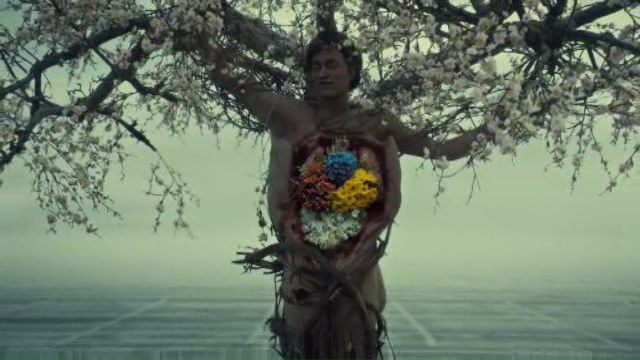
The latest victim has been grafted onto a tree in a carpark, his organs replaced with poisonous flowers. All except for his lungs.

vlcsnap-00031.jpg

Jack realises why: This is a judgement.

vlcsnap-00032.jpg

vlcsnap-00033.jpg

Jack wants to tell Hannibal about the latest case, but he won’t listen.

vlcsnap-00041.jpg

vlcsnap-00043.jpg

How is he going to do that?

vlcsnap-00044.jpg

Well, Will told Jack that if people were being killed, then Hannibal was planning a dinner party. Is this all still too subtle for Jack?

vlcsnap-00052.jpg

But now, Will is not alone. Abel Gideon knows about Hannibal, and so does Chilton, who records all their conversations. Jack asks Chilton if he knows what he is accusing Hannibal of? Oh yes.

vlcsnap-00050.jpg

vlcsnap-00049.jpg

Chilton is a believer, now that his life is at stake. He analyses Hannibal as psychopath:

Jack, he fits the profile. He is attracted to medical and psychological fields because they offer power over man. Cannibalism –

vlcsnap-00053.jpg

Hannibal eats people because he wants to, and because he can. He shows his dominance, and he dispenses justice. The dude grafted into a tree had, Jack observes, “paved paradise and put up a parking lot.” It had been an important nesting habitat for endangered songbirds.

Hannibal is picking victims for his dinner party. The recipes and victims are chosen and prepared carefully, to a Strauss “love song waltz”.

This slideshow requires JavaScript.

Hannibal’s party is splendid, with liveried footmen serving the dishes he planned during the sequences above. Chilton and Jack watch the well-heeled, well-fed guests tuck in to the fare.

vlcsnap-00083.jpg

vlcsnap-00086.jpg

Jack rudely takes a plate of delicacies home with him. Or back to the lab.

vlcsnap-00087.jpg

But Hannibal is one step ahead – the food was made of animals other than humans – goose, pig, cow.

vlcsnap-00116.jpg

But Hannibal has new dinner plans. He drugs Alana, who becomes his alibi as he goes to the asylum and kidnaps Abel Gideon, the man who attempted to steal his identity by claiming to be the Chesapeake Ripper.

vlcsnap-00092.jpg

Gideon, now crippled by the asylum guards, will be both guest of honour and main course: Hannibal has amputated his “useless” leg and prepared it as Roti de cuisse: clay-roasted thigh with canoe-cut marrowbone.

vlcsnap-00106.jpg

vlcsnap-00107.jpg

vlcsnap-00109.jpg

Gideon is a little unsure of the etiquette of the guest / meat.

vlcsnap-00112.jpg

Then, there are more tributes to the earlier books/movies:

Silence of the Lambs

vlcsnap-00095.jpg

vlcsnap-00096.jpg

And Hannibal Rising

vlcsnap-00098.jpg

And Silence again – the girl in the pit.

vlcsnap-00118.jpg

Hannibal has finished his composition. This was his design.

vlcsnap-00119.jpg