“You draw the line there?”: DOLORES ROACH episodes 7 & 8

The climax. The denouement. The final two episodes of this quite brilliant podcast that became a Broadway show that became a television series about an untrue true crime, and includes podcasts and Broadway shows. If you need to catch up on the earlier episodes, I would suggest watching them, but if you can’t wait, here are my earlier blogs.

Episode 1

Episode 2 & 3

Episode 4

Episode 5

Episode 6

And here is the very brief synopsis.

  • In episode 1, Dolores has just been released from prison after 16 years – she took the fall for her boyfriend, who has since disappeared. She heads back to Washington Heights New York. but it’s all gentrified now, except for Empanada Loca, the shop of her old friend Luis, who offers her a room and sets her up as a masseuse, a skill she learnt in jail.
  • In episodes 2 and 3, Dolores kills the landlord who has been harassing Luis for his overdue rent, which he can’t afford because the neighbourhood is now fancy, and people don’t buy empanadas much. Luis creates a new empanada, MUY LOCO. It is hugely successful, because it contains, yep, human flesh, in this case, the landlord, Mr Pearlman, whose son, Jonah, appears in the shop at the end of episode 3, with two cops behind him.
  • In episode 4, Dolores is shocked to find what Luis has done with the body of the landlord she murdered, and disgusted by the secret contents of the muy loco empanadas—Mr Pearlman. She is particularly horrified when Luis offers Jonah an empanada to try, a muy loco, which she knows is a “mouthful of daddy”. Meanwhile, the local drug dealer, Marcie, has pissed off Dolores, and now she is also in Luis’ fridge, and bits of her are now in the empanadas.
  • In episode 5, Dolores hires a private eye called Ruthie, played by Cyndi Lauper, to trace her ex, who cheated on her and let her take the fall in a drug bust. Ruthie’s motto (or perhaps mission statement) is I NEVER DON’T FIND THEM. But the last thing Dolores wants is for Ruthie to find Mr Pearlman.
  • In episode 6, we see cannibalism as a business. Luis has been clear-eyed about this all along – he gets rid of the annoying landlord, he thoroughly destroys the evidence (in customers’ stomachs) and he makes money from the meat, which is apparently delicious and hugely popular, while saving money by not buying the flesh of other animals from the food-services man, Jeremiah, the only sympathetic character in the story so far.

Not a lot of human flesh being eaten in these final two episodes, because everything is turning to shit, largely due to the impulsive plans of Luis, and the tendency of Dolores to snap the neck of anyone who annoys her. Police are looking for the drug dealer Dolores killed back in episode 4, and threatening to call in the DEA. Luis is still chopping up the bodies of Dolores’ victims to fill his empanadas, but he doesn’t want anyone to find the marijuana he is growing. THAT would be incriminating. Dolores points out that his fridge and apartment are full of chopped up bodies, and asks him the question that defines all ethical discussions.
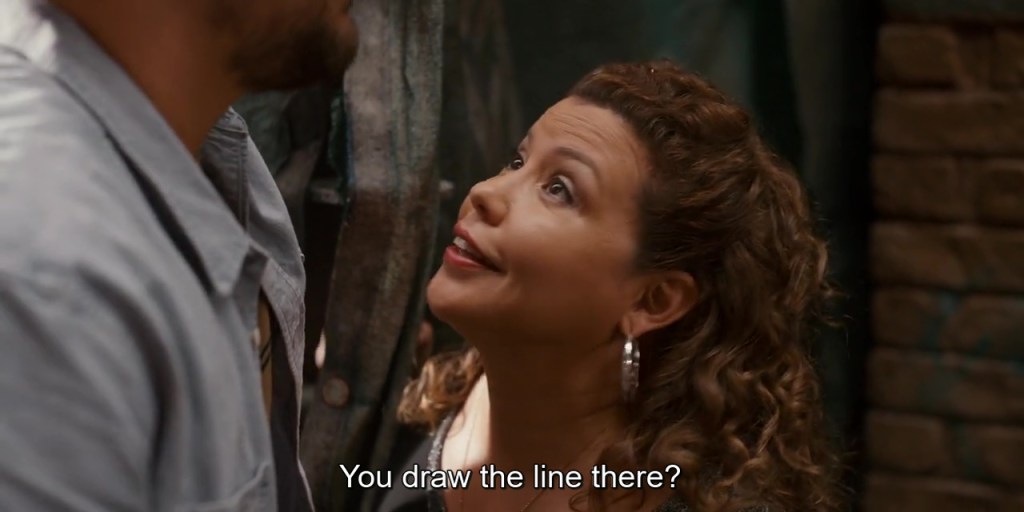
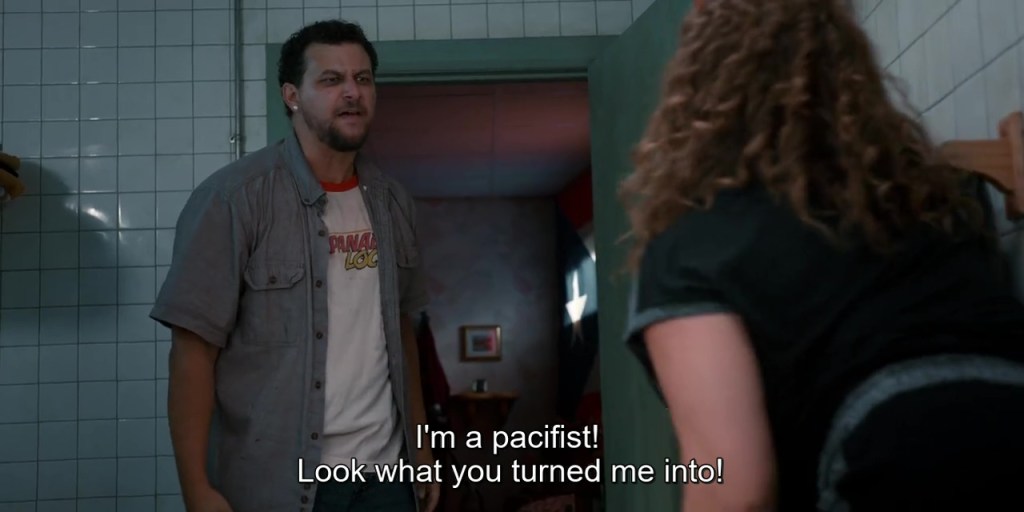
 She’s much more upset about the cannibalism than the increasing number of corpses she is leaving all over the shop. Odd that. Luis sees meat as his business, and Dolores’ steady body count as his (very reasonably priced) supplier. He’s not too fussed about all the killing, as long as he doesn’t have to do it – like customers in a butcher shop. When he finally kills a man, he is upset: “Look what you made me do!”
Luis cracks some of the best jokes in this show, in the middle of the street (much to Dolores’ fury) about the “fat fuck” she killed last episode, and how he is going to use the body fat in his pastry.

And some of the worst.
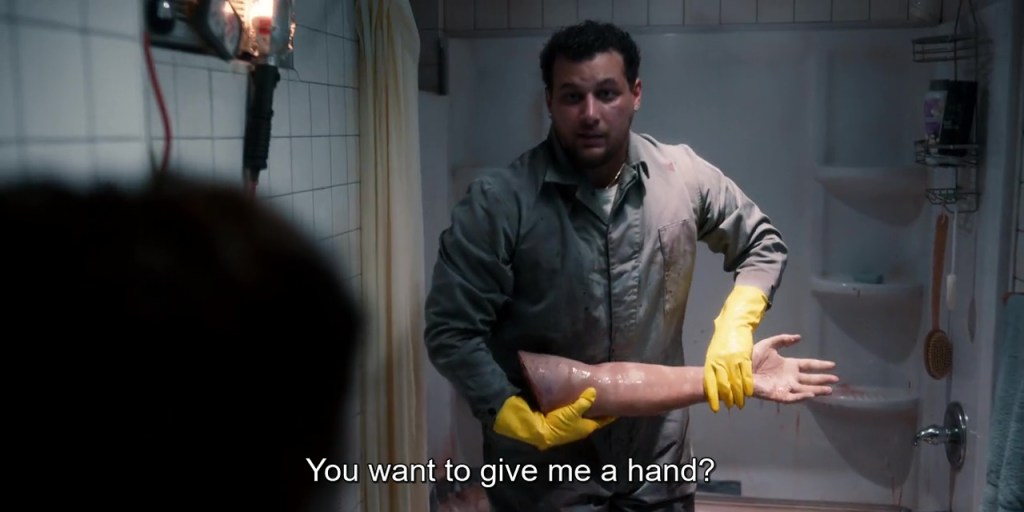
Lots of interesting Freudian things going on here – in earlier episodes, they discussed the difference between edible and Oedipal, and then there’s the whole thing with Luis only wanting to give Dolores cunnilingus, not penetrative sex, even though she has her period. She considers that eating her menstrual blood makes him a cannibal, even though he has been snacking on human empanadas all through the show, so it shouldn’t really be a surprise.

And his pet name is Mami. It’s apparently the Spanish equivalent of “baby” or “darling”, but is also used for, yep, mother. Freud said the two primary taboos are incest and cannibalism, and Luis definitely has an edible complex.

We find out why Luis doesn’t want sex – he fell in love with his father’s girlfriend when he was 12, had sex with her (so now we have another taboo covered) and then tried to castrate himself in punishment. He couldn’t cut through his penis (Meiwes and Brandes found it was much harder than you might think) and poured hot oil on the wound, leaving him horribly disfigured. Yes, Dr Freud, the threat of castration can be as big a motivation for mental illness as you thought.

Dolores just thinks she is a monster. But one of the fascinating things about cannibalism is that unlike other horror movie tropes, they are not supernatural or even particularly superhuman. And they really exist.

“I’m a monster. Worse, I’m real.”

Luis ends up “deep fried, like everybody else” in one of the most dramatic scenes, and Dolores escapes:

She goes looking for the showrunner of the play, a nice piece of postmodern complication as he clearly represents the creator of the show we are watching, Aaron Mark.

He is accused of humanising a serial killer, but hey, Dolores is very human, just like Macbeth and Oedipus and every tragic protagonist in literature. She’s not even a cannibal; in the whole eight episodes, we have not even seen her eat a human empanada! She’s just a misunderstood serial killer.

As she says, you have to draw a line somewhere.

She forces the showrunner to take her to a house where, he says, someone knows the whereabouts of the man who betrayed her and left her to rot in jail. When the door opens, she roars with laughter, and then pounces, but at whom? All we know is that, like Georgina in The Cook, The Thief, she is directing her invective at us, the audience! We may not know where her ex is living. But we do know that cannibalism starts at home.


Deep tissue cannibalism: THE HORROR OF DELORES ROACH Episode 1 (Aaron Mark, 2023)

This is not only a fabulous story, but possesses a proud heritage in the field of Cannibal Studies, and is not afraid to flaunt it. Delores Roach is a young woman in a basement in Washington Heights Manhattan, who gives massages for a living, occasionally killing her clients and delivering their bodies to Luis, who runs the struggling empanada store above, to use as meat. Yes, it is unapologetically the offspring of the legend of Sweeney Todd, the “Demon Barber of Fleet Street”, who killed his customers instead of shaving them and then dropped them through a trapdoor to his colleague and perhaps lover, Mrs Lovett, who turned them into delicious meat pies. There is some controversy over whether or not Sweeney was a real person who was publicly hanged outside Newgate Prison in 1802 or just an urban legend of early capitalism. In any case, Sweeney appeared in a number of movies; in 1936 he was just plumb crazy, while in 2007 Tim Burton made him an honest man wronged by a corrupt power establishment. Burton’s film is based on a Sondheim musical that played interminably on Broadway and around the world.

In this version, Delores (Justina Machado) turns everything upside down; it’s Sweeney through the looking glass. We’re in New York instead of London, with a female serial killer instead of a male, and a male pastry chef instead of a female. Delores is downstairs killing people for Luis who is upstairs cooking them, again turning the Sweeney legend upside down. Like Sweeney, at least in the Tim Burton musical version of the story, Delores has returned from a long and unjust term of incarceration.

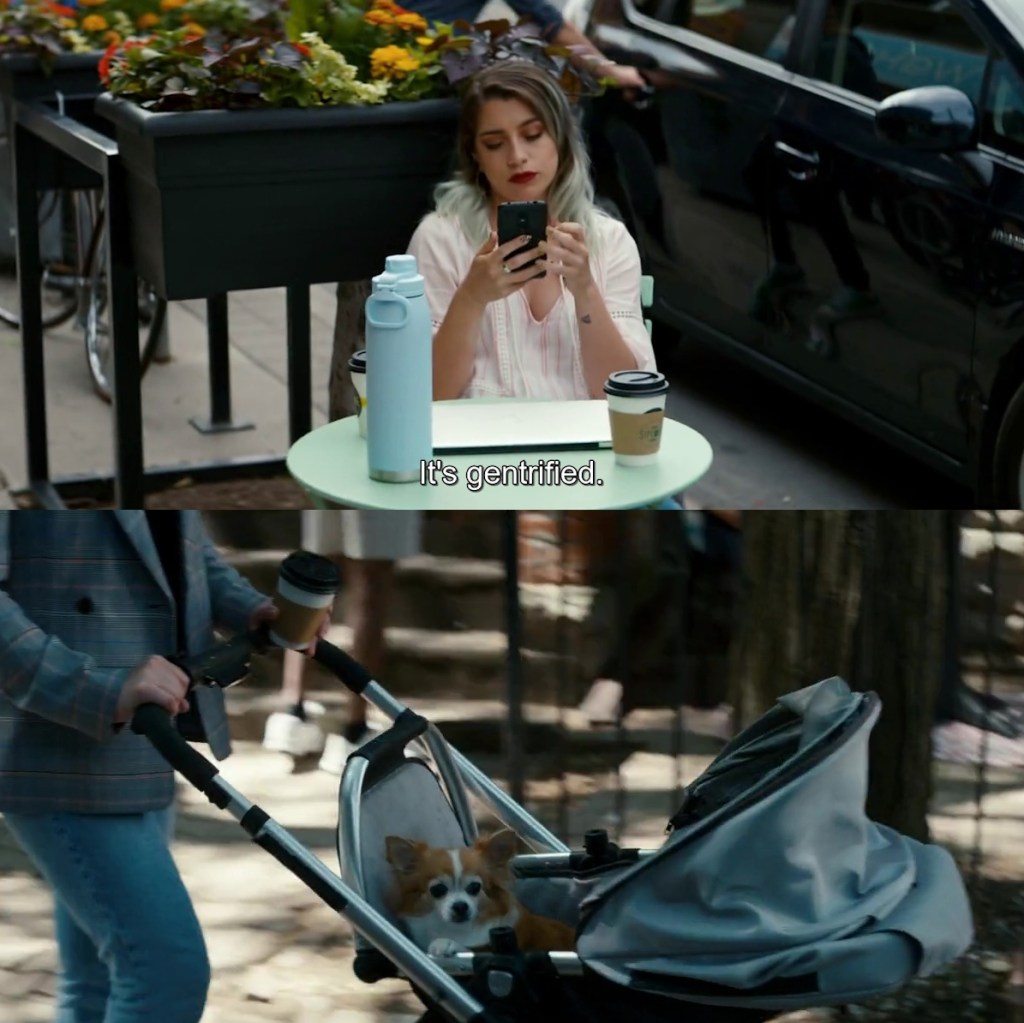
She finds her shabby neighbourhood, Washington Heights, gentrified after 16 years in the slammer, to the extent that she doesn’t even recognize any of the shops. A lot of the reviews seem to focus on gentrification as the main crime in this story.

Except for her favourite fast food store, Empanada Loca, run by Luis (Alejandro Hernandez), the son of the man who used to make the empanadas. He has a soft spot for Delores, who used to pay him in cash and spliffs when he delivered her lunches. Luis offers her accommodation, for old time’s sake, and maybe the odd massage.

There are plenty of stories based on butchers serving human meat to unwitting customers, turning them into innocent cannibals. Among them are Hitchcock’s Speciality of the House, Mielche’s The Butchers, Yau’s The Untold Story, Jensen’s The Green Butchers, Stjernswärd’s The Farm and Eboué’s Some Like it Rare. And of course our old friend Hannibal, who tells his guests “Nothing here is vegetarian”.

Burton’s Sweeney Todd was based on a Broadway musical, but Delores is a generation later, and so now her Broadway show is based on a more contemporary form of popular culture, the TRUE CRIME podcast.

Of course, it’s not true, but in the postmodern age, a true crime podcast needs a true crime, which is also confected for our narrative pleasure.

The podcast becomes a Broadway play, with the actor Jessica Pimentel (Orange is the New Black) playing Flora who is playing Delores in the play (stay with me here). Her performance is a triumph; in her final soliloquy she is covered in blood and holding a human heart.

The performance of the play, and the episode we are watching, both end with a song: Stanley Holloway’s “Sweeney Todd the Barber”:

“Sweeney Todd the barber,
by gob he were better than the play
Sweeney Todd the barber,

I’ll polish them off he used to say
and many’s  the poor young orphan lad
had the first square meal he ever had
a hot meat pie made out of his dad
from Sweeney Todd the barber”

For those of us who have been waiting for this series, or those who just saw the advance publicity, we are now in the omniscient position of knowing what is going to happen. We have seen the newspaper headline of the “real” murder and the review of the “real” true crime podcast, and seen the full house audience cheering the performance. In case we aren’t sure, a couple of friends pour drinks in Flora’s dressing room, chatting about the play and its reflection in the “real” world.

“…the café in Taipei serving human flesh dumplings?”
“Yes, yes, yes, yes and the human bone marrow in that bistro in Paris!”

Then the “real” Delores appears in the dressing room after the friends leave. No, not to murder Flora for impersonating her, but to tell her the true story.

“I’m gonna tell you shit you could never un-know.”

So now, we have a dramatisation of a fake true crime podcast about an actual crime that doesn’t exist, and the dramatisation is being applauded for creating a wave of actual cannibalism events (that also didn’t happen). They concern a female serial killer who is based on a male serial killer who also probably didn’t exist. An actor playing the (unreal) serial killer is telling her story to the actor playing the actor who is playing that serial killer. It plays (sorry) with the mind.

So does cannibalism. Except for a few rare cases where the cannibal is prepared to admit all his or her activities, such as Albert Fish, Jeffrey Dahmer and Issei Sagawa (who laid out the whole project in a manga), cannibalism narratives are very difficult to nail down. Some like Ottis Toole over-confess, leading to speculation that they are making it all up, helped by police who want to clear the cold case log. Others deny everything. And some just disappear and are never found, like Jack the Ripper. Cases of cannibalism are so sensationalised that the reports of the popular press are dubious in their accuracy.

But what we do know is that cannibalism is real, and is one of the primal drives among every type of animal from comb jellies to humans. Freud and Abrahams called the first six months of an infant’s life “the cannibalistic stage”. We all have a cannibal inside; it just comes out more readily for some people than others.

The series is a Blumhouse production on Prime Video and is so good that I am spreading this blog over all the episodes. Among the many great names to appear in future will be Cyndi Lauper as a detective.

Cannibals just wanna have fun.

Is “true crime” really “true”? INDIAN PREDATOR: DIARY OF A SERIAL KILLER (Netflix, September 2022)

The world is so full of misinformation, disinformation and straight-out lies that it is not surprising that audiences crave some truth, and podcasts and documentaries investigating “true crimes” have become enormously popular.

The first series of Indian Predator, “The Butcher of Delhi” was screened earlier this year, and this new one, “Diary of a Serial Killer” involves a confessed cannibal, so of course The Cannibal Guy had to take a look. But did he kill all those people, and even if he did, did he also eat their brains? Truth is often the first victim of cannibalism.

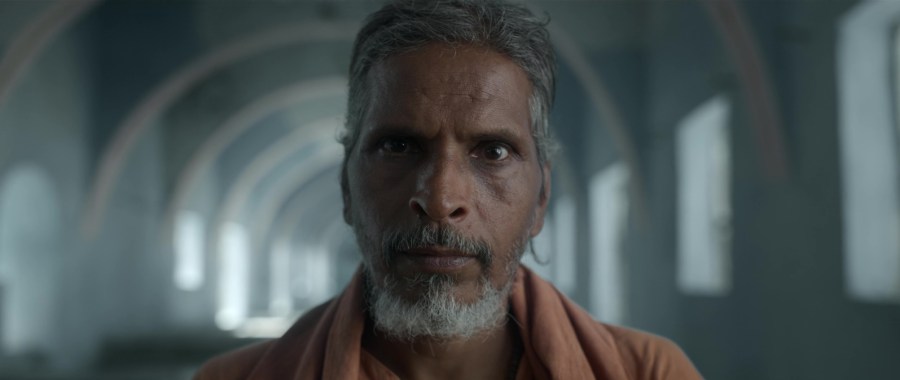
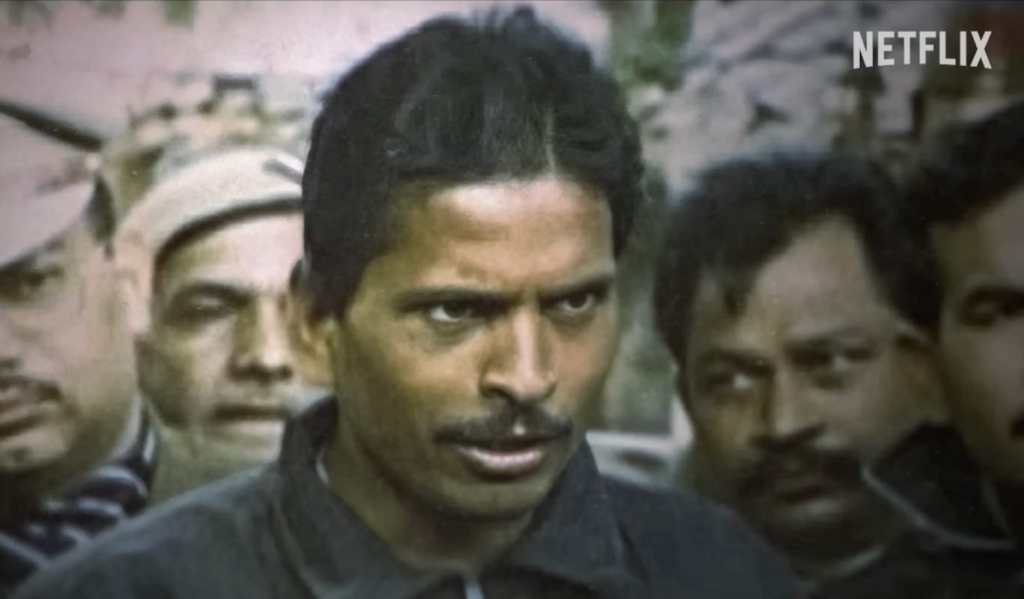
Raja Kolander, real name Ram Niranjan, the husband of a local politician, was suspected of murdering a journalist in Allahabad in 2000. Dhirendra Singh was a reporter with a Hindi daily newspaper called Aaj, and his body was mutilated and discarded in a river and a jungle. His head and genitals had been removed.

Police tracked the journalist’s phone records and found a call to the suspect, Raja Kolander. Kolander and his brother-in-law were arrested, beaten up, and finally confessed to the murder of the journalist. The police claimed that the murder was to stop Singh reporting on their car-theft business. But during the subsequent investigation, officers found Kolander’s diary, which listed some fourteen victims in total, including that journalist.

Although he was arrested in 2001, Kolander was not charged with the murder for a decade. During his trial in 2012, the police testified that he had admitted to cannibalism, and to burying fourteen skulls in his home. Kolander, his brother-in-law and his wife were all given life sentences for three murders, although he has appealed those convictions. Claims of cannibalism were never proven, nor were the other eleven murders, and some of those interviewed say that a few of those so-called “victims” are still wandering around. There is also mention made that the “mining mafia” had it in for Dhirendra Singh for exposing some of their corrupt practices, but this is not really explored further in the documentary. We are told, however, that Uttar Pradesh is ranked top in number of murders in all of India.

The first episode interviews the police and family of the journalist, and presents fairly damning evidence of murder. But then, some of it is just silly, such as the chief investigator saying that criminals “stutter when faced with the police.”

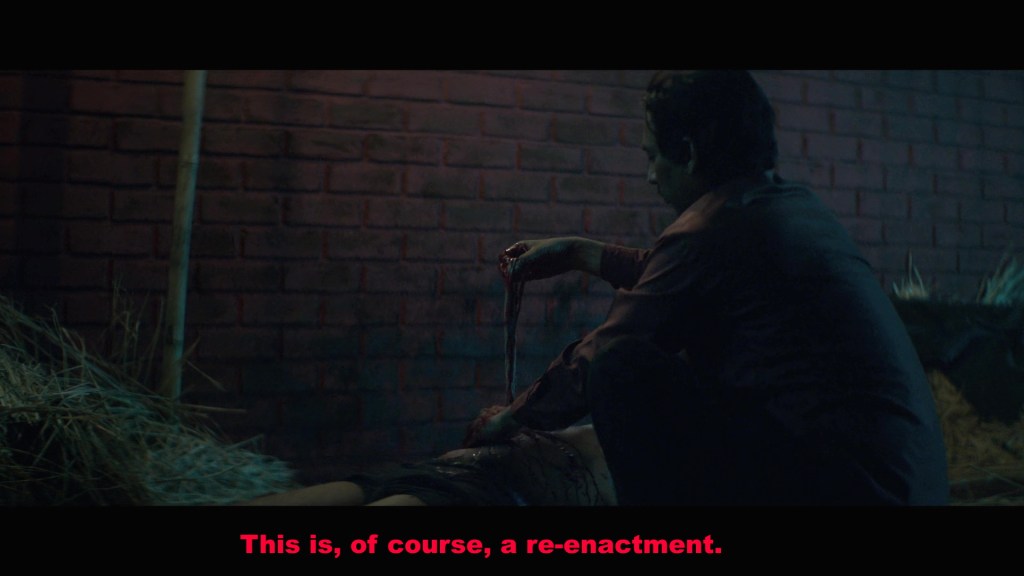
The evidence against Kolander is presented as it was laid out by the police, and the events shown in the documentary are just recreations of the official version, with actors playing the main characters. How legit those are is a good question, as there are several mentions of duress during the police interrogation.

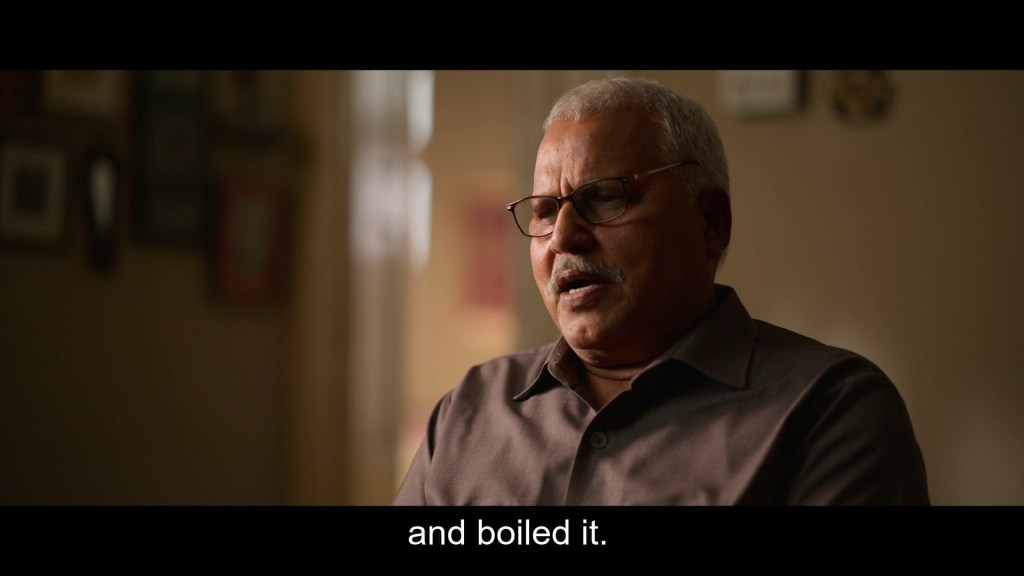
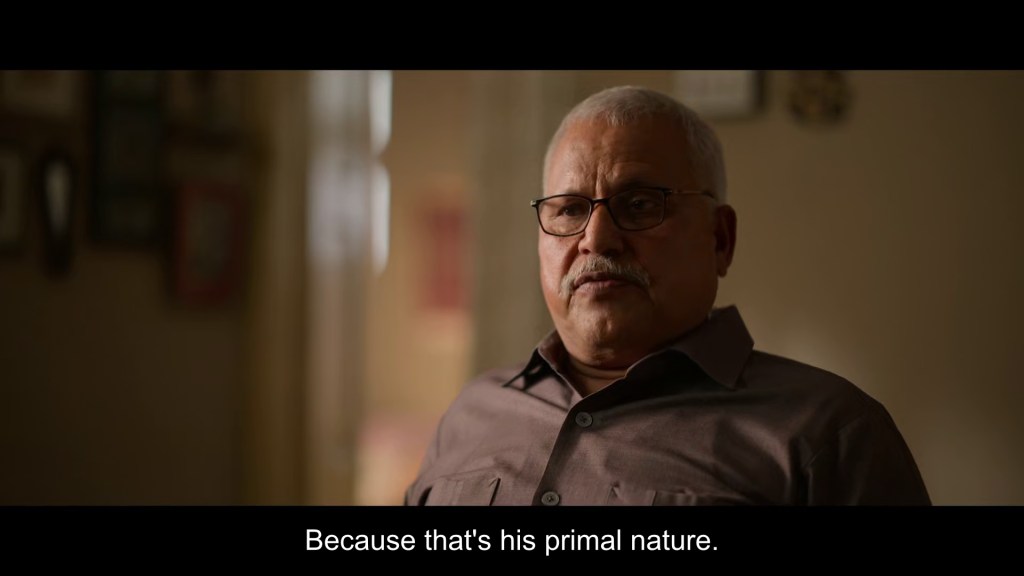
The police claim that Kolander was motivated by power, and sought to acquire it by cannibalism. One victim was from the Lala sub-caste. They are considered smart, even cunning, and often accused of taking advantage of the poor. The police claim that Kolander believed he could imbibe this cleverness through cannibalism, and so this victim was killed and Kolander then removed his brain:

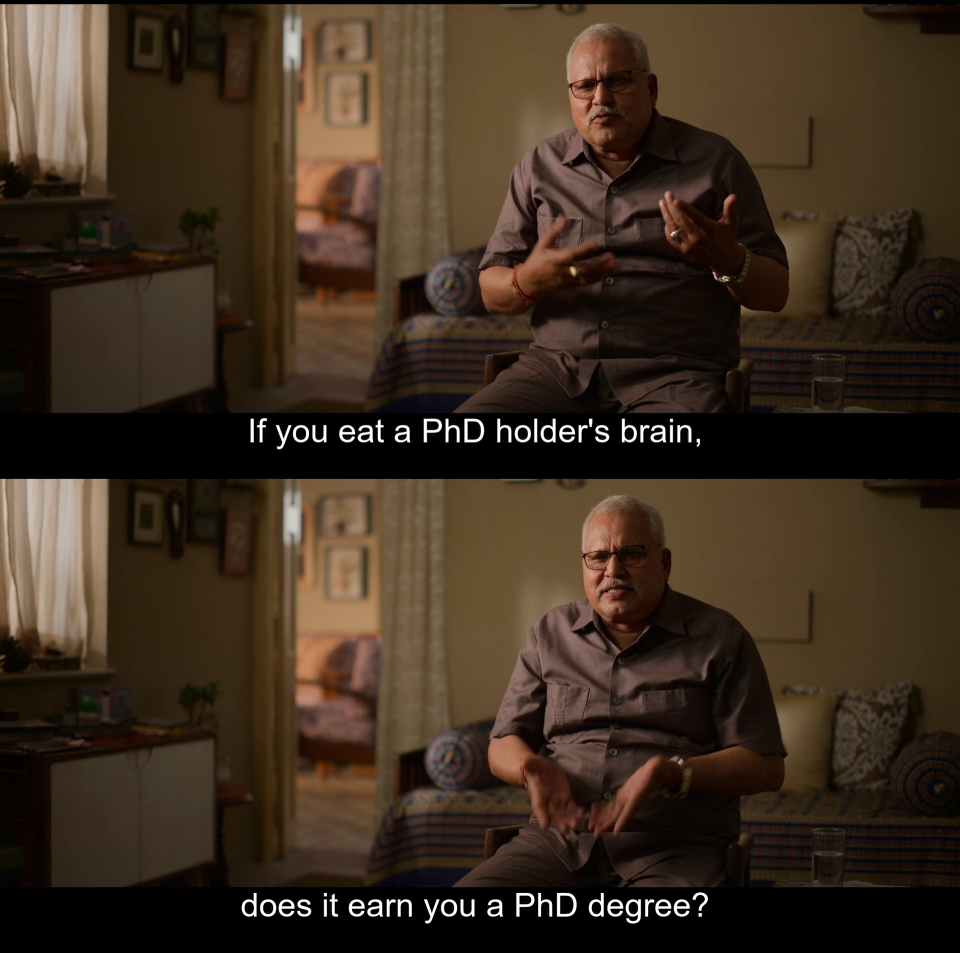
Then drank it as a stew. Another victim claimed to be a hypnotist, and so his brain was consumed in the hope of gaining that skill. As the investigator asks

A question to which I, for one, urgently need an answer.

Kolander then allegedly cut open a Brahmin, a member of a caste known to eat well, to see if they have larger intestines than other people. He then had to cut open a lower caste person to compare. The results were apparently disappointing. We are all equal, at least in the width of our intestines.

The second and third episodes interview Kolander in jail, another decade after the trial. He maintains that he is innocent of the murders that took place some twenty years before. He insists that he is a victim of trial by media.

The question of why his supposed thirteen other crimes went without investigation until a respected journalist was killed sheds some interesting light on the social and caste divisions in Indian society. Like Albert Fish, who in 1920s New York preferred to kill and eat black children since he knew the police would not work too hard to look for them, the racist attitudes in India to other classes, religions, and communities seem to have resulted in not much work being done on finding the earlier victims.

But Kolander himself comes from a caste which is largely impoverished, and the times were ripe for revolt by the subaltern castes – there were dacoits (bandits) roaming the countryside, and lower castes were fighting to be represented in government of all levels. It is clear that Kolander’s caste, the Kol, were considered by the upper castes to be primitive savages, recently driven from the jungles by deforestation into the life of subsistence farming, but retaining their savage traditions. It was inconceivable to them that a person from this background could own two cars, as the police claimed.

Kolander insists that he is a highly spiritual Hindu, not concerned with worldly power, and even claims to be a vegetarian, which would make eating brains tricky, although others (including his daughter) cast doubt on that. But it is certainly true that the colonial story has embraced accusations of cannibalism since Columbus – those who are poor and deprived must be savages, eaters of human flesh. Nothing they do is therefore surprising, and anything they are accused of is probably true.

Is this “true crime” documentary true? It’s impossible to know. But there are lot of holes in the story, including the fact that police brutality seems to be a standard interrogation technique, the fact that it took a decade to bring him to trial and, after another decade, his conviction (for three murders, not fourteen) is still to be decided. Also, the charges of cannibalism, which kind of make this newsworthy, were never proven in a court of law. Kolander, with some justification, says that his case was tried not in court but in the media, which published pretty much any sensational story they could dream up.

Cannibalism is perhaps the perfect exemplar of the uncanny – Freud wrote that we are most disquieted by the familiar suddenly becoming strange (remember Jeffrey Dahmer’s step-mother Shari saying he was “a nice, kind boy”) and things that should be hidden instead being revealed (e.g. the Brahmin’s intestines). But the impossibility of determining the truth is in itself uncanny, even more disquieting because our certainties about truth and lies are torn apart. A few cannibals sit down and tell their stories (Dahmer did, and so did Meiwes and Sagawa), but often the cannibal either disappears into the night like Jack the Ripper or suicides like Chase or is executed like Chikatilo. Seeing the bodies, or what’s left of them, but never knowing what or who happened to them is uncanny, and even more so when, like Kolander, the apparent cannibal denies all culpability.