In the year 2000, 44-year-old slaughterhouse worker Katherine Knight had a night of passion with her partner, John Price, then stabbed him 37 times, professionally skinned him, hung his hide on a meat hook over the lounge room door, decapitated him, butchered his corpse and cooked parts of him. She served up his meat with baked potato, carrot, pumpkin, beetroot, zucchini, cabbage, squash and gravy in neat settings at the dinner table, putting beside each plate place-names for Price’s children. Another meal was tossed into the backyard; it appears she intended to eat it but couldn’t do so. The police arrived before Price’s children so, as far as we know, none of him was consumed (by humans anyway).
Knight pleaded guilty to murder and the judge ordered that her papers be marked “never to be released.” An appeal was quickly denied, and she is still serving her life sentence at Silverwater Women’s Correctional Centre in Sydney.
Shoreline Entertainment planned to make a film of the incident based on Peter Lalor’s book Blood Stain, but so far it has not surfaced.
It appears that Knight was NOT a cannibal, despite one of the favourite media labels about her being “Kathy the Cannibal”. Other reports called her “The Woman Hannibal Lecter”, a comparison that makes no sense at all, since Hannibal did not use 37 strokes to kill people, definitely did eat parts of them, and did not (as Knight did) take a cocktail of sleeping tablets afterwards while lying in bed with the mutilated corpse.
Darren O’Sullivan, whose documentary is linked at the top of this blog, commented,
“this is possibly the most horrific thing I have ever discovered”.
Although the series is called “Real Twisted Tales”, I suspect O’Sullivan must have led a sheltered life. Knight was a slaughterhouse worker, recognised for her skills in knife work. She grew up in the NSW town of Aberdeen, where everyone in her family and most of the town were employed in the abattoir. Her job, from a young age, was to kill and cut up animals. She did to John Price what she was trained to do to other animals – slaughter them, cut them up, cook them. She did try to feed bits to his children, which is what farmers did in the UK (feeding cattle bone-meal to cattle), an act of cannibalism which led to Mad Cow Disease. But there is little evidence that she herself ate any of him.
The documentary above states that Katherine Knight is “one of the most evil people in the world”, because she was found sane enough to stand trial. But really, what she did was what she was paid to do every day, just to a different species than those who usually suffered and died under her hand.
Superstitious anthropocentric beliefs put humans on a tier somewhere between angels and animals, but really we are a species of Great Ape, closely related to the chimpanzee. Rationally speaking, there really is only a thin red line between killing and eating any species of animal.
Long Pigs is a 2007 “found footage” movie, in which two desperate filmmakers come across a cannibal, ask him if they can document his eating habits, and then are shocked when he starts killing people and eating them. It is presented as a documentary, with all the usual warnings about graphic scenes etc.
Bit silly, and found footage has rather been done to death, but it has some interesting ideas, particularly the sympathetic approach to the main character, even as he commits his crimes. Look, it seems to say, everyone needs a hobby and, to this cannibal, killing and eating people is no more ethically questionable than hunting or fishing. Stalk, catch, kill (as quickly and painlessly as possible) and then enjoy. He does his best to keep the movie interesting, with a patter of jokes, historical facts and philosophical observations as he slices and dices.
The cannibal is played by Anthony Alviano (Headcase, A Matter of Justice), and he presents the cannibal, also called Anthony, as a boy-next-door persona, one who kills and guts people. Like a farmer of animals, he starts the film explaining that it’s bad to frighten the victims, not for ethical reasons, but because the adrenaline ruins the taste of the meat. The filming starts as he drives around looking for a “certain kind of woman”, because he wants to make “long pig stew”. “Long pig” is a term supposedly used in the Pacific region before colonisation to designate human meat, although that definition is widely contested. Anyway, Anthony is looking for “marbled meat”, so he searches for a sex worker (traditionally victims who are not exhaustively looked for by police) who is, let’s say, of a heavy build.
“People who eat stew make perfect stew. It sounds obvious. Yeah, she looks like she eats well.”
As she smiles at the camera, he sneaks up behind with a sledgehammer and cracks her skull, resulting in the cameraman vomiting (which is actually rather more gross than the murder). They ask Anthony if gets a sexual thrill from killing women, but he dismisses this, in the same way a slaughterhouse worker might deny any pleasure in killing a different species of mammal.
“I’m not a freak or anything like that. This is all culinary, this is hard work!”
“Any hunter would recognise this position. We got the corpse hanging by the ankles. The first thing I’m gonna do here is make a little incision and tie off the anus. That’s to stop contamination from the feces. You would do that whether it was a deer carcass or a cow or a person… Absolutely necessary for health reasons.”
He cooks a stew from a portion of her thigh, then after dinner goes off to brawl in an ice-hockey game, an arena that seems the very essence of carnivorous virility.
Afterwards, he cooks ribs on a barbecue, assuring the viewers that there are “no animal by-products” used – just soymilk. And a woman’s ribs, of course, thus reinforcing the anthropocentric mythology of the human as not really animal, even though he has just butchered one in the same way as any other animal prepared for human consumption. He quotes the Arawak word barbaca, the grill on which human meat was supposedly cooked, according to explorers like Hans Staden and Jean de Léry, which became the Spanish word barbacoa, and eventually morphed into English as barbecue. Staden’s narratives were later illustrated by Theodor de Bry in his 1592 book Americae Tertia Pars, and the film sneaks in a quick peek at that glimpse of sixteenth century sensationalism.
There’s a lot of moral philosophy interwoven in the scenes of murder and gastronomy. Anthony the cannibal and his friend try to persuade the filmmakers to try some of the ribs, saying, it’s dead, and therefore cannot suffer, whereas we eat live vegetables, and “broccoli feels pain! Did you know that?” This is precisely the argument tossed at vegans by carnists, but in this case, it demonstrates the contention of the nutritionist Herbert M. Shelton:
The cannibal goes out and hunts, pursues and kills another man and proceeds to cook and eat him precisely as he would any other game. There is not a single argument nor a single fact that can be offered in favor of flesh eating that cannot be offered with equal strength, in favor of cannibalism.
Anthony works as a valet in a fancy restaurant, parking cars for rude people, and if you follow the lore of Hannibal Lecter, you will know that rude people are prime targets of cannibals. They park the car of a particularly rude man, take down his address from his licence and, next day, shoot him and load him in their car trunk. Unfortunately, they have a flat tyre and have to head to a pig farm for help, where they witness pigs being slaughtered and prepared for sale, in identical ways to Anthony’s own processes, but with rather better technology, and, oh yes, totally legally.
Most of the film is a spoof on cooking shows, which regularly have smiling chefs, or hopeful chefs, preparing lumps of animal flesh, hoping to win prizes. Anthony shows, in high-speed motion accompanied by the music of the Sugarplum Fairy, exactly how he prepares a body, stripping it and dismembering it until all that is left is two feet (still in socks) and the long femurs. He demonstrates how to get rid of the bones, cutting them up and putting them in a kiln at 2600 degrees – he even uses the line “these are some we prepared earlier.” This is a cooking show for cannibals.
Anthony is a typical modern cognate cannibal; as he says, people expect Hannibal Lecter, so “no one is going to suspect the valet”. This gives him the invisibility that we saw in cases like Jeffrey Dahmer. He loves his old mother who is in a nursing home, and is bewildered by a doctor’s request to do a post mortem analysis brain when she dies, a sophisticated update of cannibalism. He sadly tells the filmmakers that she has Alzheimer’s, but we eventually find that she died of Creutzfeldt-Jakob spongiform encephalopathy, a human version of mad-cow disease, probably from eating human meat that he fed her. He also admits to eating a five-year-old girl called Ashley, because people prefer meat from young animals, but was subsequently perturbed by the extensive police searches, and now avoids playgrounds and schools: “It’s like a supermarket, man.” As New Year celebrations explode outside, he comes to realise the filmmakers are going to release the movie, which will detail all his criminal history, and goes to get his sledgehammer. The rest, as Shakespeare says, is silence.
Anthony has a philosophy that rejects anthropocentrism and sees nothing wrong with cannibalism, or at least nothing that does not apply to any other meat. It’s a cannibalistic rejection of what Richard Ryder and later Peter Singer called “speciesism”.
“It’s only human beings that are so arrogant that they believe they are better than every other kind of animal out there. Worms don’t think about, you know, oh my god, why did mama worm get eaten by a fish; fish eats the worm and that’s that, it’s completely accepted by the worm, and the fish, and small fish gets eaten by the big fish, and if it was so wrong to eat it, then why would it taste so good?”
At the end, he is in jail, but he has published a cookbook. His cooking show has finally paid off.
This is a low-budget film, but is a lot better than might be expected. The creators were lucky enough to secure the services of Chris Bridges, the special effects artist whose credits include the Dawn of the Dead remake, Saw III & IV, 300 and Star Trek Discovery. Unless they actually killed and dismembered people, the result is spectacularly authentic. Anthony Alviano is brilliant in the role, which was written with him in mind.
The full movie (although slashed drastically from 81 minutes to 56 minutes) can, at the time of writing, be seen at https://youtube.com/watch?v=vnGXBRkxXuo.
In the year 2000, 44-year-old slaughterhouse worker Katherine Knight had a night of passion with her partner, John Price, then stabbed him 37 times, professionally skinned him, hung his hide on a meat hook over the lounge room door, decapitated him, butchered his corpse and cooked parts of him. She served up his meat with baked potato, carrot, pumpkin, beetroot, zucchini, cabbage, squash and gravy in neat settings at the dinner table, putting beside each plate place-names for Price’s children. Another meal was tossed into the backyard; it appears she intended to eat it but couldn’t do so. The police arrived before Price’s children so, as far as we know, none of him was consumed (by humans anyway).
Knight pleaded guilty to murder and the judge ordered that her papers be marked “never to be released.” An appeal was quickly denied, and she is still serving her life sentence at Silverwater Women’s Correctional Centre in Sydney.
Shoreline Entertainment planned to make a film of the incident based on Peter Lalor’s book Blood Stain, but so far it has not surfaced.
It appears that Knight was NOT a cannibal, despite one of the favourite media labels about her being “Kathy the Cannibal”. Other reports called her “The Woman Hannibal Lecter”, a comparison that makes no sense at all, since Hannibal did not use 37 strokes to kill people, definitely did eat parts of them, and did not (as Knight did) take a cocktail of sleeping tablets afterwards while lying in bed with the mutilated corpse.
Darren O’Sullivan, whose documentary is linked at the top of this blog, commented,
“this is possibly the most horrific thing I have ever discovered”.
Although the series is called “Real Twisted Tales”, I suspect O’Sullivan must have led a sheltered life. Knight was a slaughterhouse worker, recognised for her skills in knife work. She grew up in the NSW town of Aberdeen, where everyone in her family and most of the town were employed in the abattoir. Her job, from a young age, was to kill and cut up animals. She did to John Price what she was trained to do to other animals – slaughter them, cut them up, cook them. She did try to feed bits to his children, which is what farmers did in the UK (feeding cattle bone-meal to cattle), an act of cannibalism which led to Mad Cow Disease. But there is little evidence that she herself ate any of him.
The documentary above states that Katherine Knight is “one of the most evil people in the world”, because she was found sane enough to stand trial. But really, what she did was what she was paid to do every day, just to a different species than those who usually suffered and died under her hand.
Superstitious anthropocentric beliefs put humans on a tier somewhere between angels and animals, but really we are a species of Great Ape, closely related to the chimpanzee. Rationally speaking, there really is only a thin red line between killing and eating any species of animal.
On May 17, 2023, The Indiana Supreme Court in Indianapolis upheld the life sentence without parole for a 41-year-old Indiana man convicted of killing his ex-girlfriend and dismembering her body before partially eating several of her internal organs.
Joseph Oberhansley was convicted in September 2020 of murder and burglary in the slaying of 46-year-old Tammy Jo Blanton in Jeffersonville in September 2014. Clark Circuit Judge Vicki Carmichael sentenced Oberhansley to life in prison without parole, based on the jury’s recommendation.
Oberhansley’s legal team filed a brief for an appeal in June 2022. It is available at this link. His attorney, Victoria Casanova, argued before the court in April 2023 that her client’s mental health was not taken into consideration and that the jury did not return a proper verdict form in weighing aggravating and mitigating circumstances.
The opinion, written by Justice Christopher Goff, said the jury made “the necessary weighing determination.” Three other justices concurred and Justice Geoffrey Slaughter agreed in part.
The body of Blanton, 46, was found at her home the morning of Sept. 11, 2014, badly mutilated with more than 25 sharp force injuries and multiple blunt force injuries.
Jeffersonville Police reported that at approximately 9:30 a.m. on the morning of Sept. 11, 2014, officers responded to a call requesting a welfare check at Blanton’s home. Several hours earlier, Blanton had called 911 because an angry Oberhansley was upset about the end of their relationship—refusing to leave her home until ordered by several police officers.
Upon arriving at Blanton’s home, officers knocked on the door and Oberhansley answered. A detective on the scene noticed a cut on Oberhansley’s hand and searched him, finding in his pocket a brass knuckle and a knife that appeared to have hair and blood on it.
Investigators obtained a warrant for the home and inside the bathroom found a “big bloody mound of something in the bathtub.” It was Blanton’s body. She had been stabbed 25 times in the head, neck, and chest.
The body had also been extensively mutilated. The front portion of her skull, a portion of her brain, lung, and most of her heart had been removed. Further investigation revealed that parts of her organs were found on a dinner plate next to a frying pan, bloody knives, and a pair of tongs that had blood on them.
During a subsequent interview with police, Oberhansley “revealed to the detectives that he ate Tammy’s brain” and that he also “tried to pull the ‘third eye’ out with tongs,” police wrote. He also admitted to eating the organs that he removed from Blanton. Oberhansley was originally charged with murder, abuse of a corpse (because cannibalism is not a crime in 49 US states) and breaking and entering.
Oberhansley testified that two men had been at the victim’s home when he arrived around 4 a.m. that morning and said they were responsible for Blanton’s death. He said the men had knocked him out and that he awoke when police arrived.
Clark County Prosecutor Jeremy Mull told jurors Wednesday during opening statements in Oberhansley’s murder trial:
“Joseph Oberhansley butchered Tammy Blanton like you wouldn’t kill a livestock animal. But this lady died with dignity.”
Mull said Blanton locked herself in a bathroom before Oberhansley kicked a door down and attacked her — just one week after holding her captive and raping her. Oberhansley told police during a videotaped interview that Blanton “really wasn’t all that scared, surprisingly,” as if she knew she was about to die, Mull recalled. “In her last moments, she wasn’t going to give him the pleasure of seeing her scared,” the prosecutor said.
A psychologist testified at trial that Oberhansley was “the most severely mentally ill person whose case she had reviewed,” Oberhansley’s defence attorney Cara Schaefer Wieneke wrote:
“It would be easy to look at the horrors visited upon Tammy and conclude they were simply the actions of a monster. But doing so would be reductive, and this Court’s 7(B) review must look deeper. This Court must consider his actions in the context of his profound mental illness. There is also no question that Oberhansley was suffering from a severe mental illness when he committed this crime. What there is a question about, however, is whether Tammy would be alive today if Oberhansley were not so severely mentally ill. There are reasons to believe that she would. Because of that, Oberhansley asks this Court to find his sentence of life without parole is inappropriate.”
Oberhansley’s mental state was a recurring complication in the court process, in which he was found at different times competent and incompetent. For example, in 2017, his defence wrote that their client believed they were working for the devil, according to The Courier-Journal.
The case was originally declared a mistrial after witness testimony put forth information about Oberhansley’s past that parties had stipulated would not be introduced during the proceedings. For example, it was not specified in court that the defendant had spent a 12-year stint in a Utah prison for manslaughter because—while he was jealous and high on meth—he shot and killed his girlfriend Sabrina Elder, and shot his own mother (who later forgave him).
Oberhansley’s sister had grabbed his and Elder’s infant son. He shot at them, but missed. Then Oberhansley shot himself in the head. He survived, but a psychiatrist wrote he’d given himself a “partial lobotomy.” He pleaded guilty to a manslaughter charge, down from murder. His family was reluctant to take the stand, prosecutors said.
In his first trial over Blanton’s death, Oberhansley’s defence asserted that their client’s mental state was a major factor. Lawyer Bart Betteau cited horrifying details of the murder, saying that jurors would hear that Oberhansley believed Blanton was going to kill him and that she could hear his thoughts.
“Think about the process and say to yourself, is this someone who’s thinking right? His thought was that someone was after him.”
Oberhansley’s attorneys couldn’t mount an insanity defence, however. They lost their ability to do so in return for the state declining to seek the death penalty. The attorneys’ previous attempt to lodge an insanity defence was thwarted when Oberhansley filed a motion to withdraw it. He denied living with a mental illness.
Oberhansley is incarcerated at the New Castle Psychiatric Unit of the Indiana Department of Correction.
The most interesting part of this extended legal battle (nine years) from the point of view of Cannibal Studies is the statement from the prosecutor about the victim being “butchered… like you wouldn’t kill a livestock animal.” Philosophers struggle with the inconsistency of our social customs – we cherish dogs and cats, protect whales, but accept the butchery in mind-boggling numbers of cattle, sheep, pigs, chickens, and others. We know about the horrendous suffering in the slaughterhouse, but close our minds to it. We know that on top of its appalling cruelty, the meat industry is one of the largest sources of greenhouse emissions as well as a cause of several severe human health problems such as hypertension and colon cancer. Yet the meat industry remains exempt from much of the environmental and health debate that surrounds other issues. Stanley Cavell states that becoming part of a social contract requires becoming “conspirators”, agreeing implicitly what will be acceptable, disregarding its ethical conundrums. Such “perpetual failure of justice invites the threat of madness”.
Cannibals are routinely described as insane, as if their capricious psychotic episodes fully explain both their choices and the appalled revulsion of the rest of society. Oberhansley’s appeal described him as “detached from reality”. But the persistent portrayal of cannibalism as unthinkable and cannibals as insane relates to their refusal of the fissure between reality and the language able to describe it. The cannibal personifies ruthless attempts to satisfy voracious human appetites, while realising the animality of fellow humans; he puts the unthinkable into reality through the flesh and blood of his victim. His madness arises in the gap between the carefully expurgated language of the social contract and the reality of the world as a giant slaughterhouse.
On February 24 2023, Hong Kong model Abby Choi was found dead in a rental unit in Hong Kong’s northern Tai Po district. Or at least, some of her; Choi’s corpse was not complete. Her head was missing, to be found by the police, after some analysis, in a cooking pot. The police described the crime scene as a “slaughterhouse”, and they found other parts of her body in the refrigerator.
An electric saw and a meat-grinder that had been used to mince human flesh were found at the crime scene, as well as soup pots containing human tissue.
Police have taken into custody her ex-husband Alex Kwong, his father Kwong Kau and his brother Anthony Kwong. All were charged with murdering model Abby Choi a day earlier. Alex Kwong’s mother, Jenny Li, faces one count of perverting the course of justice. None of the four were granted bail.
The former husband, one of the main suspects in the murder, was arrested the next day at a pier in Tung Chung, on one of the city’s outlying islands, Lantau, while trying to flee with just the clothes on his back, and half a million HK dollars and four million $HK worth of fancy watches.
On Sunday, authorities confirmed that a young woman’s skull believed to be Choi’s had been found in a cooking pot that was seized from the house. Officials believe that a hole on the right rear of the skull is where the fatal blow was struck.
Ms Choi lived at Kadoorie Hill in Ho Man Tin and had been missing since Tuesday (Feb 21). Police discovered two legs in the apartment’s refrigerator, as well as the victim’s ID card, credit cards, and other belongings, according to Police Superintendent Alan Chung. Human tissue was found in pots of soup, while the victim’s torso and hands were not at the scene. Chung said:
“Police also have found that the flat was arranged by cold-blooded killers meticulously. Tools that are used to dismember human bodies were found in the flat, including meat grinders, chainsaws, long raincoats, gloves, and masks.”
According to China Underground, Choi’s former father-in-law had rented the flat, which was almost bare of furniture, as were the two bedrooms. Police found two types of choppers, a hammer, face shields, black raincoats, and a purple handbag that belonged to Choi. The suspects reportedly covered the walls with a sail and wore face shields and raincoats to prevent being bloodstained while dismembering the body. This was clearly not a spur of the moment crime.
More than 100 police personnel were sent to search the Tseung Kwan O Chinese Permanent Cemetery on Saturday, including a diving team who were deployed to the nearby catchwater.
The motive of the murder has yet to be determined, but it is believed to be a financial dispute between Choi, who was only 28 years old, and her ex-husband’s family, involving around 100 million Hong Kong dollars.
As a model, Choi enjoyed international exposure and was photographed at the Elie Saab Spring Summer 2023 Haute Couture show in Paris, France, as recently as January. She also appeared as the digital cover model for the luxury magazine L’Officiel Monaco and attended this year’s Paris Fashion Week.
Choi, who was also known as a social media influencer, has nearly 100,000 followers on her Instagram account, which features photographs of her posing with various luxury brands in locations from London to Paris and Shanghai and aboard yachts in Hong Kong. In her bio she writes that she’s “embracing every moment in life.”
Choi’s friend Bernard Cheng said she had four children: two sons ages 10 and 3, and two daughters ages 8 and 6; a son and a daughter from her ex-husband, who have been placed in the care of the model’s mother, and two children with her present partner.
The murder case has been adjourned to May.
The news has been greeted with horror in Hong Kong. But social media is already making tasteless comments about cannibalism and cunnilingus.
The comment in the social media posts about HK people “always” cooking their murder victims seems a little hard to swallow (sorry). No one has yet accused the alleged perps of eating the human flesh soup found in the pots, and there is some speculation that they were cooking the flesh just to render it down for disposal, or to stop it decomposing. But if you find pots of soup on a stove, you’d imagine that the most likely explanation would be that they were there for degustation. Everything else about the case uses metaphors of carnivorous virility and factory farming – the flat being a “slaughterhouse”, the grinders and protective equipment, and the motivation for the killing – lots of money.
Except in times of chronic famine, or during the Cultural Revolution, China is not known for many cases of cannibalism, unlike some other countries we could (and often do) name. But the Chinese do make some great cannibal movies, including Herman Yau’s Human Pork Buns and Ebola Syndrome (伊波拉病毒), and Fruit Chan’s Dumplings. Check them out, and then ask yourself, what exactly was planned for those pots?
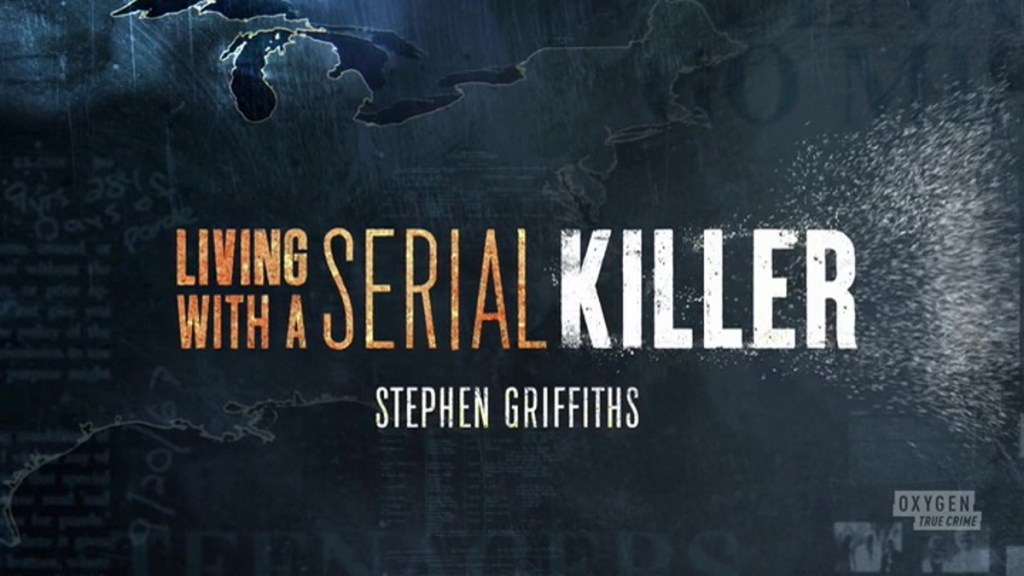
Oxygen True Crime is a program brand within the NBCUniversal stable, and is rather oddly described as:
“a multi-platform high quality crime destination brand for women”
I guess because most of the murderers reported by the show are men?
Anyway, the show we are reviewing here is part of the 2022 second season of an Oxygen series called Living with a Serial Killer, the first season of which aired in 2021. The program has covered a number of British and North American killers, including Steve Wright (the Suffolk Strangler), Peter Tobin, Timothy Boczkowski and a couple of women: Elizabeth Wettlaufer, a Canadian nurse who murdered several of her patients and Joanne Dennehy, who stabbed three men to death in 2013.
Living with a Serial Killer concentrates not so much on the killer, as do most true crime shows, but on the partners or friends or even children who lived with them, the people who thought they knew them, and it tells how they lived either in fear or else were oblivious to the exploits of the murderers. Most, but not all, of these unwilling companions were women.
Most of the killers were not cannibals, disappointingly for this blog, but one was, or says he was, despite there not being enough left of his victims to confirm or deny his claim. This was Stephen Griffiths, who stood up in court for his arraignment for murder and, when asked his name, identified himself as THE CROSSBOW CANNIBAL.
Griffiths killed three women in the city of Bradford, West Yorkshire, England in 2009 and 2010; 43-year-old Susan Rushworth disappeared on 22 June 2009, followed by 31-year-old Shelley Armitage on 26 April 2010 and 36-year-old Suzanne Blamires on 21 May that year.
The women were all Bradford sex workers. Parts of Blamires’s body, including her severed head still containing a crossbow bolt, were found in the River Aire in Shipley, near Bradford, on 25 May. Other human tissue found in the same river was later established to belong to Armitage. No remains of Rushworth were ever found. Griffiths was arrested after CCTV security footage caught him in the act of killing Suzanne Blamires. He not only committed the execution on camera but, after dragging her body inside his apartment, returned carrying his crossbow and gave a middle finger to the camera, knowing he had been seen.
Griffiths was a postgraduate research student studying criminology and specialising in British murderers, so he knew a great deal about killing and disposing of bodies. He also knew what sort of activities led to sensationalist press coverage, and he seems to have been determined to become more famous than one of his pin-ups, the Yorkshire Ripper, Peter Sutcliffe. Sutcliffe had murdered thirteen women in the same area between 1975 and 1980, and was at the time rotting in prison with several life sentences to serve, and judicial instructions that he was never to be released. Sutcliffe died in November 2020 after refusing treatment for COVID-19.
After his arrest, which happened a few days later when the caretaker checked the CCTV tapes, Griffiths readily admitted the murders to the police, telling them he had eaten some of his victims’ flesh, and adding, “That’s part of the magic.”
The program focuses on Kathy Hancock, who lived with Griffiths for a considerable time. A tough woman, a prison officer when they met, she was physically abused by him, poisoned, and perhaps worst of all psychologically tortured (particularly when he stole her dogs) to the extent that she was unable to escape his influence. She did not know that he was a serial killer, but was not very surprised when she found out. Despite the occasional escape, she was with him or under his influence for much of the decade from 2001 until his arrest in 2010.
When interviewed by West Yorkshire Police (extract at the top of this blog), Griffiths was asked why he killed the three sex-workers. His reply:
“I don’t know. Well, I’m misanthropic. I don’t have much time for the human race.”
Police divers found 159 pieces of human tissue when they searched the River Aire; almost all were from the final victim, Suzanne Blamires. There were only two parts of Shelley Armitage found – a part of her spine and a section of flesh revealing knife marks. Susan Rushworth’s family had no definite confirmation of her death or disposal, and no remains over which to mourn. He told the police:
“… it was just meat in the bath that was chopped up and churned, some of it eaten raw and I don’t know after that. I don’t know where she is.”
Griffiths claimed to be possessed by an alter ego named Ven Pariah who took over his social media accounts and boasted of his exploits. Psychiatrists found him fit to be tried, but it is still possible that his psychotic episodes (he was diagnosed as a sadistic schizoid psychopath) accompanied the murders and he really does not know what happened subsequently. It does sound a bit convenient though, like Hans Beckert in Fritz Lang’s M – EINE STADT SUCHT EINEN MÖRDER, who claimed he could not remember murdering and consuming his child victims, particularly as Griffiths seems to have clear recall of the actual murders and dismemberments.
Or he could be making it all up, since we know that Griffiths was desperate to be (in)famous and, as a student of criminology, would have been aware that cannibalism would make far bigger headlines than murder.
But here’s another explanation. Griffiths told police that he did not particularly despise sex workers, but that they were easy targets – they worked on dark, run-down streets and, due to their propensity for addiction, the police were unlikely to worry too much if they disappeared – there were plenty of other possible explanations besides murder. This is reminiscent of Albert Fish, who killed and ate African-American and Latino children, not because he was a racist, but because he knew the police would not look too hard for them.
Griffiths’ hatred was not aimed at sex workers but at women in general. He was insecure, vain, and had a desperate need to dominate. This is indicated in his relationship with Kathy Hancock, whom he abused and tormented despite the fact that she was voluntarily cohabiting with him. When she finally left he stalked and threatened her, to the extent that she finally moved overseas to get as far away from him as possible.
The ultimate form of control is to kill and consume the ‘other’. Humans do it all the time to other animals to establish an ideological superiority and supremacy – we eat meat (some of us) not because it is necessary for our health but because sacrificing the animal demonstrates human exceptionalism. It elevates the human, or those privileged to be considered human, to a higher plane than other animals and ‘lesser’ or sub-humans (untermenschen), whom we feel free to exploit in a wide variety of ways such as slavery, sweatshops and, in the extreme, cannibal feasting. Griffiths’ profound misogyny could find its deepest expression not in paying for the use of their bodies, or even ‘just’ killing them, but in utterly destroying them, and at the same time absorbing them into his own body, thereby destroying their independent subjectivity and making them exist only as part of him. Cannibalism offers ultimate power and control over the victims.
David Wilson, Professor of Criminology and Criminal Justice at Birmingham City University, said that
“We want to see serial killers as real aberrations, as different from dominant beings in our culture, but often they are just extreme versions of other beings of their time.”
Was Stephen Griffiths a cannibal or a braggart? We’ll never know for certain. Claims of cannibalism are hard to confirm, as the perpetrator is often undiscovered, unreliable, or dead. Except for cases where cannibals recorded their acts on video tape (such as Armin Meiwes), we only have the verification of missing flesh or slashed bones, evidence over which everyone from archaeologists to forensic scientists can argue forever, or the confessions of the cannibal, which can be easily retracted before trial or may prove to be just boasting and narcissistic grandstanding. Griffiths told the police:
“It was just a slaughterhouse in the bath tub.”
The cannibal, whether literal or metaphorical, is essentially enacting an extreme form of carnivorous virility, and thereby questioning the conventional view of humans as above nature, as not animals, not meat. The cannibal makes us look at ourselves as edible, and thereby question our place in, and exploitation of, the natural world. The bath tub, our symbol of cleanliness and separation from the dirt and smell of nature, becomes a slaughterhouse. The slaughterhouse, normally hidden in remote towns behind high walls, comes home.
If you’ve heard about this new movie, you’ll know it’s a sort of cannibal romcom.
Perhaps the first romcom was Adam and Eve – she was created from his rib, as “an help meet” (Genesis 2:18-21) because he was incapable of looking after Eden on his own. And he was, you know, horny. Ever since, relationships have been tricky – they’re about status, property rights and, above all, appetites. Feudal lords sealed alliances by betrothing their children, often marrying their small child off to a complete stranger. For most of human history, women were property, owned by their fathers until ownership was transferred to their husbands. What happened to them after that was up to the appetites of the man. It often still is.
Modern dating has in many ways returned to the realm of the unknown betrothal. Pictures appear on a phone screen and are assessed in an instant. If a candidate is deemed possibly sponge-worthy, a meeting is arranged and may lead to casual sex, long-term commitment or, in unfortunate cases, cannibalism.
What do we know about the person on the dating scene? Each click, each drink, is a contract, the person being (inter)viewed is already objectified by the algorithm that has decided he or she may be suitable. Relationships are chosen in the same way (and often with less forethought) as an Uber-eats meal. The app reduces us to our basics – appearance, tastes – we’re just meat.
This movie, Fresh, the first film by director Mimi Cave and writer Lauryn Kahn (good interview here but beware of spoilers) and produced by Adam McKay (Don’t Look Up), takes the metaphor to its logical conclusion. Noa (Daisy Edgar-Jones from Normal People), finds herself dating boors who feel entitled to comment on her appearance, are interested exclusively in themselves, and abuse her if she dares to refuse sex. As a woman, her body is their entitlement.
Noa meets Steve (Sebastian Stan from Winter Soldier), not on her dating site, which has been a huge disappointment to her, but in a supermarket. Steve seems charming, clever, and doesn’t press her for sex. When he draws back from sex on their first date, the first time a man has done that in her experience (maybe in history) she asks him if he wants something to drink or eat, and he says “no, just you”. He ruins her enjoyment of her spare ribs by saying “I don’t eat animals.” He means non-human animals, but it’s a common piece of lazy language; he eats humans, and humans are of course animals.
Noa agrees to a weekend getaway with Steve after only a few dates. Bad idea. This starts as a romcom but ends up covered in blood and body parts. Images of other animals waiting to be eaten reinforce the point.
Steve wants to know whom Noa has told. Who knows she is going away with him?
Steve drugs Noa (another common dating strategy) and only then do the credits start, some 33 minutes into the film, as she collapses to the floor.
Steve imprisons her, finally revealing his plan: to keep her alive and slowly sell her meat to his wealthy cannibal clients, keeping the rest of her alive and “fresh” (thus the film title) as long as possible.
Sounds grim? Sure, but also darkly funny. Steve is witty and charming apart from the, you know, kidnapping and cannibalism, and Noa is smart and tough, as she has to be in this dog-eat-dog, or man-eat-woman, world. She has to woo her abuser, as so many women do, in order to escape, even if that means eating human flesh, even perhaps her own.
This is a smart and gripping cannibal film from – wait for it – Disney! Produced by Searchlight, the studio of Nomadland and The Shape of Water, it premiered at Sundance in January this year and was released on Disney+ in the UK but Hulu in the US. It certainly is a long way from Mickey Mouse and Snow White. Yet, like them, it has a moral of sorts. As one reviewer put it:
You will want to become a vegetarian after watching “Fresh.”
Another reviewer (beware of spoilers in this link) wrote:
I don’t know about you, but I, for one, am never eating meat again.
Noa is the protagonist, and the main plot involves her predicament and her attempts to escape (no spoilers!) But Steve is a fascinating character in that he really likes Noa, feels a little bit bad about what he does, but likes the money more. Does that remind us of the farmers who claim to “love” their animals, even as they fatten them up for the abattoir? How many stories have we heard of country kids who befriend a baby lamb or calf or piglet and weep when dad appears with a cleaver, only to get over it and become killers themselves. Steve is the same, but his “livestock” are young women. He likes them, but it’s a business – he packages up their meat, their hair, even their underwear for those who want them. His cold room is full of chilled meat, carefully labelled with the names of the women it came from.
Steve’s wife, who knows exactly what he does, asks him “how was work?” He replies that he is very busy with the “new product”.
He can’t afford to care. Nor can his wife, who is missing a leg. She is a “product” whom he adopted. She knows the answer to the header of my blog “what’s it like to be edible?”
It reminded me of an interview with a slaughterhouse worker in Gail Eisnitz’s extraordinary book Slaughterhouseabout the workers who kill for a living and the animals who we choose to eat, the ones that are least aggressive, the gentle and friendly species:
If you work in that stick pit for any period of time, you develop an attitude that lets you kill things but doesn’t let you care…. You may want to pet it. Pigs down on the kill floor have come up and nuzzled me like a puppy. Two minutes later I had to kill them – beat them to death with a pipe. I can’t care.
This is not a dystopia, it is our world, now, a world in which the rich can buy anything they want including the labour, homes and bodies of others. Steve describes them as the “one percent of the one percent” – they want what no one else can have.
And it’s women they want to eat, because it’s all about ownership and power.
Think of Jeffrey Epstein who supplied underage girls to the rich and powerful. Gary Heidnik started a church which made him a lot of money and then, like Steve in this film, kidnapped, tortured, and raped six women, killing two of them and allegedly feeding the survivors with the flesh of one of the dead. Patrick Bateman was a (fictional) cannibal in the book (if not the film) of American Psycho, consuming human brains because there were absolutely no limits to his appetites.
Is there really anything to stop the “one percent of the one percent” paying to satisfy their cannibalistic appetites? If they are tired of beef and lamb, what meat is next? Millions of people disappear each year, and many are never found. Could some of them be ending up on the plates of the rich?
What Steve does to the lonely women he kidnaps is shocking. But so is what we pay minimum wage workers to do to other species. As Hannibal said, “It’s only cannibalism if we’re equals”. Eating other mammals such as Bos taurus, Ovis aries or Sus domesticus is only one thin red species line away from eating Homo sapiens.
Fresh is currently showing 81% fresh (has to really) on Rotten Tomatoes.
Andres Filomeno Mendoza Celis, 72, was arrested on Saturday evening, 15 May 2021, in his home in Calle Margaritas, in the Mexican municipality of Atizapan de Zaragoza. Detectives arrived at Mendoza’s home to interview him about the suspicious disappearance of a woman, Reyna González, a mother of two children, only to find her mutilated remains on a table. González is said to have gone to the house of Mendoza, a family friend, to buy cellphone parts for her business.
Mendoza reportedly admitted to slaughtering around thirty women over the last twenty years. Most of their names were listed in a notebook found on the premises. According to Imagen Television Mexico, Mendoza confessed to eating his victims’ body parts; he recorded the murders and mutilations on 25 videotapes. He allegedly peeled off his victim’s faces and scalps, the last one because she was “pretty”.
From @c4jimenez
Bystanders watched as personnel from the Attorney General’s Office of the State of Mexico (FGJEM) came and went, carrying out excavations inside the house, looking for skeletal remains.
Investigators used sniffer dogs to locate human body parts; officers drilled through the flooring to recover the remains and hair of several other women. They also found women’s shoes, items of clothing and the voter identification cards of Flor Vizcaino, 38, who was last seen October 16, 2016 and Rubicela Castillo, 32, who was reported missing July 20, 2019.
According to the news site Televisa, the police found the skeletal remains of up to five people at the suspect’s house, as well as knives suspected of being used to kill and dismember the “victims.”
If confirmed, this would exceed the toll of Mexico’s “Monsters of Ecatepec” – a couple who killed and ate about twenty victims between 2012 and 2018 in in Ecatepec de Morelos.
Local reports claim the suspect “could not bear the rejection of young and pretty women.” A young neighbour reported:
“He always bothered women, his gaze travelled over their bodies and fixed on their buttocks, legs and breasts… They always said he looked perverted. When they found him drunk on the street, they preferred to turn around. He drank too much and made them uncomfortable by comments he made to 30-40-year-old women.”
Mendoza is being held at the Tlalnepantla Penitentiary for the murder of Reyna González, whose remains were found at the property. Lead prosecutor for the Attorney General’s Office division, Dilcya García, said the evidence investigators were able to uncover and gather strongly indicates that they could be dealing with a cannibal “serial” killer.
Mendoza, like many modern, domestic cannibals, seemed a harmless citizen; he had been president of the council of citizen participation in the Municipal Government of Atizapán de Zaragoza. He had also been a butcher for many years, working in a slaughterhouse that prepared meat for human consumption in Tlalnepantla, so he knew how to cut skin and keep it in good condition. Well preserved, skinned faces were found, with the hair still attached.
Are there more such cases of cannibalistic murders happening now, or are authorities discovering cases which previously might never have been uncovered? In either case, there is a clear trend toward the innocuous neighbour, the seemingly bland citizen, being dragged off in cuffs, leaving behind mangled corpses missing portions of flesh. Very often, the perpetrator has been shown to have worked in a slaughterhouse. Eduard Seleznev, the “Arkhangelsk Cannibal”, worked in an abattoir, as did Sofia Zhukova, the ‘Granny Ripper.’ Alberto Sánchez Gómez lived next to a bullfighting ring. Watching other animals being sliced up into commodities must make it easier to do it to humans.
Cannibal was the directorial debut of the German director Marian Dora in 2006, and is basically a re-enactment of the famous case of Armin Meiwes (pronounced like the Sinatra song “I did it my way”), the so-called ‘Rotenburg Cannibal’. Meiwes was a German computer technician who was into “vorarephilia” (sexual attraction to eating, or being eaten by, another). He advertised on the Internet for a man who was willing to be killed and eaten, and ended up doing both of those things to an engineer named Bernd JürgenBrandes whose greatest desire was to be eaten. Unlike most crime re-enactments, this one was easy to research, because Meiwes videotaped most of the killing, butchering and eating of Brandes. We’ve met Meiwes in a couple of earlier blogs: in Grimm Love an American researcher (Keri Russell) searches for the videotape and then freaks out when she gets hold of it. The documentary Copycat Killer covered the famous case with lots of dramatic music and comparisons to Hannibal Lecter, which was absurd. The Australian comedy Rake also did a great simplified version of it with the wonderful Hugo Weaving as both an economics professor and a cannibal (which is more terrifying?).
Marian Dora is a pseudonym used by a film-maker whose real name is shrouded in mystery. Probably for good reason – his first two releases were included in anthologies of short films named Blue Snuff 1 and Blue Snuff 2, the latter of which was withdrawn due to its extremely graphic content. He then went on to work with Ulli Lommel on a number of crime/slasher films.
This film was assigned to Dora by Lommel, but proved too rich for Lommel’s taste, and Dora ended up releasing it himself, direct to video. Really? Too rich for Ulli Lommel, whose grisly bio of Fritz Haarmann we reviewed earlier this year? Well, that’s promising. Lommel went on to make his own version of the Meiwes story, with the protagonist changed to female for some reason. This was also called Cannibal at first, then changed to Diary of a Cannibal, and has graced the “Bottom 100” lists of Yahoo and IMDB ever since. We… might get to it one day. Maybe.
Meiwes and Brandes are not named in this film – the eater is just called “The Man” and the eaten “The Flesh”. There is very little dialogue, except for the Man’s mother reading him Hansel and Gretel at the beginning (when he was presumably called the Boy), presumably turning him into a cannibal (didn’t that happen to everyone who read the Brothers Grimm?)
We then Get To See A Selection Of The Man’s preferred reading matter: cannibal art by Hieronymus Bosch and Hans Staden, books on Jeffrey Dahmer, and some interesting texts on anatomy and butchering, which he will find handy later.
We see the Man having a series of meetings with a bunch of guys (and one woman) he has contacted on internet chats, all of whom turn out to be not that serious about going through with the whole, you know, kill me and eat me thing. The woman might have been ready, but he writes, “Women are too important for the survival of mankind.” Pretty much how the dairy and egg industries operate, when they sex the calves and chicks and immediately kill the males.
He even meets up with a couple of kids, not presumably through the web, but seems to prefer his meat aged and consensual.
The Man finally meets the Flesh, who introduces himself,
“I’m your flesh”
But then adds:
“I don’t want to suffer”
Yeah, no probs, mate; the Man stops on the way home from picking up the Flesh at the railway station to buy some schnapps and some cough medicine.
Then after a game of petanque and some sweaty sex, the Flesh won’t feel a thing. Hmmm.
“You’ll become a part of me”
Seems to me to be a bit of a misunderstanding of how the alimentary system works. However.
Once they enter the house, the movie becomes very dark. Literally – one of those movies where it’s hard to see what the hell is going on. They’re going to have sex, one of them is going to eat the other, but first, a nice cuppa tea.
There’s a lot of plinky-plonky music and sex scenes which drag on interminably, and end with the Flesh anally penetrating the Man. No one was expecting that. Isn’t cannibalism supposed to be about dominance? It’s an interesting conflict. They curl up on the floor together and, when they awake, the Flesh demands the Man bite off his penis. My thoughts immediately went to Monty Python (“ergh! With a gammy leg?”) at the thought of biting his penis after anal sex; but hey, call me old fashioned. Anyway, the Flesh is not called the Teeth or even Jaws, and can’t do more than draw blood, a kind of ineffective circumcision, and the Flesh growls:
“You are too weak!”
Freud would have had an orgasm of his own at this point – we have power, guilt and of course male fears which, he said, were based around the act of castration, usually due to the fear of the father’s anger at the boy’s Oedipal desires. But this man is too weak to eat him! Perhaps because he needs to eat. They need to merge before they can merge. It’s another challenge. But as Freud said, the cannibal “only devours people of whom he is fond”, which is why, according to Brigid Brophy, Christians eat God to affirm the love of the Father. The Man is seeking the transubstantiation of the Flesh.
So anyway, the Man does what any man does when his lover is disappointed – runs for the cough medicine; let’s knock him out! But then they both fall asleep, seeming to decide that this wasn’t such a hot idea. When they wake, it seems like it’s all over, but they are a stubborn pair – a splash of water on his face and the Flesh is ready and raring to get ate. This time they pick up prescription sleeping tablets at the pharmacy – Stilnox, very popular among Australian athletes apparently, and the Flesh washes it down with a bottle of brandy.
“Castrate me, then kill me. Do it now.”
The Man sets up the video (and this is all pretty much as it happened – Meiwes did videotape the whole procedure, which helped the police considerably during the court case). He puts on a record of church music, and fetches a knife. We get to see a lengthy scene of Bobbitting (hint – don’t try amateur anaesthesia at home: the cough medicine and booze don’t work very well).
He fries the severed cock up with some garlic (yep, all true to the actual case) but they find it tough and inedible. They spit it out (in the real case they fed it to Meiwes’ dog, but the sensible dogs of Germany refused to sign up for this movie).
Then the rest of the film is the killing of the Flesh and the preparation of his flesh. The Man puts the Flesh in the bathtub to bleed out, and reads a Jerry Cotton book while he waits. This is an outrageous fictionalisation – Meiwes in fact read a Star Trek novel. Ah well, poetic licence.
When the Flesh refuses to die by the time the Man finishes his book, the Man drags him out of the bath, vomiting, urinating and defecating, and lays him out in the Schlachthof he has set up, arms outstretched like the Broken Christ, then cuts his throat.
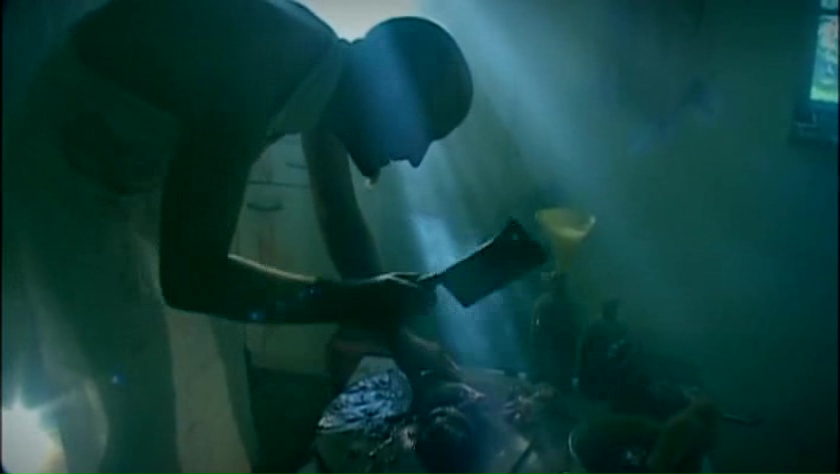
The final twenty minutes or so of this film (if anyone is still watching) is clinical – a masterclass in butchery. The Flesh is strung up by his feet and the Man disembowels him in great detail, vomiting as he does so. The Flesh, already dehumanised, is now deanimalised too; he is simply a carcass being prepared for the meat chiller.
I loved this review from Letterboxd which complains that the movie describes:
“how a cannibal prepares his food, everything is in detail and the scene came exactly when I was going to have my breakfast fuck me it’s like the movie knew when I’m going to eat my food, this has happened quite a few times with me now and its getting creepy 😂”
“One of the sickest and freakiest movies ever to come from a nation well-known for its freaky and sick movies (Germany)”
To me, the butchery was not the most abject part of the film; it was the sort of thing you might see in an instructional video for abattoir workers, except not with the usual species of victim. The defecation and vomiting were harder to take, but I guess that is subjective. All in all, most people will find something to disgust them in this film, and perhaps that was the point. It’s disgusting, but it’s not that different to what we get minimum-pay workers in slaughterhouses to do eight hours a day to some seventy billion animals every year. Unless the special effects budget was huge (not obvious from the rest of the film), a real animal was gutted and chopped up to make this film, which is actually the sickest part of it.
The butchery is shown in loving detail and for extended time. It lets us experience what it would be like to do that (I’m guessing most of us have not butchered an animal, human or otherwise). Being his first time, the Man keeps stopping to either snack on some flesh or to remorsefully throw up; pretty sure neither would be encouraged in the industrial meat corporation.
For a real slaughterhouse worker, wielding the cleaver would be sickening the first time, then boring for the hours thereafter. We see the Flesh reduced to just meat cuts. As King Lear said, when stripped of civilisation:
“unaccommodated man is no more but such a poor, bare, fork’d animal”
If you don’t want to watch the whole thing, there is an excellent and hilarious summary by Mike Bracken “The Horror Geek” which had me laughing out loud several times, despite the content.
At the end of the film, the Man has a nice Flesh dinner (the Flesh is present at the table, short of one body), then jerks off to his home movie, and next morning is all scrubbed up, in a nice suit, and trotting off to meet his potential next sacrifice. In fact, Meiwes was eventually caught because he advertised for another victim a few months later, when he started running out of Brandes. Meiwes is still in jail in Germany, and is now apparently a vegetarian.
As I said, we know very little about the director, except that Dora is not his real name, and that he is vegetarian and works as a physician. After watching this movie, you’ll understand why he wants to remain anonymous. Perhaps also why he’s a vegetarian.
We all are vaguely aware of our eventual deaths, and some people even take it seriously enough to arrange insurance of other funding for their funerals. But how many of us consider the environmental cost of burying or burning human bodies? Over one million people die every week – all those bodies going into landfill under granite slabs, or adding to the carbon emissions from the crematoria.
Why not eat them? Many of these corpses are still covered in healthy flesh. If human meat is comparable to that of the other animals we choose to eat (apparently somewhere between veal and pork), why not let those who are hungry eat some of the corpses, preferably the ones that are minimally diseased? Is death by starvation less abject than cannibalism?
Most readers will find this unthinkable and assert that they would die rather than eat human flesh, as many did after hearing about the Uruguayan rugby team survivors from Uruguayan Air Force Flight 571 which crashed in the Andes, leaving nothing to eat but frozen passengers. But like most taboos, this one is based on cultural conditioning rather than any rational thought. After all, why is it fine to source meat from a pig who has lived a short and brutal life and suffered an agonising death, but repulsive to eat a person who no longer is capable of pleasure or pain?
That is the question this short film seems to ask.
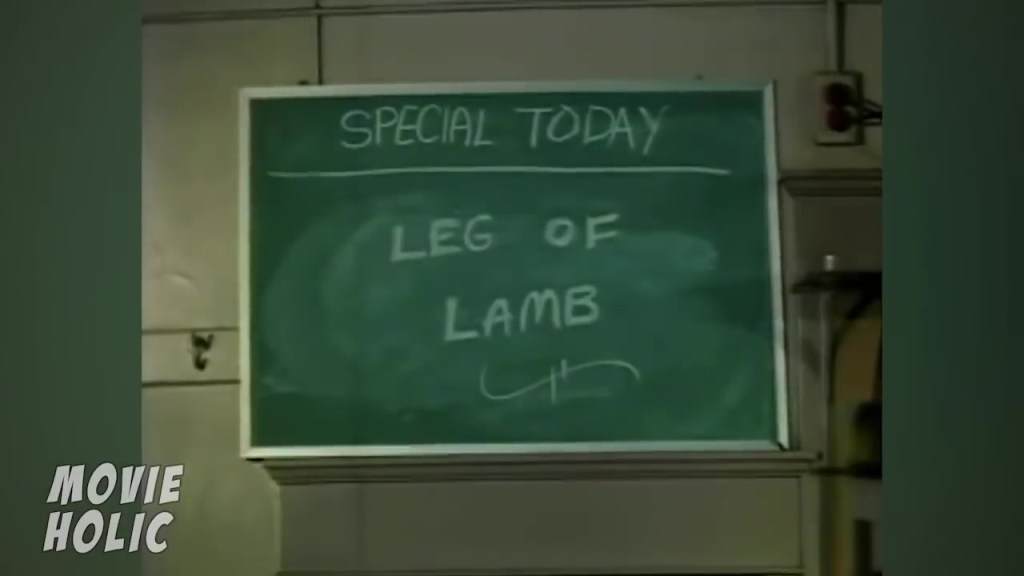
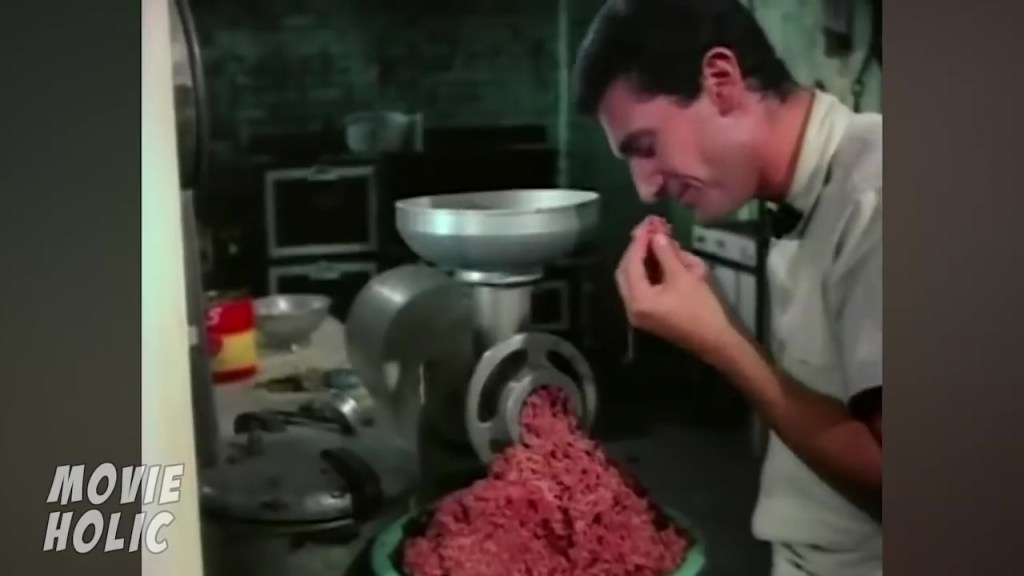
An undertaker and his two friends, who are restaurant owners, go out on the town killing people; the restaurant owners cook parts of the bodies, and the undertaker earns his keep burying the left-overs. The rather thickly ladled humour involves the victims having the names given to the flesh of animals: their first victim is Sally Lamb, and the specialty at their restaurant that day is lamb leg.
Their racket goes awry when a detective, who has a secretary conveniently named Miss Poultry, suspect that something isn’t quite kosher.
Lévi-Strauss wrote in “A Lesson in Wisdom from Mad Cows”
“The link between a meat-based diet and cannibalism (a notion broadened to take on a certain universality) thus has very deep roots in thought…. Indeed, a day may come when the idea that human beings in the past raised and slaughtered living things for food and complacently displayed slabs of their flesh in shop windows will inspire the same revulsion as what travellers in the sixteenth and seventeenth centuries felt about the cannibal meals of American, Oceanian, or African indigenous peoples.”
Acceptance of violent slaughter, particularly the impersonal conveyer-belt killing of modern agriculture, legitimises cannibalism by removing all subjectivity from the victim. The voracious and ever growing desire for meat, together with the fading of the clarity of the naïve dualism of human and animal, leads inexorably to acceptance of the consumption of human meat; thus the boom in cannibal films and television shows. The harvesting methods in this film are repulsive because they are similar to what we pay slaughterhouse workers to do, hidden from our sight.
There’s even pre-slaughter stunning.
With its bad jokes, wooden acting and terrible script, this movie scored a paltry 43% on Rotten Tomatoes, with the only official critic writing “You’ve never heard of this movie. Keep it that way.”
But the full movie (all 63 minutes of it) is on Youtube should you wish to ignore that advice. With its mid-century kitsch and ironic soundtrack, it’s so bad it’s good, if you know what I mean.
Patriarchal civilisation, Derrida tells us, depends on what he calls “carnivorous virility”:
The subject does not want just to master and possess nature actively. In our cultures, he accepts sacrifice and eats flesh. ‘Eating Well’ or the Calculation of the Subject.
The movie makes this abundantly clear in the macho strutting of the killers and the detective on their trail, but also in its choice of female victims. Men are killed violently, but as a struggle for power. Women must be subjugated, terrorised then cut up and eaten. One of the killers uses a chain to destroy a statue of the goddess Aphrodite (the Venus de Milo) in a spa, then kills a woman with the same chain. Yes, it’s symbolism, double-strength. The women are nature, presented in this film as seductive and edible. The men are the symbolic order, at war with nature and controlling her through their carnivorous sacrifice.
As one of the killers asks, his hands full of intestines:




















 The Cannibal Guy