Hobbit cannibals: THE CANNIBAL IN THE JUNGLE (Simon George, 2015)

As a general rule, I am not a big fan of “mockumentaries” – if you’re making stuff up, then why not just describe it as fiction? And if you are a channel like Animal Planet which makes factual documentaries about (real) fauna and flora for its seventy million viewers, it seems at least deceptive if not actively fraudulent to start showing made up stuff as if it is a “documentary”. This is not the first time they’ve done it; they had previously tried to make us believe they had found evidence of dragons and mermaids. So an untrue ‘true-crime’ documentary about a fake cannibal locked up for supposed cannibalism which was actually carried out by an extinct species of hobbits seemed pretty tame to the Ethics Department of Animal Planet I guess.

I should concede that some of the classics of cannibal texts are mockumentaries or “found footage” inventions. Many of the Italian ‘cannibal boom” films attempted to appear as factual records, particularly the classic Cannibal Holocaust, for which the director, Ruggero Deodata, secreted away the actors to make it appear they had been killed, then had to produce them in court to avoid facing  homicide charges. More recently, District Nine, Ghoul and Long Pigs have all made somewhat desultory attempts to persuade us that we were watching the actual killing and eating of humans by humans.

In this week’s offering, The Cannibal in The Jungle, the director Simon George presents a feature-length ‘true-crime’ special about an American scientist accused of murdering and consuming the remains of his fellow explorers while on an expedition in 1970s Indonesia. The murder/cannibalism case is told through interviews with an Australian anthropologist Richard Hoernboeck (played by Scottish actor Jim Sturgeon with a broad Australian accent), who says he found evidence of a tribe of very small hominids which he calls hobbits, and subsequently chose to investigate the murder/cannibalism case, 25 years after it happened. He tells us that in 1977, an American ornithologist was convicted of killing and cannibalising two colleagues in the jungles of Indonesia while on a quest to study eagles, as well as hoping to find a supposedly extinct owl. Instead, Dr Timothy Darrow, branded ‘The American Cannibal’ by the press during his trial for murder and cannibalism, claimed in his (unsuccessful) defence that they had been attacked by a lost species of early humans. These hobbits, he said, were responsible for the murder and consumption of his friends. Nobody believed him. Cannibalism is easier to believe than hobbits.

In fact, the remains of a species matching Darrow’s description were found in those jungles of Indonesia in 2003 by an anthropologist from Wollongong University, although his name was Mike Morwood (a hobbit name if ever I heard one). In what is now regarded as one of the most important anthropological finds ever, a team of scientists discovered the bones of an entirely new species of human, one that stood only 43 inches or 110cm tall. Homo floresiensis (popularly called Flores Man or more popularly Hobbits) lived on the island for perhaps over a million years before going extinct. Some recent research suggests that a tribe of the hominins known as Homo erectus became isolated on this remote Indonesian island, perhaps a million years ago, and evolved a dramatically smaller body size.

But did they really go extinct? An indigenous tribe on the Indonesian island of Flores, where the remains of the ‘hobbits’ were discovered, have their own accounts of little wild men that climb trees and walk on two legs. They also describe them as cannibals. And according to their legends, they may never have died out at all. This story claims to follow Hoernboeck’s expedition into the jungle of Flores, Indonesia, seeking to discover if hobbits still exist, whether Timothy Darrow’s ill-fated expedition really encountered the supposedly extinct creatures, and if the ‘American Cannibal’ was therefore innocent of the crimes for which he was convicted more than three decades previously.

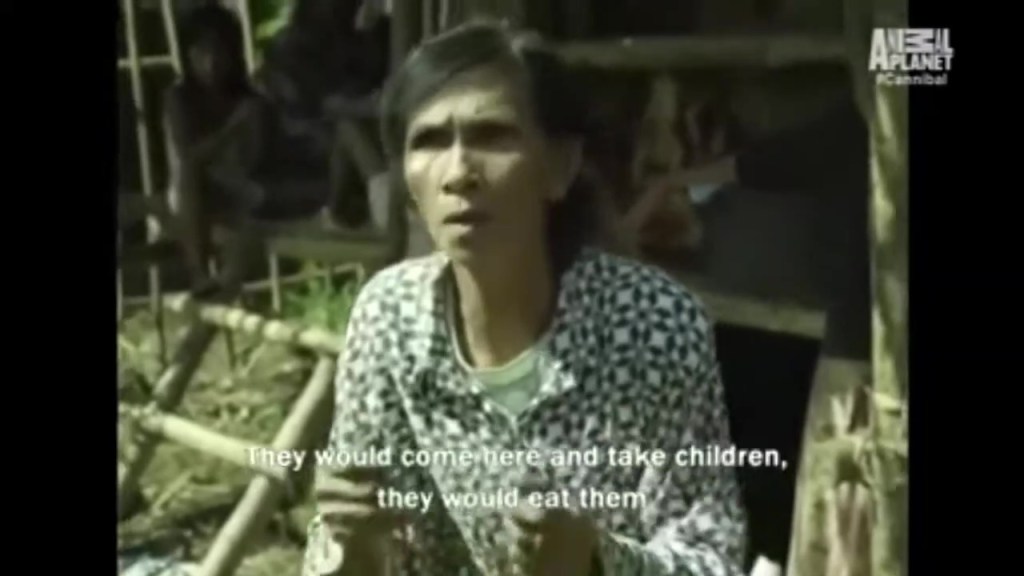
The local people of the island, the Lio, claim that the hobbits were around until very recently, and may still be hiding out in the forest. In the fake doco, they are shown suggesting that they would kidnap and eat children, although being a different species to Homo sapiens, I suppose this would not technically be cannibalism.
The program is ingeniously done. Hoernboeck, the modern-day anthropologist, shows purportedly real video of his interviews with the imprisoned Darrow (played by Richard Brake, who was in Game of Thrones and Hannibal Rising, so there’s a giveaway for the alert horror fan), and his expedition to trace the journey on which Darrow supposedly found the hobbits. Interspersed with this, we are shown what we are told is a reenactment of the original expedition by Darrow and his friends/victims. The implication is that we can believe the rest is real, because they told us what was staged. We move to the present to see the anthropologist tracking down Darrow’s tape recorder which contains the taped call of the hobbits, then eventually the actual film taken by Darrow that proved his innocence but, alas, not until after he died in the brutal Kerobokan prison.
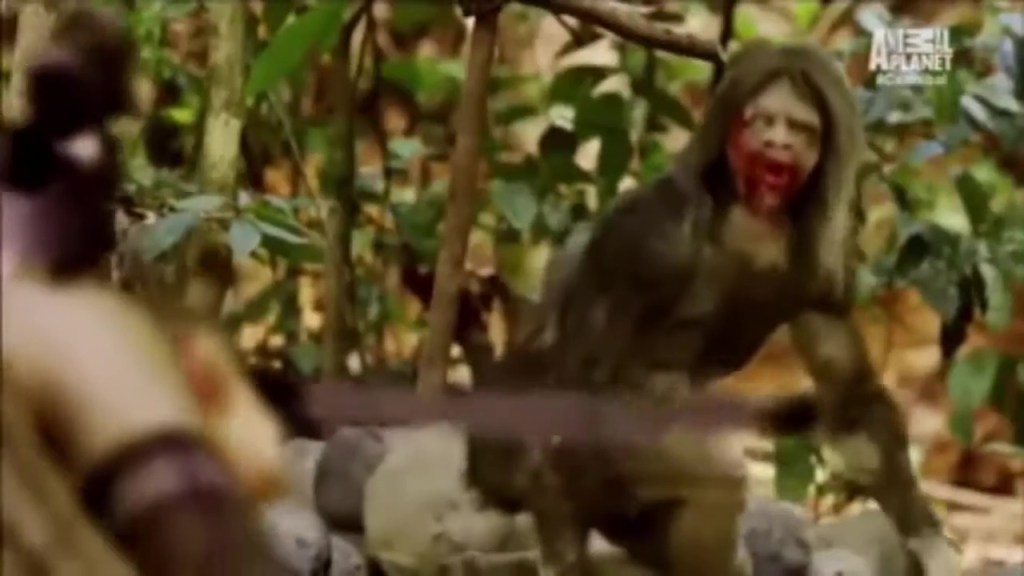
With a modicum of willing suspension of disbelief, it’s actually pretty convincing, and quite sad, unless we keep reminding ourselves that the whole thing is a fake. Those who watched it when it first came out, unless they recognised the Night King or the war criminal who ate Hannibal’s sister, did not discover that it was all fictional until the very end, when there is a (very) short statement. Most viewers probably wouldn’t even have noticed it.
What I found interesting is the depiction of the totally credible outrage of the Indonesian authorities, furious that an American would eat the Indonesian guide. Yet when the Flores locals are shown talking about the hobbits capturing and eating their children, there is inaction. Nature is red in tooth and claw! Animals eat each other, and eat people if they can, so if some unidentified ape ate your child, well, that’s unfortunate. But anthropocentric ideology denies our animality, so for a human to eat a human still manages to shock. The false binary of human/animal has led science to tie knots in the language, with some calling the hobbits “ape-men” and one learned anthropologist, Gregory Forth, calling his book about them Between Ape and Human. Like this documentary, the idea of a lacuna between apes and humans is fictional. We are a species of great ape, and our DNA is 98.8% identical to chimps.

Dr. Darrow’s supposed cannibalism was more horrific than nature’s mundane bloodbaths, not because he was genetically similar to the victim, but because he was a post-doctoral scientist, a ‘civilised’ man. If either party to slaughter, the one wielding or the one enduring the blade, can be defined as ‘animal’, all bets are off. The cannibals we consider in this blog are simply better than most people at dehumanising, objectifying the other.

The full movie is available, at the time of writing, at Daily Motion.

Mark Haydon, who was involved in Snowtown murders, being released from jail. SNOWTOWN (Justin Kurzel, 2011)

SNOWTOWN is back in the news at the moment, due to one of the perpetrators being granted parole after serving his 25-year sentence. Mark Haydon was convicted of assisting John Bunting and Robert Wagner in the murders of 11 people, including his wife, between 1992 and 1999.

Haydon reportedly rented the abandoned state bank building at Snowtown in which the bodies were stored in barrels of acid. A jury deadlocked on the charge that he was involved in the murders of his own wife, Elizabeth Haydon, and of Troy Youde, and he was never retried. His 25-year sentence was completed this year, and he will be freed into the community with no restrictions in May 2024 (unless the government succeeds in attempts to change the law to broaden the definition of a “high-risk offender”).

Above: the real Mark Haydon – then and now.

Relatives of the victims have long voiced their anguish and fear at any prospect of any of the perpetrators being released.

The film Snowtown is a recreation of this case, the most famous serial killer case in Australia (with the exception of the attempted genocide of the Indigenous population). A total of twelve victims were identified, and eight of the bodies were eventually found by police in barrels filled with acid, which were stored in an abandoned bank vault in the small town of Snowtown, in South Australia.

Although the press called this the “bodies in barrels” murders, it soon became known, to the sorrow of that little town, as THE SNOWTOWN MURDERS, even though only one of the murders had taken place there, the rest happening in the big city, Adelaide, between 1992 and 1999.

The final murder that took place in Snowtown, however, involved CANNIBALISM. We’ll have a look at that in this blog, although unfortunately the film doesn’t.

The film is a true Crime retelling, which means that none of the names have been changed to protect – anyone, and of course the dialogue has to be imagined to some extent. But we know a lot of what went on, and so did the film makers.

True Crime has been a popular genre for centuries, and transgressed the line between fiction and non-fiction in 1965, when Truman Capote released In Cold Blood, a “non-fiction novel”, relating or interpreting a 1959 Kansas murder. Modern versions of the genre extend beyond literature to films, podcasts, vodcasts and television shows. They tend to concentrate on the most sensationalistic cases and are grittily and brutally realistic in portraying the violence and gore.

In Australia, where this film originates, a survey found that some 44 percent of podcast listeners had listened to true crime podcasts, with an considerable proportion of them being women.

The protagonist of the film is Jamie Vlassakis, a teenager living with his single mother and two siblings. The mother’s boyfriend is a helpful sort of bloke who makes the kids dinner when mum has to go out, then strips them and takes photos of them for his own gratification. The mother deals quite effectively with this, beating him up and kicking him repeatedly, but soon a new man comes into their lives – John Bunting.

Bunting has a winning smile and a certitude that gets him into the family, and he takes Jamie under his wing. John also has a burning hatred of gay men and paedophiles, two rather different beasts whom he conflates into one evil figure. When Jamie tells him that he was raped by his older half-brother Troy, John tells Jamie he needs to “grow a pair” and take revenge. He involves Jamie in his plans to identify, capture and kill a range of people he considers monsters. He collects detailed information on a “spider wall” in his house. “Rock spider” is Australian slang for a paedophile.

But John Bunting has clearly not read Nietzsche:

He starts by involving Jamie in his plans to drive the erring boyfriend out of town. Jamie finds him in the garden, chopping up and mincing kangaroo body parts to toss onto the neighbour’s front door and sofa.

He involves Jamie in a raucous discussion of paedophile teachers, asking him what he thinks should be done with them. Jamie follows the fatal logic.

John takes Jamie under his wing, teaching him to ride a bike, shaving his head, showing him the spider wall, giving him a gun, and getting him to shoot John’s dog, a brutal blooding. When he introduces Jamie to the act of killing humans, there is also the accompanying deception: each victim is made to record a message that will be played on the answering phone of their loved ones. Jamie’s mum hears Troy say he hates her, and Jamie lies to her, letting her believe that forced call was true. Jamie goes off to doctors and government offices to collect payments, posing as the people they have killed. He doesn’t look happy about it, but he is sinking deeper and deeper into John’s machinations. After a while, collecting the government support payments becomes the motive as in the murder of Gary O’Dwyer; the vigilante pretext is forgotten. O’Dwyer invites the men to his place to watch him feed rats to his python, a process we see in slow motion in which the snake unhinges his jaw to swallow the prey whole, just as the men become unhinged in their growing lust to kill.

So John makes a man of Jamie, in the most toxic sense. He teaches him carnivorous virility – in order to be a man, you have to kill and eat. Not always the same carcass, but that does seem the logical consequence of the objectification of all victims.

The film traces the increasingly violent actions in which Jamie becomes involved, unwillingly at first, but totally under the control of John. He is made to watch them torture his half-brother Troy, who was earlier shown sodomising Jamie, and he finally steps in to finish the killing, tears rolling down his face, while John strokes his cheek and murmurs “good boy.”

Jamie is now a fully-fledged killer and a vigilante, not just an observer and helper the way Mark Haydon (the man currently being released on bail) is portrayed. Mark is a minor character, buying rubbish bags and digging holes for corpses, until near the end of the film, when he tells John he got into a fight with his wife, who called him a pussy. He told her what a big man he was – burying bodies. John brushes the story off, but we know she is next.

Although this murder is not shown in the film, evidence was given that Haydon saw his wife’s body and laughed. Her body was one of the ones found in barrels in the Snowtown bank building.

The final murder was Jamie’s half-brother (through a different father) David Johnson, whose only offence was his fastidiousness and unwillingness to go along with John’s rhetoric of violence. The final scene of the movie shows Jamie persuading David (one of the few wholesome characters in the film) to check out a computer supposedly offered for sale in Snowtown. They stop for a beer, they stop again so Jamie can urinate in a creek. He runs back to the car to accompany David to his death; the car is parked at a crossroads, clearly a symbol, a suggestion that Jamie, who is depicted as hating all the violence, could have chosen a different path at any time.

John Bunting, Australia’s most prolific serial killer, was convicted of eleven murders and sentenced to life imprisonment without the possibility of parole. Robert Wagner, his main accomplice, was convicted of ten murders and sentenced also to life without parole. Mark Haydon was initially charged with two murders but was only convicted on five counts of assisting. The jury did not come to a decision on two murder charges against Haydon, and another charge of assisting murder, which never came to retrial.

More than 250 suppression orders originally prevented publication of the details of this case at the time. In early 2011, a judge lifted the remaining orders in response to a request by the producers of the film Snowtown. Haydon was sentenced to 25 years, which he has now completed; he is back in the community on parole, with the head of the parole board saying he’s well behaved and poses no risk to the community. He has been moved to the Adelaide Pre-Release Centre – a low security facility where prisoners can participate in accompanied and unaccompanied leave, including for work and education. The usual conditions of parole apply (no binge drinking – yet), but he will be a free man in May 2024 when his sentence expires.  

Jamie, presented in the film as an unwilling and even sympathetic killer, pleaded guilty to four murders and provided testimony against the other men, in exchange for a lesser sentence. He testified about the cannibalism that is not shown in this film — that Bunting and Wagner hacked at David’s body to make sure it would fit in the barrel and then sliced off a sliver of flesh from the right thigh. They heated a frying pan, cooked the flesh, and handed it around. Jamie’s testimony was the only evidence police had that cannibalism had taken place, and was presented by his attorney as proof that he was fully cooperating and deserved a lighter sentence. In 2005, when Haydon’s murder charges were dropped by the Director of Public Prosecutions, several suppression orders were lifted. These detailed the murder and cannibalism of the final victim, David Johnson.
Jamie Vlassakis was sentenced to four consecutive life sentences with a non-parole period of 26 years, which means it is possible he could be released on parole in 2025. He will be 45 years old.

The film is gritty and brutal, particularly the scenes of Jamie’s rape, and the torture of their victims. But it is compelling watching, and the acting and directing are quite brilliant, capturing the loss of innocence that starts with abuse and ends with brutality. Bunting’s early life reportedly was very rough; he said he enjoyed killing ants with acid, an idea he later transposed to those humans he saw as vermin. When he grew up, he worked at a slaughterhouse, where he would brag about slaughtering animals, saying that’s what he enjoyed the most. Later, when he moved in on Jamie’s family, he would kill cats and dogs and skin them while making Jamie watch. We see Jamie transform from the innocent teenager who stands around smoking at the start of the film to a shaven-headed killer, and even his little brother is shown with his head shaved, starting his short journey from childhood abuse to callousness.

The film is all about that loss of innocence. At an early age, these kids are introduced to poverty, abuse and violence that is a hallmark of violent, carnivorous society. Children famously love “animals” when they are little, recognising their own infant state of being helpless and unable to communicate, yet are socialised into carnivory by the peer pressure to conform and their recruitment into the ceaseless human war on nature. Animals, particularly the chattel slave animals generally referred to by their monetary value, “livestock”, are nothing and nobody. It is only a small step for John Bunting to assume the same about those he hunts, and so why would he flinch at eating them? It is the logical next step.

The film closes as Jamie shuts the door of the vault, trapping the unfortunate David Johnson with the killer gang. We don’t see the murder, or the frying pan. Unfortunately, that final step over the thin red line between humans and other animals appears to have been a bridge, or a meal, too far for this film.

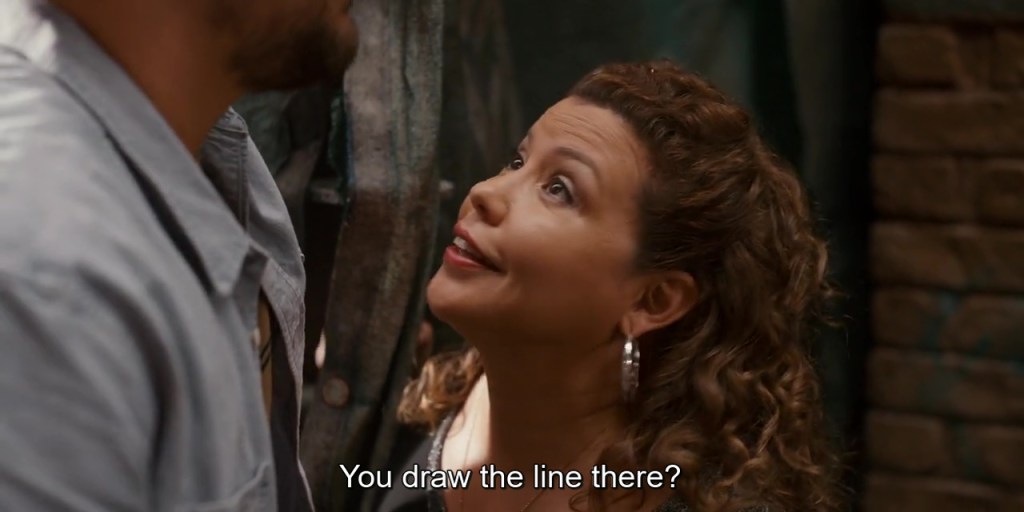
“You draw the line there?”: DOLORES ROACH episodes 7 & 8

The climax. The denouement. The final two episodes of this quite brilliant podcast that became a Broadway show that became a television series about an untrue true crime, and includes podcasts and Broadway shows. If you need to catch up on the earlier episodes, I would suggest watching them, but if you can’t wait, here are my earlier blogs.

Episode 1

Episode 2 & 3

Episode 4

Episode 5

Episode 6

And here is the very brief synopsis.

  • In episode 1, Dolores has just been released from prison after 16 years – she took the fall for her boyfriend, who has since disappeared. She heads back to Washington Heights New York. but it’s all gentrified now, except for Empanada Loca, the shop of her old friend Luis, who offers her a room and sets her up as a masseuse, a skill she learnt in jail.
  • In episodes 2 and 3, Dolores kills the landlord who has been harassing Luis for his overdue rent, which he can’t afford because the neighbourhood is now fancy, and people don’t buy empanadas much. Luis creates a new empanada, MUY LOCO. It is hugely successful, because it contains, yep, human flesh, in this case, the landlord, Mr Pearlman, whose son, Jonah, appears in the shop at the end of episode 3, with two cops behind him.
  • In episode 4, Dolores is shocked to find what Luis has done with the body of the landlord she murdered, and disgusted by the secret contents of the muy loco empanadas—Mr Pearlman. She is particularly horrified when Luis offers Jonah an empanada to try, a muy loco, which she knows is a “mouthful of daddy”. Meanwhile, the local drug dealer, Marcie, has pissed off Dolores, and now she is also in Luis’ fridge, and bits of her are now in the empanadas.
  • In episode 5, Dolores hires a private eye called Ruthie, played by Cyndi Lauper, to trace her ex, who cheated on her and let her take the fall in a drug bust. Ruthie’s motto (or perhaps mission statement) is I NEVER DON’T FIND THEM. But the last thing Dolores wants is for Ruthie to find Mr Pearlman.
  • In episode 6, we see cannibalism as a business. Luis has been clear-eyed about this all along – he gets rid of the annoying landlord, he thoroughly destroys the evidence (in customers’ stomachs) and he makes money from the meat, which is apparently delicious and hugely popular, while saving money by not buying the flesh of other animals from the food-services man, Jeremiah, the only sympathetic character in the story so far.

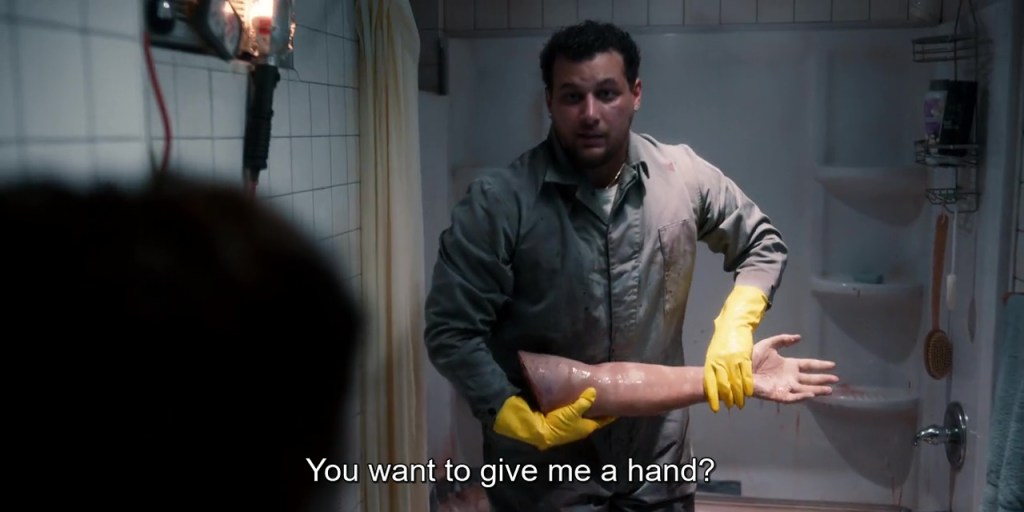
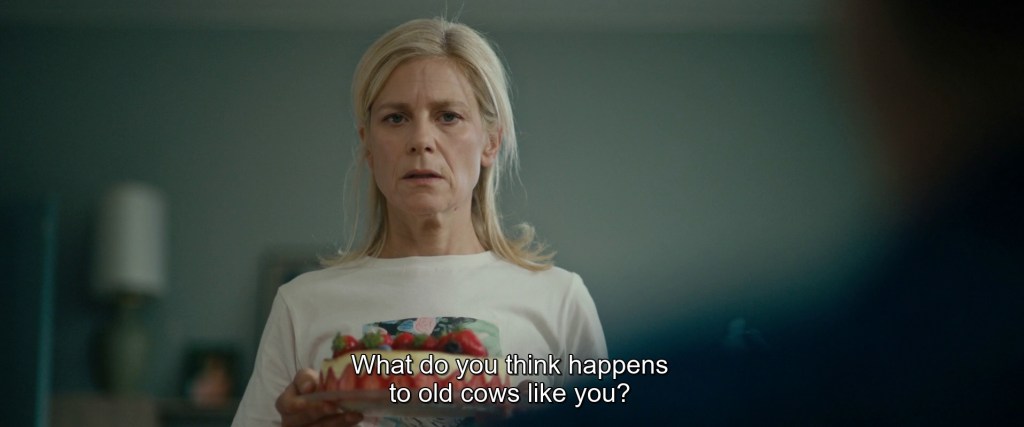
Not a lot of human flesh being eaten in these final two episodes, because everything is turning to shit, largely due to the impulsive plans of Luis, and the tendency of Dolores to snap the neck of anyone who annoys her. Police are looking for the drug dealer Dolores killed back in episode 4, and threatening to call in the DEA. Luis is still chopping up the bodies of Dolores’ victims to fill his empanadas, but he doesn’t want anyone to find the marijuana he is growing. THAT would be incriminating. Dolores points out that his fridge and apartment are full of chopped up bodies, and asks him the question that defines all ethical discussions.

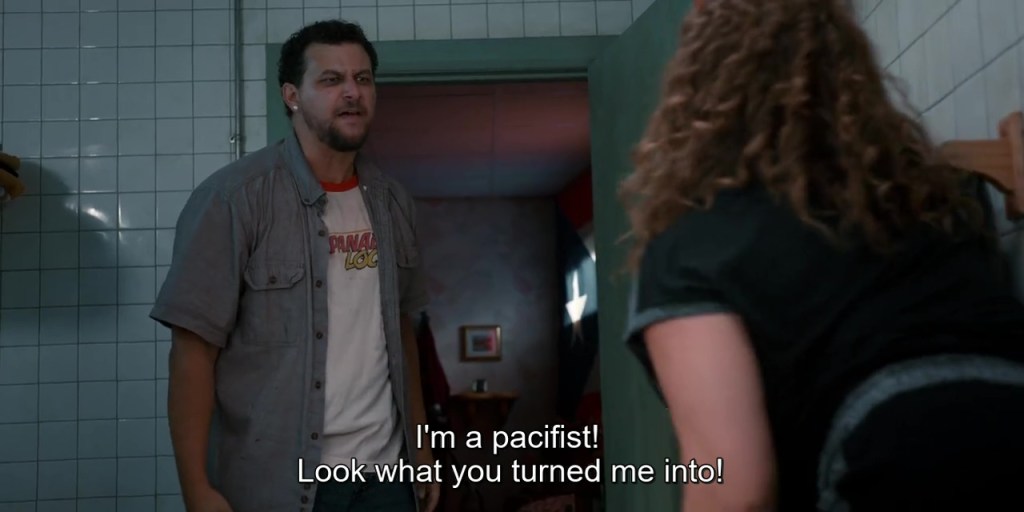
 She’s much more upset about the cannibalism than the increasing number of corpses she is leaving all over the shop. Odd that. Luis sees meat as his business, and Dolores’ steady body count as his (very reasonably priced) supplier. He’s not too fussed about all the killing, as long as he doesn’t have to do it – like customers in a butcher shop. When he finally kills a man, he is upset: “Look what you made me do!”

Luis cracks some of the best jokes in this show, in the middle of the street (much to Dolores’ fury) about the “fat fuck” she killed last episode, and how he is going to use the body fat in his pastry.

And some of the worst.

Lots of interesting Freudian things going on here – in earlier episodes, they discussed the difference between edible and Oedipal, and then there’s the whole thing with Luis only wanting to give Dolores cunnilingus, not penetrative sex, even though she has her period. She considers that eating her menstrual blood makes him a cannibal, even though he has been snacking on human empanadas all through the show, so it shouldn’t really be a surprise.

And his pet name is Mami. It’s apparently the Spanish equivalent of “baby” or “darling”, but is also used for, yep, mother. Freud said the two primary taboos are incest and cannibalism, and Luis definitely has an edible complex.

We find out why Luis doesn’t want sex – he fell in love with his father’s girlfriend when he was 12, had sex with her (so now we have another taboo covered) and then tried to castrate himself in punishment. He couldn’t cut through his penis (Meiwes and Brandes found it was much harder than you might think) and poured hot oil on the wound, leaving him horribly disfigured. Yes, Dr Freud, the threat of castration can be as big a motivation for mental illness as you thought.

Dolores just thinks she is a monster. But one of the fascinating things about cannibalism is that unlike other horror movie tropes, they are not supernatural or even particularly superhuman. And they really exist.

“I’m a monster. Worse, I’m real.”

Luis ends up “deep fried, like everybody else” in one of the most dramatic scenes, and Dolores escapes:

She goes looking for the showrunner of the play, a nice piece of postmodern complication as he clearly represents the creator of the show we are watching, Aaron Mark.

He is accused of humanising a serial killer, but hey, Dolores is very human, just like Macbeth and Oedipus and every tragic protagonist in literature. She’s not even a cannibal; in the whole eight episodes, we have not even seen her eat a human empanada! She’s just a misunderstood serial killer.

As she says, you have to draw a line somewhere.

She forces the showrunner to take her to a house where, he says, someone knows the whereabouts of the man who betrayed her and left her to rot in jail. When the door opens, she roars with laughter, and then pounces, but at whom? All we know is that, like Georgina in The Cook, The Thief, she is directing her invective at us, the audience! We may not know where her ex is living. But we do know that cannibalism starts at home.

What the Fox? “My Son Jeffrey: The Dahmer Family Tapes”

A new streaming series promises “never-before-heard” conversations between serial killer Jeffrey Dahmer, “The Milwaukee Cannibal”, and his father, Lionel.

My Son Jeffrey: The Dahmer Family Tapes is streaming from Sept. 18 on Fox Nation, Fox News Channel’s subscription-based streaming service.

The four-part documentary series replays conversations recorded with Dahmer while he was in Columbia Correctional Institution in Portage, Wisconsin, serving 15 life sentences after confessing in 1991 to a string of crimes including murder, necrophilia and cannibalism. The recordings, made by Lionel Dahmer, have not been heard publicly before, according to Fox Nation.

The series also includes Dahmer family home movies, and interviews with a variety of others, including Mike Kukral, a high school friends from Ohio; Michael Prochaska, Dahmer’s college roommate; Ronald Flowers, the man who escaped after Dahmer had drugged, sexually abused and imprisoned him at Dahmer’s grandmother’s house in West Allis; and retired Milwaukee Police lieutenants Kenneth Mueller and Michael Dubis, who were on the scene the night of Dahmer’s arrest.

Dahmer was beaten to death in prison in 1994, but you wouldn’t know from watching streaming services. In 2022, Netflix went full Dahmer-mania, with Ian Brennan and Ryan Murphy’s dramatisation of the life and crimes called DAHMER: MONSTER – The Jeffrey Dahmer Story.   

“Monster” won a Golden Globe for best actor in a miniseries or TV movie for Evan Peters for his portrayal of Dahmer. The series received 13 nominations at the Primetime Emmy Awards, which drew some ire from Thomas M. Jacobson, the attorney who represented eight of the families of Jeffrey Dahmer’s victims. He told entertainment industry news site The Wrap that nominations for shows like that contributed “to glamorizing or desensitizing violence and crime in society.”

Netflix quickly followed up their re-enactment with Conversations with a Killer: THE JEFFREY DAHMER TAPES, a set of tapes made by his defence attorneys in which he made all sorts of fascinating admissions. At this point, there wasn’t much the keen true-crime aficionado didn’t know about Dahmer.

Actually, most of this information had long been out there. Plenty of evidence had been removed and studied after his arrest, including the fridge full of human body parts, several skeletons and the barrel of acid he used to dissolve unwanted flesh. Dahmer had spoken freely to his interrogators about the murders he had done, in graphic detail, all of which was revealed at trial. After his sentencing, and before he was killed (obviously), he gave interviews to news programs who could not believe their luck, and treated him like a celebrity.

Jeremy Renner had portrayed Dahmer when Netflix was still sending movies in the post, in a movie called Dahmer.

So what does this new Fox program hope to add (besides some sorely needed ratings)? FOX Nation President Jason Klarman said in a press release:

“The Jeffrey Dahmer case has captivated the public for over three decades and now with these exclusive tapes released for the very first time, viewers will hear from Dahmer in his own words and get insight into his relationship with his father”

Fox is featuring in the promos the fact that Dahmer was killing and pickling men back in the 1980s when he was living with his dear old grandma in Wisconsin. He had lured three men back to granny’s place and killed them, and kept mummified souvenirs in his room and in the basement.

The recording does not make clear to which victims the mummified remains belonged; Jamie Doxtator, Richard Guerrero and Anthony Sears were all killed at the location. Another victim, Steven Tuomi, was murdered by Dahmer in a nearby hotel but he kept those mummified remains in her basement as well. He told his father:

“Remember when you visited grandma? Remember that small, one-by-one square foot box? You know what was in it, don’t you? The mummified head and genitals of the last victim at the West Allis location”

Dahmer’s dad was presumably relieved to hear that it only had mummified body parts, because he was worried it was something naughty:

“It was wooden, but it had a metal covering, and you were very insistent that I opened that up because you thought I had pornography magazines”.

The show also plays up the fact that the dad, Lionel, admits to his son that he also had strange and disturbing thoughts in his youth, and perhaps actions too, since he expressed surprise that he had never been caught. He tells his son, “You’re just like me, Jeff”.

Showing audio on television is pretty dull so, like the Netflix tapes, it’s illustrated with lots of archive pictures. There are skulls, and meat from Dahmer’s fridge,

And his mug shot, which is actually a lot less terrifying than some we’ve seen recently.

It’s hard to imagine that the relatives of Dahmer’s victims, who objected to the Emmy nominations for the Netflix series, are going to be too thrilled at Fox Nation digging up the corpses again. But then, it’s Fox, and they love being on the edge.

Deep tissue cannibalism: THE HORROR OF DELORES ROACH Episode 1 (Aaron Mark, 2023)

This is not only a fabulous story, but possesses a proud heritage in the field of Cannibal Studies, and is not afraid to flaunt it. Delores Roach is a young woman in a basement in Washington Heights Manhattan, who gives massages for a living, occasionally killing her clients and delivering their bodies to Luis, who runs the struggling empanada store above, to use as meat. Yes, it is unapologetically the offspring of the legend of Sweeney Todd, the “Demon Barber of Fleet Street”, who killed his customers instead of shaving them and then dropped them through a trapdoor to his colleague and perhaps lover, Mrs Lovett, who turned them into delicious meat pies. There is some controversy over whether or not Sweeney was a real person who was publicly hanged outside Newgate Prison in 1802 or just an urban legend of early capitalism. In any case, Sweeney appeared in a number of movies; in 1936 he was just plumb crazy, while in 2007 Tim Burton made him an honest man wronged by a corrupt power establishment. Burton’s film is based on a Sondheim musical that played interminably on Broadway and around the world.

In this version, Delores (Justina Machado) turns everything upside down; it’s Sweeney through the looking glass. We’re in New York instead of London, with a female serial killer instead of a male, and a male pastry chef instead of a female. Delores is downstairs killing people for Luis who is upstairs cooking them, again turning the Sweeney legend upside down. Like Sweeney, at least in the Tim Burton musical version of the story, Delores has returned from a long and unjust term of incarceration.

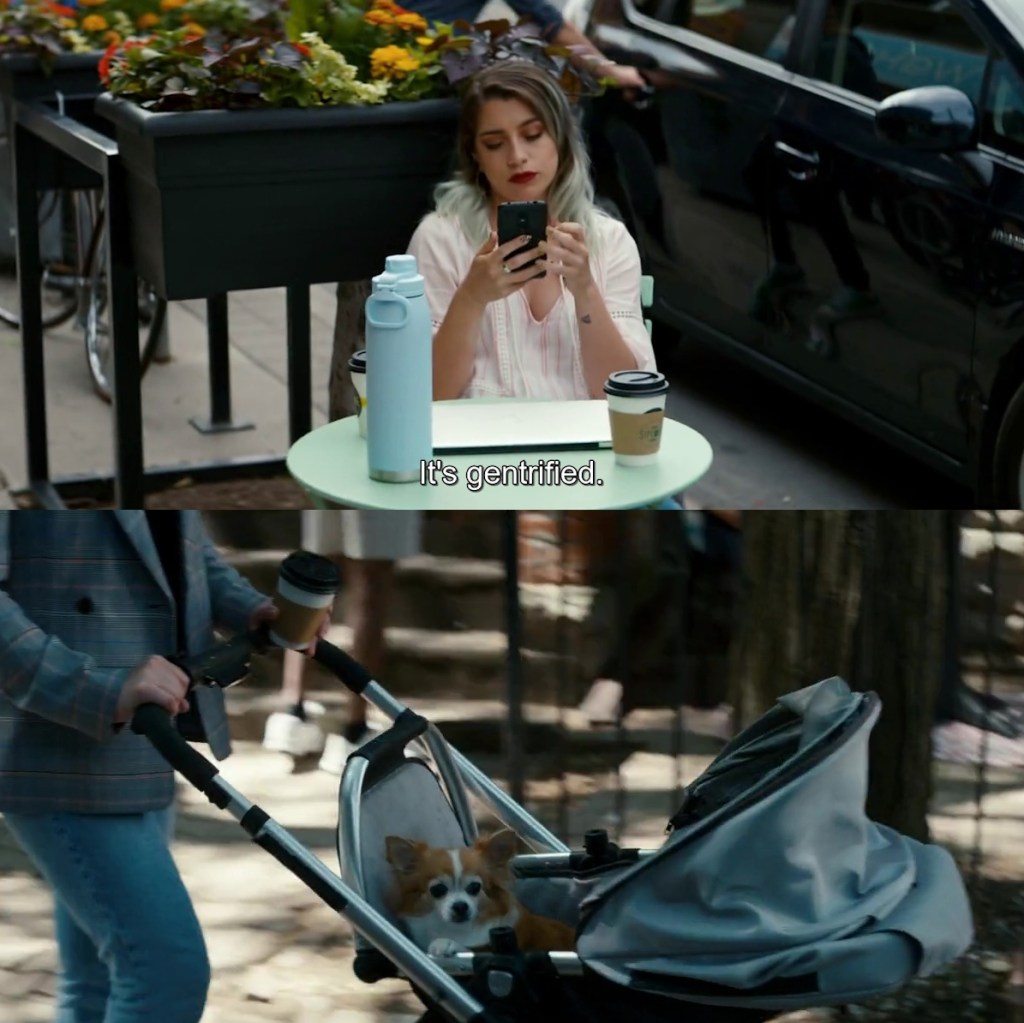
She finds her shabby neighbourhood, Washington Heights, gentrified after 16 years in the slammer, to the extent that she doesn’t even recognize any of the shops. A lot of the reviews seem to focus on gentrification as the main crime in this story.

Except for her favourite fast food store, Empanada Loca, run by Luis (Alejandro Hernandez), the son of the man who used to make the empanadas. He has a soft spot for Delores, who used to pay him in cash and spliffs when he delivered her lunches. Luis offers her accommodation, for old time’s sake, and maybe the odd massage.

There are plenty of stories based on butchers serving human meat to unwitting customers, turning them into innocent cannibals. Among them are Hitchcock’s Speciality of the House, Mielche’s The Butchers, Yau’s The Untold Story, Jensen’s The Green Butchers, Stjernswärd’s The Farm and Eboué’s Some Like it Rare. And of course our old friend Hannibal, who tells his guests “Nothing here is vegetarian”.

Burton’s Sweeney Todd was based on a Broadway musical, but Delores is a generation later, and so now her Broadway show is based on a more contemporary form of popular culture, the TRUE CRIME podcast.

Of course, it’s not true, but in the postmodern age, a true crime podcast needs a true crime, which is also confected for our narrative pleasure.

The podcast becomes a Broadway play, with the actor Jessica Pimentel (Orange is the New Black) playing Flora who is playing Delores in the play (stay with me here). Her performance is a triumph; in her final soliloquy she is covered in blood and holding a human heart.

The performance of the play, and the episode we are watching, both end with a song: Stanley Holloway’s “Sweeney Todd the Barber”:

“Sweeney Todd the barber,
by gob he were better than the play
Sweeney Todd the barber,

I’ll polish them off he used to say
and many’s  the poor young orphan lad
had the first square meal he ever had
a hot meat pie made out of his dad
from Sweeney Todd the barber”

For those of us who have been waiting for this series, or those who just saw the advance publicity, we are now in the omniscient position of knowing what is going to happen. We have seen the newspaper headline of the “real” murder and the review of the “real” true crime podcast, and seen the full house audience cheering the performance. In case we aren’t sure, a couple of friends pour drinks in Flora’s dressing room, chatting about the play and its reflection in the “real” world.

“…the café in Taipei serving human flesh dumplings?”
“Yes, yes, yes, yes and the human bone marrow in that bistro in Paris!”

Then the “real” Delores appears in the dressing room after the friends leave. No, not to murder Flora for impersonating her, but to tell her the true story.

“I’m gonna tell you shit you could never un-know.”

So now, we have a dramatisation of a fake true crime podcast about an actual crime that doesn’t exist, and the dramatisation is being applauded for creating a wave of actual cannibalism events (that also didn’t happen). They concern a female serial killer who is based on a male serial killer who also probably didn’t exist. An actor playing the (unreal) serial killer is telling her story to the actor playing the actor who is playing that serial killer. It plays (sorry) with the mind.

So does cannibalism. Except for a few rare cases where the cannibal is prepared to admit all his or her activities, such as Albert Fish, Jeffrey Dahmer and Issei Sagawa (who laid out the whole project in a manga), cannibalism narratives are very difficult to nail down. Some like Ottis Toole over-confess, leading to speculation that they are making it all up, helped by police who want to clear the cold case log. Others deny everything. And some just disappear and are never found, like Jack the Ripper. Cases of cannibalism are so sensationalised that the reports of the popular press are dubious in their accuracy.

But what we do know is that cannibalism is real, and is one of the primal drives among every type of animal from comb jellies to humans. Freud and Abrahams called the first six months of an infant’s life “the cannibalistic stage”. We all have a cannibal inside; it just comes out more readily for some people than others.

The series is a Blumhouse production on Prime Video and is so good that I am spreading this blog over all the episodes. Among the many great names to appear in future will be Cyndi Lauper as a detective.

Cannibals just wanna have fun.

Issei Sagawa: “This Is A Manga Written By A Cannibalistic Murderer”

 “I just open the page, and the first thing I see is – a half-eaten head.”

If you’re not familiar with the term, “anime” is animation, which can be hand drawn or computer generated. It usually refers to Japanese creations, but in Japan it can apply to any animated work. Usually, anime is used to refer to TV shows or movies, while “manga” usually means graphic novels (comics). There is children’s anime and a whole range of adult material, which regularly wanders into the world of sex and violence.

The manga reviewed in this short YouTube clip (above) embraces both sex and violence, as well as combining those in the form of necrophilia and cannibalism, and does so in graphic detail. It is the autobiographical record of Issei Sagawa, a Japanese man who murdered and cannibalised a young Dutch student named Renée Hartevelt, whom he had befriended at the Sorbonne in Paris in 1981. Sagawa never served time for the act.

Sagawa’s story has been told in many formats, including several documentaries, including The Cannibal Who Walked Free in 2007 and CANIBA in 2017.

Sagawa died in 2022, but he left behind a record of his activities in the form of manga, a comic book, although it was far from comical. In fact, this review on YouTube is on the site “Anime Dork”, described as “a team of passionate anime otakus” (obsessive fans), formed in August 2022, whose reviews are usually fairly light-hearted and humorous.

Not this one. The reviewer, Sydney Poniewaz, who writes under the name sydsnap, is an actress and YouTube star (pushing toward a million subscribers, so very successful), and a True Crime aficionado, particularly fascinated by the often very weird crimes committed in Japan, where she sometimes resides. But she is clearly horrified by the content of the booklet she is holding which, she tells us, is drawn by “an awful human being”, and extracts of which she eventually begins showing us.

She gives a brief synopsis of the case, such as:

“He began to sexually assault her corpse, and then partake in cannibalisation of her body.”

In the manga, she tells us,

“He talked about everything he did to her body: every scent he smelled, every texture he felt, every disgusting brief or prolonged thought throughout any sort of disgusting act he did, which – he does a lot!”

She seems most shocked by the fact that he escaped justice and led the rest of his life a free man, making films including porn, writing books, and even doing restaurant reviews.

“I’m trying to show one image where he’s not being disgusting, but honestly, he always is… he’s talking about how good it felt to murder her, how he wants to do it again.”

So, Sydney did not like the book, which she bought for (no doubt) a lot of money, and then she had to pay lots more to have the Japanese text translated, which she truly seems to regret.

“I do not recommend it. I really, really, really do not recommend it for the faint of heart. I am a pretty hard person to shake in terms of content, but this is probably the most disgusting thing I have ever read.”

There are a lot of comments on the YouTube site, mostly shocked and horrified, and a few are below. I particularly like the one that emphasises that these stories almost always focus on the killer, this one being told by him from his point of view, and rarely the victim. Renée Hartevelt, like Charlene Downes whom we discussed last week, deserves to be remembered for more than just being eaten by another member of her species.

There are more extracts of the manga, if you are interested, in the Caniba documentary, and I captured a few for my review of it. Or if you really want to get into the whole story (and I suppose some readers will), the manga itself is available on eBay, for a hefty price tag.

Why did he do it? The manga makes that pretty clear. He ate Renée for the same reason any of us eat anything – because he wanted to. The outrage that followed is based on the deeply held but mostly unexamined idea, largely based in religion, that humans are somehow separate and above other animals, kind of demi-gods. Issei Sagawa, obviously, did not believe that.

Butchering vegans: SOME LIKE IT RARE – Barbaque (Eboué, 2021)

The French are sticklers for correct grammar. Bien sûr! Grammar, and particularly syntax, are importants! For example, there is a tendency in animal rights literature for people to declare: “I am vegan.” Simply untrue – you are made of meat, comrade, red meat to be precise, as this film sets out to demonstrate, and at some length.

The correct syntax is “I am A vegan”, that is, a person who tries to avoid eating the flesh of, or otherwise exploiting, any animal. This is usually for ethical reasons to do with the undoubted suffering caused by the modern industrial animal businesses, but sometimes for health reasons (e.g. Bill Clinton) or the environment, because the animal industries cause massive amounts of greenhouse emissions, use absurd amounts of land and water, and are the main cause of deforestation, particularly in the Amazon.

But none of these arguments are likely to persuade the protagonists of this quirky French comedy Barbaque released, for those of us outside of France, under the title Some Like it Rare. Husband-and-wife Vincent (Fabrice Éboué who also wrote and directed the film) and Sophie (Marina Foïs, who managed to make three other movies in that same year) are running a failing butcher shop called Pascal Boucherie, assailed by vegan activists who throw blood (I guess red paint) around their store in protest at their bloody business.

When they see the man who threw the paint riding his bike on the road (of course he rides a bike – this is satire), they stop their van suddenly and reverse, unintentionally (perhaps) causing him to crash into their vehicle and die.

What to do with the corpse? They can’t call the police, because Vincent has already reported the damage done to his store by the dead vegan activist, and it would be assumed to be a revenge murder. But alors, they run a butcher shop, so they have all the tools to dispose of the evidence. Sophie is watching true crime documentaries on TV (aren’t we all?) and tells Vincent to chop the body up and dump the pieces in the garbage. Vincent starts chopping, watched by his dog, who eagerly gobbles up a piece of the vegan that falls onto the floor. Vincent gives the dog an ear, then realises – hey, humans are made of meat!

Chopping up bodies is easy for a butcher, but then Sophie, thinking he has already thrown out the body parts, puts the meat on the shelves. Turns out the flesh of vegans is delicious (grain fed?) and there is a rush of customers seeking what Vincent decides to call “Iranian pork”. With enthusiastic customers in the store, Vincent does not stop Sophie tasting it. Afterwards, she asks

“Vegan” says Vincent.

It’s the perfect crime, the evidence is not just eaten but, as Sophie says, “shat out” afterwards. There are lots of cannibalism jokes, such as the local policeman promising to catch the vegans who attacked the store,

It’s not exactly a new idea. Mads Mikkelsen had the same problem and the same solution (after accidentally locking their electrician in the meat freezer) in the Danish movie The Green Butchers, together with a haircut that would have shocked the normally unshockable fans who loved him in Hannibal. And let us not forget the many variants of the Sweeney Todd story which saw the “demon barber of Fleet St” feeding meat pies filled with his hairdressing clients to the grateful populace of nineteenth century London, as well as a classic of kinky Hollywood cannibalism, Eating Raoul. Butchering people for meat has appeared in several other movies including the much-underrated film The Butchers and the animal revenge movie The Farm.

At first glance, this is a satire on veganism, but then there are all the references to how delicious their flesh tastes.

The only really dislikeable character in the film is their extremely carnivorous and insufferable friend who owns a chain of butcher shops and makes a fortune selling inferior and tainted cuts of meat. He is racist, sexist, and talks only about money. When Vincent has a scuffle with him and bites his ear off, he says “you taste disgusting – you should eat more veg.” Eating meat, Vincent has discovered, makes you taste bad. Maybe that’s why we don’t eat lions.

Vincent and Sophie discuss the logistics of their new business, in the same way other meat and dairy executives talk about the “growing” and “finishing” of the victim animals, as production units. They could farm vegans, they say, and she could milk them. Vincent points out that the best meat comes from castrated steers, he wants to find

There are references to Hitler being a vegetarian (it’s not true) and still being a butcher. Sophie tells how the rabbit she loves when she was little was turned into a stew by her father, and

“although I loved Thumper more than anything in the world, I loved him more as stew.”

They then proceed to kill a plump vegan who they’ve tied up in a bathtub. Most of the film’s action is slapstick hunting sequences as Vincent and Sophie stalk and kill vegans for their shop, interspersed with discussions about hunting a black woman, from which Vincent recoils, until Sophie tells him

They both spot a plump young boy, but Vincent draws the line at killing children, with Sophie complaining

It’s easy to see it as a commentary on the commercial meat corporations, which kill most animals when they are still little more than juveniles or (for veal) babies, and exploit female animals twice – for the production of their young (and sometimes their milk) and then for their flesh when they are worn out – what Carol Adams calls “feminized protein”. All Sophie wants to do (or wants Vincent to do) is apply the same methods to human meat.

The film currently has an unbeatable 100% “Fresh” rating on Rotten Tomatoes, with The Guardian critic Cath Clarke saying:

“Some Like It Rare is a tasty treat for herbivores and carnivores alike, and it honestly doesn’t feel like an anti-vegan film.”

Martin Unsworth in the Starburst magazine said:

Some Like it Rare is a non-meat eater’s idea of extreme horror, and if you’re upset by the sight of meat being prepared, you should avoid it at all costs.”

Yes, but that’s not really true. I know plenty of meat-eaters who scrupulously avoid knowing the source of their main course. That’s why animals are butchered in remote slaughterhouses with high walls and maximum security, by anonymous, minimum-wage workers. On the other hand, it is the vegans who climb those high walls and take videos (YouTube is full of them). So while they don’t like what’s going on, the “extreme horror” is probably more applicable to those who are assailed with the cognitive dissonance of knowing they support corporations that do what Vincent and Sophie do, albeit to other species (as far as we know).

If you don’t mind subtitles (or are fluent in French) this is well worth a viewing. Let me know what you think the message is.

Is “true crime” really “true”? INDIAN PREDATOR: DIARY OF A SERIAL KILLER (Netflix, September 2022)

The world is so full of misinformation, disinformation and straight-out lies that it is not surprising that audiences crave some truth, and podcasts and documentaries investigating “true crimes” have become enormously popular.

The first series of Indian Predator, “The Butcher of Delhi” was screened earlier this year, and this new one, “Diary of a Serial Killer” involves a confessed cannibal, so of course The Cannibal Guy had to take a look. But did he kill all those people, and even if he did, did he also eat their brains? Truth is often the first victim of cannibalism.

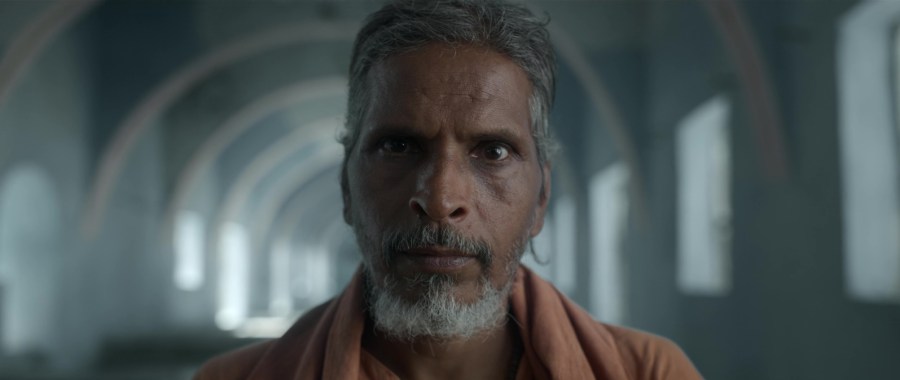
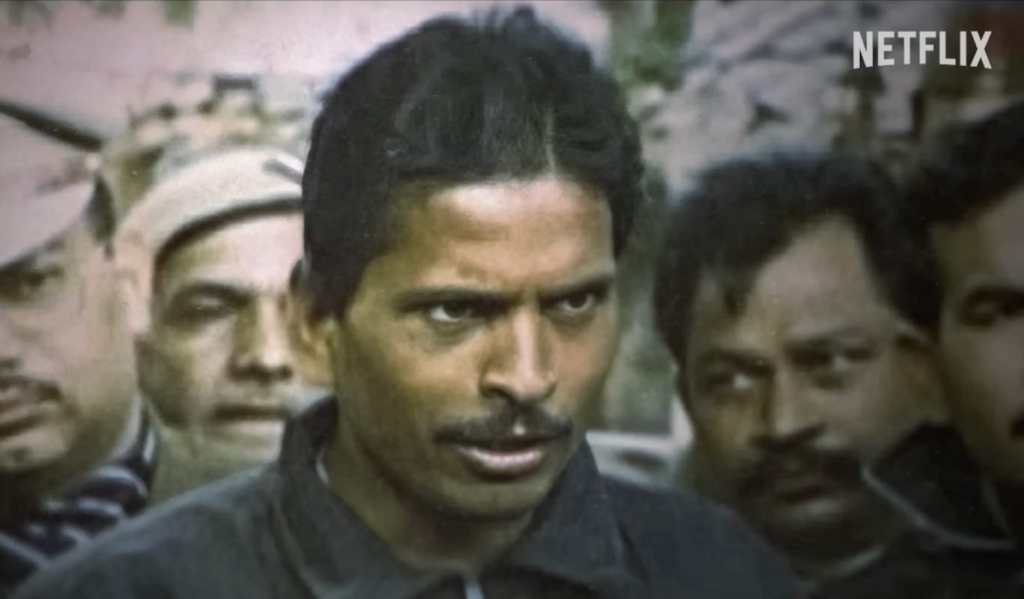
Raja Kolander, real name Ram Niranjan, the husband of a local politician, was suspected of murdering a journalist in Allahabad in 2000. Dhirendra Singh was a reporter with a Hindi daily newspaper called Aaj, and his body was mutilated and discarded in a river and a jungle. His head and genitals had been removed.

Police tracked the journalist’s phone records and found a call to the suspect, Raja Kolander. Kolander and his brother-in-law were arrested, beaten up, and finally confessed to the murder of the journalist. The police claimed that the murder was to stop Singh reporting on their car-theft business. But during the subsequent investigation, officers found Kolander’s diary, which listed some fourteen victims in total, including that journalist.

Although he was arrested in 2001, Kolander was not charged with the murder for a decade. During his trial in 2012, the police testified that he had admitted to cannibalism, and to burying fourteen skulls in his home. Kolander, his brother-in-law and his wife were all given life sentences for three murders, although he has appealed those convictions. Claims of cannibalism were never proven, nor were the other eleven murders, and some of those interviewed say that a few of those so-called “victims” are still wandering around. There is also mention made that the “mining mafia” had it in for Dhirendra Singh for exposing some of their corrupt practices, but this is not really explored further in the documentary. We are told, however, that Uttar Pradesh is ranked top in number of murders in all of India.

The first episode interviews the police and family of the journalist, and presents fairly damning evidence of murder. But then, some of it is just silly, such as the chief investigator saying that criminals “stutter when faced with the police.”

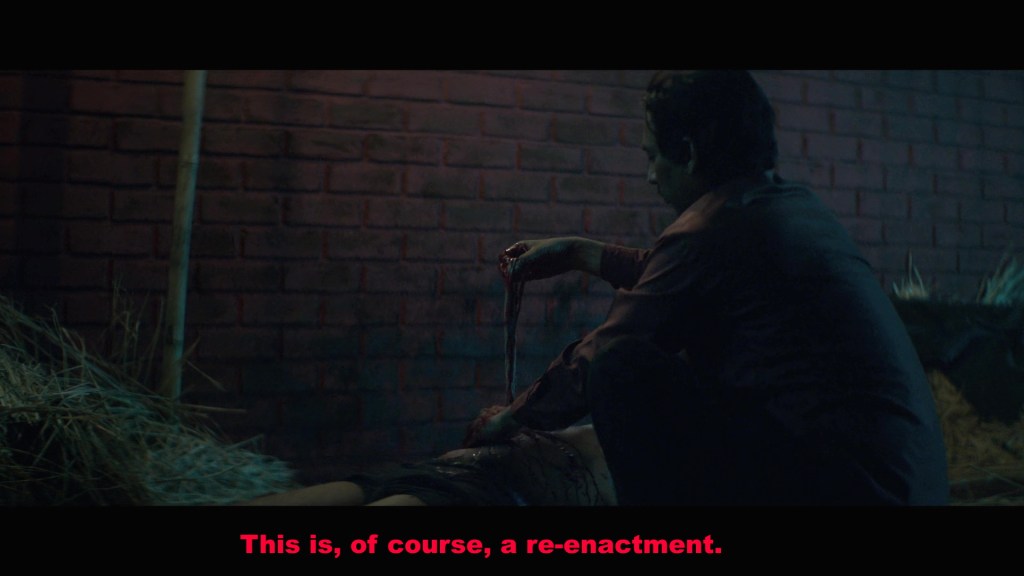
The evidence against Kolander is presented as it was laid out by the police, and the events shown in the documentary are just recreations of the official version, with actors playing the main characters. How legit those are is a good question, as there are several mentions of duress during the police interrogation.

The police claim that Kolander was motivated by power, and sought to acquire it by cannibalism. One victim was from the Lala sub-caste. They are considered smart, even cunning, and often accused of taking advantage of the poor. The police claim that Kolander believed he could imbibe this cleverness through cannibalism, and so this victim was killed and Kolander then removed his brain:

Then drank it as a stew. Another victim claimed to be a hypnotist, and so his brain was consumed in the hope of gaining that skill. As the investigator asks

A question to which I, for one, urgently need an answer.

Kolander then allegedly cut open a Brahmin, a member of a caste known to eat well, to see if they have larger intestines than other people. He then had to cut open a lower caste person to compare. The results were apparently disappointing. We are all equal, at least in the width of our intestines.

The second and third episodes interview Kolander in jail, another decade after the trial. He maintains that he is innocent of the murders that took place some twenty years before. He insists that he is a victim of trial by media.

The question of why his supposed thirteen other crimes went without investigation until a respected journalist was killed sheds some interesting light on the social and caste divisions in Indian society. Like Albert Fish, who in 1920s New York preferred to kill and eat black children since he knew the police would not work too hard to look for them, the racist attitudes in India to other classes, religions, and communities seem to have resulted in not much work being done on finding the earlier victims.

But Kolander himself comes from a caste which is largely impoverished, and the times were ripe for revolt by the subaltern castes – there were dacoits (bandits) roaming the countryside, and lower castes were fighting to be represented in government of all levels. It is clear that Kolander’s caste, the Kol, were considered by the upper castes to be primitive savages, recently driven from the jungles by deforestation into the life of subsistence farming, but retaining their savage traditions. It was inconceivable to them that a person from this background could own two cars, as the police claimed.

Kolander insists that he is a highly spiritual Hindu, not concerned with worldly power, and even claims to be a vegetarian, which would make eating brains tricky, although others (including his daughter) cast doubt on that. But it is certainly true that the colonial story has embraced accusations of cannibalism since Columbus – those who are poor and deprived must be savages, eaters of human flesh. Nothing they do is therefore surprising, and anything they are accused of is probably true.

Is this “true crime” documentary true? It’s impossible to know. But there are lot of holes in the story, including the fact that police brutality seems to be a standard interrogation technique, the fact that it took a decade to bring him to trial and, after another decade, his conviction (for three murders, not fourteen) is still to be decided. Also, the charges of cannibalism, which kind of make this newsworthy, were never proven in a court of law. Kolander, with some justification, says that his case was tried not in court but in the media, which published pretty much any sensational story they could dream up.

Cannibalism is perhaps the perfect exemplar of the uncanny – Freud wrote that we are most disquieted by the familiar suddenly becoming strange (remember Jeffrey Dahmer’s step-mother Shari saying he was “a nice, kind boy”) and things that should be hidden instead being revealed (e.g. the Brahmin’s intestines). But the impossibility of determining the truth is in itself uncanny, even more disquieting because our certainties about truth and lies are torn apart. A few cannibals sit down and tell their stories (Dahmer did, and so did Meiwes and Sagawa), but often the cannibal either disappears into the night like Jack the Ripper or suicides like Chase or is executed like Chikatilo. Seeing the bodies, or what’s left of them, but never knowing what or who happened to them is uncanny, and even more so when, like Kolander, the apparent cannibal denies all culpability.