Awarded PhD from the University of Melbourne for a thesis questioning how cultural manifestations of cannibalism challenge the assumed anthropocentrism of our relationships to other animals.
In December, we covered the arrest of Oldtown man James David Russell, 39, for cannibalism and murder in relation to the September 10 death of David Flaget. Police had seized evidence including a bloodied microwave oven, a glass bowl and a bloodied knife and duffel bag. There was evidence that heat had been applied to the body of the victim and body parts were missing, speculation being that the body parts had been cooked in the microwave.
Court proceedings were paused in late October when the Magistrate found Russell unfit to stand trial for first-degree murder and ordered him to the Idaho Security Medical Program for a mental health evaluation. This has finally cleared him to stand trial.
Guwahati, 15 April 2022: A man has confessed to eating human meat in a crematorium in Bidyapur, in Assam’s Bongaigaon district. The man, identified as Satish Chandra Rai, is a resident of Bongaigaon.
Villagers reported that they had seen the man taking portions of a dead body at a local Hindu cremation ground and later saw him eating them. The villagers caught the man and have handed him over to police.
Satish allegedly admitted to being inebriated, and consuming half of the body’s meat. The dead body had been consigned to the flames, but not completely burnt, as the man was able to find edible flesh still attached.
Police have arrested the man, and are interrogating him at the police station. Locals are now demanding that he be ousted from the village by the village council.
Like other places, cannibalism happens in India, even though it is a largely vegetarian country.
In 2017, Sunil Rama Kuchkoravi of Kolhapur murdered his mother after she refused to give him money to buy liquor. He later chopped up parts of her body and ate them, after frying them in a pan.
A (supposedly) forthcoming movie called A CANNIBAL MIND follows the life of Raja Ram Mohan, who allegedly murdered, mutilated and ate the brains of over 40 victims.
Back in Assam, in 2012 tea workers killed the owner of the plantation where they worked and allegedly ate his flesh.
It can happen anywhere and, as our alleged drunk has shown us, human meat is pretty much the same as any other animal’s flesh. Particularly when cooked.
This is an English film, unlike most of the reviews in this blog, which overwhelmingly come from the USA or, if we are thinking real video nasties, Italy. It falls into the delightful genre of dystopian cannibalism films, in which some disaster, often unnamed, has stripped the thin veneer of civilisation from the survivors and left them with one option to survive – human flesh. There are lots of films in the survivor genre – The Time Machine is a classic, set thousands of years in the future, but most are set in the very near future or even an alternative present – think Soylent Green (set in 2022), 28 Days Later or Delicatessen.
The closest to Tear Me Apart, though, is the chilling 2009 film version of Cormac McCarthy’s The Road, in which an unnamed man and boy travel through a world stripped of all animals and plants except for a few humans, most of whom have become cannibals to survive. Will they maintain their anthropocentric belief in the sacredness of human life and flesh?
In this film, it’s two brothers, also unnamed, the younger as naïve and clueless as the little boy in The Road. But it’s also a coming-of-age story, because one of the proposed victims who they intend to feast on is a young woman (like us, the older brother says, only different), perhaps the last surviving woman on earth, and do they really want to eat her?
Making the story line more intriguing is the constant presence of the ocean, the source of all life, the original mother, where the young men wait for a father who has long since vanished. The ocean supplies them limited amounts of fish to eat, but in the opening scene, the younger brother smothers a man, cuts and eats pieces of his flesh, only to be admonished by his brother –
“What would father say? I won’t warn you again – NEVER PEOPLE!”
Father may have left them on the beach to “wait it out” but now he is a mythical figure, whose rules override the primal instincts of the unschooled younger boy, who constantly gets in trouble for snacking on his victim. Because, you know, “he’s a man!” But his instinct is to fight, to kill, to eat. He is the carnivorous male, unpolished and uninhibited by social morality; as his brother says “he doesn’t know the difference between eating a fish and eating a human”. This is precisely the point – the young man has no social conditioning – he is not the vicious cannibal of so many horror films; he eats humans because he is hungry, just as a hungry dog or any other animal might.
He is a savage, simian Adam in Eden, following the rules without understanding them, rules passed down by a “father” he scarcely remembers, who may offer a second coming in some indefinable future, and who has bequeathed dietary restrictions that must be followed even though they make little sense.
But then he comes across the young woman, no physical threat but much smarter than both of the brothers. In a piece of blindingly obvious symbolism, she hands the young man an apple, with a smile. She’s also looking for her dad. Aren’t we all?
The boy goes back to his brother, who takes the apple and tells him “don’t eat this stuff, OK? It’ll make you ill”. We’re still referencing Genesis, a fierce version, in which they may eat of anything in the garden (even people) but not of the tree of the knowledge of good and evil. Her fruit actually does make him ill, because he hasn’t eaten fruit for many years. This is the carnivorous virility that Derrida said was the basis of subjectivity, but without community it turns back onto his own gut.
The brothers don’t have names because names don’t mean anything, at least until the “old world” comes back. But she has a name, Molly, and she declares the younger man will be called Joe. Like Adam, she gives names to all the animals. She makes them bury the stiff they have been eating, because, she says, the world can’t survive like this.
She even rigs up a cross for his grave, just as Joe chews the last of the dead man’s flesh.
But she has introduced them to temptation. Also to vegetarianism:
“You can’t eat meat forever. The people you eat – they have people who loved them.”
A beautifully simple argument against eating meat.
She takes his hand and puts it on her breast. Bright eyed and vulnerable, she asks “do you want to eat me?” The double entendre here is far from Biblical.
There may perhaps not be any other women left – Molly says that there was a collective in “the town” – the symbolic civilisation for which both fathers have disappeared while searching for it – but now that is just a myth as well. Well, there is one other woman but she has become “an animal” – growling and threatening. A Lilith reference perhaps? But there are certainly other men, not just the lone men who Joe ambushes and eats, but a more vicious group, with guns. Like The Road, but with a touch of On the Beach.
The trio learn fear, hunger, desire. Molly tells Joe “You don’t have to follow the rules any more.” There’s a menage-a-trois which of course leads to jealousy and we get a serve of Cain and Abel as the brothers brawl. Molly’s father makes a brief appearance, as (spoiler alert) a good meal for their return to the beach, their wild Eden. So now we’re dipping into the New Testament, eating the blood and body of their saviour. Yes, the last humans, like the first humans, have truly eaten from the tree of the knowledge of good and evil.
The film is only 82 minutes, but a lot of reviewers thought that it drags. I didn’t see it that way – the story is low key but the acting is great and the characterisation is quirky and interesting in its peeling back of the sociality we take for granted. I think a lot of critics watched the film expecting a cannibal gore-fest, and that it is not. It’s a low budget film, yet the cinematography is splendid with the scenery of the sea (it’s filmed in Cornwall) quite beautiful. It may be hard to find, but at the time of writing the full film is available on YouTube, with Arabic subtitles. Since the Scottish accents are often impenetrable, that will prove quite useful – if you speak Arabic.
This cannibal movie starts with the standard building blocks of so many cannibal/horror films: car breaks down, isolated farmhouse, friendly but weird person answering the door, munching of human flesh. Think Texas Chain Saw Massacre, The Farm, or even The Rocky Horror Show. Going to strange places, meeting weird people, eating unknown things – these are what our mothers warned us against, and so does the horror genre.
This one starts with a biblical quote, from Corinthians 6:19-20:
“do you not know that your body is a temple of the Holy Spirit within you?”
While we listen to this from a cassette tape (younger readers may need to google what that is), a young woman eats meat and eggs, while an older woman grinds peanuts. We finally meet the protagonists – Sam (Sawyer Spielberg – yep, you know his dad) is an aspiring actor, Rylie (Malin Barr) is a botanist, investigating an outbreak of a fungus called sordico (an invented name for ergot), which poisons farm animals who must then be “put down”. It’s a metaphor for what we call “sin”.
We hear another recorded piece, this time about the fungus and its resulting diseases, including images of “ignorant peasants” baking the fungus into their bread and suffering gangrenous wounds requiring amputation, and eventually madness. The disease was considered a punishment for sin. Yes, this is the formula for the movie.
Sam and Rylie’s car GPS loses its signal and Sam asks directions from a weirdo on a bike, who just stares at them. Think the hitchhiker in Texas Chain Saw.
They camp in a field while Rylie photographs plants and Sam practices an elusive script. They have sex in their tent, a sure sign in most slashers that divine punishment is coming. But divine punishment can come from eating the wrong things (fungus) or from other people, who have their own interpretations of sin. Rylie and Sam are judged by Karen (a masterful performance by Barbara Kingsley from Jessica Jones) and Eulis (Stephen D’Ambrose), who have become sort of Gretel and Hansel cannibals due to their crops going bad, and of course eating crops poisoned with sordico.
Karen offers them dinner, red meat, but Sam is off it because of his cholesterol, and Rylie is a vegan. More judgement – Sam can’t resist Karen’s red meat and cakes. His appetite is his undoing. Like the cattle, he’s eaten the wrong stuff.
Karen and Eulis capture random travellers, lobotomise them to keep them compliant, and then eat their body parts. The man Karen claims to be her son, disabled by being kicked in the head by a bull, is actually a hunter gradually being eaten. A brief cameo by Lena Dunham (or at least Lena without arms and legs) as Karen’s daughter Delilah, indicates the fate of Sam and Rylie – they are to be lobotomised, stripped of limbs and Sam is to be bred with Delilah: “we’re aiming for grandbabies. Bring some sunshine into this black world”. The meat is kept Fresh by keeping it alive as long as possible.
Karen explains her thinking:
“We are living in a time of tribulation. We have perverted God’s divine love to abuse his gifts. We were overindulgent in God’s food, and so he took it away, forcing us to seek more sources, so that he may not forsake us… we have been given an opportunity for absolution, a second chance, to sustain life by consumption of what we can access, of our own flesh, so we may be judged in His image.”
The term “rump steak” may never seem the same when you see what they do to Sam.
The film achieved a respectable 67% fresh on Rotten Tomatoes, with some critics loving it and some repulsed. The Guardian critic gave it 3/5, a fresh score (only just), saying it “plays interesting variations on an all-too-familiar plot premise.” The RogerEbert critic on the other hand said “This listless genre exercise mostly plays like a film-school-spun tribute to The Texas Chain Saw Massacre with some Hansel and Gretel clumsily mixed in, but without a political or philosophical foundation to stand on.”
I found the score annoyingly obvious, indulgently raising our tension level (which is its job) but a bit too perceptibly. The plot would have made a good episode of American Horror Stories, but at 107 minutes, I found it dragged. I’m not sure if it is fair to say it has no philosophical foundation – the nature of our food choices and nature’s revenge on human greed through spores, bacteria or viruses is right up to date. Moreover, Karen and Eulis are simply doing to their “guests” what farmers have always done – domesticated them and performed surgeries to make them docile – castrating bulls or destroying the frontal lobe of humans (or removing their tongues as in Motel Hell). It’s what Jeffrey Dahmer wanted to do when he drilled holes in his lovers’ skulls and poured in muriatic acid in an attempt to create living sex zombies. These guys just use a screwdriver through the eye-socket.
I don’t usually review short films in this blog, only because there are so many feature-length films demanding my attention, as well as news stories filling my feeds. But this one caught my eye. It’s the story of two young women who are followed home by a cannibal, and that dynamic of the apparently vulnerable females turning against the aggressive male reminded me inexorably of a movie I reviewed recently – Fresh, in which a young woman meets and dates a charming guy who turns out to be an entrepreneurial cannibal.
This film, Possibly in Michigan, is a 1983 musical horror film by artist Cecilia Condit about two young women, Sharon and Janice, who are stalked through a shopping mall by a cannibal named Arthur. The three protagonists (there is no one else in the mall, adding to the dreamlike mood) have two things in common – violence and perfume. Perfume of course is the distillation of desire, as shown in the film Perfume. Arthur follows them home, and the victims become the attackers. Is violence the only possible response to violence? Perhaps, the film seems to suggest. But the key song line is:
“Love shouldn’t cost an arm and a leg”
All the men in the film are masked as animals – pigs, dogs – and all have an aura of violence. But the actual violence, the offer to eat the women one limb at a time, comes from an unmasked man named as “Prince Charming.” The modern monster is always indistinguishable from the “normal”.
This is not the kind of short film created in the hope of discovery and a career in blockbusters. The artist is a retired professor in her seventies, a video artist who creates feminist fairy tales, and the film itself is in the permanent collection of the New York Museum of Modern Art. The New York Times called it a
“brutal, surreal and darkly funny 1983 art musical”
I loved the comments on YouTube, many of which said that it was “unsettling” rather than scary. Exactly what horror should be – like dreams, horror is really a release of repressed feelings. Some of the scariest dreams don’t involve slashers or monsters, they just touch a nerve; something we have kept buried inside is, for a few unconscious seconds, brought to the surface and examined in the light.
Another comment stated:
“As someone who’s been repeatedly abused by narcissists where it felt like they were eating my very energy and being, this was extremely ‘healing’ in a weird way. Thank you.”
Cannibalism is about power, and power can be transferred, as happens in this film. But the original monster is Arthur, a faceless man wearing an expressionless mask, the very image of impersonal, brutal menace. Cannibalism bothers us because it reminds us we are made of meat like the animals we eat, but meat is, in Western cultures at least, a symbol of male power over nature, which includes and is represented by the female. Carol Adams sums this up by saying meat is “the final stage of male desire” – men eat red meat, which comes from animals, the females of whom have already had their babies, their milk and their eggs taken from them for human consumption, until they are “spent”, at which time they are minced up for ‘pet’ food. What Adams calls “feminised protein” represents the suffering of female animals for the appetite of male humans like Arthur.
The film was rediscovered by Gen Z when a 15-second clip from one of the songs was loaded onto TikTok. I recommend the film to you – the link to the clip is at the top of this blog, where I usually load trailers – this is the whole work.
Netflix released the latest Texas Chainsaw instalment (the ninth!) on February 28th. It’s beginning to feel a lot like Easter (as in: how many ways can you tart up hot cross buns?) but there are some nice features to this one. For a start, well, it’s on Netflix, so a bit less likely to disappear into the Texan mud without trace, like some of the earlier versions. There have been eight sequels and prequels and unrelated but similar-named movies in this franchise, as well as comics (sorry, graphic novels) and a video game of the original.
The original film, in which “chain” and “saw” were two words, is still widely acknowledged as the best, despite its paltry budget and apparently impossible working conditions for the crew. It was released in 1974 by Tobe Hooper, who made a somewhat light-hearted sequel in 1986. It was a pioneer in “slasher” films and drew cannibalism out of the gothic into the sunlight, showing an alienated workforce in “flyover” states turning their (now unwanted) skills in killing steers toward killing tourists instead. It finished with Sally, the “last girl” escaping from a frustrated Leatherface, who was wearing his mask of human skin (fully biodegradable but not much use against viruses) and wielding his chainsaw in a way that buzzed of potential sequels.
This sequel takes place 48 years after the original (yep, now) and blithely ignores any plot points from the intervening movies, comics, etc. Leatherface is back, older but no wiser and still intent on killing teenagers, and so is Sally, the survivor, who is now a Texas Ranger and set on revenge.
And the cute teens, well, they’re everything that the locals hate – inter-racial, trendy, Gen Z “Influencers”, what the creepy gas-station owner (and there’s always one to set the scene) calls “gentrifuckers”.
They want to gentrify the town and set up a trendy area of gourmet cafes and authentic looking but modernised shops and galleries. Leatherface is in retirement in an abandoned orphanage, and Sally, well, she’s been looking for him for a long time apparently, although when last seen in The Texas Chainsaw Massacre: The Next Generation (not an episode of Star Trek), she was catatonic and strapped to a gurney. But now she’s hardass. When we first see her, she’s gutting a pig, just as Leatherface is slaughtering humans. The special effects are pretty similar for both, as are the body shapes, and, frankly, the characterisations. The original actors who portrayed Leatherface and Sally are both dead; the only original cast member is John Larroquette who does the voiceover, which half-heartedly tries to sound like a true-crime documentary, as he did in the original. The new Sally is Olwen Fouéré, the Irish actor, although this Sally seems to be more based on Jamie Lee Curtis’s Laurie Strode in the 2018 reboot of Halloween.
The class struggle of the original Chain Saw has been lost here. The Texas of the original was filled with pockets of people abandoned by modern capitalism and so falling into degeneracy and violence. The new movie seems to valorise the “ordinary” folks who brook no bullshit from the “me generation” and defy the dehumanising effects of capitalism. It’s hard to feel sympathy for the influencers with their real estate auctions and cutesy town planning, or to feel terror at the thought that people might chop you up, but only if you insist on being a dick.
The terror of Leatherface himself revolved not around his nasty dental problems, badly fitting masks and noisy chainsaw, but around his family, the Sawyers, a group of odd but not obviously psychotic individuals who nonetheless were more than happy to chop up and eat innocents from the outside world, which had forsaken them. It felt like this could be any of us, screaming and dying and becoming the family’s dinner, should we venture into the wrong part of the Badlands. This new version is all Leatherface. Somehow, he now has a “mother” who looks after him in an abandoned orphanage, and she dies of a heart attack when the trendies tell her she has to move out, leading to his much delayed rampage. But Leatherface was always the weapon, not the villain, sometimes killing, and sometimes donning an apron and cooking for his dominant family. He doesn’t really work as a lone psycho, particularly when we sort of sympathise with him – he’s just lost his mum, weeps as he wears her face as a mask and then applies her makeup like Norman Bates in Psycho. Who can stay mad at that?
Tobe Hooper’s classic broke new ground in cannibal films and in horror generally. It encapsulated the early 1970s as the endless war in Vietnam and the demise of the hopes of the flower power generation ran into the chainsaw that was Nixon’s silent majority. The new one seems to reflect our time, where the young and idealistic are capitalistic exploiters and Leatherface and the Texan gun-toters are just being pushed too hard into the chainsaw of QAnon. Politics and war are no longer about truth and justice but just fake news in pursuit of tribalism. The film sums this up sardonically in the climactic scene where the busload of influencers are confronted by Leatherface and his chainsaw and respond by pulling out their phones and live streaming the whole massacre.
As Marx said, great historical entities (like Leatherface) appear in history twice – the first time as tragedy, the second time (or perhaps the ninth) as farce.
But here’s my problem with this film. After 83 minutes (which seemed much longer) I looked up from the screen and screamed (internally) “where’s the cannibalism?” Yes, there was a lot of flesh on display, and broken bones, and the occasional internal organ. But none of it got eaten, which, if I had more time, would have disqualified it from this blog. The thing is, cannibalism is not just one more nasty thing that mean people might do to you and me. It is the ultimate act of dehumanisation. Sally’s friends and family in the original were turned into slaughter-animals, chopped up, eaten, and presumably ended up in the family’s outhouse. That’s what we do to those we objectify: pigs and sheep and cows, and we do it to distinguish ourselves from other animals as somehow non-animal, part-god. The slasher might kill us, but the cannibal converts us into shit. Otherwise, we are all potential wielders of the chainsaw.
Without the cannibalism, this is just another slasher with too much emphasis on special effects rather than characterisation.
Texas Chainsaw Massacre 2022 has a 33% “rotten” rating on Rotten Tomatoes, with one audience critic summing up:
“it isn’t very scary — and it definitely doesn’t help that the story hardly makes any sense.”
If you’ve heard about this new movie, you’ll know it’s a sort of cannibal romcom.
Perhaps the first romcom was Adam and Eve – she was created from his rib, as “an help meet” (Genesis 2:18-21) because he was incapable of looking after Eden on his own. And he was, you know, horny. Ever since, relationships have been tricky – they’re about status, property rights and, above all, appetites. Feudal lords sealed alliances by betrothing their children, often marrying their small child off to a complete stranger. For most of human history, women were property, owned by their fathers until ownership was transferred to their husbands. What happened to them after that was up to the appetites of the man. It often still is.
Modern dating has in many ways returned to the realm of the unknown betrothal. Pictures appear on a phone screen and are assessed in an instant. If a candidate is deemed possibly sponge-worthy, a meeting is arranged and may lead to casual sex, long-term commitment or, in unfortunate cases, cannibalism.
What do we know about the person on the dating scene? Each click, each drink, is a contract, the person being (inter)viewed is already objectified by the algorithm that has decided he or she may be suitable. Relationships are chosen in the same way (and often with less forethought) as an Uber-eats meal. The app reduces us to our basics – appearance, tastes – we’re just meat.
This movie, Fresh, the first film by director Mimi Cave and writer Lauryn Kahn (good interview here but beware of spoilers) and produced by Adam McKay (Don’t Look Up), takes the metaphor to its logical conclusion. Noa (Daisy Edgar-Jones from Normal People), finds herself dating boors who feel entitled to comment on her appearance, are interested exclusively in themselves, and abuse her if she dares to refuse sex. As a woman, her body is their entitlement.
Noa meets Steve (Sebastian Stan from Winter Soldier), not on her dating site, which has been a huge disappointment to her, but in a supermarket. Steve seems charming, clever, and doesn’t press her for sex. When he draws back from sex on their first date, the first time a man has done that in her experience (maybe in history) she asks him if he wants something to drink or eat, and he says “no, just you”. He ruins her enjoyment of her spare ribs by saying “I don’t eat animals.” He means non-human animals, but it’s a common piece of lazy language; he eats humans, and humans are of course animals.
Noa agrees to a weekend getaway with Steve after only a few dates. Bad idea. This starts as a romcom but ends up covered in blood and body parts. Images of other animals waiting to be eaten reinforce the point.
Steve wants to know whom Noa has told. Who knows she is going away with him?
Steve drugs Noa (another common dating strategy) and only then do the credits start, some 33 minutes into the film, as she collapses to the floor.
Steve imprisons her, finally revealing his plan: to keep her alive and slowly sell her meat to his wealthy cannibal clients, keeping the rest of her alive and “fresh” (thus the film title) as long as possible.
Sounds grim? Sure, but also darkly funny. Steve is witty and charming apart from the, you know, kidnapping and cannibalism, and Noa is smart and tough, as she has to be in this dog-eat-dog, or man-eat-woman, world. She has to woo her abuser, as so many women do, in order to escape, even if that means eating human flesh, even perhaps her own.
This is a smart and gripping cannibal film from – wait for it – Disney! Produced by Searchlight, the studio of Nomadland and The Shape of Water, it premiered at Sundance in January this year and was released on Disney+ in the UK but Hulu in the US. It certainly is a long way from Mickey Mouse and Snow White. Yet, like them, it has a moral of sorts. As one reviewer put it:
You will want to become a vegetarian after watching “Fresh.”
Another reviewer (beware of spoilers in this link) wrote:
I don’t know about you, but I, for one, am never eating meat again.
Noa is the protagonist, and the main plot involves her predicament and her attempts to escape (no spoilers!) But Steve is a fascinating character in that he really likes Noa, feels a little bit bad about what he does, but likes the money more. Does that remind us of the farmers who claim to “love” their animals, even as they fatten them up for the abattoir? How many stories have we heard of country kids who befriend a baby lamb or calf or piglet and weep when dad appears with a cleaver, only to get over it and become killers themselves. Steve is the same, but his “livestock” are young women. He likes them, but it’s a business – he packages up their meat, their hair, even their underwear for those who want them. His cold room is full of chilled meat, carefully labelled with the names of the women it came from.
Steve’s wife, who knows exactly what he does, asks him “how was work?” He replies that he is very busy with the “new product”.
He can’t afford to care. Nor can his wife, who is missing a leg. She is a “product” whom he adopted. She knows the answer to the header of my blog “what’s it like to be edible?”
It reminded me of an interview with a slaughterhouse worker in Gail Eisnitz’s extraordinary book Slaughterhouseabout the workers who kill for a living and the animals who we choose to eat, the ones that are least aggressive, the gentle and friendly species:
If you work in that stick pit for any period of time, you develop an attitude that lets you kill things but doesn’t let you care…. You may want to pet it. Pigs down on the kill floor have come up and nuzzled me like a puppy. Two minutes later I had to kill them – beat them to death with a pipe. I can’t care.
This is not a dystopia, it is our world, now, a world in which the rich can buy anything they want including the labour, homes and bodies of others. Steve describes them as the “one percent of the one percent” – they want what no one else can have.
And it’s women they want to eat, because it’s all about ownership and power.
Think of Jeffrey Epstein who supplied underage girls to the rich and powerful. Gary Heidnik started a church which made him a lot of money and then, like Steve in this film, kidnapped, tortured, and raped six women, killing two of them and allegedly feeding the survivors with the flesh of one of the dead. Patrick Bateman was a (fictional) cannibal in the book (if not the film) of American Psycho, consuming human brains because there were absolutely no limits to his appetites.
Is there really anything to stop the “one percent of the one percent” paying to satisfy their cannibalistic appetites? If they are tired of beef and lamb, what meat is next? Millions of people disappear each year, and many are never found. Could some of them be ending up on the plates of the rich?
What Steve does to the lonely women he kidnaps is shocking. But so is what we pay minimum wage workers to do to other species. As Hannibal said, “It’s only cannibalism if we’re equals”. Eating other mammals such as Bos taurus, Ovis aries or Sus domesticus is only one thin red species line away from eating Homo sapiens.
Fresh is currently showing 81% fresh (has to really) on Rotten Tomatoes.
The Cannibal Guy is on the road because of the floods in the Northern Rivers of NSW. I feel a bit like Hannibal in season 3, without quite as much gore. Blogs will, hopefully, resume next week, or whenever the flood waters recede. Until then, please check some of the 236 previous posts that can be searched at www.thecannibalguy.com.
In the past 18 months, the war between CJNG (Cartel Jalisco Nueva Generacion) and the Sinaloa cartels has been intensifying. Sinaloa is the largest, while CJNG is arguably the most violent.
The Mexican state of Zacatecas is their main battleground.
Sicarios (cartel assassins) on both sides fight for territory, and the profits from the production of synthetic drugs, particularly fentanyl, in that region.
They also profit mightily from kidnapping refugees trying to cross into the USA, and cooking the ones whose ransoms are not paid.
Violence in this war is not just done, but is seen to be done, with videos being released onto social media showing various atrocities, in order to demoralise the opposing cartel members. An earlier video involved a CJNG soldier using a spoon to remove the eyes of a captured rival.
A new video (widely and ironically known as “Sponsored By Adidas” due to the killers’ love of that brand of shoe) is circulating on the Internet now. It shows a soldier from the CJNG crouching over the disembowelled body of a man from a rival cartel, supposedly the Sinaloa. The man opens the corpse’s chest and removes an organ, either the heart of liver (some say a lung), and bites into it, then seems to offer it to the corpse to see if it wants a bite.
This seems to be the latest escalation of cartel violence. Before 2006, beheadings were unknown; but now there are dozens of beheadings every year in Mexico. How do you up the stakes from beheading? The previous video from a cartel, called “Funky Town” showed a live and conscious prisoner having his face flayed from his head, later to be sewn onto a soccer ball. But the big new thing for the cartels now seems to be cannibalism.
Man-eating appears to have become a requirement for new recruits to CJNG at its training camps or “cannibal schools.” One member of CJNG told a journalist that there is widespread cannibalism at the camps. Recruits are taught how to cut fingers and toes, and eat them They then graduate onto larger internal organs. He reported (anonymously) that:
“You have to do it without reacting or vomiting or you are beaten. If you didn’t want to [eat human flesh] they wouldn’t let you leave, they had you there.”
The video in question can be found on the Internet if you look hard enough. I am not posting links, because those who don’t want to see it might accidentally click, and those who do are gorehound enough to find it.
Why is cannibalism such a popular strategy for terrifying the enemy? Because there is no higher form of humiliation, no greater insult, than being killed, eaten, and then crapped out of the anus of your enemy.
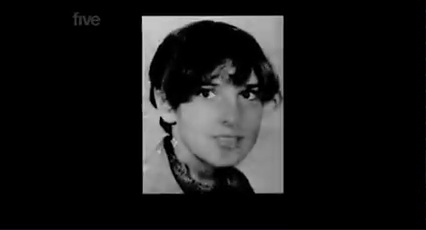
The Cannibal that Walked Free (AKA Cannibal Superstar) is a British documentary produced by Visual Voodoo for Channel Five which explores the case of Japanese cannibal Issei Sagawa. It uses dialogues with police and psychiatrists and, most intriguingly, extensive interviews with the cannibal himself.
Sagawa murdered a young Dutch woman, Renée Hartevelt, a fellow student at the Paris Sorbonne, then mutilated, cannibalised, and performed necrophilia on her corpse over two days.
The mellow voice of the narrator, Struan Rodger (Chariots of Fire), announces:
“This man murdered and ate a woman in Paris… he has never stood trial. Today he walks the Tokyo streets a free man, a free man with an ongoing appetite for human flesh.”
Around midnight on June 13 1981, 32 year old the Japanese exchange student, Issei Sagawa, emerged from his apartment at 10 Rue Erlanger in the 16th arrondissement of Paris with two large suitcases, hailed a taxi and travelled the short distance to the Bois de Boulogne. His hopes that the park would be empty at night were in vain, and several witnesses saw this 4’9” (145cm) smartly dressed Asian man trying to drag two large suitcases to the lake. Worn out (and probably full of meat), Sagawa fell asleep on a bench and woke to find an old man opening one of the cases. When the old man began to scream, Sagawa walked calmly away.
The police found that someone had removed flesh from parts of the body. During the autopsy, they discovered there had been post mortem sexual intercourse – necrophilia.
Within four days, the police tracked Sagawa through the taxi driver, and he confessed immediately. In his refrigerator, they found a large quantity of human flesh.
On the table was a plate with pieces of cooked human flesh, condiments and mustard.
The case was reported globally with the press expressing horror and disbelief. Patrick Duval, Author Le Japonais Cannibal interviewed Sagawa for several hours.
Sagawa said that the feelings began when he was very young: “I was very weak, very ugly, like a small monkey.” He described as an important memory from his childhood a game in which his uncle would play a ravenous cannibal, out to gobble up Issei and his brother.
As he grew up, he felt unable to attract the kind of women that he desired:
“Object of my desire is definitely the white girl, beautiful blonde hair, blue eyes.”
Jean-Pierre Van Geirt – a journalist from Paris Match, said “Sagawa was deeply in love with Renée, and his love was so mad that he thought the most he could love her was to eat her.”
Sagawa had invited the young student to his apartment to discuss literature. He said he asked Renée to read a German language poem he had chosen, a poem about cannibalism, and that she was unaware that he was standing behind her, holding a rifle. He shot her in the back of the neck.
“I had decided before that the first bite would be the buttocks. I was able to cut through the skin, I’m a fool so I didn’t have a clue about human body structure. I thought that red flesh would appear straight away but it wasn’t like that, and this layer that was like sweet corn just carried on for ages, however deep I cut through. I couldn’t reach with my knife so I ripped out the flesh with my fingers and put it in my mouth. After I had sex with her, I tried to kiss her I said out loud I love you, in French. And I felt a huge shiver.”
He had a tape recording of the murder and a camera with which had recorded the stages of what he did to Renée after her death; police found both in his apartment after his arrest. He had also saved a good deal of her flesh in his fridge, before packing up her remains in two suitcases.
Just 34 months after his confession, Sagawa would be a free man. Found to be insane and unfit to stand trial in France, his father employed an influential French lawyer who argued successfully that it was unfair for the French taxpayer to pay for indefinite confinement in a mental hospital, and that he should be sent back to Japan to be cured. Accordingly, less than three years after his confession, Sagawa was put on a plane and sent back to Japan. The only condition was that he could never come back to France. He spent 18 months in a Japanese mental hospital but then checked himself out, and has been free ever since.
The interviewers tracked down his psychiatric report: it said
“He was hung up by his height, not self-assured, over-sensitive and most of all emotionally cold and self-satisfied when he talked about the murder. Someone who is capable of feeling guilty wouldn’t commit such an act. You have to be completely devoid of some human emotions. Among which is the sharing of the universal taboo of cannibalism.”
The interviewer visited Sagawa’s Tokyo apartment where he lives under a false name and found him enjoying Beethoven’s 9th Symphony – the second movement, popularised in the film Clockwork Orange. He claims that he wept for the victim’s family and for his family, who were devastated – his father lost his high-powered job, his mother attempted suicide.
Despite his alleged distress, in the mid-1980s he wrote a book “In the Fog”, against the express wishes of both his and Renée’s family. It is the story of his crime, written from his perspective. It sold out. He wrote a further 19 books about his crime, became a columnist in magazines, joined a symposium at a Japanese university and appeared in two stage shows, finally appearing in torture porn, including recreations of his crime, using tall, Western actresses.
Under his false name, he told the interviewer, he meets up with Western sex workers.
“My final desire is just the same – when I see all the beautiful girls’ legs, I want to eat. So I’m not cured at all. But now, I’m not interested in at all the white women. I hate them. I found that Japanese women are the most beautiful in the world.”
Sagawa now feels the urge to cannibalise young Japanese women.
At the programme’s request, Sagawa agreed to attend his first psychiatric assessment in over ten years. In the documentary, he tells the Criminal Psychiatrist, Dr Susumu Oda:
“My libido and appetite are connected. This is very important. For instance, you see the beautiful girls on the train in summer, and you see their legs, don’t you. I think they look delicious.”
He says that he masturbates to make his feelings disappear.
Oda reported:
“A child suckles on his mother’s breast. A child survives eating breasts. So it is not that strange that a child would want to eat something he loves.”
Sagawa was small, weak and spoiled, so he never learnt to suppress those desires.
“Deep down, he doesn’t regret what he has done. He has a tendency to slowly turn the other person into an object. I think this is very dangerous.”
The doctor’s conclusion:
Freud maintained that there are two “pregenital” forms of sexual organisation in very young children not yet predominantly motivated by their genital zones. The first of these he called “oral-sadistic” or “cannibalistic”, in which sexual activity is not separated from ingestion (the second was “sadistic-anal”), and he suggested that these were “harking back to early animal forms of life”. In this “cannibalistic” stage, “the object that we long for and prize is assimilated by eating and is in that way annihilated as such.” It is not surprising, therefore, that Sagawa wanted to eat his ideal woman, and he made a particular point of eating her breasts.
“Too Much Blood”, a song on the Rolling Stones‘ 1983 album Undercover, is about Sagawa and violence in the media. His crime also inspired the Stranglers‘ 1981 song “La Folie”. The Noise Black Metal band Gnaw Their Tongues released an EP titled Issei Sagawa in 2006.
The documentary is available in full on Youtube at the time of writing. The link is at the top of this blog.
A more recent look at Sagawa is the 2017 documentary Caniba.













 The Cannibal Guy