Cannibalism News Kerala: bodies cut up, possibly eaten

Indian media is consumed with news that Kochi City Police in the Indian state of Kerala are investigating whether the accused in a human sacrifice case “cooked and ate the flesh of the victims”.

City Police Commissioner C H Nagaraju said the police are still collecting evidence. He told a press conference on Wednesday 12 October 2022:

“There’s some information that the accused ate parts of the body after killing the victims. It is being investigated. We have to conduct DNA analysis and other scientific examinations.”

Three people were arrested the day before in connection with the murder of two women in Elanthoor ­— Padmam (52) a native of Tamil Nadu, and Rosily Varghese (50) a native of Thrissur.

Those arrested were Muhammad Shafi (52), a native of Perumbavoor who is currently residing in Kochi, and a couple — Bhagaval Singh (68) of Elanthoor and his wife Laila (59).

Bhagaval Singh and his wife Laila ran a massage centre at Elanthoor in Pathanamthitta district. Shafi is alleged to have brought the two women to the couple’s home in June and September, where they were brutally murdered by the couple.

The remand report filed at the Judicial First Class Magistrate court confirmed that human sacrifices for prosperity were the reason for both murders. Occult killings have become a recurrent theme in Indian criminal typology, much like serial killers in the USA or narco-cults in Mexico.

“Mohammed Shafi proposed that consumption of human sacrifices would ensure economic prosperity.”

The Ernakulam Judicial First Class Magistrate Court on Wednesday remanded all three accused to judicial custody. The police said they will approach the court seeking custody of the accused for 12 days to initiate further inquiry and collect evidence.

Commissioner C H Nagaraju said that the first accused, Shafi (aka Rasheed), is a “sexual pervert”, as there were sadistic injuries found on the private parts of the victims. “He is a hardcore criminal, a psychopath. We are investigating whether there are more accused and if more such cases happened,” the commissioner said.

“In 2020, Shafi raped a 75-year-old woman and inflicted grievous injuries on her private parts as well. This indicates sexual perversion and psychopathic behaviour.”

Padmam, who was living in a rented room in Elamkulam and selling lottery tickets, was picked up from near Krishna Hospital in Kochi, at around 10.15am on September 26. Police recovered a clip from CCTV footage in which Padmam was seen getting into Shafi’s car. She was offered Rs 15,000 by Shafi, according to the remand report. The two reached the house of Bhagaval Singh and Laila at Elanthoor around 4 pm the same day. The remand report says,

“At the bedroom located in the central part of the house, Padmam demanded money from the accused persons. Following the argument on it, they strangulated Padmam using a plastic rope. When Padmam became unconscious, she was shifted to another bedroom on the western side of the house. Shafi inflicted injuries on Padmam’s private parts with a knife and then slashed her throat, which led to her death. Later, all accused persons cut Padmam into 56 pieces using a cleaver and knives. These parts were collected in a bucket and dumped at a pit which was dug up in the compound of the house at the northern side.”

In the interrogation, the accused person reportedly confessed to a similar human sacrifice carried out in June 2022. The other victim, Rosily Varghese of Ashokapuram, Aluva, was taken to the couple’s house at Elanthoor and was reportedly offered Rs 10 lakhs for acting in a movie.

“Rosily’s hands and legs were tied to the bed in a room in the centre of the house. A piece of cloth was inserted into her mouth which was also taped with plaster. She was stabbed by Shafi and her throat was slashed. Later, her private parts were cut and preserved. The accused persons then cut up her body into several pieces and collected them in a bucket. The body parts were later dumped in a pit dug at the eastern part of the house.”

The Hindustan Times reported that police were using cadaver-sniffing dogs and digging at Shafi’s property to determine if there were any more victims buried there.

The couple allegedly admitted to consuming the victims’ flesh after each murder.

When asked if the accused persons cooked and ate the body parts of the two women, the Kochi Police Commissioner said:

“For human cannibalism to be proved there has to be a proper examination.”

It is reported that Shafi reacted with a smile when police asked whether he had eaten the flesh of the murdered women.

Sources in the investigation team disclosed that many internal organs from the two bodies were not found. “There were no lungs, livers, kidneys in the bodies of Roseli and Padma, the women who were sacrificed as part of the ritual,” said a member of the investigating team. The post mortem reports say that the dead bodies had been cut by a person familiar with human anatomy. Though Shafi conceded that he had worked as a mortuary assistant and was versed in handling dead bodies, the police have not ruled out the possibility of an outsider in the “mission”.

Yet another factor that concerns police is the revelation by the husband-wife team of Bhagwal and Laila that Shafi had assured them that the victims’ flesh could be sold, authorities claimed. Shafi allegedly told Singh and Laila, according to IANS,

“Some people who do certain [types of worship] eat human flesh.”

The flesh could net the couple up to Rs 20 lakh ($US24,280), and a buyer was already on their way to pick all of it up, Shafi claimed, according to investigating officers.

The hacked bodies were preserved in the refrigerator in the residence, where Shafi allegedly told police they had stored 10kg of human flesh. The refrigerator is stained with human blood and Shafi’s fingerprints were found on it. The investigators also came across a pressure cooker that apparently had been used to cook the flesh.

Reports are going around Kochi that Shafi may have sold cooked human flesh through the eatery owned by him in Ernakulam.

Animal sacrifices were carried out in Kerala until banned in the 1920s. Manu Pillai’s book Ivory Throne indicates that humans were at one time among the animals sacrificed, and that that human sacrifice used to be performed at the Panayannarkavu Devi Temple near Mannar.

Kerala Higher Education and Social Justice Minister Dr R Bindu said that the disturbing incident of human sacrifice was the result of “the frustration caused by globalisation.”

“People are falling into traps as they desperately try to make a quick buck as a result of globalization. In such a situation, some people are easily duped by false illusions that human sacrifices can bring them wealth.”

As the forces of neo-liberal capitalism turn us all into voracious consumers and simultaneously raw materials for commodification, it should not be surprising that the sacrifice and consumption of other animals for food, leather, experimentation or other uses is expanding into the sacrifice and consumption of human ones.

There is a comprehensive report on this case on NDTV, including a long interview with the Kochi Police Commissioner:

Butchering vegans: SOME LIKE IT RARE – Barbaque (Eboué, 2021)

The French are sticklers for correct grammar. Bien sûr! Grammar, and particularly syntax, are importants! For example, there is a tendency in animal rights literature for people to declare: “I am vegan.” Simply untrue – you are made of meat, comrade, red meat to be precise, as this film sets out to demonstrate, and at some length.

The correct syntax is “I am A vegan”, that is, a person who tries to avoid eating the flesh of, or otherwise exploiting, any animal. This is usually for ethical reasons to do with the undoubted suffering caused by the modern industrial animal businesses, but sometimes for health reasons (e.g. Bill Clinton) or the environment, because the animal industries cause massive amounts of greenhouse emissions, use absurd amounts of land and water, and are the main cause of deforestation, particularly in the Amazon.

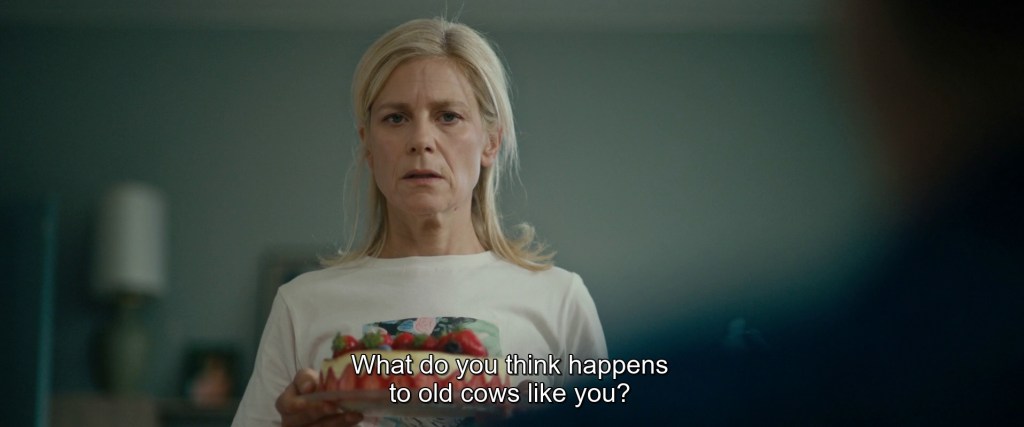
But none of these arguments are likely to persuade the protagonists of this quirky French comedy Barbaque released, for those of us outside of France, under the title Some Like it Rare. Husband-and-wife Vincent (Fabrice Éboué who also wrote and directed the film) and Sophie (Marina Foïs, who managed to make three other movies in that same year) are running a failing butcher shop called Pascal Boucherie, assailed by vegan activists who throw blood (I guess red paint) around their store in protest at their bloody business.

When they see the man who threw the paint riding his bike on the road (of course he rides a bike – this is satire), they stop their van suddenly and reverse, unintentionally (perhaps) causing him to crash into their vehicle and die.

What to do with the corpse? They can’t call the police, because Vincent has already reported the damage done to his store by the dead vegan activist, and it would be assumed to be a revenge murder. But alors, they run a butcher shop, so they have all the tools to dispose of the evidence. Sophie is watching true crime documentaries on TV (aren’t we all?) and tells Vincent to chop the body up and dump the pieces in the garbage. Vincent starts chopping, watched by his dog, who eagerly gobbles up a piece of the vegan that falls onto the floor. Vincent gives the dog an ear, then realises – hey, humans are made of meat!

Chopping up bodies is easy for a butcher, but then Sophie, thinking he has already thrown out the body parts, puts the meat on the shelves. Turns out the flesh of vegans is delicious (grain fed?) and there is a rush of customers seeking what Vincent decides to call “Iranian pork”. With enthusiastic customers in the store, Vincent does not stop Sophie tasting it. Afterwards, she asks

“Vegan” says Vincent.

It’s the perfect crime, the evidence is not just eaten but, as Sophie says, “shat out” afterwards. There are lots of cannibalism jokes, such as the local policeman promising to catch the vegans who attacked the store,

It’s not exactly a new idea. Mads Mikkelsen had the same problem and the same solution (after accidentally locking their electrician in the meat freezer) in the Danish movie The Green Butchers, together with a haircut that would have shocked the normally unshockable fans who loved him in Hannibal. And let us not forget the many variants of the Sweeney Todd story which saw the “demon barber of Fleet St” feeding meat pies filled with his hairdressing clients to the grateful populace of nineteenth century London, as well as a classic of kinky Hollywood cannibalism, Eating Raoul. Butchering people for meat has appeared in several other movies including the much-underrated film The Butchers and the animal revenge movie The Farm.

At first glance, this is a satire on veganism, but then there are all the references to how delicious their flesh tastes.

The only really dislikeable character in the film is their extremely carnivorous and insufferable friend who owns a chain of butcher shops and makes a fortune selling inferior and tainted cuts of meat. He is racist, sexist, and talks only about money. When Vincent has a scuffle with him and bites his ear off, he says “you taste disgusting – you should eat more veg.” Eating meat, Vincent has discovered, makes you taste bad. Maybe that’s why we don’t eat lions.

Vincent and Sophie discuss the logistics of their new business, in the same way other meat and dairy executives talk about the “growing” and “finishing” of the victim animals, as production units. They could farm vegans, they say, and she could milk them. Vincent points out that the best meat comes from castrated steers, he wants to find

There are references to Hitler being a vegetarian (it’s not true) and still being a butcher. Sophie tells how the rabbit she loves when she was little was turned into a stew by her father, and

“although I loved Thumper more than anything in the world, I loved him more as stew.”

They then proceed to kill a plump vegan who they’ve tied up in a bathtub. Most of the film’s action is slapstick hunting sequences as Vincent and Sophie stalk and kill vegans for their shop, interspersed with discussions about hunting a black woman, from which Vincent recoils, until Sophie tells him

They both spot a plump young boy, but Vincent draws the line at killing children, with Sophie complaining

It’s easy to see it as a commentary on the commercial meat corporations, which kill most animals when they are still little more than juveniles or (for veal) babies, and exploit female animals twice – for the production of their young (and sometimes their milk) and then for their flesh when they are worn out – what Carol Adams calls “feminized protein”. All Sophie wants to do (or wants Vincent to do) is apply the same methods to human meat.

The film currently has an unbeatable 100% “Fresh” rating on Rotten Tomatoes, with The Guardian critic Cath Clarke saying:

“Some Like It Rare is a tasty treat for herbivores and carnivores alike, and it honestly doesn’t feel like an anti-vegan film.”

Martin Unsworth in the Starburst magazine said:

Some Like it Rare is a non-meat eater’s idea of extreme horror, and if you’re upset by the sight of meat being prepared, you should avoid it at all costs.”

Yes, but that’s not really true. I know plenty of meat-eaters who scrupulously avoid knowing the source of their main course. That’s why animals are butchered in remote slaughterhouses with high walls and maximum security, by anonymous, minimum-wage workers. On the other hand, it is the vegans who climb those high walls and take videos (YouTube is full of them). So while they don’t like what’s going on, the “extreme horror” is probably more applicable to those who are assailed with the cognitive dissonance of knowing they support corporations that do what Vincent and Sophie do, albeit to other species (as far as we know).

If you don’t mind subtitles (or are fluent in French) this is well worth a viewing. Let me know what you think the message is.

Conversations with a Killer: THE JEFFREY DAHMER TAPES (Netflix 2022)
It’s definitely Dahmer month, with Netflix releasing this second blockbuster series on October 7, less than three weeks after Ryan Murphy’s ten-part series “Monster”.

The massive interest in Jeffrey Dahmer has been simmering since he was arrested in 1991, but it burst into a conflagration on September 21 2022 with the release of Ryan Murphy’s new documentary MONSTER – The Jeffrey Dahmer Story. This re-enactment, with Evan Peters playing Dahmer, became number one on the Netflix hit parade immediately. According to The New Yorker, as soon as it was released on September 21st, “Dahmer” became far and away the streaming service’s most-watched title of the week and its biggest-ever series début, despite receiving little advance marketing. Subscribers logged nearly two hundred million hours watching the program in its first week of release—more than three times as many hours as Netflix’s next most popular series. There’s even a walking tour in Milwaukee in the footsteps of Jeffrey Dahmer.

My earlier blogs on the Dahmer movie with Jeremy Renner as the killer, and the documentaries showing the real Jeffrey Dahmer being interviewed for news shows, are getting hundreds of hits each week (thank you!), in this new era of Dahmer-mania.  Family members of Dahmer’s victims are speaking out against the “Monster” series, saying it forces them to relive the traumatic events and personalises Dahmer, and even complaining about a Kesha song from 2010 which mentioned Dahmer. Nevertheless, Netflix has now released (October 7) a new series of Conversations with a Killer, this time using some previously unreleased tape-recorded interviews of Dahmer himself and his defence team, including his lawyer Wendy Patrickus, during his high-profile case. It was her first case, and she said, “I felt like Clarice Starling in Silence of the Lambs.” She spent months talking to Dahmer about each victim, preparing a defence which could only be based on an insanity plea, since there was a mountain of evidence against him, and he had already confessed everything to the police. Wendy’s DAHMER TAPES cover 32 hours of conversations held from July to October 1991. These tapes were never previously released – and are the basis of this three-part series.

This three-part true crime documentary is the third in a series from Academy Award nominee Producer/Director Joe Berlinger, whose earlier “Conversations with…” covered The Ted Bundy Tapes (2019) and The John Wayne Gacy Tapes (2022). Bundy and Gacy were prolific serial killers but, as far as we know, were not cannibals (although an English tabloid suggested Bundy might have had a few mouthfuls).

This is the Netflix summary of the Conversations with a Killer: The Jeffrey Dahmer Tapes series:
When Milwaukee police entered the apartment of 31-year-old Jeffrey Dahmer in 1991, they weren’t prepared for what they’d find. From a freezer full of human heads to decomposing body parts, the discovery amounted to the grisly personal museum of a sadistic killer. Dahmer quickly confessed to sixteen murders in Wisconsin over the span of four years, plus another murder in Ohio — but the most shocking revelation involved acts of necrophilia and cannibalism…. Why was Dahmer, who had been convicted of sexual assault of a minor in 1988, able to avoid suspicion and detection from police as he stalked Milwaukee’s gay scene for victims, many of whom were people of color?

Like the previous movies and documentaries and even the interviews with Dahmer himself and his family, the question that keeps being raised is why he did these things? Earlier texts concentrate on the psychopathy of the man himself, skirting the politics, while Murphy’s series, and this new documentary, spend more time on the ineptitude and racist privilege that seemingly kept delivering him get-out-of-jail-free cards.

“It [cannibalism] made me feel like they were a permanent part of me.”

This new release sheds much heat but very little new light onto that question. Dahmer has already told interviewers that he just wanted to possess the young men and boys who came to his home under the pretence of taking photos for money, keep them with him, without the complications of building actual reciprocal relationships. He lured them to his apartment, drugged them and then killed them or drilled holes into their skulls and injected muriatic (hydrochloric) acid. He wanted to turn them into zombies, with no will of their own, who would stay with him and be available for sex whenever he wanted. He tells his lawyers all this on the scratchy recordings that assail our ears here. The interviews are accompanied by blurry re-enactments of the prison interviews by actors dressed as Jeff and Wendy, and interspersed with contemporary interviews of the actual journalists, police, lawyers, psychiatrists, friends of the killer and the victims, all noticeably older and still in many cases clearly distressed by their involvement in the case. There are images of his victims, of the saws and drills he used, home movies of him as a (pretty happy and normal) child, as a teen, as a prisoner. There is news footage, from outside the building, of stunned crowds and news reporters doing what they do – repeating the few snippets of information they have, over and over.

But there seems to be a lot more that is alluded to but not fully analysed in both of these new Netflix releases. In flashbacks in the Monster series, and in the “conversations”, we see things like Jeff impaling worms on his hooks with his Dad, saying “ouch!” as they pretend to empathise with the animals’ suffering. We see him as a little boy examining a dead marsupial that, his Dad says, must have crept under the house to escape a predator, despite already having its skull crushed, indicating that brainless (zombie) life is feasible; Dad takes him on road trips to find and then dissect road kill. He tells a wide-eyed Jeff of the biology experiments (Dad was a chemist) in which frogs with most of their brain destroyed will still react to pain stimuli. We see him mock a vegetarian girl in biology class who doesn’t want to dissect a piglet, and later find him torturing small animals including neighbourhood dogs and cats, actions which are strikingly common in the personal histories of serial killers. Dahmer tells the lawyer:

“I didn’t seem to have the normal feelings of empathy.”

Insensitivity to animals (human or otherwise) can snowball. Killing and eating the other has always been the ultimate symbol of domination. Humans have probably done it to enemies for millennia, and psychologists tell us that industrial society since the late nineteenth century has undermined the formation of stable identities through technology-based isolation, mass mediated representations of cultural interactions, the conversion of all human relationships into fiscal transactions and the disintegration of communities. Mass-murderers and particularly cannibals like Dahmer, Fish, Meiwes or Sagawa could not have operated so freely in communities where people more intimately knew their fellow citizens’ daily movements and actions.

But such social and cultural changes affect us all, and we are not all cannibals (at least, not at this historical moment). There is more to it; the borderline pathology formed by modern life has to be ignited into violent action by an often (seemingly minor) inciting incident – Meiwes watched pigs being butchered, Sagawa recalled his uncle, who regularly played cannibalism games. Many cannibals, like many murderers, start their abuse with the objectification of other animals, as did Dahmer. Vincenzo Verzeni, who was arrested in 1871 on suspicion of killing up to twenty women, put his sexual obsession with killing and drinking blood down to the pleasure he had experienced wringing the necks of chickens when he was twelve years old. Jeffrey Dahmer had hidden his sexuality from his disapproving family for so long that he no longer wanted the gay sex that was becoming available in the 1980s – he wanted to sate his appetites without having to satisfy his partners. Sleeping pills, easily obtained due to his work as a night-shift operator at a chocolate factory, meant that he could put them to sleep and do whatever he felt like.

“I could just lay around with them, without feeling pressure to do anything they wanted to do. They wouldn’t make any demands on me. I could just enjoy them the way I wanted to.”

The men he chose were in many cases ready to have casual sex, but that was not enough. He wanted permanent relationships, but only he was to benefit. From drugs, he moved to experiments aimed at creating compliant, subservient zombies. Of course, this didn’t work, so he did the next best thing, killing them, keeping their body parts, eating their flesh so they would be a part of him.

Dahmer had learnt to ignore suffering in his fishing expeditions, at his father’s dissection table, and of course in the kitchen, where we all watch pieces of meat being prepared, our childish minds wrestling with the dawning knowledge that these were the same living, breathing, suffering animals we saw on farms, or whose representations we enjoyed in our toy-boxes or television shows.

One psychiatrist has opined that Dahmer struggled with both borderline personality disorder and schizophrenia, and therefore suffered “great confusion about what’s real and what isn’t”. There is some evidence that Dahmer couldn’t live with what he’d done, or couldn’t live without doing it any more, offering to admit to a crime he didn’t commit (the murder of six-year-old Adam Walsh) if it would get him the electric chair in Florida.

The Dahmer legend continues to grow, despite it being over thirty years since his arrest. How unique is his story? The police investigators called for a manifest of missing persons, trying to establish the identities of the remains found in Dahmer’s apartment. In episode 2, the detective says they were getting 300 calls every day from people looking for their lost loved ones, and wondering if they had ended up in Dahmer’s abattoir. Where do all these missing people go? Is it possible that there are more successful cannibals out there, busily eating the evidence, not raising the suspicions of their neighbours, and not getting caught?

In a world where humans routinely and legally do to other sentient beings what Dahmer did to his victims, it may be that the cannibal is just less tolerant of ambiguity, and when taught that the ‘other’ can be casually and ruthlessly collected, kept captive, killed and eaten, he (or occasionally she) just takes that to its logical conclusion. Interestingly, PETA is already getting feedback about that.

This documentary does not offer any revelations to those of us who already know a lot (too much?) about this case. But it lays it all out in sequence, explained by those who were involved – the police, the journalists, the doctors, and most of all Dahmer himself on the tapes. His voice is that of a witness, trying to explain what he does not understand. He killed and ate people not because he was some uncanny monster, but for the same reason anyone eats anything: because he wanted to, and he could. The jury in his case were adamant that Dahmer was sane.

What does it mean, to say that a person is sane, and how is a jury of non-experts to decide that? In episode 2, the forensic psychiatrist for the Defence, Fred Berlin, says:

“If a man who is preoccupied with having sex with corpses, if a man who is drilling holes in the heads of human beings to try to keep them alive in a zombie-like state doesn’t have a psychiatric disorder, then I don’t know what we mean by psychiatric disease. How many people does someone have to eat in Milwaukee before they think you have a mental disease?

Dahmer comes across as the picture of the civilised male subject, fully initiated into the symbolic order. As the Milwaukee journalist who was first to report the case, Jeff Fleming, put it:

“The danger could be someone who looks just like your next door neighbour. He passed on the street as a very normal person. He didn’t look scary.”

Dahmer’s comment:

“My desires were bestial, obviously.”

Or were they just, as Nietzsche said, “Human, all too human”? In the book Enemies, a Love Story, Isaac Bashevis Singer says:

“…in their behavior toward creatures, all men were Nazis. The smugness with which man could do with other species as he pleased exemplified the most extreme racist theories, the principle that might is right.”

But what we see in factory farms is not the hatred and the wish to exterminate that motivated the Nazis. Animal agriculture corporations often tell us that they “love” their animals, just as Dahmer loved his men and boys, and wanted to enjoy them. Perhaps it would be more accurate to say that in our behaviour to animals, all men are Dahmer.

PUTIN SENDS A CANNIBAL TO FIGHT IN UKRAINE

The war in the Ukraine has been one of the dominant news stories of 2022. At the time of the invasion in February 2022, Russia, a supposed military superpower, was expected to crush the much smaller Ukrainian military and swallow up the country in a matter of days. Cannibalise it, one might say.

However, the reality, after months of fighting, was that Russia did not achieve a quick victory, and might not even keep the territory it has taken. In the meantime, both sides have suffered significant losses of fighters, equipment and infrastructure. The Ukrainians estimated in mid-September that over 50,000 Russian soldiers have been killed so far.

The news this month (September 2022) is that Russia has mobilised around 300,000 “reservists” – civilians who have completed their mandatory military service, but will now be dragged back into uniform. There are two million reservists in Russia, so this is only a partial mobilisation, but it shows a level of desperation in Putin’s war machine.

But it turns out that Russia has been boosting the number of soldiers for some time, by recruiting within its worst maximum-security prisons.

A mercenary army called The Wagner Group deployed to the Ukraine back in 2014 to help pro-Russian separatists fight Ukrainian forces. British military intelligence reports that there are 1,000 mercenaries fighting there. The group has also been active in Syria and Africa, and has repeatedly been accused of war crimes and human rights abuses. They are now fighting alongside Russian regular troops in the Donbas region.

A BBC investigation identified Yevgeny Prigozhin, an oligarch known as “Putin’s chef” – so-called because he rose from being a restaurateur and caterer for the Kremlin – as a key figure in the Wagner Group. Many of Mr Prigozhin’s companies are currently under US sanctions for what it calls his “malign political and economic influence around the globe”. He has denied any connection with the Wagner Group.

Now a leading expert in Russia’s prison system, Olga Romanova, in the media group “Vazhnye istorii” (Важные истории or Important Stories) has reported that prisoners from the jails around St. Petersburg are being recruited to go to war in Ukraine as part of the “Wagner” army. Romanova states that Prigozhin has been visiting Russian prison camps in order to enlist convicted criminals to fight in Ukraine, according to accounts from military analysts and videos that have emerged on Telegram from Russian prisons. Romanova told The Daily Beast website:

“Putin’s plan is to recruit at least 50,000 convicts and Prigozhin, who is an ex-convict himself, has already sent more than 3,000 [including] serial murderers, robbers and at least one cannibal.”

Relatives of the prisoners report that the inmates are being promised that if the “volunteer” dies, they will pay the family 5 million roubles. If they live for six months of “service”, they will receive a payment of 200,000 roubles and a full pardon. A chilling thought for the victims (and their relatives) of the crimes which caused them to be in the prison camps!

“In 1/2 a year you go home with a pardon… there’s no way you end up back in prison. Those who arrive on the first day and don’t like where they’ve ended up are considered deserters and get shot.”

In Ukraine, Prigozin’s army is often referred to as an “army of orcs and goblins,” a reference to Lord of the Rings. “They take everyone, no matter what they are in prison for,” said Romanova in a video on the “Popular Politics” YouTube channel, as translated by The New Voice of Ukraine.

“They took a maniac who, so to speak, has cannibalism in his portfolio. He was also sent to war.”

Now authoritative sources (Twitter) tells us that the cannibal who has been recruited by the Wagner Group for the war in Ukraine is none other than Yegor Komarov, about whom this blog reported in December 2021. Komarov had been arrested in the town of Sortavala (near the Finnish border) after running from his crashed car, from the boot of which had tumbled a headless corpse. Komarov admitted to being a cannibal and stated that he ‘likes killing people’. He confessed to stabbing and killing another man in a park in St Petersburg the previous year for the sole purpose of tasting human flesh, and said he had sliced off the tongue and fried it in butter.

He sounds like a perfect guest at a dinner party for Putin, catered of course by Prigozhin, “Putin’s chef”.

Was Tom Petty promoting cannibalism?

It’s five years since the great Tom Petty died from “mixed drug toxicity” in his California home on October 2, 2017. But many years before that (1985), he had a big hit with the song “Don’t come around here no more” (the clip is above), which caused some major controversy, as it prompted accusations that it was promoting cannibalism.

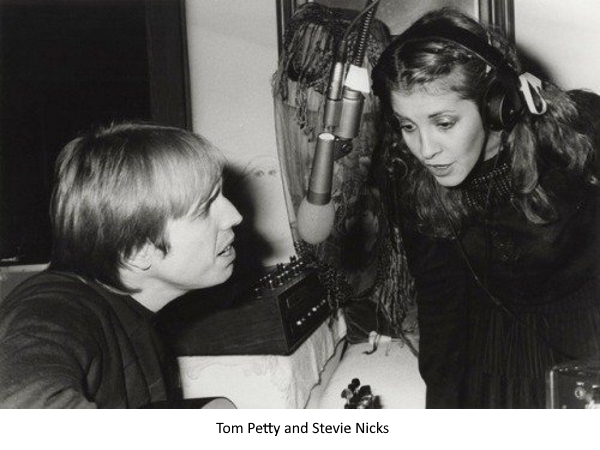
The backstory is that Stevie Nicks was initially going to record this. After spending the night with Eurythmics Dave Stewart, she woke up in a panic, realising that she still loved Joe Walsh from The Eagles, so she kicked Stewart out and told him, “Don’t come around here no more.”

Dave Stewart was no doubt heartbroken, or amused, but being a poet, he wrote a song based on her words. He asked her to record it, but she missed the recording session so he and Tom Petty did it instead.

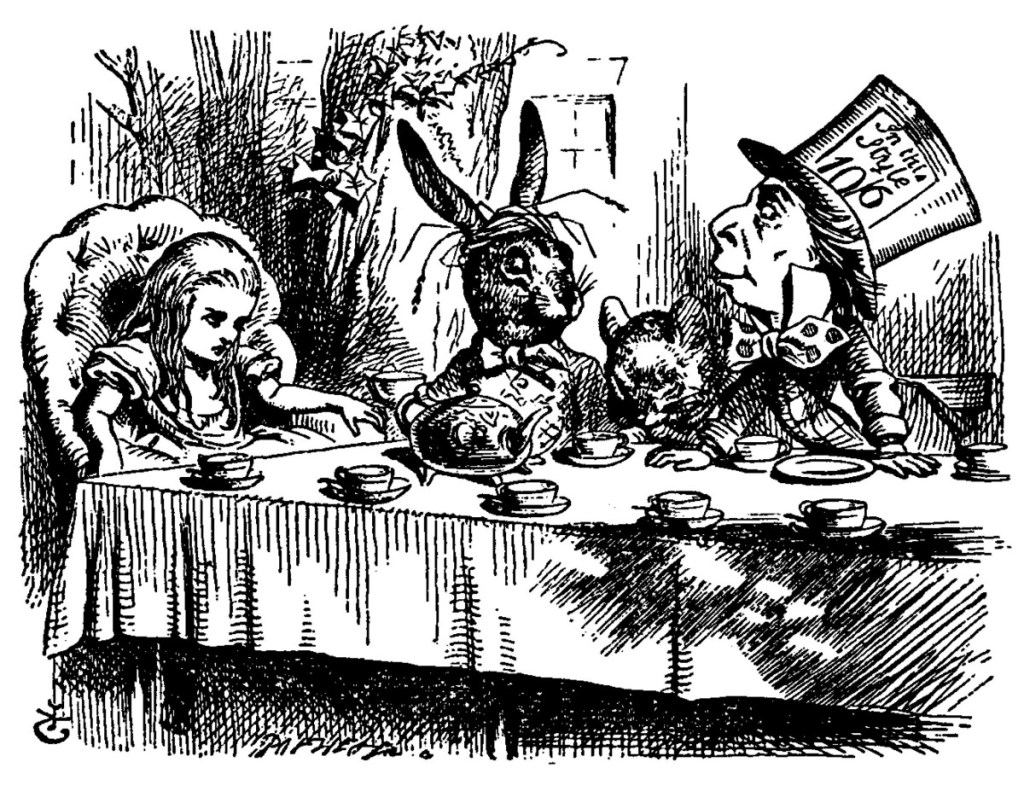
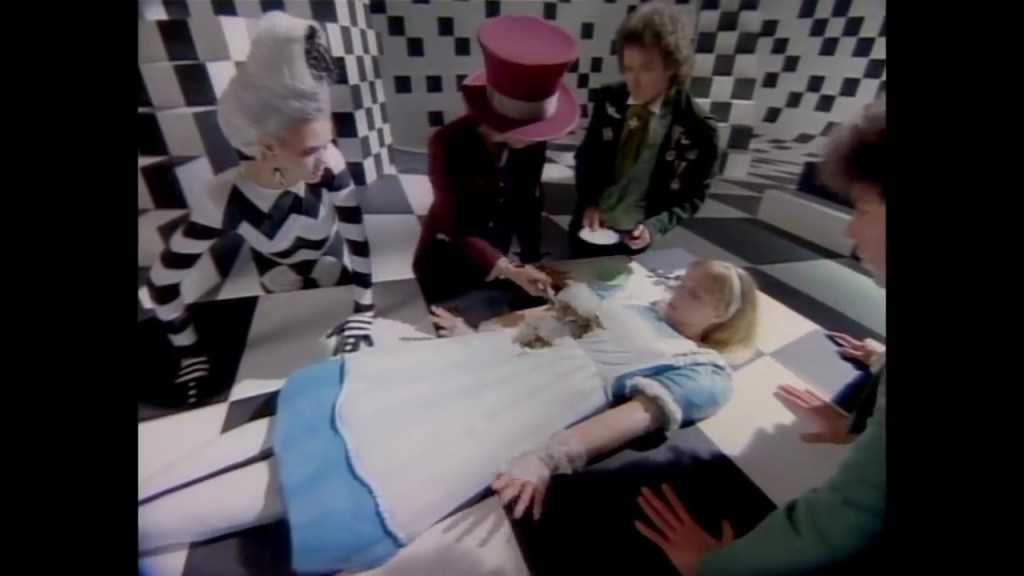
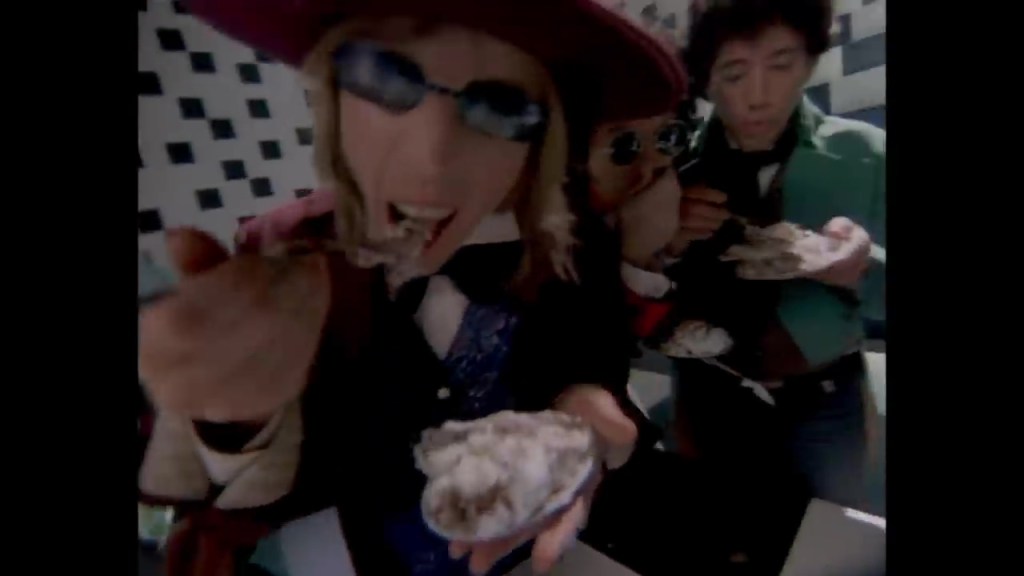
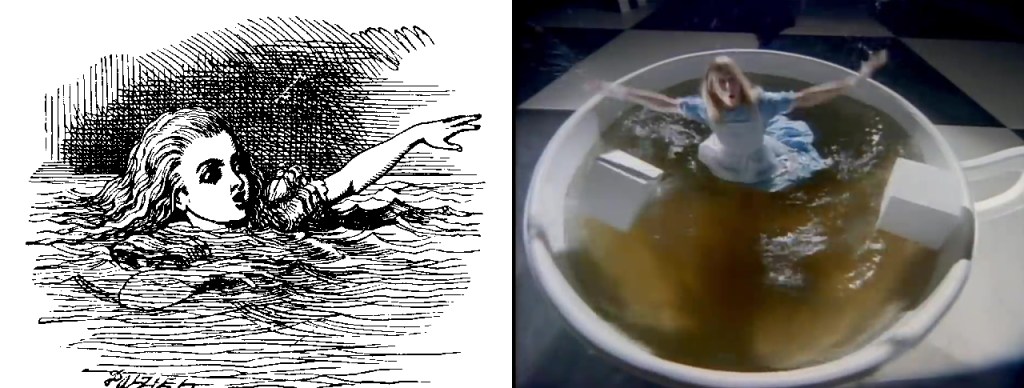
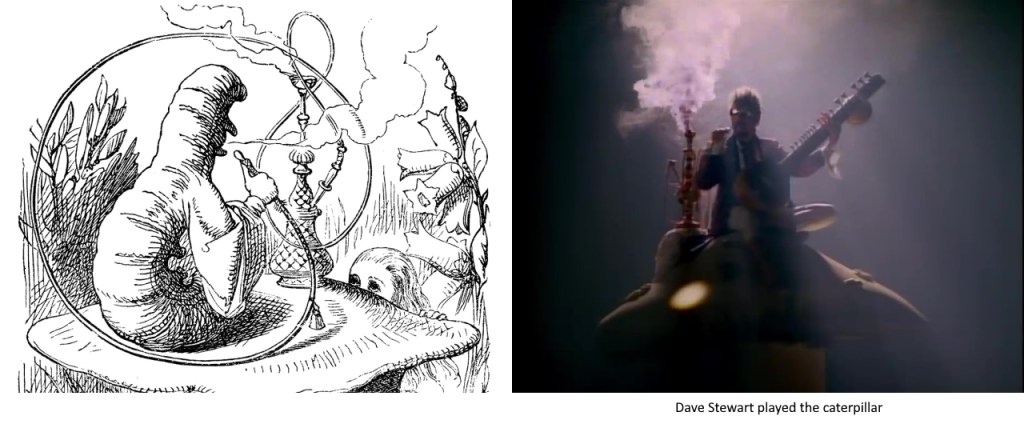
The song’s video was a psychedelic, Alice’s Adventures in Wonderland-inspired trip in which Petty plays the ‘Mad’ Hatter. Video director Jeff Stein was worried that Petty wouldn’t like the concept.

“I was little leery of pitching it to Tom, because at the time, in my mind, he was this straight-ahead rocker and maybe wouldn’t be that adventurous. For him to be in basically a costume melodrama, after whatever his image was before, was very daring, I thought. And he got totally into it.”

Many of the images from the book are shoehorned into the quite brilliant clip. There’s Alice drowning (although in tea rather than her own tears), the caterpillar sitting on a mushroom smoking a hookah, the Duchess’s baby who turns into a piglet, the flamingo croquet mallet, and of course the tea party.

The video caused instant controversy because, toward the end of the clip (which is at the top of this page), guests at the Hatter’s tea party slice up Alice and eat her as cake.

It was, reportedly, the motivation for Tipper Gore to launch the “Parents Music Resource Center” to establish a rating system for music. Stein said:

“Apparently, Tipper’s daughter saw that scene and freaked out — and then Mom started taking notice of what was going on, on MTV. And I’m not kidding: I was cited for promoting cannibalism by a parents/teachers group. I thought, ‘Well, this has to be a career high, if you can bring back cannibalism as a fad!’”

According to Stein, the final cut was not as graphic as they had planned.

“We had put strawberry jam as a filling, so when Tom was chopping it up, that kind of red strawberry sauce was going all over the place. It looked more like a slasher thing. But we weren’t going to include that in the final piece.”

MTV agreed to play the video, but they asked to remove a shot of Petty’s face.

They said it was just “too lascivious,” Petty explained. “It was just a shot of me grinning, and they were like, ‘Well, you can do it, but you can’t enjoy it that much.’”

The MTV Music Video Awards nominated the video for Video of the Year, Viewer’s Choice, and Best Direction. It ultimately won for Best Special Effects.

And of course, what would the music industry be without cannibalism?

“I’m just gonna make you my zombie”: DAHMER: MONSTER – The Jeffrey Dahmer Story (Murphy and Brennan, Netflix, 2022)

This new docudrama (I can’t believe that’s a word) is quite a big deal in the highly respected academic discipline of Cannibal Studies. While many people think of Hannibal Lecter when the subject of cannibalism arises, in terms of contemporary culture (and therefore putting aside the Donner Party for now), Jeffrey Dahmer, known as the “Milwaukee Cannibal”, is a crucial figure, not least because he really existed, we know a lot about him, and we have a good understanding of what he did. Dahmer typifies the modern cannibal in that he seems so unremarkable; we have seen, and perhaps remarked at, his cool demeanour and the fact that he seemed like just an ordinary, everyday boy next door.

There have been a few Dahmer movies and documentaries, including some interesting interviews with the man himself, arranged in jail, before a fellow prisoner caved his head in with a metal bar. This new one has a pedigree though. First of all because it is presented by Ian Brennan (Glee, Scream Queens, The Politician) and  Ryan Murphy, who signed a $300 million deal with Netflix in 2018 and who brought us such enormous and terrifying hits as Glee, Nip/Tuck, American Horror Story and American Horror Stories.

Monster – the Jeffrey Dahmer Story runs over ten episodes, released concurrently on September 21, 2022. The length alone (almost nine hours) makes it more comprehensive and immersive than the other treatments. It is also different to most serial killer / cannibal documentaries and films in that it is presented not from Dahmer’s point of view, but from that of those around him – the victims, but also the family and the neighbours (who had to put up with the appalling stench of death that always emanated from his rooms or apartments).

“We had one rule going into this from Ryan, that it would never be told from Dahmer’s point of view.”

The first episode drops us into the main event – Dahmer in his Milwaukee apartment, trolling gay bars and offering young men and boys money to come home with him for a photo session, where he drugs them and attempts to turn them into love zombies by drilling holes in their skulls and pouring acid into their brains. When this doesn’t work, he has sex with their corpses, and harvests their meat.

One man escapes and flags down the police, who arrest Dahmer. The series then turns back to his childhood, his parents’ messy divorce, and the isolation which left him free to hatch his murderous plots. Later, we meet some of his victims, and his neighbour Glenda Cleveland who repeatedly tried to notify the police and FBI of what she heard, saw and smelled, but was comprehensively ignored and even threatened for her interventions.

“What do you do in there? The smell, power tools going all hours of the night, I hear screaming coming from your apartment.”

Dahmer, threatened with eviction due to her complaints, offers her a sandwich, saying “I used to be a butcher. I made that just for you.” Glenda refuses to eat it, and we know why – it looks like a chicken sandwich (and probably is).

But our willing suspension of disbelief declares it human meat, which is not kosher in any religious tradition. He tells Glenda to “eat it!”

Most of this documentary is very true to the facts as we know them, but in any re-enactment, there will be gaps to fill in or characters that need to be heard, without filling the cast list with an unmanageable number of people to remember. So the sandwich was apparently a fact, but was not given to Glenda but to another neighbour, Pamela Bass, who thought he was a generous if shy young man, and admitted that she ended up eating it.

Glenda, played superbly by Niecy Nash (from Scream Queens and Claws), is a strong woman caught in one of those nightmares where you know there is horror, but no one will believe you.

She demands to know what is in the sandwich.

“It’s just meat… It’s like a, uh, pulled pork.”

This is a regular theme of cannibal texts: they remind us that humans are animals, and our flesh and organs are made of meat. It’s a popular meme on animal rights social media sites. This one shows the real Dahmer, in case you’ve forgotten what he looked like.

Dahmer was looking for love, but he was not willing to risk losing it, so he tried to conscript his victims as undead zombies or as corpses, skeletons, or just happy meals. He showed affection – he is seen lying with his corpses, holding their hands, preserving their body parts. He loved them in much the same way that farmers often claim to love their cattle, sheep, pigs, etc, just before putting them on the abattoir trucks.

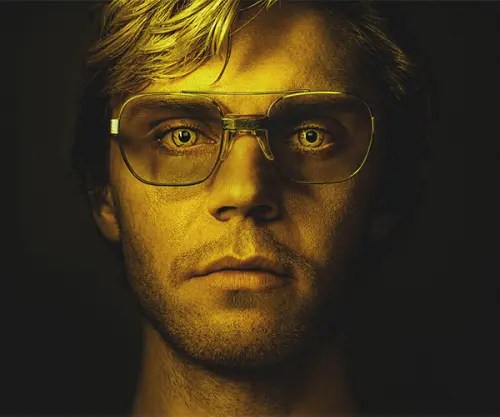
Dahmer is played brilliantly by Evan Peters (American Horror Story, X-Men, Mare of Easttown), who looks a lot like Dahmer, but with a touch of the young Malcolm McDowell – imagine Clockwork Orange but with cannibalism. If you want to know what Dahmer might have looked like forty years after his arrest, check out McDowell in Antiviral.

Jeffrey Dahmer murdered and dismembered seventeen men and boys between 1978 and 1991, thirteen years during which the police had no clue about his serial murder spree and, some might say, didn’t care much, since most of the victims were people of colour. And this is the heart of this rendition of Dahmer’s story – he was protected by the racism and incompetence of the American justice system. Here was a clean-cut white man, and people of colour disappear without trace all the time, apparently, so the police did not bother him, while the judges treated him as just a naughty boy.  Glenda’s frantic calls were met with apathy or rudeness.

He kept getting away with everything – one of the most extraordinary moments is shown in flashback in episode 2. On May 27, 1991, Glenda Cleveland called the police to Dahmer’s apartment after her daughter, Sandra Smith, and her niece, Nicole Childress, found a bleeding, naked and incoherent boy on the street who was running from Dahmer. Dahmer appeared, white and polite, and told the police that the boy was his 19 years old boyfriend.

He said the boy was drunk and they had been in an argument, and so the cops helped him take the boy back to his apartment, had a quick look around, made homophobic remarks about AIDS, and left the boy there.

The boy was bleeding from a hole drilled in his skull. After the police left, he was dead within the hour. It was later discovered that the boy was 14-year-old Konerak Sinthasomphone, Dahmer’s 13th victim. Incredibly, Dahmer was actually on parole for an earlier arrest for the molestation of another child, who was one of Konerak’s older brothers.

When Cleveland spotted Konerak’s photo in a missing person alert in the newspaper days later, she realised he was the young boy Dahmer had claimed was his boyfriend. She contacted the police and the FBI yet again, but they didn’t even return her call. Five of Dahmer’s seventeen murders, including that of Konerak, were carried out after Cleveland began contacting police. All but three of Dahmer’s victims were non-white.

The Reverend Jesse Jackson, a leader in the Civil Rights movement since the time of MLK, got involved in the case despite the urgings of some of his supporters, who didn’t think the movement should be linked to “a gay serial killer who eats people”. But as he says:

“I realised it was not just a gruesome horror show. It’s a metaphor for all the social ills that plague our nation. Bad policing, underserved communities, the low value we assign to our young Black and brown men, especially if they happen to be gay.”

The old profiling stereotypes no longer work, in fact never did. Dahmer was a serial killer who was ignored by the law for thirteen years, because he was white and male. In the Soviet Union at the same time, Andrei Chikatilo was killing and eating parts of over fifty women and children, ignored by the police force, because serial killing was considered impossible in the “workers’ paradise”. But those profiles still endure: a Black man on the street is instantly suspected of criminal intent, a white man, even Jeffrey Dahmer, is largely untouchable. In that sense, society dehumanises the poor, the coloured, the disabled, just as effectively as Dahmer did to his prey.

As the philosopher Michel Foucault observed, the world outside was a scary place filled with monsters up to the seventeeth century, and those monsters were thought to be probably criminals. But in modern times, the criminal is considered likely to be a monster. Ancient monsters were recognisable – usually grotesque and often hybrids of humans and other animals. But the contemporary monster looks, speaks and eats pretty much like the rest of us. Like Jeffrey Dahmer – the boy next door.

Is “true crime” really “true”? INDIAN PREDATOR: DIARY OF A SERIAL KILLER (Netflix, September 2022)

The world is so full of misinformation, disinformation and straight-out lies that it is not surprising that audiences crave some truth, and podcasts and documentaries investigating “true crimes” have become enormously popular.

The first series of Indian Predator, “The Butcher of Delhi” was screened earlier this year, and this new one, “Diary of a Serial Killer” involves a confessed cannibal, so of course The Cannibal Guy had to take a look. But did he kill all those people, and even if he did, did he also eat their brains? Truth is often the first victim of cannibalism.

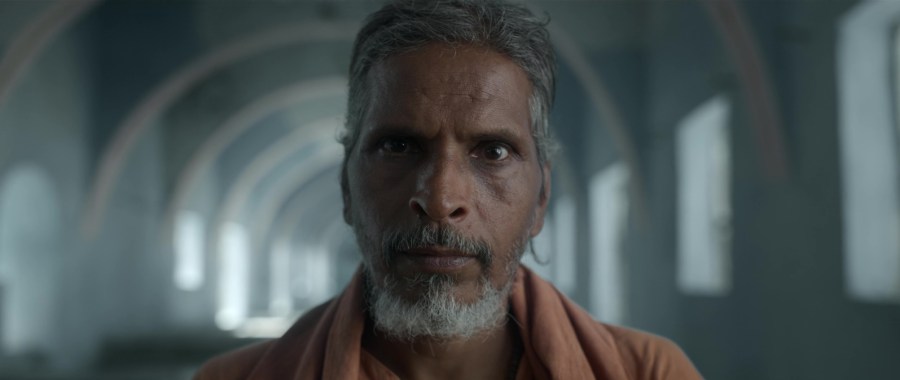
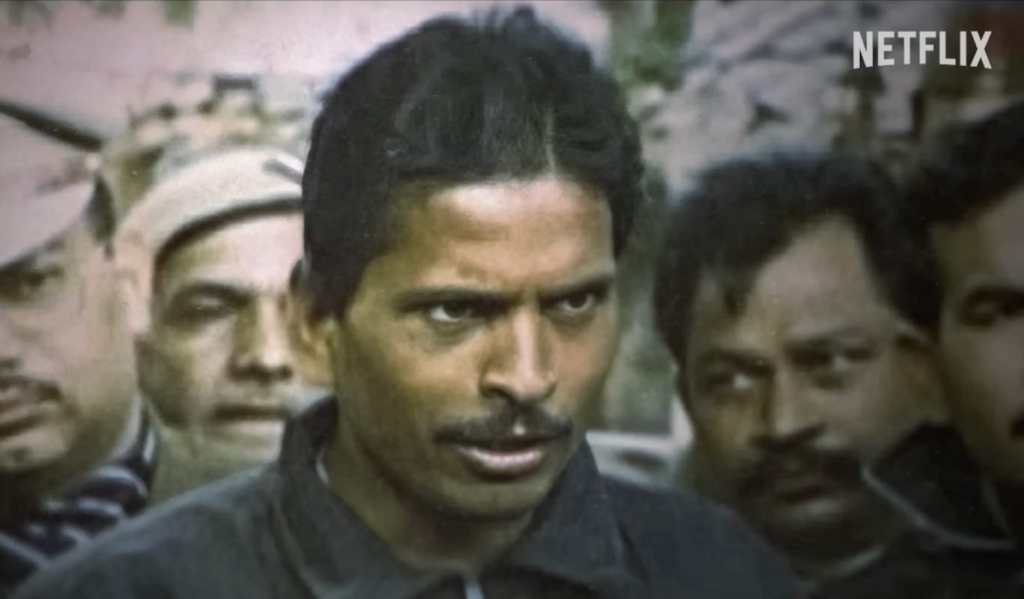
Raja Kolander, real name Ram Niranjan, the husband of a local politician, was suspected of murdering a journalist in Allahabad in 2000. Dhirendra Singh was a reporter with a Hindi daily newspaper called Aaj, and his body was mutilated and discarded in a river and a jungle. His head and genitals had been removed.

Police tracked the journalist’s phone records and found a call to the suspect, Raja Kolander. Kolander and his brother-in-law were arrested, beaten up, and finally confessed to the murder of the journalist. The police claimed that the murder was to stop Singh reporting on their car-theft business. But during the subsequent investigation, officers found Kolander’s diary, which listed some fourteen victims in total, including that journalist.

Although he was arrested in 2001, Kolander was not charged with the murder for a decade. During his trial in 2012, the police testified that he had admitted to cannibalism, and to burying fourteen skulls in his home. Kolander, his brother-in-law and his wife were all given life sentences for three murders, although he has appealed those convictions. Claims of cannibalism were never proven, nor were the other eleven murders, and some of those interviewed say that a few of those so-called “victims” are still wandering around. There is also mention made that the “mining mafia” had it in for Dhirendra Singh for exposing some of their corrupt practices, but this is not really explored further in the documentary. We are told, however, that Uttar Pradesh is ranked top in number of murders in all of India.

The first episode interviews the police and family of the journalist, and presents fairly damning evidence of murder. But then, some of it is just silly, such as the chief investigator saying that criminals “stutter when faced with the police.”

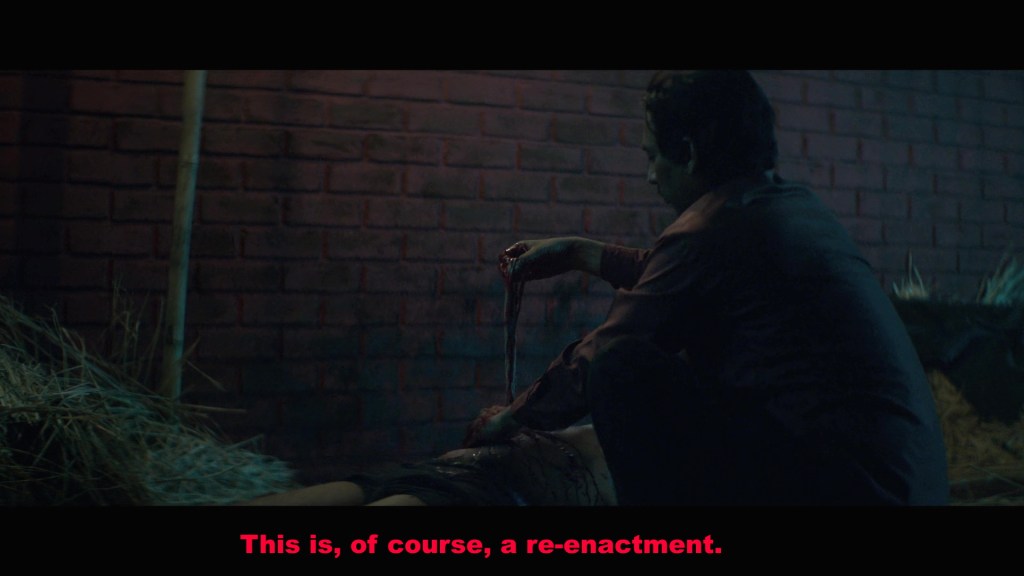
The evidence against Kolander is presented as it was laid out by the police, and the events shown in the documentary are just recreations of the official version, with actors playing the main characters. How legit those are is a good question, as there are several mentions of duress during the police interrogation.

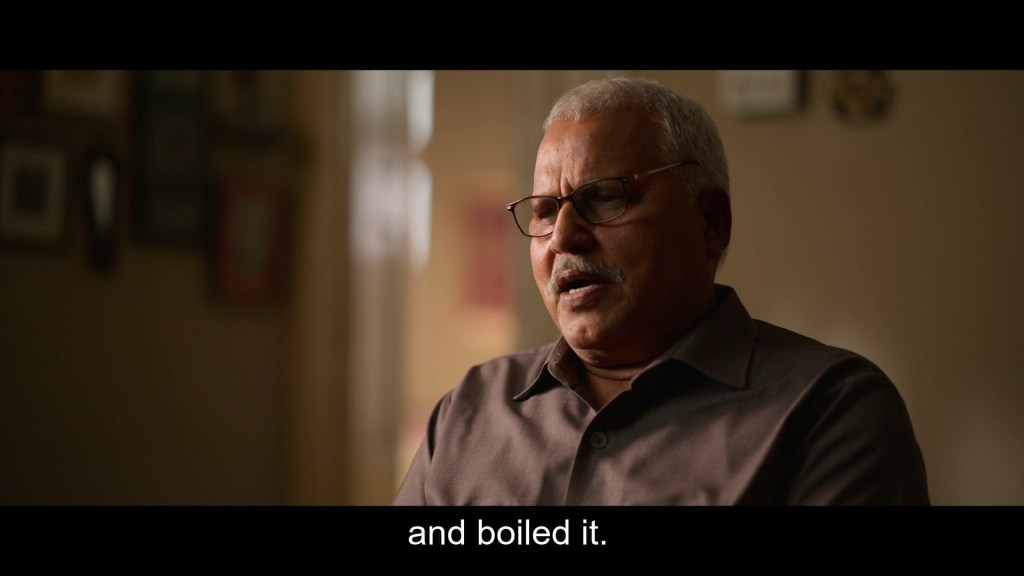
The police claim that Kolander was motivated by power, and sought to acquire it by cannibalism. One victim was from the Lala sub-caste. They are considered smart, even cunning, and often accused of taking advantage of the poor. The police claim that Kolander believed he could imbibe this cleverness through cannibalism, and so this victim was killed and Kolander then removed his brain:

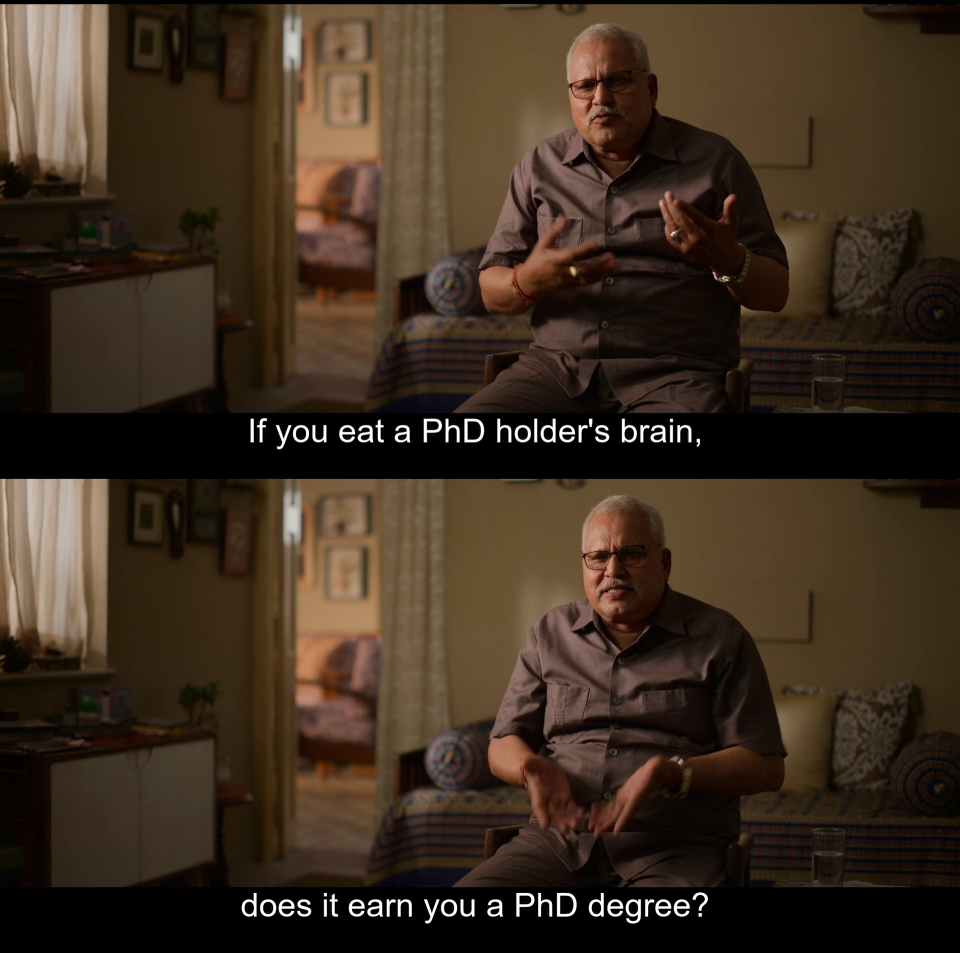
Then drank it as a stew. Another victim claimed to be a hypnotist, and so his brain was consumed in the hope of gaining that skill. As the investigator asks

A question to which I, for one, urgently need an answer.

Kolander then allegedly cut open a Brahmin, a member of a caste known to eat well, to see if they have larger intestines than other people. He then had to cut open a lower caste person to compare. The results were apparently disappointing. We are all equal, at least in the width of our intestines.

The second and third episodes interview Kolander in jail, another decade after the trial. He maintains that he is innocent of the murders that took place some twenty years before. He insists that he is a victim of trial by media.

The question of why his supposed thirteen other crimes went without investigation until a respected journalist was killed sheds some interesting light on the social and caste divisions in Indian society. Like Albert Fish, who in 1920s New York preferred to kill and eat black children since he knew the police would not work too hard to look for them, the racist attitudes in India to other classes, religions, and communities seem to have resulted in not much work being done on finding the earlier victims.

But Kolander himself comes from a caste which is largely impoverished, and the times were ripe for revolt by the subaltern castes – there were dacoits (bandits) roaming the countryside, and lower castes were fighting to be represented in government of all levels. It is clear that Kolander’s caste, the Kol, were considered by the upper castes to be primitive savages, recently driven from the jungles by deforestation into the life of subsistence farming, but retaining their savage traditions. It was inconceivable to them that a person from this background could own two cars, as the police claimed.

Kolander insists that he is a highly spiritual Hindu, not concerned with worldly power, and even claims to be a vegetarian, which would make eating brains tricky, although others (including his daughter) cast doubt on that. But it is certainly true that the colonial story has embraced accusations of cannibalism since Columbus – those who are poor and deprived must be savages, eaters of human flesh. Nothing they do is therefore surprising, and anything they are accused of is probably true.

Is this “true crime” documentary true? It’s impossible to know. But there are lot of holes in the story, including the fact that police brutality seems to be a standard interrogation technique, the fact that it took a decade to bring him to trial and, after another decade, his conviction (for three murders, not fourteen) is still to be decided. Also, the charges of cannibalism, which kind of make this newsworthy, were never proven in a court of law. Kolander, with some justification, says that his case was tried not in court but in the media, which published pretty much any sensational story they could dream up.

Cannibalism is perhaps the perfect exemplar of the uncanny – Freud wrote that we are most disquieted by the familiar suddenly becoming strange (remember Jeffrey Dahmer’s step-mother Shari saying he was “a nice, kind boy”) and things that should be hidden instead being revealed (e.g. the Brahmin’s intestines). But the impossibility of determining the truth is in itself uncanny, even more disquieting because our certainties about truth and lies are torn apart. A few cannibals sit down and tell their stories (Dahmer did, and so did Meiwes and Sagawa), but often the cannibal either disappears into the night like Jack the Ripper or suicides like Chase or is executed like Chikatilo. Seeing the bodies, or what’s left of them, but never knowing what or who happened to them is uncanny, and even more so when, like Kolander, the apparent cannibal denies all culpability.

Hammers and cannibals: THE HOUSE OF HAMMER (Discovery+, 2022)

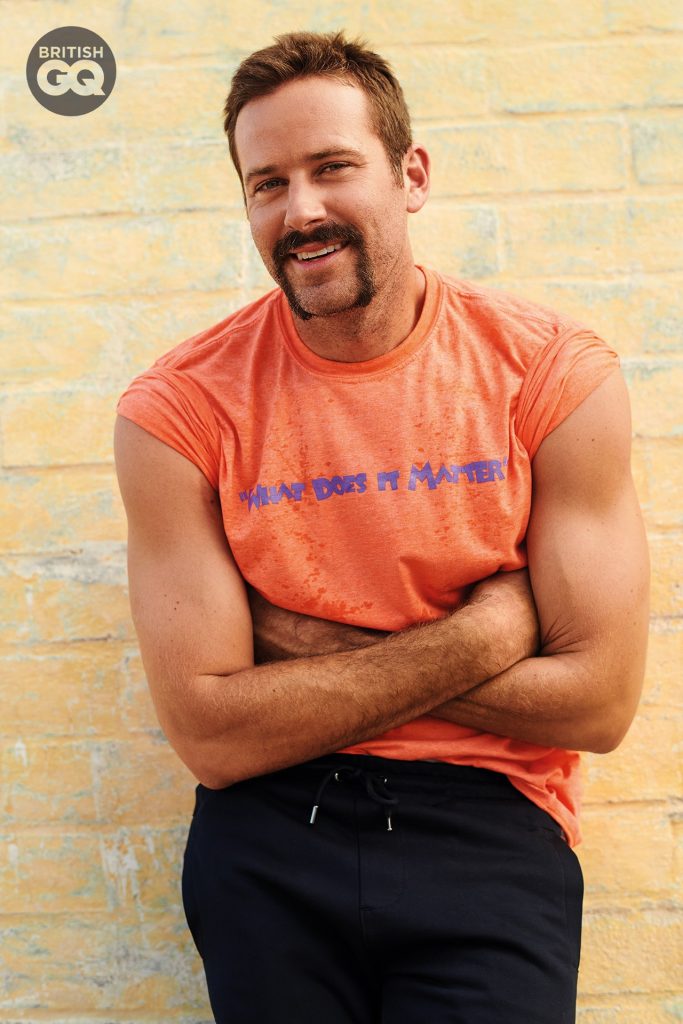
Is Armie Hammer (best known for The Social Network and Call Me by Your Name) a cannibal?

Hammer is a young American actor (in his thirties) who found fame with his 2008 portrayal of the evangelist Billy Graham in Billy, the Early Years for which he won a “Faith and Values Award” from Mediaguide, a Christian review organisation. Don’t you love irony?

Hammer went on to star in several movies (including some bombs like The Lone Ranger alongside Johnny Depp and The Man from U.N.C.L.E.) but he is best known for playing Oliver in Call Me by Your Name in 2017. He was supposed to star in a sequel, based on the novel Find Me, when his world turned to shit. Because he was a cannibal. Or wasn’t.

Now, a new three-part documentary on Discovery+ has gone through the history of the Hammer family, and the way the Hammers seem to treat everyone as, well, nails. Narrated in part by Armie’s aunt, Casey Hammer, the documentary makes clear that the family tree is rotten with toxic masculinity, abuse and exploitation. If we were wondering how Armie got that way, this sheds plenty of light on the question.

Hammer’s family was, shall we say, a colourful one. His aunt Casey declared,

“I know my grandfather had a dark side, but I saw my father’s dark side first hand, and I’ve seen my brother’s dark side, and I’ve just heard about Armie’s dark side. But I believe it.”

The documentary goes through the dark deeds of these generations: the patriarch and oil tycoon Armand Hammer, his son Julian, his son (and Casey’s brother) Michael, and his son, Armie. Casey said of her brother Michael (Armie’s dad):

“That’s the sign of a true monster. You can look in the mirror and not see any fault or that you’re doing anything wrong. And that’s how deep it goes with my brother. And that’s why he’s so scary, because he has no conscience.”

The first episode is about Armie’s allegedly violent relationships with young women who were often so star-struck that they would often let him get away with tying them up and biting them, among other things. He made his appetite seem like love.

In early 2021, several of Armie’s girlfriends took to social media to describe Hammer as abusive, manipulative and violent. Screenshots of his text messages appeared to show him describing fantasies (or real events) of rape and cannibalism.

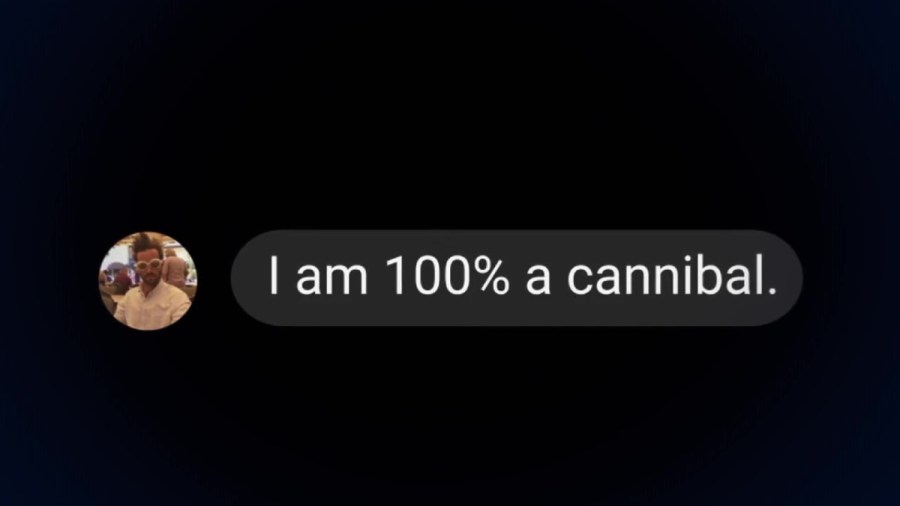
“I am 100% a cannibal…. Fuck. That’s scary to admit. I’ve never admitted that before. I’ve cut the heart out of a living animal before and eaten it while still warm. Totally raw. Still warm. ‘d eat your heart if i wasn’t stuck without you after.”

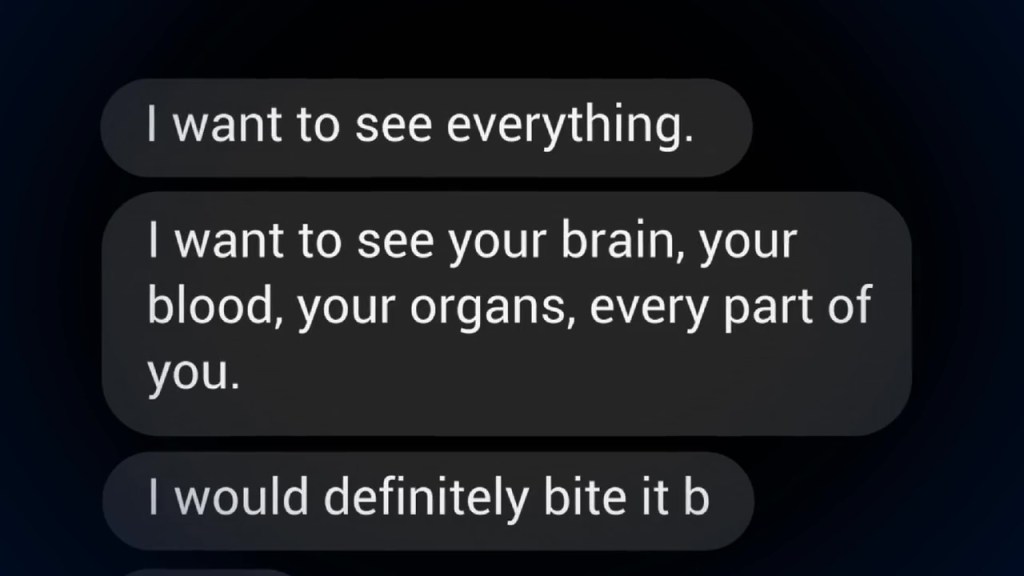
“I want to see your brain, your blood, your organs, every part of you. I would definitely bite it. 100%. Or try to fuck it. Not sure which. Probably both.”

“If I fucked you into a vegetative state id keep you, feed you, watch you, and keep fucking you…Till you are so sore and broken…. I can’t stop thinking of [fucking] your actual brain.”

“…cut a piece of your skin off and make you cook it for me…. Who’s slave/master relationship is the strongest? We’d win. When I tell you to slit your wrists and use the blood for anal.”

The documentary shows a clearly nervous Courtney Vucevovich describing Armie taking her to Sedona, tying her up, and doing whatever he wanted to her.

She shows texts on her phone, but also a note that he left at her home after he stalked her and found her address.

“Armie wanted total control of me, and absolute compliance, destroying any sense of bodily autonomy.”

Then he took her to meet his Mom! But, she said, “it was like a band-aid on a bullet wound.”

In early March, Armie’s ex-girlfriend Paige Lorenze, 24, said in an explosive interview with Vanity Fair that during their time together she felt “really unsafe and sick to her stomach.” The interview claimed that the celebrity’s ex-partners have “compared him to Ted Bundy” and said he was obsessed with shibari – a Japanese bondage art form where people are tied up in intricate patterns.

Lorenze was horrified to see the accusations of cannibalism,

“Because he would say things to me…weird stuff…like, ‘I want to eat your ribs’.”

She also claimed that Hammer had carved his initial into her pubic area and licked the wound, later bragging about it to friends, and that Hammer was fixated on biting her body, saying,

”If you did not tell me to stop I would eat a piece out of you.” And he was serious too. It was like he actually wanted to eat my flesh away.

The “A” that Armie allegedly carved into Paige

On their first night together, Lorenze said Hammer insisted: ‘You can either call me daddy or sir.’ She tells us in the documentary that

“He’s obsessed with meat. I brushed it off, but I do believe that he was serious.”

Another woman named Effie whom he dated for about five months in 2020 said that he had raped her for over four hours in Los Angeles. He told her he wanted to eat her flesh, and would suck or lick her wounds if she had “a little cut on my hand.”

Most of the documentary details allegations of non-consensual sex, AKA rape, for which Armie is being investigated by detectives from the Los Angeles sex crime division.

One such text read:

“I’m not going to lie… you cryin and crawling away while I stalked you down your halway was so exhilarating”

But on the subject of cannibalism (which is what this blog is about) let’s remember that Hammer has not been charged with acting on his cannibalistic fantasies — and in fact he has denied sending those texts. Courtney Vucevovich claims that her shoulder bears evidence of his cannibalistic ways, a wound that he suggested should be tattooed into her skin to make it permanent:

But texting and sex play, even bondage and sado-masochism (if consensual), are not illegal, and Hammer clearly enjoyed both.

But if he said these things and sent these texts, and if they were just fantasies, he picked the very worst time, the apex of the #MeToo movement, to send them. Hammer subsequently lost leading roles for which he had been preparing, including in the Jennifer Lopez film Shotgun Wedding, and his agency dropped him.

In March 2021, Effie, the woman who initially came forward with abuse allegations on Instagram, identified herself and accused Hammer of violently raping her in April 2017. The Los Angeles Police Department subsequently confirmed that he was the subject of a sexual assault investigation, which had been set in motion a month prior. Hammer has vehemently denied any wrongdoing via his lawyer, who stated that “all of his interactions with [Effie] – and every other sexual partner of his for that matter – have been completely consensual, discussed and agreed upon in advance, and mutually participatory.”

Hammer was unable to see his family during the pandemic lockdown, and his marriage fell apart. In June 2021, Hammer checked into a Florida treatment centre for drug, alcohol and sex issues.

Many, many people seem fascinated by cannibalism, and one artist is already turning Armie Hammer’s explicit DMs into NFT art (non-fungible tokens – it’s a long story).

The documentary outlines Armie’s fantasies and alleged assaults, and also goes into details of the corruption and violent activities of his forebears. So that raises the question, the one that Clarice asked Hannibal, “what happened to you?” Nothing happened, Hannibal answered. “I happenedLook at me, Officer Starling. Can you stand to say I’m evil?”

WTF? Is there a curse of the Hammer family? An evil gene? An epigenetic generational trauma that makes each new generation a bit more abusive than the last? Of course, Hannibal has some philosophy about this as well:

when it comes to nature versus nurture I choose neither. We are built from a DNA blueprint and born into a world of scenario and circumstance we don’t control.

The Hammer family have for some generations been enormously wealthy, and with wealth comes privilege. That does not necessarily lead to cannibalism (although movies like The Cannibal Club suggest otherwise), and certainly poor people can also be cannibals, but it may make the wealthy feel insulated against consequences – that is one important theme of shows like Succession. Wealth, privilege and entitlement does lead to cannibalism (not clear whether real or imagined) in American Psycho, at least in the book, (the film lingered on the murders but wimped out a bit on the actual eating of body parts).

Cannibalism is an act of domination – there can be no greater conquest of another than converting them into a meal and eventually into excrement. Hammer revealed this need to dominate in wanting to be called ‘daddy or sir’. In wanting to tie these women up so they are helplessly compliant with his every desire. In the power of watching them cry and beg. In ownership of their bodies.

The massive wealth of the Hammers demonstrates Bataille’s concept of “the accursed share”. Excess energy – in this case, wealth from the exploitation of energy in the form of oil – is spent on luxury without any public benefit, in non-procreative sexuality, in pageants and grand buildings, or else in catastrophic ways like war or sacrifice. In other words, in social terms, it must be used, or wasted. Armie Hammer used his excess energy on finding ways to control women, ultimately tying them up for the purposes of eroticism. Whether this was consensual or forced, which is what most of the women allege, is up to the Los Angeles sex crime detectives to determine. But it seems clear that privilege, particularly multiplied over several generations,

“must necessarily be lost without profit; it must be spent, willingly or not, gloriously or catastrophically.”

Georges Bataille, The Accursed Share Vol 1, p.21.

Excess energy can be donated – billionaires such as Warren Buffett and Bill Gates have pledged to give away at least half of their wealth during their lifetimes or at their deaths. Or they can expend their excess energy (wealth) on fancy homes and cars and bending others to their will. Although they usually do this less publicly than Armie Hammer did, this is still metaphoric cannibalism.

Fun fact: Rotten Tomatoes critics gave the documentary a 67% “fresh” rating, but the “audience” rating is only 5%. Most reviews, and thousands of other social media posts, doubted the veracity of the women’s claims, saying that Hammer had suffered the loss of his career because he openly expressed his fantasies. Vucekovich, on the other hand, says that after the news came out about her relationship with Hammer, she received death threats and harassing messages from Armie’s “die-hard fans.” Out of fear, she relocated from an apartment to a house where she installed cameras. “The ‘Charmies’ made my life hell,” she says. At the same time, she fielded “thousands” of messages from women who had been through something similar.

Is Armie Hammer a cannibal? He is a rich and handsome movie star from a wealthy and privileged family, who built his career on playing men who can get away with anything. He is certainly a persuasive abuser of (often much) younger women, a form of exploitative consumption that is uncomfortably close to cannibalistic ingestion.

But is he a cannibal? Technically, almost certainly not. But in his mind, in the deep, dark fissures of his unconscious, he certainly is. According to Freud, we all are.

“You are what you eat” – EAT A SWEDE, 2021

The world’s most popular pastime is eating. Plants “eat” carbon dioxide and water and turn it into carbohydrates, which animals then eat. Some animals then eat those animals. The theologian William Ralph Inge described nature as “a conjugation of the verb to eat, in the active and the passive”. Everyone is eating most of the time. When appetite becomes too voracious, we end up eating each other, or being eaten.

The video starts with members of a focus group being told they were trying human flesh.

The video shows Erik Karlsson as an entrepreneur who is trying to persuade investors to back his project to grow human meat for sale in supermarkets, and especially meat that is grown from the cells of Sweden’s national treasure, the actor Alexander Skarsgård. He then tries to persuade Skarsgård to donate some cells, for which he offers a partnership in the company. No dice.

The trailer at the top of this blog links to a website which explains the theory behind the longer clip, which is also available on YouTube: Eat a Swede (which has subtitles) or at the Eat a Swede website. Karlsson tells us that

“In 2050, the global population will reach 10 BILLION. The demand for food is expected to increase by 98%.”

There is no doubt that current meat industries are environmentally unsustainable. Humans slaughter some seventy billion (70,000,000,000) land animals every year for food, and trillions of sea animals. Yet most of the world’s people eat far less meat than Americans or Australians, and biologist E.O. Wilson estimated that for the rest of the world to reach those levels of consumption would require four more planet Earths. Other options for replacing meat include fungus, insects, larvae, etc. But why would we eat maggots (or pigs) when we have flesh from clean-living, environmentally conscious Swedes?

So anyway, meticulous detective work (AKA a quick glance at the website) revealed that this is not in fact a real company, nor are they growing real human flesh in the lab. It’s what they describe as “edutainment” or “mockumentary”. The Swedish Food Federation – an industry organization with about 800 member companies from Arla and Absolut to Oatly and Orkla – wanted to share their knowledge about sustainable food production, and in the process increase the competitive edge for Swedish food. Release a website on sustainable agriculture and you may get a few dozen likes. Make a “mockumentary” on growing human meat and

The people in the focus were actually eating “Swedish tenderloin” cut from the loin of an animal who had no doubt suffered and died at a tender age (as the name seems to imply). Probably a cow, although there is also a cut known as tenderloin from chickens, but for this process, I would think they would choose a cow because, apparently, our flesh tastes like beef, according to some people who have tried it (others say pork from wild pigs).

But the technology is already here. It is possible to grow cells in the laboratory, taking cells from an animal (and let us not forget that we ARE animals) and culture them into, well, meat. Clean meat, often called in vitro or lab meat, is meat grown in sterile laboratory conditions from animal cells. It is not plant-based meat, as so many supermarkets now offer, but actual flesh, grown in a nutritional medium, instead of cut from the carcass of a slaughtered animal. The idea is the basis of Brandon Cronenberg’s film Antiviral. While this may be a potential threat to the meat industries if /when it becomes commercially viable, it presents an immediate challenge to our culture of carnivorous virility, the ideology that makes us feel superior to other animals, demi-gods, the sacrificial violence that maintains the abyss between humans and other animals while bolstering the image of masculinity in most cultures.

More relevant to this thesis is the fact that clean meat could be grown from any animal cell. Want to try whale meat? Like to see what dodos or dinosaurs tasted like? Find a readable chain of DNA and contract the lab. And of course, the easiest cells to source are human ones – we hand them over to pathologists and crime scene investigators all the time. If clean meat becomes a reality, there is no reason (other than administrative) to assume we could not grow human steaks, livers or sweetbreads.  And as Erik says:

“It’s the only product where we have consent that it’s fine to eat it. We have a donor – that person has said ‘you can take my cells, you can grow them, and it’s fine with me that you eat them.’”

The artist Diego Rivera claimed in his memoir that human flesh is the most “assimilable” of foods for humans. Most testimonies by actual cannibals attest that human meat is not unique, and tastes similar to veal or pork. Erik says, tongue presumably in cheek, that human meat tastes like crocodile. Which, he says, tastes like – chicken.

“Since they say you are what you eat, why not eat a Swede?”

It is fascinating that polite society finds perfectly acceptable the confinement and torment of billions of animals in wretched conditions until they are slaughtered, yet so many people are shocked and repulsed by the idea of meat from a different animal, Homo sapiens, grown in sterile conditions with no need for branding, castration, confinement, slaughter and disembowelment.

Cannibalism in the Ukraine: GHOUL (Petr Jákl, 2015)

Ghoul is a “found footage” movie, a postmodern affectation that pretends it is a documentary that has been ‘found’ after some gruesome disaster. The genre was popularised (although not originated) by the Blair Witch Project in 1999 which, like Ghoul, had young film-makers heading off to investigate the paranormal, and wishing they hadn’t. One of its most famous antecedents was Cannibal Holocaust in 1980, which was purportedly a documentary about missing documentary makers, and was (purportedly) believable enough to lead to a court case in which the actors had to be produced to prove they had not in fact been killed in some sort of snuff movie. This was of course great publicity for the film, as was the fact that it had been banned in several jurisdictions. The very first film in the genre was probably Punishment Park in 1971, in which anti-Vietnam War demonstrators are supposedly dropped in the desert and hunted by Nixon’s cops.

The main point of interest in this film (the found footage itself being unoriginal and totally preposterous) is the fact that it is set in The Ukraine which, at the time of writing, is again suffering from decisions taken in Moscow. The “Holodomor” (literally “murder by starvation”) was an event that took place in the Ukraine in 1932-3, during which the population was deliberately decimated by the collectivisation of the farms and seizure of food stores. As starvation set in, corpses began to disappear, and the government response was simply to put up signs saying, “Eating dead children is barbarism”. Timothy Snyder’s Bloodlands, the history of Nazi and Soviet mass murders between the wars, examines the incidents of cannibalism in the Ukraine and Poland, and concludes “With starvation will come cannibalism”. When there is no bread or other meat, human flesh becomes the currency. Snyder describes several reports, including an orphanage in Kharkiv where the older children began eating the youngest, who himself joined in, “tearing strips from himself and eating them, he ate as much as he could.”

Pretty difficult to invent a story worse than such a reality. So to add some spice, we have in Ghoul an amateur film crew from America who are fascinated by cannibalism (as, apparently, are very many people: this blog is currently receiving over 10,000 views per month – THANK YOU for reading!) They are researching evidence of cannibalism during the Holodomor, as part of a planned television series on cannibals of the twentieth century. They are conducting interviews in Kyiv of elderly survivors of that time, but they are also hoping to interview a man named Boris who was arrested rather more recently for eating a colleague, confessed to the crime under hypnosis, but then was released, as the body was never found. He said that he was made to do it. By whom, they wonder.

The crew are taken to a local psychic/witch, who tells them that paranormal entities were behind that murder. The crew dismisses this as superstition, getting drunk and getting her to perform a séance involving a pentagram, in which they mockingly summon the ghost of Andrei Chikatilo, a notorious serial killer and cannibal who killed and partially consumed dozens of women and children in the late 1970s and 1980s.

The next morning is full of strange and uncanny events, but the crew are unable to leave for help. The Ukrainian psychic tries but fails to evict Chikatilo’s presence, with no luck: he’s back now, and killing again. The idea is that Chikatilo forced Boris, their reluctant interviewee, to kill and eat his victim. He possesses (as in takes over the body of) a cat, then Boris, who proceeds to chase the young filmmakers, screaming, through various dark, gothic passages.

WTF? (Or що за біса as they say in The Ukraine). The film’s poster (below) says “INSPIRED BY TRUE EVENTS”. But where is the connection between Stalin’s attempted genocide in the 1930s and the ghost of a cannibal who had been active in Russia in the 1970s and 80s and was executed by a bullet behind his ear in 1994? Well, turns out Chikatilo had a brother that disappeared during the famine, and his ever-loving mummy told him the brother had been kidnapped and eaten. This may have just been to make him behave better (spoiler: didn’t work very well). So anyway, he decided to become a cannibal, specialising in small children. A real piece of work, and not one you’d want to reawaken from the dead.

I find hand-held filming annoying even in the hands of an expert, and this lot are supposed to be a bit sloppy, so the picture is jumping all over the place, to the point of seasickness. Reminds me of my dad’s Super-8 home movies (although he didn’t have a cannibal ghost to film, just bored kids). If you are patient enough to put up with the soundtrack (annoying bangs meant to scare you) and the shaky camera, the concept of a massacre being presented through the dispassionate eye of a video camera is interesting, in that it could be interpreted as the way the universe indifferently watches the suffering of its animals as they eat each other or, more immediately, the way the world watches as Russia tries to cannibalise Ukraine.

But besides the irritating camera work and the noisy things that go bump in the night, the plot is absurd – you have a historical tragedy, an imaginary murderer and the supposed ghost of a real murderer, who is somehow able to take over cats, people (including during sex) and of course kill people. The whole thing is frankly a bit of a yawn. It somehow managed to get to 22% on Rotten Tomatoes, with the LA Times critic summing it up well:

“Ghoul” can’t decide whether it should be about cannibals, serial killers, ghosts or demons. The found footage trivializes rather than reflects the horrific events that serve as the film’s basis.

According to IMDB, Ghoul was the highest grossing horror in Czech history. It also won the Vicious Cat Award at the Grossmann film and wine festival. Not sure if that will impress you or not.

The full movie was available on YouTube last time I checked, but all the dialog is in Czech and Ukrainian. Even if you speak both fluently, I wouldn’t bother.