
Australian boxer Nikita Tszyu has revealed that he became a “cannibal” as he prepared to fight Lulzim Ismaili this month (August 2025). The boxer said he needed to be at his very best to win over his unbeaten opponent, and hoped that his new diet would boost his training.
Tszyu revealed that his change in nutritional sources was all thanks to his wife, Nikita Bedwell. The couple welcomed their first child earlier this month, named Curiosity after the NASA Mars Rover, and the birth allowed Tszyu to change his diet.
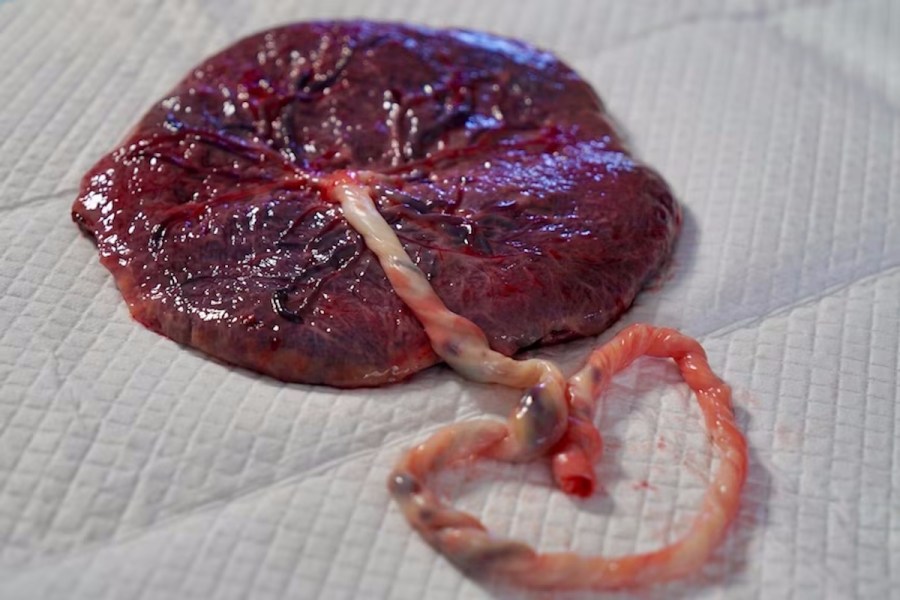
The Australian boxer is eating his wife’s placenta in capsule form as part of his training program, and feels like he is benefitting from the change in diet. He told a Sydney radio station:
“we freeze-dried her placenta and I’ve been supplementing on her placenta recently… in tablet form”
Does that make him a cannibal? Well, he thinks so. He added:
“I’ve technically become a cannibal. It’s actually like a superpower. I’ve done tests with my sparring – days where I’ve had it and days where I haven’t – and it feels like I got all this crazy amount of energy”
If you’re not convinced by that, he told the interviewers he is also including breast milk in his diet. Asked if he had tried it, he replied: “I have, I have… and it’s delicious as well!”
Consuming placentas is a growing trend in America, with mothers usually consuming them as part of their postpartum recovery. The practice dates back to Chinese medicine, though studies are yet to confirm that there are benefits to eating them.
The bout on August 20 was subtitled (based on Tszyu’s nickname):
THE BUTCHER IS BACK
So, is cannibalism the next big thing in athletic enhancements? Well, Tszyu knocked Ismaili, who was previously unbeaten, to the mat in just over one minute. The shaken opponent sat on his stool and refused to leave his corner, throwing in the towel before round two commenced.
Athletes often boast of eating meat to improve their fitness and stamina, although there are also plenty of vegan ones who swear that dropping meat and milk makes them faster, stronger and more alert. But if there is any truth in the meat myth, then I suppose we need to consider the words of Anthropologist Marvin Harris, who stated in his book Good to Eat: Riddles of Food Culture that, while humans are clearly not obligate carnivores,
“our species-given physiology and digestive processes predispose us to learn to prefer animal foods… strictly speaking, human flesh itself contains the highest-quality protein that one can eat”
There’s one to chew on, next time you enter the ring.
Family members of one of the victims of a gruesome murder of four college students in Idaho are furious that Bryan Kohberger has been offered and accepted a plea deal.
Kohberger was accused of stabbing Xana Kernodle, Madison Mogen, Kaylee Goncalves, and Ethan Chapin to death in November 2022 in Moscow, Idaho. The students were found with fatal stab wounds in an off-campus rental home in the early morning hours. Investigators believe the four students, thought to be sleeping at the time, were fatally stabbed between 3 a.m. and 5 a.m. According to the coroner, there was no sign of sexual assault.
A little over a month after the killings, Kohberger, a 28-year-old Ph.D. student and teaching assistant in the Department of Criminal Justice and Criminology at Washington State University, was arrested at his parents’ home in Pennsylvania on Dec. 30, 2022, and extradited to Idaho.
Kohberger was facing a possible death sentence if convicted in a trial that was scheduled to begin Aug. 18, 2025.
A letter sent to families of the victims to inform them of the deal said Kohberger will appear in court Wednesday to enter his guilty plea and be sentenced in late July to life in prison, according to the Idaho Statesman. Kohberger will forfeit his right to appeal as part of the deal. The letter from Moscow Prosecuting Attorney Bill Thompson said:
“We cannot fathom the toll that this case has taken on your family. This resolution is our sincere attempt to seek justice for your family. This agreement ensures that the defendant will be convicted, will spend the rest of his life in prison, and will not be able to put you and the other families through the uncertainty of decades of post-conviction appeals.”
Goncalves’s family had an angry reply on their Facebook page.
“We are beyond furious at the State of Idaho. They have failed us. Please give us some time. This was very unexpected. We appreciate all your love and support.”
The family issued a later post explaining what had been taking place.
“I would like to clarify a couple of things…we DID talk to the prosecution on Friday about the POSSIBILITY of a plea deal and it was a HARD NO from our family. It was very nonchalant and barely discussed as the majority of the conversation was surrounding the upcoming trial. NOTHING in our conversation prepared us for the next steps.”
A family member of one victim told NewsNation that upon hearing of the plea deal, she felt like “all the power had been given back to Kohberger.”
Why is this case featured in a blog about cannibalism? Well, A forensic psychiatrist told Newsweek after the arrest that Kohberger had battled with “cannibalistic urges“.
Reports then surfaced that Kohberger had followed a strict vegan diet, and had reportedly struggled with heroin addiction in the past.
Forensic psychiatrist Carole Lieberman told Newsweek that Kohberger’s “obsessive-compulsive eating habits” indicate he was afraid he would become addicted to meat if he ate it.
“He was not only vegan, he refused to eat off of pots or plates that had had meat on them. Psychologically, this represents his struggle against his cannibalistic urges. He was afraid that if he let himself go to taste meat once, he would become addicted to it—like he had become to heroin—and start killing and eating people.”
A relative told the New York Post that Kohberger’s dietary restrictions were “very, very weird” and that he seemed “very OCD,” referring to obsessive-compulsive disorder.
The woman, who asked not to be named, but said she was previously married into Kohberger’s family, said:
“It was above and beyond being vegan. His aunt and uncle had to buy new pots and pans because he would not eat from anything that had ever had meat cooked in them.”
Casey Arntz, who was friends with Kohberger in middle and high school, said in a video posted on TikTok that he had been “a heavy heroin user” in high school. Kohberger’s struggles with drug addiction continued into his college years, a friend from Northampton Community College told Fox News. Criminal profiler John Kelly told Fox News,
“This kind of person has this volcanic rage inside that’s going to explode on its victim of choice.”
Lieberman told Newsweek that Kohberger had probably studied criminology both to “calm the demons inside him that were telling him to kill” but also to “learn how to commit the perfect crime.”
Kohlberger may have corresponded with Rader (a lot of criminology students do) but we don’t know that for sure. We have to wonder if Rader would have told him about working in the meat department of a Wichita IGA a few years before his murder spree began.
Kohlberger’s obsession with meat reflects a lot of issues considered in Cannibal Studies. Firstly, the question of human meat: there really is no significant difference between the meat of humans and other large mammals such as cows, pigs or sheep. Hannibal Lecter takes delight in feeding human meat to his guests, such as the flesh of the flautist of the Baltimore Philharmonic, whose Board members subsequently enjoy the meal immensely in the book and film Red Dragon, thus becoming “innocent cannibals”.
But the point is that once meat is prepared (cooked, seasoned, presented) it is very hard to tell its provenance. Cannibals who have been asked have mostly compared it to pork or veal, with Armin Meiwes telling an interviewer
“It would have made no difference in somebody else had tasted it; he wouldn’t have questioned the meat…. During preparation, it is not as dark, but bright and fresh as pork, and tastes so very close to pork.”
Kohlberger’s belief that he might like human flesh if he tried any meat at all therefore has some logic to it. Since Charles Darwin’s writings overthrew the special status of humans as closer to angels than other animals, anthropocentrism has been amended to offer a story of humans as the culmination of evolution and thereby continues, rather less successfully, to obscure human animality. Should such beliefs falter, as happens repeatedly in many cases of contemporary cannibalism, it becomes a very short step from eating other animals to eating the human one.
But why should he become addicted to any meat? Well, we know Kohlberger has an addictive personality, shown by his very heavy usage of heroin. But we’re not talking drugs of addiction but lumps of protein, aren’t we? Well, there are plenty of studies about that. Marta Zaraska, for example, wrote in her book Meathooked that meat is highly addictive on several fronts – genetic, cultural, historic and commercial, and coined the term “meathooked” for the incongruous compulsion to eat meat despite the pangs of cognitive dissonance – the repressed feeling of guilt when considering oneself an animal-lover while also paying big corporations to kill them. Then there is the mythology of the Wendigo, a creature from Algonquin legend who starts off as a human but becomes a being who can only live on human flesh, which makes him grow bigger and at the same time hungrier. If you believe in Wendigos, then the slippery slope from carnivore to cannibal seems reasonably clear.
This leads us to the issue of Kohlberger’s apparently very strict veganism. Most people seem to believe (or want to believe) that vegans are fanatics, obsessed with animal welfare (or the environment, or their own health) who therefore compulsively avoid meat. But in fact most vegans would certainly wash a pot thoroughly after a relative had cooked meat, but are unlikely to throw it out as irretrievably ruined, as Kohlberger purportedly did. Veganism is an ethical system that attempts to minimise harm to sentient animals, which includes humans (yes, Virginia, humans are animals). If there is a slippery slope from the flesh of other animals to the flesh of Homo sapiens, then the vegan is furthest from the edge of that slope. When Kohlberger killed those students, he was not following any known vegan code of ethics, even if he didn’t sample their flesh on the way out.
In the year 2000, 44-year-old slaughterhouse worker Katherine Knight had a night of passion with her partner, John Price, then stabbed him 37 times, professionally skinned him, hung his hide on a meat hook over the lounge room door, decapitated him, butchered his corpse and cooked parts of him. She served up his meat with baked potato, carrot, pumpkin, beetroot, zucchini, cabbage, squash and gravy in neat settings at the dinner table, putting beside each plate place-names for Price’s children. Another meal was tossed into the backyard; it appears she intended to eat it but couldn’t do so. The police arrived before Price’s children so, as far as we know, none of him was consumed (by humans anyway).
Knight pleaded guilty to murder and the judge ordered that her papers be marked “never to be released.” An appeal was quickly denied, and she is still serving her life sentence at Silverwater Women’s Correctional Centre in Sydney.
Shoreline Entertainment planned to make a film of the incident based on Peter Lalor’s book Blood Stain, but so far it has not surfaced.
It appears that Knight was NOT a cannibal, despite one of the favourite media labels about her being “Kathy the Cannibal”. Other reports called her “The Woman Hannibal Lecter”, a comparison that makes no sense at all, since Hannibal did not use 37 strokes to kill people, definitely did eat parts of them, and did not (as Knight did) take a cocktail of sleeping tablets afterwards while lying in bed with the mutilated corpse.
Darren O’Sullivan, whose documentary is linked at the top of this blog, commented,
“this is possibly the most horrific thing I have ever discovered”.
Although the series is called “Real Twisted Tales”, I suspect O’Sullivan must have led a sheltered life. Knight was a slaughterhouse worker, recognised for her skills in knife work. She grew up in the NSW town of Aberdeen, where everyone in her family and most of the town were employed in the abattoir. Her job, from a young age, was to kill and cut up animals. She did to John Price what she was trained to do to other animals – slaughter them, cut them up, cook them. She did try to feed bits to his children, which is what farmers did in the UK (feeding cattle bone-meal to cattle), an act of cannibalism which led to Mad Cow Disease. But there is little evidence that she herself ate any of him.
The documentary above states that Katherine Knight is “one of the most evil people in the world”, because she was found sane enough to stand trial. But really, what she did was what she was paid to do every day, just to a different species than those who usually suffered and died under her hand.
Superstitious anthropocentric beliefs put humans on a tier somewhere between angels and animals, but really we are a species of Great Ape, closely related to the chimpanzee. Rationally speaking, there really is only a thin red line between killing and eating any species of animal.
Children wandering door to door, sometimes unsupervised, is often likely to end in tears. In this film Sector 36, immigrant parents, struggling to survive, have not the time to keep a watchful eye on the kids, resulting in sexual abuse, murder, organ trafficking, and cannibalism.
The words “inspired by true events” allow for all sorts of poetic licence, offering the fascination of actual criminality without the need to prove the veracity of each scene. This one is fairly close to the facts, being based on the 2006 Noida serial murders, in which over thirty children disappeared from a town in Uttar Pradesh in northern India. Evidence was presented, in the trial of the two alleged perpetrators, that the children had been sexually abused and murdered, had their organs sold to traffickers, and in some cases were eaten. The charges included abduction, rape, murder, criminal conspiracy and trafficking. The two men involved, a rich man and his servant, were found guilty of murder in 2009 and sentenced to death but were later (2023) acquitted of all charges against them due to insufficient and largely circumstantial evidence, despite the servant’s recorded confessions, which included admissions of cannibalism.
Before the acquittals, the BBC released a documentary called The Slumdog Cannibal, which tried to examine the motivations of the servant who had admitted to the crimes. The legal position becomes a lot more complicated once convictions are quashed, so in the two-hour Netflix special Sector 36, the original names have been changed, and various details are embellished for dramatic effect. The twists and turns of the plot at the end are completely fictitious. But the direction is sure and never intrusive, the plot is taut and engrossing, and the acting excellent, from the smallest victim to the extraordinary interactions of the two main characters, Prem and Ram.
We start by meeting the hungry servant, in this case called Prem Singh (played by Vikrant Massey), who is looking after the house of his boss, Balbir Singh Bassi (Akash Khurana). He calls his family, tenderly tells his wife he loves her, and then goes off to a storeroom where he starts chopping up a dead woman.
We then we meet a policeman, Ram Charan Pandey (played by Deepak Dobriyal) who is also a loving family man, driving his daughter to school on his scooter, but he turns out to be corrupt and lazy at work, not bothering to investigate the reports of the many small children who have gone missing in the town. They’ll turn up, he tells the distraught parents. He believes it too, until Prem tries to abduct his daughter. Then he takes the cases seriously, only to be hindered and suspended by his superior officer who is a friend or perhaps employee of the rich man, Bassi. When the father of one of the abducted girls appears at Bassi’s house screaming about murder and rape, Bassi reveals that the father was the girl’s pimp.
But then, a child from a wealthy family is taken, a nationwide manhunt is launched, and the child is found almost immediately. One cop tells his colleagues that while Gandhi freed the country, the picture of Gandhi’s face on Indian banknotes will free this rich child. Eventually, Ram’s new superior officer reinstates him and lets him arrest Prem, but only because he wants his temporary posting in Delhi to become permanent.
Is everyone corrupt in this story? The theme, stated at the beginning, is Isaac Newton’s third law of thermodynamic: for every action there is an equal and opposite reaction, which has become in social interactions a “system”. The system means that when a crook gives Pandey a box of cash, he is allowed to leave, while others who have no funds are beaten up and incarcerated. When a rotting child’s hand is found in a sewer, Pandey declares it is a monkey’s paw and gives a reward to the boy who found it.
This boy is then captured by Prem who has his own system, capturing little kids to be abused and then slaughtered for their flesh and organs. Prem tells the boy that the police will forget about him after a few days, and even his parents will eventually just replace him. But someone else, someone rich and worthy, will live longer through the appropriation of his organs.
Why, we wonder, is he like this? We have a flashback to Prem’s early life – he is working in his uncle’s butcher shop, chopping up goats and “servicing” his uncle, who enjoys raping little boys. We see him fight back, killing the uncle and then chopping him up, presumably getting rid of the evidence by bundling it up with the goat flesh, and eating his uncle’s liver, raw.
I cut that fucker up and fed him to the dogs. Had a few pieces myself!
As an adult, he has no scruples doing the same thing to kids (human ones), for his own pleasure and profit. Ram, the policeman, arrests Prem who immediately confesses, boasts, that he kidnaps kids, rapes them, chops them up after killing them, eats some of the meat, disposes of the rest, and sells their organs. His “business” involved all the missing children that the police have been ignoring. He tells the police,
Sir, the thing is that after killing Uncle, I got a taste for human flesh. I used to crave it. I needed it every couple of months…. I avoided it for a year, I tried to quit. But that craving wouldn’t go away.
He admits to abducting Ram’s daughter, but says it was an accident. He just didn’t know her father was a cop. Ram asks, “what’s the difference between them and my child?” Prem is outraged – there is no comparison, the kids he kidnapped and slaughtered were nobodies, who would never amount to anything.
While Prem is a bit naïve (one might say stupid), his question is real. No one cares about the sheep, goats or chickens that he chopped up in his Uncle’s shop as a child, nor would they be able to tell the difference if he added Uncle to the mince. Prem’s argument that he became addicted to human flesh is just an excuse – those who have tried the meat of humans report it is hard to distinguish from veal or pork. But poverty, homelessness and alienation is real, and if we can utterly disregard the moral value of any sentient being, we can do the same to those humans who seem, to criminals and authorities alike, outside our scope of care. Those whose lives don’t matter become disposable, and ultimately edible.
“He got shot down in New Guinea, and they never found the body because there used to be — there were a lot of cannibals, for real, in that part of New Guinea.”
This anecdote aroused plenty of outrage from PNG politicians who proclaimed that there was never, not much, or hardly any cannibalism in the good old days.
But now the story has once again raised its well-chewed head. 2025 is the 50th anniversary of independence for PNG, a year which was expected to be a celebration. Instead, the news is full of stories about nine people being killed in shootouts in Enga Province over that New Year period, as violence escalates in the highlands, a region that was hit by a catastrophic landslide last May.
That news was overshadowed by a video that soon went viral of armed gang members holding mutilated body parts in Central Province, 60 miles (100 km) from the capital.
Voices in the Tok Pisin language on the video said they planned to eat the victim, with one man making licking motions as they displayed a severed foot, saying,
“this is our meat, we will cook it and eat it”
There was an immediate furore over the claims of cannibalism. Police said the deceased was killed in a dispute in the remote Goilala mountains in the province, but there are conflicting accounts of when the video was made.
Prime Minister James Marape called for calm, and stated,
“Such acts of inhumanity are intolerable and represent a significant challenge to our shared humanity”
Marape had objected to Biden’s claims about cannibalism during the war, saying that PNG did not deserve to be labelled as a nation of cannibals.
Community leader Matilda Koma from Auga Dilava added,
“We do not eat people. Goilala people are not cannibals”
Fane’s Catholic priest Francis Pirit said that the video of the killing and youths pretending to eat human remains was a show of bravado, boasting because they had won a battle.
“There are no cannibals in the Goilala area. I sleep, eat and live amongst them. They do not eat human beings”
Despite the boast by the men, there is no footage of flesh being eaten in the gruesome video.
Cannibalism in PNG was largely a ritual practice by a small number of tribes and largely ceased by the 1960s after being banned by the colonial power, Australia. The suspicion that colonised peoples are inevitably cannibals has never completely disappeared; when the Australian soldiers of the 7th Division AIF began to find mutilated and cannibalised bodies in New Guinea in late 1942, they were not sure whether to blame the Japanese or local tribesmen. After a lengthy commission of enquiry, the Australian government in 1945 finally added cannibalism to the War Crimes Act 1945, the only nation to do so.
As recently as 2012, 29 members of a “cannibal cult” were arrested in Madang province on PNG’s northeast coast. Forensic reports and statements made by the accused led police to believe parts of the victims had been eaten.
One of the more persuasive substantiations of PNG cannibalism was Kuru, a rare, incurable neurodegenerative prion disorder that was found in the Fore people of Papua New Guinea in the middle of the last century. Kuru is a form of transmissible spongiform encephalopathy, related to the “mad cow” disease that cured people from eating beef for many years, and appears to have been spread by funerary cannibalism. It is often touted as a reason not to be a cannibal, appearing unexpectedly in films like Jim Mickle’s We Are What We Are and many films about wendigos.
So, cannibalism remains a sensitive topic in PNG. President of the PNG Law Society Hubert Namani sparked outrage when his comments condemning the “barbaric killing, mutilation and cannibalism” over the festive season were reported by the Post Courier newspaper.
Meanwhile, Goilala’s local member of parliament, Casmiro Aio, pointed out this week that there had been no regular police presence in his electorate for 10 years.
The questions remain – did any of the dead people get eaten? And more interestingly, why would that be so much more appalling than the fact that nine people were killed?
Cannibalism is defined by our good friends at Wikipedia as:
“the act of consuming another individual of the same species as food.”
Most dictionaries like to put “human” in there somewhere, but that is just another manifestation of anthropocentrism, a species-wide narcissism that believes everything is just about us. The same ideology also insists that human flesh is somehow different to that of other animals, and human suffering somehow more intense, or at least more important.
Now, we know that corn cobs cannot grow arms and legs and barbecue each other or indeed anyone of another species. As far as we know, they also cannot suffer, as pain is an evolutionary response to danger, and only useful to animals, who can seek to avoid that danger. The concept of corn cobs tormenting and killing other vegetables is absurd.
But that is exactly what humans do, confining, tormenting and slaughtering some eighty billion sentient land animals every year, and several trillion sea animals. We draw the line, usually at other humans, sometimes at dogs and cats in Ohio, but that line is arbitrary and can shift without much impetus.
If corn cobs could eat each other, they probably would. The objectification of the other, human or nonhuman, and the intensity of the slaughterhouse we have built in this world, sees that line between carnivore and cannibal increasingly porous, as we have seen in the hundreds of examples in this blog.
“…as long as human beings will go on shedding the blood of animals, there will never be any peace. There is only one little step from killing animals to creating gas chambers a la Hitler and concentration camps a la Stalin . . . all such deeds are done in the name of ‘social justice’. There will be no justice as long as man will stand with a knife or with a gun and destroy those who are weaker than he is.” Isaac Bashevis Singer, foreword to ‘Vegetarianism, a Way of Life’, by Dudley Giehl
Written, directed and produced by Matthew Roth, The Man who Collected Food (also released as Cannibal Collector) is a parable of modern consumerist society.
Miguel (Mike N. Kelly) is the unexceptional, almost unnoticeable man next door (like most modern cannibals), who is quietly (or sometimes noisily) proud of his collection. What he collects is food, and he hoards it in cupboards and on display shelving. Like any serious collector (think of Barbie collections or comic books), it is definitely not for consumption.
He carefully stores his purchases in their original packaging, knowing that they would be ruined as collector’s items if he were to open them or, heaven forbid, eat them! Like any obsession, collecting takes over his life.
To survive without spoiling his collection, he eats people. He won’t open any of his food packets, but has a cold-room full of abducted humans, collected according to ethnicity, some already cooked, others tied and gagged and awaiting prep, which involves unfastening them and then chasing and killing them with various fun toys like mediaeval maces.
“Mother always told me to never play with my food. But I don’t think she know how much fun it really is.”
It’s just his quirk, and his neighbours are presented as even crazier than him. There’s the deer hunters, identical father and son in matching lumberjack plaid, and then there’s Kelvin, who runs around with a shotgun shooting at aliens (and who is covered in what he claims are bits of their green brains).
Kelvin sums up the film’s theme:
“I believe that there’s something a little strange in all of us. Whether we’d like to admit it or not, there’s just that one thing we don’t want anyone else to know about.”
Miguel attends a group therapy meeting for people with traumas and more common addictions like sex and cigarettes. He tells the group he collects food, which doesn’t seem that big a deal, until he adds,
“In order to keep my collection in mint condition, I have to resort to cannibalism.”
He tells them he can’t eat “animals” because they are food, and so belong in his collection. The facilitator asks him how that is logical, in that people are also food, at least to cannibals, but he points out that people are not food to other people.
“They don’t package or can people, if they had people-sized packages, then you’d have a better argument.”
She might have had better luck pointing out that people are animals too. Instead, she announces that they are all going to go to his home to open all his packets as therapy, and that makes him really mad. The middle of the film is a long, slow-motion sequence of him killing all the people in the group, and then the cleaner who finds the bodies.
His secret is discovered by the deer hunters who decide to hunt him, until he kills and eats them, then hears a phone message about a friend who keeps escaping death in various accidents and is called “the luckiest man in the world”.
Taking the essentialist argument seriously, Miguel decides that eating such a man might allow him to incorporate that luck, and finally find what he has been searching for: “that package of Ranch Wall Rice with Chicken and Vegetables”. Eating the “luckiest man in the world” will, he hopes, make him lucky.
Taking obsession to its logical conclusion, The Man Who Collected Food is a black comedy (or red comedy given the amounts of gore) with a serious message; a critique of modern consumerism.
“It’s all because I’m different. Sometimes I just wish I could collect comics or coins or anything – it has to be food, food, food!”
Our appetites are incited by marketing and advertising, while at the same time we are told that the Earth is being destroyed by our voracious cravings. We are insatiable, and yet we are ashamed of that. As Dylan said,
“If my thought-dreams could be seen, they’d probably put my head in a guillotine, but it’s all right Ma, it’s life and life only!”
The script is somewhat feeble and the acting varies between wooden and histrionic. The film earned a respectable 71% “fresh” on Rotten Tomatoes, even though there are no reviews listed. But nonetheless, it’s entertaining and funny, the theme music by Daniel Alcheh is terrific, and the gore hounds will appreciate the amount of carnage. And it actually has a lot to say about obsession, greed, consumerist voracity, and the illogical cultural binaries of edibility and abhorrence. Worth a look, if you can find it.
People who automatically flinch at the idea of cannibal movies (or cannibalism generally) give a little mental shrug when the subject turns to starvation. What would you do if you had no food, nothing containing any life-giving nourishment except other human bodies? The honest answer to that is, usually, ‘I don’t know, and I hope never to find out’.
Several films considered in this blog have looked into what we might call “survival cannibalism”, a sub-group of the wider “castaway” genre—films like Hitchcock’s Lifeboat—which derive from the narrative of Robinson Crusoe. The most famous in Cannibal Studies is still Alive, which retold the story of the young footballers who survived a plane crash in the Andes, only to discover that the search had been called off and there was literally no food in the snow, except the bodies of their fellow passengers (most of whom were their friends). It was recently rebooted in Spanish in Bayona’s La sociedad de la nieve. Such stories are contemporary versions of the old shipwreck stories which motivated much of the cannibalism narratives of early modern Europe, horrifying the Europeans, when they weren’t accusing the colonialised of the same thing. A classic story is the whaling ship Essex, the wreck of which inspired Moby Dick. The film In the Heart of the Sea follows that story – what happened to them after the ship sunk? Well, weeks in a lifeboat with nothing but each other for company and no food…
Then we have the many, many post-apocalyptic stories, starting with Soylent Green, in which overpopulation and climate change have led to the recycling of dead people into delicious crackers. Other classics of this genre include Delicatessen, We Are The Flesh, Cadaver, and of course the bleak glimpse of the future, The Road. Such disasters can be intentionally created, such as Stalin’s famine in the Ukraine, during which the starving ate their own relatives. In the USA, the classic case of starvation cannibalism is the Donner Party.
This week’s film, Hunger, explores the same question: what would you do? If you were starving, what, or who, would you eat? An apocalypse is not the fault of the victims, and surviving any way you can, feeding yourself and your family, is difficult to criticise. It may still be gross to some (or most) people, but it is nevertheless, in some ways, understandable.
But this film complicates it by taking away the excuses of an indifferent nature or a catastrophic global event. In Hunger, there is no apocalypse. The characters are just five people who wake to find themselves in a dark dungeon, with no idea how they got there. It’s a cistern, a larger version of the abandoned well in which Catherine Martin found herself trapped in Silence of the Lambs. And, of course, like Catherine, there is no food being catered. Science hates anecdotal evidence, so in this film we have a scientist who has gathered ‘ordinary’ people in extraordinary circumstances, just to see what would happen. You may remember Mason Verger boasting of a similar experiment in Hannibal:
“I adopted some dogs from the shelter. Two dogs that were friends. I had them in a cage together with no food and fresh water. One of them died hungry. The other had a warm meal.”
They have access to four barrels of water, a toilet (of sorts, but only four toilet rolls) and a day-clock that marks off 30 days, the length of time the human body can survive without food.
On the second day, they find on their water barrels a scalpel, an instrument that Jordan, the doctor played by Lori Heuring (Mulholland Drive), calls “a human carving knife”. It soon becomes clear what that is for, and it ends up (after much discussion) being used for just that purpose – to kill and butcher each other.
We find out as they talk that they seem to have been chosen because they have all taken a life – one killed her abusive partner, another in a hold-up gone wrong, another through euthanasia. Doctors like Jordan handle life and death every day. But the scientist wants to know, are they willing to kill out of hunger alone?
Then there is that scientist who kidnapped them; we find that he had been a young boy who survived a car crash: we later discover he cannibalised his mother’s corpse to stay alive. Now he watches his captives, and takes careful notes.
He shares their predilection for taking life: when a couple come to have sex in the quiet country area and hear the pleas for help from their oubliette, he shoots them with tranquiliser darts and pushes their car into the river, but not until they wake up. He thereby reveals a sadistic streak, a psychopathy, or at least a disavowal of empathy, common in scientists who experiment on mice, rats, dogs, monkeys and other animals. Most of us react to seeing other sentient beings in pain by initiating an empathetic response called resonance in the inferior frontal gyrus and the inferior parietal lobule of our brains. Recent research in which rats were given electric shocks and responded similarly both to pain and to watching other rats in pain showed that this ability is not restricted to humans, and in fact may be better developed in rats than in some scientists. Like Descartes torturing dogs or Josef Mengele experimenting on camp inmates, a psychopathic scientist can justify any cruelty for the sake of research.
Cannibalism, the act of killing and eating another, is sometimes considered transcendent (by the cannibal), with one character making reference to cannibalism as a spiritual pursuit:
“Human flesh is essence. It captures a person’s soul!”
The scientist likes this idea, because he ate his mother, so it’s comforting to think that he now contains her soul. But the main theme of the film remains starvation cannibalism, in this case forced on the victims, as it was in the Ukrainian famines or the Nazi death camps. The counterpart of this cannibalism is happening in their bodies. As Dr Jordan tells us, the process of starvation progresses as “your body basically cannibalises itself.” The alternative is what the scientist hopes to witness, the choice to “become a savage”.
Jordan, the doctor, is the only character who refuses to consider cannibalism. Like “the Man” in The Road, she wants to “carry the fire”, and that anthropocentric ideal does not include eating humans. The others spurn such naïve ideology:
“You can hold on to your precious humanity. We’re doing what we have to do to survive. And your boyfriend? He tasted surprisingly delicious.”
Cannibalism is usually depicted by society as a form of madness or monstrosity involving a devolution from civilised to savage, from enlightened to barbaric. Unless we pay someone else to do it for us—then it’s called animal husbandry.
The film was produced for a tiny $625,000, so the special effects and production time are limited (except for the buckets of gore), but it is still extremely effective. Hunger was released on Fangoria’s Frightfest DVD line, the same distributor as the (reworked) Armin Meiwes story Grimm Love. It does not seem to have received wide distribution, which is a shame, as it is well made, well acted (particularly Lori Heuring, who is quite incandescent) and is well worth your while chasing down. Moreover, it covers a crucial question that becomes more urgent as the world goes to hell in a handbasket – what would you do?
There are tendencies, dispositions, that characterise each era, each year, sometimes each day. Call them spiritus mundi or the zeitgeist, they appear to us in the media of the time – never more so than now, when we can express instant expression and instant outrage on social media. The current trend seems to be about oppressive elites who are manipulating, enslaving, sometimes consuming us. On the ‘right’ this is sometimes expressed as “the Deep State”, on the ‘left’ it is variously called capitalist exploitation or racist colonialism.
A story that has been doing the rounds for a decade has recently gone (a bit) viral again this month after a podcast called Mexico Unexplained revisited the story of Gabriela Rico Jiménez, a 21-year-old model from Mexico who disappeared some 15 years ago after raging against the machine outside a fancy hotel in Monterrey Nuevo Leon. Jiménez is usually described as a “supermodel” although there is little evidence of that in Google searches. But then again, if she has been “disappeared” by the elites against whom she railed, then they would have made sure to delete her history as well, n’est pas? The Daily Mail rediscovered the story on June 1 2024 and brought it back to life:
Anyhow, she made some interesting if somewhat mystifying accusations:
“I wanted my freedom. Monterrey freed me but it cost me a lot of work. I was in Mexico City for a year and four months. All this began in mid-2001. I barely remember. They were young and powerful, and they killed them. I’ve been knocking on doors. What I wanted was my freedom. I want my freedom. Carlos Slim knew about this. I want my freedom. It hurts my soul that they took him away.”
Carlos Slim at that time was apparently the richest man in Mexico or maybe the world, controlling América Móvil, Latin America’s biggest mobile telecom firm, so it’s not too surprising that her rant was shut down pretty quick, and she was carted off, presumably to a mental asylum, wherein she perhaps still rots, unless she has been cured, killed, or eaten.
As the police (or stooges of the elites if you prefer) began to move in, she screamed,
“You! You were there! … You killed Mouriño! They told me who did they kill? The Queen of England? The Queen of Germany? Did they kill the princesses and Mickey Mouse? It was also him! What? Nothing is going to come here. The people where you come from are crazy! They killed a lot of people. Death to that kind of human! Go away! They ate humans! Disgusting! They ate humans! I wasn’t aware of anything. Of the murders, yes, but they ate humans! Humans! They smell like human flesh!”
Now, Germany does not have a Queen, nor is Mickey Mouse a real live mortal being (sorry for the spoiler, kids). Were other royals and plutocrats engaged in cannibalism? Unfortunately, the sudden disappearance of Ms Jiménez makes it difficult to work out what she was alleging, let alone the truth of such claims. But conspiracy theories love angry rants and disappearing complainants, and so a (smallish) cult has followed Jiménez, particularly after an anonymous person on a blog called “The Black Manik” claimed to have spoken to Jimenez and witnessed the incident, until he was pulled away by “some tall, well-dressed people”. Accusations fly thick and fast about elites and their alleged members, some of whom are occasionally accused of being rich cannibals.
Despite the best efforts of the Daily Mail, no further sightings of Gabriela Rico Jiménez have been reported.
The narrative of cannibalism to describe class warfare is nothing new – in 1789, the sans-culottes felt that French aristocrats were (perhaps metaphorically) eating their flesh, and in turn, the poor eating the aristocrats (more literally) became popular after the Revolution. In films, there are a lot of phantasies about the poor eating the rich, such as the silly English movie Eat the Rich. Indigenous people were routinely accused of eating their European invaders, often as a pretext for enslavement and extermination, but sometimes the eating of the foreigner was presented as a form of liberation. Sawney Bean and his incestuous clan were supposedly preying on rich travellers in the fifteenth century, and have been revived for horror stories ever since. We see cannibalism as a form of revenge on rich exploiters in the classic Suddenly Last Summer, in which the rich, white, effete Sebastian is eaten by the impoverished boys he has been sexually abusing.
But the more realistic horror movies usually show those with money, influence and power eating the poor. Jack the Ripper was never conclusively identified, but seems to have been someone rich and powerful, who got his kicks in 1888 from killing sex workers and, in one case at least, eating parts of them. The film Never Let Me Go showed a future (or alternate present) in which the protagonists were bred as clones, not to be eaten exactly, but to be cut up for organ transplants. More recently, films have speculated on the rich forming clubs to eat the poor, or paying entrepreneurs to kidnap and sell parts of young women to satiate their jaded appetites. In the wonderful Welsh film The Feast, the rich are over-consumers of the environment, and their punishment is to eat each other. And let’s not forget the extraordinary accusations made against actor Armie Hammer, who declared to a girlfriend on social media “I am 100% a cannibal. I want to eat you.”
So it’s not clear who is eating whom – the rich or the poor, or perhaps there is some sort of cultural pendulum. But leaving aside the actual flesh, we are all involved in consumption of the other in some form. Philosophers from Voltaire to Derrida have declared “we are all cannibals”.
Dmitri Malyshev was recently released from a 25-year sentence for murder and cannibalism to fight on the Ukrainian front for the Russian “Storm V” and “Storm Z” forces.
The enormous number of casualties and shortage of Russian volunteer troops in Ukraine inspired Yevgeny Prigozhin, an oligarch known as “Putin’s chef” because he rose from being a restaurateur and caterer for the Kremlin, to scour the worst prisons in Russia and recruit murderers, rapists and cannibals for his army, the Wagner Group. They were dropped into the thick of the fighting, and promised a full pardon if they survived six months against the Ukrainian army. Prigozhin has since been killed, but the scheme apparently survives, now run by the Russian military.
The latest recruit is Dmitri Malyshev. Originally from Volgograd, Malyshev was sentenced to 25 years in prison in 2015 for multiple criminal offences. Ten years ago, he murdered an acquaintance, a Tajik native, and then filmed himself cutting the heart out of the victim and roasting it in a frying pan and eating it. Malyshev, part of an organized criminal group, had previously killed two businessmen for their money.
In the video, Malyshev said:
“We’re roasting a human. Here it is – a heart. I’ve already added the onion.”
Malyshev subsequently apologized for his actions, “carried out under the influence of alcohol.” Well, that’s OK then. Who hasn’t acted ill-advisedly after a few drinks and eaten a friend?
In March 2024, Malyshev took a photo in Ukraine with another participant in the war, Alexander Maslennikov from Volzhsky, who was convicted in 2017 for stabbing to death two girls he met at a karaoke joint, dismembering them, and hiding them in the forest, for which he received a 22-year sentence. In 2023, residents of Volgograd and Volzhsky expressed their fear on social media about Maslennikov’s potential return to the region.
A cannibal and a serial killer were released from prison and went to the front line
The cannibal Dmitry Malyshev, who ate Tajik’s heart and recorded the whole process on camera, was released from prison and went to war in Ukraine to "fight" sex education in school and gays. At… pic.twitter.com/R26pDYHAMh
During his conversation with V1 journalists, Malyshev confirmed that he had served his prison term alongside Maslennikov, and they both signed a military contract in October 2023. Malyshev was deployed to the ‘Storm V’ unit. The cannibal asserted that he had decided to “fight for the preservation of traditional Russian values.” He added that he came to Ukraine to “fight” against sex education in schools and gays.
Malyshev is currently in hospital. He told reporters:
“A grenade landed on me during an assault manoeuvre. I have a broken jaw, shrapnel in my knee and left hand and my left eardrum burst. Nothing to see here.”
Other cannibals purportedly sent to fight in Ukraine include:
Nikolai Ogolobyak, a Satanist who, with his followers, killed four college students and ate their internal organs in a ritual feast
Denis Gorin, who killed and ate parts of at least three victims, although parts of around twelve bodies were found
From Putin’s point of view, it’s an ideal solution. Why feed these guys (even if not very lavishly) for the next twenty years or so, when they can go off and be killed or else fend for themselves, finding their own sources of meat and onions? And, if they happen to survive the hellish battles in which they are dropped, then they are ‘pardoned’ and sent home where, more than likely, their victims’ relatives may have plans for them. From a military point of view, too, they have proved that the life of a human is worth no more to them than any other kind of edible animal, which, together with having nothing to lose, makes them ideal killing machines.
“…there is no article ‘cannibalism’ in the legislation of the Russian Federation. Perhaps that is why the dehumanization of Russians has already acquired a literal meaning.”
Meat the twenty-first century version of super-soldiers.