Children wandering door to door, sometimes unsupervised, is often likely to end in tears. In this film Sector 36, immigrant parents, struggling to survive, have not the time to keep a watchful eye on the kids, resulting in sexual abuse, murder, organ trafficking, and cannibalism.
The words “inspired by true events” allow for all sorts of poetic licence, offering the fascination of actual criminality without the need to prove the veracity of each scene. This one is fairly close to the facts, being based on the 2006 Noida serial murders, in which over thirty children disappeared from a town in Uttar Pradesh in northern India. Evidence was presented, in the trial of the two alleged perpetrators, that the children had been sexually abused and murdered, had their organs sold to traffickers, and in some cases were eaten. The charges included abduction, rape, murder, criminal conspiracy and trafficking. The two men involved, a rich man and his servant, were found guilty of murder in 2009 and sentenced to death but were later (2023) acquitted of all charges against them due to insufficient and largely circumstantial evidence, despite the servant’s recorded confessions, which included admissions of cannibalism.
Before the acquittals, the BBC released a documentary called The Slumdog Cannibal, which tried to examine the motivations of the servant who had admitted to the crimes. The legal position becomes a lot more complicated once convictions are quashed, so in the two-hour Netflix special Sector 36, the original names have been changed, and various details are embellished for dramatic effect. The twists and turns of the plot at the end are completely fictitious. But the direction is sure and never intrusive, the plot is taut and engrossing, and the acting excellent, from the smallest victim to the extraordinary interactions of the two main characters, Prem and Ram.
We start by meeting the hungry servant, in this case called Prem Singh (played by Vikrant Massey), who is looking after the house of his boss, Balbir Singh Bassi (Akash Khurana). He calls his family, tenderly tells his wife he loves her, and then goes off to a storeroom where he starts chopping up a dead woman.
We then we meet a policeman, Ram Charan Pandey (played by Deepak Dobriyal) who is also a loving family man, driving his daughter to school on his scooter, but he turns out to be corrupt and lazy at work, not bothering to investigate the reports of the many small children who have gone missing in the town. They’ll turn up, he tells the distraught parents. He believes it too, until Prem tries to abduct his daughter. Then he takes the cases seriously, only to be hindered and suspended by his superior officer who is a friend or perhaps employee of the rich man, Bassi. When the father of one of the abducted girls appears at Bassi’s house screaming about murder and rape, Bassi reveals that the father was the girl’s pimp.
But then, a child from a wealthy family is taken, a nationwide manhunt is launched, and the child is found almost immediately. One cop tells his colleagues that while Gandhi freed the country, the picture of Gandhi’s face on Indian banknotes will free this rich child. Eventually, Ram’s new superior officer reinstates him and lets him arrest Prem, but only because he wants his temporary posting in Delhi to become permanent.
Is everyone corrupt in this story? The theme, stated at the beginning, is Isaac Newton’s third law of thermodynamic: for every action there is an equal and opposite reaction, which has become in social interactions a “system”. The system means that when a crook gives Pandey a box of cash, he is allowed to leave, while others who have no funds are beaten up and incarcerated. When a rotting child’s hand is found in a sewer, Pandey declares it is a monkey’s paw and gives a reward to the boy who found it.
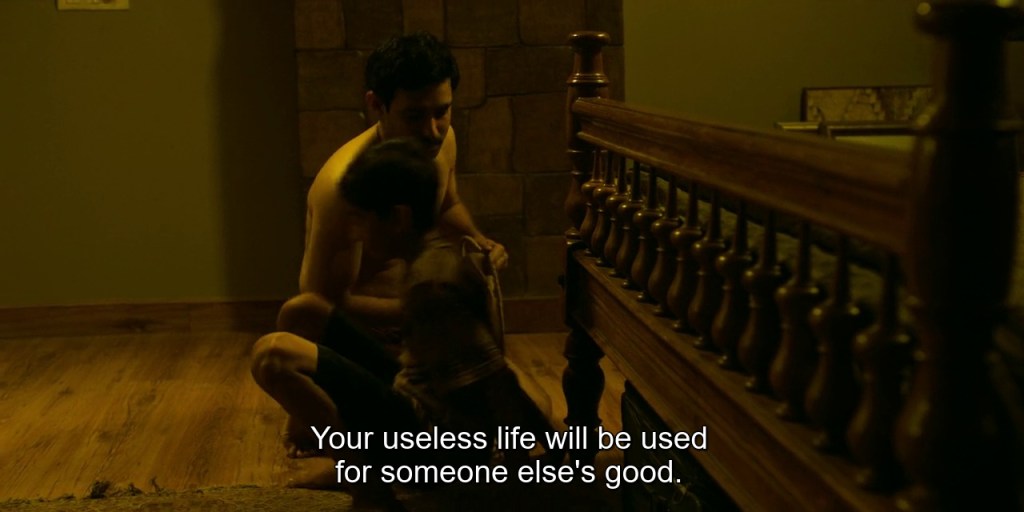
This boy is then captured by Prem who has his own system, capturing little kids to be abused and then slaughtered for their flesh and organs. Prem tells the boy that the police will forget about him after a few days, and even his parents will eventually just replace him. But someone else, someone rich and worthy, will live longer through the appropriation of his organs.
Why, we wonder, is he like this? We have a flashback to Prem’s early life – he is working in his uncle’s butcher shop, chopping up goats and “servicing” his uncle, who enjoys raping little boys. We see him fight back, killing the uncle and then chopping him up, presumably getting rid of the evidence by bundling it up with the goat flesh, and eating his uncle’s liver, raw.
I cut that fucker up and fed him to the dogs. Had a few pieces myself!
As an adult, he has no scruples doing the same thing to kids (human ones), for his own pleasure and profit. Ram, the policeman, arrests Prem who immediately confesses, boasts, that he kidnaps kids, rapes them, chops them up after killing them, eats some of the meat, disposes of the rest, and sells their organs. His “business” involved all the missing children that the police have been ignoring. He tells the police,
Sir, the thing is that after killing Uncle, I got a taste for human flesh. I used to crave it. I needed it every couple of months…. I avoided it for a year, I tried to quit. But that craving wouldn’t go away.
He admits to abducting Ram’s daughter, but says it was an accident. He just didn’t know her father was a cop. Ram asks, “what’s the difference between them and my child?” Prem is outraged – there is no comparison, the kids he kidnapped and slaughtered were nobodies, who would never amount to anything.
While Prem is a bit naïve (one might say stupid), his question is real. No one cares about the sheep, goats or chickens that he chopped up in his Uncle’s shop as a child, nor would they be able to tell the difference if he added Uncle to the mince. Prem’s argument that he became addicted to human flesh is just an excuse – those who have tried the meat of humans report it is hard to distinguish from veal or pork. But poverty, homelessness and alienation is real, and if we can utterly disregard the moral value of any sentient being, we can do the same to those humans who seem, to criminals and authorities alike, outside our scope of care. Those whose lives don’t matter become disposable, and ultimately edible.
‘There will be cannibalism, and rumours of cannibalism”
Yes, I paraphrased the Book of Matthew. Although not all that many people got eaten, the media was full of cannibal stories, and here are a few of them, sorted by their places of occurrence.
Australia
One of the men imprisoned for the so-called Snowtown murders (which mostly did not take place in the little town of Snowtown) was released. Mark Haydon was charged with assisting the men who did the actual killing and who ate part of one victim’s leg some 25 years earlier.
Brazil
Influencer Israel dos Santos Assis, better known online as Pinguim (Penguin) was arrested for desecrating graves in the cemetery of San Francisco the Count in the Salvador Metropolitan Region, stealing human bones, and using human flesh from the corpses to cook his most popular dish: feijoada, a bean stew usually involved simmering beans with beef or pork. Seems rotting human is a good substitute for pork.
Canada
Robert Pickton, the pig farmer convicted of six counts of second-degree murder (although he was charged with at least twenty others), was attacked by another inmate in prison and died a few weeks later. Pickton allegedly “processed” the meat of his rape and murder victims by feeding them to his pigs and, police said, possibly mixing them up with pork products he sold to his neighbours for their personal consumption.
China
Netflix released a new version of the classic science fiction book 3 Body Problem and ran into a storm of criticism from China for its depictions of the extreme violence of the Cultural Revolution. Although most of the victims of the purges were killed by shooting, live burial, drowning, boiling alive, and disembowelling, there is evidence that several hundred had been cannibalised, as the ultimate in humiliation.
The General who presided over a Cultural Revolution massacre that included cannibalism of those deemed “enemies of the people”, Wei Guoqing, was reburied (or at least his ashes were) with full honours in Beijing’s Babaoshan Revolutionary Cemetery – the resting place of China’s high-ranking leaders and revolutionary heroes. Wei’s name is most strongly linked in the public mind with cannibalism during the massacre period in Guangxi’s Wuxuan and Wuming counties and Nanning city. Researchers have found that at least 137 people were eaten, with thousands participating. “Paying tribute to a legendary gourmet,” wrote one wag on social media.
Cuba
Stories began circulating this year that the extreme food shortages in Cuba were leading to the danger, or actual occurrence, of cannibalism. This was bolstered by reports from 2022 of two hospital workers who had been stealing hearts and fat from human bodies and selling them as mince.
Haiti
Rumours circulated that the natural disasters and gang violence in Haiti was leading to starvation cannibalism. Jimmy Cherizier, a gang leader called Barbecue (“Babekyou” in the local parlance) was known for his penchant for burning people alive, and there was at least one video on Twitter/X of one gang member supposedly “tearing flesh from the leg of a burning corpse and eating it.” Such stories cannot be selfishly maintained by one little country, so of course it was not long before Bill and Hillary Clinton were accused of joining the cannibal feast. To add to the hilarity, Elon Musk posted on his own site, X, that a picture of a man near a fire was evidence of cannibalism, only to have the post removed by his own team for violating community standards. The fact-checking website Snopes pointed out that videos of bodies in Haiti being roasted on spits had previously appeared as accusations against a Nigerian restaurant, and were in fact from a Halloween prank in China in 2018. Still, you know, voodoo and all. Meanwhile, Trump ally Laura Loomer supplied conclusive proof that Haitians were cannibals: apparently, if you Google it, you will see a lot of results. The Prosecution rests its case.
India
India’s top court put a temporary stay on the execution of a man convicted of killing his mother and eating her remains in what is being deemed as the “rarest of rare” cases of cannibalism. Sunil Rama Kuchkoravi of western Maharashtra state’s Kolhapur district was handed a death penalty by a lower court in 2021 for killing his 63-year-old mother in 2017. The High Court in October this year upheld the death sentence against Kuchkoravi, stating that the convict possibly has a “syndrome of pathological cannibalism”. The execution has been delayed until the case is reheard in April 2025.
Israel (and around there)
Francesca Albanese, the U.N. special rapporteur for Palestinian rights, has been condemned for antisemitic rhetoric by the governments of the U.S., France and Germany among others. Albanese, known for accusing Israel of genocide (an odd charge seeing that the population of Gaza has increased in the last twelve months), wrote that the Israeli army was “rotten to the core”. A follower immediately introduced the classic blood libel: “Jews are capable of eating human flesh”, to which Albanese replied along the lines of “not all Jews”. Reassuring to note that a person paid by the taxpayers of the West, who finance the UN, can admit that some Jews are not cannibals!
A Yazidi woman was rescued from Gaza by Israeli troops. She revealed that, after being captured by ISIS in 2014 and forced to be sex slaves, the women were starved and finally fed meat which, they later told her, was from the bodies of a beheaded Yazidi baby, the child of one of the women. They told her:
‘We cooked your one-year-old son that we took from you, and this is what you just ate’.
Indonesia
Police investigated a suspected cannibalism case in West Java Province. The Head of the Criminal Investigation Unit confirmed that a video on social media showed the alleged perpetrator consuming a small portion of the victim’s flesh. He said that police had found 12 body parts of the victim at the crime scene.
Italy
An inmate in the notorious Poggioreale Prison in Naples tore the finger off another inmate and ate it. The Campania Guarantor, Samuele Ciambriello, observed that “it is now clear that the Poggioreale prison needs a structure suitable for hosting inmates suffering from mental disorders.” Seems like a good idea.
Mexico
A podcast called Mexico Unexplained revisited this year the story of Gabriela Rico Jiménez, a 21-year-old model from Mexico who disappeared some 15 years ago, after raging against the machine outside a fancy hotel in Monterrey Nuevo Leon. Ranting about the elites, including oddly the Queens of England and Germany (which is a Republic), she had shouted that “They ate humans! Disgusting!… They smell like human flesh!”
Nigeria
A man accused of being a sorcerer was blamed by villagers of the small town of Kirikiri for the disappearance of several children and elderly people. He was supposed to be “feeding on the flesh of the innocent.” Several claimed to have located the individual on the edge of a forest, wearing clothes “stained with blood” and mumbling mysterious incantations. A group of villagers beat the man and left him for dead.
Russia
Erkinzhon Abdurakhmanov, 47, intended to cure his own heart problems ‘after making a pact with the devil’, he told police. He killed a 65-year-old male pensioner in the Kuyurgazinsky district of Russian region Bashkortostan by striking him three times with an axe, according to reports. He then then cut out the heart and ‘ate the meal’ as he waited at a bus stop. He gave the uneaten remains to a woman also waiting for a bus ‘and asked her to bury it’. He was not arrested, however, until he headed into a liquor store and tried to steal some drinks. Cannibalism is not against the law in Russia, but murder and stealing alcohol is.
Vladimar Putin’s policy of giving pardons to criminals who agreed to fight in Ukraine in lieu of serving their sentences, was honoured in a pardon to a charmer named Denis Gorin, who had been convicted of at least four murders, and had eaten the flesh of his victims.
Another pardon involved Dmitri Malyshev. Malyshev was sentenced to 25 years in prison in 2015 for multiple criminal offences. Ten years ago, he murdered an acquaintance, a Tajik native, and then filmed himself cutting the heart out of the victim and roasting it in a frying pan and eating it. Neighbours seemed uneasy about his imminent return home.
South Africa
On December 26, 2024, eight illegal miners known as zama zamas emerged from Shaft 10 of a mine near Stilfontein, located in Northwest South Africa. They were taken by police, who confirmed that twelve bodies remained trapped beneath the ground, with miners reportedly resorting to eating human flesh due to severe food shortages.
[GRAPHIC CONTENT] Illegal miners have started eating human flesh. That's according to SANCO North West Spokesperson, Mzukisi Jam. The claims were made in Christmas Eve letters sent to the surface claiming that more miners have died. #DStv403#eNCApic.twitter.com/vqDodTXgmZ
Novosibirsk Archpriest Alexander Novopashin became notorious for claiming that Ukrainians are “cannibals”. Although conspiracy theories about cannibals are becoming more common, this particular Archpriest is taken seriously in Russia, and regularly lectures Russian security forces and soldiers.
UK
Marius Gustavson, who called himself “the eunuch maker”, offered a service where he charged men to destroy or remove their testicles, and then charged subscribers to his website to see him perform the operations. The court heard that that there was “clear evidence” of cannibalism and that Gustavson had “cooked testicles for lunch in an artfully arranged salad platter”.
Meanwhile, a candidate from a party called Reform UK was suspended for saying that meat-eaters should “eat other humans” and said humanity should be “obliterated”. Just saying what many are thinking, perhaps.
USA
The cannibal story of the year was the President, Joe Biden, claiming that his uncle had been eaten by cannibals in New Guinea. The leaders of PNG took exception to the stereotyping of their people as cannibals. Apparently, only some of them had been.
Speaking of Presidents, Donald Trump embellished his rhetoric on immigration by pointing out that some of the undocumented people pouring over the border were from insane asylums, and called that “Silence of the Lambs stuff”. Trump had previously claimed that Hannibal Lecter had endorsed his candidacy, which is a bit odd since Hannibal is a fictional character, but by far not the oddest claim in the 2024 election.
In March, a homeless man in Kern County was arrested for picking up the leg of a person who had been killed in a train accident and chowing down on it. California has no laws against cannibalism, but he was charged with “mutilating the body” which is a bit odd, since the train had already done that.
In Utah, which also has no law against cannibalism (Idaho is the only state that does), a law was passed to criminalise the ‘ritual abuse of a child’, which apparently regularly includes making the little ones eat “organic substance or material” (i.e. bits of people) before they are allowed to have their desserts. This in addition to claims that such rituals would sometimes involve eating the children instead.
A keen-eyed traveller pointed out that the road once taken by the Donner Party, which ended up in them getting lost and eating each other, was now signposted with a sign indicating dining was available. Much hilarity ensued on social media.
Conservative political commentator Candace Owens managed to link transexuals, Native Americans and cannibals, all in one sentence. No wonder she is so widely admired.
Much to the relief of the good people of Idaho (the only State in the Union with laws against cannibalism), the law was amended to ensure that giving someone else human flesh to eat was also prohibited. This led, on its long road to farce, to the accusation that bodies were being turned into compost which could be used to grow food for humans to consume. Rather than DNA test all compost, the law confined itself to banning the act of deliberately giving human flesh to another person. The legislator who introduced the bill cited a disturbing case on the show TruTV, which she admitted might have been a prank (it was) in which diners were told they had been eating human flesh, just to whet their appetites perhaps.
Ariana Grande raised some eyebrows when she was asked on a podcast whom she would most like to dine, and named Jeffrey Dahmer. Not sure Dahmer would have agreed – he was more into man-flesh, and there’s not much meat on Ariana anyway.
In April, a man was arrested in Las Vegas for eating a victim’s eyeballs and ears. The victim was pronounced dead. What happens in Vegas stays – internal.
Talking of ears, Mike Tyson, famous for biting the ear of Evander Holyfield in a fight in (where else) las Vegas in 1997, released a line of marijuana gummies shaped like nibbled ears.
Allegations were raised that Gilgo Beach ‘serial killer’ Rex Heuermann’s family was involved in the murders, which took place near the remote beach town of Gilgo in Suffolk County, New York from the 1990s to 2011. His daughter, who likes to paint the odd Satanic scene including body parts and cannibal feasts, was accused of being involved in his depredations. Homicide experts said that was insane, a word that gets tossed around a lot in cannibal stories. Heuermann was charged with a seventh murder last week.
On October 9, a woman in Kentucky, Torilena May Fields, was arrested after a dismembered body was found behind a home in Northern Kentucky and cooked human body parts were found in the oven. The body, and its parts, turned out to have been her mother. She was also charged with cruelty in that she “intentionally tortured and killed a domestic dog.”. A contractor found the dismembered body of the mother, and told police the perp had been “casting spells.” Her bail was set at $1.5 million. Her next court appearance is set for March 10, 2025 in Robertson County. Some people just give cannibalism a bad name.
Another Kentucky woman, a former youth counsellor, was arrested for allegedly discussing cannibalism and other hobbies with a convicted murderer.
In Oklahoma, Kevin Ray Underwood was executed by lethal injection in December (on his 45th birthday, the press gleefully informed us) for killing a ten-year-old girl in a “cannibalistic fantasy.” The man admitted to luring the girl into his apartment and beating her over the head with a cutting board before suffocating and sexually assaulting her. He told investigators that he nearly beheaded her in his bathtub before abandoning his plans to eat her. So not really a cannibalism story, but near enough.
International
Citizen of the world, Donald Duck, appeared on the interview show Hot Ones on the Internet (which is global), where guests eat chicken wings with hot sauce. Turns out Donald is a vegan though, preferring cauliflower, and since ducks aren’t chickens, the controversy that ensued over whether he was (or would have been) a cannibal by partaking of chicken was just silly.
HAPPY NEW YEAR, and may your worst problems be mild gastro-oesophageal reflux.
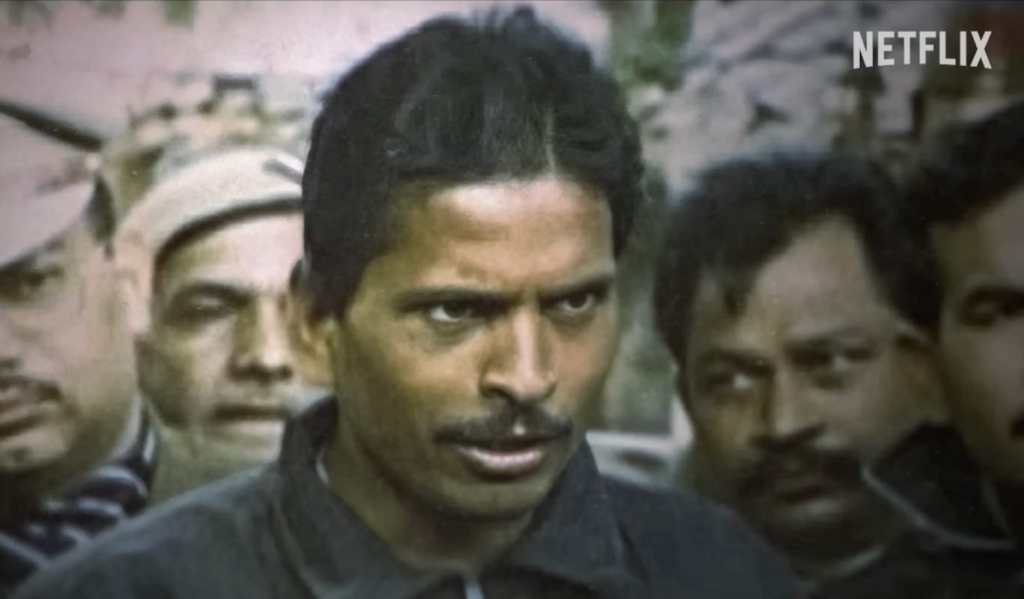
The 2006 Nithari serial murderscase was alleged to have taken place in the house of businessman Moninder Singh Pandher in Noida near Nithari village, Uttar Pradesh, India between 2005 and 2006. Moninder Singh was convicted in two out of the five cases against him, while his servant Surinder Koli, accused of assisting him or possibly instigating the killings, was convicted in 10 out of the 16 cases against him.
Koli admitted to killing six children and a 20-year-old woman referred to as “Payal” after sexually assaulting them. He later confessed to eating their livers and other parts of their bodies. Both men were sentenced to death, Koli ten times, but eventually, in October 2023, after some 2,000 hearings, Allahabad High Court acquitted them both, citing lack of evidence.
Despite being from a family of Hindu vegetarians, Koli was from the Dalit, the Untouchable caste, who are considered subhuman by much of society, marginalised, excluded, with their human rights routinely violated. They survive by doing the jobs no one else wants. From 14, Koli worked as a butcher’s assistant, learning to slaughter and dismember large mammals, which seems to have been a useful skill later in his life. He apparently developed a taste for meat at this time.
In 2005, Koli became a servant to Pandher, where he witnessed some pretty lively parties involving Pandher’s friends and visiting sex workers. In March that year, a little girl went missing in Nithari, and a couple of weeks later it happened again. Between 2005-06, a child went missing in Nithari every six weeks on average.
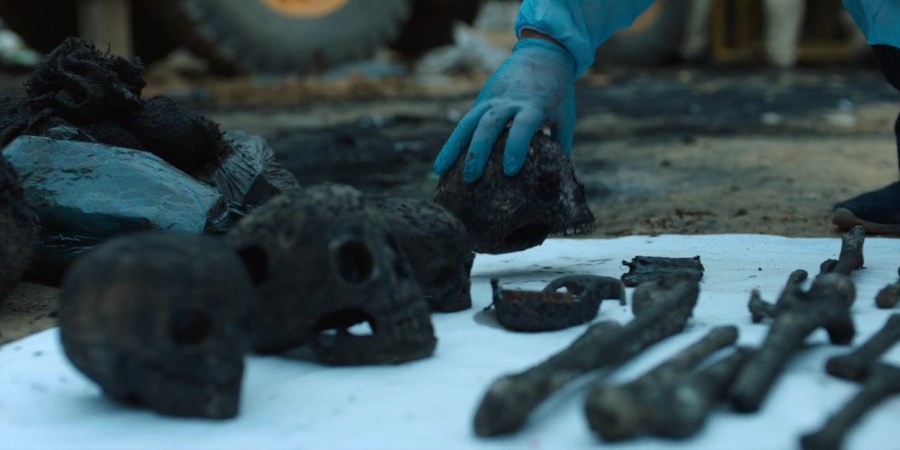
Police told parents they had probably run away (although the youngest was three years old) and would return by themselves. Frustrated by police inaction, parents and local residents in December 2006 organised the excavation of the reeking drains behind Pandher’s house where they found bags of bones, which proved to the hands and legs of small children. Skulls were found on the other side of the house. Police arrested the two men, and found some of the children’s belongings in the house. Police put the number of child victims at more than 31. Locals rioted outside the house, claiming that the police were corrupt and had concealed evidence of crimes involving rich people; the father of one girl alleged that the police had threatened and harassed him.
They demanded that the local police force be replaced by the Federal Government agency, the Central Bureau of Investigation. In 2007, six police were suspended for incompetence and the CBI filed sixteen cases against the two men involving abduction, rape, murder, criminal conspiracy and trafficking.
The CBI investigated the case, which by now was surrounded by accusations that tried to explain the disappearances – an organ transplant racket, or a child pornography ring. Pandher’s laptop was found to contain images of naked children, but they turned out to be his grandchildren. The logistics of harvesting and selling organs of small children turned out to be almost certainly insurmountable. Extensive psychological evaluations found that Koli was obsessed with young girls aged 5-7, while Pandher had a thing for 18-19 year old sex workers (one victim was twenty, the rest were children). Koli admitted on tape to luring the little girls into the house, strangling them and having sex with them before killing them, then cutting up their corpses and eating body parts. The way he dismembered them was similar to what he would have learned as a butcher’s assistant when he was a teenager. Yet investigators found that he had behaved entirely normally with his own children back in his home village, where his wife and family lived.
On 12 February 2009, both the accused—Moninder Singh Pandher and his domestic servant Surinder Koli—were found guilty of the 8 February 2005 murder of Rimpa Haldar, 14, by a special sessions court in Ghaziabad. This verdict embarrassed the CBI, as they had earlier given a clean bill of health to Pandher in all their charge-sheets. Both were given the death sentence. Other victims were identified, including:
On 4 May 2010, Koli was found guilty of the 25 October 2006 murder of Arti Prasad, 7, and given a second death sentence eight days later.
On 27 September 2010, Koli was found guilty of the 10 April 2006 murder of Rachna Lal, 9, and given a third death sentence the following day.
On 22 December 2010, Koli was found guilty of the June 2006 murder of Deepali Sarkar, 12, and given a fourth death sentence.
On 24 December 2012, Koli was found guilty of the 4 June 2005 murder of Chhoti Kavita, 5, and given a fifth death sentence.
On 16 October 2023, 17 years after the crimes first came to light, Koli and Pandher were acquitted of all charges against them due to insufficient and largely circumstantial evidence, despite the recorded confessions of Koli. The parents were naturally shattered.
It seems likely that between the animalisation of lower caste humans and the sacralisation of certain species of cattle in India, some people are unable to discern any line between humans (except for their kin) and other large mammals.
“Moninder used to have call-girls coming home all the time. Seeing them, I wanted to have sex as well. Slowly, these feelings turned into my wanting to murder and eat them. A girl from Sector 30 called Dimple was passing in front of the house. I called her inside. I then strangled her with her chunni. When she was unconscious, I tried to have sex with her but failed. So I killed her. I wanted to eat her. So I took her body into the bathroom upstairs. I got a knife from the kitchen and cut her body into little pieces. I then cooked a piece of her arm and chest and ate it.”
Koli later denied any involvement in the murders, saying that the CBI made him “remember” names and details to frame him, as they were protecting rich men who were raping and killing girls and selling their organs (a high-tech form of cannibalism). Pandher is now free; Koli remains in jail. The victims’ families continue suffering, even as some of them were given houses and cash settlements. When money talks, nothing and no one is off the menu.
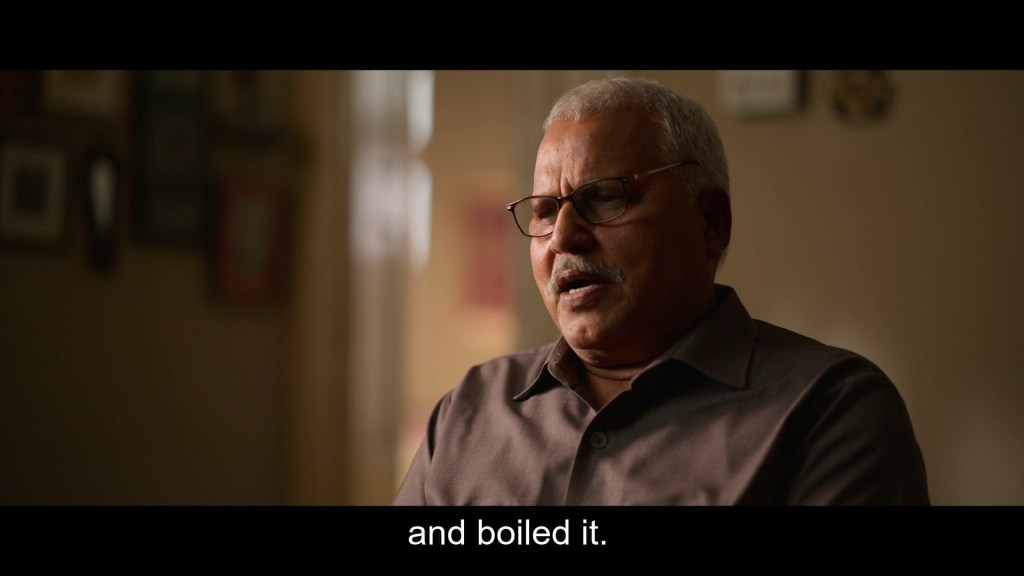
The BBC released a documentary on the case called The Slumdog Cannibal in 2012. This was after the initial trials, but before the several appeals. The documentary, which concentrates on the background and motivations of Surinder Koli, can be watched (at the time of writing) on YouTube.
Two men in Odisha (eastern India, formerly known as Orissa) have been arrested and accused of cannibalism after locals found them eating half-burnt flesh from the body of a woman who was being cremated at a funeral in Mayurbhanj, Odisha.
The incident happened in a tribal village called Bandhasahi. The accused were identified as Sundar Mohan Singh, 58, and Narendra Singh, 25, both from Dantuni village. The deceased woman was identified as Madhusmita Singh, 25, who had died in the Bandhasahi village hospital. The family took her body to the cremation ground and performed the last rites. In Hinduism, the preferred way of disposing of the dead is Antyeṣṭi(अन्त्येष्टि), a composite Sanskrit word of antya and iṣṭi, meaning “final sacrifice.”
The two men, who were said to be drunk, were overseeing the proper burning of the body. As the cremation progressed, the body had been burnt almost entirely to ashes, except for a single unburnt piece of flesh. Mohan and Narendra claimed that it wouldn’t burn unless it was cut into smaller pieces and then thrown back into the fire.
Lobo Singh, the grandfather of the deceased girl, watched the men pull the unburnt flesh out of the fire. Narendra proceeded to divide it into three pieces, with Mohan tossing two pieces back into the flames. However, Lobo Singh said he witnessed Mohan concealing the remaining piece in his left hand, He questioned Mohan about this, to which Mohan casually replied that he would discard it later.
The woman’s uncle said that, when he asked them what they would do with the flesh, one of the accused, Sundar Mohan Singh, replied, “You don’t know about witchcraft.” After around 10 minutes, he announced that he would eat the piece of flesh. Before the others could do anything, Mohan put the piece in his mouth and began chewing it; he also offered a portion of flesh to Narendra, who also commenced eating it.
The villagers caught and beat the accused duo, tied them up in rugs, and informed the local police. Both accused admitted committing the crime, claiming that they had consumed the flesh in an inebriated condition. They were charged under section 297 of the Indian Penal Code. Senior police officer Sanjay Kumar Parida stated that the accused were arrested based on the complaints of the villagers, but no trace of human flesh was found on them. Further investigation into the case continues.
This sort of phantasy, that eating human flesh will give the eater special powers, is not uncommon in Cannibal Studies texts; essentialist speculations that some part of the ‘donor’ remains imbued – such as the courage embodied in the brave enemy’s heart or strength in his or her limbs. Brigid Brophy, one of the seminal voices in the animal justice movement, called this “the primitive superstition that eating the flesh of bulls endows you with the strength of the bull”. Even Freud seemed to have subscribed to such thoughts, claiming in Totem and Taboo that the birth of civilisation occurred when a group of young prehumans came to resent their father’s monopolisation of the tribe’s females (common among primates) and rose up, killing the father to take their mothers and sisters for themselves. “Cannibal savages as they were, it goes without saying that they devoured their victim as well” and, Freud added, as well as the protein they ingested from the fresh meat, the brothers would each have “acquired a portion of his strength”. Freud went on to speculate that their sense of remorse created the first ethical basis for civilisation, which seems rather far-fetched, and there is no evidence that the Singhs, even when they sober up, will be creating a new form of civilisation in Odisha. Although, to counter my obvious scepticism, there are reports that Armin Meiwes, currently in prison in Germany, allegedly claimed that, after he ate his bilingual lover in 2001, his own English improved considerably. We absorb the nutrition of our food, why should cannibals not absorb the strength, spirit and experiences of their victims?
The Orissa Post called the incident “extremely rare”, but this blog has reported on similar incidents in the past. In Assam in 2022, another inebriated man found edible flesh within the cremation flames.
In 2019, The Global Report on Food Crises estimated that there were some 135 million “acutely food-insecure people in crisis or worse”, including 17 million acutely malnourished children under 5 years old. The changing climate, or future pandemics, could easily double that number, leading to what the head of the UN’s food relief agency warned could be “a famine of biblical proportions”. Globally, over a million people die each (normal) week, many of them still covered in healthy flesh; if human meat is similar to that of other animals, why not let those who are starving eat some of the corpses, at least those who are minimally diseased? Is an agonising death by starvation less abject than eating human meat? And if, as most societies (not including Hindus) seem to believe, it’s OK to eat animals, and humans are animals (a species of Great Ape), then from carnivory to cannibalism is only a very thin red line.
What a year! These are some of the cannibalism stories, films and songs that arrived in 2022, with links back to the original reports, so that you can look up the ones that catch your interest, and so that this blog does not take all of 2023 to read.
January
A German man dubbed by the press the ‘cannibal teacher’ was convicted of murder and sentenced to life in prison. Stefan R., a 41-year-old maths and chemistry teacher, had apparently searched on the dark web for terms such as “long pig” and “fatten and slaughter people”. The man claimed his victim died of natural causes after a (presumably vigorous) sexual tryst, and he had removed the man’s penis “since my DNA could still have possibly been present due to the oral sex I performed”. In other words, he didn’t mind a bit of mutilation and perhaps cannibalism, but was concerned not to be “outed” as gay.
Djalma Campos Figueiredo, 46, was arrested in Brazil. He had been sentenced by the Court of Justice of Rondonia in the city of Porto Velho to 42 years in prison for several counts of aggravated murder but had escaped custody. The Civil Police alleged he would eat his victims’ eyes and ears and drink their blood.
Meanwhile, the Zamfara (NW Nigeria) State Police Command arrested a 57-year-old man, Aminu Baba, for allegedly eating and selling human body parts. Baba and three others were arrested after the murder of a nine-year-old boy. The Police Commissioner reported that Baba had “confessed that he usually ate the body parts and identified the throat as the most delicious part. He also sold some of the human parts to his customers.”
February
A war between rival cartels in the Mexican state of Zacatecas graduated from the normal torture and beheadings to systematic cannibalism, with new sicarios (cartel assassins) being required to eat parts of their rivals before being allowed to graduate (or remain alive).
In Afghanistan, we discovered that the Taliban were rounding up drug addicts and putting them in rehabilitation centres to detox, which is a nice thought, except that they gave them little or no food (“cold turkey” does not count), so they apparently resorted to cannibalism.
In the Indian state of Assam, a man who had had perhaps more than a few drinks smelt cooking meat in a crematorium in a Hindu cremation ground. He helped himself to a few portions of the body, but was caught by villagers and handed over to police; but not before he had eaten about half of his purloined flesh.
May
A man calling himself The Chinese Zodiac Killer was arrested by the FBI in Jefferson County, New York for sending letters to media outlets, government offices including the White House, and other organisations, claiming he killed people and ate their flesh, and that he plans to kill more. He seems to have based his story on the Zodiac killer who terrorised California in the late 1960s. The original Zodiac Killer (who was not accused of cannibalism) was never caught, but this one was easily found, posting his threatening letters (what century is this again?) at the same letterbox he had previously used.
June
The case against James David Russell (see above in April) went to preliminary trial. Sadly, the judge threw out the charge of cannibalism, saying there was insufficient evidence to pursue it, and went with the rather more mundane offence of first-degree murder. Since this has a life sentence attached, the practical effect of dropping the cannibalism charge is negligible, but as the first cannibalism case in the USA, it would have been fascinating.
A rumour swept the Internet that the actress Anne Hathaway was a cannibal, based on a cryptic Tweet saying “police didn’t find human remains and evidence of cannibalism in her LA home that she sold in 2013.” We were all later astonished to discover the whole thing was a hoax.
The effects of the war in The Ukraine were starting to be felt in Europe and the UK (whose people often do not think it’s part of Europe). The Russians fell gladly on a statement from one Jeremy Clarkson (a car enthusiast) that “Hunger makes people eat their neighbours” to predict that the British will soon be a nation of cavemen feeding off each other. Of course, if you’ve ever been to a soccer match…
industrial/electronic music duo SKYND released their tenth song, called ARMIN MEIWES, about the German man who killed and ate a willing volunteer.
The New York Times raised the temperature of the culture wars with its review of several books, movies and TV shows about cannibalism, culminating in the (somewhat tongue in cheek) statement that “Cannibalism has a time and place… that time is now.” The right-wing press predictably jumped on the story accusing the NYT of everything from irresponsibility to Satanism.
Also in New York, Steven Spielberg whipped out his cell phone to record Marcus Mumford singing his new work, a haunting song called “CANNIBAL“. The song might be about love and lockdown, or it could involve child abuse.
DISCOVERY+ launched a three-part series called HOUSE OF HAMMER. The series explored allegations from various girlfriends of the actor Armie Hammer that he was a cannibal, or had at least threatened them with cannibalism. It also examined his relatives, many of whom seemed to be presented as even worse specimens than Armie.
Russia discovered the war was not going well in Ukraine, and started recruiting murderers and rapists to be sent to the front as reinforcements. Also – one cannibal, Yegor Komarov, whose man-eating exploits we learned about in December 2021.
October
In the Indian state of Kerala, there were allegations that a couple who ran a massage centre were bringing women home not so much for massages, but for human sacrifice and ritual cannibalism.
In the US state of Michigan, Mark David Latunski, who had been arrested in 2019 for killing and eating his Grindr date, finally came to trial and entered a plea of guilty.
November
Issei Sagawa, the “Kobe Cannibal”, died of pneumonia at the age of 73. Sagawa had killed and eaten a young Dutch fellow-student in Paris in 1981. He was found insane and sent back to Japan, where he was released and lived free ever since, making movies, writing books, and even becoming a restaurant reviewer.
Rapper Comethazine released Bawskee 5, the 12th song on which was called “CANNIBAL“.
Back in Brazil again! A patient in the Municipal Hospital of Nuovo Hamburgo in the state of Rio Grande do Sul attacked other patients, screamed and spat at people, and eventually chewed off his own fingers and toes. A witness said “while he was chewing his own meat, you could hear the crackling of bones in his mouth”.
December
Mark Latunski, 52, was sentenced to life in prison without the possibility of parole on December 15 for the murder of his Grindr date three years previously. Kevin Bacon, 25, had been killed and mutilated by Latunski on December 24, 2019 at Latunski’s Bennington home. Latunski pleaded guilty in September to killing Bacon and eating one of his testicles, after stabbing him in the back and slitting his throat. In a victims’ impact statement, the victim’s father said “Evil does exist, and it touched us.”
On the screen
The big news on streaming television this year was Jeffrey Dahmer, the “Milwaukee Cannibal”, who took Netflix by storm with not one but two titles, despite having been killed by a fellow prisoner in 1994.
Ryan Murphy and Ian Brennan’s docudrama called “MONSTER: THE JEFFREY DAHMER STORY“, which logged nearly two hundred million hours of watching in its first week of release
Joe Berlinger’s third series of CONVERSATIONS WITH A KILLER, featuring previously unheard defence attorney tapes of interviews with Dahmer.
Lots of new cannibalism feature films in 2022, some of which I will catch up with next year:
Luca Guadagnino’s BONES AND ALL, featuring Timothée Chalamet and Taylor Russell as teenage cannibals in a tender and gory road movie, has been getting heaps of publicity.
Mimi Cave’s FRESH is a charming romcom, until the knives come out. A fascinating insight into ultimate consumerism.
Leatherface came back (again!), this time older but no wiser. This is the ninth (!) instalment of the TEXAS CHAINSAW MASSACRE franchise, and went straight to Netflix.
John Ainslie’s DO NOT DISTURB depicts a couple renewing their romance by taking peyote, but finding that this particular variant of the drug awakens a taste for human flesh.
Leatherface came out to play again, this time as a fan-film prequel called THE SAWYER MASSACRE. Made on a shoestring but arguably superior to the other sequels and prequels.
Liam Regan’s EATING MISS CAMPBELL, in which a vegan, goth student falls in love with her new English teacher and develops a taste for human flesh.
Sean Patrick Flanery’s enjoyable road movieFRANK AND PENELOPE, in which a couple take on a cannibal cult in the wilds of Texas.
Timo Vuorensola’s JEEPERS CREEPERS REBORN, the umpteenth take on a supernatural tale of the demon who eats people and incorporates their bodies, but only every 23 years.
Fred Olen Ray’s PIRANHA WOMEN offers a totally believable story of women who turn into man-eaters because of an anti-cancer treatment.
THE MENU has Ralph Fiennes as a demented chef and Anya Taylor-Joy as the fly, as it were, in his menu plan. There is no obvious cannibalism involved in the movie, but there is some speculation on-line about the final cheeseburger.
‘Ted Lasso goes cannibal’ in Adam Leader & Richard Oakes’ FEED ME, a jolly rant in which a grieving man wants to die, and a nearby cannibal wants to help him, but by instalment.
And now for something completely different
From out of the future, we have some new AI software of which Shital Shah, a senior research engineer at Microsoft, said:
ChatGPT was dropped on us just bit over 24 hours. It's like you wake up to the news of first nuclear explosion and you don't know yet what to think about it but you know world will never be the same again. Here some interesting snapshots of this "explosion"🧵:
ChatGPT is “a large language model that has been trained to generate human-like responses to text input.” In other words, you can ask it questions and receive (often) intelligent answers, rather than a series of links, like Google. You can try it for free (at the moment) here.
Naturally, I asked it questions such as “is meat murder” and it replied:
“Ultimately, whether or not eating meat is considered murder is a matter of personal belief and moral judgement.”
So, I barked back, like a prosector out for a conviction, “Where does that leave the cannibal?”
“Whether or not eating other humans is considered murder would also be a matter of personal belief and moral judgement. Most people would consider cannibalism to be morally reprehensible, as it involves the killing and consuming of another human being. However, there may be some individuals who do not see it that way, and their personal beliefs and moral judgement would dictate their view on the matter.”
Indian media is consumed with news that Kochi City Police in the Indian state of Kerala are investigating whether the accused in a human sacrifice case “cooked and ate the flesh of the victims”.
City Police Commissioner C H Nagaraju said the police are still collecting evidence. He told a press conference on Wednesday 12 October 2022:
“There’s some information that the accused ate parts of the body after killing the victims. It is being investigated. We have to conduct DNA analysis and other scientific examinations.”
Three people were arrested the day before in connection with the murder of two women in Elanthoor — Padmam (52) a native of Tamil Nadu, and Rosily Varghese (50) a native of Thrissur.
Those arrested were Muhammad Shafi (52), a native of Perumbavoor who is currently residing in Kochi, and a couple — Bhagaval Singh (68) of Elanthoor and his wife Laila (59).
Bhagaval Singh and his wife Laila ran a massage centre at Elanthoor in Pathanamthitta district. Shafi is alleged to have brought the two women to the couple’s home in June and September, where they were brutally murdered by the couple.
The remand report filed at the Judicial First Class Magistrate court confirmed that human sacrifices for prosperity were the reason for both murders. Occult killings have become a recurrent theme in Indian criminal typology, much like serial killers in the USA or narco-cults in Mexico.
“Mohammed Shafi proposed that consumption of human sacrifices would ensure economic prosperity.”
The Ernakulam Judicial First Class Magistrate Court on Wednesday remanded all three accused to judicial custody. The police said they will approach the court seeking custody of the accused for 12 days to initiate further inquiry and collect evidence.
Commissioner C H Nagaraju said that the first accused, Shafi (aka Rasheed), is a “sexual pervert”, as there were sadistic injuries found on the private parts of the victims. “He is a hardcore criminal, a psychopath. We are investigating whether there are more accused and if more such cases happened,” the commissioner said.
“In 2020, Shafi raped a 75-year-old woman and inflicted grievous injuries on her private parts as well. This indicates sexual perversion and psychopathic behaviour.”
Padmam, who was living in a rented room in Elamkulam and selling lottery tickets, was picked up from near Krishna Hospital in Kochi, at around 10.15am on September 26. Police recovered a clip from CCTV footage in which Padmam was seen getting into Shafi’s car. She was offered Rs 15,000 by Shafi, according to the remand report. The two reached the house of Bhagaval Singh and Laila at Elanthoor around 4 pm the same day. The remand report says,
“At the bedroom located in the central part of the house, Padmam demanded money from the accused persons. Following the argument on it, they strangulated Padmam using a plastic rope. When Padmam became unconscious, she was shifted to another bedroom on the western side of the house. Shafi inflicted injuries on Padmam’s private parts with a knife and then slashed her throat, which led to her death. Later, all accused persons cut Padmam into 56 pieces using a cleaver and knives. These parts were collected in a bucket and dumped at a pit which was dug up in the compound of the house at the northern side.”
In the interrogation, the accused person reportedly confessed to a similar human sacrifice carried out in June 2022. The other victim, Rosily Varghese of Ashokapuram, Aluva, was taken to the couple’s house at Elanthoor and was reportedly offered Rs 10 lakhs for acting in a movie.
“Rosily’s hands and legs were tied to the bed in a room in the centre of the house. A piece of cloth was inserted into her mouth which was also taped with plaster. She was stabbed by Shafi and her throat was slashed. Later, her private parts were cut and preserved. The accused persons then cut up her body into several pieces and collected them in a bucket. The body parts were later dumped in a pit dug at the eastern part of the house.”
The Hindustan Times reported that police were using cadaver-sniffing dogs and digging at Shafi’s property to determine if there were any more victims buried there.
The couple allegedly admitted to consuming the victims’ flesh after each murder.
When asked if the accused persons cooked and ate the body parts of the two women, the Kochi Police Commissioner said:
“For human cannibalism to be proved there has to be a proper examination.”
It is reported that Shafi reacted with a smile when police asked whether he had eaten the flesh of the murdered women.
Sources in the investigation team disclosed that many internal organs from the two bodies were not found. “There were no lungs, livers, kidneys in the bodies of Roseli and Padma, the women who were sacrificed as part of the ritual,” said a member of the investigating team. The post mortem reports say that the dead bodies had been cut by a person familiar with human anatomy. Though Shafi conceded that he had worked as a mortuary assistant and was versed in handling dead bodies, the police have not ruled out the possibility of an outsider in the “mission”.
Yet another factor that concerns police is the revelation by the husband-wife team of Bhagwal and Laila that Shafi had assured them that the victims’ flesh could be sold, authorities claimed. Shafi allegedly told Singh and Laila, according to IANS,
“Some people who do certain [types of worship] eat human flesh.”
The flesh could net the couple up to Rs 20 lakh ($US24,280), and a buyer was already on their way to pick all of it up, Shafi claimed, according to investigating officers.
The hacked bodies were preserved in the refrigerator in the residence, where Shafi allegedly told police they had stored 10kg of human flesh. The refrigerator is stained with human blood and Shafi’s fingerprints were found on it. The investigators also came across a pressure cooker that apparently had been used to cook the flesh.
Reports are going around Kochi that Shafi may have sold cooked human flesh through the eatery owned by him in Ernakulam.
Animal sacrifices were carried out in Kerala until banned in the 1920s. Manu Pillai’s book Ivory Throne indicates that humans were at one time among the animals sacrificed, and that that human sacrifice used to be performed at the Panayannarkavu Devi Temple near Mannar.
Kerala Higher Education and Social Justice Minister Dr R Bindu said that the disturbing incident of human sacrifice was the result of “the frustration caused by globalisation.”
“People are falling into traps as they desperately try to make a quick buck as a result of globalization. In such a situation, some people are easily duped by false illusions that human sacrifices can bring them wealth.”
As the forces of neo-liberal capitalism turn us all into voracious consumers and simultaneously raw materials for commodification, it should not be surprising that the sacrifice and consumption of other animals for food, leather, experimentation or other uses is expanding into the sacrifice and consumption of human ones.
There is a comprehensive report on this case on NDTV, including a long interview with the Kochi Police Commissioner:
The world is so full of misinformation, disinformation and straight-out lies that it is not surprising that audiences crave some truth, and podcasts and documentaries investigating “true crimes” have become enormously popular.
The first series of Indian Predator, “The Butcher of Delhi” was screened earlier this year, and this new one, “Diary of a Serial Killer” involves a confessed cannibal, so of course The Cannibal Guy had to take a look. But did he kill all those people, and even if he did, did he also eat their brains? Truth is often the first victim of cannibalism.
Raja Kolander, real name Ram Niranjan, the husband of a local politician, was suspected of murdering a journalist in Allahabad in 2000. Dhirendra Singh was a reporter with a Hindi daily newspaper called Aaj, and his body was mutilated and discarded in a river and a jungle. His head and genitals had been removed.
Police tracked the journalist’s phone records and found a call to the suspect, Raja Kolander. Kolander and his brother-in-law were arrested, beaten up, and finally confessed to the murder of the journalist. The police claimed that the murder was to stop Singh reporting on their car-theft business. But during the subsequent investigation, officers found Kolander’s diary, which listed some fourteen victims in total, including that journalist.
Although he was arrested in 2001, Kolander was not charged with the murder for a decade. During his trial in 2012, the police testified that he had admitted to cannibalism, and to burying fourteen skulls in his home. Kolander, his brother-in-law and his wife were all given life sentences for three murders, although he has appealed those convictions. Claims of cannibalism were never proven, nor were the other eleven murders, and some of those interviewed say that a few of those so-called “victims” are still wandering around. There is also mention made that the “mining mafia” had it in for Dhirendra Singh for exposing some of their corrupt practices, but this is not really explored further in the documentary. We are told, however, that Uttar Pradesh is ranked top in number of murders in all of India.
The first episode interviews the police and family of the journalist, and presents fairly damning evidence of murder. But then, some of it is just silly, such as the chief investigator saying that criminals “stutter when faced with the police.”
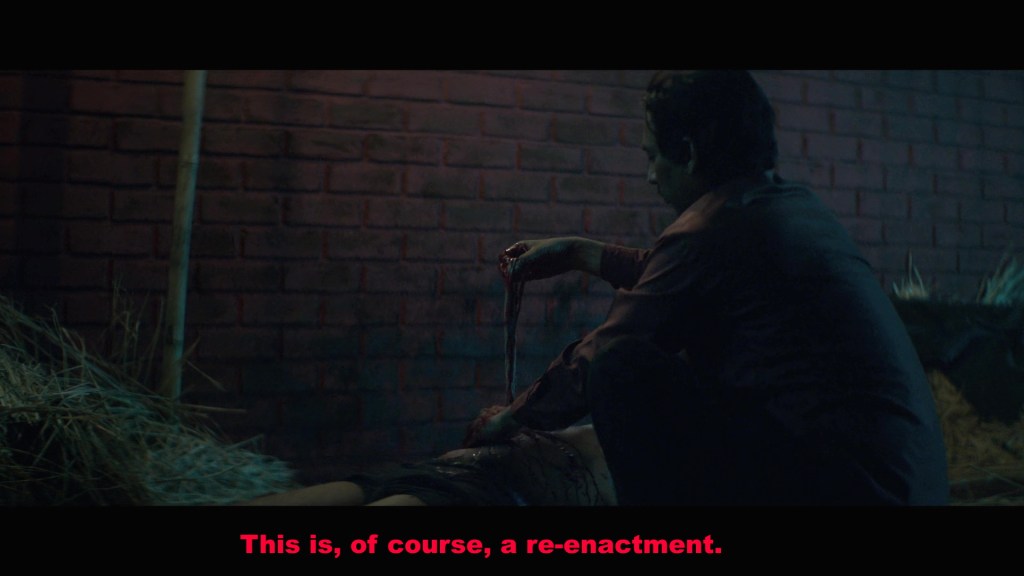
The evidence against Kolander is presented as it was laid out by the police, and the events shown in the documentary are just recreations of the official version, with actors playing the main characters. How legit those are is a good question, as there are several mentions of duress during the police interrogation.
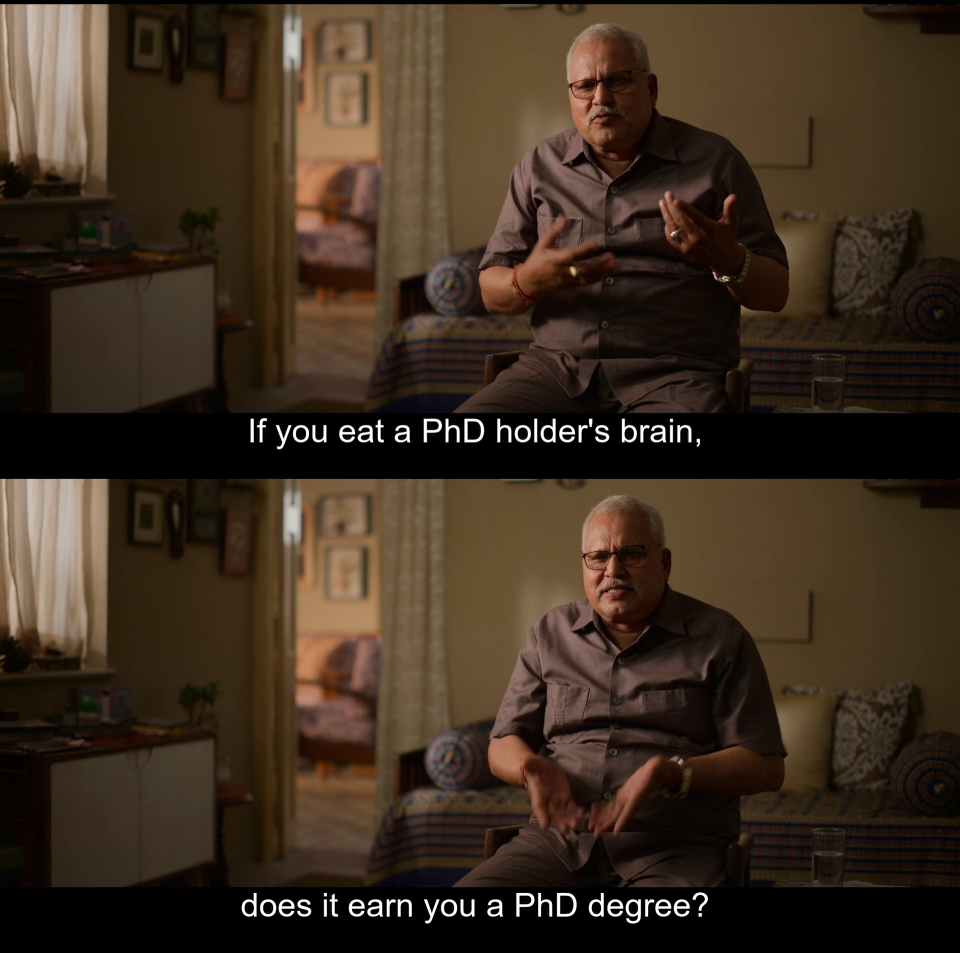
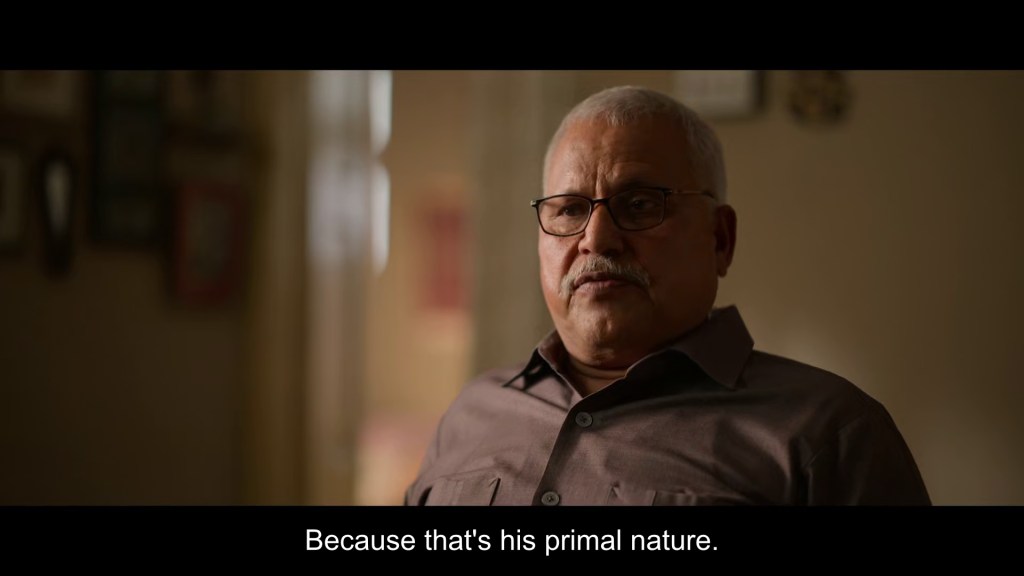
The police claim that Kolander was motivated by power, and sought to acquire it by cannibalism. One victim was from the Lala sub-caste. They are considered smart, even cunning, and often accused of taking advantage of the poor. The police claim that Kolander believed he could imbibe this cleverness through cannibalism, and so this victim was killed and Kolander then removed his brain:
Then drank it as a stew. Another victim claimed to be a hypnotist, and so his brain was consumed in the hope of gaining that skill. As the investigator asks
A question to which I, for one, urgently need an answer.
Kolander then allegedly cut open a Brahmin, a member of a caste known to eat well, to see if they have larger intestines than other people. He then had to cut open a lower caste person to compare. The results were apparently disappointing. We are all equal, at least in the width of our intestines.
The second and third episodes interview Kolander in jail, another decade after the trial. He maintains that he is innocent of the murders that took place some twenty years before. He insists that he is a victim of trial by media.
The question of why his supposed thirteen other crimes went without investigation until a respected journalist was killed sheds some interesting light on the social and caste divisions in Indian society. Like Albert Fish, who in 1920s New York preferred to kill and eat black children since he knew the police would not work too hard to look for them, the racist attitudes in India to other classes, religions, and communities seem to have resulted in not much work being done on finding the earlier victims.
But Kolander himself comes from a caste which is largely impoverished, and the times were ripe for revolt by the subaltern castes – there were dacoits (bandits) roaming the countryside, and lower castes were fighting to be represented in government of all levels. It is clear that Kolander’s caste, the Kol, were considered by the upper castes to be primitive savages, recently driven from the jungles by deforestation into the life of subsistence farming, but retaining their savage traditions. It was inconceivable to them that a person from this background could own two cars, as the police claimed.
Kolander insists that he is a highly spiritual Hindu, not concerned with worldly power, and even claims to be a vegetarian, which would make eating brains tricky, although others (including his daughter) cast doubt on that. But it is certainly true that the colonial story has embraced accusations of cannibalism since Columbus – those who are poor and deprived must be savages, eaters of human flesh. Nothing they do is therefore surprising, and anything they are accused of is probably true.
Is this “true crime” documentary true? It’s impossible to know. But there are lot of holes in the story, including the fact that police brutality seems to be a standard interrogation technique, the fact that it took a decade to bring him to trial and, after another decade, his conviction (for three murders, not fourteen) is still to be decided. Also, the charges of cannibalism, which kind of make this newsworthy, were never proven in a court of law. Kolander, with some justification, says that his case was tried not in court but in the media, which published pretty much any sensational story they could dream up.
Cannibalism is perhaps the perfect exemplar of the uncanny – Freud wrote that we are most disquieted by the familiar suddenly becoming strange (remember Jeffrey Dahmer’s step-mother Shari saying he was “a nice, kind boy”) and things that should be hidden instead being revealed (e.g. the Brahmin’s intestines). But the impossibility of determining the truth is in itself uncanny, even more disquieting because our certainties about truth and lies are torn apart. A few cannibals sit down and tell their stories (Dahmer did, and so did Meiwes and Sagawa), but often the cannibal either disappears into the night like Jack the Ripper or suicides like Chase or is executed like Chikatilo. Seeing the bodies, or what’s left of them, but never knowing what or who happened to them is uncanny, and even more so when, like Kolander, the apparent cannibal denies all culpability.
Guwahati, 15 April 2022: A man has confessed to eating human meat in a crematorium in Bidyapur, in Assam’s Bongaigaon district. The man, identified as Satish Chandra Rai, is a resident of Bongaigaon.
Villagers reported that they had seen the man taking portions of a dead body at a local Hindu cremation ground and later saw him eating them. The villagers caught the man and have handed him over to police.
Satish allegedly admitted to being inebriated, and consuming half of the body’s meat. The dead body had been consigned to the flames, but not completely burnt, as the man was able to find edible flesh still attached.
Police have arrested the man, and are interrogating him at the police station. Locals are now demanding that he be ousted from the village by the village council.
Like other places, cannibalism happens in India, even though it is a largely vegetarian country.
In 2017, Sunil Rama Kuchkoravi of Kolhapur murdered his mother after she refused to give him money to buy liquor. He later chopped up parts of her body and ate them, after frying them in a pan.
A (supposedly) forthcoming movie called A CANNIBAL MIND follows the life of Raja Ram Mohan, who allegedly murdered, mutilated and ate the brains of over 40 victims.
Back in Assam, in 2012 tea workers killed the owner of the plantation where they worked and allegedly ate his flesh.
It can happen anywhere and, as our alleged drunk has shown us, human meat is pretty much the same as any other animal’s flesh. Particularly when cooked.























 The Cannibal Guy