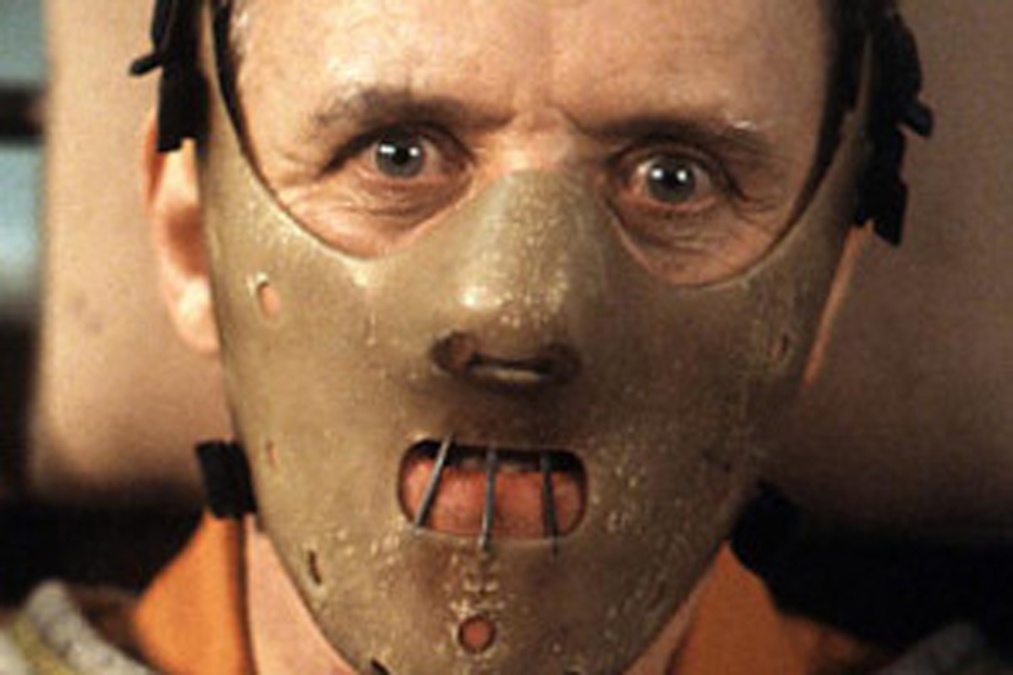
The silence of the lambs (Jonathan Demme, 1991)

The silence of the lambs is celebrating its 35th anniversary this year. It was released on Valentine’s Day 1991 (I swear I didn’t make that up). As a birthday treat, the film was re-released to cinemas in April 2026. It was also, not surprisingly perhaps, the subject of the very first blog I uploaded to this site some eight years ago.

The film is, almost without exception, the movie that people first mention when I talk to them about cannibalism (yes I do, which is probably why I don’t have many friends). This is actually a little surprising as, although the male lead, Hannibal Lecter (Anthony Hopkins), is a cannibal, for most of the film he is incarcerated, and even on the loose he is not seen actually eating anyone (although he certainly discusses the idea with some gusto). In the sequel, Hannibal (Scott 2001), he is indeed shown serving human flesh – the brain of Clarice’s nemesis – to its owner. In a later prequel, Hannibal rising (Webber 2008), an attempt is made to trace Lecter’s psychopathy to childhood trauma: the cannibalism of his sister during the war, much to the displeasure of many of his fans, who complained of the loss of the nuance and the mystery.

The silence of the lambs has become something of a cinematic classic, while the sequels and prequels have largely faded from memory. Robert Butler in the Chicago Tribune credited the film with legitimising cannibalism in the movies, with its star cast and its haul of all five major Academy Awards – best picture, best actor, best actress, best director and best adapted screenplay. Before this, Butler claimed, cannibalism was limited to exploitation films. No doubt directors from Luis Buñuel to Peter Greenaway might demur.

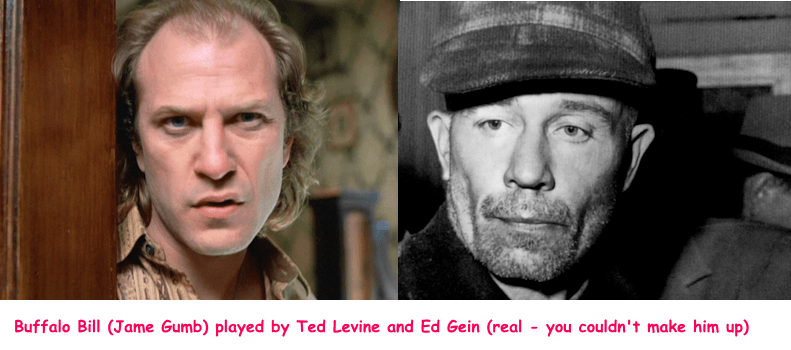
The film is a psychological thriller with Hannibal Lecter, presented as an evil genius, trading insights into the most private neuroses of FBI trainee Clarice Starling (Jodie Foster) in exchange for his profiling of the serial killer, called by the police and media Buffalo Bill, whose epithet is designed to animalise him. Bill is killing and skinning women to make a woman suit. He is pure monster, closer to the gender-challenged Leatherface of The Texas chain saw massacre than the urbane, sophisticated, civilised psychiatrist Lecter, who remains a mystery. Bill and Leatherface are in fact both based on the real-life murderer and grave robber Ed Gein (as was Norman Bates from Psycho), who was very keen on making things out of human bodies, although whether he was a cannibal is still uncertain (and he’s not telling).
Lecter’s jailer, Dr Chilton, comes closest to attempting a diagnosis, saying:

“Oh, he’s a monster. A pure psychopath. So rare to capture one alive”

Starling, asked by a young policeman if Lecter is a vampire, simply replies

“they don’t have a name for what he is”

Maggie Kilgour, who wrote an excellent book on cannibalism as a “metaphor of communication”, wrote that Hannibal is defined by “rhyming logic” – anyone named “Hannibal” must end up a “cannibal”. That is good enough for the viewers – the man is presented as pure evil, but deliciously, he is not a monster in the sense of Leatherface or even Sweeney Todd: we appreciate his style and wit, we even like him in contrast to the other psychopaths we meet in the film: Buffalo Bill, and Multiple Miggs, who ejaculates on Starling on her way out of the asylum, a dastardly act that the chivalrous Lecter abhors, and because of which he chooses to assist her (or perhaps it’s love at first bite).

The psychological or legal techniques of modern society are useless against his brilliance and primitive, raw power; Staring is sent to interview him like the lamb of the title being led to slaughter. Buffalo Bill has captured his latest victim, Catherine Martin, daughter of a powerful US Senator, and there are only days or hours before he kills and skins her to make his “woman suit”.

The opening of the film finds Starling running in the woods, small and alone like Red Riding Hood, yet we soon find that she is on an FBI obstacle course in Quantico, running past the motto “hurt, agony, pain – love it”. Starling is not one of the screaming victims that we find in Texas chain saw massacre: Starling is still a victim, though, of chauvinism from her colleagues, mental probing from Lecter and stalking in the dark by Bill, but she is smart, well trained, strong and sassy, standing up to her boss when he uses the chauvinist card: she is the perfect example of the prey woman becoming the avenging hero.

‘Slasher’ films like Texas chain saw massacre routinely pit the redneck monster against the civilised hero. The silence of the lambs turns the ‘slasher’ order on its head: Lecter is the city sophisticate, Starling the West Virginia redneck – he skewers her with the observation “you’re not more than one generation from poor, white trash, are you Agent Starling?” Yet when the psycho in the neighbouring cell splashes her with his semen, Lecter tells her that “discourtesy is unspeakably ugly to me”.
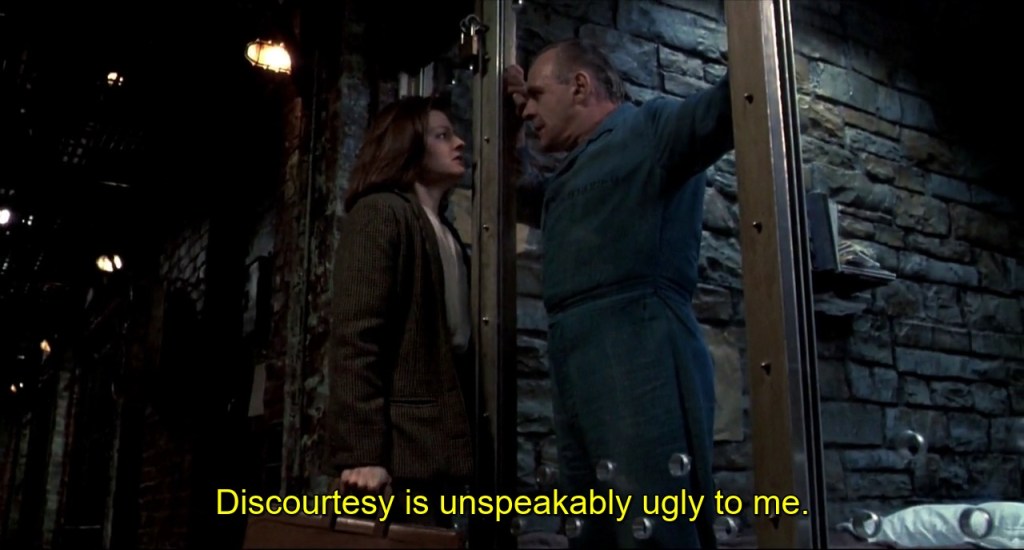
Lecter is a pastiche of classical monsters: Dracula’s hunger for blood (amid exaggerated courtesy), Dr Frankenstein scientific insight, Dr Jekyll’s secret identity; his power to terrify is precisely his amiable, civilised charm: we should be scared of cannibals who wear leather masks and grunt than those who eat us with fava beans and a nice chianti, but we’re not.

Clarice Starling has to overcome not just the mind games of Lecter, who psychoanalyses her through the bars of his cage, but also the political ineptitude of the men around her, in order to blow away the antagonist, psycho-sexual killer Buffalo Bill, who is not a cannibal, at least not in gustatory terms. Bill is a depraved cannibal in the sense that he incorporates human skin into his persona, but it is Hannibal, the deprived cannibal in the asylum, who becomes the protagonist in partnership with the unwilling Clarice.
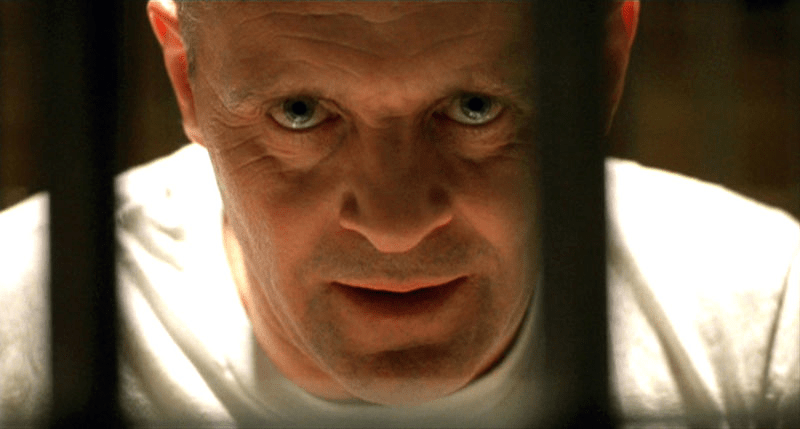
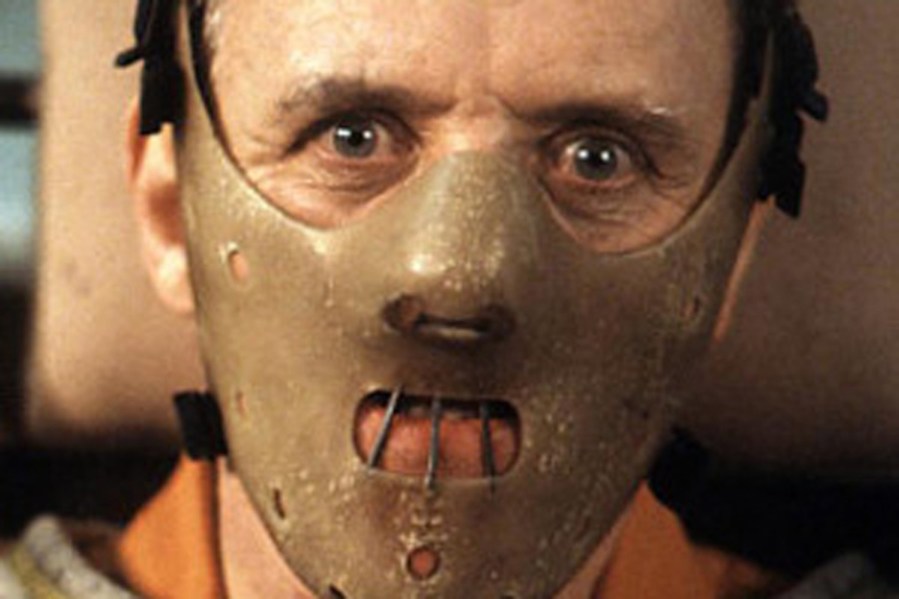
The silence of the lambs trades in close-ups: Starling usually pensive, Bill leering and imagining a valid sexuality, Lecter directly threatening, staring, unblinking, in extreme close up, straight into the audience’s eyes. It is us that he is addressing, analysing, threatening. Under the menace is a keen humour, often rare in the genre. Besides Lecter’s pun about “having an old friend for dinner”, he also reflects on Starling’s offer that, in return for helping catch Bill, he will be allowed to use a beach (under SWAT surveillance of course) where there are terns. Terns – the word suggests to him that he and Starling should have “turns” at sharing information. Starling’s turn will not relate to the case, but to her life, her childhood traumas. Despite her boss’ instruction to tell him nothing personal – “you don’t want Hannibal Lecter inside your head” – she describes her worst memory: the death of her father, a town marshal gunned down while on duty, and her subsequent life on an relative’s ranch, where she found the truth of animal agriculture, being awoken one night by the screaming of the spring lambs as they were slaughtered. She tried to free the lambs, took one and ran, but was caught and sent to an orphanage. Since then, Starling has been struggling with the contradictory messages given to children that harming animals is wrong, but eating them is fine. Lecter’s speculative diagnosis is that she believes that if she saves Catherine, the lambs will stop screaming in her dreams. She has made the lambs subjects, while Bill makes his human victims objects. As Starling tears up under the intense and massively magnified gaze of Hannibal Lecter, she gives a glimpse into the abyss of what Carol Adams calls the “absent referent”, the process that objectifies animals (and women) who are the victims of violence.

Starling’s lambs are not the only part of modern civilisation scrutinised and turned inside out by The silence of the lambs. The social order is very commonly defined in film by showing not examples of it but characters or events that transgress it. The strength of Lecter’s character is his ability not just to offend the social order but to be an extreme example of it: like modern liberal society, he is educated, rational, even enlightened, yet, also like modern society, there is an undercurrent of voracious appetite and extreme violence. Similarly, Starling transgresses social boundaries with her challenge to masculine power structures and her role as the rescuing hero rather than the hero-victim.
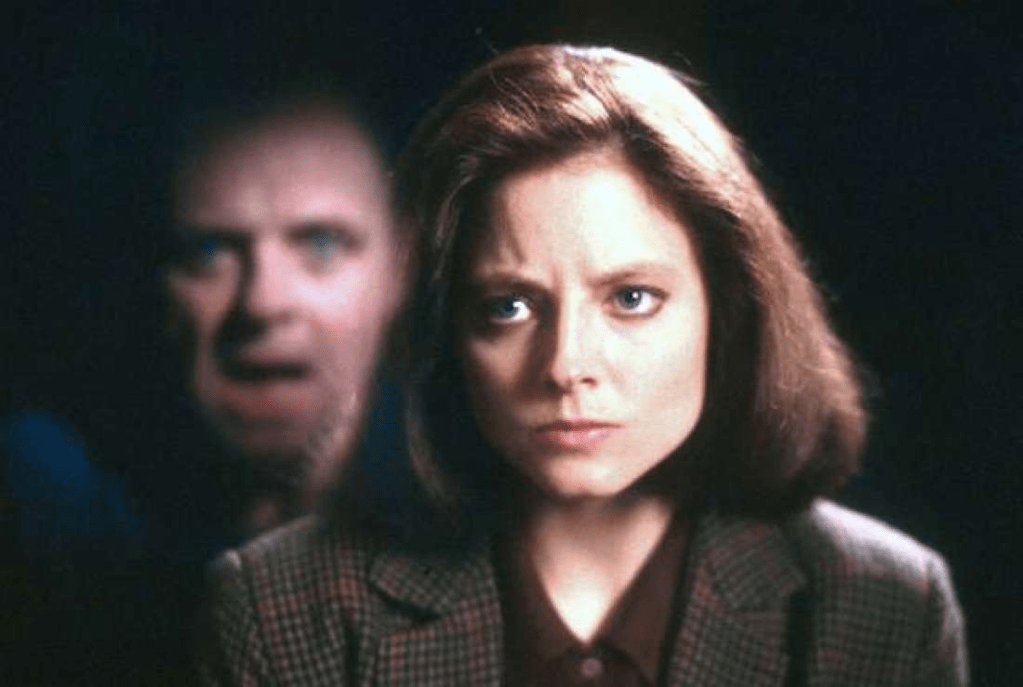
Cary Wolfe believes that the most important discourse in this film is that of species. While cross-gender conflicts are examined through the minor character of Bill and to some extent Starling, and class issues in the clash of the civilised Lecter with the often inept and backward authority figures, at the heart of the film (reflected in its title) is the struggle of Starling to come to terms with the objectification of the innocents – the lambs of her childhood or the women Bill is skinning. Objectification is seen throughout: Bill speaks to Catherine in the third person: “it rubs the lotion on its skin; it does this whenever it’s told”; Lecter speaks of his victims by function: “A census taker once tried to test me. I ate his liver with some fava beans and a nice chianti”.

One critic went so far as to say that Hopkin’s brilliance in the role makes Lecter “the cannibal we all want to be”. Lecter does not resist humanist symbology, he takes it to its logical extreme: he orders rare lamb chops, (a reference to Starling’s trauma), in his cell before he slaughters his jailers and escapes, as if to say that he does not eat animals instead of humans: he eats animals, so why not eat humans?
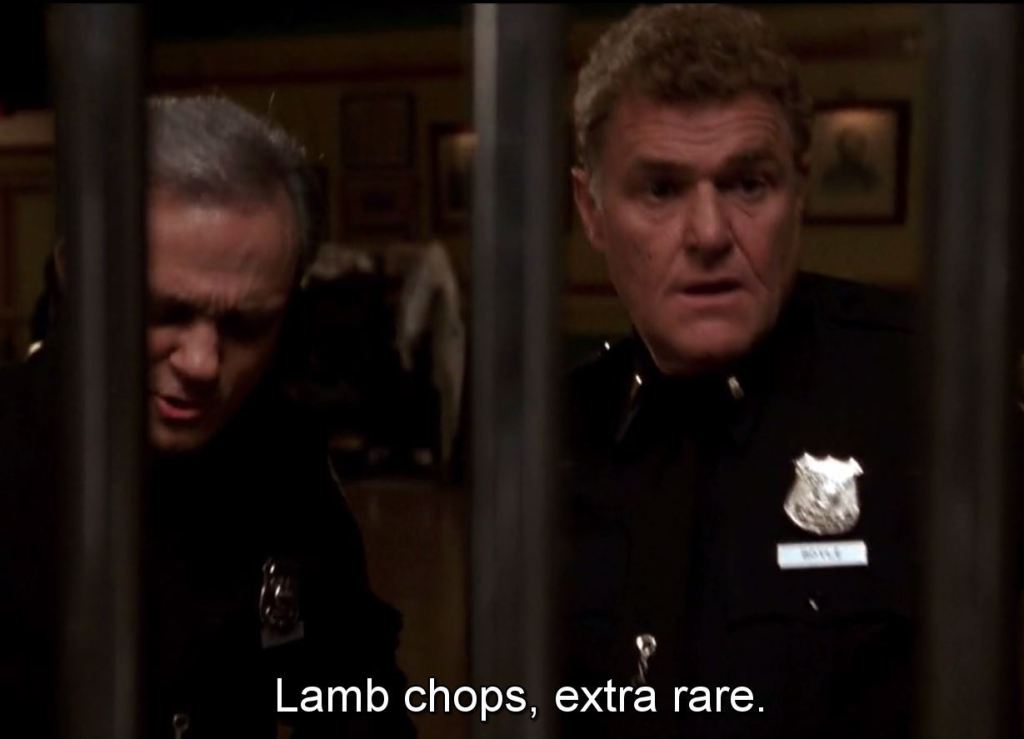
Lecter represents consumerism and carnivorous virility taken to their logical conclusion – uncontrolled, voracious hunger, only controlled by extreme measures. As Maggie Kilgour summarised, the film demonstrates the continuing power of primal appetites: “man-eating is a reality – it is civilisation that is the myth”. The thin veneer of cultural sophistication is just a hockey mask covering a terrifying appetite.
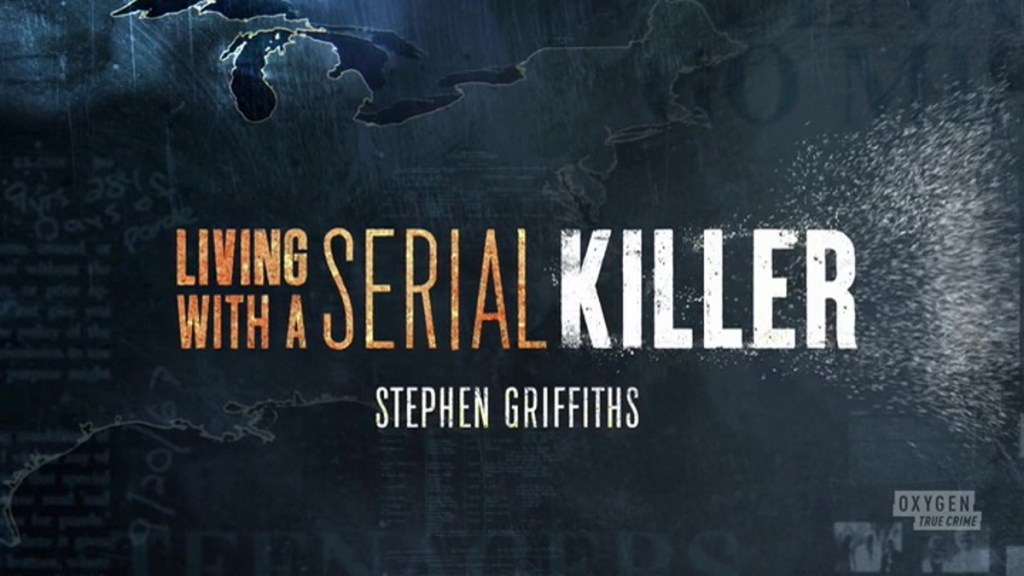
THE CROSSBOW CANNIBAL (Living with a Serial Killer, Season 2 Episode 2)

Oxygen True Crime is a program brand within the NBCUniversal stable, and is rather oddly described as:

“a multi-platform high quality crime destination brand for women”

I guess because most of the murderers reported by the show are men?

Anyway, the show we are reviewing here is part of the 2022 second season of an Oxygen series called Living with a Serial Killer, the first season of which aired in 2021. The program has covered a number of British and North American killers, including Steve Wright (the Suffolk Strangler), Peter Tobin, Timothy Boczkowski and a couple of women: Elizabeth Wettlaufer, a Canadian nurse who murdered several of her patients and Joanne Dennehy, who stabbed three men to death in 2013.

Living with a Serial Killer concentrates not so much on the killer, as do most true crime shows, but on the partners or friends or even children who lived with them, the people who thought they knew them, and it tells how they lived either in fear or else were oblivious to the exploits of the murderers. Most, but not all, of these unwilling companions were women.

Most of the killers were not cannibals, disappointingly for this blog, but one was, or says he was, despite there not being enough left of his victims to confirm or deny his claim. This was Stephen Griffiths, who stood up in court for his arraignment for murder and, when asked his name, identified himself as THE CROSSBOW CANNIBAL.

Griffiths killed three women in the city of Bradford, West Yorkshire, England in 2009 and 2010; 43-year-old Susan Rushworth disappeared on 22 June 2009, followed by 31-year-old Shelley Armitage on 26 April 2010 and 36-year-old Suzanne Blamires on 21 May that year.

The women were all Bradford sex workers. Parts of Blamires’s body, including her severed head still containing a crossbow bolt, were found in the River Aire in Shipley, near Bradford, on 25 May. Other human tissue found in the same river was later established to belong to Armitage. No remains of Rushworth were ever found. Griffiths was arrested after CCTV security footage caught him in the act of killing Suzanne Blamires. He not only committed the execution on camera but, after dragging her body inside his apartment, returned carrying his crossbow and gave a middle finger to the camera, knowing he had been seen.

Griffiths was a postgraduate research student studying criminology and specialising in British murderers, so he knew a great deal about killing and disposing of bodies. He also knew what sort of activities led to sensationalist press coverage, and he seems to have been determined to become more famous than one of his pin-ups, the Yorkshire Ripper, Peter Sutcliffe. Sutcliffe had murdered thirteen women in the same area between 1975 and 1980, and was at the time rotting in prison with several life sentences to serve, and judicial instructions that he was never to be released. Sutcliffe died in November 2020 after refusing treatment for COVID-19.

After his arrest, which happened a few days later when the caretaker checked the CCTV tapes, Griffiths readily admitted the murders to the police, telling them he had eaten some of his victims’ flesh, and adding, “That’s part of the magic.”

The program focuses on Kathy Hancock, who lived with Griffiths for a considerable time. A tough woman, a prison officer when they met, she was physically abused by him, poisoned, and perhaps worst of all psychologically tortured (particularly when he stole her dogs) to the extent that she was unable to escape his influence. She did not know that he was a serial killer, but was not very surprised when she found out. Despite the occasional escape, she was with him or under his influence for much of the decade from 2001 until his arrest in 2010.

When interviewed by West Yorkshire Police (extract at the top of this blog), Griffiths was asked why he killed the three sex-workers. His reply:

“I don’t know. Well, I’m misanthropic. I don’t have much time for the human race.”

Police divers found 159 pieces of human tissue when they searched the River Aire; almost all were from the final victim, Suzanne Blamires. There were only two parts of Shelley Armitage found – a part of her spine and a section of flesh revealing knife marks. Susan Rushworth’s family had no definite confirmation of her death or disposal, and no remains over which to mourn. He told the police:

“… it was just meat in the bath that was chopped up and churned, some of it eaten raw and I don’t know after that. I don’t know where she is.”

Griffiths claimed to be possessed by an alter ego named Ven Pariah who took over his social media accounts and boasted of his exploits. Psychiatrists found him fit to be tried, but it is still possible that his psychotic episodes (he was diagnosed as a sadistic schizoid psychopath) accompanied the murders and he really does not know what happened subsequently. It does sound a bit convenient though, like Hans Beckert in Fritz Lang’s M – EINE STADT SUCHT EINEN MÖRDER, who claimed he could not remember murdering and consuming his child victims, particularly as Griffiths seems to have clear recall of the actual murders and dismemberments.

Or he could be making it all up, since we know that Griffiths was desperate to be (in)famous and, as a student of criminology, would have been aware that cannibalism would make far bigger headlines than murder.

But here’s another explanation. Griffiths told police that he did not particularly despise sex workers, but that they were easy targets – they worked on dark, run-down streets and, due to their propensity for addiction, the police were unlikely to worry too much if they disappeared – there were plenty of other possible explanations besides murder. This is reminiscent of Albert Fish, who killed and ate African-American and Latino children, not because he was a racist, but because he knew the police would not look too hard for them.

Griffiths’ hatred was not aimed at sex workers but at women in general. He was insecure, vain, and had a desperate need to dominate. This is indicated in his relationship with Kathy Hancock, whom he abused and tormented despite the fact that she was voluntarily cohabiting with him. When she finally left he stalked and threatened her, to the extent that she finally moved overseas to get as far away from him as possible.

The ultimate form of control is to kill and consume the ‘other’. Humans do it all the time to other animals to establish an ideological superiority and supremacy – we eat meat (some of us) not because it is necessary for our health but because sacrificing the animal demonstrates human exceptionalism. It elevates the human, or those privileged to be considered human, to a higher plane than other animals and ‘lesser’ or sub-humans (untermenschen), whom we feel free to exploit in a wide variety of ways such as slavery, sweatshops and, in the extreme, cannibal feasting. Griffiths’ profound misogyny could find its deepest expression not in paying for the use of their bodies, or even ‘just’ killing them, but in utterly destroying them, and at the same time absorbing them into his own body, thereby destroying their independent subjectivity and making them exist only as part of him. Cannibalism offers ultimate power and control over the victims.

David Wilson, Professor of Criminology and Criminal Justice at Birmingham City University, said that

“We want to see serial killers as real aberrations, as different from dominant beings in our culture, but often they are just extreme versions of other beings of their time.”

Was Stephen Griffiths a cannibal or a braggart? We’ll never know for certain. Claims of cannibalism are hard to confirm, as the perpetrator is often undiscovered, unreliable, or dead. Except for cases where cannibals recorded their acts on video tape (such as Armin Meiwes), we only have the verification of missing flesh or slashed bones, evidence over which everyone from archaeologists to forensic scientists can argue forever, or the confessions of the cannibal, which can be easily retracted before trial or may prove to be just boasting and narcissistic grandstanding. Griffiths told the police:

“It was just a slaughterhouse in the bath tub.”

The cannibal, whether literal or metaphorical, is essentially enacting an extreme form of carnivorous virility, and thereby questioning the conventional view of humans as above nature, as not animals, not meat. The cannibal makes us look at ourselves as edible, and thereby question our place in, and exploitation of, the natural world. The bath tub, our symbol of cleanliness and separation from the dirt and smell of nature, becomes a slaughterhouse. The slaughterhouse, normally hidden in remote towns behind high walls, comes home.

Cannibalism News Kerala: bodies cut up, possibly eaten

Indian media is consumed with news that Kochi City Police in the Indian state of Kerala are investigating whether the accused in a human sacrifice case “cooked and ate the flesh of the victims”.

City Police Commissioner C H Nagaraju said the police are still collecting evidence. He told a press conference on Wednesday 12 October 2022:

“There’s some information that the accused ate parts of the body after killing the victims. It is being investigated. We have to conduct DNA analysis and other scientific examinations.”

Three people were arrested the day before in connection with the murder of two women in Elanthoor ­— Padmam (52) a native of Tamil Nadu, and Rosily Varghese (50) a native of Thrissur.

Those arrested were Muhammad Shafi (52), a native of Perumbavoor who is currently residing in Kochi, and a couple — Bhagaval Singh (68) of Elanthoor and his wife Laila (59).

Bhagaval Singh and his wife Laila ran a massage centre at Elanthoor in Pathanamthitta district. Shafi is alleged to have brought the two women to the couple’s home in June and September, where they were brutally murdered by the couple.

The remand report filed at the Judicial First Class Magistrate court confirmed that human sacrifices for prosperity were the reason for both murders. Occult killings have become a recurrent theme in Indian criminal typology, much like serial killers in the USA or narco-cults in Mexico.

“Mohammed Shafi proposed that consumption of human sacrifices would ensure economic prosperity.”

The Ernakulam Judicial First Class Magistrate Court on Wednesday remanded all three accused to judicial custody. The police said they will approach the court seeking custody of the accused for 12 days to initiate further inquiry and collect evidence.

Commissioner C H Nagaraju said that the first accused, Shafi (aka Rasheed), is a “sexual pervert”, as there were sadistic injuries found on the private parts of the victims. “He is a hardcore criminal, a psychopath. We are investigating whether there are more accused and if more such cases happened,” the commissioner said.

“In 2020, Shafi raped a 75-year-old woman and inflicted grievous injuries on her private parts as well. This indicates sexual perversion and psychopathic behaviour.”

Padmam, who was living in a rented room in Elamkulam and selling lottery tickets, was picked up from near Krishna Hospital in Kochi, at around 10.15am on September 26. Police recovered a clip from CCTV footage in which Padmam was seen getting into Shafi’s car. She was offered Rs 15,000 by Shafi, according to the remand report. The two reached the house of Bhagaval Singh and Laila at Elanthoor around 4 pm the same day. The remand report says,

“At the bedroom located in the central part of the house, Padmam demanded money from the accused persons. Following the argument on it, they strangulated Padmam using a plastic rope. When Padmam became unconscious, she was shifted to another bedroom on the western side of the house. Shafi inflicted injuries on Padmam’s private parts with a knife and then slashed her throat, which led to her death. Later, all accused persons cut Padmam into 56 pieces using a cleaver and knives. These parts were collected in a bucket and dumped at a pit which was dug up in the compound of the house at the northern side.”

In the interrogation, the accused person reportedly confessed to a similar human sacrifice carried out in June 2022. The other victim, Rosily Varghese of Ashokapuram, Aluva, was taken to the couple’s house at Elanthoor and was reportedly offered Rs 10 lakhs for acting in a movie.

“Rosily’s hands and legs were tied to the bed in a room in the centre of the house. A piece of cloth was inserted into her mouth which was also taped with plaster. She was stabbed by Shafi and her throat was slashed. Later, her private parts were cut and preserved. The accused persons then cut up her body into several pieces and collected them in a bucket. The body parts were later dumped in a pit dug at the eastern part of the house.”

The Hindustan Times reported that police were using cadaver-sniffing dogs and digging at Shafi’s property to determine if there were any more victims buried there.

The couple allegedly admitted to consuming the victims’ flesh after each murder.

When asked if the accused persons cooked and ate the body parts of the two women, the Kochi Police Commissioner said:

“For human cannibalism to be proved there has to be a proper examination.”

It is reported that Shafi reacted with a smile when police asked whether he had eaten the flesh of the murdered women.

Sources in the investigation team disclosed that many internal organs from the two bodies were not found. “There were no lungs, livers, kidneys in the bodies of Roseli and Padma, the women who were sacrificed as part of the ritual,” said a member of the investigating team. The post mortem reports say that the dead bodies had been cut by a person familiar with human anatomy. Though Shafi conceded that he had worked as a mortuary assistant and was versed in handling dead bodies, the police have not ruled out the possibility of an outsider in the “mission”.

Yet another factor that concerns police is the revelation by the husband-wife team of Bhagwal and Laila that Shafi had assured them that the victims’ flesh could be sold, authorities claimed. Shafi allegedly told Singh and Laila, according to IANS,

“Some people who do certain [types of worship] eat human flesh.”

The flesh could net the couple up to Rs 20 lakh ($US24,280), and a buyer was already on their way to pick all of it up, Shafi claimed, according to investigating officers.

The hacked bodies were preserved in the refrigerator in the residence, where Shafi allegedly told police they had stored 10kg of human flesh. The refrigerator is stained with human blood and Shafi’s fingerprints were found on it. The investigators also came across a pressure cooker that apparently had been used to cook the flesh.

Reports are going around Kochi that Shafi may have sold cooked human flesh through the eatery owned by him in Ernakulam.

Animal sacrifices were carried out in Kerala until banned in the 1920s. Manu Pillai’s book Ivory Throne indicates that humans were at one time among the animals sacrificed, and that that human sacrifice used to be performed at the Panayannarkavu Devi Temple near Mannar.

Kerala Higher Education and Social Justice Minister Dr R Bindu said that the disturbing incident of human sacrifice was the result of “the frustration caused by globalisation.”

“People are falling into traps as they desperately try to make a quick buck as a result of globalization. In such a situation, some people are easily duped by false illusions that human sacrifices can bring them wealth.”

As the forces of neo-liberal capitalism turn us all into voracious consumers and simultaneously raw materials for commodification, it should not be surprising that the sacrifice and consumption of other animals for food, leather, experimentation or other uses is expanding into the sacrifice and consumption of human ones.

There is a comprehensive report on this case on NDTV, including a long interview with the Kochi Police Commissioner:

Young Leatherface: THE SAWYER MASSACRE (Steve Merlo, 2022)

Whether you loved or hated (or anything in-between) Tobe Hooper’s The Texas Chain Saw Massacre, it is widely acknowledged to be a seminal work in the history of slasher movies generally, and specifically of cannibal films. Total Film made it number one of the fifty greatest horror movies of all time (Psycho was number 6!) and Richard Zoglin of Time said that it set “a new standard for slasher films”. Ben Woodard called it “unambiguously the greatest horror film ever made.” That makes creating a sequel (or actually a prequel) all the more fraught!

Chainsaw was based partly on the real-life (real-death?) exploits of Ed Gein, the “Butcher of Plainfield”, who decorated his house with all sorts of furniture made of human bones and skin, but Gein had dug most of them up from graveyards. The man-monster from TCSM was Leatherface who wore a mask (well before the rest of us) and even made it himself (far more sustainable than the rest of us). It was, however, made of human skin, which you can’t get readily even on Etsy, and he sourced his raw materials from those travelling through his little corner of Texas, cutting them up with a large and noisy chainsaw, often bashing them on the head with a mallet first, as the more primitive slaughterhouses used to do to the cattle in their yards.

But why did he do that? We get some hints in the movie from his brother, the Hitchhiker, who makes it clear that the family had been “in meat” and worked in the local slaughterhouses, which had closed as industry fled the “fly-over” states. But a lot of people lost their jobs in the seventies, and most of them did not go out and buy chainsaws with murderous intent. So how did Leatherface get started? And whose idea was it to eat the victims?

Such questions have clearly been on the mind of TCSM fan Steve Merlo, who recently sat down for an interview with Bloody Disgusting about his intended feature film THE SAWYER MASSACRE, intended as a prequel to the 1974 classic.

The film has been crowdfunded through Indegogo (now closed unfortunately) but should have raised enough to see it released in about August 2022.

Here’s the plot from the Director:

While recovering from the loss of someone close, Jimmy’s friends bring him to the Texas countryside to escape city life. In need of supplies for their cabin, they head to a gas station where they are directed to an isolated farmhouse. The property is not as it seems. They find themselves hunted by the cannibalistic psychopath known as Leatherface.

Clearly, it follows the formula that was also seen in The Hills Have Eyes, Wrong Turn, The Farm and loads of other slasher movies where humans are on the table instead of sitting around it. But, as Merlo says,

“It is our intent not to copy what the original did, but use it as influence in a stylistic way. Our film will have more blood and kills, but will still be very subtle in its delivery.”

The film is due for release in 2022, the date that appears in IMDB. The film also has a Facebook, Twitter and Instagram page if you wish to follow its progress.

Dexter is delicious: “What’s Eating Dexter Morgan?” DEXTER Season 8 Episode 3

00 title.jpg

Dexter is a television series that ran for 96 episodes from 2006-13. This episode is from the final season, and is the only one to feature a cannibal, which seems like a pretty shocking oversight really.

Dexter Morgan (Michael C. Hall, who played David Fisher in Six Feet Under) is a serial killer who also works as a blood spatter technician for the Miami metro police. There’s a lot of analysis of how he got that way (didn’t help that he saw his mother chopped up with a chainsaw when he was little) but, as he is not the cannibal in this tale, we don’t have to concern ourselves too much about that. Interesting to note, though, that although he is presented as a psychopath, he is often shown to have emotions and feelings that might not result in that diagnosis. In fact, Dexter only kills very bad people (just as Hannibal Lecter mostly only kills very rude ones) so he is really more a vigilante than a psychopath, and is motivated by a sense of justice that the Nietzschean Dr Lecter might find laughably absurd. We would have to conclude that both, however, are trying to improve the world by removing objectionable characters from its surface.

Dexter follows a suspect, Ron Galuzzo (Andrew Elvis Miller), to the mall where he sells exercise equipment. Galuzzo measures Dexter’s body/fat ratio, a wink to what we are about to find out about the dude and his culinary interests.

02 very low fat to muscle.JPG

Dexter breaks into Galuzzo’s house and it’s a mess, except for the kitchen, which is clean and spotless. Dexter opens a crock pot and finds a finger in the stew. Dexter is horrified, because I guess serial killers are not used to seeing body parts. Or perhaps Dexter is secretly a vegan.

vlcsnap-00005.jpg

vlcsnap-00004.jpg

In the fridge, Dexter finds plastic containers containing various body parts. One of them holds a whole brain marinating in a garlic sauce.

vlcsnap-00007.jpg

vlcsnap-00009.jpg

Dexter has a killing ritual, in which the victim is bound and gagged; in this case, it takes place in Galuzzo’s kitchen.

11 Disgusting.JPG

12 cannibal.JPG

He first lectures Galuzzo on the evils of cannibalism (bit of a nerve from someone whose hobby is slicing people up) then admits that he thinks that he and Galuzzo are alike, because

15 consume everyone I love.JPG

Of course, Dexter has a rather better set of knives than most cannibals.

16 knives.JPG

Galuzzo is the only cannibal featured in the TV series, which is all based around the first book of an entertaining and highly amusing series of eight novels by Jeff Lindsay. A quite different case of cannibalism is featured in the fifth novel, Dexter is Delicious (2010). In the book, Dexter faces a coven of cannibals who eat (sometimes willing) victims in a Dionysian romp.

Image result for dexter is delicious

The story revolves around Dexter and his sister, Deb, trying to save a young girl who doesn’t want to be saved; she wants to be eaten. I shall leave the cannibal unnamed in this extract, so as not to be accused of spoilers.

“Some of them do. They want to be eaten – just as much as I want to eat them…. Almost makes you believe in a benevolent God, doesn’t it?”

The book (IMHO) offers a much better cannibal story than the one in this episode, and we can only wish that the television gods had adapted it instead of this rather insipid character who presents no real challenge to Dexter, beyond offending his delicate sensibilities. Maybe Legal forbade it. Fine to tie a cannibal up, abuse him and slaughter him, but to eat someone who wants to be eaten? Now there’s an ethical dilemma for our times.

vlcsnap-00001.jpg

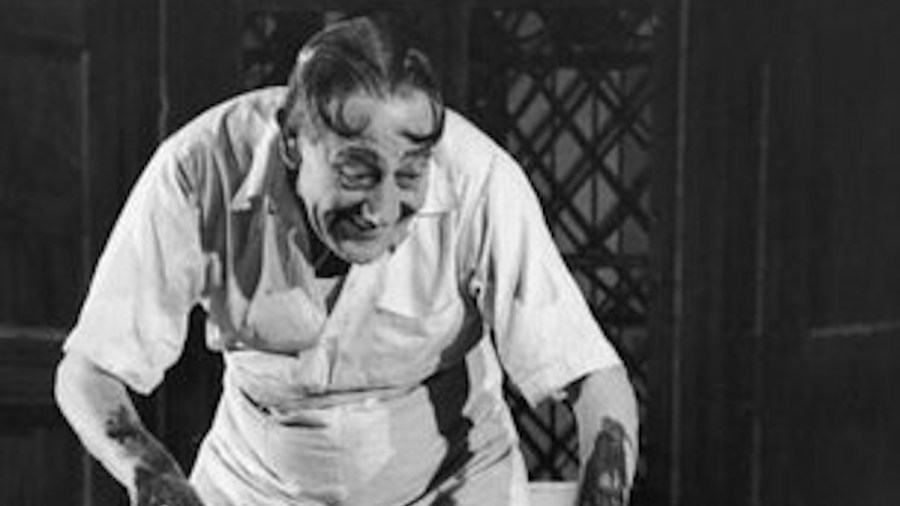
Innocent cannibalism: “SWEENEY TODD: THE DEMON BARBER OF FLEET STREET” (King, 1936)

One of the earliest films in the range of cannibal stories I have chosen to cover is George King’s 1936 version of Sweeney Todd. Sweeney is a modern myth, but is a descendant of the shadow archetype, those who destroy themselves in trying to destroy others, including Homer’s Cyclops, whose behaviour, Lacan would say, is governed by “unregulated libidinism”. This Todd is certainly so governed.

vlcsnap-00001.jpg
The poster on the wall of the barber shop, where the story is told

The title role is played by the wonderfully named Tod Slaughter, who presents Todd as pure evil: socially respectable, yet greedy for money and lusting after the young heroine, Johanna. This is a far more straight forward explanation of cannibalism than the 21st century version where Depp is motivated by revenge at injustice (and insists on singing as well).

The plot is straightforward: Todd has a barber shop near the docks where he lures passers-by in for a shave, kills them and steals their valuables, the kind of simple but effective business plan that any bank would find beguiling.

vlcsnap-00004.jpg

Todd’s partner in crime, Mrs Lovett, has a pie shop and profitably disposes of the bodies. Johanna is the daughter of a local merchant and Todd offers to go into partnership with him, planning to ruin him and blackmail him into approving marriage with his daughter. When the girl’s true love, Mark, returns with riches from the African colonies, (he also bravely fights off a tribe of savages, who are probably cannibals in terms of the colonial trope) he is robbed by Todd but saved from death by Mrs Lovett, who is jealous of Todd’s attention to Johanna. In an interesting instance of early (pre-‘slasher’) gender displacement, Johanna decides to save Mark by dressing as a boy, but is captured by Todd and, setting the gender roles back to basics, has to be rescued from the resulting fire (which consumes Todd) by Mark.

vlcsnap-00012.jpg

Neither Todd nor Lovett are ever seen eating human flesh – all cannibalism is performed by the unwitting customers, alluded to when Mark’s comic relief friend and shipmate, Pearley, munches through a pie while speculating on what Todd does with the bodies. The word ‘cannibal’ is never uttered, and the only whiff of abjection is when the narrator, a modern day barber in Todd’s old shop recounting the story to a customer, reveals there is a pie shop next door, and watches in amazement as the man flees. This is textbook abjection: the smell of meat from some non-human mammal cooking next door has made the customer in contemporary London realise his own mortality.

Sweeney Todd 1936.jpg

The class nature of nineteenth century England is illustrated by young Tobias, who is brought to Todd as an apprentice: Todd gets one guinea for each boy he takes from the parish. The Beadle warns Todd that this is the last boy he is getting: presumably he has killed, and Mrs Lovett has cooked, the previous seven.

vlcsnap-00002.jpg
“You’ve brought me another apprentice. And a nice little boy, too!”

The boy prepares the victims by applying shaving cream, and is then sent off for a walk with a penny pie from next door, making the innocent lad the chief innocent cannibal. In fact, all the cannibalism is innocent and is carried out by the lower classes, represented by Pearley and Tobias, an apparent metaphor for the exploitation with which the working class was struggling in the 1930s when the film was made. Todd’s unconscionable slaughter of men (never women, except, almost, the disguised Johanna) for profit is pure objectification: he treats his fellow humans as commodities. No explanation is given, nor needed: Todd’s maniacal laughter is necessary and sufficient to make clear that he is a psychopath; in this, he is a mythic figure: the stuff of nightmares.

Sweeney Todd 1936 poster.jpg

Full movie (with some audio issues) is available at https://www.youtube.com/watch?v=6W0YoxQkTjs

IF YOU LIKE MY BLOG, PLEASE FEEL FREE TO RECOMMEND IT (WITH DISCRETION) TO FRIENDS ON SOCIAL MEDIA.

IF YOU HAVE ANY QUESTIONS OR COMMENTS, YOU CAN USE THE TAG, OR EMAIL ME ON CANNIBALSTUDIES@GMAIL.COM.