June 2025: The Sutter County District Attorney has issued a statement declaring that, on June 10, 2025, the California Board of Parole Hearings rescinded a February 2025 grant of parole for Leslie Closner. Mr. Closner will remain incarcerated until another parole hearing is required by law.
Closner was sentenced to 25 years to life after pleading guilty to first degree murder in 1988.
The statement noted that:
Closner strangled his girlfriend to death on the evening after her daughter’s wedding. Once the victim was dead, Closner raped her corpse. He then mutilated and consumed part of her body. He then raped the corpse again. The Sutter County District Attorney believes that this offender should remain behind bars for the remainder of his life. The People would like to thank the victim’s family for their dedication all these years, for attending every hearing and representing their loved one so fiercely. The Sutter County District Attorney’s Office will continue to represent the People of the State of California in these hearings, speaking up for justice for the family of his victim and the well-being of the community.
In October 1987, Closner and his girlfriend, Jan Ferguson, checked into a motel to attend her daughter’s wedding. During a fight, Closner threw Ferguson onto the floor and strangled her to death, according to a parole review document.
After the murder, Closner moved her body to a bed, ripped her clothes off and raped her corpse. He attempted to give Ferguson mouth-to-mouth resuscitation but when that was unsuccessful, he fled from the room.
However, after leaving, Closner realised that he left his wallet in the hotel room. He climbed through an open window to get it, then had sex with Ferguson’s corpse again, bit off both of her nipples and swallowed them.
According to the parole review document, Closner then fled the motel but turned himself in to Oregon police two days later.
This is not the first time Closner was granted parole which was later rescinded. In a 2018 decision to deny Closner parole, former California Governor Jerry Brown wrote that this wasn’t Closner’s first aggressive crime. During Closner and Ferguson’s five-year relationship, he allegedly inflicted repeated emotional and physical abuse on her.
During a short separation, Closner followed Ferguson around “to the point of obsessing over her,” the parole review document said.
Closner told the board during a parole hearing, “I was really obsessed with her, and this obsession was sexual, um, and it just — it spiralled into even more and more heightened tension between us.”
He was also in an abusive relationship with his ex-wife, the parole review document said. In one instance, he attempted to strangle her to the point where she couldn’t breathe. Their marriage ended in divorce, after his ex-wife filed for a restraining order.
Brown wrote in his decision to deny Closner parole that he didn’t think Closner knew why he has violent tendencies. When the board asked him why he committed such an appalling crime, Closner said, “My view is that I was dealing with some, you know, negative core issues that extend back from early childhood and in relationship with my mother.”
Closner said during a parole review that he believes his violent tendencies came from the fact that he was physically abused as a child and saw his mother’s naked body.
A psychologist said in 2014 that Closner spoke about his mother differently, “sometimes with anger and sometimes with a lustful voice” and that at some point during their interview, he “seemed to become sexually excited as he described watching his mother undress,” the parole review document said.
Former Governor Brown wrote that Closner poses an unreasonable danger to society if he was to be released.
Cosner has been in jail for almost forty years. Under California law, Closner could be scheduled for future parole reviews, but given his threat profile, denials are likely.
Children wandering door to door, sometimes unsupervised, is often likely to end in tears. In this film Sector 36, immigrant parents, struggling to survive, have not the time to keep a watchful eye on the kids, resulting in sexual abuse, murder, organ trafficking, and cannibalism.
The words “inspired by true events” allow for all sorts of poetic licence, offering the fascination of actual criminality without the need to prove the veracity of each scene. This one is fairly close to the facts, being based on the 2006 Noida serial murders, in which over thirty children disappeared from a town in Uttar Pradesh in northern India. Evidence was presented, in the trial of the two alleged perpetrators, that the children had been sexually abused and murdered, had their organs sold to traffickers, and in some cases were eaten. The charges included abduction, rape, murder, criminal conspiracy and trafficking. The two men involved, a rich man and his servant, were found guilty of murder in 2009 and sentenced to death but were later (2023) acquitted of all charges against them due to insufficient and largely circumstantial evidence, despite the servant’s recorded confessions, which included admissions of cannibalism.
Before the acquittals, the BBC released a documentary called The Slumdog Cannibal, which tried to examine the motivations of the servant who had admitted to the crimes. The legal position becomes a lot more complicated once convictions are quashed, so in the two-hour Netflix special Sector 36, the original names have been changed, and various details are embellished for dramatic effect. The twists and turns of the plot at the end are completely fictitious. But the direction is sure and never intrusive, the plot is taut and engrossing, and the acting excellent, from the smallest victim to the extraordinary interactions of the two main characters, Prem and Ram.
We start by meeting the hungry servant, in this case called Prem Singh (played by Vikrant Massey), who is looking after the house of his boss, Balbir Singh Bassi (Akash Khurana). He calls his family, tenderly tells his wife he loves her, and then goes off to a storeroom where he starts chopping up a dead woman.
We then we meet a policeman, Ram Charan Pandey (played by Deepak Dobriyal) who is also a loving family man, driving his daughter to school on his scooter, but he turns out to be corrupt and lazy at work, not bothering to investigate the reports of the many small children who have gone missing in the town. They’ll turn up, he tells the distraught parents. He believes it too, until Prem tries to abduct his daughter. Then he takes the cases seriously, only to be hindered and suspended by his superior officer who is a friend or perhaps employee of the rich man, Bassi. When the father of one of the abducted girls appears at Bassi’s house screaming about murder and rape, Bassi reveals that the father was the girl’s pimp.
But then, a child from a wealthy family is taken, a nationwide manhunt is launched, and the child is found almost immediately. One cop tells his colleagues that while Gandhi freed the country, the picture of Gandhi’s face on Indian banknotes will free this rich child. Eventually, Ram’s new superior officer reinstates him and lets him arrest Prem, but only because he wants his temporary posting in Delhi to become permanent.
Is everyone corrupt in this story? The theme, stated at the beginning, is Isaac Newton’s third law of thermodynamic: for every action there is an equal and opposite reaction, which has become in social interactions a “system”. The system means that when a crook gives Pandey a box of cash, he is allowed to leave, while others who have no funds are beaten up and incarcerated. When a rotting child’s hand is found in a sewer, Pandey declares it is a monkey’s paw and gives a reward to the boy who found it.
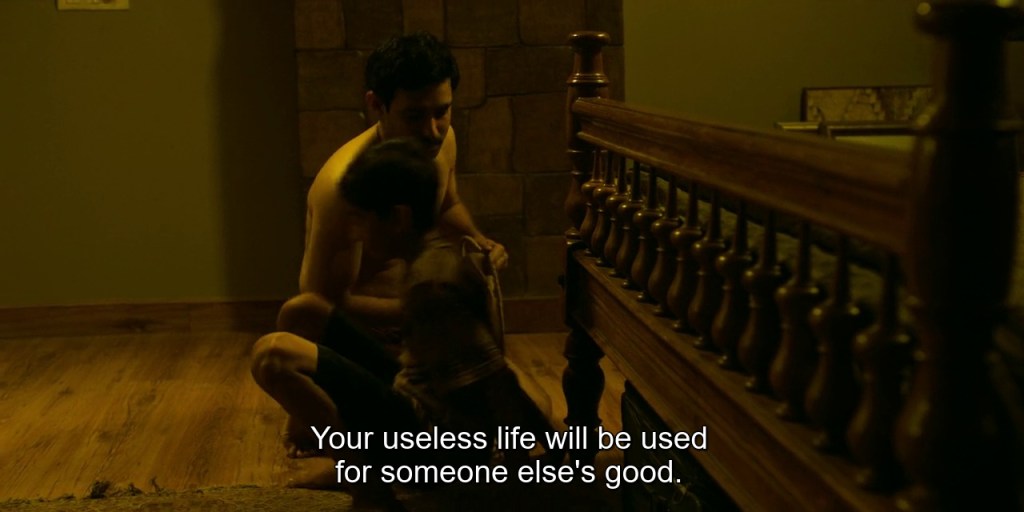
This boy is then captured by Prem who has his own system, capturing little kids to be abused and then slaughtered for their flesh and organs. Prem tells the boy that the police will forget about him after a few days, and even his parents will eventually just replace him. But someone else, someone rich and worthy, will live longer through the appropriation of his organs.
Why, we wonder, is he like this? We have a flashback to Prem’s early life – he is working in his uncle’s butcher shop, chopping up goats and “servicing” his uncle, who enjoys raping little boys. We see him fight back, killing the uncle and then chopping him up, presumably getting rid of the evidence by bundling it up with the goat flesh, and eating his uncle’s liver, raw.
I cut that fucker up and fed him to the dogs. Had a few pieces myself!
As an adult, he has no scruples doing the same thing to kids (human ones), for his own pleasure and profit. Ram, the policeman, arrests Prem who immediately confesses, boasts, that he kidnaps kids, rapes them, chops them up after killing them, eats some of the meat, disposes of the rest, and sells their organs. His “business” involved all the missing children that the police have been ignoring. He tells the police,
Sir, the thing is that after killing Uncle, I got a taste for human flesh. I used to crave it. I needed it every couple of months…. I avoided it for a year, I tried to quit. But that craving wouldn’t go away.
He admits to abducting Ram’s daughter, but says it was an accident. He just didn’t know her father was a cop. Ram asks, “what’s the difference between them and my child?” Prem is outraged – there is no comparison, the kids he kidnapped and slaughtered were nobodies, who would never amount to anything.
While Prem is a bit naïve (one might say stupid), his question is real. No one cares about the sheep, goats or chickens that he chopped up in his Uncle’s shop as a child, nor would they be able to tell the difference if he added Uncle to the mince. Prem’s argument that he became addicted to human flesh is just an excuse – those who have tried the meat of humans report it is hard to distinguish from veal or pork. But poverty, homelessness and alienation is real, and if we can utterly disregard the moral value of any sentient being, we can do the same to those humans who seem, to criminals and authorities alike, outside our scope of care. Those whose lives don’t matter become disposable, and ultimately edible.
An eastern Kentucky woman was arrested in November on charges relating to human trafficking. A Morgan County grand jury has now indicted Elena Sparenberg on charges of conspiracy to human trafficking, solicitation to murder and sexual abuse and distribution of obscene matter.
The West Liberty Police Department said in a press release on December 11 2024 that they first detected the alleged crimes in September, after receiving an investigation referral from the Kentucky Department of Corrections Internal Affairs regarding conversations between an inmate and a visitor.
Sparenberg, a former youth counsellor from Illinois, was identified as the visitor, talking with a Harlan County man who had been in jail for murder and other charges since 2021.
While investigating, police searched Sparenberg’s home in Illinois and took electronic devices. They allege that Sparenberg and the inmate had shared images, videos, electronic messages, letters and calls.
Their conversations referenced minors and adults regarding sexual abuse, rape, kidnapping, murder, mutilation, torture, satanic rituals, cannibalism, human trafficking, abuse of a corpse, collecting human remains for sexual purposes and more.
Police say images they found showed children from a sporting organisation. Their coaches and parents were notified, along with others who are thought to be in danger as future victims.
A friend on TikTok, where Sparenberg posts charming videos of her baby, asked:
Sparenberg’s LinkedIn account, which lists her position as counsellor in Illinois, ironically states:
“…until then, I believe in starting at the bottom. By doing this, I am able to work my way up.”
Not clear if the alleged cannibalism planned to follow the same progression?
Sparenberg was extradited from Illinois to Kentucky on a Morgan County warrant.
She is being held at the Rowan County Detention Center.
SNOWTOWN is back in the news at the moment, due to one of the perpetrators being granted parole after serving his 25-year sentence. Mark Haydon was convicted of assisting John Bunting and Robert Wagner in the murders of 11 people, including his wife, between 1992 and 1999.
Haydon reportedly rented the abandoned state bank building at Snowtown in which the bodies were stored in barrels of acid. A jury deadlocked on the charge that he was involved in the murders of his own wife, Elizabeth Haydon, and of Troy Youde, and he was never retried. His 25-year sentence was completed this year, and he will be freed into the community with no restrictions in May 2024 (unless the government succeeds in attempts to change the law to broaden the definition of a “high-risk offender”).
Above: the real Mark Haydon – then and now.
Relatives of the victims have long voiced their anguish and fear at any prospect of any of the perpetrators being released.
The film Snowtown is a recreation of this case, the most famous serial killer case in Australia (with the exception of the attempted genocide of the Indigenous population). A total of twelve victims were identified, and eight of the bodies were eventually found by police in barrels filled with acid, which were stored in an abandoned bank vault in the small town of Snowtown, in South Australia.
Although the press called this the “bodies in barrels” murders, it soon became known, to the sorrow of that little town, as THE SNOWTOWN MURDERS, even though only one of the murders had taken place there, the rest happening in the big city, Adelaide, between 1992 and 1999.
The final murder that took place in Snowtown, however, involved CANNIBALISM. We’ll have a look at that in this blog, although unfortunately the film doesn’t.
The film is a true Crime retelling, which means that none of the names have been changed to protect – anyone, and of course the dialogue has to be imagined to some extent. But we know a lot of what went on, and so did the film makers.
True Crime has been a popular genre for centuries, and transgressed the line between fiction and non-fiction in 1965, when Truman Capote released In Cold Blood, a “non-fiction novel”, relating or interpreting a 1959 Kansas murder. Modern versions of the genre extend beyond literature to films, podcasts, vodcasts and television shows. They tend to concentrate on the most sensationalistic cases and are grittily and brutally realistic in portraying the violence and gore.
In Australia, where this film originates, a survey found that some 44 percent of podcast listeners had listened to true crime podcasts, with an considerable proportion of them being women.
The protagonist of the film is Jamie Vlassakis, a teenager living with his single mother and two siblings. The mother’s boyfriend is a helpful sort of bloke who makes the kids dinner when mum has to go out, then strips them and takes photos of them for his own gratification. The mother deals quite effectively with this, beating him up and kicking him repeatedly, but soon a new man comes into their lives – John Bunting.
Bunting has a winning smile and a certitude that gets him into the family, and he takes Jamie under his wing. John also has a burning hatred of gay men and paedophiles, two rather different beasts whom he conflates into one evil figure. When Jamie tells him that he was raped by his older half-brother Troy, John tells Jamie he needs to “grow a pair” and take revenge. He involves Jamie in his plans to identify, capture and kill a range of people he considers monsters. He collects detailed information on a “spider wall” in his house. “Rock spider” is Australian slang for a paedophile.
But John Bunting has clearly not read Nietzsche:
He starts by involving Jamie in his plans to drive the erring boyfriend out of town. Jamie finds him in the garden, chopping up and mincing kangaroo body parts to toss onto the neighbour’s front door and sofa.
He involves Jamie in a raucous discussion of paedophile teachers, asking him what he thinks should be done with them. Jamie follows the fatal logic.
John takes Jamie under his wing, teaching him to ride a bike, shaving his head, showing him the spider wall, giving him a gun, and getting him to shoot John’s dog, a brutal blooding. When he introduces Jamie to the act of killing humans, there is also the accompanying deception: each victim is made to record a message that will be played on the answering phone of their loved ones. Jamie’s mum hears Troy say he hates her, and Jamie lies to her, letting her believe that forced call was true. Jamie goes off to doctors and government offices to collect payments, posing as the people they have killed. He doesn’t look happy about it, but he is sinking deeper and deeper into John’s machinations. After a while, collecting the government support payments becomes the motive as in the murder of Gary O’Dwyer; the vigilante pretext is forgotten. O’Dwyer invites the men to his place to watch him feed rats to his python, a process we see in slow motion in which the snake unhinges his jaw to swallow the prey whole, just as the men become unhinged in their growing lust to kill.
So John makes a man of Jamie, in the most toxic sense. He teaches him carnivorous virility – in order to be a man, you have to kill and eat. Not always the same carcass, but that does seem the logical consequence of the objectification of all victims.
The film traces the increasingly violent actions in which Jamie becomes involved, unwillingly at first, but totally under the control of John. He is made to watch them torture his half-brother Troy, who was earlier shown sodomising Jamie, and he finally steps in to finish the killing, tears rolling down his face, while John strokes his cheek and murmurs “good boy.”
Jamie is now a fully-fledged killer and a vigilante, not just an observer and helper the way Mark Haydon (the man currently being released on bail) is portrayed. Mark is a minor character, buying rubbish bags and digging holes for corpses, until near the end of the film, when he tells John he got into a fight with his wife, who called him a pussy. He told her what a big man he was – burying bodies. John brushes the story off, but we know she is next.
Although this murder is not shown in the film, evidence was given that Haydon saw his wife’s body and laughed. Her body was one of the ones found in barrels in the Snowtown bank building.
The final murder was Jamie’s half-brother (through a different father) David Johnson, whose only offence was his fastidiousness and unwillingness to go along with John’s rhetoric of violence. The final scene of the movie shows Jamie persuading David (one of the few wholesome characters in the film) to check out a computer supposedly offered for sale in Snowtown. They stop for a beer, they stop again so Jamie can urinate in a creek. He runs back to the car to accompany David to his death; the car is parked at a crossroads, clearly a symbol, a suggestion that Jamie, who is depicted as hating all the violence, could have chosen a different path at any time.
John Bunting, Australia’s most prolific serial killer, was convicted of eleven murders and sentenced to life imprisonment without the possibility of parole. Robert Wagner, his main accomplice, was convicted of ten murders and sentenced also to life without parole. Mark Haydon was initially charged with two murders but was only convicted on five counts of assisting. The jury did not come to a decision on two murder charges against Haydon, and another charge of assisting murder, which never came to retrial.
More than 250 suppression orders originally prevented publication of the details of this case at the time. In early 2011, a judge lifted the remaining orders in response to a request by the producers of the film Snowtown. Haydon was sentenced to 25 years, which he has now completed; he is back in the community on parole, with the head of the parole board saying he’s well behaved and poses no risk to the community. He has been moved to the Adelaide Pre-Release Centre – a low security facility where prisoners can participate in accompanied and unaccompanied leave, including for work and education. The usual conditions of parole apply (no binge drinking – yet), but he will be a free man in May 2024 when his sentence expires.
Jamie, presented in the film as an unwilling and even sympathetic killer, pleaded guilty to four murders and provided testimony against the other men, in exchange for a lesser sentence. He testified about the cannibalism that is not shown in this film — that Bunting and Wagner hacked at David’s body to make sure it would fit in the barrel and then sliced off a sliver of flesh from the right thigh. They heated a frying pan, cooked the flesh, and handed it around. Jamie’s testimony was the only evidence police had that cannibalism had taken place, and was presented by his attorney as proof that he was fully cooperating and deserved a lighter sentence. In 2005, when Haydon’s murder charges were dropped by the Director of Public Prosecutions, several suppression orders were lifted. These detailed the murder and cannibalism of the final victim, David Johnson.
Jamie Vlassakis was sentenced to four consecutive life sentences with a non-parole period of 26 years, which means it is possible he could be released on parole in 2025. He will be 45 years old.
The film is gritty and brutal, particularly the scenes of Jamie’s rape, and the torture of their victims. But it is compelling watching, and the acting and directing are quite brilliant, capturing the loss of innocence that starts with abuse and ends with brutality. Bunting’s early life reportedly was very rough; he said he enjoyed killing ants with acid, an idea he later transposed to those humans he saw as vermin. When he grew up, he worked at a slaughterhouse, where he would brag about slaughtering animals, saying that’s what he enjoyed the most. Later, when he moved in on Jamie’s family, he would kill cats and dogs and skin them while making Jamie watch. We see Jamie transform from the innocent teenager who stands around smoking at the start of the film to a shaven-headed killer, and even his little brother is shown with his head shaved, starting his short journey from childhood abuse to callousness.
The film is all about that loss of innocence. At an early age, these kids are introduced to poverty, abuse and violence that is a hallmark of violent, carnivorous society. Children famously love “animals” when they are little, recognising their own infant state of being helpless and unable to communicate, yet are socialised into carnivory by the peer pressure to conform and their recruitment into the ceaseless human war on nature. Animals, particularly the chattel slave animals generally referred to by their monetary value, “livestock”, are nothing and nobody. It is only a small step for John Bunting to assume the same about those he hunts, and so why would he flinch at eating them? It is the logical next step.
The film closes as Jamie shuts the door of the vault, trapping the unfortunate David Johnson with the killer gang. We don’t see the murder, or the frying pan. Unfortunately, that final step over the thin red line between humans and other animals appears to have been a bridge, or a meal, too far for this film.
This blog contains graphic scenes of sexual abuse, violence and cannibalism. These are all imaginary phantasies (in the Freudian sense of wish fulfilment rather than whimsical fiction or “fantasy”), drawn, written or simulated. None claim or even appear to be anything other than phantasies.
Note: these images were all taken from a standard browser search of the Internet in 2023. Most were captured from the short form blogging platform Tumblr, which hosts a wide range of different sites, including cannibalguy. None of these images below are from the “dark web” where there are supposed to be far more graphic scenes including, allegedly, genuine instances of rape, murder and cannibalism.
If you don’t like graphic images (he said to people reading a blog called thecannibalguy), please exit, and come back next week.
Tumblr has deleted this account since I downloaded these images in January 2023. The link below is to his or her new account at an aggregation site called Tumbex. Some of these images appear there, while others not shown here have been added. The images reflect a deep male fear of the female cannibal, an extreme form of what Barbara Creed calls Phallic Panic.
This site seems to explore the eating of the male; some images such as the one below consider the parallel with those considered ontologically animal and so morally inconsequential, and question why humans might not be the same.
More cannibalism of the male, but this time on Facebook, which is usually considered a little more, shall we say, demure than Tumblr. The most interesting aspect of this image is that the male has been penetrated (an outrage usually reserved for the female) and that, although the site censors seem to have no quarrel with the steel rod entering his anus and exiting his mouth, the penis has been blurred for the sake of decorum. Torture and cannibalism are, it seems, less offensive than images of human genitals.
Cannibalism can fascinate not just objectively but subjectively. Many web users claim to crave their own consumption by a cannibal, and some of them like Bernd Juergen Brandes achieve their desires. For most, it is phantasy, often expressed in long rambling narratives.
Preparing my meat
I know it’s unusual, but I’ve wanted someone to eat my genitals for as long as I can remember. If you think you might be interested in cooking and eating my cock and balls, please drop me a note. You should prepare me however you think best. I’m willing to help prepare and serve myself to you to eat if you desire. One cooking method I’ve thought a lot about has me sitting on a low mound, my legs straddling a wood fire burned down to coals. My butt is impaled on a short steak pounded into the mound to keep me from moving and some insulation is placed on my inner thighs. Before I’m placed over the coals to cook, the chef has tied my erect cock and balls off tightly. He tamps a seasoned stuffing mix down my pee hole to season me from inside and forces a large clove of garlic in my glans to keep the stuffing in me. He then takes a large syringe and injects some seasoned Cabernet into my ball sack. He tells me my balls will braise in the wine and cook more slowly as my penis is roasting. At first just a few coals are placed under my genitals at first to provide a little heat. Foil is tented over my genitals so they cook evenly from all sides. I’m grinning and trying not to cum with my cock tied off. I feel some pain from the heat, but my cock is getting numb from being tied off. At this point the chef occupies me with some conversation as I start to cook… The chef and I continue to chat about dinner. He bastes my balls and cock head frequently so they don’t burn and periodically sifts more seasoning onto my genitals. My cock is continuously twitching. My cum seeps into the stuffing chef forced down my pee hole, but can’t escape to the end of my cock. My balls move in the wine that fills my sac, but can’t get away from the heat. Chef keeps adding a few more coals around my genitals. Then I realize: I’m starting to cook! and get the first whiffs of my roasting sausage – musky pork ! I’m so excited to finally be dinner. I hope I’m tasty. After some time my cock is mostly numb and I’m cumming deep in my groin. My cock is a golden brown and my ball sac is getting crispy on the outside. Some stuffing has blossomed out the end of my penis around the garlic. Some wine has leaked from the hole used to fill my sac and mixed with the seasoning I’m coated with. I’m ready to be served! The chef helps me up off of the dowel that impales my butt and I hobble to a sturdy outside table… I sit on a large platter facing the chef and spread my legs as far as possible to present myself for his dinner. He shakes some salt and ladles juniper berry sauce on my browned and steaming cock and I’m ready to be carved. With wide eyes I watch the chef spear my cock head and slice it off. He smiles just before popping it in his mouth and starting to chew. I’m trying desperately to cum, but can’t with the tight binding at the base of my genitals. Piece by piece he carves and eats my roasted penis, dipping each bite in the juniper berry sauce. Eventually, it’s a twitching red circle even with my balls. He eyes the second course greedily, and smiles again as he slices open my crispy ball sac. My roasted testicles pop out with the remaining wine sauce. The cords are cut and my oysters sliced. (he gives me a piece to taste, interesting flavor with a hint of cum.) With my testicles devoured, he trims off the crispy bits of my sac and wipes the plate with them. They crunch in his mouth. The root of my penis is now exposed and dripping juice on the plate. He comes at it with you carving knife and starts to cut. I feel him slicing through my living meat. I grit my teethe and push into the knife, willing him to carve out my root for the final bites of his meal. He pops it in his mouth and walks off chewing as I collapse on the table.
sashaotaku
Much hand-drawn art involves violence against women, usually helpless but sometimes compliant and occasionally even enthusiastic. This image suggests that penetration by penis and skewer or spear are analogous, and the figure in the middle appears to be a woman with a camera who is at least voluntarily documenting the intercourse and likely murders, possibly to prepare herself for the same fate from the man who is sexually fondling both her and the prospective killer.
Coffingag
The artist who posted this is unapologetically into ‘dolcett’, a subset of vorarephilia, usually abbreviated to ‘vore’. Vore of women (gynophagia) can be ‘soft vore’ where the victim is eaten while still alive and whole or ‘hard vore’ where killing and dismemberment is depicted with attendant gore, while male diners usually express appreciation for the meat. Dolcett is hard vore gynophagia that depicts females being killed and cooked, often on a spit, and often with their enthusiastic agreement.
The artist of this piece stated that the art was “commissioned” and would be the first of a series that would be drawn when time allowed during their semester. I wonder if the semester covers the writings of Julia Kristeva, who speaks of the “fragile states where man strays on the territories of animal”. This image is clearly based on the roast chicken which appears on millions of dining tables nightly, but is clearly a woman – it shows breasts and a round but stitched stomach, implying an equivalence between being pregnant and being ‘stuffed’. The pregnant woman is the ultimate disrupter of the patriarchal symbolic order, a symbol of fertile, fecund nature.
sexual-freak-show
This is a hard vore site, but also promotes other paraphilias such as scopophilia, voyeurism, bondage, incest, torture and bestiality, interspersed with innocuous images of entirely healthy young women, conceivably placed to allow readers to exercise their own imagination. The concept of a person seeming to enjoy being roasted alive is pure phantasy; there have been no reports to my knowledge of anyone ‘enjoying’ this, even Joan of Arc. This image appears to have been removed, but replaced with many more graphic scenes.
Flostress
This site is no longer available, or at least cannot be opened safely, indicating that it may have been appropriated by a fraud site. It demonstrates the equivalence of women and animals that Carol J. Adams has studied comprehensively. The face and breasts are clearly human, the ears and tail clearly porcine.
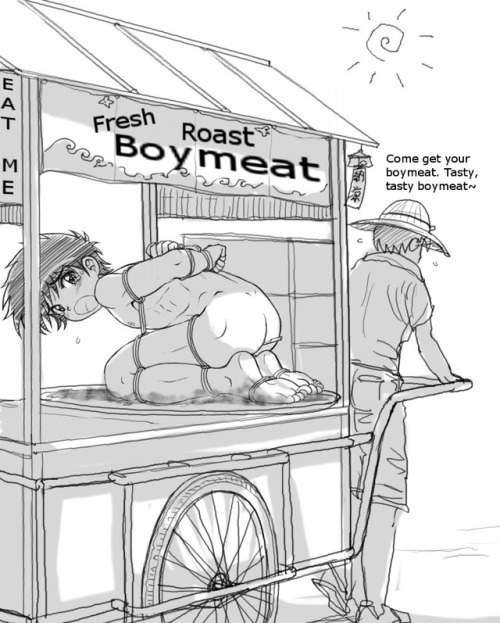
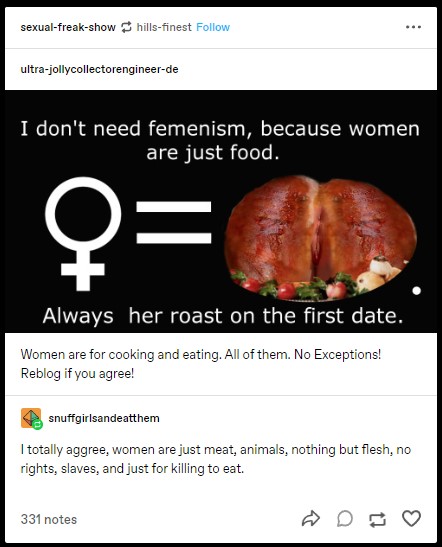
This site involves many purported recipes for “girl meat” and line drawings imagining various abuses. The one below seems to have been removed but while there it expressed (with appallingly ignorant spelling) a profound misogyny.
Fluidcravings
Originally uploaded to Tumblr but since deleted, in fact the whole account has been removed.
A succinct summary of the problem with cannibalism and carnivorism in general. The eater is motivated by a voracious appetite and objectifies the victim as simply food. The victim is terrified, experiencing an agonising death immersed in stomach acid. The end result is satisfaction for the cannibal while the victim is reduced to ordure. “I’m not food” is what the trillions of animals slaughtered every year for human consumption would say if they could make themselves understood by the consumers, and sums up the struggle against carnivorous virility.
Clearly Creed’s archaic mother, the basis of so many man-eating monsters, who reflect an unconscious fear that the mother’s body, from which we all emerged, has the power to re-absorb the child. In this drawing, we see one who is seemingly willing to re-enter her body, assuming a foetal position in her stomach.
ForbiddenFeast
This is a site dedicated to gynophagia and dolcett images, and is only fully accessible by paid subscription, but there is still plenty of free content for those who happen upon it. The explanatory page states that it features
“exclusive artworks depicting food in a “unmentionable” nature (sic). If I seem vague, I’m sorry. You should check out the terms “dolcett” and “gynophagia” to get what we mean. If you are here by mistake and do not know the context of what this site is about already, you should leave now.”
I’ve spent a lot of time and a lot of words wondering why an image such as the above is so abject and repugnant, while the same scene is unremarkable in any butcher shop, just because it involves a different species of mammal.
Reddit is a social news aggregation, content rating, and discussion website where readers can join and participate in discussions on particular topics in dedicated areas called “subreddits”. This subreddit is simply entitled “cannibalism_lounge”. It offers a rather more sophisticated version of the defunct Internet fetish forum “The Cannibal Café” where Armin Meiwes contacted prospective victims in the year 2000.
This account has been removed from Tumblr but content is still available in Tumbex. Objectifies the human body into “choice cuts”, a process common to butcher shops, but usually showing the bovine rather than human form.
Content removed by the website
Sites like Facebook and Tumblr spend a lot of time and money deleting gratuitously offensive posts. Most effort seems to be spent in tracking down and removing porn, which I would think might be less offensive to many than the scenes of bloody mayhem in the vore posts. The ones like those shown in this blog, which last long enough to be captured, are probably relatively mild content. Anything stronger (or focused on genitals) usually gets the boot, often accompanied by a triumphant statement such as the one below, which seems to say “we caught you”.
They are pretty successful capturing consensual sex, but rape, torture and cannibalism? Not so much.
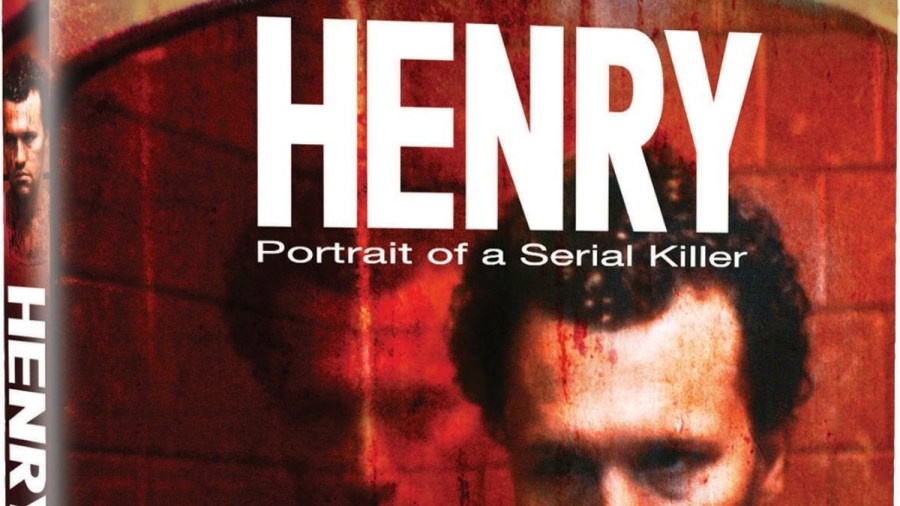
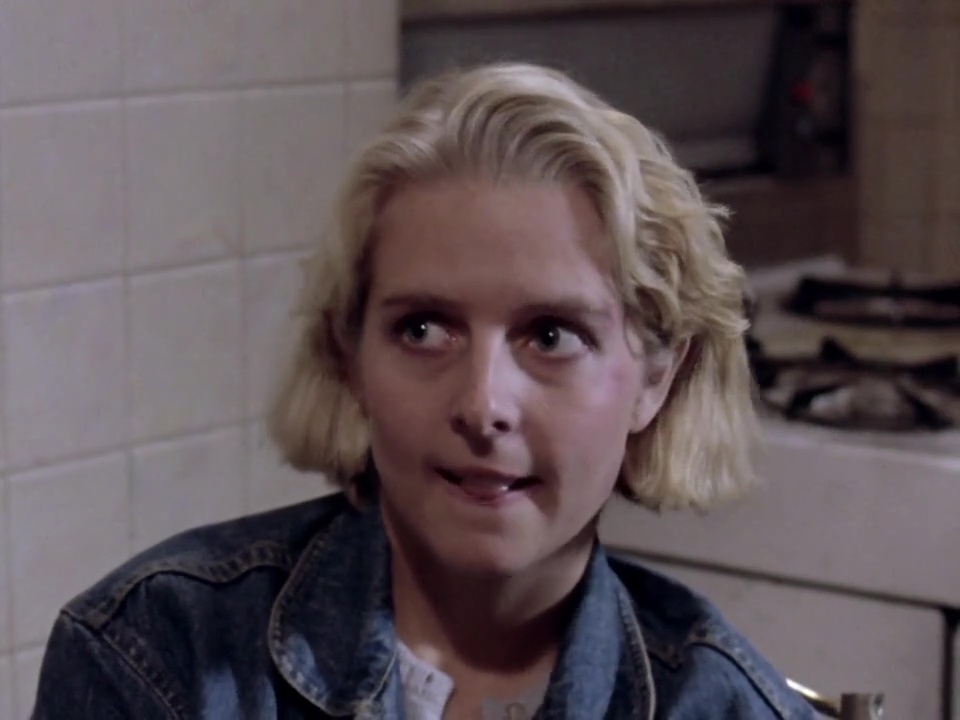
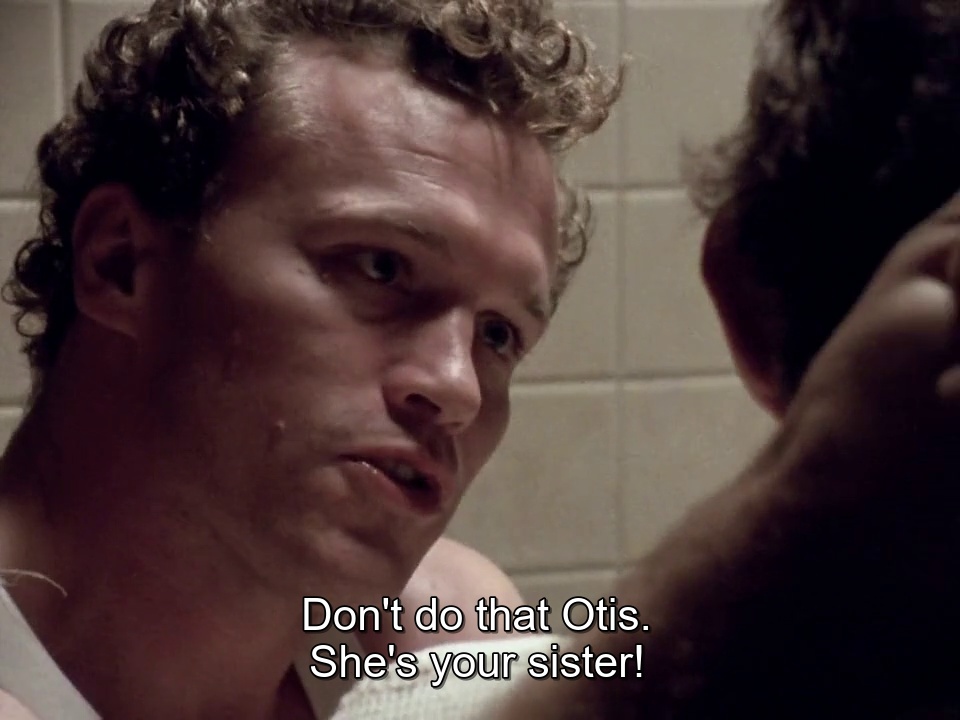
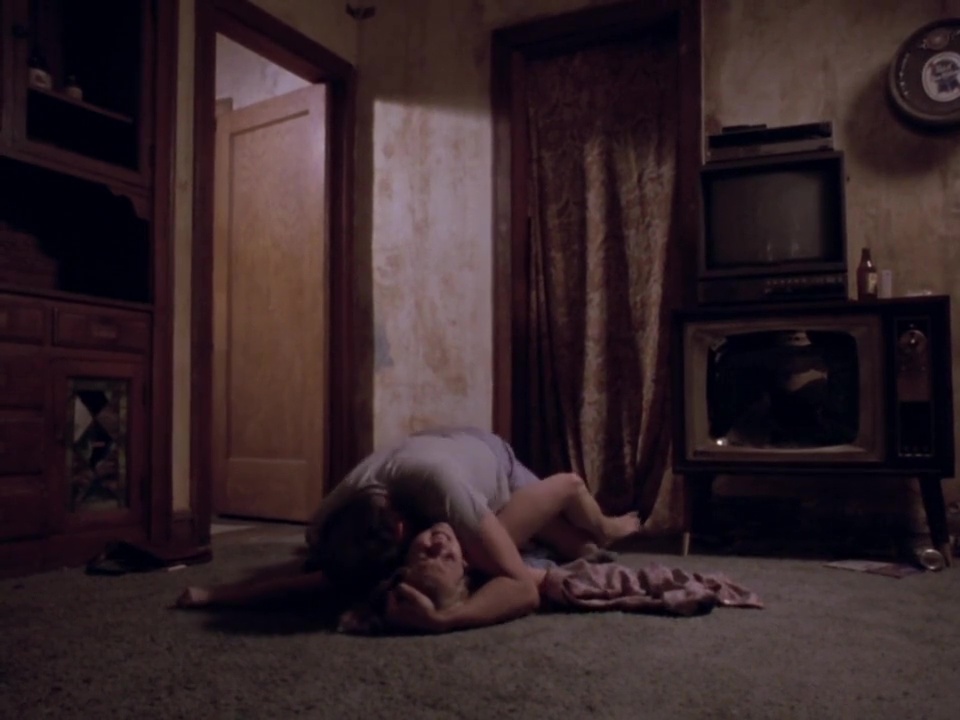
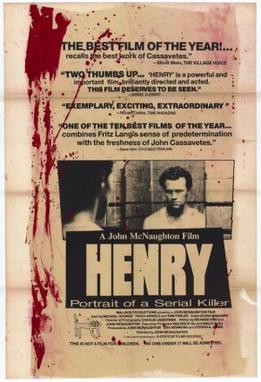
Henry: Portrait of a Serial Killer is an American psychological crime film directed and co-written by John McNaughton that depicts a random crime spree by Henry and his protégé Otis, who torture and kill with impunity. Michael Rooker in his debut film plays the nomadic killer Henry, Tom Towles plays Otis, a prison ‘friend’ who lives with Henry, and Tracy Arnold is Becky, Otis’s sister.
The characters of Henry and Otis are loosely based on convicted real life serial killers Henry Lee Lucas and Ottis Toole, who was famous for his claims to have cannibalised many of their victims, claiming that they also supplied women and children for human sacrifice to a cult called “The Hand of Death”.
Henry confessed to over 600 murders, which supposedly were committed between his release from prison in 1975 to his arrest in 1983, a pace that would have required a murder every week. A detailed investigation by the Texas attorney general’s office ruled out Lucas as a suspect in most of his confessions by comparing his known whereabouts to the dates of the murders to which he had confessed. It appears that the police would bring any cold case to his attention, feed him information about it, and then let him take responsibility. He had nothing to lose, and global fame and notoriety to gain. He was convicted of 11 murders and sentenced to death for the murder of an unidentified female victim known only as “Orange Socks.” His death sentence was commuted to life in prison by Texas Governor George W. Bush in 1998 due to evidence that Lucas was in Florida at the time “Orange Socks” was killed in Texas. Lucas later recanted all his confessions except for the murder of his mother, and died in prison of heart failure on March 13, 2001.
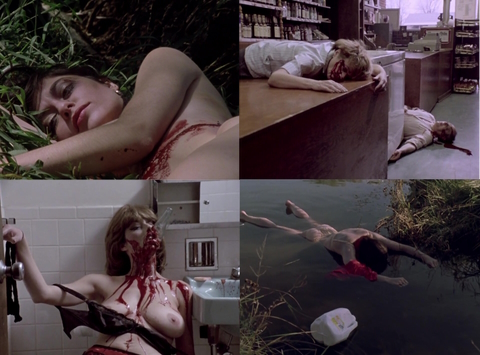
The film involves a lot of scenes of Henry driving his battered old Chevy Impala around the grey streets of Chicago, finding people to kill. Images of bloody mayhem are offered for their shock value and become repetitive, and rather fake, but then the film was made on a tiny budget.
Some narratives in the film run parallel to what we know of the real serial killers. Henry did meet Ottis, but in a soup kitchen in Jacksonville, Florida, not in prison. Henry’s father really did lose both of his legs after being struck by a freight train, leaving Henry at his mother’s mercy. But the film largely omits the long-term homosexual relationship between them (shyly hinting at it when they share the last can of beer) and, sadly, totally omits Ottis’ predilection for cannibalism.
Henry did sexually abuse Ottis’ 12-year-old niece Frieda Powell, who lived with them for many years. As in the film, Powell preferred to be addressed as Becky rather than Frieda. However, in the film Becky is Otis’s younger sister, and is presented as a considerably older single mother, not the real 12-year-old Powell.
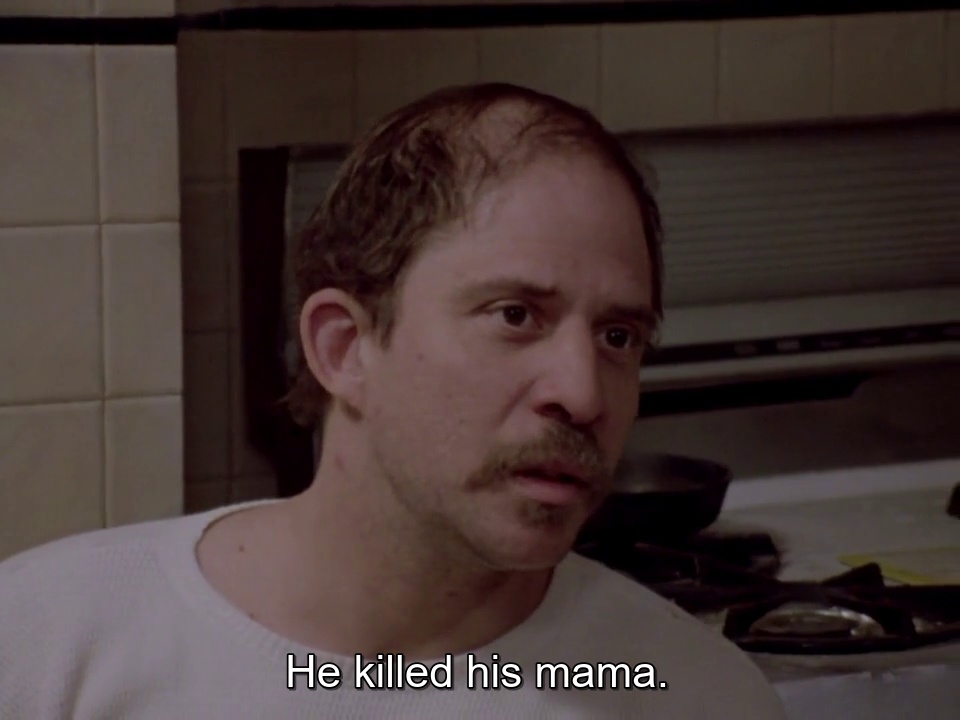
Sexual neurosis is presented as the root cause of the violent tendencies of both men. Otis, who is shown attempting to sexually abuse his sister, tells her that Henry killed his own mother, and when Becky asks Henry about it, he tells her his mother was a sadist and a “whore”, who forced him to watch her having sex with clients, sometimes making him wear girls’ clothing for further humiliation.
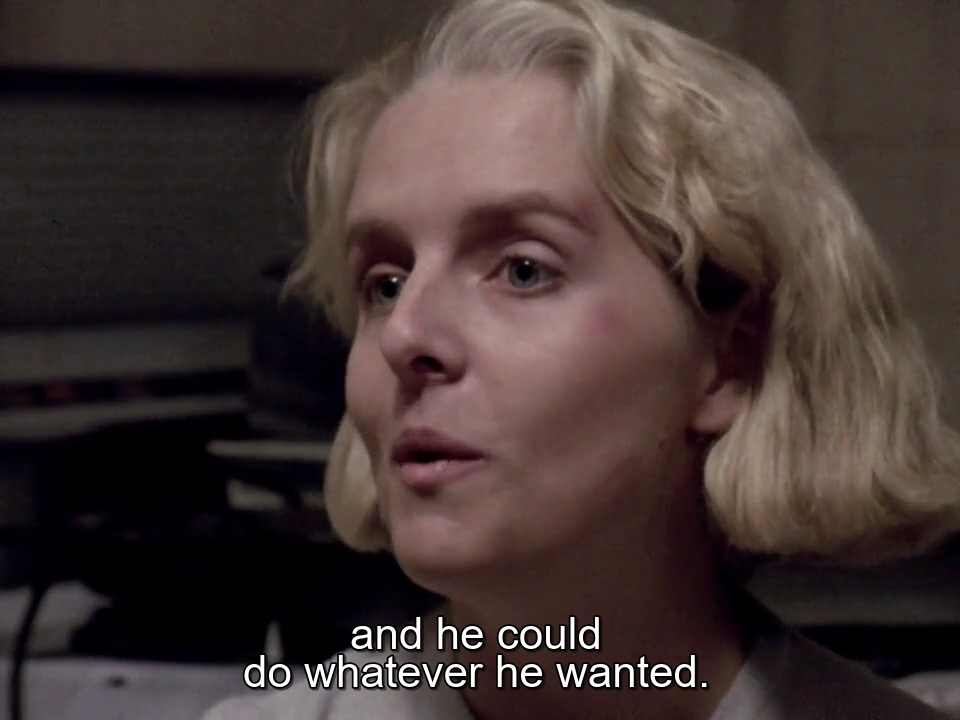
Becky in response tells Henry of her childhood, in which she was regularly raped by her father, with her mother claiming not to believe her.
“He told me he had a right, because he was my daddy and I was his daughter, and he fed me and let me live in his house, and he could do whatever he wanted. And he did… I didn’t fight him, because when I did he just hit me.”
Henry introduces Otis to his world of serial killing when they pick up two sex workers and Henry snaps their necks during sex, suggesting that he is revenging his mother’s abuse. To Henry, the world is against him, and murder is “always the same, and it’s always different.”
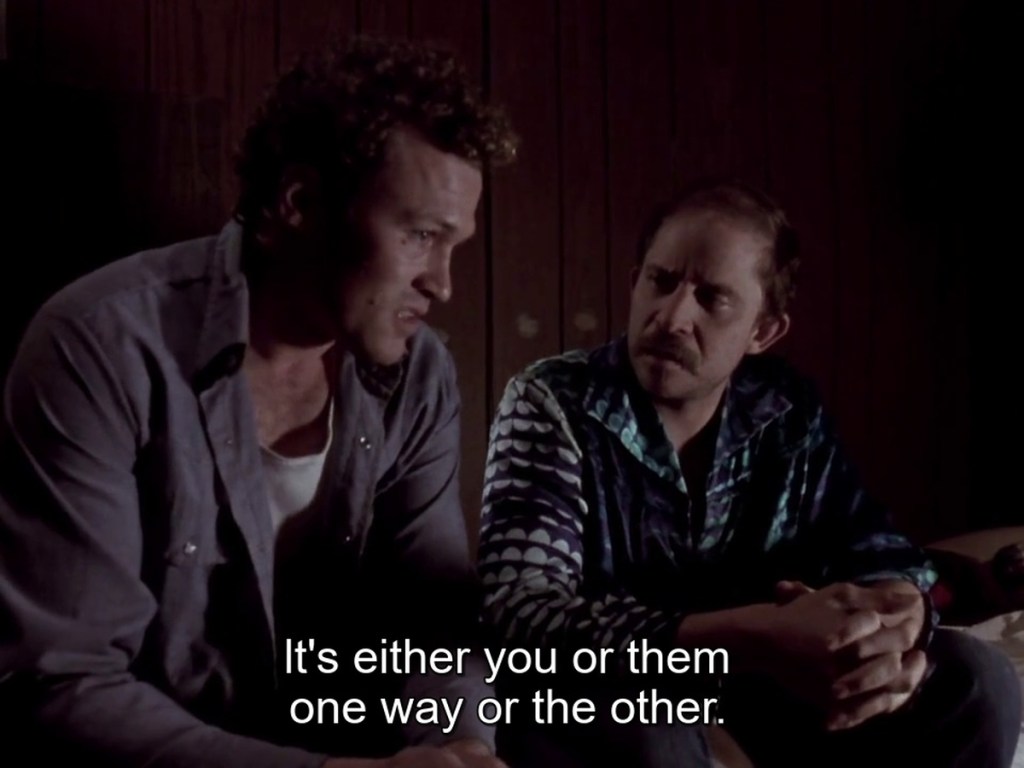
Otis gets a taste for murder when they kill a fence who mocks them when they try to buy a television from him, and then actively seeks out opportunities when a high school boy he comes on to punches him in the mouth. Henry says it would be a mistake to kill the boy, since they’ve been seen together, but Henry wants to kill someone. It’s the world being against them, again.
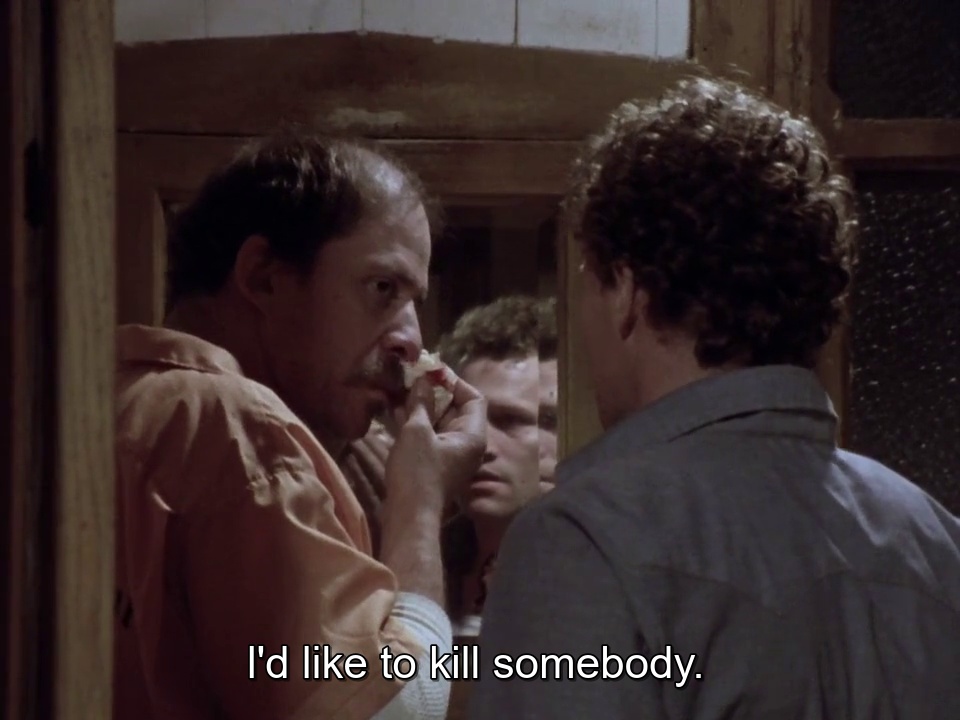
Henry schools Otis to make sure every murder is different – that way there can be no M.O. for the police to follow. A particularly brutal scene of the murder of a family is videotaped by the pair (on a camera stolen from the dead fence) and Otis enjoys re-watching himself molesting the screaming woman, breaking her neck and then attempting necrophilia, until Henry orders him to stop, just as he forced him to desist from molesting Becky when she arrived. When Henry finds Otis raping his own sister, he fights him and with Becky’s help, kills him.
Henry has his own moral code, in which murder is fine, but incest, family violence and necrophilia are forbidden. The real Henry’s paedophilic involvement with twelve-year-old Becky, and the real Ottis’ interest in eating people, are never mentioned.
Incest, murder and cannibalism are the three great taboos of our civilisation according to Freud, the driving forces behind the creation of laws and morals, which stop us destroying our communities by doing those things. The movie sadly concentrates on the murders and has references to incest, but totally ignores the cannibalism.
Unlike the film, the real Henry did not kill Ottis – both men died in separate prisons, Ottis in Florida State Prison in 1996 and Henry in Ellis Unit, Huntsville, Texas in 2001.
Due to the violent imagery, the film was censored in many markets and the original poster (above) was banned. The controversy brought it some very valuable publicity. The reviews were also mostly positive – it has an 89% “Fresh” rating on Rotten Tomatoes, with Roger Ebert observing that the film does not “sugar-coat” or trivialise violence as most slashers tend to do, and calling it:
“a very good film, a low-budget tour de force that provides an unforgettable portrait of the pathology of a man for whom killing is not a crime but simply a way of passing time and relieving boredom.”
It’s well made (considering the miniscule budget), the cast are terrific (in both senses of the word) and the plot, if somewhat out of step with the reality of the case, is well presented and never dull. But why should it stick to the “facts” of the case, when clearly neither Henry nor Ottis were too sure what was real and what simply bravado?
Cities are locked down, citizens are trying to escape from a deadly virus, food is rationed, rumours abound of dark government plots to kill off sections of the population. No, it’s not a COVID-19 movie but a speculative fiction film from over fifty years ago. From the trailer (above):
“Mankind destroyed what made most of the world liveable. Nature – wounded, diseased, and enraged – took revenge on her murderers. She cut off their food supply, and then waited, while they consumed each other.”
Yes, it’s a cannibal film based on a cannibal book, and its premise is the human war against nature, the way victory inevitably turns into defeat, and then perhaps extinction. The book it was based on, The Death of Grass by John Christopher, came out in 1956, which makes it quite prescient, and a bit of a shame more people didn’t read it back then, when carbon dioxide levels were 314 parts per million, compared to today’s 422ppm. Here’s a quote from that book:
“…he could no longer believe that there would be any last-minute reprieve for mankind. First China, and then the rest of Asia, and now Europe. The others would fall in their turn, incredulous, it might be, to the end. Nature was wiping a cloth across the slate of human history, leaving it empty for the pathetic scrawls of those few who, here and there over the face of the globe, would survive.”
Those who did take it seriously were film-makers like Ray Milland, who made Panic in Year Zero! in 1962 with a very similar plot, and this one, No Blade of Grass, an adaptation of Christopher’s book made by the acclaimed American actor turned director Cornell Wilde, whose 1965 film The Naked Prey was in many ways a forerunner of the Italian “Cannibal Boom” films of the 1970s and 1980s.
The film, set in the UK, starts with scenes of environmental destruction, as did its more famous American rival Soylent Green three years later. Soylent Green specifically nominated global warming as the cause of the collapse of the food system, due to the human population peaking in a way Thomas Malthus might have found terrifying.
In No Blade of Grass, it’s a virus sweeping the globe (right up to date, again); this one is killing all the grasses, including wheat, oats, barley, rye and rice, the food staples, without which the human species (and many other animals) will starve. We’re already getting a taste of this, as discussed in last week’s blog, with the blockade of Ukraine, the grains from which make up a majority of the food supplies for some of the poorer countries.
Of course, that is ‘over there’ and while we can feel sorry for the starving masses, we also have remote controls so we can turn off the sad news and enjoy our dinners. Just so, in this film we get unsubtle examples of starving children, interposed with rich, entitled, white British folks scoffing their roast beef and looking superior as they hear the news from overseas where, we are told, 600 million people have died of starvation, and the Chinese government is using nerve gas to kill 300 million of their own citizens to keep the state from total anarchy. The news continues:
“In the countries which no longer have any form of government, there are reports of widespread cannibalism.”
But even the comfortably bourgeois patriarch John Custance (Nigel Davenport) is making plans, in his light-hearted, Pythonesque way, to take his family up to visit his brother in the country. Do come along, old boy, he tells his daughter’s boyfriend, a scientist who has insider knowledge of what’s going to happen, because:
Anarchy breaks out in London and major cities. Fighting their way out of London, John and his family adopt the savagery of the collapsing society, robbing and killing those who stand in their way.
The car is stopped and John is knocked unconscious, while his wife (Jean Wallace, Cornel Wilde’s wife and frequent collaborator) and daughter (Lynne Frederick, later to be the last of the many wives of Peter Sellers) are raped. This rape scene, not the famine and cannibalism, turned out to be the controversial part of the movie, since Lynne Frederick was only 15 at the time. Nevertheless, Michael never loses his eyepatch or his cool or his alpha masculinity, while the women mostly do what they are told, and their hair remains perfectly coiffed.
A short-wave radio news bulletin reports:
“All the evidence indicates that France, Germany, Italy, in fact all of Western Europe along with a major part of Asia, South America and Africa have ceased to exist as part of the civilised world. In the midst of complete anarchy, and mass starvation, the horrors of cannibalism are already widespread.”
Only America and Canada are left, in the words of the US President, to “survive and preserve… the heritage of man’s greatness.”
When they finally arrive at John’s brother’s farm after a battle with a bikie gang that seems to owe more to the early Western than to science fiction, they have collected a whole lot of salt-of-the-earth farmers, whom the brother is not pleased to see, as he doesn’t want to feed them. The final showdown is therefore a modern iteration of Cain and Abel – the battle of the brothers.
The really odd thing about this cannibal film is that, while we witness the descent of civilised British gentlefolk into savagery, we never see any actual cannibalism. We hear a lot about it occurring in other countries, and speculation about it being about to happen at home, but the British seem to find each other particularly unappetising.
Cornell Wilde was an activist director, intent on convincing his audiences that the world was going pear-shaped in a hurry, and he was not big on subtlety. Unfortunately, the audience expects not just social commentary but also entertainment, and despite a lot of shooting and explosions and murders and rapes, the film suffered from some wooden dialogue and irritating flash-forwards which extinguished any suspense. The film received a desultory score of just 40% on Rotten Tomatoes.
No Blade of Grass is over fifty years old, which doesn’t excuse but partly explains the overt sexism, classism and racism that it addresses while also often seeming to endorse. Yet the film’s environmental theme is even more current today than it was on its release fifty years ago. Pollution is killing off agriculture, the water is contaminated and unfit for drinking, animals are dying out everywhere. The two little boys in the car even mention global warming, years before most of us had heard of it.
When COVID hit in 2020, people queued for food and water and guns and (most urgently) toilet paper, and there was much talk of famine, the breakdown of social order and, inevitably, the rise of cannibalism, just as we see in this film (although being British, they never discuss or seemingly require toilet paper). With no grains and no domesticated animals, people naturally turn to the only available meat, that which grows on the ape called Homo sapiens. But fifty years on, we don’t seem to have learnt anything from such speculations.
The film ends with a narrator announcing:
“This motion picture is not a documentary; but it could be.”
Marcellus (Hamlet Act I, scene iv) claimed that “something is rotten in the state of Denmark”, but it’s not their cannibal films or actors. The Neon Demon is directed by Nicolas Winding Refn (currently in trouble with PETA for killing a pig for a TV series). Refn has made several movies (Pusher, Valhalla Rising, etc) starring Mads Mikkelsen, probably known best by the readers of this blog as Hannibal Lecter, or perhaps Svend in Anders Thomas Jensen’s The Green Butchers. This film does not have Mads in it, but it does have Elle Fanning as a sixteen-year-old model who, we just know, is going to be chewed up, swallowed and spat out by the Los Angeles fashion industry.
Books about screen-writing always stress the opening image – it sets the scene, establishes the atmosphere, tells the viewer what to expect. Well, this one sure does.
Jesse (Elle Fanning from The Great) dead on a couch, blood caked onto her throat and down her arm. A grim male gaze from a photographer. The killer? Police forensics?
No, he’s an amateur photographer doing audition shots for her, and is probably the only nice guy in the story, and we all know where nice guys finish. Anyway, Jesse is befriended, as she wipes off the fake blood, by a make-up artist named Ruby (Jena Malone from The Hunger Games), who takes her to a party to meet the LA fashion scene.
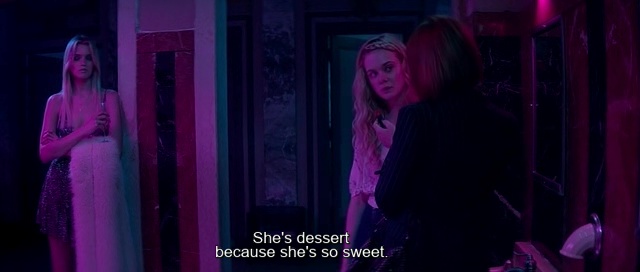
The other models hate her for being young and pretty and not needing the constant plastic surgery to fix all the things the surgeon and our culture say is wrong with their bodies. In the bathroom, as you do, they discuss lipsticks, which they note are always named after either food or sex, and speculate on this new commodity, Jesse. Is she food or sex?
Either way, it’s about appetite. Think of an animal, any animal – a snail, a snake, a human. What is the animal thinking about? It’s almost certainly food or sex. This film combines the two. The men have the power – the celebrity photographer, the fashion designer, even the sleazy motel manager (played with black humour by Keanu Reeves) – Jesse is their fresh meat.
The young, hopeful girls have their looks, and a useful booster of narcissism, a taste for the neon demon of fame, which fuels their journey through the fashion jungle.
When they get “old” (over twenty apparently), they inject various toxins and go under the plastic surgeon’s knife to fix what they are convinced are their failings. But it’s never enough. Jesse sees visions which confirm her own beauty in her eyes:
Women would kill to look like this. They carve and stuff and inject themselves. They starve to death, hoping, praying that one day they’ll look like a second-rate version of me.
But once used up, the women and girls are rejected, discarded, left to fight among themselves – to the death. Jesse is edible to them too, but not in the male way, more in the way that Elizabeth Báthoryis alleged to have bathed in the blood of virgins to keep her youth.
That’s a small taste of the real cannibalism in the film, which infiltrates the metaphoric cannibalism of the meat markets of advertising and fashion. There is an ancient tradition, from the earliest days of tribal ceremonies and the Wendigo to Richard Chase and Armin Meiwes, that eating the flesh or drinking the blood of a victim (preferably a young fit one) will transfer their strength and attractiveness to the eater. If you can keep them down of course.
An even older tradition talks of killing and eating the gods of the harvest, in order that they may be reborn and bring with them next year’s prosperity. The tradition survives in the transubstantiation of the Eucharist service. Jesse is a young and beautiful. She is, or thinks she is, a goddess. How can she not be eaten, in this film both metaphorically and literally?
There is no point in going on with the plot, it’s filled with rape, paedophilia, murder, masturbation, necrophilia, and of course cannibalism, but you really need to see it yourself, and anyway, the plot is not the point. Brian Tellerico, the reviewer from Rogerebert.com, summed this up:
“It is a sensory experience, driven by the passion of its fearless filmmaker and a stunning central performance by Elle Fanning.“
“I woke up one morning a couple of years ago and was like, ‘Well, I was never born beautiful, but my wife is,’ and I wondered what it had been like going through life with that reality. I came up with the idea to do a horror film about beauty, not to criticize it or to attack it, but because beauty is a very complex subject. Everyone has an opinion about it.”
Everyone had an opinion about The Neon Demon too, with some of the audience at Cannes booing it and the rest giving it a standing ovation. You can make up your own mind – it’s an Amazon original, so you should be able to find it quite easily wherever you are in the world. It is a beautiful film, the acting is superb, the direction is assured and precise. The horror is not so much from the gore, as the scenes of young girls being treated as meat. But that is exactly the point.
The French philosopher Jacques Derrida spoke of what he called “carnivorous sacrifice”:
“The establishment of man’s privileged position requires the sacrifice and devouring of animals.”
The animals we sacrifice and devour are little more than infants – chickens for example are slaughtered at seven weeks of age. Pigs are killed at six months (less if they run into Refn, apparently). We no more eat old animals than photographers seek out old models. Remember Curtis’ line in Snow Piercer:
“I know what people taste like. I know that babies taste best.”
Or the words of John Jacques Rousseau:
“The animals you eat are not those who devour others; you do not eat the carnivorous beasts, you take them as your pattern. You only hunger after sweet and gentle creatures who harm no one, which follow you, serve you, and are devoured by you as the reward of their service.“
Cannibalism is no more or less than the sacrifice and devouring of animals – in this case, the Great Ape known as Homo sapiens. As voracious consumerism and greed extends its reach, to plunder the entire planet, the distinction between us and the other animals seems increasingly to evaporate.
This is a cannibal film, also a Western and a horror movie, so it has something for (almost) everyone. Although a low budget work by a first-time film-maker, the film has been widely recognised for the excellence of the script and direction, and the characterisation by a team of top actors. And the graphic nature of its climax.
Bone Tomahawkis set in a small town in the last days of the Old West, a frontier society held together by a sheriff, Franklin Hunt, played by Kurt Russell (who managed to fit in a starring role in Tarantino’s The Hateful Eight that year as well), with an understated calm and a brooding power. A drifter comes into town and Hunt shoots him when he tries to run from the saloon, necessitating Samantha (Lili Simmons from Banshee), who practices medicine, to treat him in the jail. She, the drifter and a deputy are all abducted during the night – the only evidence is an arrow in the wall, and a dead African-American stable boy. Who could have done that?
We assume ‘Indians’, but a Native American they trust, “the Professor” (Zahn McClarnon, from Longmire and Fargo), tells them these are not the ‘Indians’, or at least the ones with whom the American invaders have been at war. They are a tribe with no name, no language (i.e. less than human). The local Indians call them “troglodytes”, cave dwellers,
The Sheriff, his “back-up deputy” and comic relief, Chicory (Richard Jenkins from Six Feet Under and Shape of Water), the mysterious Indian-fighter Brooder (Matthew Fox from Party of Five and Lost) and Samantha’s husband Arthur (Patrick Wilson from Fargo) with a broken leg that is fast turning gangrenous, set out in pursuit. Most of the film, until the climax when they meet the trogs, is more a road movie than a Western or a cannibal horror film. It’s four cowboys against the elements. On the long ride out to the land of the trogs, they come across two Mexicans and Brooder kills them, suspecting that they are scouts for a bandit gang. Chicory explains,
“Mr Brooder just educated two Mexicans on the meaning of manifest destiny”.
Manifest destiny was a widely held cultural ideology that proposed that the culturally and racially superior American settlers were destined to expand across North America. Inferior, backward, savage peoples were meant to get out of the way, or be exterminated. Even the horses were supposed to be racially intolerant. When the rest of the gang comes in the night and steals their horses, Brooder is incredulous that his horse would allow a Mexican to ride her.
Discrimination, be it racism, speciesism, ageism, ableism or any other, is never all-encompassing. Most racists don’t hate everyone, or at least not equally. The settlers in areas like the old West hated the ‘Indians’ for defending their lands, which the white men wanted. Even in the era when this movie is set, sometime in the late nineteenth century, some Native Americans like the Professor were accepted as, if not equals, at least semi-civilised negotiating partners, while others, who maintained their resistance, were considered bloodthirsty savages, and portrayed as killers, rapists and sometimes cannibals.
In this film, this second group is distilled into a people so inhuman that they do not even have language, which is often the first thing quoted in defining the supposed gulf between humans and other animals. They are accused of raping and killing their mothers and, worse yet, abducting and raping white women, requiring the gallant sacrifice of heroes such as those depicted here. One of the party, Brooder, boasts of having killed more Indians than all the rest of the town put together. When pressed, he admits that not all were men, as Indian women and children can also handle an arrow or a spear, and he tells of losing his mother and sisters to an Indian massacre when he was ten. For Brooder, white vs red, civilised vs savage is no different to good vs evil. He is an absolute racist, but for what he considers good reasons.
Yet even these less-than-human troglodytes are racists – they left the black stable-boy behind, because “they don’t eat Negroes”. No explanation is given, and it makes no sense since, under the skin (of whatever colour) we are all red meat. Yet their refusal to eat black people paints the white supremacism of the others as less vile somehow – look, these brutal savages must be exterminated – and they’re racists too, so it’s OK for us to discriminate against them.
Of course, those we wish to destroy must be dehumanised, vilified, and preferably accused of vile crimes, of which cannibalism usually seems to be the leading contender. But there is little evidence of Native Americans indulging in the flesh of their victims, whereas only fifty years before the demise of the Old West, the Donner Party had tucked into the remains of the members of their party who had died in the bitter winter snows of the Sierra Nevada in 1846-47. When they ran out of corpses, they murdered and ate their Native American guides.
The film is written and directed by S. Craig Zahler who also wrote the music with Jeff Herriott. It is a tour de force, a modern film that manages to bring to life the Western, a genre that, like its heroes, does not ever seem to die. American Frontier scholar Matthew Carter points out that this story is
“informed by one of white America’s oldest and most paranoiac of racist-psychosexual myths: the captivity narrative”
In these narratives, civilised society is threatened by an evil outside force, and something precious (usually a woman, seen as a possession) is stolen and must be recovered. In Bone Tomahawk, traditional narratives are challenged to some extent – the women are not passive, Brooder’s prejudice is challenged, the savages are motivated by the drifters desecrating their burial ground. But the heroes are white men, the story is told from their perspective, the fear of the outsider or alien (remember this is only a few years after 9/11) offers a stark binary which equates civilised with good and savage with evil. It is the myth that was used to justify manifest destiny and the genocide of the Native American tribes. The trogs are barely human – they are covered in white mud which disguises their humanity and they have whistles implanted in their throats instead of having voices, so they cannot be engaged in rational discussion. We see a prisoner scalped and then cut open while alive, to establish their monstrosity.
Their own women, we see at the end, are heavily pregnant, blinded and their limbs removed, so they are simply breeding machines for more warriors, a reference, intentional or not, to the way anti-Islamic propaganda depicts Moslem women as blinded by fundamentalist controls and their burqa.
But perhaps the Professor is the most interesting character. In Westerns, there were ‘good Indians’ who were assimilated into the dominant culture, often assisted in spreading ‘civilisation’ (think Tonto in The Lone Ranger).
Then there were the ‘bad Indians’ – the outsiders, vicious and merciless, uninterested in accommodating the invaders on their land, and often (although not always) portrayed as cannibals.
On Friday, 18 June 2021, a Swiss court sentenced 46-year-old Alieu Kosiah, a West African rebel leader, to 20 years in prison for rape, murder and cannibalism, committed during Liberia’s civil war. The case before a three-judge panel at the federal criminal court in Bellinzona was Switzerland’s first war crimes trial held in a civilian court.
Kosiah, AKA “bluff boy”, was a commander in the rebel faction United Liberation Movement of Liberiafor Democracy (ULIMO) that fought former President Charles Taylor’s army in the 1990s. He faced 25 charges, including one in which he was accused of eating slices of a school-teacher’s heart. He was found guilty of all but four of the charges. The court listed the charges as
“recruitment and use of a child soldier, forced transportation, looting, cruel treatment of civilians, attempted murder, murder (directly or by order), desecration of a corpse and rape.”
Criminal complaints were filed by Liberian victims, represented by civil rights group Civitas Maxima. The indictment says Kosiah killed or participated in the killing of 18 civilians, forced a displaced woman to be his “wife”, raping her repeatedly, and recruited a 12-year-old boy as his personal bodyguard. In one incident described in the indictment, Kosiah joined fighters in eating slices of a dead man’s heart off a metal plate. Acts of cannibalism were not uncommon in the conflict.
Child soldiers with ULIMO
Kosiah was arrested in 2014 under a Swiss law that allows prosecution for serious crimes committed anywhere, under the principle of universal jurisdiction. He had denied all the charges and told the court he was a minor when first recruited into the conflict.
Dubbed “the Monster” by survivors of the war, Kosiah is infamously remembered for the Black Monday attack on June 28, 1993 when rebels rounded up and massacred villagers in Foya, Lofa County.
Other Liberian war criminals
Liberia has ignored pressure to prosecute crimes from its continuous wars between 1989-2003, in which about 250,000 people died and thousands of child soldiers were conscripted and taught to kill and commit atrocities. Charles Taylor is himself currently serving a 50-year prison sentence for aiding and abetting rebels who committed atrocities in neighbouring Sierra Leone, but not for his actions in Liberia. His son, Chuckie, was sentenced for torture in Liberia by a U.S. court in 2009.
Ex-warlord Mohammed “Jungle Jabbah” Jabateh has been jailed for 30 years in the US for lying about his past as a leader of a force that carried out multiple murders and acts of cannibalism.
In July 2018, France detained naturalised Dutch citizen Kunti K, a suspected former militant ULIMO commander and placed him under formal investigation for crimes against humanity including torture and cannibalism. Another Liberian commander, Gibril Massaquoi, known as “Angel Gabriel” is on trial in Finland accused of eating his victims, burning kids alive and raping women. A verdict is expected around September this year.
Gibril Massaquoi
An ULIMO commander named Joshua Milton Blahyi known as “General Butt Naked” gave evidence to Liberia’s Truth and Reconciliation Commission in 2008:
“Any time we captured a town, I had to make a human sacrifice. They bring to me a living child that I slaughter and take the heart off to eat it… A lady offered me her child for my sacrifice. After cutting up the child I divided the heart among my boys and myself. The blood of the child was still on my hand when Jesus appeared to me and asked me to stop being a slave.”
Blahyi’s crimes included child sacrifice, cannibalism, the exploitation of child soldiers and trading blood diamonds for guns and cocaine, which he provided to boy soldiers as young as nine. He was never charged, and is now an evangelical pastor. He published an autobiography about his conversion.
General Butt Naked and Edna Fernandes
The cannibal as animal
One observation.
During his trial, Alieu Kosiah broke down and shouted:
“I’ve been locked up for six years, I have emotions, I’m not an animal.”
Well actually, he is an animal. We all are: humans are a species of Great Ape, as are our closest relatives the chimpanzees, who also wage war and indulge in occasional cannibalism. The point here, though, is that Kosiah saw himself stereotyped as a black man, an African, in a court full of white Europeans passing judgement on him. To the European, only a century or so ago, all Africans were considered savages and cannibals, little more than beasts, a libel which is hard to expunge, and a demonisation that was just as useful to European imperialist expansion as the use of gunboats. As recently as 1959, New York Times reporter Homer Bigart (an almost perfect name) wrote to his foreign news editor about his contempt for the new class of African leaders such as Kwame Nkrumah,
“I vastly prefer the primitive bush people. After all, cannibalism may be the logical antidote to this population explosion everyone talks about.”
The savagery and cannibalism of the multitudes of wars that have swept Africa in the last decades have led to appalling atrocities. But let us not forget the role of the colonialist rulers who divided the continent up, regardless of the local tribal areas, and sucked the riches out of the land, leaving the newly independent countries destitute and riven with implacable hatreds.
As Malcolm X wrote in 1965 about the colonisers of Africa:
They projected Africa always in a negative light: jungles, savages, cannibals, nothing civilized.
The legacy of this demonisation (see Milton Allimadi’s new book “Manufacturing Hate: How Africa Was Demonized in Western Media.”) is seen in the support given to psychopathic dictators who seize control for their own enrichment, but also for that of their overseas sponsors.
Milton Allimadi
Is it so surprising that this mythology of the ‘savage’ cannibal should be internalised and acted out in the heat of the internecine wars of our time?

























 The Cannibal Guy