“Embracing cannibalism”? THE NEW YORK TIMES July 2022 (and the backlash)

I guess it was only a matter of time before cannibalism became part of the culture wars. A light-hearted article in the New York Times July 23 by freelance writer Alex Beggs looked at the undeniable plethora of cannibalism narratives in contemporary movies, TV series, books and news reports, including the TV series Yellowjackets and the recent novel A Certain Hunger by Chelsea Summers, in which a (female) restaurant critic develops a taste for (male) human flesh. The article asserted:

“Turns out, cannibalism has a time and a place. In the pages of some recent stomach-churning books, and on television and film screens, Ms. Summers and others suggest that that time is now.”

Alex Begg has also written for Bon Appétit magazine, making her well qualified to write about food, of whatever provenance. Cooking shows are full of lumps of meat being baked and braised and broiled and smothered in sauces; why not add humans to the livestock list? There certainly are billions of us.

The appearance of cannibalism in secular culture reflects the fading of traditional morality. As Dostoevsky warned in The Brothers Karamazov, without a belief in “immortality” (implying divine judgement), “everything would be lawful, even cannibalism”. Our reflexive distaste for cannibalism (and our fascination with it) comes from the belief that humans are somehow not animals, or animals that have transcended animality – it all comes back to the Biblical statement that we are made in “the image of God”, whatever that means.

Such a belief, with or without support from on high, is called anthropocentrism, or sometimes speciesism, and is maintained by the practice of killing other animals in ever increasing numbers, to prove our superiority. Jacques Derrida called that “carnivorous virility”, but what happens when the lust to kill outruns the limits of anthropocentrism and is instead turned back on fellow humans? We have people who see humans as just another edible species, like Sawney Bean, Sweeney Todd, Albert Fish, Ed Gein, Jeffrey Dahmer and of course Hannibal Lecter. Not all of those were real people, and not all the facts about the real ones are real facts, but one fact remains: humans are animals, and animals are made of meat. When a society reaches a point where the old ethical agreements are disintegrating, it can either forge new ones or dissolve into chaos, war and, yes, cannibalism. At a time when the news is full of pandemics, climate change, famine, school shootings and political turmoil, is it so surprising that cultural representations show us eating each other?

Did I mention culture wars? Those who despise the New York Times (a certain and fairly large section of America apparently) came out with their anti-cannibalism guns blazing (they like guns, love meat, don’t like cannibals – it does seem a little inconsistent.)

Rod Dreher, a senior editor of The American Conservative opined:

“It’s a sign that our culture and civilization has become so decadent, so enamored by sensation, that we actually fetishize eating death…. We now live in a Culture of Death, in which we regard books, television, and film drama about the eating of human beings as pleasurable, as exciting.”

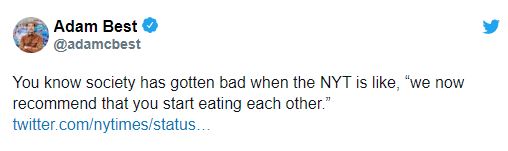
On Twitter, reactions poured in such as that of writer Emmanuel Rincón:

Zack Kanter tweeted 

“A zero sum worldview, irrational fear of overpopulation, and hatred of success will inevitably lead NYT journos to the literal conclusion of ‘eat the rich.’”

Journalist Tom Fitton tweeted

“NY Times, taking a break from promoting the mass killing of the unborn through abortion, promotes cannibalism.”

Others linked the article back to the QAnon mythology of Democrats torturing and eating children (particularly Hillary).

American Thinker said (under the headline “Cannibal Communists Crave Kids”):

“maybe there was more to that Pizzagate conspiracy than I realized!”

Many had clearly not even bothered to read the article:

And a blessedly brief journalist, Sameera Khan, tweeted

“THIS IS SATANISM”

Greg Gutfeld on his high rating Fox talk show (if you haven’t seen him, imagine a fairy waved a wand and turned The Colbert Report into a real boy) took the opportunity to pack every cannibal pun imaginable (“it’s an ATE part series”) into a short segment, as well as several digs at other shows run by Liberals such as Samantha Bee, and their regular target, CNN. Gutfeld accuses comedian Tom Shillue (formerly of The Daily Show!) of thinking he would be delicious, because he is all white meat.

The gist of much of the criticism was that the Liberal elite are trying to normalise cannibalism, as a way to – what? Reduce overpopulation? Feed the hungry? The website Editorials 360 accuses a “globalist cabal” of planning to make us all eat insects and humans, and drink recycled sewage, a fiendish plot “to enslave, denigrate and dehumanize humanity.”

The website TMZ recalled that the movie Soylent Green was set in 2022, which was then fifty years in the future, but is now, well, now. Are we in fact normalising cannibalism, because it is the logical end-point of voracious consumerism?

Soylent Green is a good place to start the analysis of this “normalizing” phenomenon. Even after fifty years, it is still the movie many people name when cannibalism comes up in discussion (as it seems to do quite a lot whenever thecannibalguy is around). The movie [spoiler alert] was set in 2022 New York, which is portrayed as part of a failed state, in which overpopulation and global warming has led to a chronic shortage of food, leading the authorities (secretly) to grind up humans who have died (or agreed to be euthanised) and convert them into nutritious protein crackers called Soylent Green. Setting it in 2022 was a bit pessimistic, but let us remember that the world’s human population has almost doubled since the movie was made fifty years ago, and that CO2 concentration was 330 parts per million in 1973, compared to around 420 now. Are we entering a time when our voracious consumerism will so deplete the planet that, as Cormac McCarthy suggested, the only thing left to eat will be each other?

Chelsea Summers put it in a political context, relating cannibalism to capitalism:

“Cannibalism is about consumption and it’s about burning up from the inside in order to exist.”

The magazine Evie, which describes itself as “the sister you never had” explains the extraordinary growth of interest in cannibalism stories by referring to the quasi-religious conceits of anthropocentrism:

“Cannibalism is the extreme conclusion of the idea that humans – and their bodies – do not have inherent value that demands respect. American society has been traveling down this philosophical road for a while. It started with legalizing abortion: After Roe v. Wade in 1973, any baby born or killed was just a “choice” at the mercy of their parents. They were not recognized as having inherent value with rights to their body or their life. More recently were the mandatory lockdowns, mask wearing, and vaccinations for Covid-19. Again, a lack of respect for human bodies and for our ability to make decisions for ourselves occurred. The encroachment on human dignity could potentially continue to progress into cannibalism – where the bodies of others have no inherent meaning, value, or sacredness that separates them from the animals we do rightfully and naturally eat.”

Lots of problems with that explanation, not least no attempt to explain the “inherent value” of humans or the assumption that we can eat other animals “rightfully and naturally.” But it is a pretty good summation of the unexamined assumptions at the heart of most writings on cannibalism, or carnivorism, or vivisection, or hunting – the idea that humans are somehow more than animals, and less than edible, while every other species on the planet is stripped of all moral value.

However, talking about cannibalism can put people off the slaughter treadmill altogether. When fact checkers came to ask Chelsea Summers about the way the book’s anti-heroine gastronomically prepares her murdered lovers, their questions about the intricacies of human butchery so disturbed her that she went “full raw vegan for two weeks.” Tobe Hooper gave up meat while making The Texas Chain Saw Massacre, saying “the heart of the film was about meat; it’s about the chain of life and killing sentient beings”. He also claimed that Guillermo Del Toro, no shrinking violet himself in abject filmmaking, gave up meat after seeing it. Bryan Fuller, creator of Hannibal, gave up eating meat during filming of the first season, telling Entertainment Weekly he had been:

“writing about cannibalism for the last three years but also doing considerable research on the psychology of animals, and how sophisticated cows and pigs and the animals that we eat actually are.”

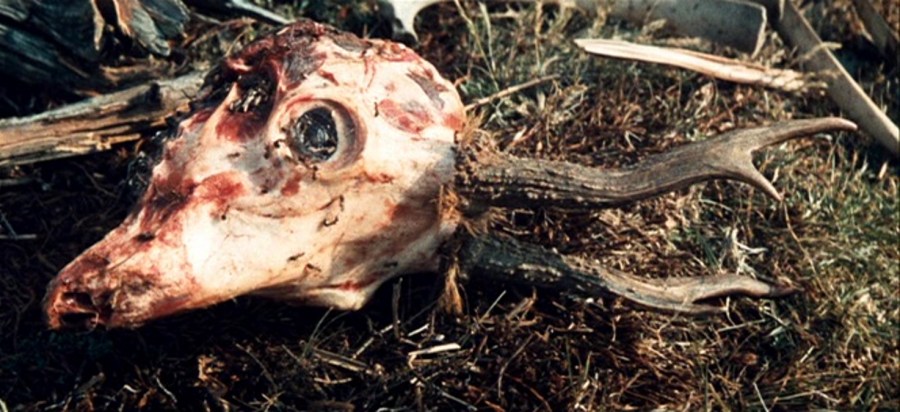
Shows like Hannibal and The Santa Clarita Diet show human flesh as “just meat.” But to do that, they have to (their legal departments insist) come up with ways of simulating the human flesh without actually killing people (or digging them up like Ed Gein). The Yellowjackets prop team chose to use venison (think Bambi). But, the showrunners warned,

“they’ll have to find an alternative for future episodes, because many in its cast are vegan.”

Portrayals of cannibalism, whether actual or fictional, can make some people hungry, and turn others against eating flesh.

Gutfeld points out that:

“In the mind of the NY Times, it’s probably more humane to eat a human being than an animal.”

By “animal”, Gutfeld presumably means every multicellular, eukaryotic organisms in the biological kingdom Animalia except one – Homo sapiens. We know we are a species of great ape, but spend much of our time pretending we don’t know that.

Being humane, being ethical, is largely about respect and consent. Which was precisely the defence offered by Armin Meiwes when arrested for eating a man who had made it very clear he wanted to be eaten. Cannibalism texts, in ever-increasing numbers, joyfully confound the human/animal divide, and show the human body as edible flesh. So it is not surprising that such questions will be raised, and that, as the NYT said, “that time is now.”

However, Ted Cruz, who likes cannibalism jokes as much as the next meal, came up with a brilliant two-word solution that will put people off human flesh for a considerable time:

“Reports of widespread cannibalism” – NO BLADE OF GRASS (Cornell Wilde, 1970)

Cities are locked down, citizens are trying to escape from a deadly virus, food is rationed, rumours abound of dark government plots to kill off sections of the population. No, it’s not a COVID-19 movie but a speculative fiction film from over fifty years ago. From the trailer (above):

“Mankind destroyed what made most of the world liveable. Nature – wounded, diseased, and enraged – took revenge on her murderers. She cut off their food supply, and then waited, while they consumed each other.”

Yes, it’s a cannibal film based on a cannibal book, and its premise is the human war against nature, the way victory inevitably turns into defeat, and then perhaps extinction. The book it was based on, The Death of Grass by John Christopher, came out in 1956, which makes it quite prescient, and a bit of a shame more people didn’t read it back then, when carbon dioxide levels were 314 parts per million, compared to today’s 422ppm. Here’s a quote from that book:

“…he could no longer believe that there would be any last-minute reprieve for mankind. First China, and then the rest of Asia, and now Europe. The others would fall in their turn, incredulous, it might be, to the end. Nature was wiping a cloth across the slate of human history, leaving it empty for the pathetic scrawls of those few who, here and there over the face of the globe, would survive.”

Those who did take it seriously were film-makers like Ray Milland, who made Panic in Year Zero! in 1962 with a very similar plot, and this one, No Blade of Grass, an adaptation of Christopher’s book made by the acclaimed American actor turned director Cornell Wilde, whose 1965 film The Naked Prey was in many ways a forerunner of the Italian “Cannibal Boom” films of the 1970s and 1980s.

The film, set in the UK, starts with scenes of environmental destruction, as did its more famous American rival Soylent Green three years later. Soylent Green specifically nominated global warming as the cause of the collapse of the food system, due to the human population peaking in a way Thomas Malthus might have found terrifying.

In No Blade of Grass, it’s a virus sweeping the globe (right up to date, again); this one is killing all the grasses, including wheat, oats, barley, rye and rice, the food staples, without which the human species (and many other animals) will starve. We’re already getting a taste of this, as discussed in last week’s blog, with the blockade of Ukraine, the grains from which make up a majority of the food supplies for some of the poorer countries.

Of course, that is ‘over there’ and while we can feel sorry for the starving masses, we also have remote controls so we can turn off the sad news and enjoy our dinners. Just so, in this film we get unsubtle examples of starving children, interposed with rich, entitled, white British folks scoffing their roast beef and looking superior as they hear the news from overseas where, we are told, 600 million people have died of starvation, and the Chinese government is using nerve gas to kill 300 million of their own citizens to keep the state from total anarchy. The news continues:

“In the countries which no longer have any form of government, there are reports of widespread cannibalism.”

But even the comfortably bourgeois patriarch John Custance (Nigel Davenport) is making plans, in his light-hearted, Pythonesque way, to take his family up to visit his brother in the country. Do come along, old boy, he tells his daughter’s boyfriend, a scientist who has insider knowledge of what’s going to happen, because:

Anarchy breaks out in London and major cities. Fighting their way out of London, John and his family adopt the savagery of the collapsing society, robbing and killing those who stand in their way.

The car is stopped and John is knocked unconscious, while his wife (Jean Wallace, Cornel Wilde’s wife and frequent collaborator) and daughter (Lynne Frederick, later to be the last of the many wives of Peter Sellers) are raped. This rape scene, not the famine and cannibalism, turned out to be the controversial part of the movie, since Lynne Frederick was only 15 at the time. Nevertheless, Michael never loses his eyepatch or his cool or his alpha masculinity, while the women mostly do what they are told, and their hair remains perfectly coiffed.

A short-wave radio news bulletin reports:

“All the evidence indicates that France, Germany, Italy, in fact all of Western Europe along with a major part of Asia, South America and Africa have ceased to exist as part of the civilised world. In the midst of complete anarchy, and mass starvation, the horrors of cannibalism are already widespread.”

Only America and Canada are left, in the words of the US President, to “survive and preserve… the heritage of man’s greatness.”

When they finally arrive at John’s brother’s farm after a battle with a bikie gang that seems to owe more to the early Western than to science fiction, they have collected a whole lot of salt-of-the-earth farmers, whom the brother is not pleased to see, as he doesn’t want to feed them. The final showdown is therefore a modern iteration of Cain and Abel – the battle of the brothers.

The really odd thing about this cannibal film is that, while we witness the descent of civilised British gentlefolk into savagery, we never see any actual cannibalism. We hear a lot about it occurring in other countries, and speculation about it being about to happen at home, but the British seem to find each other particularly unappetising.

Cornell Wilde was an activist director, intent on convincing his audiences that the world was going pear-shaped in a hurry, and he was not big on subtlety. Unfortunately, the audience expects not just social commentary but also entertainment, and despite a lot of shooting and explosions and murders and rapes, the film suffered from some wooden dialogue and irritating flash-forwards which extinguished any suspense. The film received a desultory score of just 40% on Rotten Tomatoes.

No Blade of Grass is over fifty years old, which doesn’t excuse but partly explains the overt sexism, classism and racism that it addresses while also often seeming to endorse. Yet the film’s environmental theme is even more current today than it was on its release fifty years ago. Pollution is killing off agriculture, the water is contaminated and unfit for drinking, animals are dying out everywhere. The two little boys in the car even mention global warming, years before most of us had heard of it.

When COVID hit in 2020, people queued for food and water and guns and (most urgently) toilet paper, and there was much talk of famine, the breakdown of social order and, inevitably, the rise of cannibalism, just as we see in this film (although being British, they never discuss or seemingly require toilet paper). With no grains and no domesticated animals, people naturally turn to the only available meat, that which grows on the ape called Homo sapiens. But fifty years on, we don’t seem to have learnt anything from such speculations.

The film ends with a narrator announcing:

“This motion picture is not a documentary; but it could be.”

Indeed.

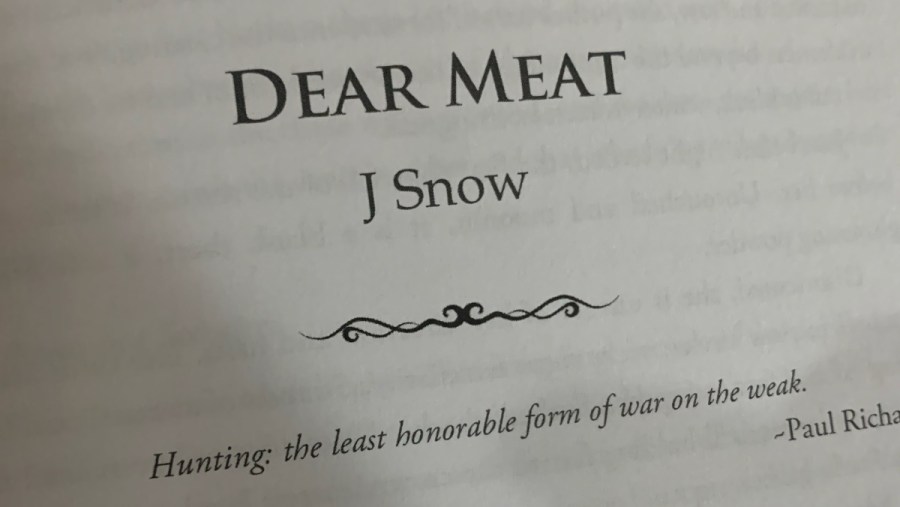
Dear Meat (J. Snow, 2020)

This blog has laboured mightily to keep up with the constantly growing catalogue of cannibalism movies and TV shows, as well as the increasing number of actual cases reported in the media. So this week we are taking a rather exciting side-trip into the wonderful world of short stories, a place where the sets can be as lavish as the author wishes since there are no Producers cutting budgets, the protagonists can do anything the mind can conjure up without the need for stunt persons or insurance, and the whole thing requires no masks or social distancing.

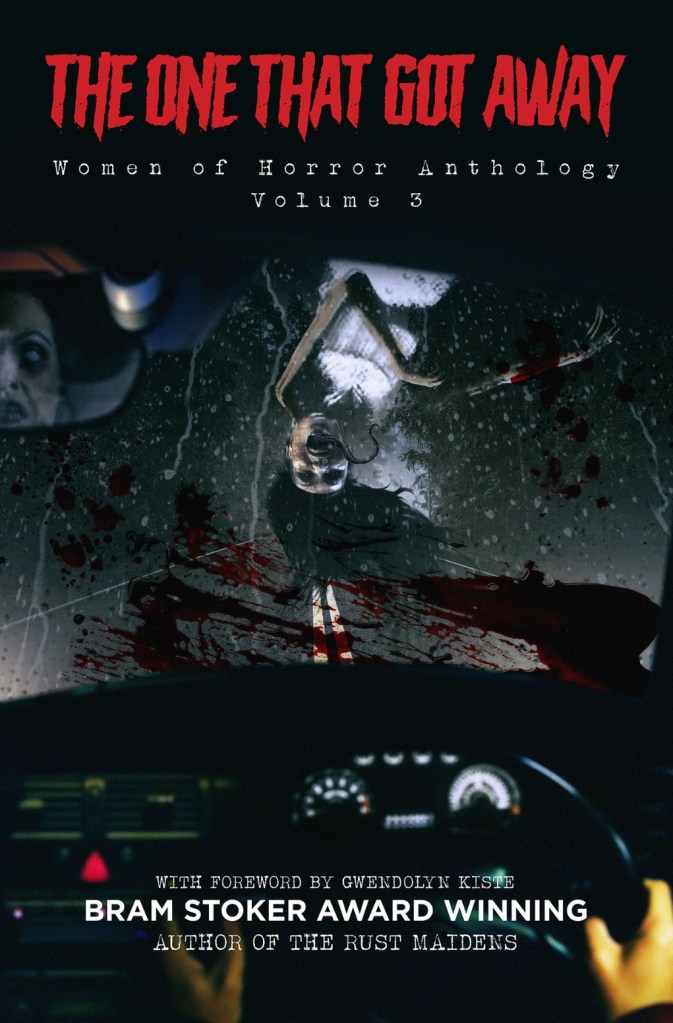
The story considered in this week’s cannibalism blog is called DEAR MEAT, and it appears in the third Women of Horror Anthology, titled THE ONE THAT GOT AWAY.

The anthology contains an amazing assortment of thirty fresh looks at the wonderful world of horror. I have, naturally, chosen to review the cannibalism story by J Snow, since that’s what I do, for reasons best known to myself and the Department of Culture and Communications at the University of Melbourne.

Ms Snow has written and published five cannibalism stories; reassuring to know that others also labour in these fields. For those of you who wish to know how (or why) she writes, there is an interview at Paula Readman’s Clubhouse.

Dear Meat was written a few years before the pandemic, but reads like it could be taken from tomorrow’s newsfeed. It involves a small elite group of rich and powerful men who have decided that human population growth is threatening to destroy the biosphere, and so must be stopped and reversed. More than two thirds of the population, billions of people, must be “eliminated.”

Various ingenious and possibly prophetic strategies are mentioned such as introducing viruses and tainted vaccines, genetically modified foods and contaminated water supplies. Free tubal ligations and vasectomies are encouraged, and abortions allowed up to two months after birth. But the key plan in this story is to set the populace at each other’s throats, or more precisely at the barrels of guns. Yes, hunting season for humans becomes the only way to feed the family. Tags are issued, which is apparently the way hunting works in the USA, and the distribution is weighted according to the discriminatory preferences of these shadowy rulers – the “unworthy and unholy” are allotted the most tags meaning the poor and the non-Christians are most likely to be hunted and cooked. Illegal immigrants are always open season. The rich and the politicians, however, don’t ever seem to end up on the butcher’s slabs.

English cleric and economist Thomas Malthus pointed out in 1798 that population increases geometrically, but food availability increases only arithmetically. All things being equal, this means we must run out of food, unless there is a disaster or an intentional reduction in human population growth. Too many people and not enough food is likely to lead to cannibalism, although Malthus did not venture into such abject speculations. The ethologist John Calhoun crossed that bridge in his study of rats, where he found that putting rats into a utopian environment, with no shortage of food or shelter, and letting them breed unconstrained, ended up in a chaotic maelstrom of sexual deviance and cannibalism. A Malthusian/Calhounian scenario is the basis for the film Soylent Green which is set (honest, I’m not making this up) in 2022, when overpopulation has led to a situation where the enormous population of poor people can only be fed by recycling the bodies of those who die or can be persuaded to accept euthanasia.

Not so in Dear Meat. The people running the government know one thing that has been true since the start of humanity: when there is hunger,

“People turn on each other, become monsters, all for one tiny morsel.”

The people turning on each other in this story are from a family; a man, a woman and a child. Not even close to a large family by today’s standards, but in the world of the story, any increase in population (child) must be balanced by a decrease (a hunted tag). One person must die, be carted to the butcher and carried home as meat, just as the odd hunter does now to deer or kangaroos or anyone else that happens to move at the wrong moment.

I am introducing some levity because this is a grim scenario, skilfully crafted, beautifully written and with an ending that I absolutely will not spoil. The wonderful thing about eBooks is that they are ridiculously affordable and offer hours of reading pleasure. This collection, and particularly Dear Meat, is highly recommended.

Here’s a review from Goodreads:

And here’s one from Amazon:

The author’s details are here, and the book is available at on line retailers including Amazon.