The model and the cannibals: Gabriela Rico Jimenez

There are tendencies, dispositions, that characterise each era, each year, sometimes each day. Call them spiritus mundi or the zeitgeist, they appear to us in the media of the time – never more so than now, when we can express instant expression and instant outrage on social media. The current trend seems to be about oppressive elites who are manipulating, enslaving, sometimes consuming us. On the ‘right’ this is sometimes expressed as “the Deep State”, on the ‘left’ it is variously called capitalist exploitation or racist colonialism.

A story that has been doing the rounds for a decade has recently gone (a bit) viral again this month after a podcast called Mexico Unexplained revisited the story of Gabriela Rico Jiménez, a 21-year-old model from Mexico who disappeared some 15 years ago after raging against the machine outside a fancy hotel in Monterrey Nuevo Leon. Jiménez is usually described as a “supermodel” although there is little evidence of that in Google searches. But then again, if she has been “disappeared” by the elites against whom she railed, then they would have made sure to delete her history as well, n’est pas? The Daily Mail rediscovered the story on June 1 2024 and brought it back to life:

Anyhow, she made some interesting if somewhat mystifying accusations:

“I wanted my freedom. Monterrey freed me but it cost me a lot of work. I was in Mexico City for a year and four months. All this began in mid-2001. I barely remember. They were young and powerful, and they killed them. I’ve been knocking on doors. What I wanted was my freedom. I want my freedom. Carlos Slim knew about this. I want my freedom. It hurts my soul that they took him away.”

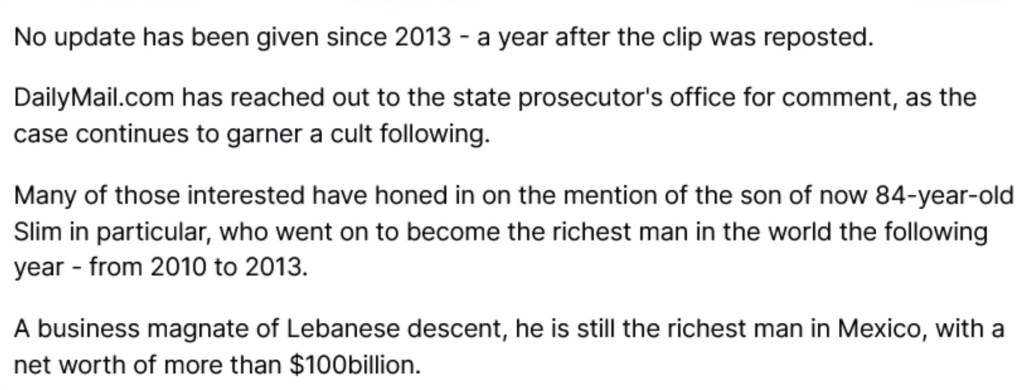
Carlos Slim at that time was apparently the richest man in Mexico or maybe the world, controlling América Móvil, Latin America’s biggest mobile telecom firm, so it’s not too surprising that her rant was shut down pretty quick, and she was carted off, presumably to a mental asylum, wherein she perhaps still rots, unless she has been cured, killed, or eaten.
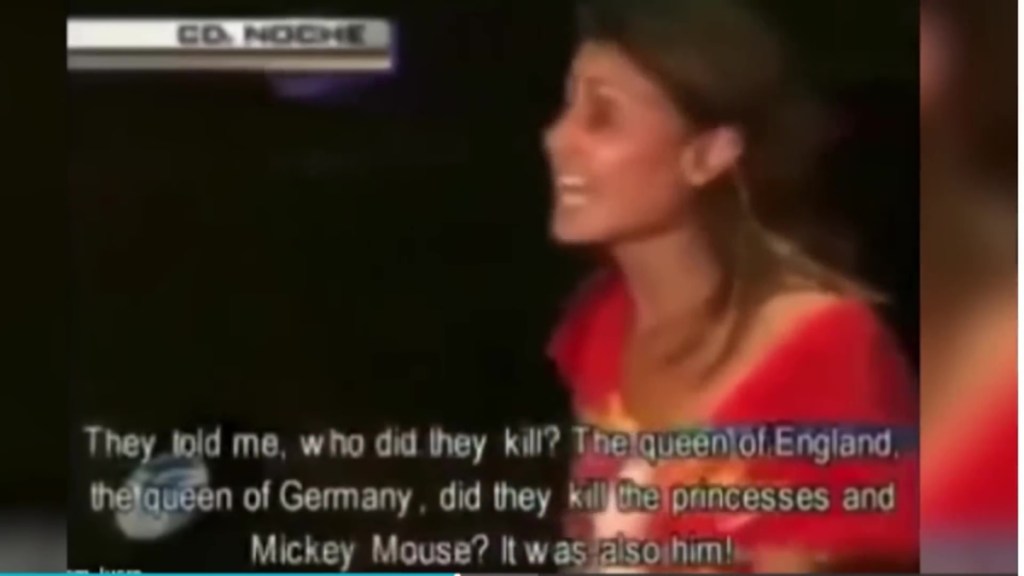
As the police (or stooges of the elites if you prefer) began to move in, she screamed,

“You! You were there! … You killed Mouriño! They told me who did they kill? The Queen of England? The Queen of Germany? Did they kill the princesses and Mickey Mouse? It was also him! What? Nothing is going to come here. The people where you come from are crazy! They killed a lot of people. Death to that kind of human! Go away! They ate humans! Disgusting! They ate humans! I wasn’t aware of anything. Of the murders, yes, but they ate humans! Humans! They smell like human flesh!”

Now, Germany does not have a Queen, nor is Mickey Mouse a real live mortal being (sorry for the spoiler, kids). Were other royals and plutocrats engaged in cannibalism? Unfortunately, the sudden disappearance of Ms Jiménez makes it difficult to work out what she was alleging, let alone the truth of such claims. But conspiracy theories love angry rants and disappearing complainants, and so a (smallish) cult has followed Jiménez, particularly after an anonymous person on a blog called “The Black Manik” claimed to have spoken to Jimenez and witnessed the incident, until he was pulled away by “some tall, well-dressed people”. Accusations fly thick and fast about elites and their alleged members, some of whom are occasionally accused of being rich cannibals.

Despite the best efforts of the Daily Mail, no further sightings of Gabriela Rico Jiménez have been reported.
The narrative of cannibalism to describe class warfare is nothing new – in 1789, the sans-culottes felt that French aristocrats were (perhaps metaphorically) eating their flesh, and in turn, the poor eating the aristocrats (more literally) became popular after the Revolution. In films, there are a lot of phantasies about the poor eating the rich, such as the silly English movie Eat the Rich. Indigenous people were routinely accused of eating their European invaders, often as a pretext for enslavement and extermination, but sometimes the eating of the foreigner was presented as a form of liberation. Sawney Bean and his incestuous clan were supposedly preying on rich travellers in the fifteenth century, and have been revived for horror stories ever since. We see cannibalism as a form of revenge on rich exploiters in the classic Suddenly Last Summer, in which the rich, white, effete Sebastian is eaten by the impoverished boys he has been sexually abusing.

But the more realistic horror movies usually show those with money, influence and power eating the poor. Jack the Ripper was never conclusively identified, but seems to have been someone rich and powerful, who got his kicks in 1888 from killing sex workers and, in one case at least, eating parts of them. The film Never Let Me Go showed a future (or alternate present) in which the protagonists were bred as clones, not to be eaten exactly, but to be cut up for organ transplants. More recently, films have speculated on the rich forming clubs to eat the poor, or paying entrepreneurs to kidnap and sell parts of young women to satiate their jaded appetites. In the wonderful Welsh film The Feast, the rich are over-consumers of the environment, and their punishment is to eat each other. And let’s not forget the extraordinary accusations made against actor Armie Hammer, who declared to a girlfriend on social media “I am 100% a cannibal. I want to eat you.”

So it’s not clear who is eating whom – the rich or the poor, or perhaps there is some sort of cultural pendulum. But leaving aside the actual flesh, we are all involved in consumption of the other in some form. Philosophers from Voltaire to Derrida have declared “we are all cannibals”.

Auto-cannibalism: EAT (Jimmy Weber, 2014)

Hollywood, they say, will eat you alive, and stories of those who try to succeed (and fail) are often accompanied by metaphors of incorporation. If the city doesn’t eat you, the people will, or if they don’t, you’ll end up eating yourself. That’s what happens to Novella (Meggie Maddock) in this powerful movie about a struggling actress who just can’t get a break.

No wonder she develops some nervous habits. The one revealed here is auto-cannibalism. She eats herself.

Novella has lost control of her life. She hasn’t won a part for three years. Intending to be a famous movie star, she instead finds herself auditioning for porn movies to make ends meet, and then comes home to find an eviction notice on her door. Her life is out of control, and she tries to reclaim it by auto-cannibalism—eating her own flesh. An illness, an addiction or an obsession is often described as “all-consuming” and Eat takes this to its logical conclusion.

The film explores the desperation and isolation that is so much a part of modern cultures, and the extreme reactions to the feeling of failure. What better way to explore the darkness inside us than by opening ourselves up and looking, feeling and tasting it? As the movie reminds us,

This is the debut feature from Jimmy Weber (Incubator), and he demonstrates a rare talent for showing people things that really turn their stomachs. This is what horror should do—while so many entries that once caused people to pass out or vomit in cinemas have become stale and unremarkable, people eating their own flesh still manages to make the gorge rise for many otherwise hardened reviewers of gore movies. It takes us into our deepest fears and lets them out to play in the (relatively) safe world of the cinema.

Andy Warhol made an underground movie called Eat in 1964 which featured a man eating a mushroom for 45 minutes. This Eat is a lot more graphic, although the French got here first with Marina de Van’s extraordinary 2002 film In My Skin. In that film, the protagonist feels the same appetite for her own flesh as so many people seem to feel when they smell bacon.

If you’re not a gore hound, you probably may not like this film. The special effects are excruciatingly realistic, and reinforced by sound effects of biting and slurping that offer a sometimes exaggerated realism. But although it is a disturbing film, it is beautifully made and makes its point about the human tendency to consume, like the ouroboros, the very environment that sustains us.

Cannibalism, or any kind of carnivory, is ultimately about control. Humans seek to control nature by killing and eating others—usually other species, but sometimes, even often, other humans. There is no greater control of another than taking their life and converting their flesh into food and then into faeces. But doing it to ourselves? That is more an enquiry, an interrogation of the usually unquestioned human/animal binary. Reddit reports that a guy who calls himself Incrediblyshinyshart served his friends tacos, made from his own amputated leg, just to see what we taste like. A Spanish influencer ate part of her knee which had been removed surgically, just because it was her property and she could (much the same argument people use to justify eating other animals). Then there’s the vegan who made meringues out of his own blood, because, he said, it is,

the only ethical source of animal products, because I can give my consent to myself in a way that a sheep can’t.”

Once we look inside our skin, that large sensory organ which identifies us to the world and ourselves, we find meat, the same red meat we find inside other mammals. The only difference between the cannibal who consumes his own flesh and the gourmand who eats that of a pig, cow or sheep is one of consent.

The first splatter film: BLOOD FEAST (Lewis 1963)

Blood Feast is a very early American horror film, made way back in 1963. It was composed, shot and directed by Herschell Gordon Lewis, and is considered the first “splatter” film, a sub-genre of horror noted for its graphic depictions of on-screen gore. The plot focuses on a food caterer named Fuad Ramses (Mal Arnold) who kills women so that he can include their body parts in his meals, which are ritual sacrifices to resurrect the Egyptian goddess Ishtar (fun fact, Ishtar was actually a Babylonian goddess).

The preview (at the top) advises that the picture

“contains scenes which under no circumstances should be viewed by anyone with a heart condition or anyone who is easily upset. We urgently recommend that if you are such a person, or the parent of a young or impressionable child now in attendance, that you and the child leave the auditorium for the next ninety seconds.”

Well, “leave the auditorium for the next sixty-seven minutes” might have been better advice, but hey, Blood Feast was highly successful, grossing four million dollars against its tiny $24,500 budget, despite receiving terrible reviews calling it amateurish and vulgar. Blood Feast was part of a trilogy, comprising Two Thousand Maniacs! In 1964 and Color Me Blood Red in 1965, although these were not strictly cannibal films.

Lewis had seen Alfred Hitchcock’s Psycho and felt that it cheated (in the shower scene) by showing blood going down the drain but not the actual murder, and he set out to make up that shortcoming, with buckets of gore and actual body parts (e.g. a sheep’s tongue was imported from Tampa Bay for the scene where Ramses cuts out a woman’s tongue).

He also, like Hitchcock, had some gimmicks to promote the film, giving the audience “vomit bags” and taking out an injunction against the film in Sarasota, Florida, purely for the publicity. The film was banned in the UK as a “video nasty” and not released in full for over forty years, which just added to its notoriety.

Blood Feast was followed by a “tribute” movie, Blood Diner, in 1987, although this was written as a comedy and ended up not directly related to the story of Blood Feast. A belated sequel, Blood Feast 2: All U Can Eat, was released in 2002.

The plot is paper thin – Ramses is a wild-eyed killer who chops up several young women, described in the poster as “nubile”, supported by cleavage close-ups wedged into the scenery wherever vaguely possible.

He takes body parts from these “nubile young girl victims”, such as legs, tongues, hearts and brains. These he boils in a cauldron (except for a leg which, for some reason, gets baked in an oven), from which he will prepare the offering that will allow the rebirth of the goddess.

The cop on his trail is played by William Kerwin who had a long and illustrious career in film, TV and on stage, despite being in this movie. The cops are clueless for most of the film because apparently weird guys shuffling around with machetes don’t attract much notice in Miami Beach. The murderer conveniently is asked to cater a dinner for a wealthy socialite’s daughter, who will be his final victim, and who is conveniently in love with the cop in charge, with whom she conveniently goes to lectures on ancient Egyptian religious rituals. Oh dear.

The cop sums up the evidence:

“Lust, murder, food for an ancient goddess who received life through the perverted death of others.”

I suppose there are some ethical issues raised, like how come humans can cut out the tongue of a sheep for an appallingly awful movie, but a goddess can’t have a few nubile girls for her resurrection? But such issues, if raised, are raised purely accidentally.

The film managed to achieve 38% on Rotten Tomatoes which, considering the perhaps deliberate awfulness, is not too bad a score. It does not try to be Hitchcock – there is little to no suspense, or even plot, and the music and acting are far closer to pantomime than horror. Each murder is clearly signalled to the audience, with women getting into baths, smooching boyfriends, moving into motel rooms, each accompanied by ominous strings and a snare drum.

The violence is gratuitous, particularly a scene where he whips a girl to death to collect her blood, and the gore is gloriously overdone, as if satirising its tribute to the restrained murder scene in Psycho (which of course had a far more powerful audience affect). The dialogue wanders in a thin band between wooden and absurd, such as these exchanges:

“Well, the killer must have thought she was dead.”
It’s a miracle she wasn’t.”
Well, she is now.”

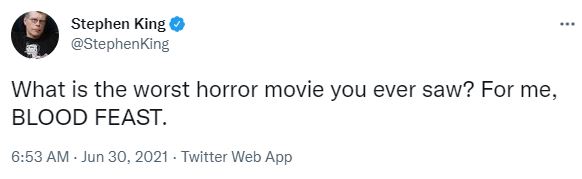
The Los Angeles Times called it “grisly, boring movie trash” and “a blot on the American film industry.” Stephen King tweeted last year:

Variety called the film:

“an insult even to the most puerile and salacious of audiences.”

Yes it was, and they ate it up.

Our own flesh: HONEYDEW (Devereux Milburn, 2021)

This cannibal movie starts with the standard building blocks of so many cannibal/horror films: car breaks down, isolated farmhouse, friendly but weird person answering the door, munching of human flesh. Think Texas Chain Saw Massacre, The Farm, or even The Rocky Horror Show. Going to strange places, meeting weird people, eating unknown things – these are what our mothers warned us against, and so does the horror genre.

This one starts with a biblical quote, from Corinthians 6:19-20:

“do you not know that your body is a temple of the Holy Spirit within you?”

While we listen to this from a cassette tape (younger readers may need to google what that is), a young woman eats meat and eggs, while an older woman grinds peanuts. We finally meet the protagonists – Sam (Sawyer Spielberg – yep, you know his dad) is an aspiring actor, Rylie (Malin Barr) is a botanist, investigating an outbreak of a fungus called sordico (an invented name for ergot), which poisons farm animals who must then be “put down”. It’s a metaphor for what we call “sin”.

We hear another recorded piece, this time about the fungus and its resulting diseases, including images of “ignorant peasants” baking the fungus into their bread and suffering gangrenous wounds requiring amputation, and eventually madness. The disease was considered a punishment for sin. Yes, this is the formula for the movie.

Sam and Rylie’s car GPS loses its signal and Sam asks directions from a weirdo on a bike, who just stares at them. Think the hitchhiker in Texas Chain Saw.

They camp in a field while Rylie photographs plants and Sam practices an elusive script. They have sex in their tent, a sure sign in most slashers that divine punishment is coming. But divine punishment can come from eating the wrong things (fungus) or from other people, who have their own interpretations of sin. Rylie and Sam are judged by Karen (a masterful performance by Barbara Kingsley from Jessica Jones) and Eulis (Stephen D’Ambrose), who have become sort of Gretel and Hansel cannibals due to their crops going bad, and of course eating crops poisoned with sordico.

Karen offers them dinner, red meat, but Sam is off it because of his cholesterol, and Rylie is a vegan. More judgement – Sam can’t resist Karen’s red meat and cakes. His appetite is his undoing. Like the cattle, he’s eaten the wrong stuff.

Karen and Eulis capture random travellers, lobotomise them to keep them compliant, and then eat their body parts. The man Karen claims to be her son, disabled by being kicked in the head by a bull, is actually a hunter gradually being eaten. A brief cameo by Lena Dunham (or at least Lena without arms and legs) as Karen’s daughter Delilah, indicates the fate of Sam and Rylie – they are to be lobotomised, stripped of limbs and Sam is to be bred with Delilah: “we’re aiming for grandbabies. Bring some sunshine into this black world”. The meat is kept Fresh by keeping it alive as long as possible.

Karen explains her thinking:

“We are living in a time of tribulation. We have perverted God’s divine love to abuse his gifts. We were overindulgent in God’s food, and so he took it away, forcing us to seek more sources, so that he may not forsake us… we have been given an opportunity for absolution, a second chance, to sustain life by consumption of what we can access, of our own flesh, so we may be judged in His image.”

The term “rump steak” may never seem the same when you see what they do to Sam.

The film achieved a respectable 67% fresh on Rotten Tomatoes, with some critics loving it and some repulsed. The Guardian critic gave it 3/5, a fresh score (only just), saying it “plays interesting variations on an all-too-familiar plot premise.” The RogerEbert critic on the other hand said “This listless genre exercise mostly plays like a film-school-spun tribute to The Texas Chain Saw Massacre with some Hansel and Gretel clumsily mixed in, but without a political or philosophical foundation to stand on.”

I found the score annoyingly obvious, indulgently raising our tension level (which is its job) but a bit too perceptibly. The plot would have made a good episode of American Horror Stories, but at 107 minutes, I found it dragged. I’m not sure if it is fair to say it has no philosophical foundation – the nature of our food choices and nature’s revenge on human greed through spores, bacteria or viruses is right up to date. Moreover, Karen and Eulis are simply doing to their “guests” what farmers have always done – domesticated them and performed surgeries to make them docile – castrating bulls or destroying the frontal lobe of humans (or removing their tongues as in Motel Hell). It’s what Jeffrey Dahmer wanted to do when he drilled holes in his lovers’ skulls and poured in muriatic acid in an attempt to create living sex zombies. These guys just use a screwdriver through the eye-socket.

Anything for a steak, apparently.

Leatherface is back (again): TEXAS CHAINSAW MASSACRE (David Blue Garcia, 2022)

Netflix released the latest Texas Chainsaw instalment (the ninth!) on February 28th. It’s beginning to feel a lot like Easter (as in: how many ways can you tart up hot cross buns?) but there are some nice features to this one. For a start, well, it’s on Netflix, so a bit less likely to disappear into the Texan mud without trace, like some of the earlier versions. There have been eight sequels and prequels and unrelated but similar-named movies in this franchise, as well as comics (sorry, graphic novels) and a video game of the original.

The original film, in which “chain” and “saw” were two words, is still widely acknowledged as the best, despite its paltry budget and apparently impossible working conditions for the crew. It was released in 1974 by Tobe Hooper, who made a somewhat light-hearted sequel in 1986. It was a pioneer in “slasher” films and drew cannibalism out of the gothic into the sunlight, showing an alienated workforce in “flyover” states turning their (now unwanted) skills in killing steers toward killing tourists instead. It finished with Sally, the “last girl” escaping from a frustrated Leatherface, who was wearing his mask of human skin (fully biodegradable but not much use against viruses) and wielding his chainsaw in a way that buzzed of potential sequels.

This sequel takes place 48 years after the original (yep, now) and blithely ignores any plot points from the intervening movies, comics, etc. Leatherface is back, older but no wiser and still intent on killing teenagers, and so is Sally, the survivor, who is now a Texas Ranger and set on revenge.

And the cute teens, well, they’re everything that the locals hate – inter-racial, trendy, Gen Z “Influencers”, what the creepy gas-station owner (and there’s always one to set the scene) calls “gentrifuckers”.

They want to gentrify the town and set up a trendy area of gourmet cafes and authentic looking but modernised shops and galleries. Leatherface is in retirement in an abandoned orphanage, and Sally, well, she’s been looking for him for a long time apparently, although when last seen in The Texas Chainsaw Massacre: The Next Generation (not an episode of Star Trek), she was catatonic and strapped to a gurney. But now she’s hardass. When we first see her, she’s gutting a pig, just as Leatherface is slaughtering humans. The special effects are pretty similar for both, as are the body shapes, and, frankly, the characterisations. The original actors who portrayed Leatherface and Sally are both dead; the only original cast member is John Larroquette who does the voiceover, which half-heartedly tries to sound like a true-crime documentary, as he did in the original. The new Sally is Olwen Fouéré, the Irish actor, although this Sally seems to be more based on Jamie Lee Curtis’s Laurie Strode in the 2018 reboot of Halloween.

The class struggle of the original Chain Saw has been lost here. The Texas of the original was filled with pockets of people abandoned by modern capitalism and so falling into degeneracy and violence. The new movie seems to valorise the “ordinary” folks who brook no bullshit from the “me generation” and defy the dehumanising effects of capitalism. It’s hard to feel sympathy for the influencers with their real estate auctions and cutesy town planning, or to feel terror at the thought that people might chop you up, but only if you insist on being a dick.

The terror of Leatherface himself revolved not around his nasty dental problems, badly fitting masks and noisy chainsaw, but around his family, the Sawyers, a group of odd but not obviously psychotic individuals who nonetheless were more than happy to chop up and eat innocents from the outside world, which had forsaken them. It felt like this could be any of us, screaming and dying and becoming the family’s dinner, should we venture into the wrong part of the Badlands. This new version is all Leatherface. Somehow, he now has a “mother” who looks after him in an abandoned orphanage, and she dies of a heart attack when the trendies tell her she has to move out, leading to his much delayed rampage. But Leatherface was always the weapon, not the villain, sometimes killing, and sometimes donning an apron and cooking for his dominant family. He doesn’t really work as a lone psycho, particularly when we sort of sympathise with him – he’s just lost his mum, weeps as he wears her face as a mask and then applies her makeup like Norman Bates in Psycho. Who can stay mad at that?

Tobe Hooper’s classic broke new ground in cannibal films and in horror generally. It encapsulated the early 1970s as the endless war in Vietnam and the demise of the hopes of the flower power generation ran into the chainsaw that was Nixon’s silent majority. The new one seems to reflect our time, where the young and idealistic are capitalistic exploiters and Leatherface and the Texan gun-toters are just being pushed too hard into the chainsaw of QAnon. Politics and war are no longer about truth and justice but just fake news in pursuit of tribalism. The film sums this up sardonically in the climactic scene where the busload of influencers are confronted by Leatherface and his chainsaw and respond by pulling out their phones and live streaming the whole massacre.

As Marx said, great historical entities (like Leatherface) appear in history twice – the first time as tragedy, the second time (or perhaps the ninth) as farce.

But here’s my problem with this film. After 83 minutes (which seemed much longer) I looked up from the screen and screamed (internally) “where’s the cannibalism?” Yes, there was a lot of flesh on display, and broken bones, and the occasional internal organ. But none of it got eaten, which, if I had more time, would have disqualified it from this blog. The thing is, cannibalism is not just one more nasty thing that mean people might do to you and me. It is the ultimate act of dehumanisation. Sally’s friends and family in the original were turned into slaughter-animals, chopped up, eaten, and presumably ended up in the family’s outhouse. That’s what we do to those we objectify: pigs and sheep and cows, and we do it to distinguish ourselves from other animals as somehow non-animal, part-god. The slasher might kill us, but the cannibal converts us into shit. Otherwise, we are all potential wielders of the chainsaw.

Without the cannibalism, this is just another slasher with too much emphasis on special effects rather than characterisation.

Texas Chainsaw Massacre 2022 has a 33% “rotten” rating on Rotten Tomatoes, with one audience critic summing up:

“it isn’t very scary — and it definitely doesn’t help that the story hardly makes any sense.”

Dear Meat (J. Snow, 2020)

This blog has laboured mightily to keep up with the constantly growing catalogue of cannibalism movies and TV shows, as well as the increasing number of actual cases reported in the media. So this week we are taking a rather exciting side-trip into the wonderful world of short stories, a place where the sets can be as lavish as the author wishes since there are no Producers cutting budgets, the protagonists can do anything the mind can conjure up without the need for stunt persons or insurance, and the whole thing requires no masks or social distancing.

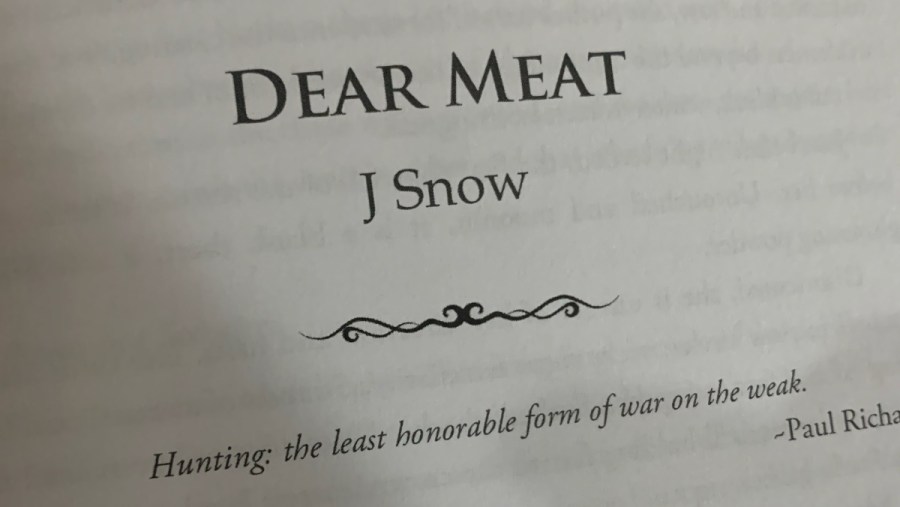
The story considered in this week’s cannibalism blog is called DEAR MEAT, and it appears in the third Women of Horror Anthology, titled THE ONE THAT GOT AWAY.

The anthology contains an amazing assortment of thirty fresh looks at the wonderful world of horror. I have, naturally, chosen to review the cannibalism story by J Snow, since that’s what I do, for reasons best known to myself and the Department of Culture and Communications at the University of Melbourne.

Ms Snow has written and published five cannibalism stories; reassuring to know that others also labour in these fields. For those of you who wish to know how (or why) she writes, there is an interview at Paula Readman’s Clubhouse.

Dear Meat was written a few years before the pandemic, but reads like it could be taken from tomorrow’s newsfeed. It involves a small elite group of rich and powerful men who have decided that human population growth is threatening to destroy the biosphere, and so must be stopped and reversed. More than two thirds of the population, billions of people, must be “eliminated.”

Various ingenious and possibly prophetic strategies are mentioned such as introducing viruses and tainted vaccines, genetically modified foods and contaminated water supplies. Free tubal ligations and vasectomies are encouraged, and abortions allowed up to two months after birth. But the key plan in this story is to set the populace at each other’s throats, or more precisely at the barrels of guns. Yes, hunting season for humans becomes the only way to feed the family. Tags are issued, which is apparently the way hunting works in the USA, and the distribution is weighted according to the discriminatory preferences of these shadowy rulers – the “unworthy and unholy” are allotted the most tags meaning the poor and the non-Christians are most likely to be hunted and cooked. Illegal immigrants are always open season. The rich and the politicians, however, don’t ever seem to end up on the butcher’s slabs.

English cleric and economist Thomas Malthus pointed out in 1798 that population increases geometrically, but food availability increases only arithmetically. All things being equal, this means we must run out of food, unless there is a disaster or an intentional reduction in human population growth. Too many people and not enough food is likely to lead to cannibalism, although Malthus did not venture into such abject speculations. The ethologist John Calhoun crossed that bridge in his study of rats, where he found that putting rats into a utopian environment, with no shortage of food or shelter, and letting them breed unconstrained, ended up in a chaotic maelstrom of sexual deviance and cannibalism. A Malthusian/Calhounian scenario is the basis for the film Soylent Green which is set (honest, I’m not making this up) in 2022, when overpopulation has led to a situation where the enormous population of poor people can only be fed by recycling the bodies of those who die or can be persuaded to accept euthanasia.

Not so in Dear Meat. The people running the government know one thing that has been true since the start of humanity: when there is hunger,

“People turn on each other, become monsters, all for one tiny morsel.”

The people turning on each other in this story are from a family; a man, a woman and a child. Not even close to a large family by today’s standards, but in the world of the story, any increase in population (child) must be balanced by a decrease (a hunted tag). One person must die, be carted to the butcher and carried home as meat, just as the odd hunter does now to deer or kangaroos or anyone else that happens to move at the wrong moment.

I am introducing some levity because this is a grim scenario, skilfully crafted, beautifully written and with an ending that I absolutely will not spoil. The wonderful thing about eBooks is that they are ridiculously affordable and offer hours of reading pleasure. This collection, and particularly Dear Meat, is highly recommended.

Here’s a review from Goodreads:

And here’s one from Amazon:

The author’s details are here, and the book is available at on line retailers including Amazon.

“An army of pissed-off man-hating feminist cannibals” DOGHOUSE (Jake West, 2009)

Doghouse is a British slapstick / splatter movie. The danger of mixing genres like that is that sometimes neither one will work, and this is a good example of just that. A bunch of young men head off for a weekend to cheer up one of their friends who has just been divorced. The film introduces them one by one with a placard showing their name (hoping vainly that we will thereafter remember them). They are all being verbally abused by their partners for leaving them, a condition sometimes known as being “in the doghouse”. They diagnose their situation as suffering from what they call “social gender anxiety” and plan to do male things like, you know, drink and smoke and piss on trees. They think they are recapturing their animal essences, whereas in fact they are just being dicks.

They head for a little town where, they have heard, the women outnumber the men four to one. Their minibus driver tells them that it is the middle of nowhere, and hey, there are worse things than divorce.

They are expecting

“an entire village of man-hungry women, waiting to jump the first band of desperadoes rolling up from London.”

Turns out that’s exactly what they get (yes, such subtle irony) because the women have all been infected with a virus in a biological warfare trial intended to turn one half of an enemy population against the other, and isn’t that a decent summary of human history? This virus turns them into what these guys call

“an army of pissed-off man-hating feminist cannibals”

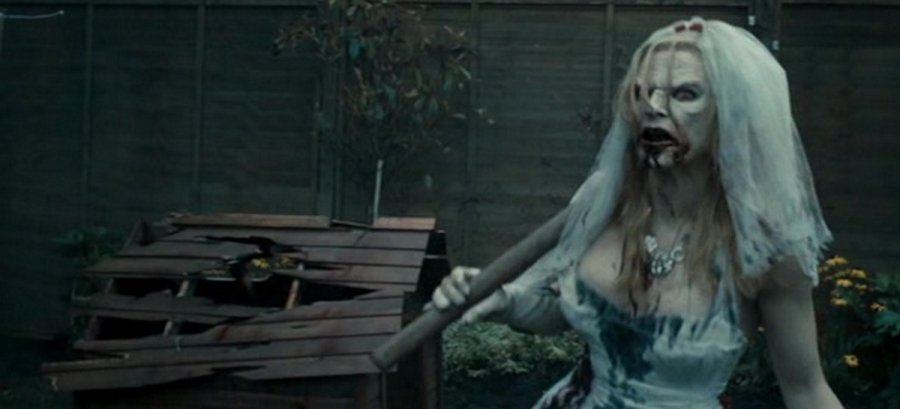
Each woman is a caricature of her womanly role – a bride, a hairdresser, a grandma, etc.

While this is a remarkably silly film, it does illustrate quite nicely the themes of abjection and the monstrous feminine. Monsters are by definition outsiders, but more so when their appearance and violent activities are in a female form, because we are reminded of the archaic mother – the authority figure of early childhood who toilet trained us, dominated us, exemplified adult sexuality and offered us both nurturing and the threat of Oedipal competition with the father and ultimately castration or reabsorption. Just so, the women of the town represent female roles: the crone (one of the men’s gran), the bride (in virginal white), the hairdresser, the barmaid, the traffic warden. Freud might have enjoyed this film – the women carry castrating weapons – knives, scissors, axes, teeth, a dental drill. Even stilettos. One woman represents voracious appetite and therefore body dysmorphia (obesity) – she has an electric carving knife and kneels in front of her victim in a recreation of every fellatio-gone-wrong castration nightmare, cutting off his, well, his finger. But you know, symbolism.

In case the symbolism is still not clear, the local shop, with a mummified penis in the display case, is called

The men plan a violent exit, declaring “Today is not the day to stop objectifying women”. This gives the film an excuse to answer the women’s cannibalistic violence against the men with some very nasty misogynistic attacks by the surviving men, the ones who were the most obdurate male chauvinists, using ‘male’ weapons like fire and vehicles and sporting equipment, resulting in women being variously burnt, having their teeth knocked out, beheaded and beaten to death with golf clubs. At the climax, one of the surviving men growls “give me a wood” – yeah, you get the picture. There would be a certain section of the audience cheering those scenes, I suspect.

The movie managed to stumble to a surprising 48% on Rotten Tomatoes, with the Guardian reviewer summing it up as:

“misogyny and creative bankruptcy in Jake West’s Brit gender-wars comedy horror about a bunch of hen-pecked blokes stuck in a village of cannibalistic women”

If I still haven’t dissuaded you, the full movie can be watched (when I last checked) on YouTube.

Young Leatherface: THE SAWYER MASSACRE (Steve Merlo, 2022)

Whether you loved or hated (or anything in-between) Tobe Hooper’s The Texas Chain Saw Massacre, it is widely acknowledged to be a seminal work in the history of slasher movies generally, and specifically of cannibal films. Total Film made it number one of the fifty greatest horror movies of all time (Psycho was number 6!) and Richard Zoglin of Time said that it set “a new standard for slasher films”. Ben Woodard called it “unambiguously the greatest horror film ever made.” That makes creating a sequel (or actually a prequel) all the more fraught!

Chainsaw was based partly on the real-life (real-death?) exploits of Ed Gein, the “Butcher of Plainfield”, who decorated his house with all sorts of furniture made of human bones and skin, but Gein had dug most of them up from graveyards. The man-monster from TCSM was Leatherface who wore a mask (well before the rest of us) and even made it himself (far more sustainable than the rest of us). It was, however, made of human skin, which you can’t get readily even on Etsy, and he sourced his raw materials from those travelling through his little corner of Texas, cutting them up with a large and noisy chainsaw, often bashing them on the head with a mallet first, as the more primitive slaughterhouses used to do to the cattle in their yards.

But why did he do that? We get some hints in the movie from his brother, the Hitchhiker, who makes it clear that the family had been “in meat” and worked in the local slaughterhouses, which had closed as industry fled the “fly-over” states. But a lot of people lost their jobs in the seventies, and most of them did not go out and buy chainsaws with murderous intent. So how did Leatherface get started? And whose idea was it to eat the victims?

Such questions have clearly been on the mind of TCSM fan Steve Merlo, who recently sat down for an interview with Bloody Disgusting about his intended feature film THE SAWYER MASSACRE, intended as a prequel to the 1974 classic.

The film has been crowdfunded through Indegogo (now closed unfortunately) but should have raised enough to see it released in about August 2022.

Here’s the plot from the Director:

While recovering from the loss of someone close, Jimmy’s friends bring him to the Texas countryside to escape city life. In need of supplies for their cabin, they head to a gas station where they are directed to an isolated farmhouse. The property is not as it seems. They find themselves hunted by the cannibalistic psychopath known as Leatherface.

Clearly, it follows the formula that was also seen in The Hills Have Eyes, Wrong Turn, The Farm and loads of other slasher movies where humans are on the table instead of sitting around it. But, as Merlo says,

“It is our intent not to copy what the original did, but use it as influence in a stylistic way. Our film will have more blood and kills, but will still be very subtle in its delivery.”

The film is due for release in 2022, the date that appears in IMDB. The film also has a Facebook, Twitter and Instagram page if you wish to follow its progress.

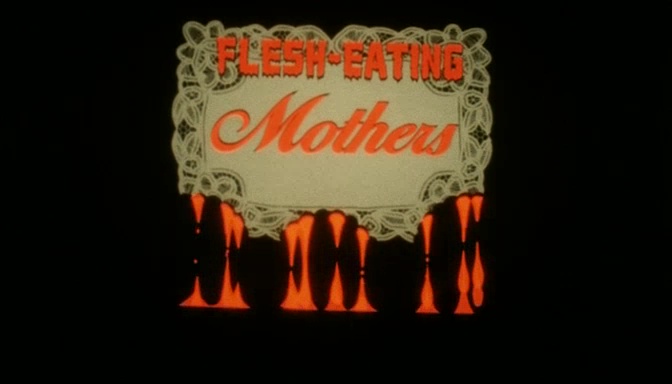
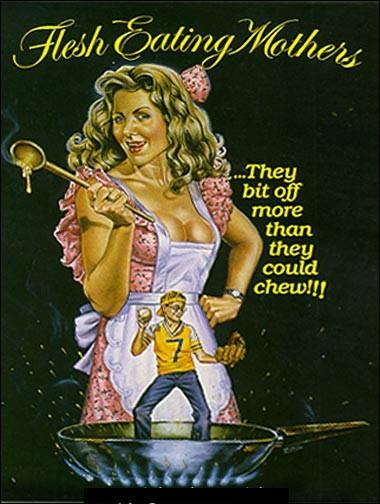
“FLESH EATING MOTHERS” (James Aviles Martin, 1989)

OK, I’m posting this on Mother’s Day, and a very happy occasion may it be for those who have a mother, particularly one who doesn’t routinely eat her children. But the film is also about a deadly virus, one which has been covered up by the authorities, so it’s not just schlock horror, but also somewhat prophetic.

vlcsnap-00005.jpg

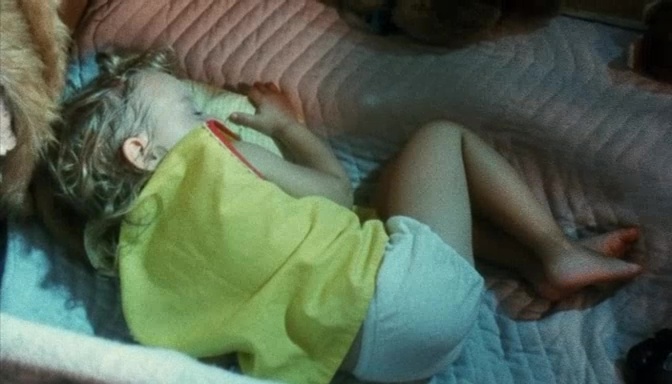
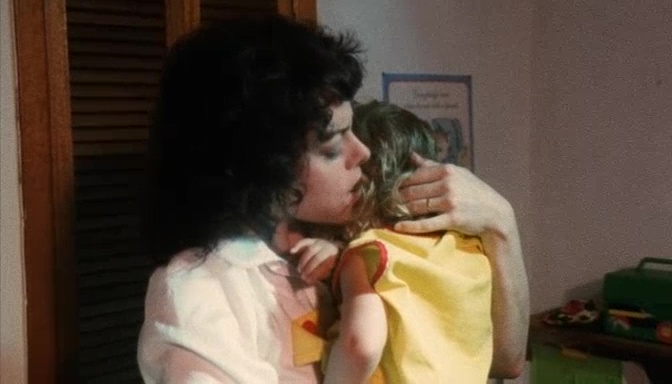
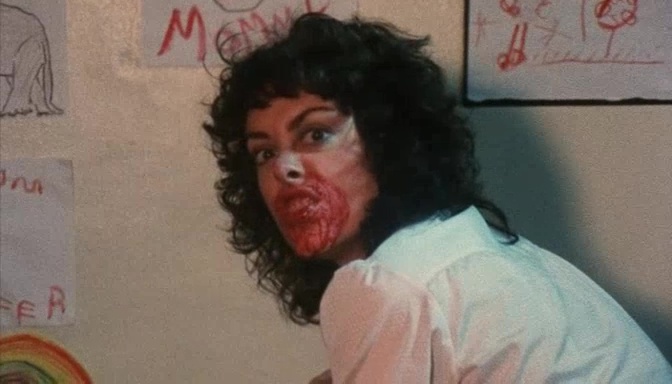
This has it all: cannibalism, domestic violence, murder, lots of blood, adultery and filicide – yes, the mothers eat everything in the fridge and then start on their kids. Early in the piece, one mother stuffs a whole sandwich in her mouth (possibly the most abject scene) then starts on her son, who is still, absurdly, wearing his baseball mitt.

vlcsnap-00020.jpg

vlcsnap-00023.jpg

Her husband is a cop and manages to shoot her as she nominates him as main course, then he’s arrested, has to prove his innocence with the help of a scientist who is being stymied by official obstruction, and at this point there is a tendency to turn off and watch something else, particularly as the acting is so bad that one suspects it has to be deliberate.

This one literally is the best actor in the film:

vlcsnap-00027.jpg

vlcsnap-00031.jpg

vlcsnap-00032.jpg

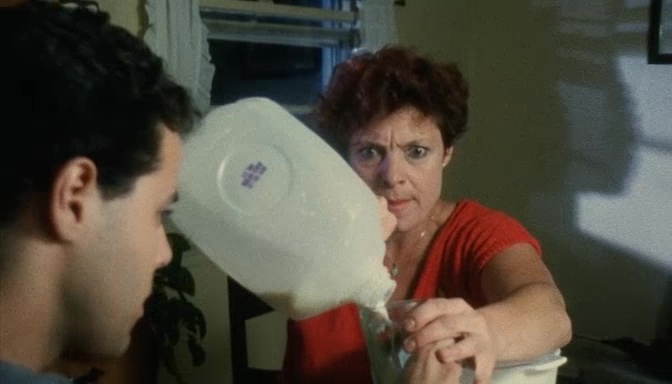
You get the idea. One mother makes her son special creamy mashed potatoes, which he eats as she describes the process of producing milk-fed veal. Is there a message here – a cream-fed kid who is about to be her dinner?

“Milk-fed baby cows…. The calf is taken from the mother and put in a small room, so small that he can’t move around, see, so that his muscles are real tender. And they don’t feed him anything but milk, so that he’s really soft by the time they kill him. And so he’s really delicate to eat.”

She pours him another glass of milk.

vlcsnap-00034.jpg

vlcsnap-00035.jpg

“Mom’s on the rag again” he complains to his friend after he escapes, adding that he doesn’t blame her: “it’s all society’s fault”.

The kids work out what’s going on and unite in opposition, but not until plenty of makeup and fake blood has been added to this powerful stew of nonsense.

vlcsnap-00037.jpg

vlcsnap-00041.jpg

vlcsnap-00046.jpg

“My mother ate my brother.”
“My mother too!”
“My mother ate my father.”
“She’s never done anything like this before!”

Look, it’s all very light-hearted, despite the R rating, and it’s a bit unfortunate that I decided to review it the week after one of the greatest cannibalism movies, Fritz Lang’s M. But there’s an important point here, for us keen Cannibal Studies scholars. So many cannibal films feature male cannibals, from Hans Beckert to Sweeney Todd to Hannibal Lecter. Yet as Barbara Creed told us in The Monstrous Feminine, published not long after this movie hit the big screen, mythical tales and modern horror films teem with female monsters. But the stereotype for cannibal films is the male cannibal and, often, the female victim. Where monsters are female, they often follow Freud’s odd designation of women as terrifying and abject because little boys are supposed to see their lack of a penis as proof their mothers were castrated. Thus, we get the dumb teenager saying “Mom’s on the rag again”. She is, even after trying to eat him, a victim in his eyes.

But Creed, and this film, argue that the female monster relates not to her lack but her centrality to reproduction and nurturing. Woman is the all-consuming womb, the witch, the vampire, the castrator rather than the castrated. We know we came out of her, and fear we may be reabsorbed. But hey, the scene of the battered wife eating the fist of her abusive husband fills us with a certain satisfaction.

vlcsnap-00044.jpg

Of the more than 300 films involving cannibalism that I will be discussing in this blog (eventually), only a handful involve female protagonists or even female directors. When they do, they are often presented as comedy as (I presume) this film is; films such as Cannibal Women in the Avocado Jungle of Death or Santa Clarita Diet. Even in those, though, as in the more serious offerings such as Raw or Jennifer’s Body, cannibalism is presented as a form of empowerment, never as a lack.

Here’s the virus under a microscope.

vlcsnap-00045.jpg

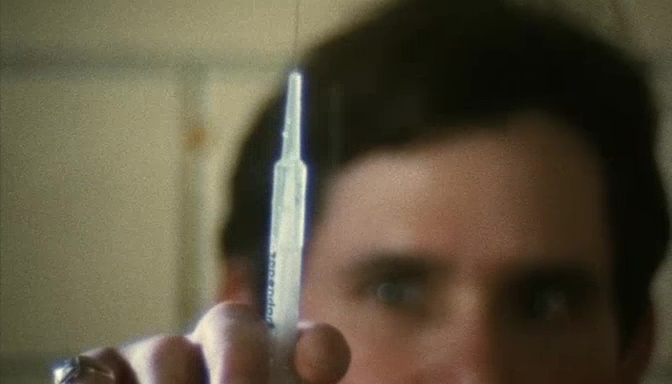
The authorities knew about it, but kept it hidden, apparently because they thought it was a punishment for adultery. Plenty of Trump supporters who doubtlessly believe the same about COVID-19. Luckily, there’s a smart scientist with an instant vaccine.

vlcsnap-00047.jpg

This is a very silly movie, but it’s refreshing to see some women do the flesh-eating for a change.

Poster.jpg

Happy Mother’s Day!

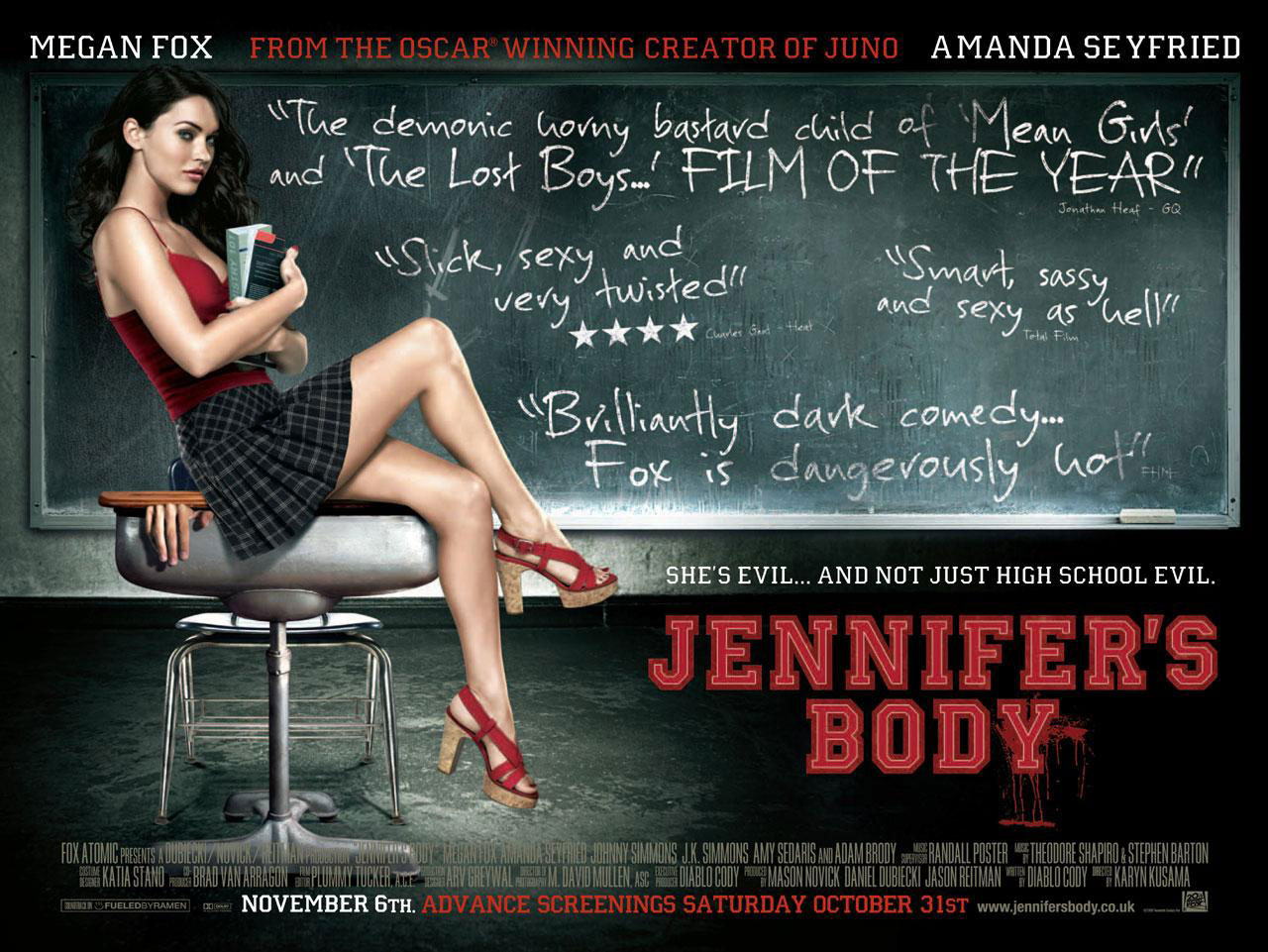
Cannibalism as female empowerment: JENNIFER’S BODY (Karyn Kusama, 2009)

Jennifer’s Body is classified as a comedy, even though it’s rated R for sexuality, bloody violence, language and drug use. Well, all those things can be funny. Even cannibalism is sometimes the butt of jokes (well, quite often), and a lot of people get eaten in this movie.

poster-jennifer-body-quad.jpg

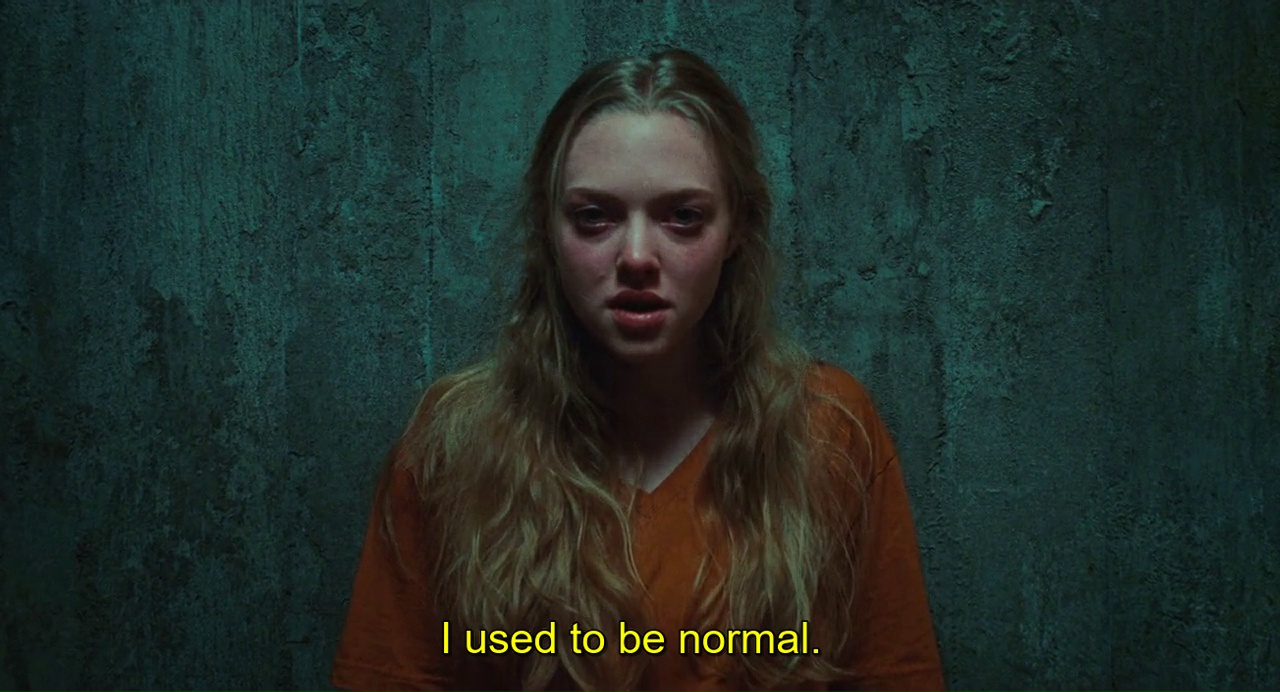
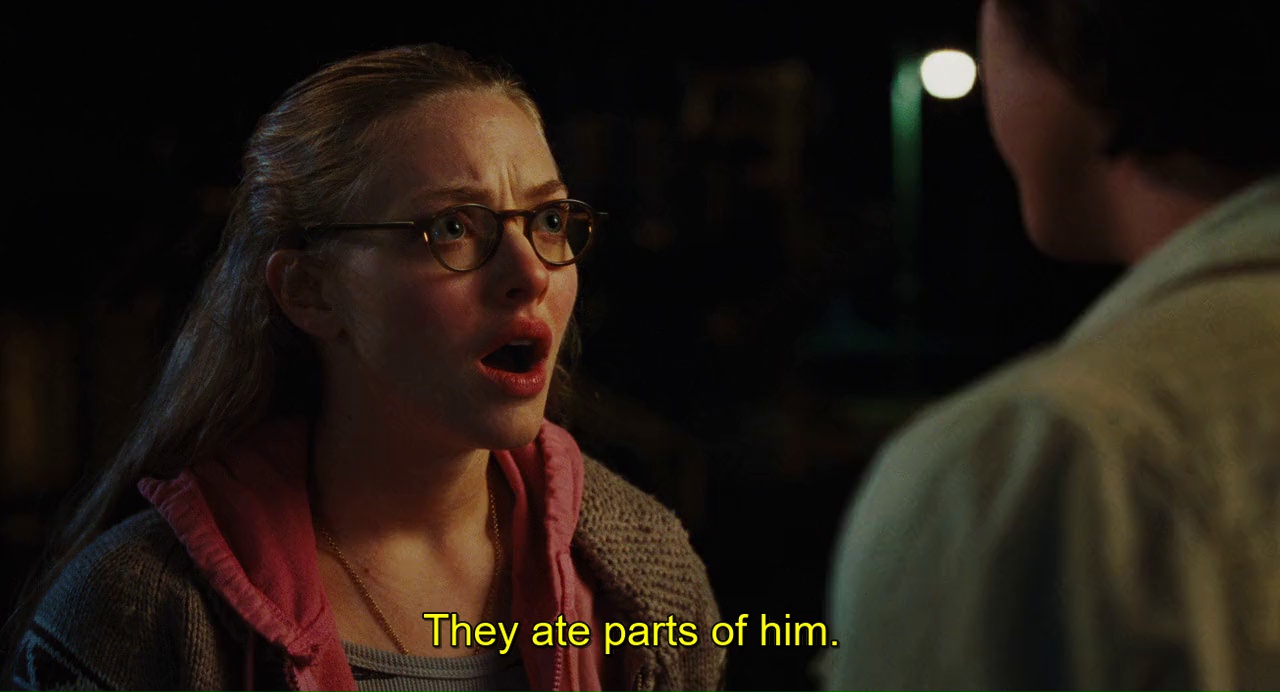
The story does not start with Jennifer (Megan Fox) but with her nerdy bestie Needy (Amanda Seyfried), “short” for Anita, although no one calls her that. Needy is revealed to be an ultra-violent resident of an asylum.

vlcsnap-00002.jpg

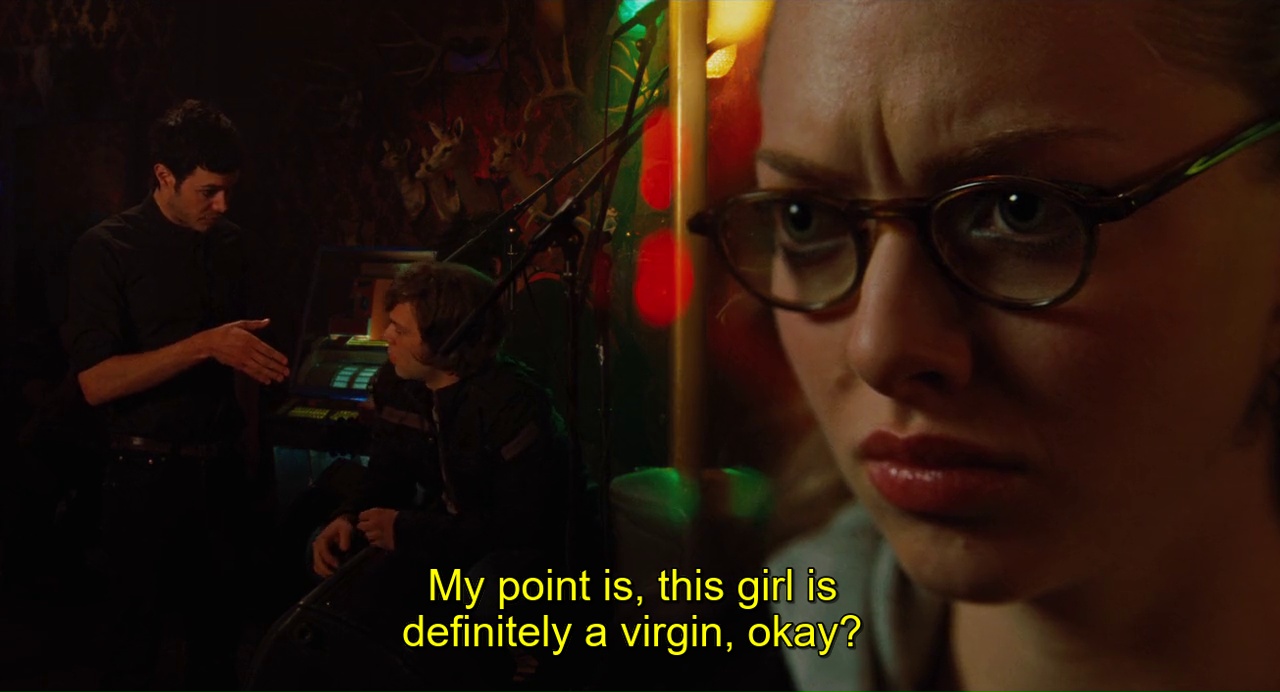
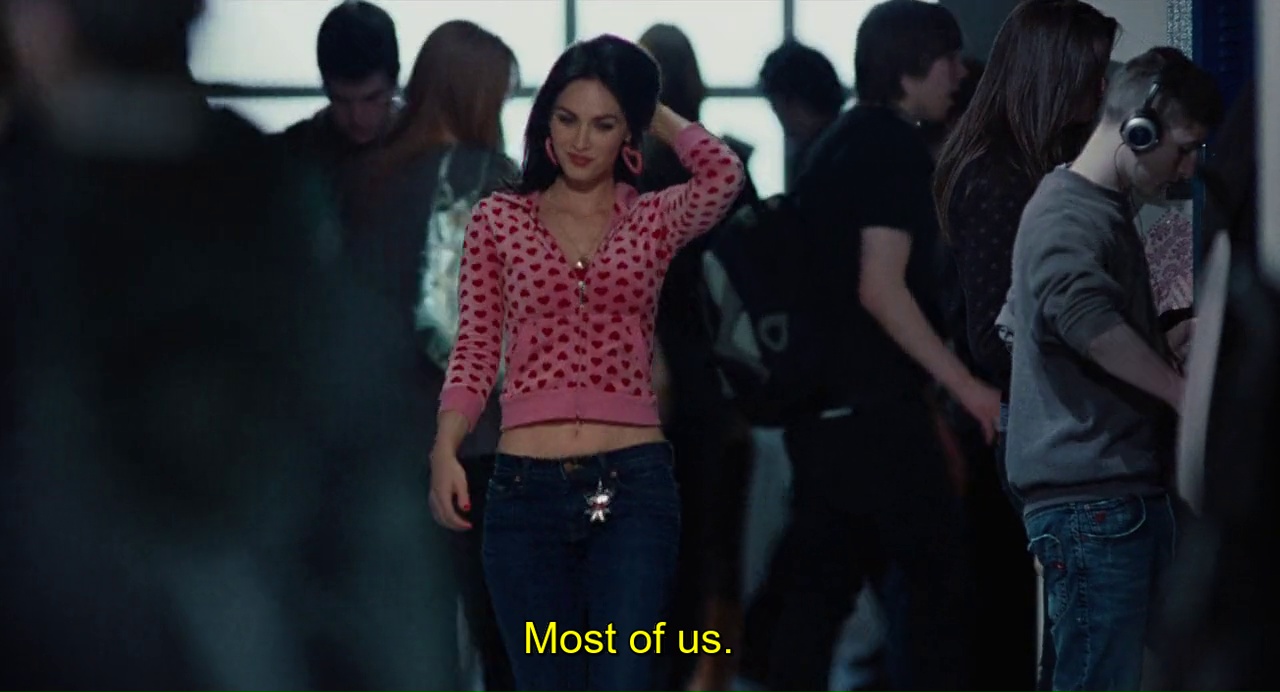
The rest is flashback. Jennifer is the popular girl, the sexy girl, the one no one can believe is friends with the boring Needy, but she is bored in their little town of – wait for it – Devil’s Kettle. Jennifer wants to get off with the big city band in town, Low Shoulder. At their gig, Needy hears them arguing about whether Jennifer is a virgin, and leaps to her friends defence

vlcsnap-00008.jpg

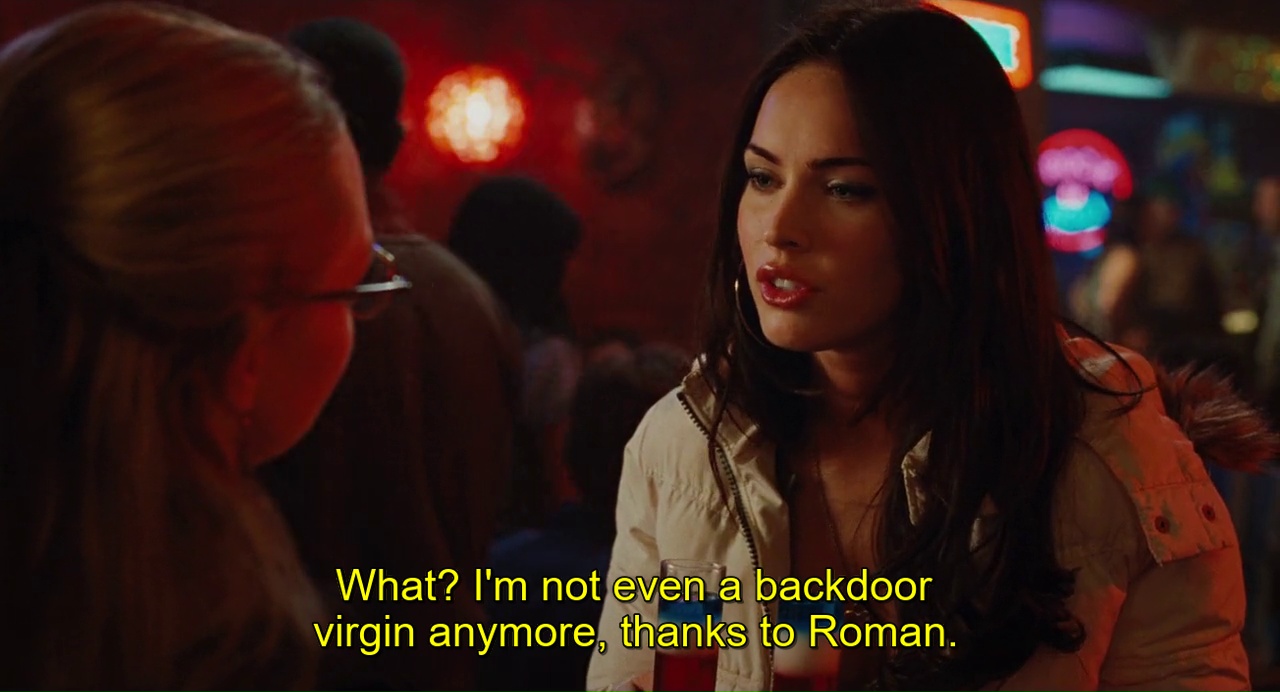
Jennifer later tells her that’s not even close to the truth.

vlcsnap-00009.jpg

Now, when men are looking for virgins, there are only two possible explanations, depending on whether they are of a metaphysical bent, and these guys are very bent. So telling them Jennifer fits their shopping list turns out to be a very bad idea. Jen gets in the band’s truck as the venue burns down. Needy is distraught.

But she meant well. And later that night, here’s Jen, looking quite sanguine, in both sense of the word.

vlcsnap-00016.jpg

Jennifer has been a virgin sacrifice to a demonic force, which promised greatness to the band. However, not being a virgin (even backdoor) means that the sacrifice, instead of killing her, left her possessed by the demon, a succubus.

vlcsnap-00018.jpg

Yeah, OK, but the audience needs a good reason for a woman to start eating her dates (even if, after 100+ blogs, you and I could think of a dozen good ones). So she is possessed, and eating people. When she’s hungry, she’s weak and unhealthy, but when she’s fed (and cleaned up) she’s the life, or undeath, of the party.

vlcsnap-00052.jpg

This is a really good film, with all the ingredients of greatness: the cast are excellent, the director, Karyn Kusama, is in her element (she made Destroyer with Nicole Kidman recently) and it was written by Diablo Cody, fresh from the triumph of Juno, for which she won an Oscar for best original screenplay. But the film bombed at the box-office, the accepted wisdom in those days being that successful films were made exclusively for 14-year-old (white) boys. This one wasn’t, it was about strong and often violent women, and has been gathering a cult following in the decade since its release.

vlcsnap-00035.jpg

There have been many horror movies about women, often (e.g. Carrie or Teeth) involving revenge for something done to them. This fits with the cultural expectation that men will be the aggressors and the monsters, and from this fetid swamp arose the slasher movies, including most cannibal films. Jennifer herself has been sexualised by most of the men and boys who appears in the plot. She is kidnapped and murdered by the band, despite begging for mercy.

But Jennifer is not seeking revenge on the band – that will (but not until the credits) be Needy’s job.

vlcsnap-00091.jpg

Jennifer is a monster for all the males who have objectified her.

vlcsnap-00037.jpg

The film plays with the assumptions about male power and appetite. The boys Jennifer eats are gentle and considerate, not violent or aggressive – the huge line-backer she tears apart after her return is seen first crying for his friend, who died in the fire.

vlcsnap-00036.jpg

Everyone assumes, of course, that his killer is male.

vlcsnap-00038.jpg

vlcsnap-00039.jpg

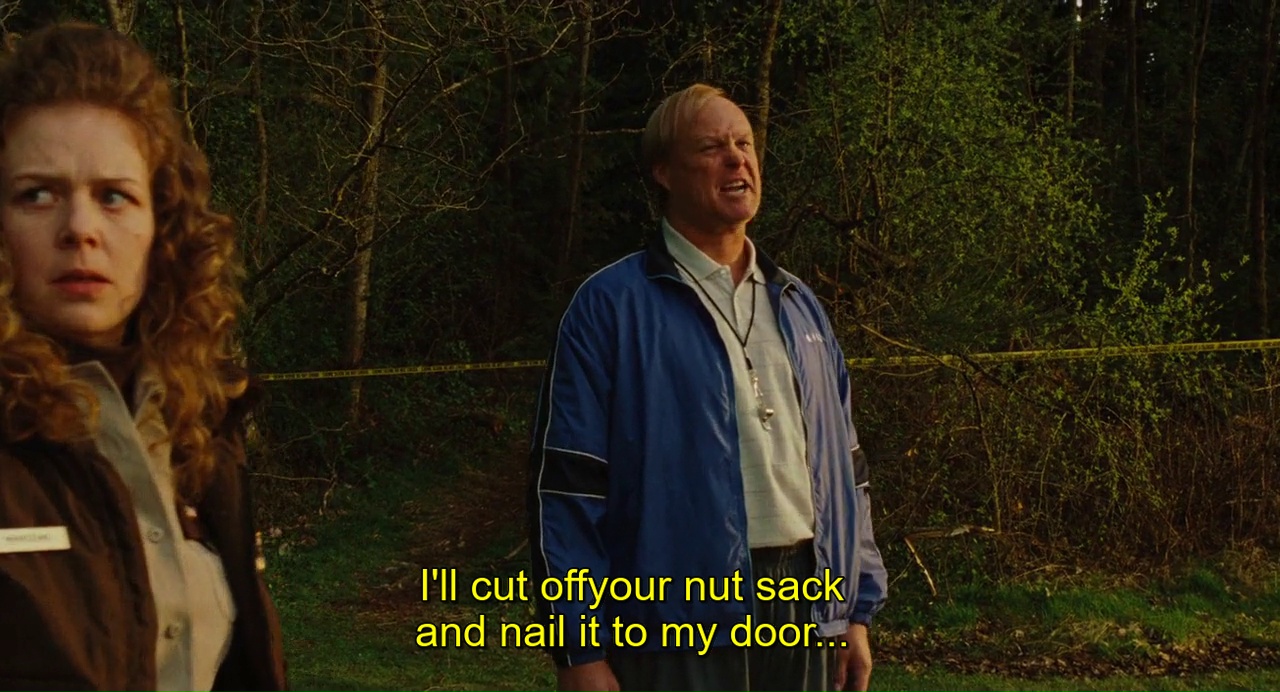
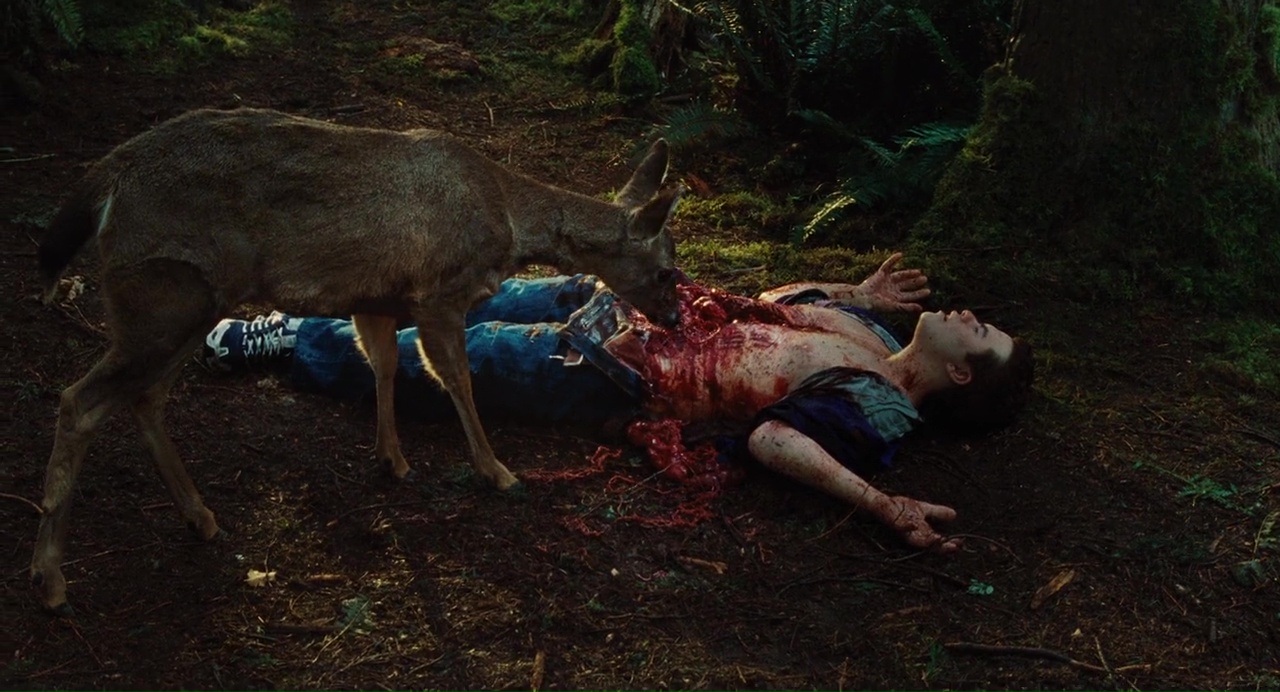
But the body when found is being eaten by a gentle fawn.

vlcsnap-00025.jpg

Despite widespread cultural beliefs, female monsters are not rarities.  Earliest mythology tells of the Medusa, the sight of whom “made the spectator stiff with terror” (much to Freud’s amusement) and even earlier, there are claims that Lilith, Adam’s ex before he met up with Eve, was, or became, a succubus. Jennifer is an ideal example of what film scholar Barbara Creed calls “The Monstrous-Feminine”, a concept of monstrosity that depicts not a female version of male monsters, but a cultural force defined by male fears about the feminine. These fears include being castrated (Freud’s favourite explanation), as well as confronting “the monstrous womb” – a terrifying image of a “black hole which threatens to reabsorb what it once birthed” (Creed, The Monstrous-Feminine, p. 27). As the writer, Diablo Cody, says, it is an unashamedly feminist horror movie.

Jennifer’s Body was before it’s time. In an article explaining the woeful critical reaction to the film, Vice summed up:

‘Jennifer’s Body’ Would Kill if It Came Out Today

vlcsnap-00024.jpg