What would you do? HUNGER (Steven Hentges, 2009)

People who automatically flinch at the idea of cannibal movies (or cannibalism generally) give a little mental shrug when the subject turns to starvation. What would you do if you had no food, nothing containing any life-giving nourishment except other human bodies? The honest answer to that is, usually, ‘I don’t know, and I hope never to find out’.

Several films considered in this blog have looked into what we might call “survival cannibalism”, a sub-group of the wider “castaway” genre—films like Hitchcock’s Lifeboat—which derive from the narrative of Robinson Crusoe. The most famous in Cannibal Studies is still Alive, which retold the story of the young footballers who survived a plane crash in the Andes, only to discover that the search had been called off and there was literally no food in the snow, except the bodies of their fellow passengers (most of whom were their friends). It was recently rebooted in Spanish in Bayona’s La sociedad de la nieve. Such stories are contemporary versions of the old shipwreck stories which motivated much of the cannibalism narratives of early modern Europe, horrifying the Europeans, when they weren’t accusing the colonialised of the same thing. A classic story is the whaling ship Essex, the wreck of which inspired Moby Dick. The film In the Heart of the Sea follows that story – what happened to them after the ship sunk? Well, weeks in a lifeboat with nothing but each other for company and no food…

Then we have the many, many post-apocalyptic stories, starting with Soylent Green, in which overpopulation and climate change have led to the recycling of dead people into delicious crackers. Other classics of this genre include Delicatessen, We Are The Flesh, Cadaver, and of course the bleak glimpse of the future, The Road. Such disasters can be intentionally created, such as Stalin’s famine in the Ukraine, during which the starving ate their own relatives. In the USA, the classic case of starvation cannibalism is the Donner Party.

This week’s film, Hunger, explores the same question: what would you do? If you were starving, what, or who, would you eat? An apocalypse is not the fault of the victims, and surviving any way you can, feeding yourself and your family, is difficult to criticise. It may still be gross to some (or most) people, but it is nevertheless, in some ways, understandable.

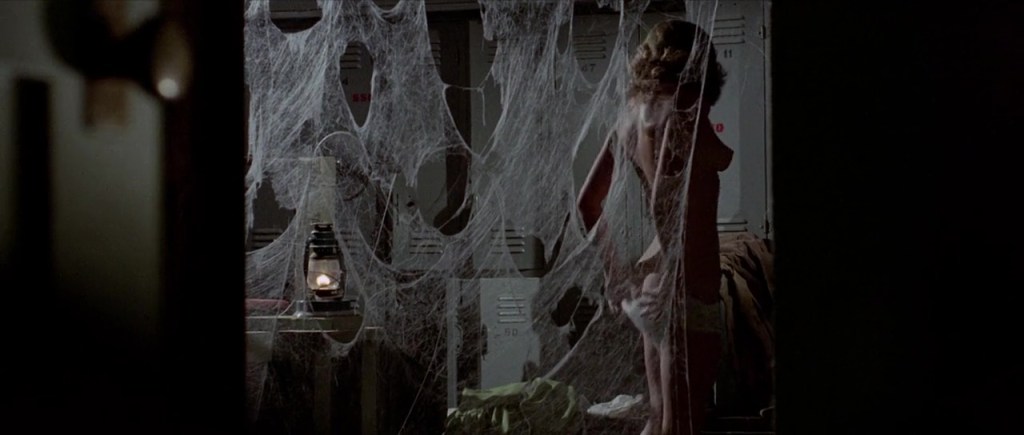
But this film complicates it by taking away the excuses of an indifferent nature or a catastrophic global event. In Hunger, there is no apocalypse. The characters are just five people who wake to find themselves in a dark dungeon, with no idea how they got there. It’s a cistern, a larger version of the abandoned well in which Catherine Martin found herself trapped in Silence of the Lambs. And, of course, like Catherine, there is no food being catered. Science hates anecdotal evidence, so in this film we have a scientist who has gathered ‘ordinary’ people in extraordinary circumstances, just to see what would happen. You may remember Mason Verger boasting of a similar experiment in Hannibal:

“I adopted some dogs from the shelter. Two dogs that were friends. I had them in a cage together with no food and fresh water. One of them died hungry. The other had a warm meal.”

They have access to four barrels of water, a toilet (of sorts, but only four toilet rolls) and a day-clock that marks off 30 days, the length of time the human body can survive without food.

On the second day, they find on their water barrels a scalpel, an instrument that Jordan, the doctor played by Lori Heuring (Mulholland Drive), calls “a human carving knife”. It soon becomes clear what that is for, and it ends up (after much discussion) being used for just that purpose – to kill and butcher each other.

We find out as they talk that they seem to have been chosen because they have all taken a life – one killed her abusive partner, another in a hold-up gone wrong, another through euthanasia. Doctors like Jordan handle life and death every day. But the scientist wants to know, are they willing to kill out of hunger alone?

Then there is that scientist who kidnapped them; we find that he had been a young boy who survived a car crash: we later discover he cannibalised his mother’s corpse to stay alive. Now he watches his captives, and takes careful notes.

He shares their predilection for taking life: when a couple come to have sex in the quiet country area and hear the pleas for help from their oubliette, he shoots them with tranquiliser darts and pushes their car into the river, but not until they wake up. He thereby reveals a sadistic streak, a psychopathy, or at least a disavowal of empathy, common in scientists who experiment on mice, rats, dogs, monkeys and other animals. Most of us react to seeing other sentient beings in pain by initiating an empathetic response called resonance in the inferior frontal gyrus and the inferior parietal lobule of our brains. Recent research in which rats were given electric shocks and responded similarly both to pain and to watching other rats in pain showed that this ability is not restricted to humans, and in fact may be better developed in rats than in some scientists. Like Descartes torturing dogs or Josef Mengele experimenting on camp inmates, a psychopathic scientist can justify any cruelty for the sake of research.

Cannibalism, the act of killing and eating another, is sometimes considered transcendent (by the cannibal), with one character making reference to cannibalism as a spiritual pursuit:

“Human flesh is essence. It captures a person’s soul!”

The scientist likes this idea, because he ate his mother, so it’s comforting to think that he now contains her soul. But the main theme of the film remains starvation cannibalism, in this case forced on the victims, as it was in the Ukrainian famines or the Nazi death camps. The counterpart of this cannibalism is happening in their bodies. As Dr Jordan tells us, the process of starvation progresses as “your body basically cannibalises itself.” The alternative is what the scientist hopes to witness, the choice to “become a savage”.

Jordan, the doctor, is the only character who refuses to consider cannibalism. Like “the Man” in The Road, she wants to “carry the fire”, and that anthropocentric ideal does not include eating humans. The others spurn such naïve ideology:

“You can hold on to your precious humanity. We’re doing what we have to do to survive.
And your boyfriend? He tasted surprisingly delicious.”

Cannibalism is usually depicted by society as a form of madness or monstrosity involving a devolution from civilised to savage, from enlightened to barbaric. Unless we pay someone else to do it for us—then it’s called animal husbandry.

The film was produced for a tiny $625,000, so the special effects and production time are limited (except for the buckets of gore), but it is still extremely effective. Hunger was released on Fangoria’s Frightfest DVD line, the same distributor as the (reworked) Armin Meiwes story Grimm Love. It does not seem to have received wide distribution, which is a shame, as it is well made, well acted (particularly Lori Heuring, who is quite incandescent) and is well worth your while chasing down. Moreover, it covers a crucial question that becomes more urgent as the world goes to hell in a handbasket – what would you do?

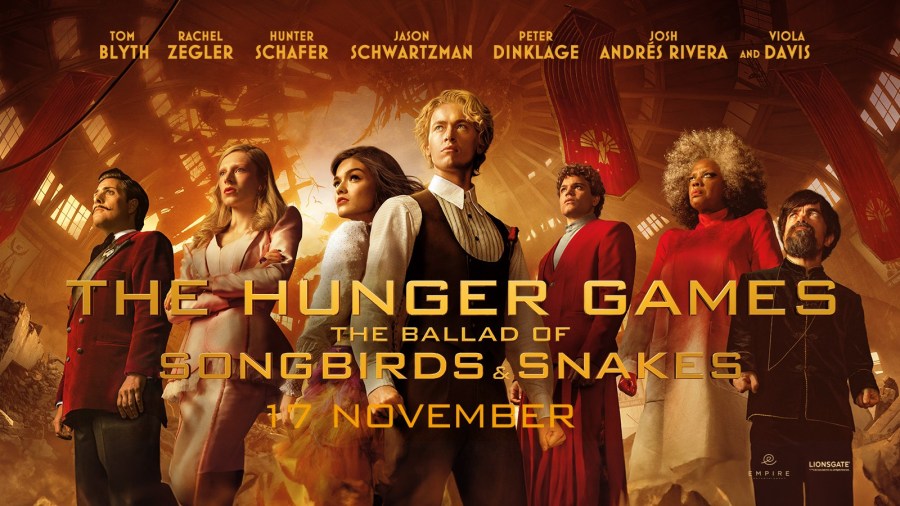
THE HUNGER GAMES: Ballad of Songbirds and Snakes [and Cannibals] (Francis Lawrence, 2023)

The Hunger Games began as trilogy of novels by American author Suzanne Collins (2008-2010). The prequel, The Ballad of Songbirds and Snakes, was released in 2020. The first three were adapted into four films (annually from 2012-15), all of which set various box office records. The first film, The Hunger Games (2012), recorded for biggest opening day and biggest opening weekend for an original IP. In 2023, the prequel to the trilogy, titled The Ballad of Songbirds and Snakes, was released as a film.

The Hunger Games is a post-apocalyptic dystopia set in Panem, a North American country consisting of the wealthy Capitol and 13 districts in varying states of poverty, punished for rebelling against the Capitol. Every year, children from the first 12 districts are selected via lottery to participate in a compulsory, televised battle to the death called The Hunger Games. The name Panem derives from the Latin phrase Panem et circenses, which literally translates into “bread and circuses”, the ideology used by the Roman emperors to distract the citizens from their daily struggles and the obscene indulgence of the elites. One of the highlights of the Roman circuses was the gladiators, who would fight to the death, as a popular form of entertainment.

There are not really any rules to the Hunger Games (except kill everyone else) but cannibalism is frowned on, as the audience find it a bit gross. Compared to just, you know, chopping people up. Titus (named after one of the crazier Roman Emperors) kills combatants in the 66th Games by tearing out their throats and eating their organs; he is killed in an avalanche, presumably created by the organisers because of his threat to their ratings. Like many cannibals, he is dismissed as just plumb crazy.

The Ballad of Songbirds and Snakes is a prequel, starting 64 years before the Hunger Games, during the ‘Dark Days’ which led up to the failed rebellion in Panem. How, it wonders, did we get this way? Well, cannibalism of course is part of the answer. In the novel, the narrator says:

“…the siege had reduced the Capitol to cannibalism and despair.”

But this is a movie, and you know the golden rule: show don’t tell. So the opening reveals two children, a young Coriolanus and his cousin Tigris, running through the snowy streets of the Capitol during the rebellion, hunting for food. A man appears with a cleaver and chops the arm from the corpse of a woman.

“Why is doing that?” asks the boy. Tigris replies simply:

So, the scene is set for the rise of Coriolanus Snow, who eventually becomes the ruthless President of Panem (played by Tom Blyth in this film, and later the incomparable Donald Sutherland). To him, the ends justifies the means, and what ends are more important than staying alive, even if it requires killing and sometimes eating people? It’s the human condition, particularly in post-apocalyptic dystopias. That’s entertainment!

“See how quickly we become predator? See how quickly civilisation disappears?”

“Our women can’t get pregnant” A BOY AND HIS DOG (L.Q. Jones, 1975)

“Dog eat dog” is an odd expression. Dogs generally don’t eat each other. The phrase is really a euphemism for the way humans will exploit and kill (and sometimes eat) each other. Accusing the dogs is more socially acceptable, but the phrase is more about our own predilection for devouring our own kind to satiate our various hungers, particularly in times of societal collapse.

This cannibalism blog has reviewed a number of post-apocalyptic films, the best known being Soylent Green, Delicatessen, The Bad Batch, Snowpiercer, 28 Days Later and The Road. Lesser known films include No Blade of Grass, We Are The Flesh, Cadaver, The Girl With All The Gifts, Tear Me Apart and of course several versions of the H.G. Wells classic, The Time Machine.

Clearly, we love bad things happening, preferably well into the future (800,000 years in The Time Machine), and to other people. It’s Greek tragedy but set in our future, warning us of the inevitable unwinding of society and, as we have found, often the eating of the most vulnerable. In most such movies, food is the obsession of both the protagonist and the various antagonists that must be overcome.

The protagonist of such movies is almost always male, and males, in most cultures, are conditioned to eat meat. If humans are the only meat available, that will often do just fine. Other appetites appear occasionally (there was a controversial rape scene in No Blade of Grass), but Freud’s insistence on the primacy of the sexual urges is put on the backburner (sorry) when it comes to eating.

Not this one though. The film is a post-apocalyptic black comedy (we see mushroom clouds at the start, and are told that World War 4 (in 2007) lasted five days – enough time to empty the missile silos). This film is set in 2024 (well, Soylent Green was set in 2022, so now seems like a good decade for disasters). The humans who survive work together in “rover packs” or else hunt alone as “solos”. There is an implication that the rover packs are happy to engage in a bit of cannibalism, as we see a small child carried, struggling, into a campsite.

The main character is a solo – his name is Vic, and he is played by Don Johnson, who a decade later would become a huge star and win a Golden Globe for his role in Miami Vice.

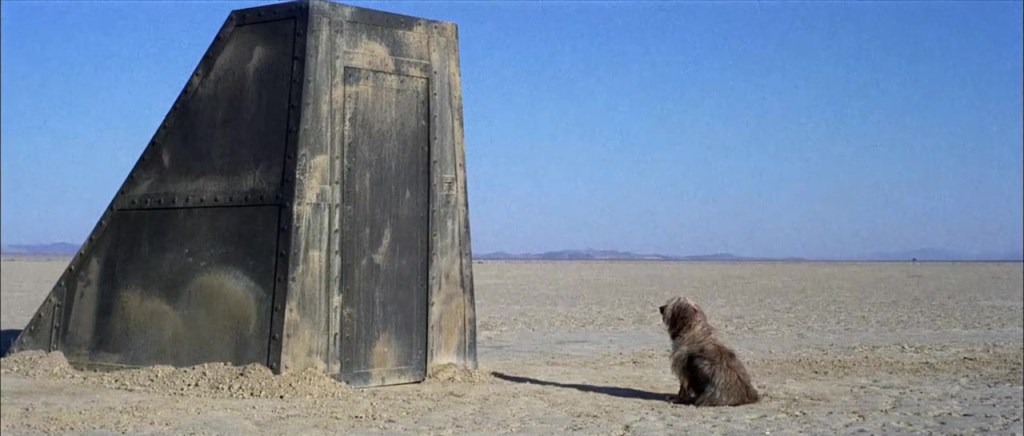
Did I say main character? Arguably, the star of this film is Blood, a shaggy dog.

Blood is smarter, better informed, has an advanced sense of humour and irony (he calls Vic “Albert”, after the rather more conventional dog stories of Albert Payson Terhune), has a superb sense of smell, and can converse telepathically with Vic. But the genetic modification that allowed this telepathy (designed for war of course) also removed his ability to hunt for food. So, Vic and Blood are symbiotes – Vic hunts for food, while Blood smells out women for the sexually voracious appetite of Vic.

In this ultimate extension of what Barbara Creed calls “aggressive phallicity”, the frontier of the rugged individual, the gun is king and women are purely there as rape targets. In the opening scene, Blood finds a woman, but a rover pack has arrived first, and they have knifed her after they have had their fun. Vic’s anger is purely selfish – that she could have been used a few more times. Blood mocks him “you’re so funny when you’re sexually frustrated.”

Later, Blood discovers a woman, Quilla (Susanne Benton) in disguise at the movies (there is one rover pack that exists as a sort of neutral space, putting on movies, running a brothel and selling popcorn). They put on old movies and cheesecake for lonely solos to beat off to. They watch Fistfull of Rawhide (it’s a real movie, from 1969) as Vic waits for the girl to leave and head someplace isolated where he can accost her.

They follow her to a deserted gymnasium, where she is getting changed from her male disguise, and he is enchanted by her youth, beauty and cleanliness.

Quilla comes from a different world, the “Downunder”, a series of underground cities where traditional American values rule – raised hats, marching bands, picket fences, apple pies, civility). Everyone is made up in white-face – everyone is Middle America is white, and seem to need confirmation. Quilla, it turns out, was “the cheese” – she came to the surface to tempt Vic, like Eve tempted Adam, so he would enter the underground world, and bring his sperm with him.

Yes, the solid citizens of the symbolic order or language and laws have become sterile. But Blood, she says, wouldn’t fit in there. Trouble in paradise. Blood, badly wounded defending Vic, who had refused to leave Quilla to a rover pack, waits at the portal as Vic descends like Orpheus in search of Quilla. They want Vic’s sperm, because being underground has made their men sterile, but it’s not going to be the orgiastic event Vic imagines – they strap him down and connect his member to an electro-ejaculation machine, just as modern agriculture does to prize-winning bulls and rams. Such a device is normally inserted into the rectum and positioned against the prostate, and an electric charge causes involuntary ejaculation. To the townsfolk, Vic is an animal to be milked of sperm and then killed when they are done with him.

The film is available on YouTube (at the time of writing) so I won’t give too many spoilers. It’s well acted, the dog is delightful, the plot is pretty faithful to the novella of the same name, which came from the brilliant mind of Harlan Ellison. Ellison published the story is a collection called The Beast That Shouted Love At The Heart Of The World, in the introduction to which he objected to the term “new wave science fiction”, and cast bitter scorn on the “clots” who called his work “sci-fi”. Ellison was known for his brilliant writing but also his outspoken, combative personality; the Los Angeles Times described him as “the 20th-century Lewis Carroll” while Robert Bloch, author of Psycho, called him “the only living organism I know whose natural habitat is hot water”. The story’s concept remains original and the narrative sparkling, even half a century after the book and film were made.

The genius of this story, captured in the film, is the deconstruction of some of the most basic assumptions of our (pre-world war IV) societies. One, Derrida tells us, is common to all philosophers up to now – that we look at animals, but assume they do not look back. It is the basis of anthropocentrism (human supremacism) to assume that only humans are aware, are subjects who think and observe. But in this film Vic is the dumb animal that only knows how to fight and fornicate, while the “rational animal” who keeps him alive, teaches him and cares for him, is Blood, the dog.

Then there is the myth of the hero, the man of action – men like Vic seem to be a dying breed. Vic is only interested in “getting laid” – and believes that is only possible through violent rape. But Quilla is smarter than Vic, manipulative and calculating, as well as having a stronger libido – “I’m the one who’s supposed to want it” he complains. Socially too the dominant male is an anachronism. Above ground, the solos are being recruited into rover packs or killed, while below ground, the patriarchal symbolic order that is trying to recreate America of the 1950s is dying out – the males infertile.

Finally, I need to address the question of cannibalism, because, hey, this is a cannibalism blog. There is an implication in the film that the rover packs are kidnapping children from other packs for dinner (we all know that babies taste best). That’s what happens after an apocalypse – check out the gangs in The Road. But there is an implication that the society below ground also eats meat, and the only animals we see are humans, plus one small white dog. Those who disobey “The Committee”, a triumvirate who rule the place, are sent to “the farm”, to be killed and perhaps eaten. That’s what farms do – provide food.

And what about Blood and the other dogs – dogs are scavengers, but they usually prefer meat. While Vic collects pre-war cans of food, and Blood is very pleased to eat popcorn at the movies, there are certainly a lot of bodies lying around. But we see no evidence of anyone, human or canine, eating (adult) humans, until, like most apocalypse movies, there is no choice.

Or rather there is a choice – sex or love.

There is a popular ethical question about whom you would save from a burning building – a human stranger, or your dog? I suspect most people who have dogs would feel required to answer “the human”, but sotto voce would answer “my dog of course”. When Vic emerges from the Downunder with Quilla, he finds Blood badly injured and starving. Quilla tells Vic she loves him, tells him to leave the dog and go live with her. There’s lust, and there’s love. What will a boy do for his dog?

Virus apocalypse – 28 DAYS LATER (Danny Boyle, 2002)

A highly contagious virus, originating in human exploitation of captive animals, leads to the complete collapse of society. Pretty far-fetched, huh?

Do you remember back in the good old days, let’s say 2019, when “post-apocalyptic” was just a genre, a metaphor, rather than a feature of every evening news bulletin? The Director, Danny Boyle, reveals in his movies glimpses of different worlds, or rather our world, but disfigured by our appetites. In his debut film, Shallow Grave, it was money, in Trainspotting it was heroin, in Steve Jobs it was recognition. In this film, what we consume and vomit out is rage.

Chimp learning rage.

The film starts with a brief explanation of how zoonotic diseases originate; often that happens in a laboratory. In the opening scene, a chimp is tied to a bed and made to watch videos of rage: lynchings, riots, shootings.

The chimps have been infected with an inhibitor that triggers overwhelming rage. It is carried in a virus, and a highly contagious one. When a group of animal liberationists break in to free the tormented primates, the virus is unleashed as well. There is no cure; the infected humans become killing machines.

If they break your skin or their blood enters your bodily fluids, you are then infected too. The cities are evacuated, the affected killed with no warning.

Like the hero of The Day of the Triffids, the protagonist wakes in a hospital. Jim (Cillian Murphy) is a bicycle courier who has been in a coma for 28 days after a run-in with a car.

He wanders the empty streets, and the rest of the movie revolves around his efforts to avoid the infected and find those who are still, well, human. Which means they have slightly less rage.

28 Days Later is a horror thriller, but much more than that. Yes, you will jump when infected people with bright red eyes leap through the window at you, but it also portrays a profound appreciation of loss, particularly when Jim finds his parents, who have suicided, and is informed he is “lucky”. There is also plenty of humour, and some stunning scenes revealing the beauty of a world, how it could be without humans busily killing each other and poisoning nature.

Danny Boyle captures perfectly the imagery of Rainer Maria Rilke:

“Let everything happen to you
Beauty and terror
Just keep going
No feeling is final”

Jim and his survivor friends find a platoon of soldiers who have varying views of the virus. The Sergeant (Stuart McQuarrie) is a Nietzschean, who sees humanity as a temporary blip on the smooth course of evolution:

“So if the infection wipes us out, that is a return to normality.”

But the Major in charge (Christopher Eccleston) is more Hobbesian, and sees us as creatures of the jungle.

“Which to my mind puts us in a state of normality now”.

But what’s “normal”? What occurs around us, or the global scene? Perhaps it is only their country (it’s set in the UK) that is affected and locked down?

Made in 2002, the film seems very prophetic. COVID-19 is not exactly the zombie apocalypse, but the themes of the attack on nature, the unintended consequences of animal exploitation, the distrust of the authorities, the fear of infection and the pain of quarantine make this movie even more timely now.

And it’s not portraying the zombie apocalypse, because the film is not really a zombie movie. Zombies, after all, are dead, or at least undead, but this lot are living, although ravaged by the virus and prone to uncontrollable snarling and biting. Roger Luckhurst, in his cultural history of zombies, states that zombies are

“a contagion, driven by an empty but insatiable hunger to devour the last of the living… the Rapture with rot”.

Zombies are supposed to shuffle along, with bits falling off. There was an uproar when this film came out – zombies that can run! Fast zombies. Or sick cannibals?

I try to limit this blog to authentic cannibals, living humans who eat or otherwise incorporate body parts of other humans, living or dead. Once I start including the undead, well, it becomes a never ending feast – a lot of fun, but out of scope. Maybe when I run out of cannibal films and TV shows – which is looking increasingly unlikely – we can start on zombies.

The thing about zombies is they don’t actually exist (as far as we can determine). Whereas cannibals – oh yes, they are out there. But who are the cannibals – the contagious, the ones who deliberately developed the virus, or the authorities who use it to their political advantage?

The last CANNIBAL on Earth — (“Last Man on Earth” Season 4, episodes 9-11, Will Forte)

https://www.youtube.com/watch?v=5HspqJ9ef5Q

The Last Man on Earth was a four-season American post-apocalyptic comedy series that showed on Fox from 2015-17. The protagonist (Will Forte, who also created the series) is Phil (or Tandy as everyone calls him – long story). Phil believes he is the only survivor of a mysterious virus (not coronavirus, but hard not to think about it while watching) that has killed off humanity and most other animals. He travels around the USA leaving signs on billboards asking other survivors to contact him in Tucson, but gradually goes crazy from loneliness.

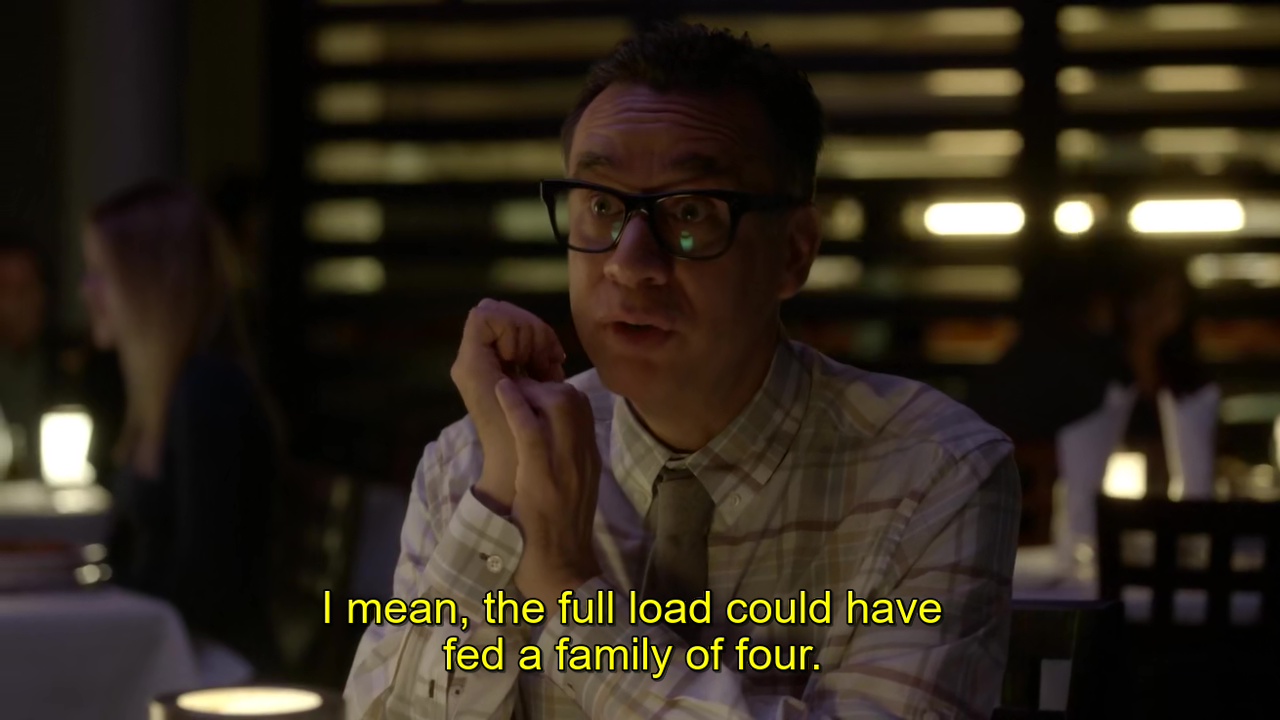
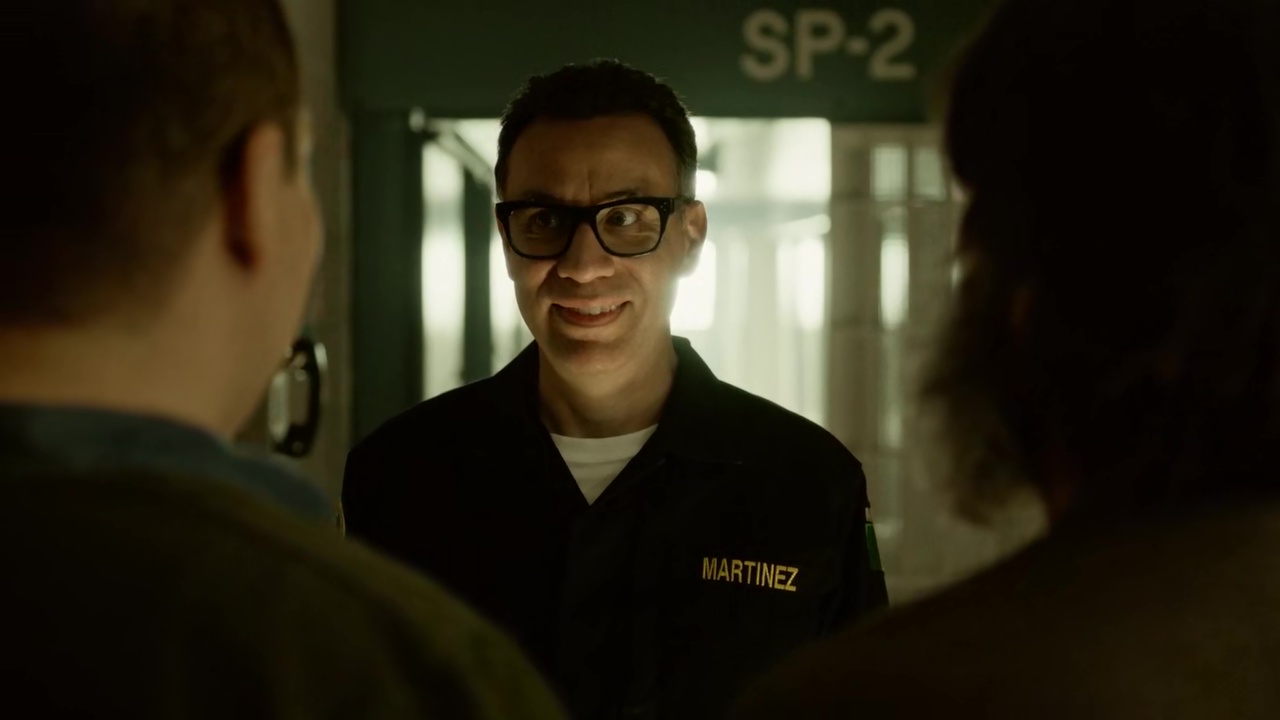
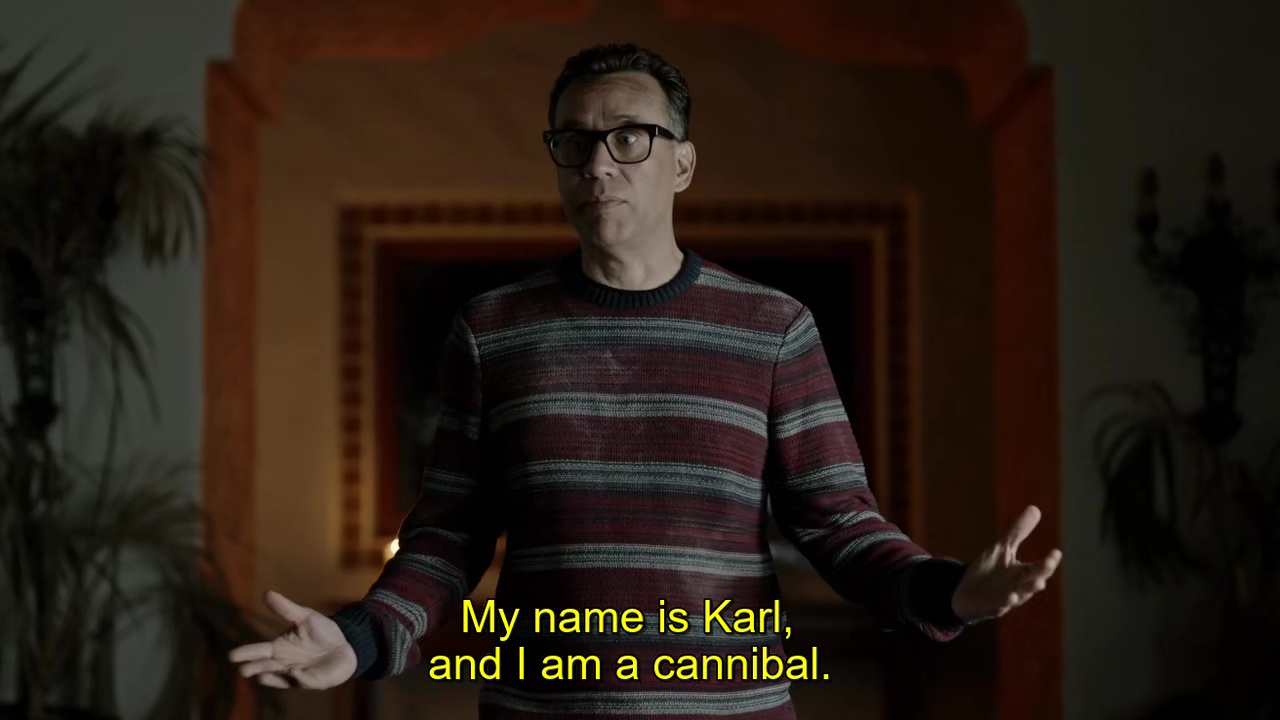
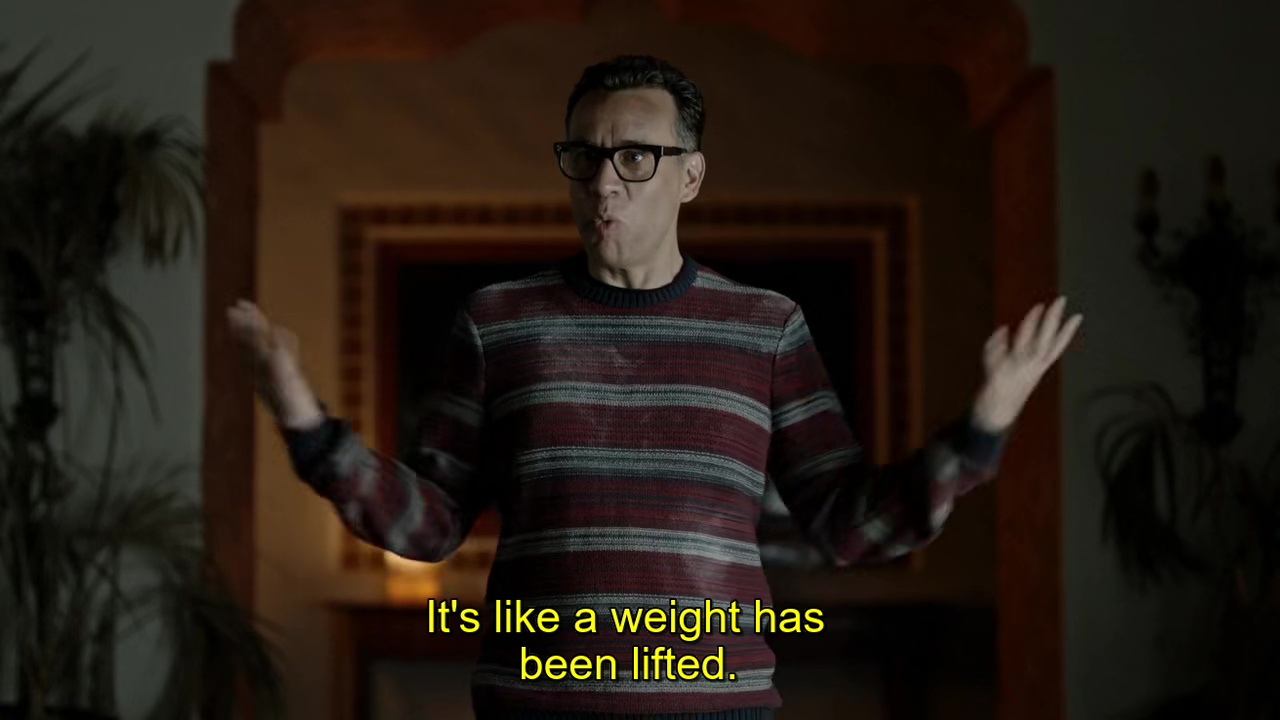
Then he starts meeting other humans. As it’s a comedy, they are (nearly) all nice, friendly, peaceable people, who bicker but generally don’t bite. Until season 4, when he meets Karl (Fred Armisen), a serial-killer cannibal. In a flashback to before the virus, Karl is being socially inept, disgusting his dinner date with recollections of a boil he had just had lanced.

vlcsnap-00005.jpg

vlcsnap-00008.jpg

The art of cannibalism stories is to disgust the viewer. Otherwise, where’s the conflict?

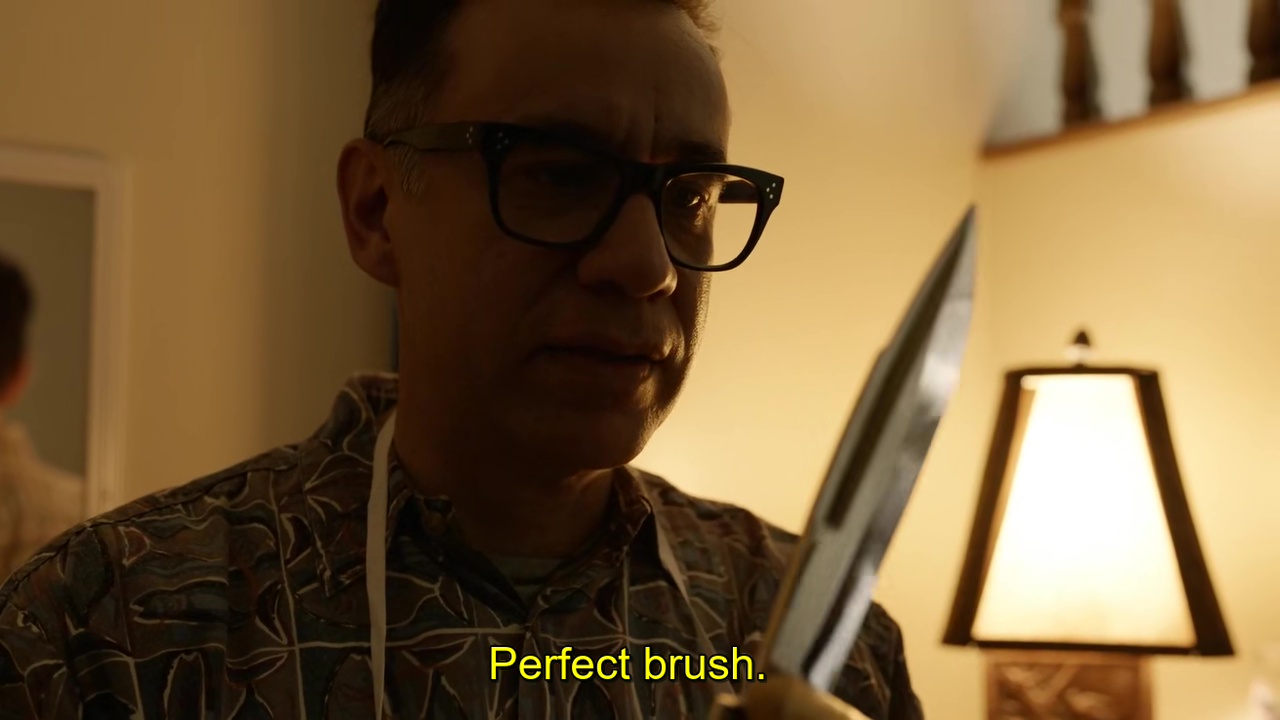
Karl’s modus operandi is to invite his prospective victim in for a sitting where he paints their portrait (a skill in which he is almost as deficient as his romantic conversation), then reach for his

vlcsnap-00024.jpg

When his model goes looking for a refreshing drink in the fridge, Karl has to run.

vlcsnap-00025.jpg

He flees to Mexico and sets up the same artistic practice, but is soon arrested and sent to a maximum-security prison, where he starts painting the other inmates, with designs to convert them into his next meal.

vlcsnap-00026.jpg

Karl is also somehow immune to the virus, but has been unable to escape the prison in which he was confined for the four years after everyone else died. Karl has killed the only other virus survivor, a guard, and is wearing his uniform, to hide his status as prisoner/cannibal. Karl is nice too. Except for being a serial killer cannibal.

vlcsnap-00033.jpg

Karl has an unexplained compulsion to eat human flesh, and is powerless to defy it, despite his desperate efforts to do so.

vlcsnap-00027.jpg

He is obsessively drawn to a used Band-Aid, which is stained with the flesh of a burnt finger.

vlcsnap-00032.jpg

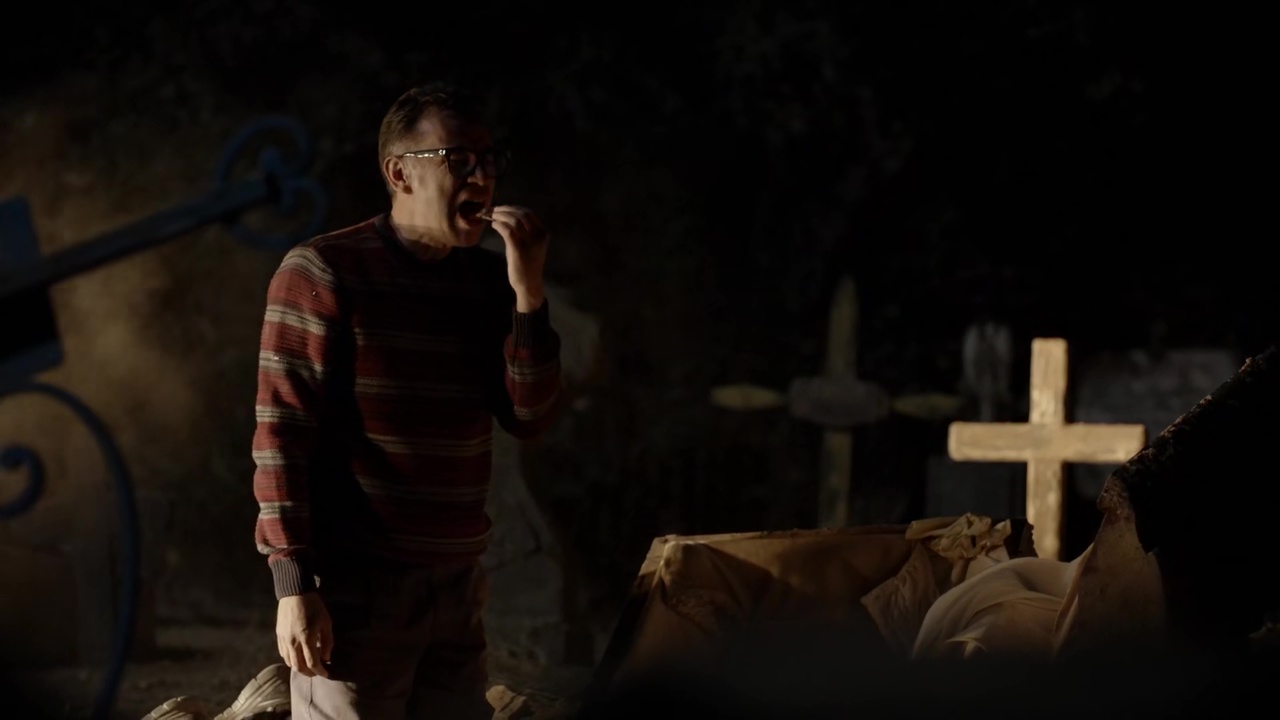
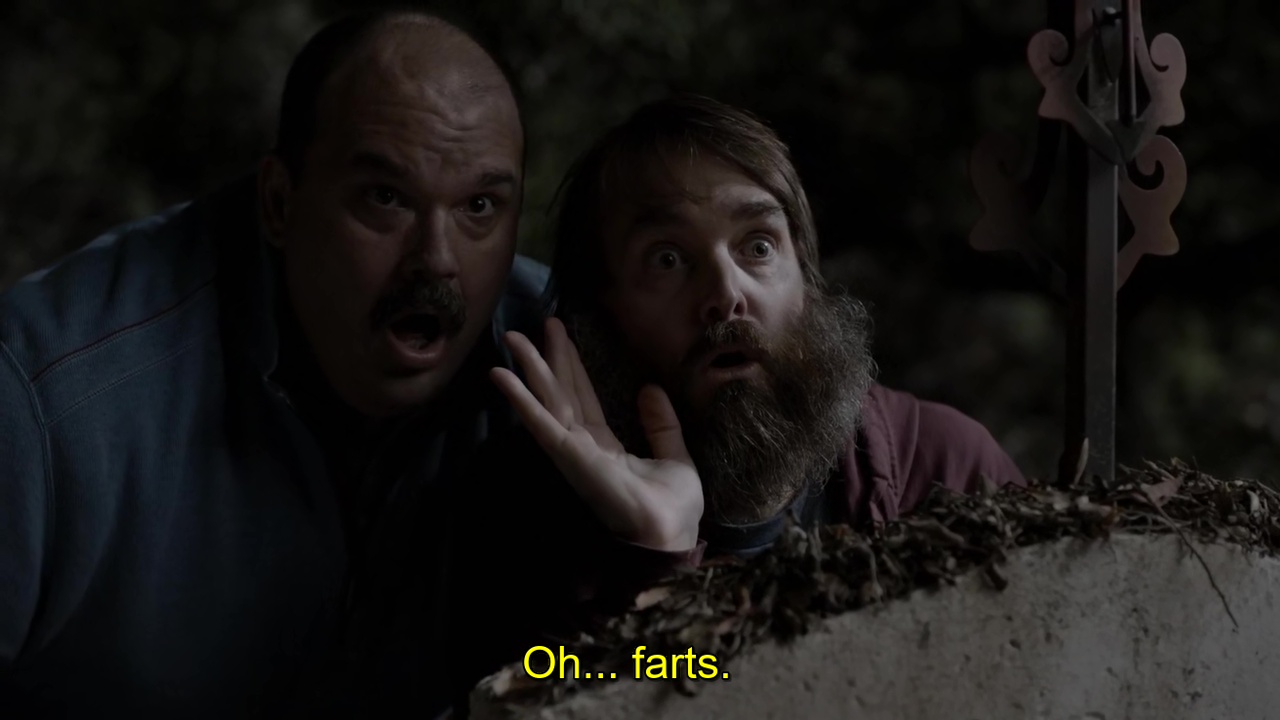
He is unmasked when he is followed to a cemetery, where he hopes to satiate his longings with some well-rotted corpse-flesh, much to the disgust of the observers.

vlcsnap-00049.jpg

vlcsnap-00051.jpg

What makes a cannibal? We have looked in this blog at several motivations such as savageism, starvation, revenge, psychopathy and entrepreneurship, and particularly at the figure of the wendigo, the mythical Algonquin spirit that inhabits the lost and drives them to an ever-escalating hunger for human flesh. Bryan Fuller implies in Hannibal that the good doctor Lecter is such a spirit, appearing as a figure with antlers, often disturbingly dressed in suit and tie. Traditionally, the cannibal required no explanation. In Classical stories, he (and cannibals were usually male) was a super-human or else hybrid figure, monstrous in appearance and easily identified as an ‘other’. In colonial times, they were tribes of savages, whose ignorance of the morals of Europe required the intervention of the conquistadors to ensure they were re-educated, which would usually involve the appropriation of their lands and the enslavement or extermination of the ‘cannibals’.

The contemporary cannibal is often typified by his inconspicuousness – acquaintances of cannibals like Jeffrey Dahmer, Albert Fish or Armin Meiwes often spoke of how normal and prosaic they seemed. Karl fits exactly into this model of the contemporary cannibal – the others like him, and can hardly believe it, even when he admits to his addiction, as if it was an AA meeting.

vlcsnap-00024.jpg

vlcsnap-00025.jpg

There are many ethical issues raised in this apparently light-hearted comedy. Everything in the world before the virus was about voracious appetite and power, and things have not changed that much. Now of course there is no money, and the stores are full of whatever you could want, but it’s all starting to go bad, even the tins. The few animals they have found alive have usually come to a sticky end – the cow whose milk they took died, her calf was left behind when they left for Mexico, the bull was killed and eaten. They found crickets and ate them. They catch a fish with a hook, much to their surprise. Phil threatens to eat a little dog’s butt at one point. Anthropocentrism, sometimes called speciesism or human narcissism, is now the supreme ideology, even though it has apparently led to the extermination of almost all life on Earth.

The main question of this brave new world, then, is: are there any ethical constants? The survivors are mostly besotted with the idea of having babies and repopulating the world with humans: is that a great idea? And while they are satisfied to smash down shop doors and take whatever they need, they are shocked at the cannibal doing the same. To Karl, to all of us, morality is simply relative to his immediate needs. Certainly not a view confined to cannibals.

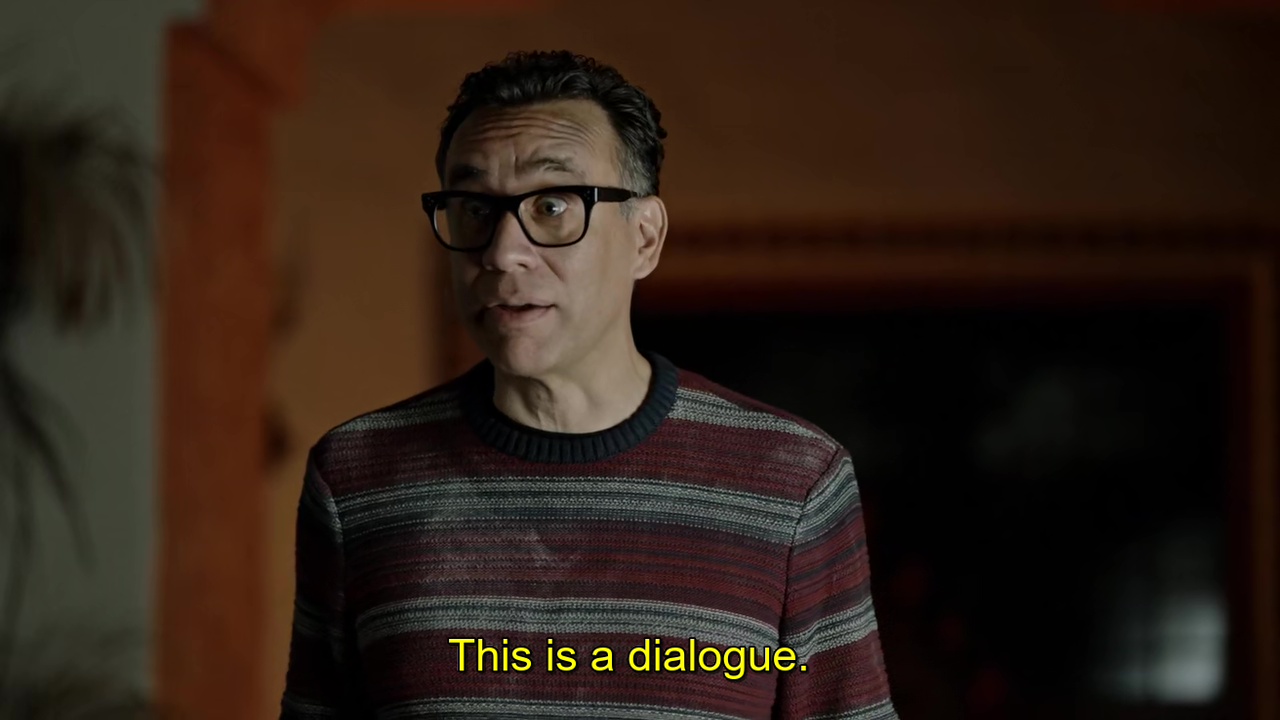
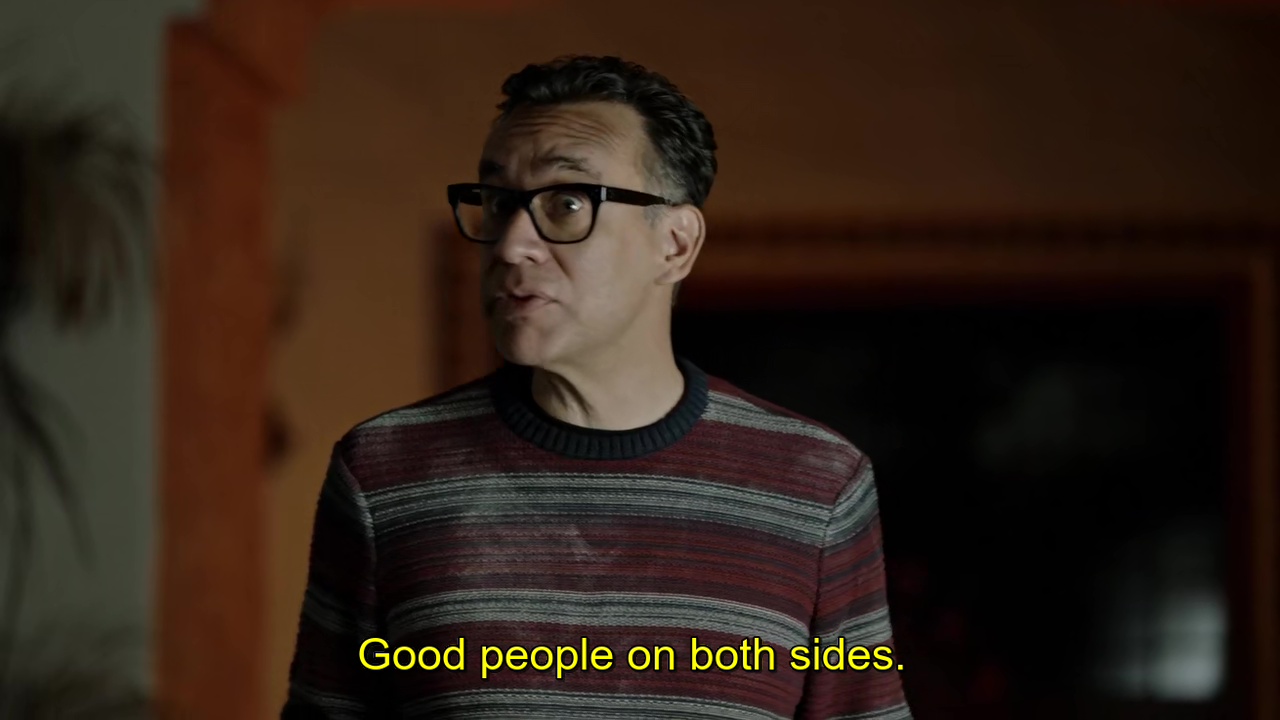
Karl suggests they all go to bed, and discuss the problem in the morning. They will have questions for him. He will have questions for them too! His morality is straight out of Trump at Charlottesville:vlcsnap-00031.jpg

vlcsnap-00032.jpg

As Dostoevsky said in the Brothers Karamazov:

“…there was no law of nature that man should love mankind, and that, if there had been any love on earth hitherto, it was not owing to a natural law, but simply because men have believed in immortality…. if you were to destroy in mankind the belief in immortality, not only love but every living force maintaining the life of the world would at once be dried up. Moreover, nothing then would be immoral, everything would be lawful. even cannibalism.”

Karl exemplifies what Aristotle called the “rational principle”.