Cannibal hunter: “CHILD 44” (Espinosa, 2015)

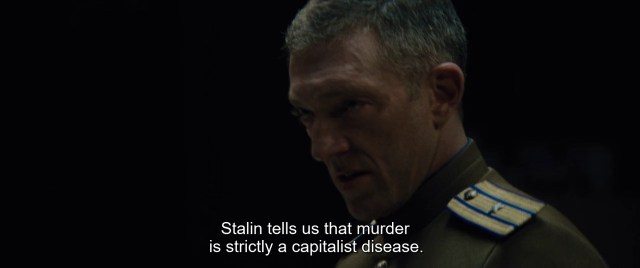
Most cannibal movies are about the cannibal, but Child 44 is almost entirely about the cannibal-hunter. He is a member of Stalin’s secret police, the MGB, the predecessor of the KGB, and the movie is set in the last days of the Stalinist terror. The perp is torturing and killing children and surgically removing their organs, so our hero wants to, like, stop him. There is an administrative problem though: in the Socialist Paradise of the USSR, there is no such thing as murder; it is a capitalist crime. So the first case is put down as a train accident. Then there are 43 more – thus the title.
vlcsnap-2018-11-30-12h07m44s774.jpg

The film is based on the bestselling book by Tom Rob Smith, the first of a trilogy featuring former MGB Agent Leo Demidov. In the film, Leo is played by the English actor Tom Hardy, with a convincing mix of power and vulnerability that carries an otherwise rather overlong production. Leo is a war hero who planted the red flag on the Reichstag after the conquest of Berlin, and is now a senior investigator.

vlcsnap-2018-11-30-16h36m36s863.jpg

One of his friends from the Berlin days, Alexei (Fares Fares), also a MGB officer, finds that his little boy has been brutally murdered, but Leo has to persuade him to accept the official explanation that he was hit by a train.
vlcsnap-2018-11-30-18h29m20s092.jpg

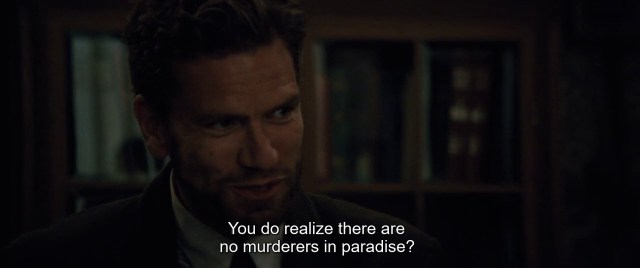
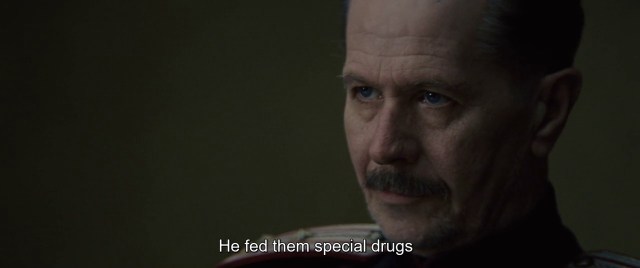
The antagonist (not the killer, we barely see more than his legs or arms until half way through the film) is another veteran of Berlin named Vasili (Joel Kinnaman, who played the clean-cut Republican candidate running against Frank Underwood in House of Cards). He is a coward, liar, etc and manages to derail Leo’s career by accusing Leo’s wife, Raisa (Noomi Rapace from The Girl with the Dragon Tattoo) of being a spy. Stripped of his rank for refusing to denounce his (maybe) pregnant wife, Leo must start his investigation as a mere militiaman in a remote town. He is under the command of a General played by the brilliant Gary Oldman, who has portrayed everyone from Dracula to Beethoven, Sirius Black to George Smiley, Winston Churchill to Mason Verger (in Hannibal the movie).
vlcsnap-2018-11-30-18h26m01s802.jpg

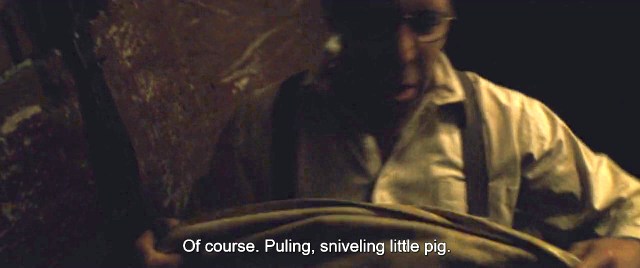
The General has two boys and is not pleased when another dead boy, with organs surgically removed, is found nearby. He arrests the man who found the body, not because he thinks he is the killer but because he is gay, and he assumes that a gay man must be responsible (also because homosexuality was a crime in the Soviet Union). But rounding up all the gay men in town doesn’t stop the killings. The killer is seen picking up a boy in a station, later making sweets (where would archetypal paedophiles be without bags of sweets) and still later abusing himself for being weak and prone to remorse.
vlcsnap-2018-11-30-18h15m16s015.jpg

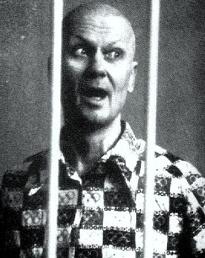
The film, as I said, is based on a book, which is based on the true story of Andrei Chikatilo, the “Rostov Ripper”, who was eventually convicted of 52 murders, although he confessed to more. Chikatilo was able to continue his killing spree from 1978 to 1995, due to a combination of general ineptitude, official denial of the concept of a Soviet serial killer, and luck (apparently his semen had a different grouping to his blood). He claimed that he had been told by his mother that his older brother had been kidnapped and cannibalised by starving neighbours when he was little. This may have been her way of trying to scare him into behaving, but he was born in Ukraine at the time of the Holodomor, when Stalin was busy starving millions of people to death as part of the process of Collectivisation, so could well have been true.  Chikatilo was a self-confessed cannibal, stating that he gained sexual satisfaction from torturing his victims, and would sometimes drink their blood and eat their nipples and tongues. The real Chikatilo was far more depraved than depicted in this movie. There is a list of his crimes at the criminal minds website.
Andrei_Romanovich_Chikatilo_Trial_1992.jpg
Andrei Chikatilo

This film has a lot going for it, particularly a first-rate cast, some good action scenes, and a lot of sets which capture the oppressive darkness of Stalinist Russia. But it has a lot of problems too. It’s over two hours and gets a bit tedious in parts, and the decision to have a bunch of English, Swedish, Lebanese, Polish and even Australian actors speak in English with heavy Russian accents to make it seem “authentic” was widely derided by critics. The Guardian critic called the film “an Iron Curtain version of ‘Allo ‘Allo”.

With a Rotten Tomato rating of only 26%, the film bombed at the box office, grossing just $13 million against its $50 million budget. It was banned in Russia, with the Minister of Culture accusing the film of making the Soviet Union look like Mordor. Outrageous of course. Stalin was far worse than Sauron.

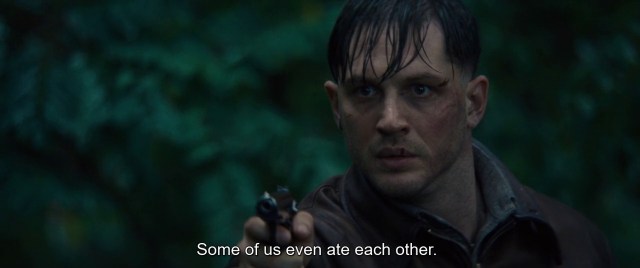
And perhaps the worst thing? Just as the Soviets would not admit that there was a serial killer in their paradise, this film does not approach the fact that he was also a cannibal (although it refers briefly to the widespread cannibalism of the Ukrainian famine). It asks some important questions about social ethics and who is actually responsible for people like Chikatilo, the individual or the state and its terrorist organisations. But without people getting eaten, it’s just another very long murder mystery.vlcsnap-2018-11-30-18h59m44s130.jpg
IF YOU LIKE MY BLOG, PLEASE FEEL FREE TO RECOMMEND IT (WITH DISCRETION) TO FRIENDS ON SOCIAL MEDIA.
IF YOU HAVE ANY QUESTIONS OR COMMENTS, YOU CAN USE THE TAG, OR EMAIL ME  ON CANNIBALSTUDIES@GMAIL.COM.

Creepy old cannibal dude – THE GRAY MAN (Flynn, 2007)

The movie starts at St. John’s Orphanage in Washington in 1882. A young Albert Fish and other children are being beaten, to drive out their sins.

01 orhanage beatings.JPG

Fast forward to Albert Fish (Patrick Bauchau) as an adult. He remembers, in a voiceover, a horse that some older boys at the orphanage set on fire; how the horse galloped off, trying to get away from the fire, but of course taking the fire with him. Fish compares himself to that horse.

“The fire chases you, and catches you, and then it’s in your blood. After that, it’s the fire that has control, not the man.
Blame the fire of passion for what Albert H. Fish has done.”

Scott Flynn’s debut film is not just a very well made and pretty creepy thriller / horror movie, it is an accurate retelling of the story of Albert H. Fish, who killed several children in the 1920s, and ate parts of their bodies.

03 grandaughter - I'm no good with little ones
Albert Fish (Patrick Bauchau) with his grand-daughter. He hands her back to his daughter saying “I’m no good with little ones”. Truer words were never spoken.

Fish never got over the beatings at the orphanage, and is seen in the film whipping himself with a belt, interspersed with images of himself in the orphanage, watched by a pale boy – his younger self. That’s not the least of it: an X-ray found dozens of needles he had inserted into his groin for further punishment. In a sense, he punished himself in advance for sins he felt he was driven to commit.

02 self flag.JPG

The film is structured around a film noir-style narration by Detective Will King (Jack Conley), of the NY Missing Persons Bureau.

Fish kills a boy scout, who is found by the other scouts hanging from a tree, his calf removed.

04 Scouts find Francis.JPG

Then comes the famous case: Fish sees a newspaper ad from a young man, Edward Budd (Eric Parker), who is looking for work, but when he visits the Budd family home, he is smitten by young Grace (Lexi Ainsworth), Edward’s ten year old sister, whom he stares at throughout the interview. No one seems to find this creepy, and when Fish comes back to pick up Edward and his friend, he suggests that Grace accompany him to his niece’s birthday party at Columbus and 135th – when he returns her, he says, he’ll pick up the boys. The mother (Jillian Armenante) has qualms, as well she might, but the father urges her to let Grace go. So, they have lunch. The father says “Let’s eat – I’m starved.” Fish replies: “Me too.” But it’s not for what the Budd’s are putting on their table.

05 smitten with Grace.JPG

Of course, there is no party, no niece, no such street as 135th Street, and no return for Grace. When they get off the train, Grace dives back into the carriage to retrieve a package Fish has forgotten. She thinks it’s a present for the niece; it’s actually a bone saw that he bought earlier. Grace is picking flowers when Fish calls her into the creepy old house, purportedly to hide for the surprise party; the door slams shut. Fade to next scene. Fish is eating raw meat.

06 so pleased to see you grace.JPG

Detective King searches for Grace Budd for six years, despite the department closing the case and the public forgetting about young Grace. Fish hasn’t forgotten though, and when he finds a stationery package in his room while chasing a cockroach, he writes to Grace’s mother, a break which finally allows Will to track down and arrest Fish. In the letter, Fish describes the crime in graphic detail, but modestly added that Grace had died a virgin – I guess he thought Mrs Budd would find that comforting. The movie gradually has Fish read the parts of the letter regarding the killing, chopping up and eating of Grace, although it omits the earlier section which told of his friend who returned from China in 1894, where:

“all children under 12 were sold to the Butchers to be cut up and sold for food… A boy or girls behind which is the sweetest part of the body and sold as veal cutlet brought the highest price”

The letter is quoted in full, with its dodgy grammar, in Wikipedia.

Fish said that this story had given him the idea:

“He told me so often how good human flesh was I made up my mind to taste it.”

In the trial, a psychiatrist with a suitably Germanic accent testifies that Fish told him that:

“What I did must have been right, or an angel would have stopped me, just as the angel stopped Abraham in the Bible.”

Genesis 22 has a lot to answer for.

Fish is found guilty, despite the psychiatrist’s evidence of his insanity, and put to death in the electric chair. The pale boy follows him down the corridor to the execution room.

99 Albert_Fish_1903.JPG
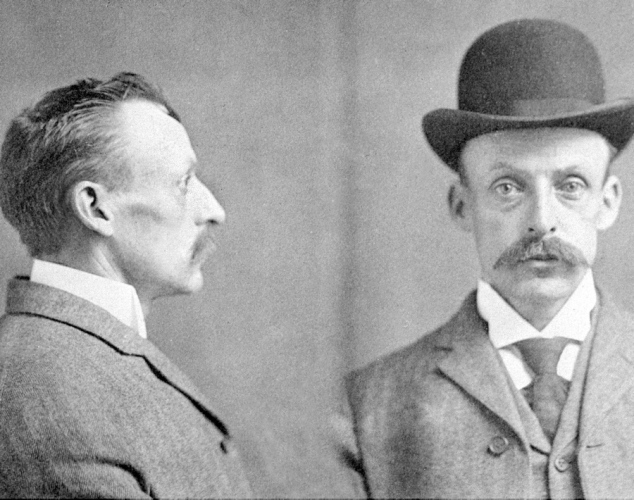
The real Albert Fish
150px-Grace_budd.gif
The real Grace Budd

The true number of Fish’s victims will never be known. He claimed to have “had children in every state” but whether he was referring to rape, murder or cannibalism, or just bragging, cannot be established. Fish was finally caught because he killed and ate Grace Budd, a white girl: he admitted that he mostly chose children who were mentally handicapped or African-American as his victims, explaining that he assumed the police would not look too hard for them. The fact that it took six years to catch him, and that this film does not even mention them, would seem to prove him right.

DVD.jpg

The DVD cover shows Albert and Grace heading for the deserted house where she will be killed and eaten. The tag line is interesting: “a real life Hannibal Lecter”. Pretty sure Hannibal would eat alive anyone who compared him to Albert Fish.

The full movie is not easy to find. There is a copy on Youtube when I last checked, with subtitles in Polish.

IF YOU LIKE MY BLOG, PLEASE FEEL FREE TO RECOMMEND IT (WITH DISCRETION) TO FRIENDS ON SOCIAL MEDIA.
IF YOU HAVE ANY QUESTIONS OR COMMENTS, YOU CAN USE THE TAG, OR EMAIL ME  ON CANNIBALSTUDIES@GMAIL.COM.

Not easy being green (or lunch): THE GREEN INFERNO (Roth, 2013)

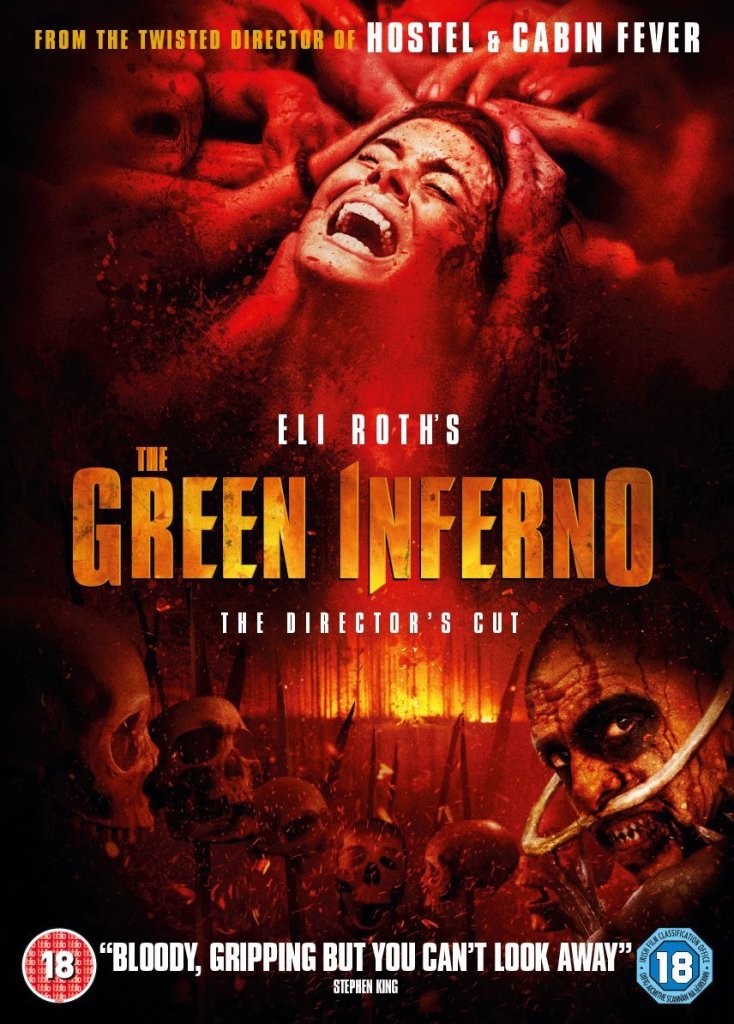
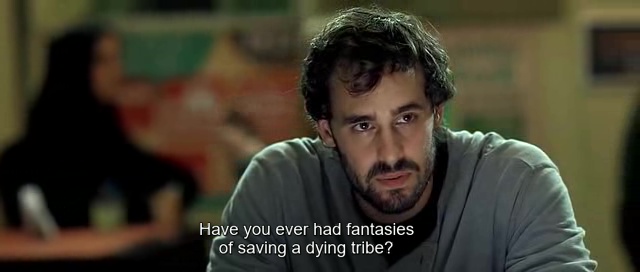
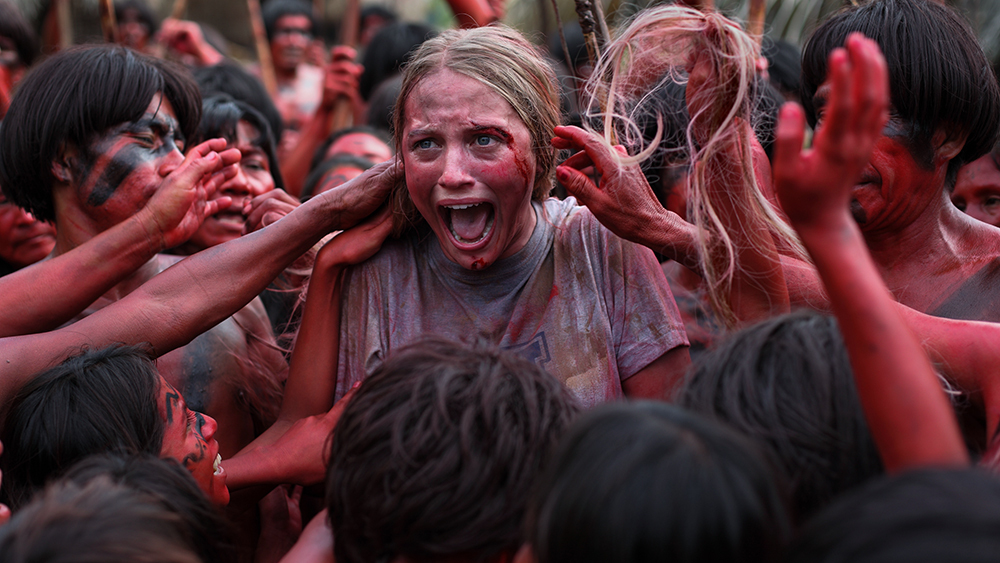
Green Inferno (Eli Roth) is a homage to Italian cannibal films of the late 1970s and early ’80s “cannibal boom”, particularly Cannibal Holocaust (1980), which featured a film-within-a-film called, you guessed it, The Green Inferno. The film follows a group of activists who are forced to fight for survival when they are captured by a cannibal tribe. This is a standard trope of the Italian cannibal films, although Roth tries to inject a few twists to bring it up to the 21st century (they are trying to save the tribe).

dvd the-green-inferno.jpg

The film was made in 2013 but only released on September 25, 2015.

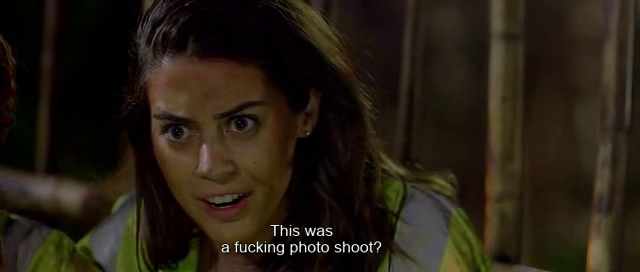
The protagonist is Justine (Chilean actress Lorenza Izzo, at that time soon to be, and since then divorced, wife of Eli Roth). She plays a college freshman, who is a rebel without a cause. As the film opens, she is involved in a hunger strike to win health insurance for campus janitors. She escalates to outrage over female genital mutilation when she attends a lecture on the practice, and rushes off to lobby her father, who is a UN lawyer.

vlcsnap-2018-10-09-17h22m47s079.jpg

The trouble starts when Jonah (Aaron Burns) invites her to a meeting of an activist group led by Alejandro (Ariel Levy). The group plans a trip to the Amazon rainforest to stop a big corporation from illegally logging the forest and exterminating the ancient native tribes who live there; their goal is to film the logging crews with cell phones and stream footage, to raise public awareness.

vlcsnap-2018-10-09-17h30m07s473.jpg

The operation is funded by a drug dealer named Carlos, who flies them into Peru in a small plane. They arrive in the Amazon and head to a logging site where they begin their protest, chaining themselves to bulldozers while filming the loggers cutting down trees. A private militia arrives, and the protest receives viral attention on the internet when Justine is nearly shot by one of the militia officers. The group is arrested, but Carlos pays the police to let them go.

vlcsnap-2018-10-17-10h00m04s950.jpg

In a scene reminiscent of Alive!, the plane crashes into the forest; OK, they are bouncing through trees instead of snow, but like Alive! wings are falling off, people are falling out of the back of the plane, etc. The survivors search for a GPS phone to call for help, but then the cannibals arrive, painted blood red. The group are shot with tranquiliser darts and taken to a small village where they are imprisoned in a bamboo cage.

the_green_inferno.jpg

The female elder of the cannibal tribe dismembers and decapitates Jonah, in graphic detail, starting with his eyeballs and tongue.

download.jpg

Tongues traditionally get a beating in cannibal movies, maybe because they represent the human ability to communicate with language, and so are ideal targets for those whose prime directive is not the survival of civilisation. Man From Deep River had a similar scene. Hannibal serves tongue to his friends in episode six of the first season of the television series, and Cordell promises to do the same to Hannibal in Season 3 episode seven:

I’ll boil it, slice it very thin, marinate it in olive oil, garlic, parsley and vinegar.

And of course, Clarice is warned about the time Hannibal ate a nurse’s tongue in Silence of the Lambs.

Here’s the twist: Alejandro had cynically staged the protest to benefit a rival company, and the eventual deforestation of the area is inevitable. If they can survive until the next lot of bulldozers arrive they might be saved – and because they cooked Jonah first, the village may not need to eat any more of them for a while (he’s a big lad).

vlcsnap-2018-10-26-23h21m20s086.png

vlcsnap-2018-10-26-23h22m17s731.png

OK, no more spoilers – if you like gratuitous gore, go watch the movie. Suffice it to say that female genital mutilation manages to get back into the plot, and people get eaten – one alive, another by ants. Not sure which is worse.

Green Inferno was filmed on location in Chile, the Peruvian Amazon and New York City.

vlcsnap-2018-10-26-23h17m55s292.png

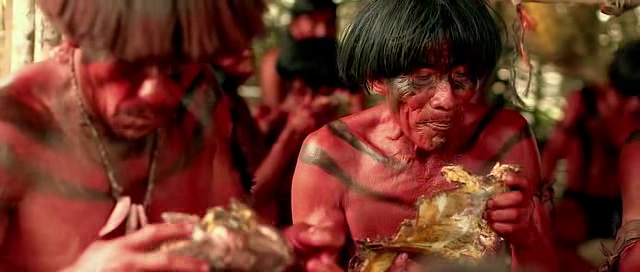
But to make it feel really authentic, Roth decided to cast the Callanayacu tribe from Peru as the main “stars”. Nearly every person (except the Americans) in the movie is an actual member of the tribe that Roth discovered in the Amazon. A remote, self-sustaining farming (definitely not cannibal) community with no electricity or running water, the Callanayacu had little contact with the outside world beyond the occasional supply boat.

vlcsnap-2018-10-26-23h17m51s710.png

While Roth had found the perfect cast, he soon found that most of the tribe had no concept of what a movie was, and had never seen one. So Roth brought a generator and a TV and made them watch the 1980 grindhouse film, Cannibal Holocaust.

“We had to explain to them conceptually what a movie was, and showed them Cannibal Holocaust — and they thought it was the funniest thing that they had ever seen” Roth said in an interview.

Roth says the decision to film in the Peruvian jungle paid off.

“The footage looks so spectacular. It’s something you couldn’t get anywhere else in the world. We went farther than any cameras had ever gone before. They call the river gorge ‘Pongo de Aguirre’ because Werner Herzog’s Aguirre, The Wrath of God was the last film to shoot there. But we went deeper, to a point where there was nothing but river and jungle. It was an incredible experience.”

Roth’s movies are all tributes to the great horror classics. Green Inferno does not try to say much new – it puts a bunch of (mostly) white people in a jungle full of primitive irrational cannibals, out of their depth, and makes them face their worst fears – the key trope of cannibal films. Probably the majority of cannibal movies do that, including Road to Zanzibar. The twist here is that the cannibals are not the bad guys – they are doing what Roth imagines primitive people did all the time (he is certainly wrong there).

vlcsnap-2018-10-26-23h16m26s877.png

The people he is condemning are of course the venal corporations, but also the sanctimonious “social justice warriors” as he calls them:

“the film is really about people getting caught up in causes they don’t know anything about and doing it for vanity reasons more than for the cause itself.”

But Roth is not doing much for the locals either, showing them as brutal and merciless killers, and Survivor International said the group was “disturbed” by the depiction of the tribe, explaining, “These stories have created a racist view of uncontacted and isolated groups.” Amazon Watch and AIDESEP voiced similar concerns.

inferno2.jpg

The film took a hammering by the critics. Variety said:

“A project that boasts all the appeal (and aroma) of a carcass rotting in the rainforest.”

Rotten Tomatoes critics gave it a measly 36%, with the audience rating below even that.

Stephen King, on the other hand, who knows a bit about horror, tweeted that the film is:

“like a glorious throwback to the drive-in movies of my youth: bloody, gripping, hard to watch, but you can’t look away.”


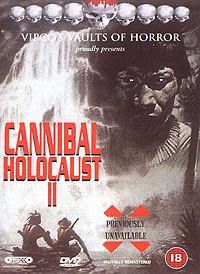
Incidentally, this is not the only Green Inferno movie. As well as the film within a film in Cannibal Holocaust, the cannibal film genre was supposed to have died with Antonio Climati’s 1988 film  Natura Contro (English: Against Nature), also known in English as The Green Inferno and Cannibal Holocaust II.

Cannibal_Holocaust_2_DVD.jpg

Climati had no intention of making a sequel to Deodato’s Cannibal Holocaust, and the title was used by distributors of the film to cash in on the success and notoriety of the earlier film. In 2002, British distributor VIPCO released Natura Contro on VHS and DVD as Cannibal Holocaust II, the film’s best known name. Not much cannibalism in it though.

Next week: more Hannibal episodes!


IF YOU LIKE MY BLOG, PLEASE FEEL FREE TO RECOMMEND IT (WITH DISCRETION) TO FRIENDS ON SOCIAL MEDIA.
IF YOU HAVE ANY QUESTIONS OR COMMENTS, YOU CAN USE THE TAG, OR EMAIL ME  ON CANNIBALSTUDIES@GMAIL.COM.


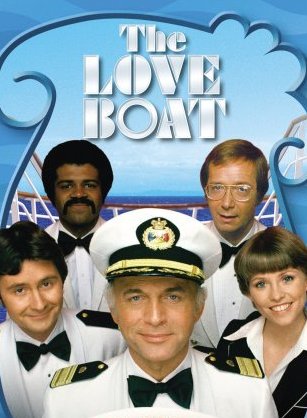
From the sublime to the ridiculous: LOVE BOAT Season 3 episode 13 (Duchowny & Rafkin, 1979)

Crew.jpg

Tom Paine said it is only a small step from the sublime to the ridiculous, so it seems fitting to move from last week’s blog, HANNIBAL, one of the most concise studies of the cannibal psychosis of postmodern society, to a glimpse of the bourgeoisie at play, or at least their aspirations of what that might look like. I refer, of course, to LOVE BOAT, a series that ran for an absurdly long nine years and 250 episodes. Aaron Spelling was the producer – he also made Charlie’s Angels, Dynasty, Beverley Hills 90210, Charmed and a string of other shows, which always seemed to capture the zeitgeist of the time.

Aaron_Spelling_TWA_ad_photo.JPG

Why are we watching Love Boat you ask (or wail, while pathetically covering your ears)? Well, there is an interesting cannibal reference in episode 13 of season 3, which went to air on November 24, 1979. The episode has the catchy title of “Not Now, I’m Dying / Eleanor’s Return / Too Young to Love” – there were always a few threads going on at the same time.

Warning: the following theme song is a mind worm and will be running through your head relentlessly during your worst hangovers.

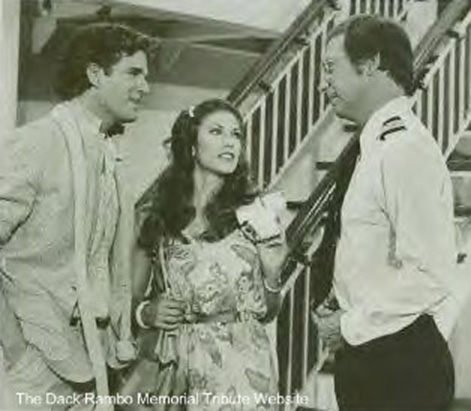
Anyway, getting to the point. One of the main characters on the ship is the Doc (Dr Adam Bricker) played by Bernie Kopell, who also played the KAOS agent Siegfried in Get Smart. On this particular cruise, Lucy, a friend of Doc’s (Barbi Benton), comes on board with her boyfriend Peter (Dack Rambo). She wants a romantic conclusion, a proposal, but Peter keeps on making excuses.

DR05c.jpg

Eventually, Peter “admits” to having a terminal illness, saying he has Kuru, a disease he spotted on the front of a magazine. Doc calls his bluff, pointing out that Kuru is only contracted by “eating people”. But then Peter drops a pen, can’t hold a book, and Doc realises that he really does have a disease – ALS (Lou Gehrig’s Disease). A sad irony in that Dack Rambo was to die of complications from AIDS only five years after this episode went to air. Barbi Benton, who started off as a Playboy model, is still going strong, as is Bernie Kopell at the time of writing.

dackloveboatpic.jpg

This is interesting not so much for the longevity of the stars but the mention of Kuru. This is a prion disease, a rare, incurable neurodegenerative disorder that was found in the Fore people of Papua New Guinea. Kuru is a form of transmissible spongiform encephalopathy, related to the “mad cow” disease that cured people from eating beef for many years and is still tested for when you go to donate blood.

Kuru was first suspected to be related to funerary cannibalism (eating your relatives rather than burying them, to return their life force to the village) after extensive studies by the Australian anthropologist Shirley Lindenbaum starting in 1961. Kuru was found to be eight to nine times more prevalent in women and children than in men. Fore men reported that they considered that consuming human flesh would weaken them in times of conflict or battle, while the women and children were allowed to eat the bodies of the deceased, including the brain, where the prion particles were particularly concentrated. Daniel Carleton Gajdusek, a virologist, was later awarded a Nobel prize for mapping the transmission of the disease to chimpanzees by transferring into them parts of the brain of an 11-year-old Fore girl who had died of Kuru.

FavorableGregariousCowbird-size_restricted
From a 2010 documentary of Kuru

Kuru is rare and hard to catch (even the Fore people have a high rate of immunity to the disease). It is, however, very popular among people who write about cannibalism on social media, as they think it proves that human cannibalism is a ‘bad thing’ because it can make you ill (although they don’t mention the bovine version, in case that ruins their dinner). The Nobel prize was the cherry on top of the brain tissue theory of cannibalism.

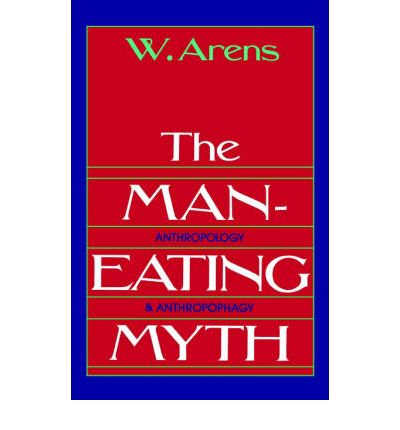
In 1979, the same year this episode of Love Boat was aired, an American anthropologist, William Arens of Stony Brook University, New York, published his book The Man-Eating Myth, in which he challenged the automatic assumption of cannibalism among those dubbed “savages” by the colonial powers of the West. In fact, Arens caused a major uproar in anthropological circles by saying he could find no adequate documentation of cannibalism as custom in any form for any society – it may have happened, but not as a socially sanctioned system. He was more interested in why people are so fascinated by the depiction or suspicion of it (and so am I, hence this blog). As for the Fore, Arens said “the evidence is circumstantial, since Fore cannibalism has never been observed by an outsider”.

Arens.jpg

So, did the Fore get Kuru by eating their dead? We’ll never know for sure, but we can be confident, with Doc, that Peter didn’t.

NEXT WEEK: HANNIBAL Season 1 Episode 2

If you like my blog, please feel free to recommend it (with discretion) to friends on social media.
If you have any questions or comments, you can use the tag, or email me on cannibalstudies@gmail.com.

The first cannibal film was made in Australia? “The Devil’s Playground” (Bindley, 1928)

We tend to think of ‘cannibal films’ as starting with the Italians: Ruggero Deodato’s Ultimo Mondo Cannibale (1977) or, before that, Umberto Lenzi’s Man From Deep River (Italian title Il Paese Del Sesso Selvaggio, 1972). These followed a formula in which civilised Europeans blundered into savage lands (Lenzi’s film was set in Thailand) and are captured by cannibals, tortured, witness terrible atrocities and then escape.

Chief2
Chief Trelua, cannibal king, actually a Sydney lifeguard

But cannibals have appeared in movies well before the Italians invented their special exploitation genre. Tarzan films from the early twentieth century showed the lost British Lord living with apes but killing cannibals – they were prima facie cannibals, because they were savages. But they were background noise, they were the predators in the jungle, assumed to be cannibals by trade, but not usually caught in the act (and, in the books, Tarzan’s British aristocratic breeding stops him tasting human flesh, for reasons he can’t quite understand).

Image result for tarzan johnny weissmuller
Johnny Weismuller as Tarzan the podiatrist

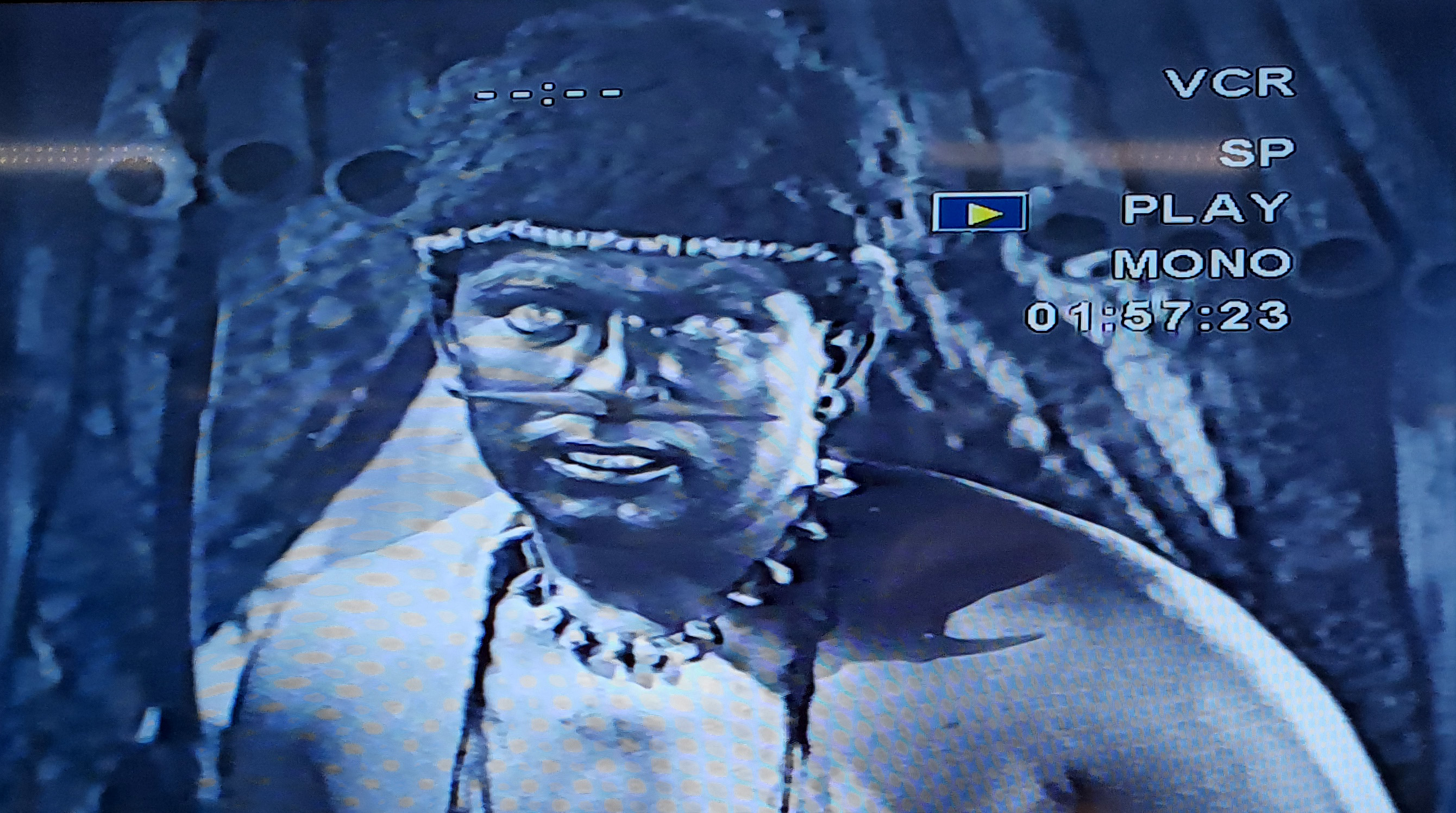
One of the very first film to show savages as cannibals, before Johnny Weissmüller hit the vines, was actually an Australian film called The Devil’s Playground, written and directed by Victor A. Bindley.

This is the opening card (it’s a silent movie):

Far off the beaten track, in the South Seas, lies a beautiful island – a jewel of the sea. Its waters, abounding in the low grade island pearl shellfish, have brought a few white traders to its shores. The sinister reputation borne by its native population in fetish and cannibal rites, in the past, and the wild doings of some of its present white population, has earned for the island the name of:

“THE DEVIL’S PLAYGROUND”

 Not to be confused with Fred Schepisi’s 1976 film of the same name, which revolved about quite different appetites.

Bindley’s silent movie was made with a budget of £2,000, not a fortune even in 1926, when production commenced. This required a certain financial prudence: according to Australian Film 1900–1977, scenes were shot on beaches near Sydney (Bilgola) and interiors in the Mosman Town Hall. Natives were played by Sydney lifeguards in black-face!

Painted savages

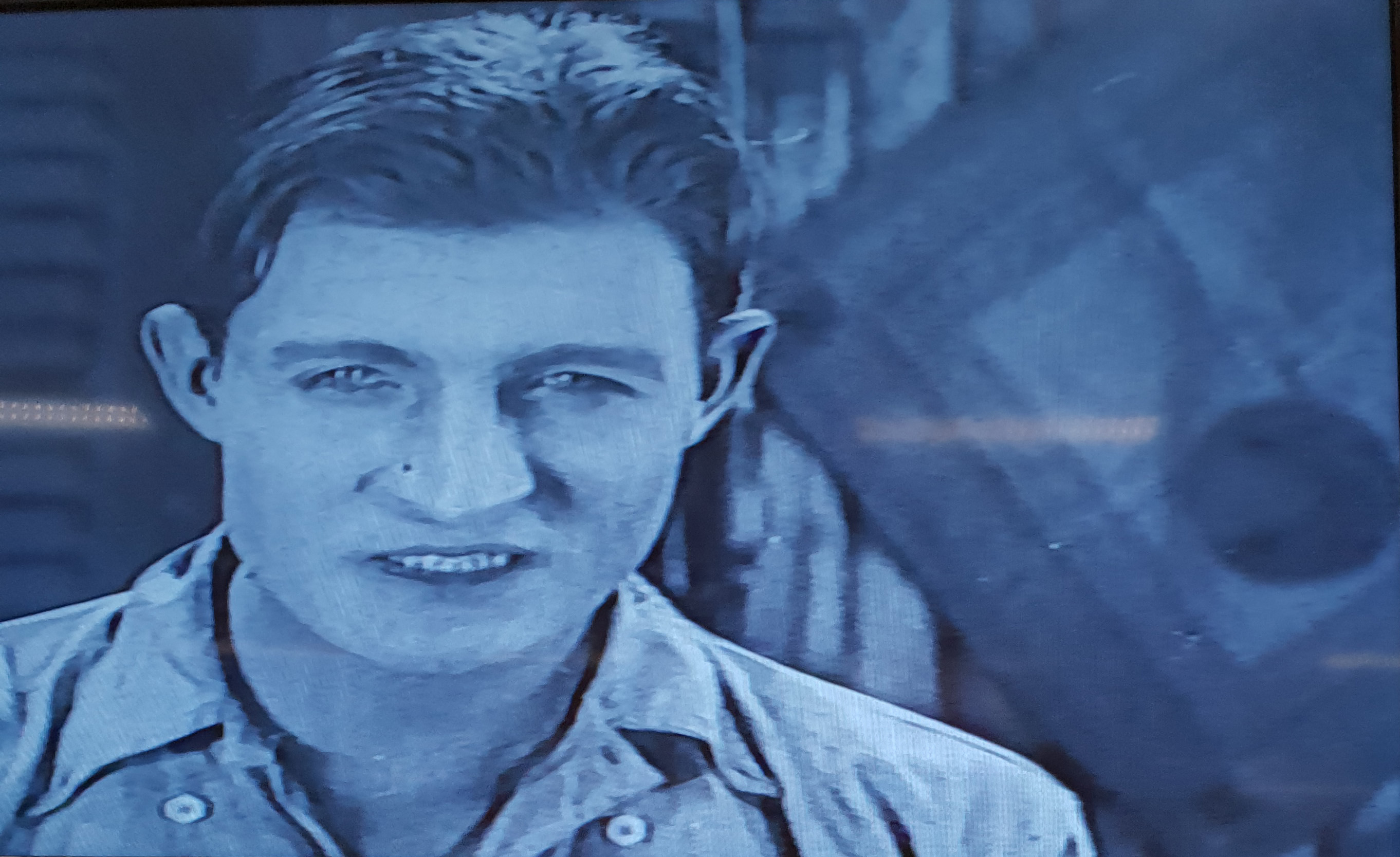
The villain, however, is a corrupt white man named Bull Morgan who exploits the natives and forces the heroine, Naneena, to marry him, after murdering her brother. Fun fact: Naneena is played by Elsa Jacoby, later a prominent Sydney socialite, philanthropist and opera singer. Meanwhile, the locals are not content to put up with colonialist discourses:

Trelua seeks counsel of the wise man, Malatai!

“Malatai! Our warriors grow fat and lazy under the white-man’s rule, and our men-children are weaklings!

“Our spears would but splinter against the might of the whitemen, for they are as many as the white sands of the sea! Their great men are wise! Let Trelua seek justice in their councils!”

“Your puny words cannot hold me for long, O Malatai! Better to die fighting like men, than like women upon our sleeping mats!”

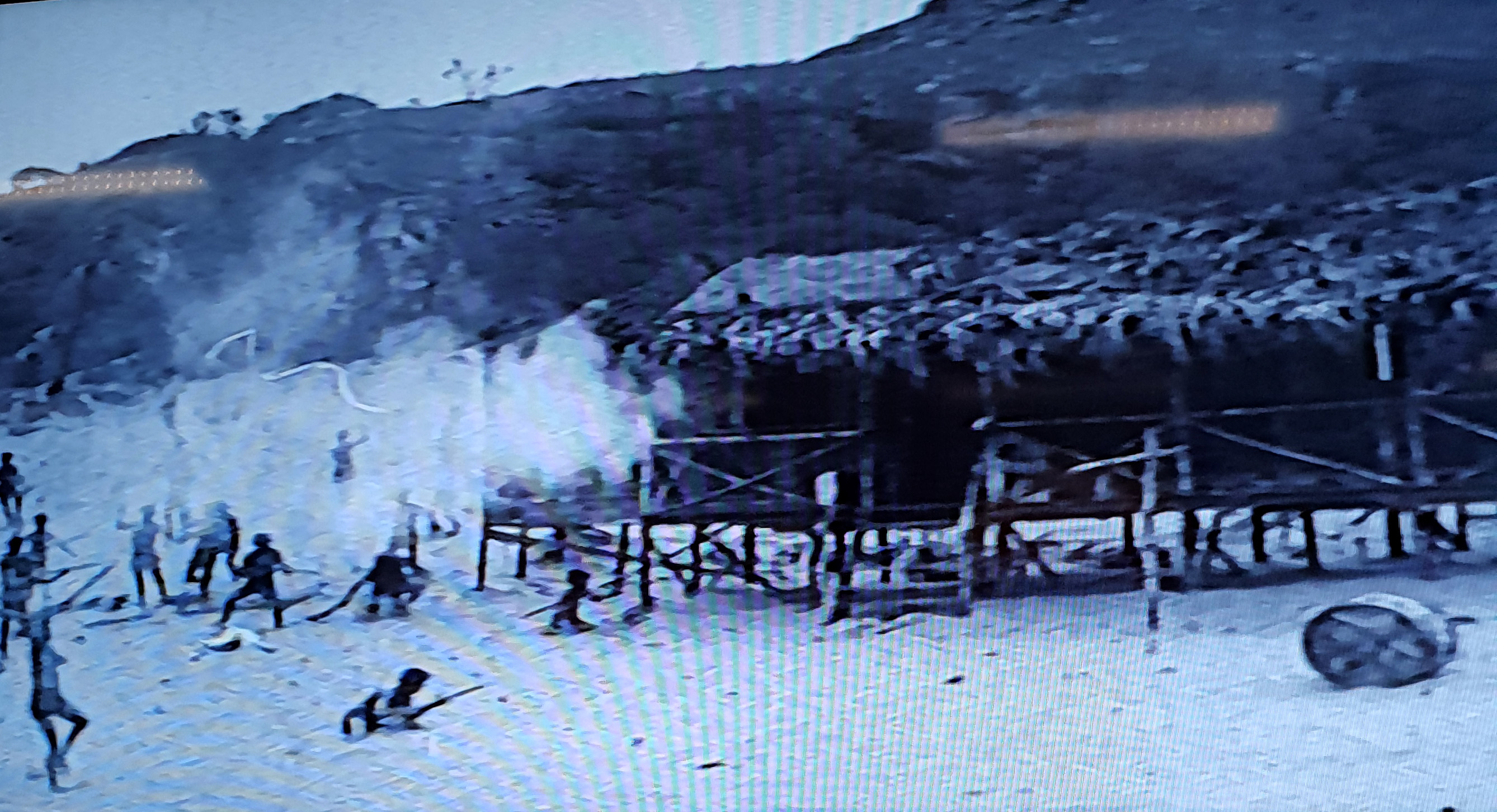
The natives rise up, but not to rescue Naneena – they are cannibals and cannot be seen to do too much good. She is rescued by an airman, who calls in a British cruiser to quell the native revolt although, before the cannons roar, the cannibal chief kills Bull, proving that no one is all bad.

Attacking the grog shop
The cannibals attack the grog shop!

Hero
The noble hero

The Sydney Morning Herald of 8 February 1930 reported that the film had been banned from export (another first for the director) under the censorship regulations which included blasphemy, indecency, or obscenity, being injurious to morality, or likely to be offensive to the people of the British Empire. It may be that the violence of Bull whipping poor Naneena was a bit over the top for the censors (although she gave him back as good or better than she got), or that the British navy blasting natives with cannons was “offensive to the people of the British Empire”.

Navy
The navy arrives to put down the cannibal mutiny

Bull-whip
Bull whips Naneena!

Bull whipped
Naneena whips Bull!

But the most likely reason for the ban is that showing the corruption of the white traders, who were widely known to be exploiting and corrupting the indigenous inhabitants of the islands, was a bridge too far. Like most cannibal films, it raises the question: who is eating whom?

At any rate, the film was shelved and did not have a public screening until 1966, by which time it was just a historical oddity. It is available in the NSW State Library on VCR, which led me to spend an excruciating two hours there recently. It’s not much of a cannibal film, really, but then it’s not much of a film. Pretty exciting, for a cannibal film blog, to find a very early specimen, especially when it’s home-grown!

Incidentally, the Oxford Apartments in Milwaukee where Jeffrey Dahmer killed and ate most of the boys and young men who took his fancy in the 1980s was torn down after his arrest and a playground built, but the locals refused to use it, calling it – you guessed it – the devil’s playground”.

If you like my blog, please feel free to recommend it (with discretion) to friends on social media.
If you have any questions or comments, you can use the tag, or email me  on cannibalstudies@gmail.com.

NOT a cannibal movie: “Black Panther” (Coogler, 2018)

https_blogs-images.forbes.comscottmendelsonfiles201802au_rich_hero_blackpanther_1_3c317c85-1200x526

Western culture, and cinema is no exception, has shamelessly used cannibalism as an unexamined accusation against “others” – mainly the black and brown people of lands coveted by imperial powers: Africa, the Pacific, South America and others. The Greeks used it to dehumanise any barbarians who happened to become bothersome, and of course Columbus made some very nice profits when he “discovered” that the Caribs, a tribe he hadn’t met, were man-eaters and needed to be converted, enslaved or exterminated (and the Spanish then did all three, very successfully, to most of South America).

Very early cannibal movies showed stereotyped cannibals, bones in their noses, dancing around a cauldron containing a sorry looking white man, often a man of God.

Lupino Lane Be My King 1928
This is from a 1928 film called Be My King (Lupino Lane)

Doctor X (Curtiz, 1932) saw the villain going to Africa to learn the secrets of the cannibals.

Dr X 1932

Even Bing Crosby and Bob Hope headed off to the “Dark Continent” and almost got eaten.

Road to Zanzibar 1941
Road to Zanzibar (Schertzinger, 1941)

The cannibals’ nationality changed, but the victim, the civilised white man (or sometimes even woman) stayed pretty pale, just being in the wrong (savage) place at the wrong (then) time. Think of Robinson Crusoe (Bunuel 1954)

Cannibal feast Robinson Crusoe 1954
The after-party from Robinson Crusoe (Bunuel, 1954)

Robinson Crusoe is one of the classic stories of the savage being tamed by the civilised white man. Crusoe has been shipwrecked on an island. Friday is a cannibal whom Crusoe saves from a rival tribe as he is about to become lunch. Friday is taught to serve the master, and has to promise never again to eat humans.
The civilised Crusoe, incidentally, is described as having been shipwrecked on his way to the area to capture slaves.

Think of the “Cannibal Boom” of the 1970s:

Man from deep river 1972
Man from Deep River (Lenzi, 1972)

The cannibal story likes to pretend that civilisation has eliminated such savagery, but it still fascinates and repels us at the same time. In 2013, the “savages” were at it again in Eli Roth’s Green Inferno (this time white people, just trying to save the jungle, being eaten by crazy Peruvian cannibals).

So this is the image of the intersection of empire and indigenous culture: civilisation and savagism. Uncivilised cannibals are shown as inexplicable antagonists, as amoral as sharks or predatory aliens. Their cannibalism is usually seen as acculturated and therefore distinguishes those cultures as uncivilised and morally inferior to the white (usually male) hero’s culture.

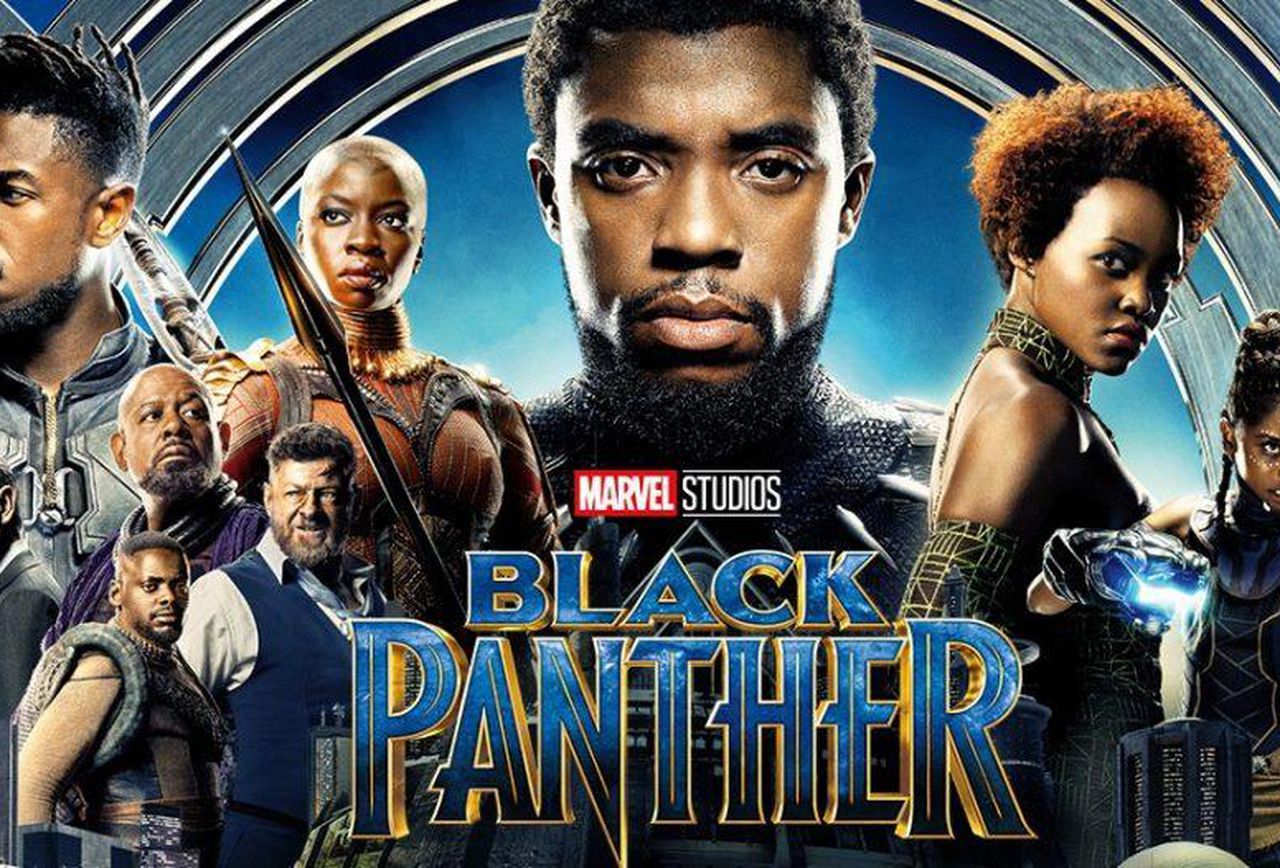
That’s why I was interested to see the take on cannibalism in Black Panther, which is set in the mythical African kingdom of Wakanda, but involves a lot of cultural interchange with an increasingly violent America. Everett Ross (Martin Freeman), a U.S. State Department employee stationed in Wakanda, becomes an ally to T’Challa (Chadwick Boseman), the King of Wakanda. When Ross attempts to speak to the leader of the Jabari tribe — M’Baku (Winston Duke) — he’s told:

“One more word, and I will feed you to my children.”

There it is. There’s the colonialist trope. And here is how Black Panther handles it:

“I am kidding – we are vegetarians.”

So, not a cannibal movie, but a worthwhile flipping of the tired imperialist stereotypes.
It sneaks into this blog because of the cool cannibal joke.

And they’re not really vegetarians, because they are wearing furs and catching fish. Sigh.

Good movie though.

IF YOU LIKE MY BLOG, PLEASE FEEL FREE TO RECOMMEND IT (WITH DISCRETION) TO FRIENDS ON SOCIAL MEDIA.
IF YOU HAVE ANY QUESTIONS OR COMMENTS, YOU CAN USE THE TAG, OR EMAIL ME  ON CANNIBALSTUDIES@GMAIL.COM.

Sex and appetite: “Suddenly, Last Summer” (Mankiewicz, 1959)

1959_Suddenly_Last_Summer

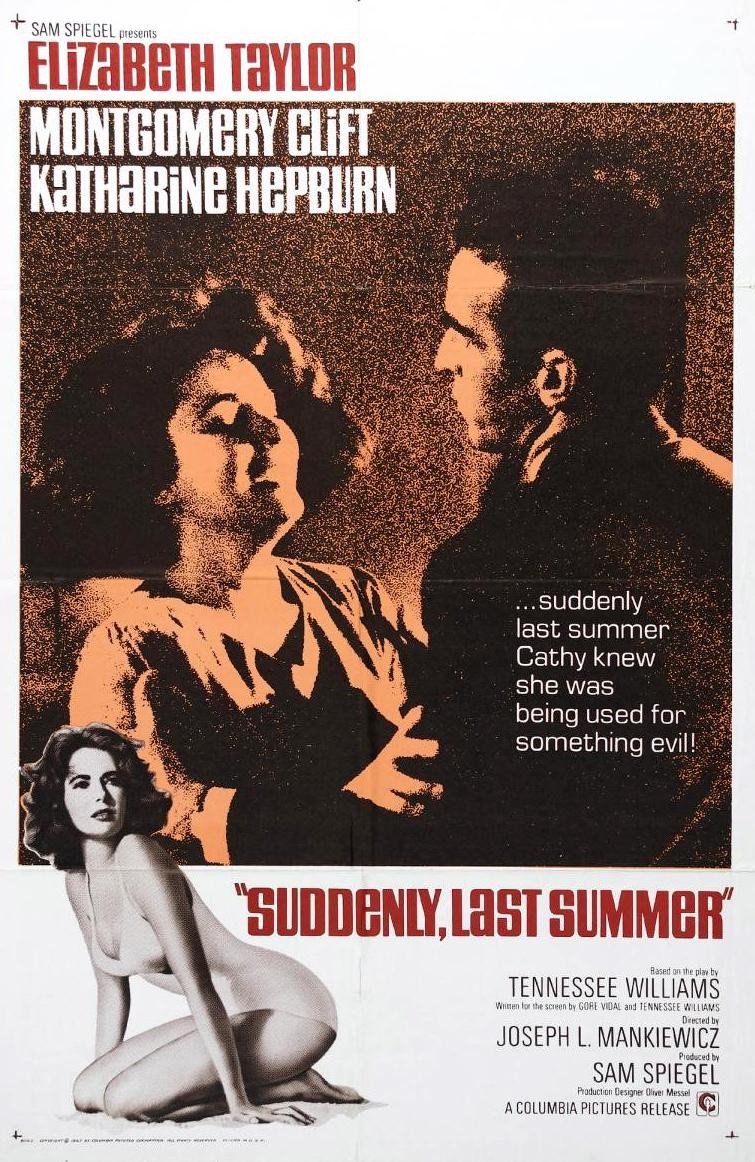
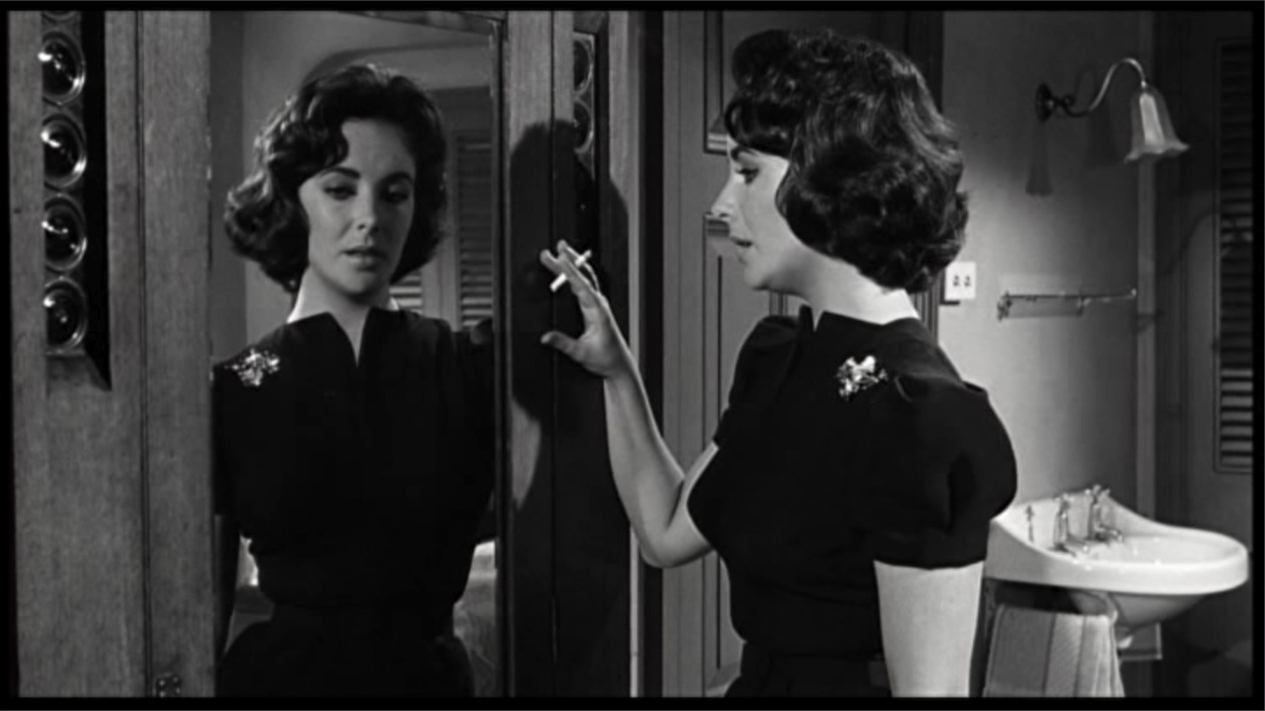
Some movies drip with stars, to the extent that you start to wonder if most of the conflict in the film was about who would get higher billing. Not this one – as well as star power, we have a story of homosexuality and cannibalism, and it’s not totally clear which was more shocking to the audiences of 1959.

As for the stars – we have Elizabeth Taylor, Katherine Hepburn and Montgomery Clift, in a film directed by Joseph L. Mankiewicz (All About Eve, Guys and Dolls, Cleopatra, etc), and loosely adapted from a play by Tennessee Williams. Gore Vidal wrote the screenplay. A veritable galaxy of stars.

The film is about a young woman who has descended into mental illness due to a traumatic experience with cannibalism, the details of which the audience are not shown until the very end. Catherine Holly (Elizabeth Taylor) is being evaluated by a psychiatrist, Dr. John Cukrowicz (Montgomery Clift), at the insistence of her wealthy New Orleans aunt Violet Venable (Katherine Hepburn). Violet suspects there is more to her son Sebastian’s death than she wishes to become public, and offers to finance a new wing for the hospital if they will pressure Dr Cukrowicz to give Catherine a lobotomy (which is what had happened to Tennessee Williams’ sister). Violet hopes thereby to remove the memory of what happened to Sebastian (who is only seen in flashbacks and never front on), while Catherine was travelling with him in Spain “last summer”.

Sebastian has rejected his smothering mother, with whom he has had an almost Oedipal relationship, and instead has been using his cousin Catherine, as he used his mother on earlier trips, to attract young boys, whom he then procures for sex. Sebastian’s appetite changes though – just as he discarded his mother when she got older, now he no longer wants these Spanish boys: he says he is “fed up with the dark ones” and is “famished for blondes”, intending to head to Northern Europe.

Suddenly-Last-Summer
Catherine reflects on her naivety

Catherine in the final scene is given a truth serum by her psychiatrist and finally recalls Sebastian’s death. She remembers that the boys followed Sebastian, calling for bread (pan), and when he refused and ran, they chased him, tore him to pieces and ate his flesh.

capturfiles_234

“…there were those children along the beach which was fenced off with wire. Our table was less than a yard away from the wire fence. And those… children… there was a band of them, they looked like a flock of plucked birds and they came darting up to the wire fence as if they’d been blown there by the wind by the hot white wind from the sea. And they were all calling out… Pan Pan Pan.”

table

Psychiatry and cinema evolved together and are closely tied, particularly in cannibal films (consider Hannibal Lecter), where madness is sometimes used as a convenient explanation to avoid deeper social analyses. This film brings together complex themes that often were avoided in the 1950s. In the conflict between the rich tourists and the starving children of the seaside village we witness savagery as a response to a colonialist mentality of exploitation, objectification in Sebastian’s use of the boys and of his relatives as sexual objects to bait the boys, voracious appetite and the breakdown of normative morality. Sebastian’s sexual appetite is mirrored in the hunger of the boys he has abused, enjoyed and abandoned.

capturfiles_2331

“…cousin Sebastian was, he was lying naked on the broken stone… and this you won’t believe…nobody, nobody could believe it… it looked as if they had devoured him…as if they had torn or cut parts of him away with their hands or with knives or with jagged tin cans they made music with. As if they had torn bits of him away and stuffed them in their gobbling mouths.”

Tenessee Williams hated the adaptation of his play. To him, the cannibalism should have been metaphorical, not graphically represented (although it was certainly polite by today’s standards). He wrote:

“I walked out. Sam Spiegel, the producer, gave a private showing of it at a big party, and I just got up and walked out. When you began to see Mrs Venable, and it became so realistic, with the boys chasing up the hill – I thought it was a travesty.”

The New Yorker called the film “a preposterous and monotonous potpourri of incest, homosexuality, psychiatry, and, so help me, cannibalism.”

It’s not totally clear how a film about incest and homosexuality got round the Hollywood “Production Code”, which had strict rules against such immoralities. Critics have opined that Sebastian’s grisly death gave the film a free pass, because, the review board said, it “illustrates the horrors of such a lifestyle” and “can be considered moral in theme even though it deals with sexual perversion.” Weirdly, the cannibalism seems to have cancelled out the homosexuality.

Anyway, it was a hit at the box office due to its big stars and scandalous content, earning $6.4 million on release, a tidy sum in those days. Both Katharine Hepburn and Elizabeth Taylor received nominations for the Academy Award for Best Actress.

suddenlybig

The film pressed all the buttons of 1959 America: homosexuality, incest and cannibalism. But what happens to the cannibals? The film leaves them on the top of the hill, their mouths stuffed with pieces of Sebastian. Like the angel of death in Violet’s parlour, they have passed judgement on Sebastian’s proclivities and handed him a sentence equally unpardonable (in those days) – to be eaten alive. Presumably they remain there, ignored and hungry until another rich man seeks to sate his appetite by arousing theirs. There is no judgement offered – these cannibals are simply forces of nature, a “flock of plucked birds”. Savages inhabiting our own travel itineraries.


If you like my blog, please feel free to recommend it (with discretion) to friends on social media.
If you have any questions or comments, you can use the tag, or email me  on cannibalstudies@gmail.com.


What a dragon it is getting old: RED DRAGON (Ratner, 2002)

Red Dragon

OK, look, I understand. We loved Anthony Hopkins in The Silence of the Lambs (Demme, 1991), and we understood when he looked a little, well, worn ten year later when he played the title role in Hannibal (Scott, 2001). It was set some unspecified time after Hannibal’s escape at the end of Silence, and he had had a hard time – he’d had to flee the USA, kill and eat Dr Chilton, settle in Florence, and, worst of all, behave himself and hardly kill anyone there. That can really take a toll on a guy.

But then, nothing succeeds like excess, so Dino De Laurentiis decided he needed another Hannibal movie. OK, how about we see him return to the US and eat his way through a retirement village. No? OK, let’s instead make a prequel, set a bit before Silence, in which Hannibal would logically be much younger but Hopkins will, unavoidably, look much older. Very postmodern, huh?

mistake

The movie Red Dragon (Ratner, 2002) is based on the book of the same name by the brilliant Thomas Harris, the book which birthed Hannibal Lecter in 1982. The book is incredibly rich in insights into the human condition, alienation and the family, the nature of power, the futility of our pretensions of importance in an indifferent universe. Most of the TV series Hannibal (Fuller, 2013-15) is based on this book (and yes, I will start my review of that superb creation soon, in fact as soon as I figure out how to cover 39 episodes without taking all year to do it). Also based on the book of Red Dragon was the terrific movie Manhunter (Mann, 1986) which had everything going for it other than Hopkins, although Brian Cox was a great Lecter, albeit a bit shy of admitting his penchant for cannibalism (it was the eighties).

48165j_lg

Luckily, Anthony Hopkins is a masterful actor and can carry through playing Hannibal a dozen years younger than the same character in his previous movie. But only just. The rest of the cast is also stellar, as you would expect from the reboot of a reboot. The screenplay is by Ted Tally, who also wrote the screenplay for The Silence of the Lambs.

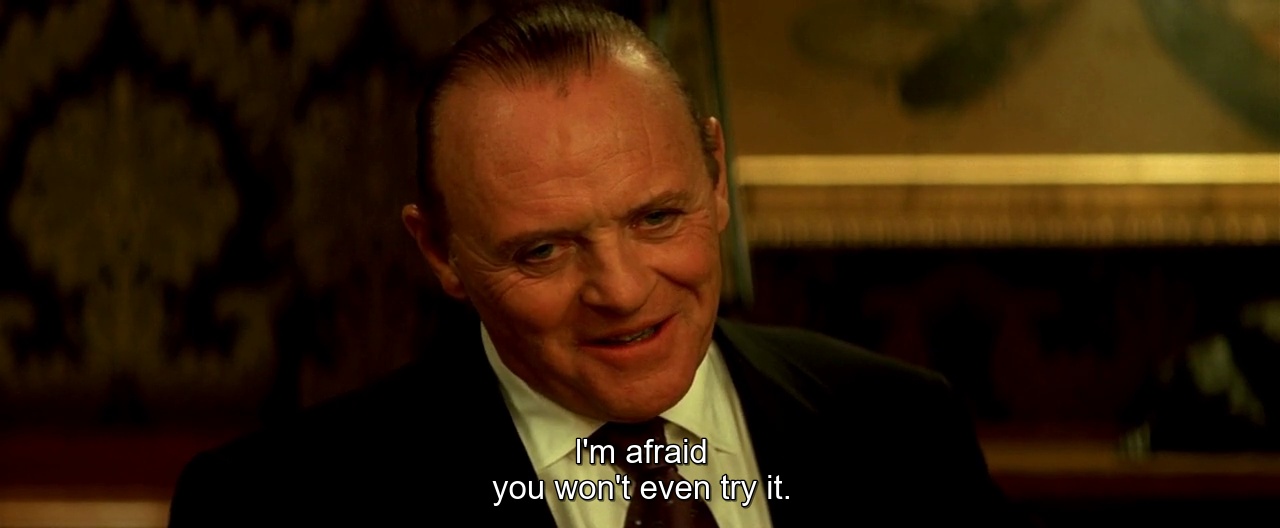
The film starts in Baltimore, where a respectful audience watches and listens to the symphony orchestra’s second flautist pretty much ruin an otherwise masterful performance of the Scherzo from Mendelssohn’s Midsummer’s Night Dream. In that audience is Hannibal Lecter, and he does not look pleased. No indeed. Something must be done. Medium to well-done, perhaps. In a sharp suit and a pony-tail, and quoting Horace, Hannibal later entertains the Board members of the Symphony who revel in his hospitality, despite one of their musicians being currently listed as a missing person. When Hannibal is asked by the Chairwoman to confess what is in the amuse-bouche, he replies: “If I tell you:

vlcsnap-2018-09-01-17h33m02s255

He sits at the head of the table, watching them eat. They are “innocent cannibals” – because they know not what they eat. Well, after all, who really does the homework nowadays as to what’s on the dinner plate?

After the innocent cannibals leave, Will Graham (Edward Norton) turns up – he and Lecter have previously worked together on another serial killer investigation – Garret Jacob Hobbs (which won’t mean much unless you’ve watched the first season of the TV series Hannibal (Fuller 2013), a prequel to the prequel). Will and Hannibal have been trying to profile a new serial killer, the Chesapeake Ripper (who is really Lecter of course), and have been looking for some sort of medical expert, a vengeful crazy who know how to “souvenir” body parts from the victims. But that’s not what he’s doing (we assume that it’s a “he”.) Will has worked it out:

vlcsnap-2018-09-01-17h35m47s188

As Lecter goes to get Will’s coat, Will finds on the bookshelf a copy of Larousse Gastronomique – it opens at “sweetbreads” – the recipe for the body parts that were taken from the victims. As the realisation comes to him – Hannibal is the cannibal! – so does Hannibal, with a large knife.

Anthony-Hopkins-sir-anthony-hopkins-40879414-500-200

Will survives, Hannibal is incarcerated in the Baltimore State Hospital for the Criminally Insane, and the Symphony Chairwoman faints in court when she finds out what (or who) was in the amuse-bouche. The case is sensationalised in The Tattler, a scandal sheet, by sleazy journalist Freddy Lounds (played by the late Philip Seymour Hoffman). Will retires to the seaside with his son and wife, Molly (a too brief appearance by Mary-Louise Parker of Weeds and West Wing).

vlcsnap-2018-09-01-18h50m06s202

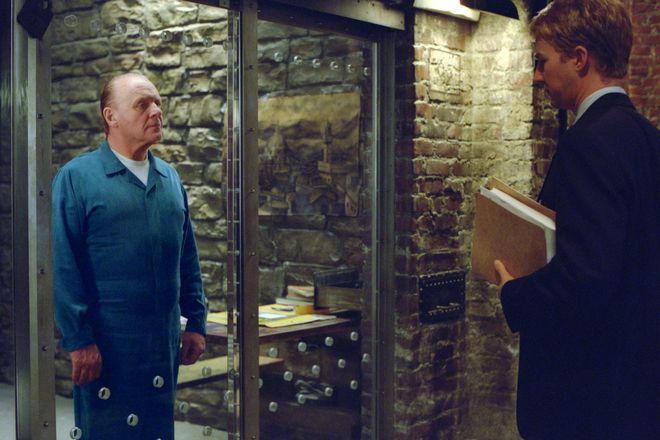
Several years later (according to the card), Will is persuaded to return to pursue a new killer: Francis Dolarhyde (Ralph Fiennes), “The Great Red Dragon” as he calls himself, or “The Tooth Fairy” as the cops call him, since he likes to bite the women victims as he rapes them, after he has killed them and their whole families. Not a cannibal, but certainly a biter. He uses his grandmother’s teeth – it’s all her fault of course, since she raised him in fear and shame and threatened to castrate him when he wet his bed (come home Dr Freud, all is forgiven). He greatly admires Hannibal, and likes to communicate with him about his “becoming” – he believes that “each being that I change makes me more than a man”, and he sees Hannibal as John the Baptist, to his Christ. And Will goes to see Hannibal, walking along the row of cages containing crazies, just as Clarice Starling will do later (in a movie made 11 years earlier).

antani-hopkins-i-eduard-nortan-v-cherveniya-drakon
Does the set look familiar?

Hannibal tells him that he and Will are just alike – their imagination raises them above all the other “dullards”. And so the chase begins.

vlcsnap-2018-09-01-18h28m59s296

After all the blood has been wiped off the walls, Hannibal writes to Will:

“We live in a primitive time, don’t we Will? Neither savage nor wise. Half measures are the curse of it. Any rational society would either kill me or put me to some use.”

The film ends with Clarice being announced. A nice segue into Silence of the Lambs, a film which had already swept the Oscars a decade before this.

vlcsnap-2018-09-01-23h07m44s541

Reviews were mixed: some critics hated it, some loved it. Of course it made a fortune when it came out, grossing over 200 million dollars. The public was hungry for Hannibal. The fact that the story had already been made as Manhunter in 1986 didn’t bother anyone – it wasn’t Hopkins, and it didn’t focus on Hannibal, and, worst of all, there was no cannibalism. And let us remember that the book Red Dragon, on which both those movies were based, was also the basis for Hannibal the TV series in 2013, and particularly Season 3. There’s more than one Macbeth, and there’s more than one way to make Red Dragon. One critic wrote:

“The only downside to this delectable third course? The regrettable likelihood that Lecter fans will have to make do without dessert.”

red-dragon-film-660x330

Hannibal Lecter is not real, but the public hunger for Hannibal the Cannibal certainly is. We put up with the “dullards” who put us, and Hannibal, into cages. We dream of sating our often deranged appetites, and we wish we had the power to do so. Hannibal offers us a fantasy of doing that.


If you like my blog, please feel free to recommend it (with discretion) to friends on social media.
If you have any questions or comments, you can use the tag, or email me  on cannibalstudies@gmail.com.

Cannibalism with Danish: “The Green Butchers” (Jensen, 2003)

Green_Butchers_Danish

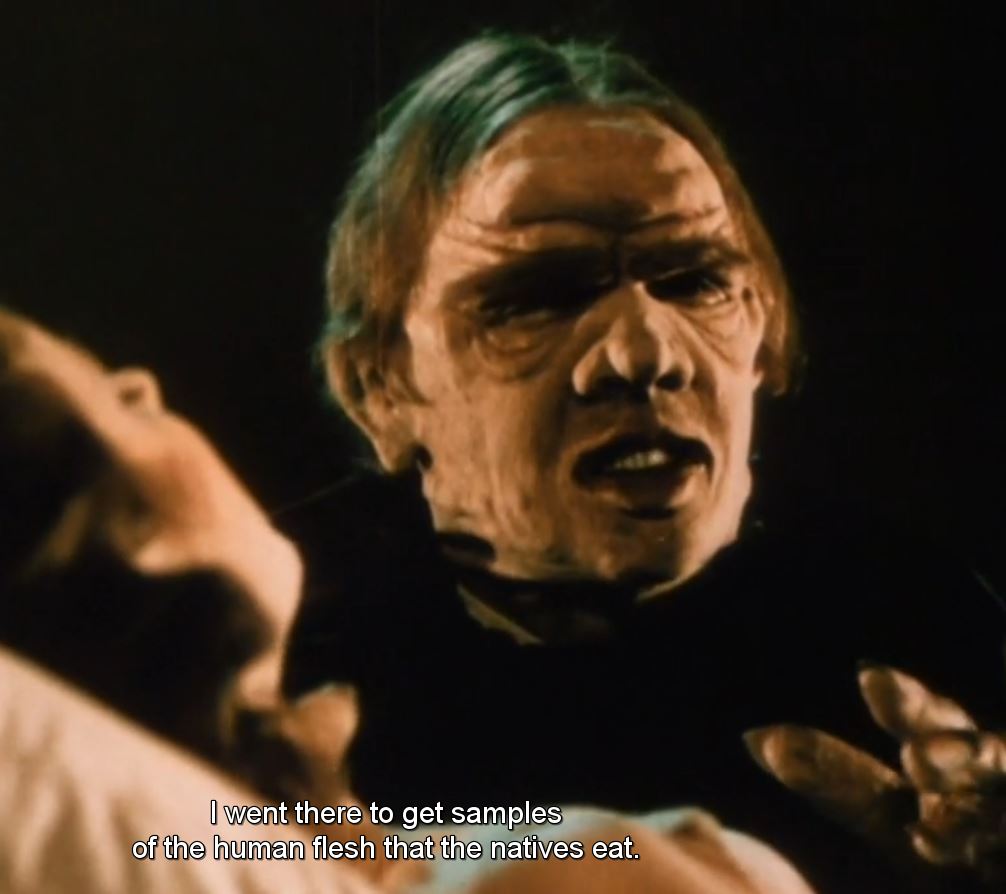
Anders Thomas Jensen directed this Danish black comedy, which is only really listed early in this blog because it stars – yep, that really is him – Mads Mikkelsen, better known to readers of this blog, I daresay, as Hannibal Lecter in the television series Hannibal (2013-15).

vlcsnap-2018-08-15-15h07m49s449

Svend (Mads Mikkelsen) and Bjarne (Nikolaj Lie Kaas) work in a butcher shop, but are browbeaten by their mean boss, “Sausage” Holger (Ole Thestrup), who says Bjarne’s pate tastes like jockstrap, and even disparages Svend’s marinade (believe it or not, this becomes an important plot point). Holger opens the film with a great summary of animal agriculture:

“I’ve always been fascinated by sausages. It’s almost mythological to kill an animal and then mock it by sticking it in its own intestine. Can you imagine anything worse than being stuck up your own ass?”

They can’t stand this rude dude, so they start their own butcher shop (slagtermester). Bjarne has problems: he smokes twenty joints a day and kills animals so he can collect their skeletons. But it turns out he is the saner of the two partners.

vlcsnap-2018-08-15-15h24m02s243

Their grand opening attracts a total of zero customers. Next morning, Svend does not have a good day: he breaks up with his fiancé and then discovers that he has inadvertently locked the electrician in the meat freezer all night. What to do with a frozen electrician? Holger appears, demanding fillets for the Rotary dinner, and Svend panics.

vlcsnap-2018-08-15-15h21m50s508

Next day, the guests from the Rotary dinner are queueing up outside the shop – they all loved the fillets. Business is booming and, as Svend says, we had to get rid of him, one way or another. The electrician becomes “Svend’s chicky-wickies”. Then the real estate agent turns up, wanting a tour of the premises. So it goes.

vlcsnap-2018-08-15-21h49m20s192

It’s an accidental Sweeney Todd. They meant no harm, and are just being rewarded for bumbling incompetence. And isn’t that the way the world really operates? The Peter Principle!

Then the local pastor reveals that he didn’t like the Rotary dinner. It reminded him of his wife. The wife he had to eat after a plane crash on their honeymoon. Yes, it’s not just Danish Hannibal, it’s also Alive!

vlcsnap-2018-08-16-17h46m00s906

Mads Mikkelsen is very good in the role of the nervous, sweating, irritable Svend, although it’s hard to reconcile this farcical character, and his extraordinary haircut, with the cool, sophisticated and brilliant Dr Hannibal Lecter, let alone Le Chifre in Casino Royale or even Kaecilius in Dr Strange.

Hannibal - Season 1

By the end of the film, we are asked questions of perception: what is appetite? What is “meat”? Is the secret in the sauce? Is that a wig?

The promoters had no idea what to do with this film. Check out some of the posters – hard to tell that they are for the same thing!

This slideshow requires JavaScript.

It’s a quirky comedy, pleasant enough and inoffensive, unless you are offended by either butchers or cannibalism. If you are equally offended by both, then perhaps it has done its job well.

If you like my blog, please feel free to recommend it (with discretion) to friends on social media.
If you have any questions or comments, you can use the tag, or email me  on cannibalstudies@gmail.com.

The unkindest cut: “Teeth” (Lichtenstein, 2007)

Six months into this blog, I ask you: have we actually defined cannibalism? I answer you (because it’s a rhetorical question): no, we have not.

The Oxford Dictionary says that a cannibal is “a person who eats the flesh of other human beings”. But what does “eat” mean, then? “Put (food) into the mouth and chew and swallow it.”  So then we have problems with zombies, who eat the flesh of other humans, but may or may not be “persons” (since they are dead, or undead). And with bulemics, who chew and swallow, but then bring it up again?

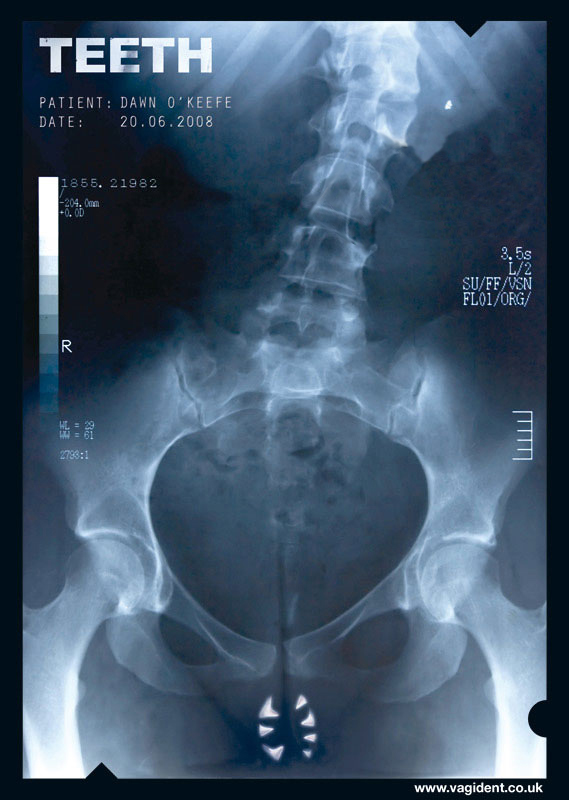
Why am I being such a pain about this? Because I like this film, and would love to fit it into my cannibal blog. But she, to put it politely, does not swallow

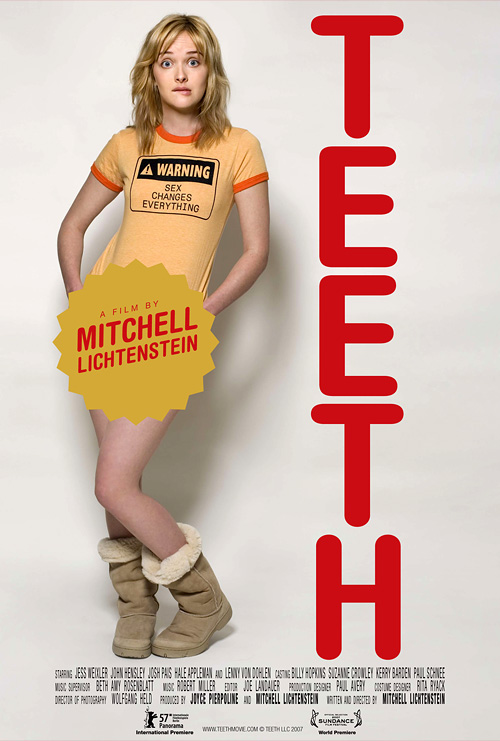
teeth-poster-big

Teeth is directed by Mitchell Lichtenstein, the son of far more famous pop artist Roy Lichtenstein. It is awkwardly defined as “comedy horror” which can be a problematic mix, and often ends up with silly movies like Eat the Rich. But this one works, although I didn’t find it terribly funny. I guess if you were sitting in a cinema watching a bunch of teenage boys squirm, that might have been good for a laugh.

Dawn

Dawn O’Keefe (Jess Weixler) is a teenage spokesperson for a Christian abstinence group called the “Promise”. This is a terrifying crowd – young teens can be pretty off-putting anyway, but this lot want to chant stuff about Eve and the Devil and Sin, and do so with a flint-eyed seriousness that is disturbing (or funny if you see it from a certain angle).

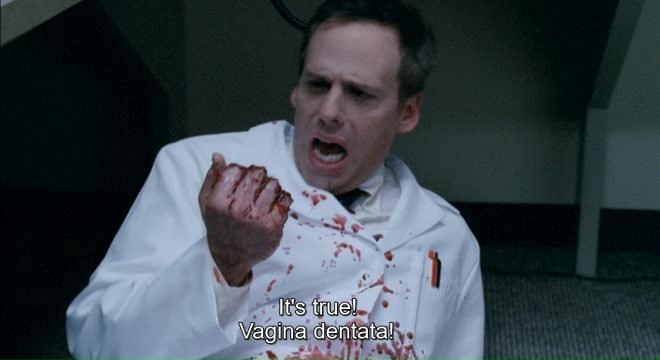
Dawn has a talent which is not known to anyone, including her, or the various males who try to assault and penetrate her: she has a vagina dentata: a toothed vagina. As a tiny girl, she almost bites off the finger tip of her step-brother who is doing naughty things under her swim suit in the wading pool, but the talent comes into its own when a boy from the abstinence group decides that God will forgive and understand if he takes advantage of their solitary swim, knocks her almost unconscious and then starts to rape her. Well, God might forgive, but Dawn’s lower teeth don’t, and he discovers a new and very agonising weight loss method.

This slideshow requires JavaScript.

The vagina dentata is an ancient myth that is found in many folk legends from a wide range of peoples. Freud and the classical theorists liked to say that it is a representation of the fear that little boys have of their penis-less mothers, which leads them to assume that they are next for castration, either by her or by their fathers who are angry at their budding Oedipal desires. Joseph Campbell in The Masks of God talks about a New Mexico myth in which “vagina girls” ate men who came to their house for sex. We’re getting close to cannibalism now, I think.

41yfXieMBGL

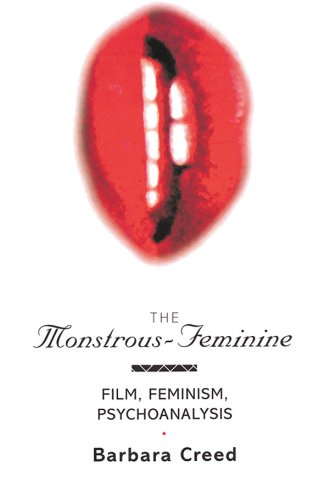
It’s a huge subject, covering quite a lot of what goes in the festering sewers of our unconscious minds. If you wish to research it more (and it is fascinating stuff), Barbara Creed has covered the subject comprehensively in The Monstrous Feminine.

vlcsnap-2018-08-06-23h36m52s586

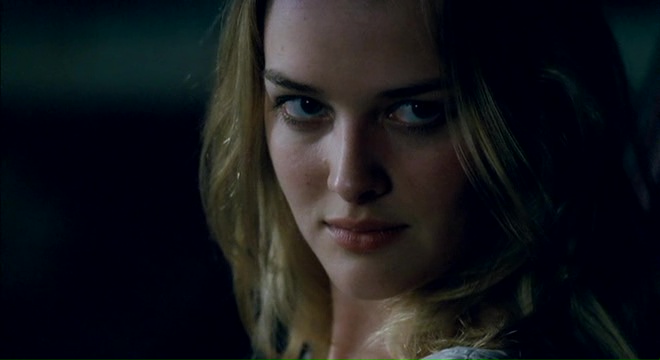
So: young Dawn, played brilliantly by Jess Weixler, whom you may recognise as the investigator Robyn in the TV series The Good Wife, believes in saving herself for marriage, a view that is considered somewhat old fashioned now, but still resonates in many parts of the world, particularly the Bible belts. Those around her, including her step-brother with the disfigured finger, feel that she should “put out” as they say, but when she does, boy are they sorry. Creed looks closely at the “taboo of virginity” and Freud’s view that this arises from penis envy and frigidity. Men fear that women will castrate them, particularly when the loss of virginity is painful, as it clearly is to Dawn. Freud ignores the possibility that it is men’s irrational fear of the deadly power of the vagina that leads to fear of sexual intercourse. Brought up in this oppressive environment, Dawn is unaware of her power. The film unravels this power.
Weixler won the Special Jury Prize at the Sundance Film Festival “For a juicy and jaw-dropping performance”, and it was well deserved.

vlcsnap-2018-08-06-23h49m11s629
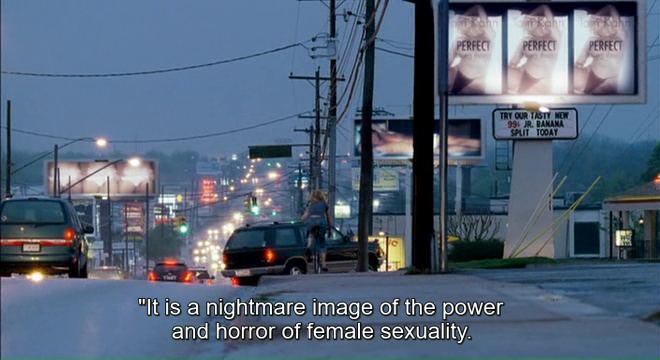
You have to watch closely to catch the “banana split” gag

The horror of cannibalism is at least as much to do with their power to snap, bite and destroy as it is with their tendency to swallow (any old Jaws can do that). The vampire, without whom the Horror industry would be toothless (sorry), swallows, but only blood, not flesh. Yet it is the sharp teeth and the swallowing that gives vampires their welcome into at least the outer limits of cannibal fiction. Dawn is an unwilling but not totally innocent cannibal, because she soon figures out (through google) what it means to be the bearer of the vagina dentata.

vlcsnap-2018-08-06-23h55m02s172

A film like this could easily degenerate into farce, and the celibate teens could end up laughable stereotypes of conservative bigots. Yet, Dawn takes us with her on her quest to understand what she is, what she wants, and what she can do to those who wish to force themselves on her. The logline states “every rose has its thorns”, and the trailer says “Something is wrong with Dawn O’Keefe”. But surely that’s not true – there is something very wrong with the rapists, and it gets a lot wronger as they get closer to the climax of their plans. One review said:

“What’s most important for Dawn is she discovers her vagina is not a curse but a source of power.”

Dawn at first thinks that her vagina dentata might be the “Adam within”, a forbidden male side of her character that causes gratuitous havoc. But in fact, the teeth are her defence and her weapon against injustice. With her extra teeth, and the ‘dawning’ of the realisation of her own power, Dawn is a superhero of the #MeToo age.

vlcsnap-2018-08-13-21h32m43s706

The film has a respectable 80% on Rotten Tomatoes website, with the concensus being:

“Smart, original, and horrifically funny, Teeth puts a fresh feminist spin on horror movie tropes.”

teethposter_banned
This poster was apparently banned

The final credits state:

No man was harmed


If you like my blog, please feel free to recommend it (with discretion) to friends on social media.
If you have any questions or comments, you can use the tag, or email me  on cannibalstudies@gmail.com.