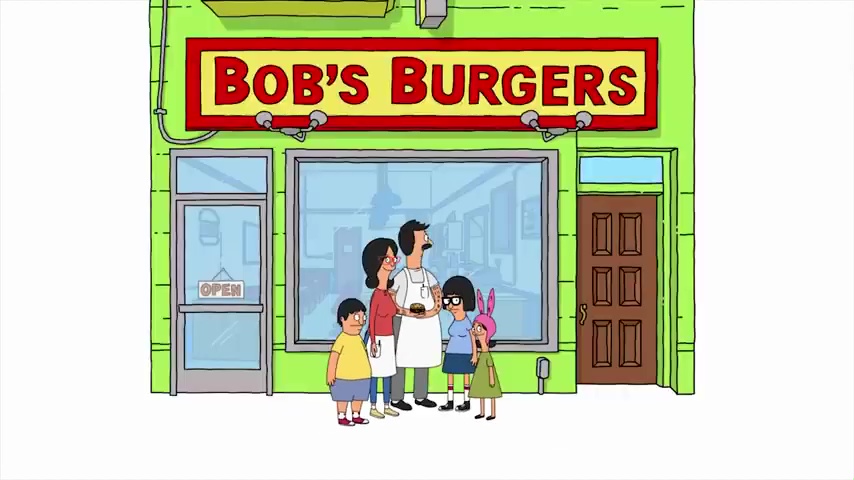
Bob’s Burgers is a hugely popular animated sitcom that has been running since 2011. It has been renewed for a 12th and 13th season, and has spun off a comic book series, a soundtrack album and a movie which, although delayed by the pandemic, is due for release in 2022. TV Guide ranked it among the sixty greatest TV cartoons. Bob and his family have even appeared in a “couch gag” in an episode of The Simpsons, a show that has had its own cannibal stories. This first episode, Human Flesh, aired on Fox on January 9 2011 and was viewed in 9.41 million homes in the US.
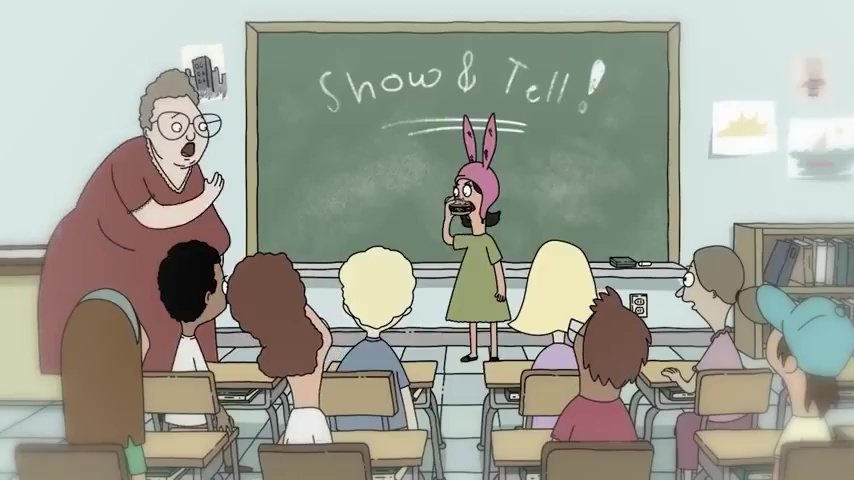
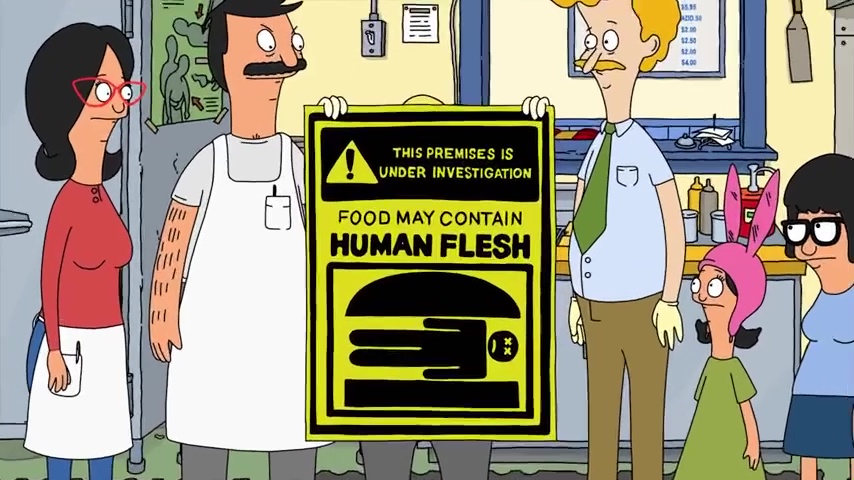
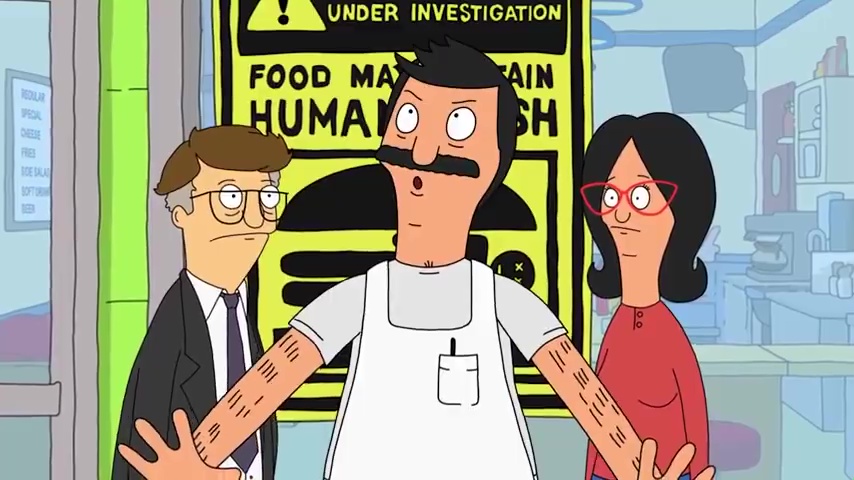
Bob’s Burgers is due to reopen after a series of disasters, staffed by his family – his wife Linda (John Roberts) and three kids. The Health Inspector arrives to investigate reports that Bob’s burgers are made out of human meat from the crematorium next door, a rumour started by youngest daughter Louise (Kristen Schaal from Flight of the Conchords and Last Man on Earth) at her school ‘show and tell’.
The Health Inspector is a jilted lover of Linda and tells Bob (H. Jon Benjamin):
“We’ll test your meat. If it contains human flesh anything above the four percent allowable by the FDA, then your restaurant will be closed, and you, sir, will be going to jail!”
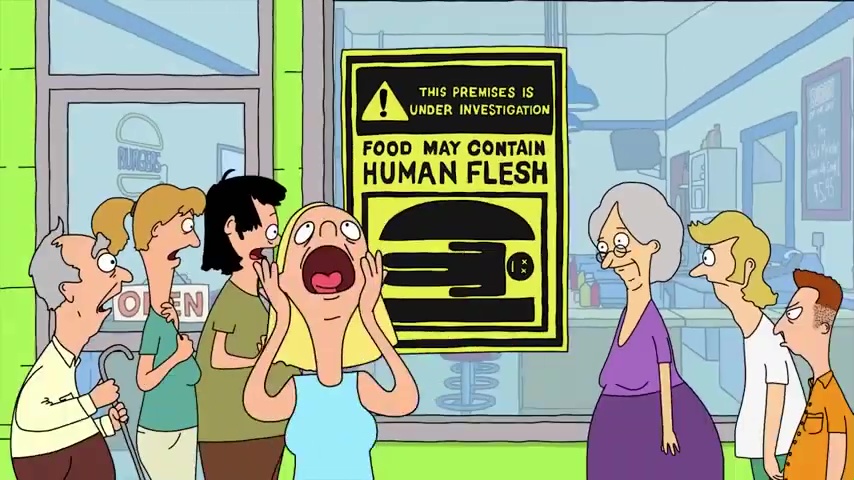
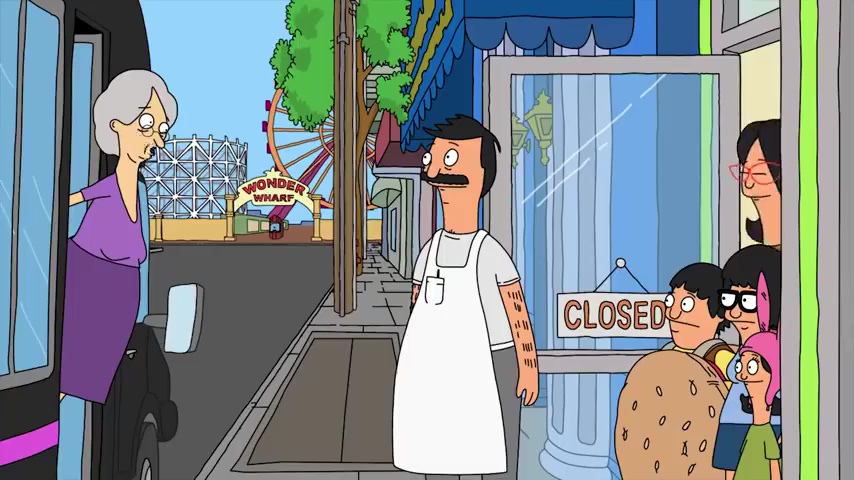
The public response is to run screaming from the door, although one old lady says she’d try it, and at least there’s no waiting line.
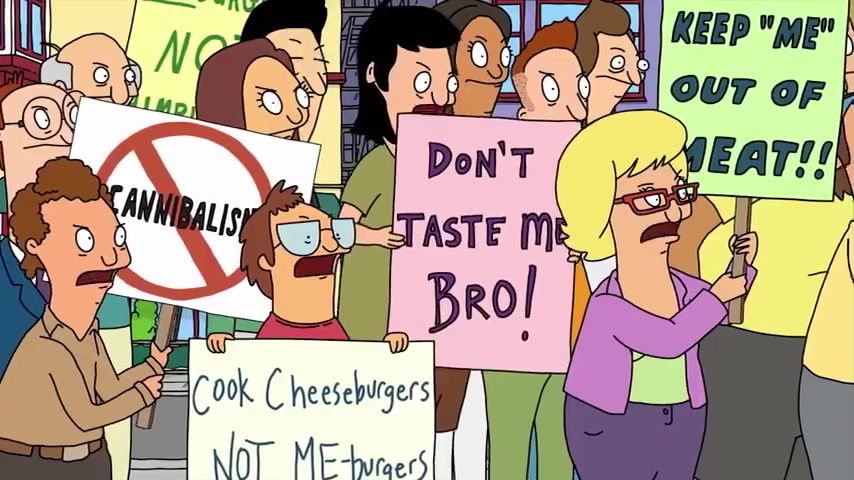
An angry mob gathers outside the shop.
Bob addresses them, appealing to them to consider the living, rather than the dead.
“we mistreat the living and no one seems to care, but once that body’s dead, it’s ‘don’t mistreat the dead body, hey, don’t eat the dead body, that’s the ultimate crime, right? Murder, no big deal; cannibal? Whoaaa!”
The burger shop is saved when the “adventurous eaters’ club turns up wanting to try human flesh burgers, willing to pay $50 each. The health inspectors return to announce that their test showed “100% Grade A beef” but Bob shouts them down.
The restaurant is saved. But we never get the answer to Bob’s question. Why is it OK to mistreat each other (and the unfortunate animals who are made into his beef) but not eat the human dead, the only beings in this equation who cannot suffer?
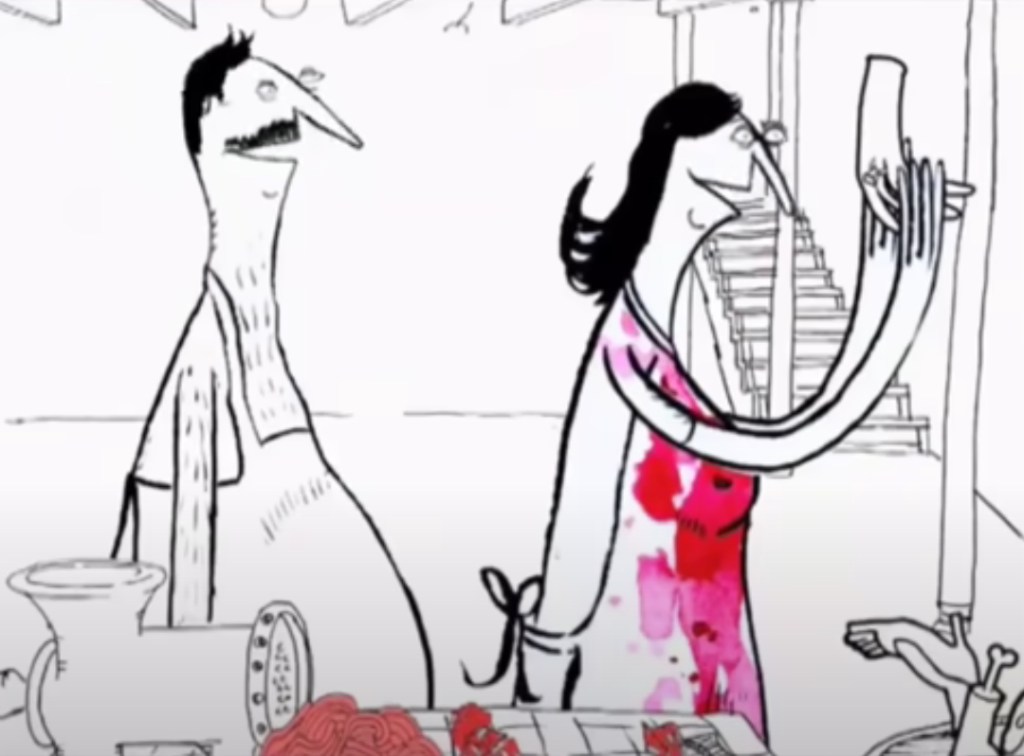
The show’s creator, Loren Bouchard, told The Hollywood Reporter that the original concept of the show was a family of cannibals running a restaurant, but Fox talked him out of it.
Seems like a missed opportunity to me.
Here is the original concept cartoon, with Linda assuming that a ring on a corpse’s hand (from a pile about to go in the meat grinder) is her anniversary present from Bob.
Last week’s blog was not a film or TV story but a real event, the account of displaced people being kidnapped for ransom by Mexican cartels, and chopped up for their meat if the money was not found. This segues nicely into this week’s blog, in which a boy disappears and the parents suspect a cartel kidnapping, but in fact (spoiler alert) he has joined a group of feral cannibals.
The response to news of cartels, kidnapping and cannibalism is to shake our heads and ask how people can DO such things. The assumption behind such a question is that we have ‘progressed’ and, while cannibalism may have been a part of our savage past, it should have been left behind in today’s enlightened civilisation. Yet we are aware that cannibalism continues to exist, and that it can reappear when food is short, as in the siege of Leningrad, or for revenge like the man who killed and ate up to thirty women because he resented their rejection of him, or sexual attraction and desire to keep the person with us (or within us) like Jeffrey Dahmer and Armin Meiwes, or just for fun and profit, like Fritz Haarmann.
Sigmund Freud wrote of an ORAL SADISTIC or CANNIBALISTIC STAGE, which coincides with the time babies’ teeth start to erupt. We recognise our mother’s breast as external to us, and wish to retain ownership, by biting and swallowing it. At the same time, the aggression is tempered or sometimes instead magnified by anxiety at the potential loss of the other (mothers don’t like to be bitten) or fear that the much stronger parent will instead choose to devour the child. Our first instance of logical reasoning – if I can bite her, she can surely bite me harder. These early influences may sink into the sludge at the bottom of our unconscious minds as we grow up, but they remain there, and can reappear at any time in different forms.
It is tempting, therefore, to see acts of cannibalism as simply throwbacks – to our earlier social models (savagery) or to psychotic deviance dredged up from tortured unconscious memories. Civilisation, we think, can conquer such eruptions. But not always, and not in this episode of American Horror Stories, another episode of which we considered recently.
This one is set in, and against, nature. A man, woman and three-year-old boy are driving into Kern Canyon National Park in California for a camping trip. The father wants to return to nature, get them out of their comfort zone. The mother points out that “out of the comfort zone” is equivalent to “uncomfortable”, and the little boy wants a TV. A phone call on the way tells us that the father is a lawyer defending a “greedy-ass corporation” – the type that exploits and destroys the environment for profit. This is going to be about nature, red in tooth and claw, and revenge.
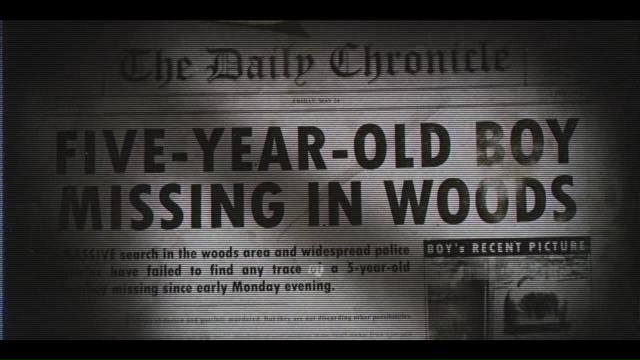
The boy, Jacob, disappears while camping with his family. Ten years later, his father, Jay, is approached by a hunter who tells him that he believes Jacob is alive, kidnapped by a drug cartel running pot farms in the park. The hunter leads Jay and Jacob’s mother, Addy, into the woods to look for him. The Park Ranger, who for some reason is Australian, warns then not to go, but of course they head off and, like last week’s Mexican abduction, it’s a trap.
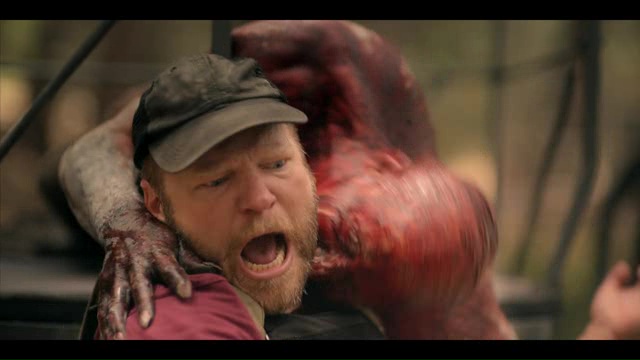
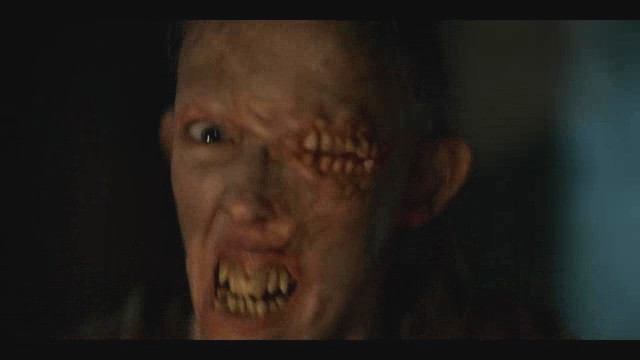
Deep in the woods, they are attacked by wild, human-like creatures, who eat their abductor. Jay and Addy seek refuge at the Park Ranger’s station, where the Ranger tells them that the National Park Service was created by the government
“…to keep Americans from things that would kill and eat them.”
These are feral humans, he says, possibly descendants of Vikings, or of mountain men who never came down from the mountains, or maybe Civil War soldiers who never surrendered. Or people who just checked out, had enough of the world. In any case, they have gone back to nature, gone feral, and so are a threat to the civilised, cultured humans who use and abuse the natural world. The Ranger tells them there are are tribes of ferals in every National Park – over 2,000 people have vanished from the parks over the years. There are certainly people living off the grid in the wild areas of the world, but not necessarily feral cannibals. Why is it kept top secret?
“Governments need their citizens to believe they are in control. Plus, the National Parks generate billions of dollars in revenue every year. Capitalism, baby! If people knew there were feral cannibals running around, attendance might drop off.”
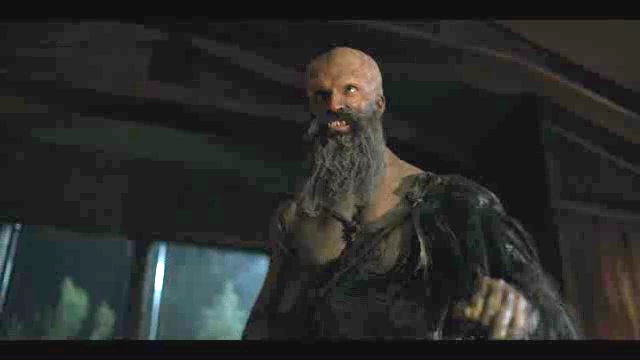
The Station is attacked by the feral cannibals, and the ranger is killed. Jay and Addy are taken to the leader of the creatures, seated on a throne of skulls, looking remarkably like a Renaissance Jesus.
Of course it is Jacob (speculation is already mounting that Jacob, the cannibal king, might get his own spin-off series). Jacob seems to recognise his parents, but when one of the creatures asks Jacob who they are he answers, “dinner“. Freud would have enjoyed the feast that follows: the “primal hordes” overthrowing and eating the father; Jacob, frozen in his infantile cannibalistic phase, tasting his parents’ blood.
This episode is also a study in what Georgio Agamben calls the “anthropological machine”, a paradigm that we use to separate ourselves from other animals. In the pre-modern machine, non-humans were depicted as human-like to draw the distinction – we spoke of werewolves, minotaurs and cyclops; in this episode they evoke Bigfoot or the Australian equivalent, the Yowie. But the modern anthropological machine instead declares certain humans to be less than human or else inhuman – race, ability, gender or social status may be used to divide us into human and “other”. The ferals are inhuman because they have regressed to savagery, chosen nature over civilisation. For hundreds of thousands of years, we existed in small clans, and anyone outside the immediate family was assumed inhuman. We need to fear, and sometimes eat, the outsider, because we evolved to do so.
We like to think that this is all ancient history. But our sanguine belief in social progress lulls us into supposing that that acts of cannibalism (as depicted in this blog thecannibalguy.com, for example), are simply aberrations, throwbacks to a savage past, or unfortunate outbursts by deranged or psychopathic individuals. What this confident diagnosis ignores is the inherent violence of the human species.
As sociologist Zygmunt Bauman points out, the civilising process has simply presented a “redeployment of violence”. Instead of hunting animals or, more recently, slaughtering them in the street in what used to be called “the shambles”, we now mass produce death in huge factories called abattoirs, which are placed away from residential areas and surrounded by high walls and sophisticated security systems. Violence against our fellow humans has been similarly redeployed, with drones and smart bombs replacing hand to hand conflict. Fear of social sanctions or maybe divine punishment keep us in control of our internalised aggressive drives against our fellow citizens, at least some of the time. But at any moment, for reasons usually unclear, we can loose this violence, together with the voracious appetite that characterises consumerism, and redeploy it against adversaries. Call it feral, as per this episode, or perhaps, instead, call it authentic, cannibalistic humanity.
The news serviceNoticias Telemundo recently reported a case of kidnapping, murder and cannibalism which, it seems, may not be so uncommon among refugees trying to cross Mexico into the United States.
Noticias Telemundo Investiga interviewed 32 migrants kidnapped from 2019 to 2021 in Mexico and the U.S. Their relatives were made to pay $1,500 to $5,000 as ransom to criminal gangs for the release of the kidnapped migrants.
The latest story follows the ordeal of a young man named David Sanabria and his little girl Ximena, who are from Honduras.
David Sanabria had arranged a coyote (smuggler) to escort them to the Texan border, where he planned to turn himself and his daughter in to U.S. immigration authorities and seek asylum. But when they reached Reynosa in the Mexican state of Tamaulipas, the coyote turned them over to a cartel gang. David and other captives were repeatedly made to call relatives to ask for a ransom, and were beaten if the relative said they couldn’t afford it. The victims are not US citizens so relatives cannot ask for help from the FBI, and in many cases the local police in Mexico are in the pay of the cartels.
If the ransom was not paid by the deadline, the captives would be murdered. David said:
“With a machete they dismembered them, killed them, and the only thing I could do was cover my daughter’s eyes and ears so that she would not know what was happening, nor would she have those memories for her whole life.”
After that, the corpses were cooked and the surviving migrants were made to eat the human meat, “so that there would be no trace of anything — that’s what one had to eat.” The term “innocent cannibal” is usually reserved for those who are not aware that human meat is in their meal, but in this case, I think we can apply it to David and Ximena.
At night, the kidnappers performed satanic rituals. “They knelt down. They had images of the devil, of Santa Muerte. They made pleas. They made offerings. It was something horrible,” he said. Several survivors who spoke to Noticias Telemundo Investiga talked about the kidnappers’ “cult of death”.
David’s brother borrowed money from his co-workers, friends and relatives and even asked strangers for money on the streets of Nashville. He eventually raised the $7,500 ransom and David and Ximena were released. David waded across the Rio Grande with Ximena on his back. So they made it to the US border where they were detained for three days, but then were returned to Mexico. Under Title 42 to curb the spread of COVID-19, migrants who are detained at the border are returned to Mexico while their petitions for asylum are processed. This year, 100,000 migrants a month are being returned to Mexico.
They were put in a shelter by the National Migration Institute of Mexico, and Al Otro Lado, which provides free legal assistance to migrants from Baja California, helped David fill out an asylum application.
In August, the U.S. granted David and Ximena humanitarian parole so they could enter the country and live with his brother in Tennessee while they await the results of their asylum petitions.
This is Ximena in the shelter.
The United Nations estimates there are over 82 million people in the world who have fled their homes, of whom 26 million are refugees, half of those under the age of eighteen. That means one in every ninety-five people on earth has fled their home as a result of conflict or persecution.
Imagine, if you can, being a refugee, anywhere in the world. You are fleeing from a place which doesn’t want you, and where people are possibly threatening to imprison or kill you, to another place that also does not want you and may send you back, and almost no one will support you en route. Men, women and children are helpless, easy prey for unscrupulous smugglers and criminal gangs. If you disappear, no one will find you, particularly if you have been eaten.
Migrant kidnappings happen all the time. Mexican authorities at the beginning of September 2021 reported a total of 697 migrants kidnapped and rescued in just 10 days. These are not statistics. They are people like David and Ximena, who may be robbed, kidnapped, beaten, killed, forced into cannibalism, and even eaten themselves, as the world ignores them. In a world where we capture, kill and eat some 350 million animals every hour of every day, is it really surprising that we sometimes do the same to members of our own species?
American Horror Storiesis part of the American Story franchise. It is a 2021 spin-off of the hugely popular American Horror Story, an anthology series created by Ryan Murphy and Brad Falchuk, who were responsible for other terrifying shows like Nip/Tuck and Glee. American Horror Story is currently in its tenth season, and has been renewed for seasons 11-13. Each season is a self-contained mini-series, whereas in this new series, American Horror Stories, each episode is a self-contained narrative.
While there were cannibals in American Horror Story, (the Raspers in season 2 and the Polk family in season 6), the new series seems to be a lot more into them – the first season has two cannibal stories out of the seven episodes, an impressive 28.6% (if anyone is counting).
Episode 3 is called “Drive In” because that’s where most of the gore happens. Kelley (Madison Bailey) and Chad (Rhenzy Feliz) have been arguing about her reluctance to have sex with him, even though he is playing Bob Ross The Joy of Painting on his laptop (he’s been told it’s a sure fire aphrodisiac due to its reputation for causing a relaxed, tingling sensation known as ASMR (autonomous sensory meridian response). Anyway, that trick doesn’t work on Kelley.
Bob Ross is an interesting choice for a horror story opening, as he seems to live on through Twitch and the internet, despite having died in 1995. So much horror is about the undead stalking promiscuous teenagers!
Chad’s friends assure him that ASMR won’t work – what he needs is horror! That’s why horror films are so popular, they are aphrodisiacs, OK? The link between fear and sex – the subject of a whole new dissertation.
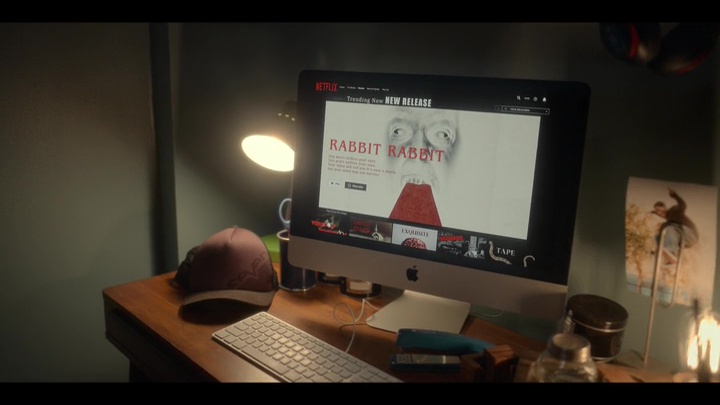
Chad’s friends have one ticket left for the drive-in screening of a film called Rabbit Rabbit. The film was banned by Tipper Gore (Amy Grabow) after the audience at the only showing in 1986 started to massacre each other, and she ordered all prints of the movie destroyed. Except they missed one: the director’s cut. Chad dismisses this whole massacre business as an urban legend, but takes the ticket.
As they drive in, a lone woman is protesting, demanding the screening be stopped. She tells Chad she was at the showing in 1986, where her boyfriend plucked out her eye and ate it before being killed himself. He listens politely, but then Kelley turns up with the biggest bucket of popcorn ever created, and he has to, you know, go. Presumably now full of popcorn, Kelley tells Chad that she is finally ready to have sex with him, and various cannibal metaphors fill the cars before the movie starts – Chad and Kelley pashing in his car, fellatio in his friend’s car next door.
Chad and Kelly’s steamy petting fogs up the car windows, so they cannot see the film, nor do they see the mayhem erupting outside, where people are attacking and devouring each another. They try to drive away when a cannibal smashes through their window but they crash, and have to retreat to the projection room, where we see Chad, who just yesterday was trying to seduce his girlfriend by playing The Joy of Painting, use the last copy of Rabbit Rabbit to cave in the skull of the projectionist, who has just eaten her assistant.
Of course, it’s not the last print. There is a rumour of another print being shown next night. Their mission, should they choose to accept, is to find the director and destroy the NEXT last copy.
So, we finally get to the cannibalism, and it’s plentiful and gory, as we would expect. Those affected by the film get bloodshot eyes, their veins swell, and they are only interested in one thing – human flesh. Chad’s best friend approaches as they leave, eyes bloodshot, veins swollen, and Chad appeals to him to THINK! Remember when we were two little boys, innocently watching porn in the afternoons? Now, according to Aristotle’s theory of the human being as the rational animal, Chad’s appeal to reason, love, friendship, shared porn, should have broken through the spell. Ha!
So what’s with this movie, with the most innocuous title imaginable: Rabbit Rabbit? The rabbit is a gentle, timid, vegan animal who is massacred pretty much everywhere he is found, due to his propensity to breed – a lot! Sounds kind of human?
Chad has done some research before going to the movie; he watched, on YouTube, Tipper Gore’s committee condemning the movie and having it banned after the audience massacre in 1986. Banning things is popular in America due to deep religious convictions, but also not popular due to, you know, the First Amendment. Tipper Gore, married to Vice President Al Gore, was responsible for making music companies add warning labels to songs with explicit content around that time, after finding her 11 year old daughter listening to Darling Nikki by Prince, so this is not just idle chatter – she was seriously into banning stuff.
But why is the government banning Rabbit Rabbit and destroying all copies (or so they imagine)? Well, the director, who glories in the name Larry Bitterman (John Carroll Lynch from Fargo and The Drew Carey Show) is asked by Tipper about his claim in Fangoria Magazine that his movie:
“…would break people’s souls, and anyone who saw it would be damaged forever.”
Publicity hype, laughs Bitterman, but Tipper is worried about the effects of violent content on society, which must be an in-joke for Murphy and Falchuk, after presenting us with ten seasons of violent content, and now this gorefest. Critics have been warning about that sort of thing forever. Civil society has been threatened by the Internet, porn mags, the horror genre, and before that television, movies, radio… hell, conservative Cro-Magnons were probably warning about the evils of cave paintings 40,000 years ago.
Is there any sense to it? Can porn turn us into sex offenders, horror stories into cannibals? The internet certainly turns some people into trolls. Bitterman wants to make cinematic history – he tells the teens that this “was his finest hour” – a cinematic happening, a horror movie where the horror isn’t on screen, it’s in the audience. He refers to Friedkin’s (actual) use of subliminals in The Exorcist – two frames of a demon’s face in reel six had people throwing up in the aisles and women going into labour. Rabbit Rabbit took this to the next level,
“The universal combination of image and sound that would trigger the fear centre of every human brain. I studied intrusive memory formation, the CIA hijinks with MK-Ultra…”
Bitterman had jumped the hearing bench and attacked Tipper Gore when she boasted about destroying the prints of his movie, which resulted in him being locked up for fifteen years for assault. His conclusion: “a society that locks up its artists doesn’t deserve to survive.”
There’s another in-joke – the series was made by FX for Hulu. What if a film like Rabbit Rabbit was to appear on, I dunno, a rival streaming platform – imagine the damage it could do!
But there’s another question for us among all the hacked flesh and explosions. Have you ever felt like you are in a horror movie? Maybe while in the throes of a personal tragedy, or watching a pandemic unfold, or contemplating changing climate. Perhaps you’ve wondered if “they” are playing with your brain. Or perhaps they really are breaking your soul. Or maybe eating you alive. Cannibalism is a brutal metaphor for pretty much every atrocity we visit on our fellow earthlings. A movie, a cataclysm, political upheaval – what would it take to start us eating each other?
Who’s in your burger? One of the best parts of any news story about cannibalism (and don’t the media just love them?) is the cheeky double entendre, the thigh-slapping pun, the sly innuendo. This story has generated many of them. E.g.
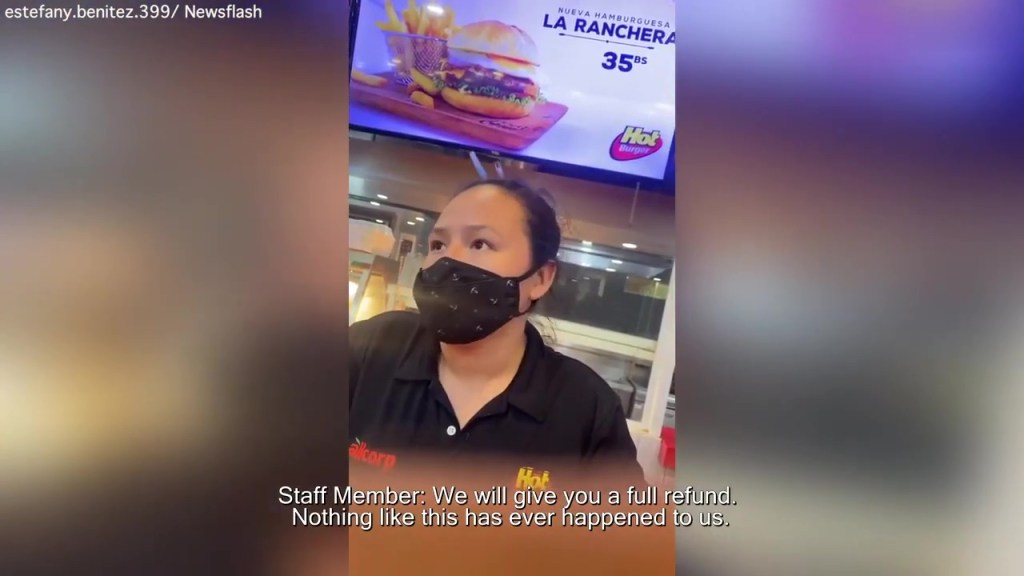
Estefany Benitez wrote in a Facebook post about an incident she alleges occurred on Sunday September 12 at the Hot Burger store in Santa Cruz de la Sierra in Bolivia. Benitez claimed that she chewed on a severed finger with her first bite of her hamburguesa magnifica burger.
Accompanying photos show what appears to be a rotting fingertip on the plate next to the burger.
In Benitez’s accompanying video, which currently boasts more than 60,000 views, she says,
“Here we are at the magnificent Hot Burger where a finger ended up in my burger.”
The video shows an employee pleading “Please tell me what you want and we will give it to you.” The young employee tells the angry customer that the burgers arrive at the restaurant pre-prepared and that “nothing like this has ever happened to us before.” But the video claims that the restaurant then reportedly continued “serving customers like nothing had happened”.
UNINTENTIONAL PUN OF THE WEEK GOES TO:
“This issue is out of our hands.”
After the post went viral, a company spokesperson called the discovery an “unfortunate incident” and explained that an employee had lost two fingers while prepping the meat — a story that has been confirmed by local police.
It’s not unusual for customers to discover human body parts in their food. In an incident in 2019, a UK couple claimed they’d found a tooth in their Chinese takeout. This trope of the innocent cannibal eating human body parts under the assumption that they are from some anonymous animal who is not human has been around since the legend of Sweeney Todd, the ‘demon barber of Fleet St’ who processed his customers into meat pies, and who was supposedly hanged in London in 1802. Todd has graced several movies, most recently a musical with Johnny Depp and Helena Bonham Carter. Other similar stories include Motel Hell and the Danish comedy Green Butcher, starring Mads Mikkelsen. Of course, The Texas Chain Saw Massacre famously begins with a group of tourists chowing down on some unnamed “barbeque” before themselves becoming the ingredients.
In the movie The Farm, a group of animal activists make a living cutting up tourists who stop at their hotel, selling their meat as part of a catering business. Female victims are artificially inseminated to make saleable milk. Like the Hot Burger company, they also have production problems, when a customer finds a tooth in his delivery of meat.
In light of the events at Hot Burger, the Bolivian vice-minister for the defense of consumer rights ordered the temporary closure of the burger branch and fined the firm. However, it’s unclear whether Benitez will pursue legal action. Comments on her Facebook page are running hot, many of them condemning her for putting hard-working restaurant staff out of work. And, when you think of it, is it really so very shocking to find meat from a large mammal in a burger?
An Army veteran from Utah who has been accused of assaulting police during the Capitol insurrection was refused bail after he threatened to “eat the flesh” of a probation officer.
Federal prosecutors revealed the threat made by Landon Copeland during a bail hearing on Friday 10 September. They told U.S. District Judge Meriweather that Copeland had been on pretrial release for “all of two days” before making the threat, resulting in him being re-arrested. According to a motion from prosecutors seeking to keep him detained, Copeland told the probation officer,
“I will eat your flesh for nutrients. I don’t think you don’t know what I am”
Copeland later stated “I was well within my First Amendment rights in speaking to him the way I did.” At a Zoom hearing on May 6, Copeland had shouted at a judge and court officials. He then drove to probation services where he spoke to the officer through a glass partition. According to the detention memorandum (page 7), he was “ranting about government conspiracies” and claiming “the government was out to get him. At times, he banged his head against the glass and pressed his face against the glass.”
Copeland said he was furious because, during the May hearing, an attorney for another defendant said his client had become addicted to Fox News and suffered from “Foxitis.” Copeland said the attorney’s comment was “spitting in the face of the 258 million people that tune in to the Tucker Carlson show,” complaining that he was “allowed to lambast all of Fox News’ viewers without objection from the judge or any of the other attorneys present.”
Prosecutors also said during Friday’s hearing that if Copeland is released pending trial and placed on home confinement, multiple agents would be required to conduct check-ins because law enforcement “is not welcome” in Hildale, Utah, where he lives, according to a report from WUSA9’s Jordan Fischer. Hildale is home to the Fundamentalist Church of Jesus Christ of Latter-Day Saints, led by jailed president Warren Jeffs.
Copeland’s Defense attorney told the judge Friday that Copeland would abide by release conditions as he had a child, and that he “does renounce what he said, with regards to anything that could be interpreted as threatening or wanting violence.” However, prosecutors countered that Copeland “renounced nothing” during two recent interviews with the media, but “he has a reason for saying something differently today.”
With regard to the insurrection, Copeland has said that former president Donald Trump “invited” him to be there — and that he would “willingly do it again.”
Judge Meriweather concluded Friday that if she only had the January 6 conduct to consider,
“I might not find the threat to be as substantial as I do. But Mr. Copeland’s conduct on the short time of his pretrial release speaks loudly. My concern is that it does appear mental health and substance use played a role in May 6… so I don’t believe that stringent release conditions in this case would adequately ensure the safety of the community.”
Enquiries have not established what or whom Mr Copeland is eating in jail.
This is an American documentary about serial killers, but specialising in those who ate parts of some of their victims. I guess that makes it inevitable that they will throw the name Hannibal Lecter in there, even though the similarities are not immediately apparent.
There are a lot of documentaries about cannibals, some mostly interested in sensationalism, and others seeking some sort of journalistic accuracy. This is one of the better ones, with a good selection of experts commenting on the various cases.
Cannibals, and particularly cannibal serial killers, are a real problem for the media. The difficulty comes from the scepticism that journalists need to cultivate in interpreting a world of stories that are stranger than fiction, or sometimes are fiction disguised as fact, or just fiction that people want to believe. Cannibal books and films fall into the horror genre and are usually lumped together with vampires, zombies, ghouls and other strange monsters out of their creators’ nightmares. So cannibals are a problem.
Cannibals are real. Many cannibals have had their activities thoroughly documented, some are even willing to be interviewed. Jeffrey Dahmer gave a range of interviews in which he spoke openly of the way he lured young men and boys to his apartment in Milwaukee and drugged them, then drilled holes into their heads and injected acid, hoping to create compliant zombie lovers, or else strangled and ate them. Dahmer was killed by a fellow prisoner after serving only a tiny fraction of his sentence of 937 years imprisonment.
But others are still alive – Armin Meiwes is in prison in Germany for eating a willing victim whom he met on the Internet and has willingly given interviews revealing his deepest passions, and he even gets out on day release from time to time. Another documentary reviewed on this site a couple of years ago compared him to, yep, Hannibal Lecter.
Issei Sagawa was arrested in Paris for killing a Sorbonne classmate whose body he lusted after and then eating parts of her, but was not sent to prison as he was declared insane. When the asylum sent him back to Japan, he was released (the French didn’t send any evidence with him), and lives in Tokyo where he has made porn movies, written for cooking magazines, and yes, done interviews for unnerved journalists. There are at least three documentaries on him, which we will get to – eventually.
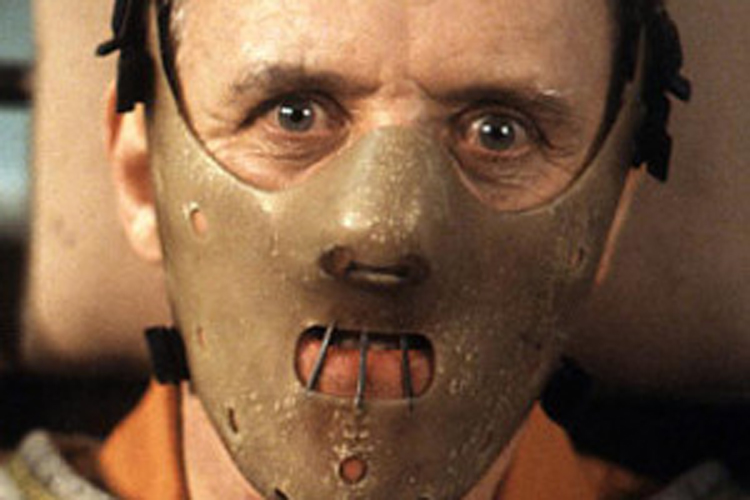
Documentaries like this one love to compare real-life cannibals, or the much wider field of serial killers, with the fictional character, Hannibal Lecter, “Hannibal the Cannibal”. The problem here is that the serial killers in this doco (or any that weren’t) are not very much like Hannibal. Actual modern cannibals are usually categorised as banal, normal-looking folks who under the polite surface are depraved psychopaths, while Hannibal is civilised, educated, rational, brilliant and independently wealthy. He is a highly respected psychiatrist (until his arrest) and remains a likeable protagonist to many readers and viewers, despite his penchant for murder and guiltless consumption of human flesh. He even introduces his own ethical guidelines: he prefers to eat rude people: the “free range rude” to quote another Hannibal epigram.
Much of the commentary in this documentary is by Jack Levin, a Criminologist with a rather distracting moustache, or perhaps a pet mouse that lives on his upper lip. He sums up the modern cannibal serial killer:
“Many Americans when they think of a serial killer will think of a glassy-eyed lunatic, a monster, someone who acts that way, someone who looks that way. And yet the typical serial killer is extraordinarily ordinary. He’s a white, middle-aged man who has an insatiable appetite for power, control and dominance.”
The standard serial killer appears very ordinary indeed. According to the doco, 90% of serial killers are white males. Many serial killers, we are told, experienced a difficult childhood, abused emotionally, physically or sexually. Hannibal of course saw his sister eaten, and probably innocently joined in the meal, so I guess you might call that a difficult childhood. But of course many people have difficult childhoods (less difficult than Hannibal’s, one hopes) without becoming cannibals or serial killers. Many of these so-called “real life Hannibal Lecters” featured in this program were not even cannibals, such as John Wayne Gacy, who murdered at least 33 young men and boys, but did not eat them, and was not even vaguely similar to Hannibal in appearance, MO, or dining habits. Same with Ted Bundy, who also gets a segment. These killers killed because they enjoyed it – as an act of dominance. Serial killers, Levin tells us, get “high” on sadism and torture. Hannibal, on the other hand, just killed his victims the way a farmer might choose a chicken for dinner – slaughter the tastiest, fattest one, or else the one who has been annoying him.
“There is much discussion as to whether cannibalism is an inherent characteristic in all human beings, our animal impulses, or whether cannibalism stems only from the minds of mad beasts such as some of the most prolific serial killers.” Richard Morgan, narrator.
Eventually, we get to the cannibals. First up is Andrei Chikatilo, the Russian cannibal who sexually assaulted, murdered, and mutilated at least fifty-two women and children between 1978 and 1990. Chikatilo, we are told, liked to cook and eat the nipples and testicles of his victims, but would never admit to eating the uterus – far too abject for his psychosis. Sigmund Freud and Julia Kristeva would find that fascinating.
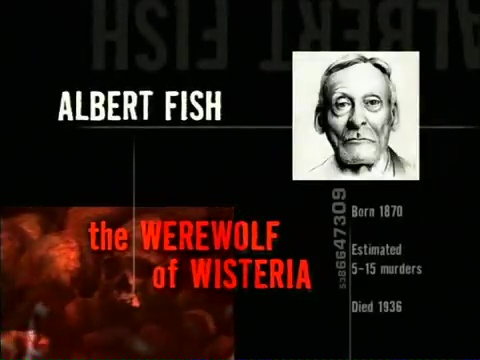
We look in some detail at Albert Fish, the “Gray Man” who tortured and killed probably fifteen children around the US at the beginning of the twentieth century. He mostly specialised in the children of the poor and people of colour, but was eventually caught because he ate a little white girl, causing the police to take the cases seriously at last.
A large section of the documentary is dedicated to Jeffrey Dahmer, perhaps the most famous of the modern real-life cannibals. Dahmer was not a sadist, disliking violence and suffering, so he did not really fit the description used in the doco, and was certainly no Hannibal.
The other experts wax lyrical about cannibals, such as author and psychiatrist Harold Schechter, who speculates that
“Anthropological evidence seems to suggest that cannibalism was a kind of activity that our pre-human ancestors indulged in with a certain regularity, so I think there is probably some sort of innate impulse towards that kind of activity… serial killers act out very archaic, primitive impulses that clearly still exist on some very very deep level.”
Well, that’s definitely not Hannibal, the Renaissance man, who carefully considers each action and dispassionately stays several steps ahead of his pursuers. Jack Levin again:
“Any serial killer who cannibalises victims has broken one of the most pervasive and profound taboos in all of society. Psychologically, this means the killer has achieved the opposite of what he had hoped… in terms of ego, in terms of self-image, he has got to feel worse about himself.”
That certainly is not Hannibal!
But there are some interesting observations in this documentary if we set aside the obvious problems with the comparisons with Hannibal. Zombie flesh-eaters were first popularised in Night of the Living Dead which came out in 1968, what the documentary calls “the most murderous decade” – the 1960s, followed a few years later by The Texas Chain Saw Massacre. People flocked to the cinema to see people being eaten because two Kennedys and MLK were assassinated and the brutal, unending Vietnam war was filling the television screens? Maybe so.
Levin tells us
“Most people don’t see the difference between Hannibal Lecter and Jeffrey Dahmer. To the average person, there is no difference between fact and fantasy.“
Col. Robert K. Ressler, who founded the FBI Behavioural Sciences Unit (which makes him a real life Jack Crawford) points out that there are no serial killer psychiatrists, nor do serial killers normally become well integrated into the upper levels of society like Hannibal. So he’s not helping the Hannibal comparison at all. Nor is Levin, who points out that Dahmer was remorseful at his trial, and went out of his way to avoid inflicting pain, unlike most serial killers to whom the killing is a “footnote” to the main text – the torture of the victim. So Dahmer does not fit into the model of serial killer presented here, and he has nothing in common with Hannibal Lecter.
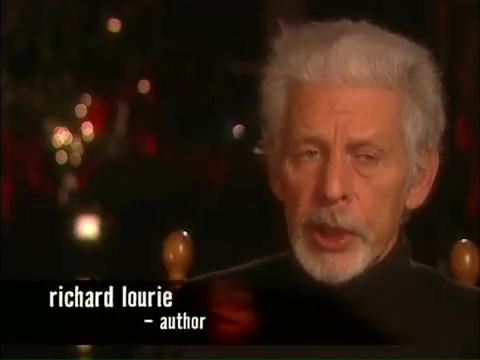
But author Richard Lourie, who wrote a book about Chikatilo, points out that we, the audience, really want to see the serial killer as a Nietzschean Übermensch (superman) – a brilliant criminal genius. He also tells us that Hannibal seems asexual, above the primal drives that motivate people like Chikatilo and Dahmer. Not entirely true of course, if you have read the end of the book Hannibal or read any of the Fannibals’ fan fiction which speculates on some juicy homoerotic episodes between him and Will.
But there is a point to all these rather painfully stretched comparisons between real serial killers and the fictional Hannibal Lecter. Hannibal, Leatherface, the Zombies, are all the inchoate faces of our nightmares, and horror stories are our way of understanding the terrors that fill the news sites. Hannibal is not typical of the real-life serial killer or cannibal, but remember that the apparently kindly old woman who wanted to eat Hansel and Gretel was hardly typical of the horrors of Europe at the time of famine and plague when the Grimms were writing their stories. Each is a facet of horror.
Schechter talks about the simplistic view that cannibalism is in itself “evil”. Which is actually worse, he asks, to torture and kill a person or to eat their flesh when they are dead, an act which can certainly do them no more harm? Indeed.
Levin sums up:
“It could be argued that cannibalism as this ultimate form of aggression lurks within every one of us…. We have an aggressive part of ourselves, it’s part of basic human nature, and to that extent we are all potential cannibals.“
A kind face, a deceptive smile, a gingerbread house or psychiatrist’s couch can sometimes be more terrifying than the sordid crime scenes left by Chikatilo, Dahmer and Fish. The seeming normality of Albert Fish, Andrei Chikatilo, Jeffrey Dahmer or Hannibal Lecter conceals something that we hide deep within our shadow selves.
The full documentary is available (at the time of writing) on YouTube.
I have in my (admittedly odd) library a title called The In Vitro Meat Cookbook. It has a series of recipes, none of which you can cook yet, because they require as their main ingredient meat grown in the laboratory rather than cut from the quivering corpse of an animal who probably lived her whole life in horrendous conditions. When this lab meat becomes commercially available, it will doubtlessly be great news for the billions of animals who die in terror for our plates each year, but these recipes go beyond the meats you might see at a butcher shop, to such suggested dishes as Dodo Nuggets and Dinosaur Leg and, yes, Celebrity Cubes:
“Forget autographs and posters. Prove that you’re the ultimate fan of a celebrity by eating him or her.”
Pop stars in whiskey glaze. If that isn’t intimate enough, how about “IN VITRO ME”? Yep, it’s grown from your own stem cells, and it’s “best shared with a lover as the ultimate expression of unity”.
I digress, but it is relevant to this week’s movie. Antiviral is a film even more relevant now than when it was released a decade ago. For a start, the daily news speaks of little else than viruses and antivirals, and when they do turn to other issues, these usually involve celebrities. This film covers both. It is set in an alternative present, where the obsession with celebrities has moved past adulation and stalking (and occasional cannibalism) to a lucrative business – selling their diseases. For a lot of money, you can suffer the same symptoms and weeping, bleeding pustules as your favourite star!
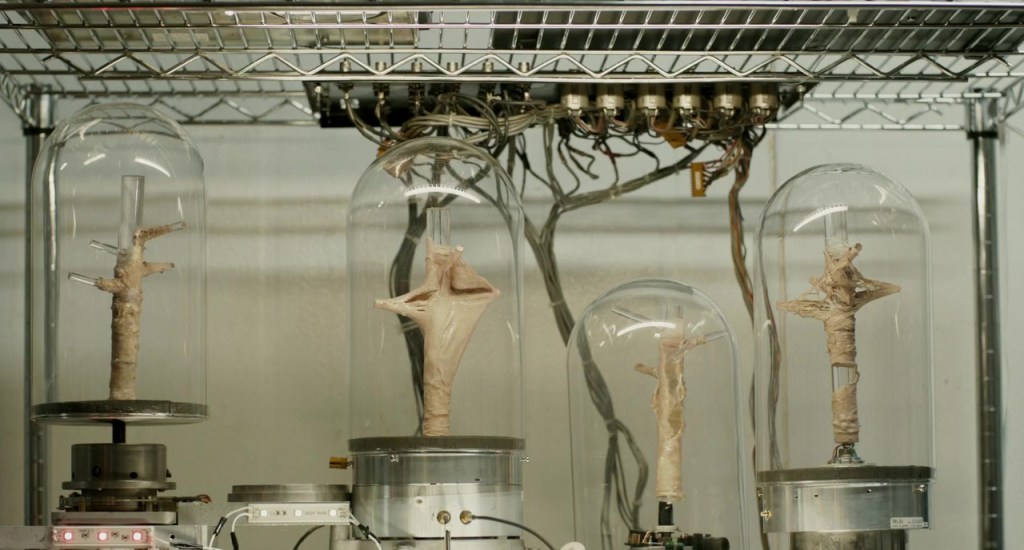
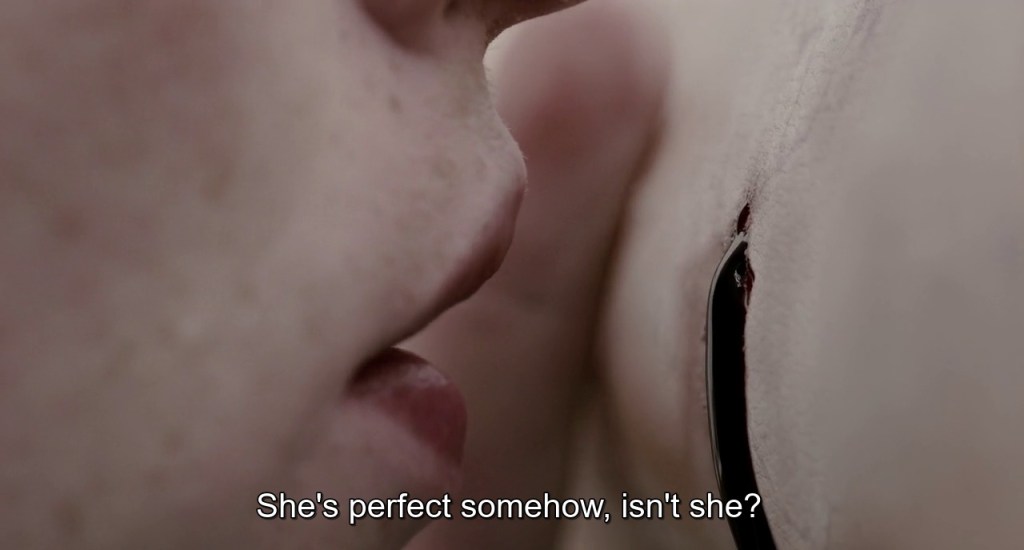
The movie is the first work by Brandon Cronenberg, the son of body-horror pioneer David Cronenberg (The Fly, The Dead Zone, A History of Violence, etc), sometimes known as “the King of Venereal Horror” or “the Baron of Blood”. Quite a legacy to live up to, but Brandon Cronenberg does it brilliantly in this work, which features cannibalism among its panoply of abjection. The imagery is stunning – bleak scenes in monochromes, then a flash of crimson – blood or lipstick. Needles sticking in arms and gums, lumps of meat grown from celebrities and sold to customers desperate for a touch and a taste of their favourite star.
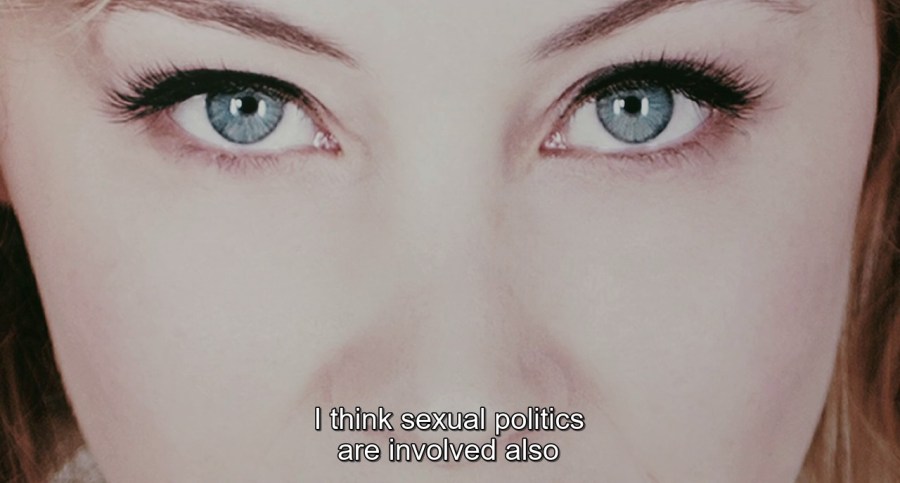
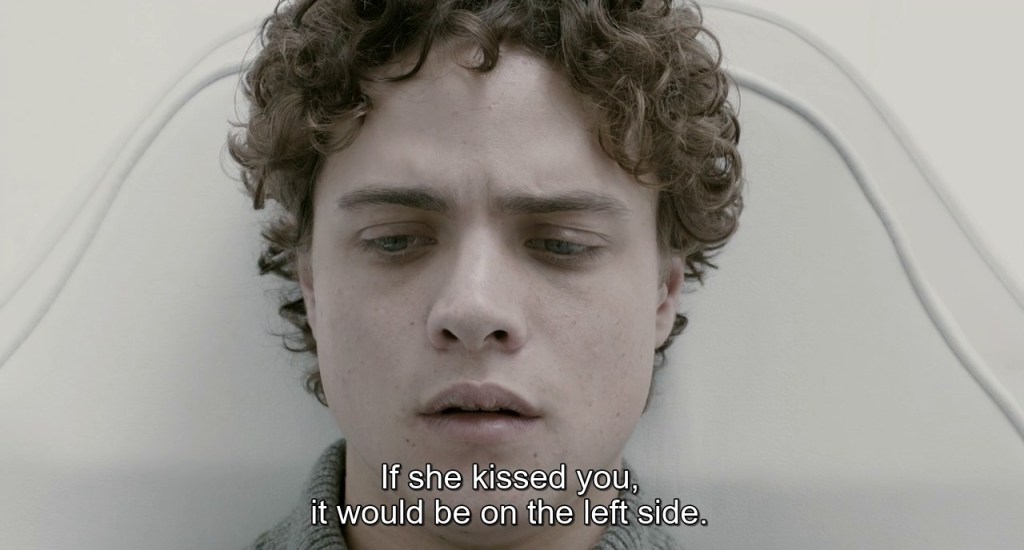
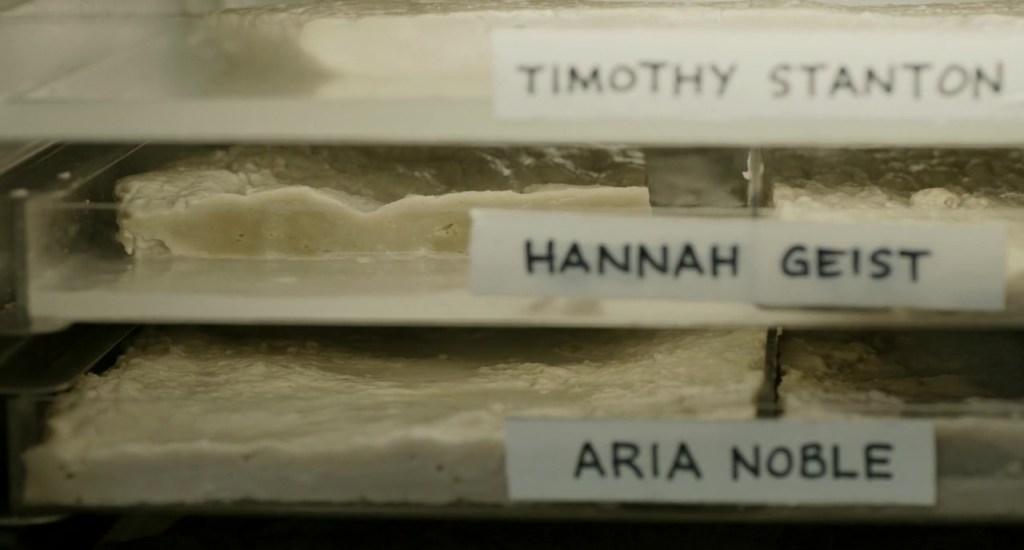
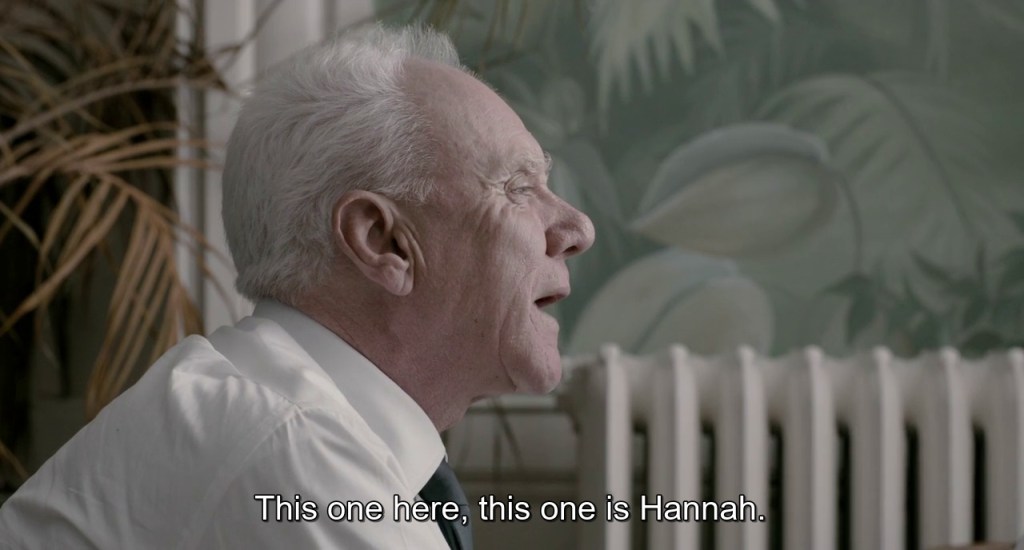
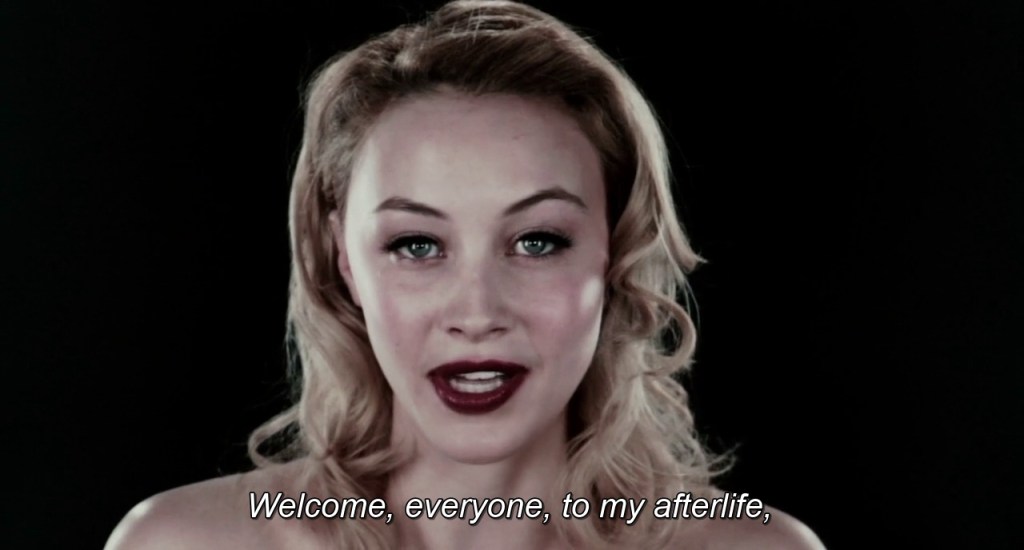
The protagonist of the film is Syd (Caleb Landry Jones from Get Out, Nitram etc), an employee of the Lucas Clinic. Syd sells customers the dream of being close to their favourite celebrity. What does the avid fan do after already seeing all the movies, reading the magazines, collecting the images? In this world, they pay to get the same diseases as the celeb. Syd knows how to sell, he talks a fan into a dose of herpes simplex, collected by his employer from the superstar Hannah Geist, whom he describes as “more than human”. She had the pus-filled blisters on the right of her mouth, so you really want to be infected on the left, because
Syd is a trusted employee of Lucas (where the archivist is played by Lara Jean Chorostecki, who played Freddie Lounds in Hannibal!), but he is ambitious, hoping to sell the virus that is killing Hannah on the black market. He takes some of her blood (Lucas Clinic has exclusive rights to Hannah’s diseases) and infects himself, then waits, taking his temperature, doing things with cotton probes that we all now understand.
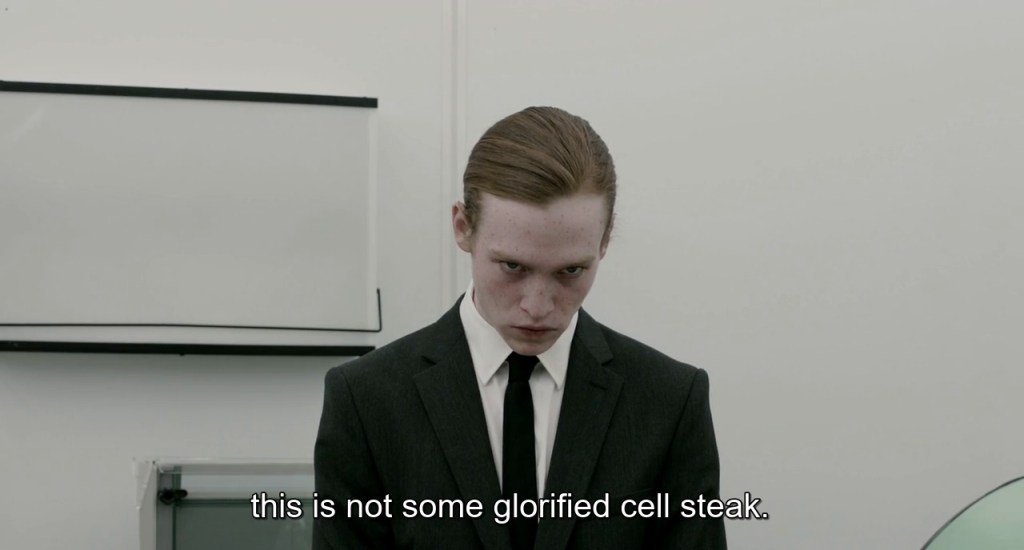
He is hoping to sell the new virus through the specialist butcher Arvid (Joe Pingue), whose business Astral Bodies does a thriving trade in celebrity cell steaks – edible flesh grown from the cells of celebrities.
Syd tells Arvid “I don’t understand how this is not considered cannibalism”. Arvid is more philosophical. What does it mean to be human, he asks – is the human “found in its materials” or is it something more religious, as the law currently tends to assume – a soul perhaps?
“But we’ll see what happens when we go from growing celebrity cell steaks to growing complete celebrity bodies.”
When Hannah’s death is announced, Syd’s diseased blood is suddenly in demand – those who have already eaten Hannah now want to either watch him die the way she did, or buy the virus and die along with her. Syd has to escape the virus coursing through his body, and the various business types who want it.
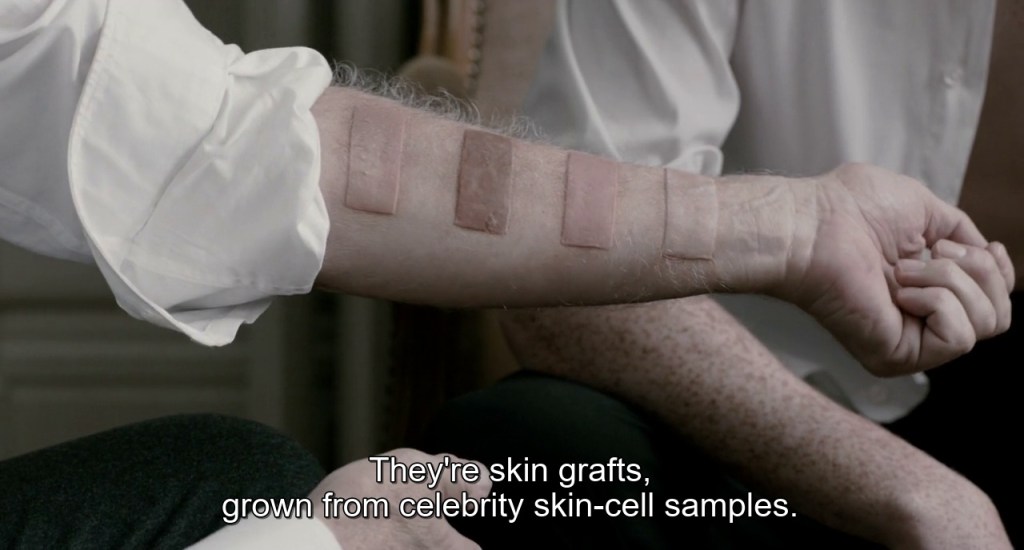
Anything related to a celeb is valuable. Lucas Clinic is even planning to sell ringworms from Hannah’s dog. Or if you don’t want a disease, you can get a skin graft from your favourite celebs, as Hannah’s doctor, Dr Abendroth (played by the magnificent Malcolm McDowell) shows Syd.
What does it mean to “go viral”? This humble blog has gone viral (a very mild, non-toxic one) in that it is viewed thousands of times a month, presumably because wonderful readers like you share it (please?) on social media, or perhaps (socially distanced) word of mouth. But a celebrity who goes viral has his or her impact measured not in the thousands of views but in the millions. Celebrity becomes the message in itself; as the head of Lucas Clinic says, when asked if the current crop of celebs deserve to have the levels of mania surrounding them,
“Anyone who’s famous deserves to be famous. It’s more like a collaboration that we choose to take part in. Celebrities are not people. They’re group hallucinations.”
Hannah’s doctor Abendroth is more metaphysical, musing that
“there is a power, something in the thrall of the collective eye, that can be consumed and appropriated.”
Certainly we devour our celebrities, with the paparazzi as the hunters and the rest of us sitting with a magazine or a tablet and consuming them – think of Marilyn Monroe, Princess Diana, Amy Winehouse, Michael Jackson and many, many more. Unlike most of us mere mortals, the celeb who has gone viral remains consumable after death, perhaps more so. So it is with Hannah.
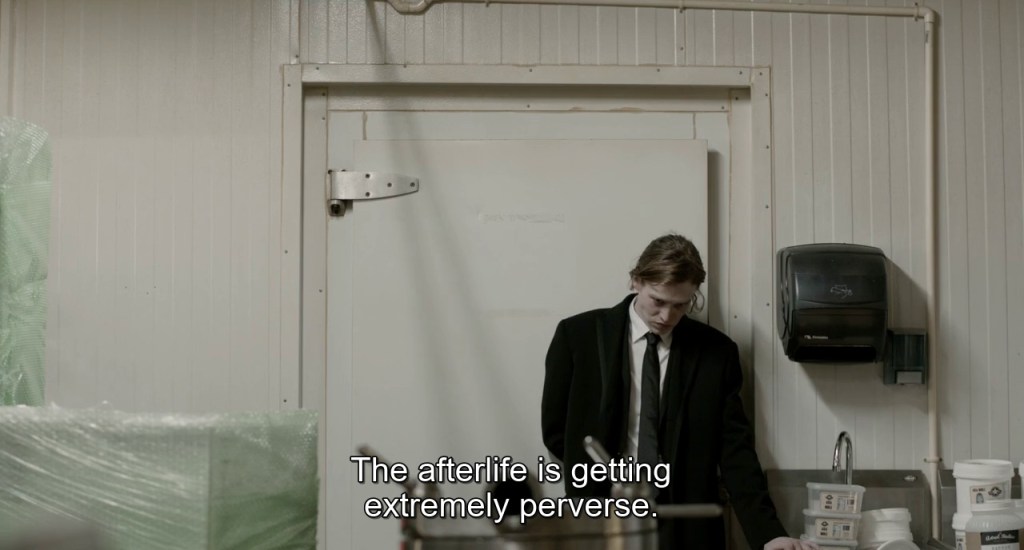
The marketing of Hannah’s “afterlife” expresses the vulnerability of humans, the paragon of animals, to a virus, a type of genetic code so tiny that we are not even agreed on calling them “alive”.
“From the perspective of the virus, the human being is irrelevant. What matters is the system that allows it to function. Skin cells, nerve cells, the right home for the right disease.”
But no spoilers – go get this one out and watch it (if you’re not the squeamish type) – it is well worth it.
We long for connection. Cronenberg mentioned a moment of inspiration:
“A friend of mine said he was watching Jimmy Kimmell one night and Sarah Michelle Gellar was on the show. She said she was sick and if she sneezed she’d infect the whole audience, and everyone just started cheering.”
The philosopher Blaise Pascal said that there was, in every human, an “infinite abyss [which] can be filled only with an infinite and immutable object”. He suggested that this infinite and immutable object should be God. Humans are big on eating gods – Dionysus was torn apart and reborn by means of his mother eating his heart, which made her pregnant. Christians eat the Eucharist – the body and blood of Jesus, according to John 6:55-66
“For my flesh is meat indeed, and my blood is drink indeed.He that eateth my flesh, and drinketh my blood, dwelleth in me, and I in him.”
We live vicariously, by eating our gods. But in our culture, the celebrity is god. The viral, consumable, more-than-human celebrity.
Imagine a place where your wildest dreams come true!
Suppose your fantasy could materialise – would you still want it? Fantasies are often best left in the realm of the imagined – that’s why people watch BDSM instead of actually torturing partners, or play war games on the computer instead of getting a gun and going out hunting people. A fantasy which became reality would come with consequences that you might not enjoy so much. But it’s fun to imagine, and I suspect many of my readers would have “wildest dreams” that no television network would dare portray! Have you checked Tumblr lately?
Fantasy Island originally came from the prolific mind of Aaron Spelling, who was producing hit shows from 1959 until his death in 2006, so you’ve probably brushed against his work somewhere in your life: from Burke’s Law (1963-66) to the Mod Squad (1968-73), Charlie’s Angels (1976-81), Fantasy Island (1977-84), The Love Boat (1977-86), Dynasty (1981-89), Beverly Hills, 90210 (1990-2000), Melrose Place (1992-99) and dozens of others. So prolific was he, that many of the series he produced overlapped – Fantasy Island was introduced in made-for-TV movies when Charlie’s Angels was just setting the television world alight. It then ran for 152 episodes over five years, followed by less successful revivals, including a pretty awful horror movie in 2020. This new reboot began airing on Fox on August 10, 2021.
Spelling said in an interview that the idea came from a joke: he was pitching ideas to ABC, and they had rejected six different ones, when he finally exclaimed:
“What do you want? An island that people can go to and all of their sexual fantasies will be realized?”
They loved that one.
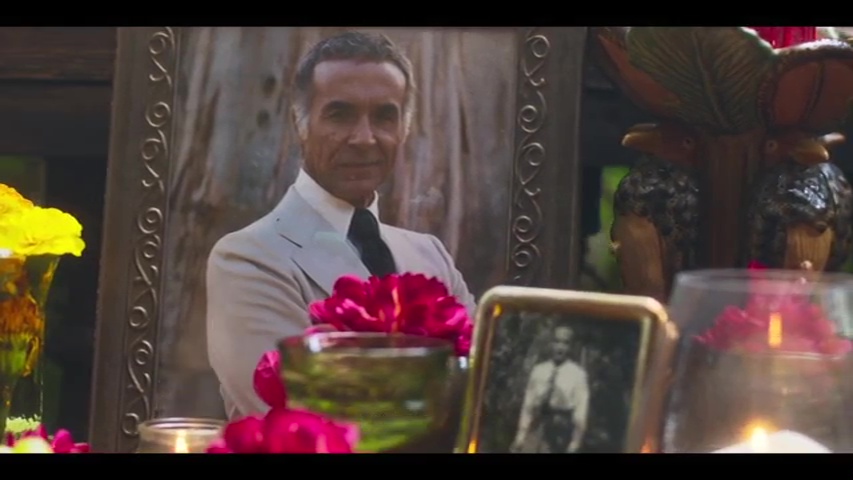
The original featured the great Mexican actor Ricardo Montalbán as Mr. Roarke, the white-suited proprietor of the island, a kind of wizard who could make any wish come true, but often foresaw that the results would be not as desired, or that the motivations of the fantasy were misunderstood. This new series created by Elizabeth Craft & Sarah Fain takes up that scenario, but now it’s Rourke’s grandniece, Elena (Roselyn Sánchez from Without a Trace), still all in white, and still dispensing fantasies. A photo of her granduncle is on her desk.
The formula usually has two different story arcs happening simultaneously. The one we are interested in for this cannibalism blog is the one involving Christine (Bellamy Young from Scandal) as a television newsreader in Phoenix, who is oppressed by body shaming, that turns out (in an island-inspired memory) to spring from an abusive step-father.
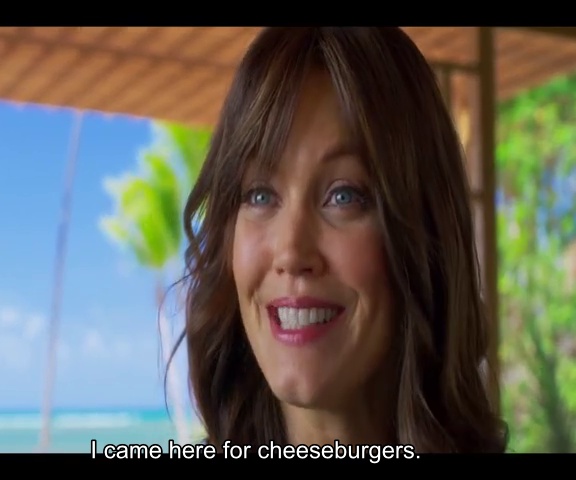
Christine’s rather disappointing fantasy is to be able to spend the visit to the island eating anything and everything she wants, and not gain a pound.
Of course, the island knows that her hunger is much more elemental. Long story short (or as Elvis sang “I said all that to say all this”) – the stepfather turns up on the island, still abusive, and [SPOILER ALERT] she kills him and ends up eating him, roasted on a spit.
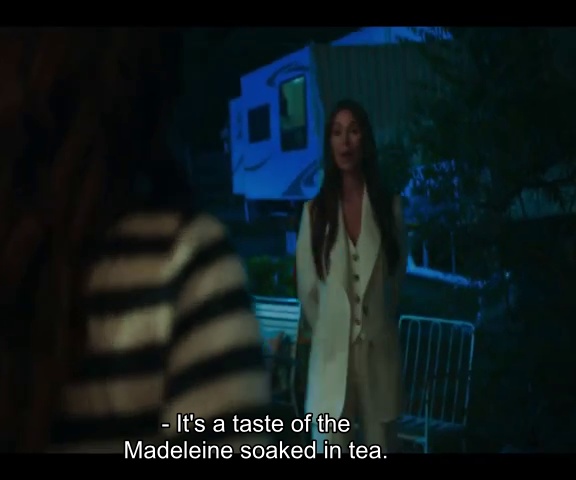
Have you seen Mike White’s TV series White Lotus yet? Everyone seems to be talking about it. Rolling Stone magazine called it “Class Warfare Comes to Fantasy Island.” It kept coming to mind when I watching this first episode of FI. Of course, no one is technically eaten in White Lotus, but it is a kind of Fantasy Island for the rich, a place where they expect their every wish to appear, not by wizardry but because of their obscene wealth, and it sees their schemes backfiring sometimes, as the Fantasy Island ones often did. Of course, like all fairy stories, Fantasy Island has a moral lesson; no such luck for White Lotus. In reality, the rich always eat the poor. Like Nine Perfect Strangers, the rich also have their suffering to deal with from past trauma or abuse, and revisiting that hurt is supposed to start the healing. In Christine’s case, it is food that brings all her misery rushing back in; Elena refers to Proust’s memory-laden madeleine cakes which bring childhood memories flooding back.
When I say no one is eaten on White Lotus, I mean only literally. Allegorically, though, the rich gobble up the serving people, using and abusing them, stealing the lands of the indigenous families and employing them as servants and entertainers, exploiting and discarding the others. The staff are instructed to be “generic” – almost invisible, as are the billions of animals we humans eat each year. The first step in cannibalism is objectification of the victim.
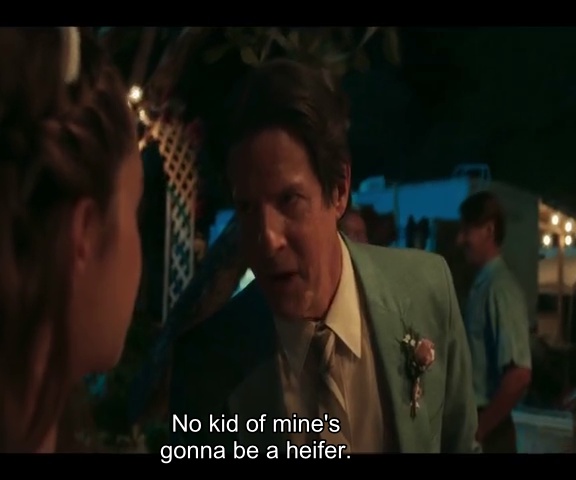
Just so, Christine’s step-father offers, in a flash-back, to fix her teeth so she can become a star, but we know there is a price. He objectifies and belittles her, telling her:
There are a lot of animal references in this episode. Christine, as a child, is compared to a heifer, that is, a cow who has not yet been mated. The implication is that his abuse is sexual as well as mental. He, in turn, is referred to as a pig – Elena tells Christine that the abuser died in 2012, that she met on the island not him, but his cruelty and her trauma, and devoured them:
It’s a bit of a cop-out, IMHO. She is so relieved to realise that she killed and ate her abusive stepfather’s poisonous effects by – eating a pig? Why such relief? Eating bits of an innocent pig, killed and cooked on a spit roast, is OK to her, but not a man who mentally and probably physically abused her?
If anyone deserved to be killed and roasted, it was not the pig.
I expected this to be either graphically violent or else painfully dull, but it was neither. It is quite different from any cannibal movie I have reviewed on this blog.
Deathmaker (German: Der Totmacher) is a re-enactment of the transcripts of the interrogation of the serial killer and cannibal Fritz Haarmann who killed and ate parts of at least 24 homeless boys between the end of the Great War in 1918 and his eventual capture and execution in 1924-5.
Haarmann became known as the “Vampire of Hanover” for killing his victims with a “love bite” that went right through their windpipes. He made a living selling the victims’ clothes and flesh (marketed as “pork”) on the black market to grateful customers who were barely surviving the collapse of the German economy after the war.
There are no flashbacks or re-enactments of violent incidents, just three men sitting in a room, and only two of them speak. Imagine it as a play that has been recorded to film. Or think Louis Malle’s My Dinner with Andre mixed with In Treatment. The great German film maker Ulli Lommel had made a re-enactment of Haarmann’s killing spree some twenty years earlier called The Tenderness of Wolves (Die Zärtlichkeit der Wölfe). The two films are a wonderful glimpse into the mind of a cannibal, although the characterisation is so different as to be almost unrecognisable
Almost the whole film is set in one room in an asylum, with psychology professor Ernst Schultze (Jurgen Hentsch) interviewing mass-murderer and cannibal Fritz Haarmann (Götz George, who won best actor at Venice Film Festival for this role) to determine if he is sane, or at least lucid enough to be tried and executed. Except for entrances and exits and the occasional visiting doctor, no other people are present, and the only other member of the cast is the stenographer (Pierre Franckh) – whose notes of the meetings this film used as its script – he is variously terrified, fascinated and sympathetic to Haarmann, all depicted entirely in his face, as he never says a word.
The Director, Romuald Karmakar, is known for producing thoughtful films that often follow perpetrators who are responsible for their own downfall. The professor asks unexpected questions about maths or geology, while Fritz plays the clown, but as the questions close in on his life and sexuality, he becomes more lucid, trying to justify his actions, and trying to win the sympathy of his interrogator. The professor has full control over the hulking Fritz, who is soon describing exactly how he killed the boys and young men during sex, with graphic details of how he dismembered them and disposed of the body parts.
“Took out the bowels. And threw them in a bucket. Dumped them in the toilet. It’s all rumpled up. I cut them up and threw them away.”
Haarmann’s boyfriend, Hans, would acquire the boys, sometimes just because he wanted their clothing, and knew he would get it after Fritz finished with them.
The professor, unlike modern psychs, pours scorn on Fritz, contemptuously condemning his homosexuality and violence and dismissing his claim that he will be allowed into Heaven to meet his mother. Would Haarmann have acted as he did if his homosexuality had been accepted? We can’t know that, but we do know that German laws against homosexuality were made more draconian after Haarmann’s case in 1924.
The boys won’t be able to testify against him to the heavenly judge, Haarmann says, because he caved their heads in, and he demonstrates how he did it, smashing his fist into his hand repeatedly.
He laughs, he boasts, he complains, and eventually he cries as he realises that his rampages, which he at first maintained were not his fault, will surely have him condemned to the guillotine.
The subject of cannibalism is barely mentioned, even though that is about all that Haarmann is remembered for now.
The professor tells him there is plenty of evidence that Fritz fried shrimps in human fat, made bouillon, sausages and brawn
We are told that he stripped the flesh from his victims and sold their clothes, and finally we get a quick reference to “Haarmann’s sausages”, almost as a double entendre joke. The ethical debate between the professor and Fritz is not about cannibalism but about the families who lost their sons, and his response each time is that they were just “joy-boys”.
The basis of exploitation, killing and eating others is objectification. A cow or pig can be “just an animal” and a homeless boy can be “just a joy-boy”. Just words, but powerful enough to allow the most despicable acts, as they strip all moral value from the intended victim. Haarmann claimed he did not remember killing them, they would just be lying next to him, dead, next morning. And of course, once they were dead, they were no longer “just joy-boys” and were instead now just meat. Our ability to objectify does not necessarily stop at the species line.
The film received several awards and nominations from the Deutscher Filmpreis in 1996 including Best Feature Film, Best Direction and Best Actor. Götz George is simply superb in the role, for which he also won the Volpi Cup at the Venice Film Festival. Deathmaker was chosen as Germany’s official submission to the 69th Academy Awards for Best Foreign Language Film, but did not manage to receive a nomination.
It is not a film for everyone, both because of the descriptions of the dismemberment of human bodies, as well as the fact that, if you don’t speak German, following the dialog in subtitles can be wearing for some people. But it is quite brilliant, and if you can’t find it on a streaming service, it is available on DVD. Well worth the effort.