Western culture, and cinema is no exception, has shamelessly used cannibalism as an unexamined accusation against “others” – mainly the black and brown people of lands coveted by imperial powers: Africa, the Pacific, South America and others. The Greeks used it to dehumanise any barbarians who happened to become bothersome, and of course Columbus made some very nice profits when he “discovered” that the Caribs, a tribe he hadn’t met, were man-eaters and needed to be converted, enslaved or exterminated (and the Spanish then did all three, very successfully, to most of South America).
Very early cannibal movies showed stereotyped cannibals, bones in their noses, dancing around a cauldron containing a sorry looking white man, often a man of God.
This is from a 1928 film called Be My King (Lupino Lane)
Doctor X (Curtiz, 1932) saw the villain going to Africa to learn the secrets of the cannibals.
Even Bing Crosby and Bob Hope headed off to the “Dark Continent” and almost got eaten.
The cannibals’ nationality changed, but the victim, the civilised white man (or sometimes even woman) stayed pretty pale, just being in the wrong (savage) place at the wrong (then) time. Think of Robinson Crusoe (Bunuel 1954)
The after-party from Robinson Crusoe (Bunuel, 1954)
Robinson Crusoe is one of the classic stories of the savage being tamed by the civilised white man. Crusoe has been shipwrecked on an island. Friday is a cannibal whom Crusoe saves from a rival tribe as he is about to become lunch. Friday is taught to serve the master, and has to promise never again to eat humans. The civilised Crusoe, incidentally, is described as having been shipwrecked on his way to the area to capture slaves.
The cannibal story likes to pretend that civilisation has eliminated such savagery, but it still fascinates and repels us at the same time. In 2013, the “savages” were at it again in Eli Roth’s Green Inferno (this time white people, just trying to save the jungle, being eaten by crazy Peruvian cannibals).
So this is the image of the intersection of empire and indigenous culture: civilisation and savagism. Uncivilised cannibals are shown as inexplicable antagonists, as amoral as sharks or predatory aliens. Their cannibalism is usually seen as acculturated and therefore distinguishes those cultures as uncivilised and morally inferior to the white (usually male) hero’s culture.
That’s why I was interested to see the take on cannibalism in Black Panther, which is set in the mythical African kingdom of Wakanda, but involves a lot of cultural interchange with an increasingly violent America. Everett Ross (Martin Freeman), a U.S. State Department employee stationed in Wakanda, becomes an ally to T’Challa (Chadwick Boseman), the King of Wakanda. When Ross attempts to speak to the leader of the Jabari tribe — M’Baku (Winston Duke) — he’s told:
“One more word, and I will feed you to my children.”
There it is. There’s the colonialist trope. And here is how Black Panther handles it:
“I am kidding – we are vegetarians.”
So, not a cannibal movie, but a worthwhile flipping of the tired imperialist stereotypes.
It sneaks into this blog because of the cool cannibal joke.
And they’re not really vegetarians, because they are wearing furs and catching fish. Sigh.
Good movie though.
IF YOU LIKE MY BLOG, PLEASE FEEL FREE TO RECOMMEND IT (WITH DISCRETION) TO FRIENDS ON SOCIAL MEDIA.
IF YOU HAVE ANY QUESTIONS OR COMMENTS, YOU CAN USE THE TAG, OR EMAIL ME ON CANNIBALSTUDIES@GMAIL.COM.
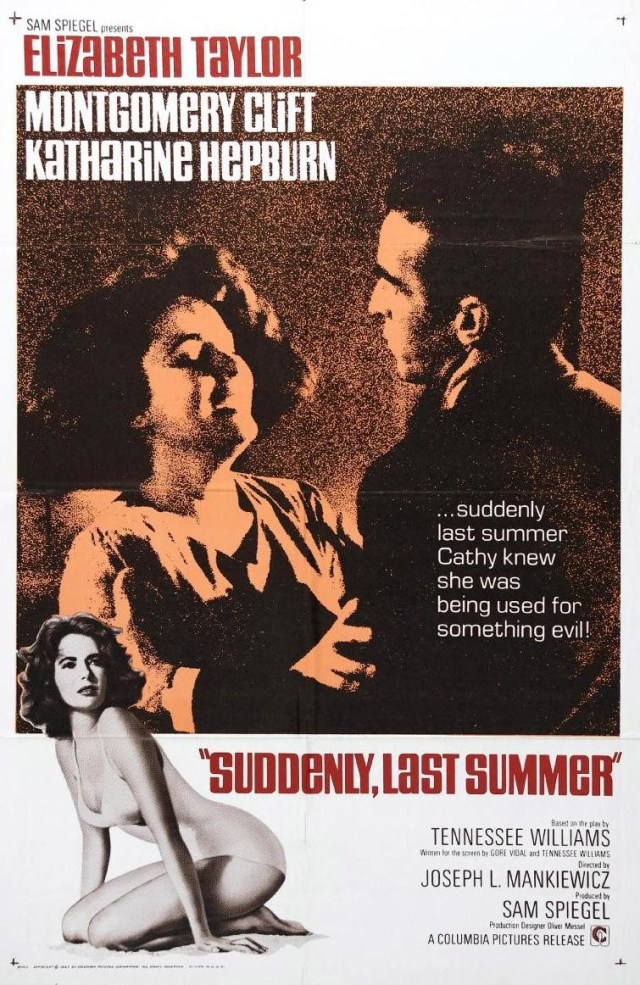
Some movies drip with stars, to the extent that you start to wonder if most of the conflict in the film was about who would get higher billing. Not this one – as well as star power, we have a story of homosexuality and cannibalism, and it’s not totally clear which was more shocking to the audiences of 1959.
As for the stars – we have Elizabeth Taylor, Katherine Hepburn and Montgomery Clift, in a film directed by Joseph L. Mankiewicz (All About Eve, Guys and Dolls, Cleopatra, etc), and loosely adapted from a play by Tennessee Williams. Gore Vidal wrote the screenplay. A veritable galaxy of stars.
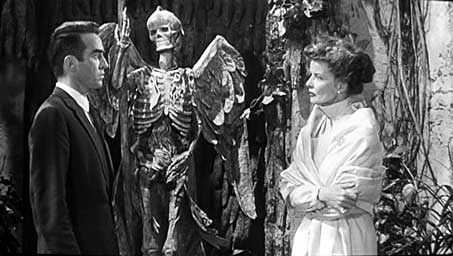
The film is about a young woman who has descended into mental illness due to a traumatic experience with cannibalism, the details of which the audience are not shown until the very end. Catherine Holly (Elizabeth Taylor) is being evaluated by a psychiatrist, Dr. John Cukrowicz (Montgomery Clift), at the insistence of her wealthy New Orleans aunt Violet Venable (Katherine Hepburn). Violet suspects there is more to her son Sebastian’s death than she wishes to become public, and offers to finance a new wing for the hospital if they will pressure Dr Cukrowicz to give Catherine a lobotomy (which is what had happened to Tennessee Williams’ sister). Violet hopes thereby to remove the memory of what happened to Sebastian (who is only seen in flashbacks and never front on), while Catherine was travelling with him in Spain “last summer”.
Sebastian has rejected his smothering mother, with whom he has had an almost Oedipal relationship, and instead has been using his cousin Catherine, as he used his mother on earlier trips, to attract young boys, whom he then procures for sex. Sebastian’s appetite changes though – just as he discarded his mother when she got older, now he no longer wants these Spanish boys: he says he is “fed up with the dark ones” and is “famished for blondes”, intending to head to Northern Europe.
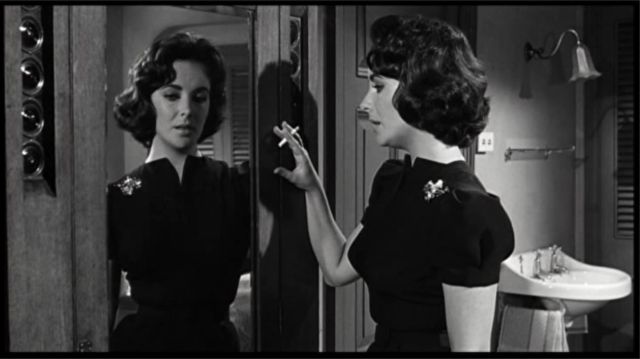
Catherine reflects on her naivety
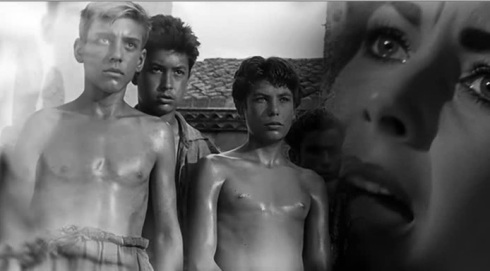
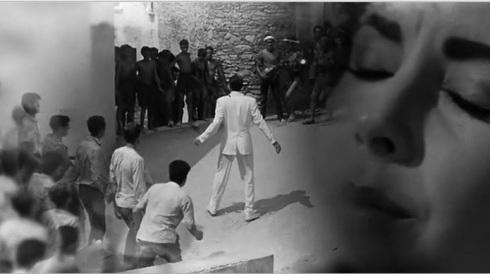
Catherine in the final scene is given a truth serum by her psychiatrist and finally recalls Sebastian’s death. She remembers that the boys followed Sebastian, calling for bread (pan), and when he refused and ran, they chased him, tore him to pieces and ate his flesh.
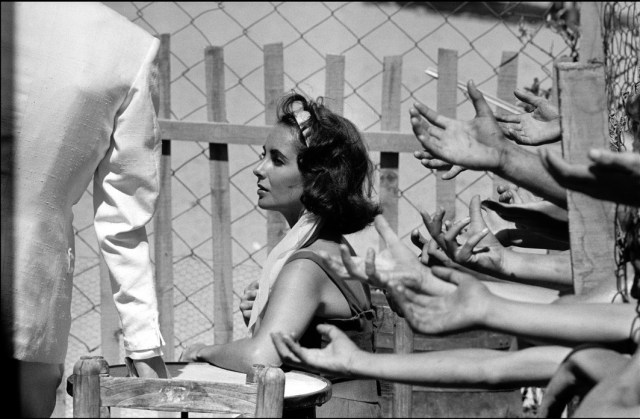
“…there were those children along the beach which was fenced off with wire. Our table was less than a yard away from the wire fence. And those… children… there was a band of them, they looked like a flock of plucked birds and they came darting up to the wire fence as if they’d been blown there by the wind by the hot white wind from the sea. And they were all calling out… Pan Pan Pan.”
Psychiatry and cinema evolved together and are closely tied, particularly in cannibal films (consider Hannibal Lecter), where madness is sometimes used as a convenient explanation to avoid deeper social analyses. This film brings together complex themes that often were avoided in the 1950s. In the conflict between the rich tourists and the starving children of the seaside village we witness savagery as a response to a colonialist mentality of exploitation, objectification in Sebastian’s use of the boys and of his relatives as sexual objects to bait the boys, voracious appetite and the breakdown of normative morality. Sebastian’s sexual appetite is mirrored in the hunger of the boys he has abused, enjoyed and abandoned.
“…cousin Sebastian was, he was lying naked on the broken stone… and this you won’t believe…nobody, nobody could believe it… it looked as if they had devoured him…as if they had torn or cut parts of him away with their hands or with knives or with jagged tin cans they made music with. As if they had torn bits of him away and stuffed them in their gobbling mouths.”
Tenessee Williams hated the adaptation of his play. To him, the cannibalism should have been metaphorical, not graphically represented (although it was certainly polite by today’s standards). He wrote:
“I walked out. Sam Spiegel, the producer, gave a private showing of it at a big party, and I just got up and walked out. When you began to see Mrs Venable, and it became so realistic, with the boys chasing up the hill – I thought it was a travesty.”
The New Yorker called the film “a preposterous and monotonous potpourri of incest, homosexuality, psychiatry, and, so help me, cannibalism.”
It’s not totally clear how a film about incest and homosexuality got round the Hollywood “Production Code”, which had strict rules against such immoralities. Critics have opined that Sebastian’s grisly death gave the film a free pass, because, the review board said, it “illustrates the horrors of such a lifestyle” and “can be considered moral in theme even though it deals with sexual perversion.” Weirdly, the cannibalism seems to have cancelled out the homosexuality.
Anyway, it was a hit at the box office due to its big stars and scandalous content, earning $6.4 million on release, a tidy sum in those days. Both Katharine Hepburn and Elizabeth Taylor received nominations for the Academy Award for Best Actress.
The film pressed all the buttons of 1959 America: homosexuality, incest and cannibalism. But what happens to the cannibals? The film leaves them on the top of the hill, their mouths stuffed with pieces of Sebastian. Like the angel of death in Violet’s parlour, they have passed judgement on Sebastian’s proclivities and handed him a sentence equally unpardonable (in those days) – to be eaten alive. Presumably they remain there, ignored and hungry until another rich man seeks to sate his appetite by arousing theirs. There is no judgement offered – these cannibals are simply forces of nature, a “flock of plucked birds”. Savages inhabiting our own travel itineraries.
If you like my blog, please feel free to recommend it (with discretion) to friends on social media.
If you have any questions or comments, you can use the tag, or email me on cannibalstudies@gmail.com.
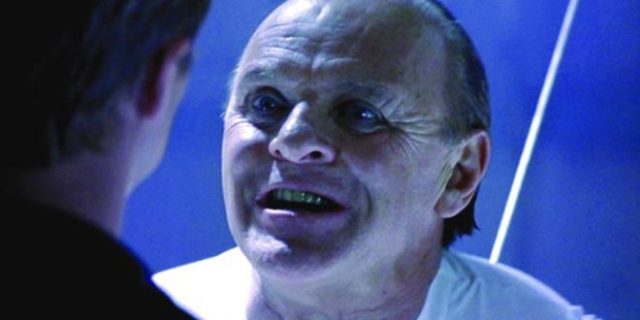
OK, look, I understand. We loved Anthony Hopkins in The Silence of the Lambs (Demme, 1991), and we understood when he looked a little, well, worn ten year later when he played the title role in Hannibal (Scott, 2001). It was set some unspecified time after Hannibal’s escape at the end of Silence, and he had had a hard time – he’d had to flee the USA, kill and eat Dr Chilton, settle in Florence, and, worst of all, behave himself and hardly kill anyone there. That can really take a toll on a guy.
But then, nothing succeeds like excess, so Dino De Laurentiis decided he needed another Hannibal movie. OK, how about we see him return to the US and eat his way through a retirement village. No? OK, let’s instead make a prequel, set a bit before Silence, in which Hannibal would logically be much younger but Hopkins will, unavoidably, look much older. Very postmodern, huh?
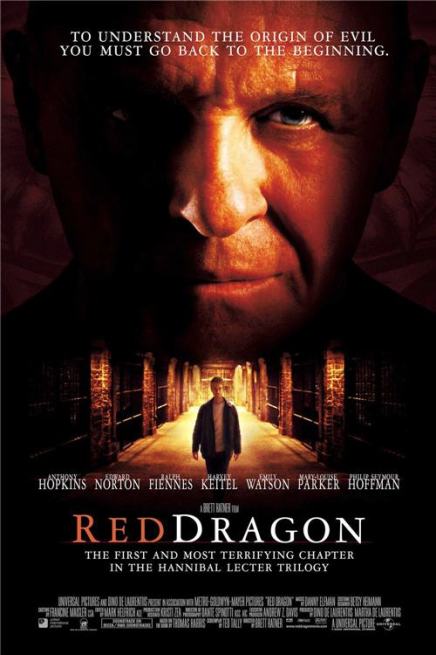
The movie Red Dragon (Ratner, 2002) is based on the book of the same name by the brilliant Thomas Harris, the book which birthed Hannibal Lecter in 1982. The book is incredibly rich in insights into the human condition, alienation and the family, the nature of power, the futility of our pretensions of importance in an indifferent universe. Most of the TV series Hannibal (Fuller, 2013-15) is based on this book (and yes, I will start my review of that superb creation soon, in fact as soon as I figure out how to cover 39 episodes without taking all year to do it). Also based on the book of Red Dragon was the terrific movie Manhunter(Mann, 1986) which had everything going for it other than Hopkins, although Brian Cox was a great Lecter, albeit a bit shy of admitting his penchant for cannibalism (it was the eighties).
Luckily, Anthony Hopkins is a masterful actor and can carry through playing Hannibal a dozen years younger than the same character in his previous movie. But only just. The rest of the cast is also stellar, as you would expect from the reboot of a reboot. The screenplay is by Ted Tally, who also wrote the screenplay for The Silence of the Lambs.
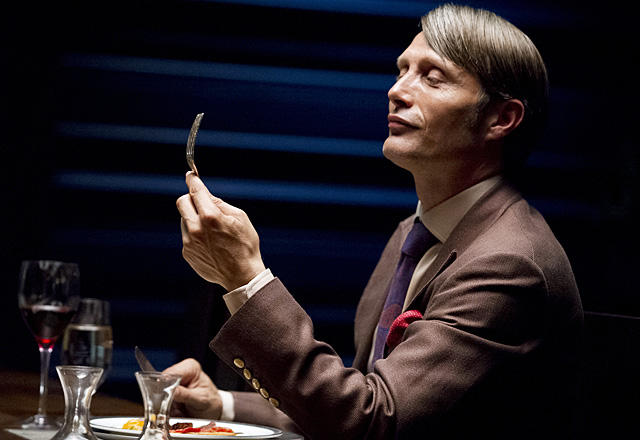
The film starts in Baltimore, where a respectful audience watches and listens to the symphony orchestra’s second flautist pretty much ruin an otherwise masterful performance of the Scherzo from Mendelssohn’s Midsummer’s Night Dream. In that audience is Hannibal Lecter, and he does not look pleased. No indeed. Something must be done. Medium to well-done, perhaps. In a sharp suit and a pony-tail, and quoting Horace, Hannibal later entertains the Board members of the Symphony who revel in his hospitality, despite one of their musicians being currently listed as a missing person. When Hannibal is asked by the Chairwoman to confess what is in the amuse-bouche, he replies: “If I tell you:
He sits at the head of the table, watching them eat. They are “innocent cannibals” – because they know not what they eat. Well, after all, who really does the homework nowadays as to what’s on the dinner plate?
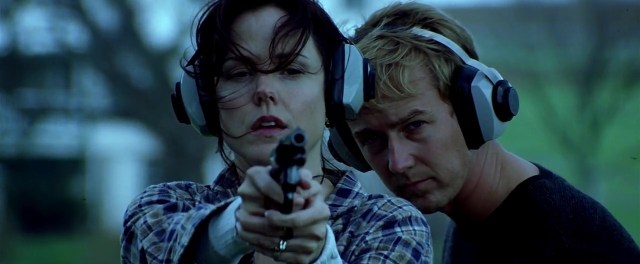
After the innocent cannibals leave, Will Graham (Edward Norton) turns up – he and Lecter have previously worked together on another serial killer investigation – Garret Jacob Hobbs (which won’t mean much unless you’ve watched the first season of the TV series Hannibal (Fuller 2013), a prequel to the prequel). Will and Hannibal have been trying to profile a new serial killer, the Chesapeake Ripper (who is really Lecter of course), and have been looking for some sort of medical expert, a vengeful crazy who know how to “souvenir” body parts from the victims. But that’s not what he’s doing (we assume that it’s a “he”.) Will has worked it out:
As Lecter goes to get Will’s coat, Will finds on the bookshelf a copy of Larousse Gastronomique – it opens at “sweetbreads” – the recipe for the body parts that were taken from the victims. As the realisation comes to him – Hannibal is the cannibal! – so does Hannibal, with a large knife.
Will survives, Hannibal is incarcerated in the Baltimore State Hospital for the Criminally Insane, and the Symphony Chairwoman faints in court when she finds out what (or who) was in the amuse-bouche. The case is sensationalised in The Tattler, a scandal sheet, by sleazy journalist Freddy Lounds (played by the late Philip Seymour Hoffman). Will retires to the seaside with his son and wife, Molly (a too brief appearance by Mary-Louise Parker of Weeds and West Wing).
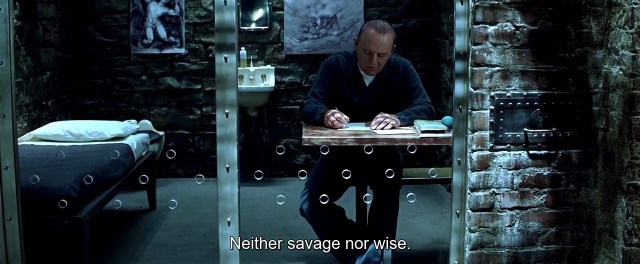
Several years later (according to the card), Will is persuaded to return to pursue a new killer: Francis Dolarhyde (Ralph Fiennes), “The Great Red Dragon” as he calls himself, or “The Tooth Fairy” as the cops call him, since he likes to bite the women victims as he rapes them, after he has killed them and their whole families. Not a cannibal, but certainly a biter. He uses his grandmother’s teeth – it’s all her fault of course, since she raised him in fear and shame and threatened to castrate him when he wet his bed (come home Dr Freud, all is forgiven). He greatly admires Hannibal, and likes to communicate with him about his “becoming” – he believes that “each being that I change makes me more than a man”, and he sees Hannibal as John the Baptist, to his Christ. And Will goes to see Hannibal, walking along the row of cages containing crazies, just as Clarice Starling will do later (in a movie made 11 years earlier).
Does the set look familiar?
Hannibal tells him that he and Will are just alike – their imagination raises them above all the other “dullards”. And so the chase begins.
After all the blood has been wiped off the walls, Hannibal writes to Will:
“We live in a primitive time, don’t we Will? Neither savage nor wise. Half measures are the curse of it. Any rational society would either kill me or put me to some use.”
The film ends with Clarice being announced. A nice segue into Silence of the Lambs, a film which had already swept the Oscars a decade before this.
Reviews were mixed: some critics hated it, some loved it. Of course it made a fortune when it came out, grossing over 200 million dollars. The public was hungry for Hannibal. The fact that the story had already been made as Manhunter in 1986 didn’t bother anyone – it wasn’t Hopkins, and it didn’t focus on Hannibal, and, worst of all, there was no cannibalism. And let us remember that the book Red Dragon, on which both those movies were based, was also the basis for Hannibal the TV series in 2013, and particularly Season 3. There’s more than one Macbeth, and there’s more than one way to make Red Dragon. One critic wrote:
“The only downside to this delectable third course? The regrettable likelihood that Lecter fans will have to make do without dessert.”
Hannibal Lecter is not real, but the public hunger for Hannibal the Cannibal certainly is. We put up with the “dullards” who put us, and Hannibal, into cages. We dream of sating our often deranged appetites, and we wish we had the power to do so. Hannibal offers us a fantasy of doing that.
If you like my blog, please feel free to recommend it (with discretion) to friends on social media.
If you have any questions or comments, you can use the tag, or email me on cannibalstudies@gmail.com.
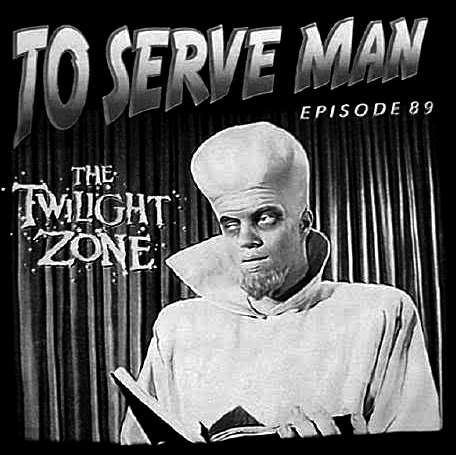
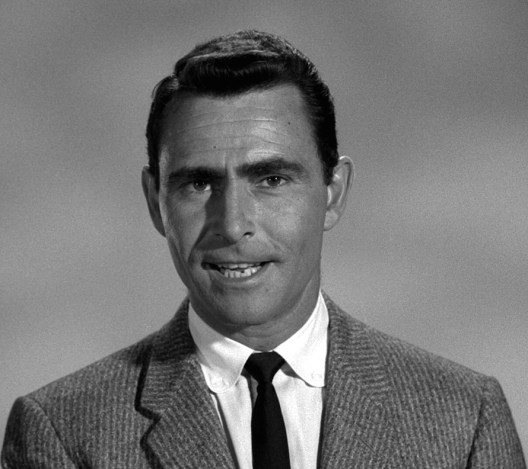
“To Serve Man” was episode 89 of the hugely popular television series Twilight Zone, which ran from 1959-64. This episode is written by Rod Serling who introduced each episode, and is based on a 1950 short story by a science-fiction master, Damon Knight. The television episode moves the action to its own time, where it introduces 1960s politics: the Berlin blockade and the wars in Algeria and Indo-China.
In contrast to all this conflict and confrontation comes a stunning discovery: alien spaceships are landing near cities all over the world. The Secretary-General of the UN, (played by Hardie Albright – fun fact: one of the voices of Bambi), announces that one of the spacecraft has landed near the UN building, and one of the aliens is on his way to the UN to address the people of Earth. The aliens are called Kanamits, and Serling tells us about them:
“Respectfully submitted for your perusal – a Kanamit. Height: a little over nine feet. Weight: in the neighbourhood of three hundred and fifty pounds. Origin: unknown. Motives? Therein hangs the tale, for in just a moment, we’re going to ask you to shake hands, figuratively, with a Christopher Columbus from another galaxy and another time. This is the Twilight Zone.”
Now, Columbus created much havoc in South America, where he coined the term “cannibal”, a mis-hearing of the name of the Carib tribe, and a misunderstanding of their eating habits. But this lot, the Kanamits, seem like good guys. The 3m dude says (without moving his lips – it’s all done by telepathy):
“Our intentions are honourable. We desire above all things to help the people of Earth.”
The narration points out how unlikely this seemed: “as a race, we’re unaccustomed to charity. Brutality is a far more universal language to us.”
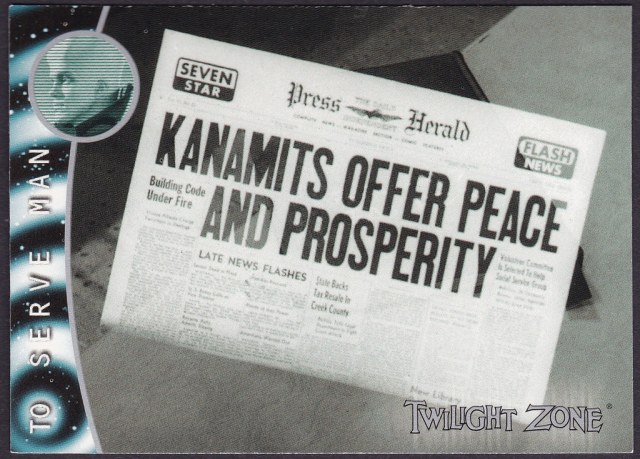
They offer things normally only seen in science fiction or election manifestos – a power source which can supply a whole country for the cost of a few dollars. A cheap nitrate, which can be added to the soil to end famine for good. An impenetrable force field, which nations can use as a defensive shield. “It was the age of Santa Claus”.
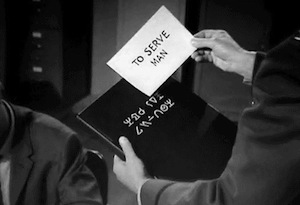
Michael Chambers (Lloyd Bochner), a cryptography expert, is asked by the military to translate the book the Kanamits have left on the table of the UN (why would they do that?) Anyway, it’s a very different language from a different galaxy, so he and his team have no idea where to start. Also, he thinks that maybe the military are “looking a gift horse in the mouth”, worried that with the alien imposed peace and prosperity, the armed forces will be out of a job. Then his assistant, Patty (Susan Cummings), bursts in with the news that they have deciphered the title of the book. It is: “TO SERVE MAN”. Chambers calls this “a reasonably altruistic phrase”, although the others are more cautious. But the deserts bloom, armies are mothballed, and thousands of earthlings are invited to board the spaceships and visit the Kanamit home planet. As the guests embark, a smiling Kanamit weighs each person.
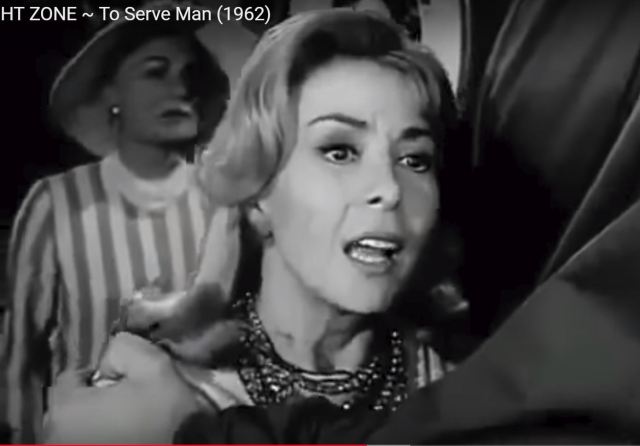
Patty is still working on the book, but explains that the capital letters on the title she translated are different to the lower case letters in the book. THIS is what’s holding them up? Anyway, as Chambers starts to board, Patty arrives, having broken the code. She shouts the famous line to him:
“To serve man: it’s a cookbook!”
She has proved that paraprosdokians somehow work fine in any language, even transgalactically.
Confined on board, Chambers turns to the camera, breaking the fourth wall, which was pretty revolutionary in those days. He asks us:
“How about you? You still on earth, or on the ship with me? It doesn’t make very much difference, because sooner or later we’ll all of us be on the menu. All of us.”
Rod Serling sums up in a more profound explication:
“Simply stated, the evolution of man. The cycle of going from dust to dessert. The metamorphosis from being the ruler of a planet, to the ingredient in someone’s soup.”
There’s the rub. We love to think of ourselves as the “alpha predator” (except when we are surrounded by sharks or crocodiles). But what if we weren’t? What if someone else saw us the way we see animals like cows, pigs, sheep and chickens? Is the fear of cannibalism just the fear of being eaten by humans, or also the fear that civilised people (regardless of galaxy) can be just as fierce and brutal as nature, red in tooth and claw? Aliens eating us can be just as disturbing as cannibals, particularly when they look like us, such as in Under The Skin (Glazer, 2013).
When Hannibal Lecter decides some of us are rude and can only be improved by cooking, are his feelings of superiority different to the Kanamit? To eat a human or any other animal requires objectification: turning an individual into a commodity. We do it to our prey. The Kanamits do it to theirs. Are they wrong? Are we?
The full episode is on Youtube:
If you like my blog, please feel free to recommend it (with discretion) to friends on social media.
If you have any questions or comments, you can use the tag, or email me on cannibalstudies@gmail.com.
Anders Thomas Jensen directed this Danish black comedy, which is only really listed early in this blog because it stars – yep, that really is him – Mads Mikkelsen, better known to readers of this blog, I daresay, as Hannibal Lecter in the television series Hannibal (2013-15).
Svend (Mads Mikkelsen) and Bjarne (Nikolaj Lie Kaas) work in a butcher shop, but are browbeaten by their mean boss, “Sausage” Holger (Ole Thestrup), who says Bjarne’s pate tastes like jockstrap, and even disparages Svend’s marinade (believe it or not, this becomes an important plot point). Holger opens the film with a great summary of animal agriculture:
“I’ve always been fascinated by sausages. It’s almost mythological to kill an animal and then mock it by sticking it in its own intestine. Can you imagine anything worse than being stuck up your own ass?”
They can’t stand this rude dude, so they start their own butcher shop (slagtermester). Bjarne has problems: he smokes twenty joints a day and kills animals so he can collect their skeletons. But it turns out he is the saner of the two partners.
Their grand opening attracts a total of zero customers. Next morning, Svend does not have a good day: he breaks up with his fiancé and then discovers that he has inadvertently locked the electrician in the meat freezer all night. What to do with a frozen electrician? Holger appears, demanding fillets for the Rotary dinner, and Svend panics.
Next day, the guests from the Rotary dinner are queueing up outside the shop – they all loved the fillets. Business is booming and, as Svend says, we had to get rid of him, one way or another. The electrician becomes “Svend’s chicky-wickies”. Then the real estate agent turns up, wanting a tour of the premises. So it goes.
It’s an accidental Sweeney Todd. They meant no harm, and are just being rewarded for bumbling incompetence. And isn’t that the way the world really operates? The Peter Principle!
Then the local pastor reveals that he didn’t like the Rotary dinner. It reminded him of his wife. The wife he had to eat after a plane crash on their honeymoon. Yes, it’s not just Danish Hannibal, it’s also Alive!
Mads Mikkelsen is very good in the role of the nervous, sweating, irritable Svend, although it’s hard to reconcile this farcical character, and his extraordinary haircut, with the cool, sophisticated and brilliant Dr Hannibal Lecter, let alone Le Chifre in Casino Royale or even Kaecilius in Dr Strange.
By the end of the film, we are asked questions of perception: what is appetite? What is “meat”? Is the secret in the sauce? Is that a wig?
The promoters had no idea what to do with this film. Check out some of the posters – hard to tell that they are for the same thing!
This slideshow requires JavaScript.
It’s a quirky comedy, pleasant enough and inoffensive, unless you are offended by either butchers or cannibalism. If you are equally offended by both, then perhaps it has done its job well.
If you like my blog, please feel free to recommend it (with discretion) to friends on social media.
If you have any questions or comments, you can use the tag, or email me on cannibalstudies@gmail.com.
Six months into this blog, I ask you: have we actually defined cannibalism? I answer you (because it’s a rhetorical question): no, we have not.
The Oxford Dictionary says that a cannibal is “a person who eats the flesh of other human beings”. But what does “eat” mean, then? “Put (food) into the mouth and chew and swallow it.” So then we have problems with zombies, who eat the flesh of other humans, but may or may not be “persons” (since they are dead, or undead). And with bulemics, who chew and swallow, but then bring it up again?
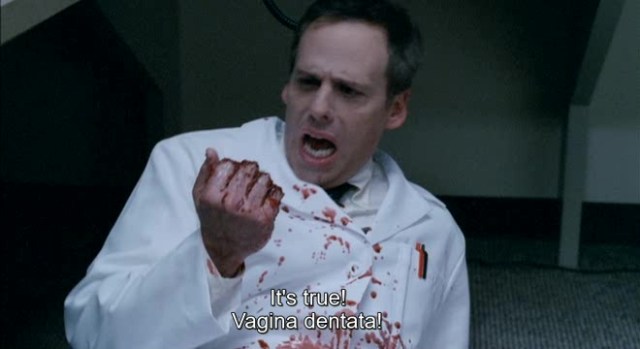
Why am I being such a pain about this? Because I like this film, and would love to fit it into my cannibal blog. But she, to put it politely, does not swallow…
Teeth is directed by Mitchell Lichtenstein, the son of far more famous pop artist Roy Lichtenstein. It is awkwardly defined as “comedy horror” which can be a problematic mix, and often ends up with silly movies like Eat the Rich. But this one works, although I didn’t find it terribly funny. I guess if you were sitting in a cinema watching a bunch of teenage boys squirm, that might have been good for a laugh.
Dawn O’Keefe (Jess Weixler) is a teenage spokesperson for a Christian abstinence group called the “Promise”. This is a terrifying crowd – young teens can be pretty off-putting anyway, but this lot want to chant stuff about Eve and the Devil and Sin, and do so with a flint-eyed seriousness that is disturbing (or funny if you see it from a certain angle).
Dawn has a talent which is not known to anyone, including her, or the various males who try to assault and penetrate her: she has a vagina dentata: a toothed vagina. As a tiny girl, she almost bites off the finger tip of her step-brother who is doing naughty things under her swim suit in the wading pool, but the talent comes into its own when a boy from the abstinence group decides that God will forgive and understand if he takes advantage of their solitary swim, knocks her almost unconscious and then starts to rape her. Well, God might forgive, but Dawn’s lower teeth don’t, and he discovers a new and very agonising weight loss method.
This slideshow requires JavaScript.
The vagina dentata is an ancient myth that is found in many folk legends from a wide range of peoples. Freud and the classical theorists liked to say that it is a representation of the fear that little boys have of their penis-less mothers, which leads them to assume that they are next for castration, either by her or by their fathers who are angry at their budding Oedipal desires. Joseph Campbell in The Masks of God talks about a New Mexico myth in which “vagina girls” ate men who came to their house for sex. We’re getting close to cannibalism now, I think.
It’s a huge subject, covering quite a lot of what goes in the festering sewers of our unconscious minds. If you wish to research it more (and it is fascinating stuff), Barbara Creed has covered the subject comprehensively in The Monstrous Feminine.
So: young Dawn, played brilliantly by Jess Weixler, whom you may recognise as the investigator Robyn in the TV series The Good Wife, believes in saving herself for marriage, a view that is considered somewhat old fashioned now, but still resonates in many parts of the world, particularly the Bible belts. Those around her, including her step-brother with the disfigured finger, feel that she should “put out” as they say, but when she does, boy are they sorry. Creed looks closely at the “taboo of virginity” and Freud’s view that this arises from penis envy and frigidity. Men fear that women will castrate them, particularly when the loss of virginity is painful, as it clearly is to Dawn. Freud ignores the possibility that it is men’s irrational fear of the deadly power of the vagina that leads to fear of sexual intercourse. Brought up in this oppressive environment, Dawn is unaware of her power. The film unravels this power.
Weixler won the Special Jury Prize at the Sundance Film Festival “For a juicy and jaw-dropping performance”, and it was well deserved.
You have to watch closely to catch the “banana split” gag
The horror of cannibalism is at least as much to do with their power to snap, bite and destroy as it is with their tendency to swallow (any old Jaws can do that). The vampire, without whom the Horror industry would be toothless (sorry), swallows, but only blood, not flesh. Yet it is the sharp teeth and the swallowing that gives vampires their welcome into at least the outer limits of cannibal fiction. Dawn is an unwilling but not totally innocent cannibal, because she soon figures out (through google) what it means to be the bearer of the vagina dentata.
A film like this could easily degenerate into farce, and the celibate teens could end up laughable stereotypes of conservative bigots. Yet, Dawn takes us with her on her quest to understand what she is, what she wants, and what she can do to those who wish to force themselves on her. The logline states “every rose has its thorns”, and the trailer says “Something is wrong with Dawn O’Keefe”. But surely that’s not true – there is something very wrong with the rapists, and it gets a lot wronger as they get closer to the climax of their plans. One review said:
“What’s most important for Dawn is she discovers her vagina is not a curse but a source of power.”
Dawn at first thinks that her vagina dentata might be the “Adam within”, a forbidden male side of her character that causes gratuitous havoc. But in fact, the teeth are her defence and her weapon against injustice. With her extra teeth, and the ‘dawning’ of the realisation of her own power, Dawn is a superhero of the #MeToo age.
The film has a respectable 80% on Rotten Tomatoes website, with the concensus being:
“Smart, original, and horrifically funny, Teeth puts a fresh feminist spin on horror movie tropes.”
This poster was apparently banned
The final credits state:
If you like my blog, please feel free to recommend it (with discretion) to friends on social media.
If you have any questions or comments, you can use the tag, or email me on cannibalstudies@gmail.com.
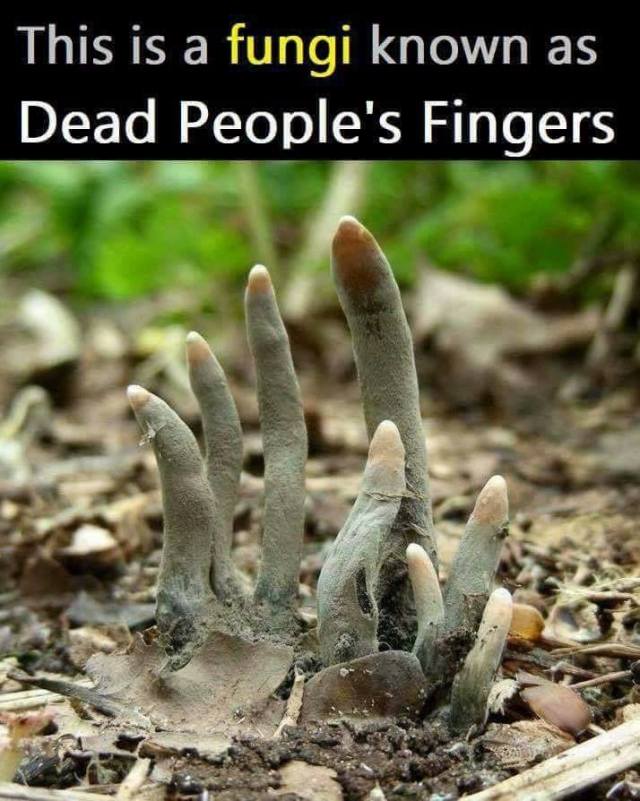
The film blogs arrive on Sunday morning (eastern Australian time) but occasionally another possible cannibal connection arrives which is too good to miss. Take a look:
Yep, not dead fingers at all. It’s a fungus, that happens to look like grey fingers with nails. It’s Xylaria polymorpha, commonly known as dead man’s fingers, a saprobic fungus.
So what’s it doing on a cannibal blog? Only this: it reminded me of the scene from the TV series Hannibal called “Amuse-Bouche“. People are being buried, alive, to feed fungi.
This slideshow requires JavaScript.
I guess you’d call that: life imitates art?
One of the best shows on television, and I will get to it soon on this blog.
If you like my blog, please feel free to recommend it (with discretion) to friends on social media.
If you have any questions or comments, you can use the tag, or email me on cannibalstudies@gmail.com.
Jean-Jacques Rousseau is reported to have told the Paris Commune during the French Revolution that:
“When the people have nothing more to eat, they will eat the rich.”
It caught on, some 200 years later, and became the title of a number of songs from such revolutionary outfits as Aerosmith, Motörhead and State of Mind.
Rousseau could have added “and when the people have nothing to watch, they will watch cannibalism comedies”. Lucky he didn’t though, because not many people watched this particular lemon.
Eat the Rich is a black comedy featuring the cast members of the popular television series The Comic Strip Presents…. (Adrian Edmondson, Dawn French, Rik Mayall, Nigel Planer, Peter Richardson, Jennifer Saunders and Alexei Sayle), plus a whole lot of big name cameos. Among the cameos are two really great bass guitarists: Paul McCartney and Bill Wyman!
Enough trivia – time to get to the serious business of comedy. The film is set in a restaurant named ‘Bastards’ where Alex (Al Pellay), is a waiter, trying to put up with the contempt and disgust of the upper-class clientele, who order dishes like “sliced baby koala, poached in its mother’s milk”. Alex is fired for being rude and turns to a life of crime and revolution. The denouement comes when Alex and his friends return to Bastards and start killing and cooking the customers, renaming the establishment “Eat the Rich”.
This is the police. Lay down your knives and forks!
The film was a very thinly veiled satire on Thatcher’s England, but never really seemed likely to be a call to arms. Timeout London said:
“the back-alley production values and total lack of comic invention on display in this Thatcher-baiting misstep meant that any hopes of a Pythonesque run at the movies were knocked way back on their heels.”
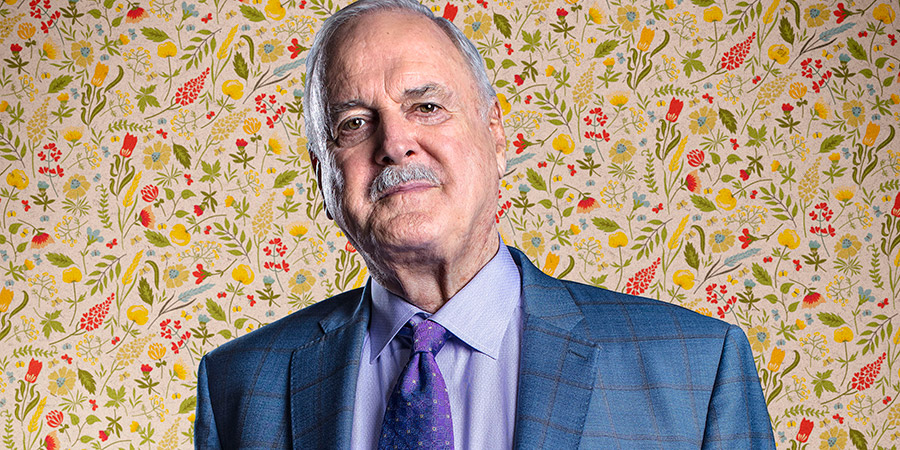
It was a commercial flop, taking in only $200,000 in the US. This may have set cannibal humour back decades but, fortunately, we have just learnt that John Cleese is writing a cannibalism film! According to recent press releases, Cleese has revealed that:
“My greatest professional accomplishment will be a movie I’m writing now, a light comedy about cannibalism. It’s called Yummy.”
Of course, that could be Cleese being too silly, too silly.
But it shows a certain zeitgeist – cannibal films are the flavour of this era of our culture. I wonder if it relates to our fears about the increasingly apparent hazards of a society and economic system based on ever more voracious appetite?
If a vegetarian eats vegetables, what does a humanitarian eat?
If you like my blog, please feel free to recommend it (with discretion) to friends on social media.
If you have any questions or comments, you can use the tag, or email me on cannibalstudies@gmail.com.
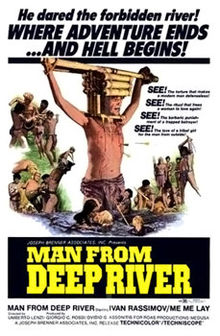
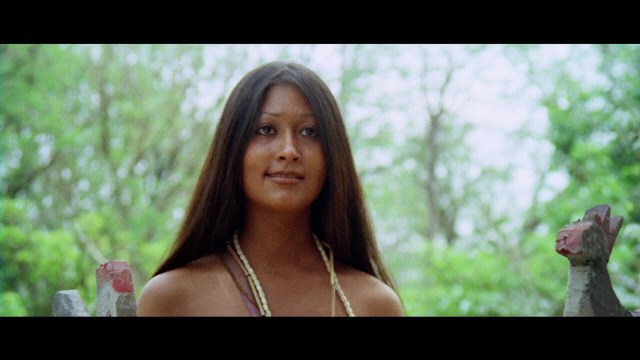
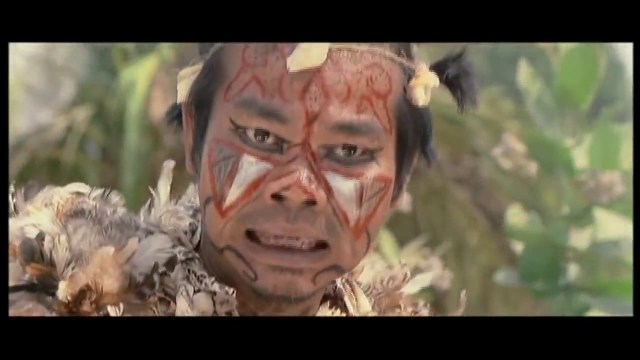
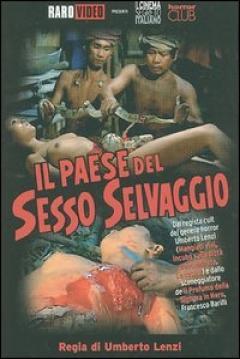
Man From Deep River, otherwise known as Deep River Savages, Sacrifice and (originally) Il paese del sesso selvaggio (English: The Country of Savage Sex), is a 1972 Italian cannibal film directed by Umberto Lenzi. Largely overlooked in the world of cannibal studies (with some justification), it is best remembered for starting the “cannibal boom” of Italian exploitation cinema that filled our big screens with blood and body parts in the late 1970s and early 1980s.
Lenzi was probably trying to imitate the content of the notorious Mondo cinema, which had gained grindhouse popularity after Mondo Cane (Jacopetti and Cavara) in 1962. Mondo films tended to focus on exotic customs and locations, graphic violence, and animal cruelty, often presented as fact. Man from Deep River turned this into a fictional formula.
The film was inspired by A Man Called Horse (Silverstein, 1970), which also featured a white man who is incorporated into a tribe that originally held him captive. Horse had the advantage of a big star: Richard Harris, who went on to be King Arthur, Marcus Aurelius and Albert Dumbledore (in the first two Harry Potter movies), as well as having a brief but glorious singing career with one huge hit: Macarthur Park. This is all totally irrelevant to this blog, which is about cannibal movies, but you should watch the clip of the Jimmy Webb song Macarthur Park, which has little or nothing to do with anything, even the song, but helps explain why Baby Boomers are, well, the way we are.
Don’t drop the soap
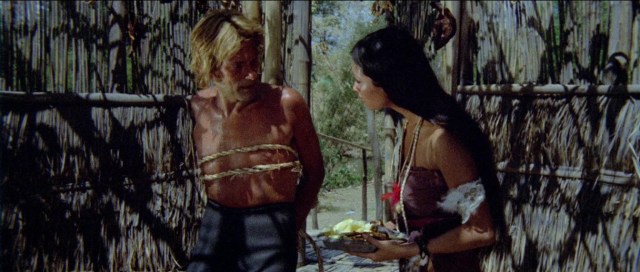
In Man From Deep River (see? back on track already!) British wildlife photographer John Bradley (Ivan Rassimov) kills a man after a boxing match in Bangkok (as if to say “we can be savages too!”) and heads into the rain forest, with his camera. Naturally, he is captured by a native tribe. Bundled in a net, he is and carried to their village, where they tell the chief that they have caught a large fish-man. After a bit of xenophobic torture and witnessing a couple of murders of members of a rival tribe of – yes – cannibals (the tongue scene is hard to forget), John attracts the attention of Marayå (Me Me Lai), the beautiful and naked daughter of the chief, who convinces her father that John is not a fish-man, just a hu-man. Dad agrees to release Bradley, as Marayå’s slave. Could be worse.
There’s an escape attempt, and then the chance to join the tribe through a trial by ordeal – but of course, the cannibals are still next door, as they must be to qualify this film for this blog. Things get sticky. And red.
Cannibalism is certainly featured in the film, but director Umberto Lenzi stated that cannibalism was not intended to be the central theme, and the “cannibal boom” did not really start until Ruggero Deodato released his film Last Cannibal World in 1977 (we’ll get to it eventually). Nevertheless, Man from Deep River is seen as either the inspiration or the start of the cannibal boom, as its combination of the rain forest setting and onscreen cannibalism was a revolutionary innovation (Tarzan movies never dared). Lenzi was asked to direct Last Cannibal World, but the producers chose Ruggero Deodato (Cannibal Holocaust, 1980) when Lenzi’s price was too steep. Lenzi didn’t miss the boom, though, making Eaten Alive! (1980) and his most famous work, Cannibal Ferox (1981).
Looks delish, but I’m a bit tied up right now
Man from Deep River also set the standard for scenes of extreme violence and carnage, including on-screen killing of animals, which rightly incited the wrath of censorship authorities around the world. It is a simplistic although surprisingly sympathetic look at the clash of modern and ‘savage’ cultures, mixed with a rather touching love story. It is elegantly filmed, although Lenzi’s obvious affection for twiddling his zoom lens can get a bit nauseating. But most of all, Man from Deep River set the pace for the cannibal exploitation movies that came after it: the white man, lost and bound, finding that his pretensions of superiority just don’t stand up to the scrutiny of the jungle.
Literally: ‘the place of savage sex’. Fake news.
If you like my blog, please recommend it (with discretion) to friends on social media.
If you have any questions or comments, you can use the tag, or email me on cannibalstudies@gmail.com.
Polite cannibal films are careful not to show teeth sinking into flesh. But it’s a bit odd to have a cannibal film, especially one involving “Hannibal The Cannibal”, which doesn’t even mention the subject of cannibalism!
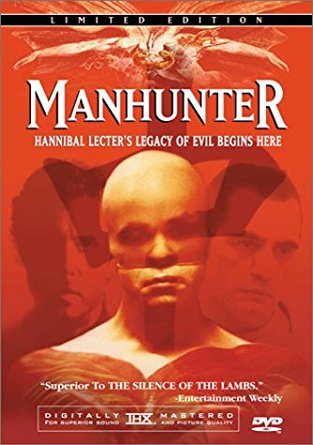
Hannibal Lecter first appeared in print in 1981 in Thomas Harris’ novel Red Dragon. Incredibly (in hindsight), there was a five year gap before Robert Mann directed Manhunter, a corker of a movie – and the very first Hannibal film. Mann altered both the title of the story and Hannibal’s surname, for no particularly good reason – it seems there may have been some doubt over the copyright to the name, although the plot was almost identical to the book. There have been suggestions in interviews that, because Bruce Lee was churning out Dragon movies at the time, producer Dino De Laurentiis was worried that people would think “Red Dragon” was just another Kung Fu movie.
The Director, Michael Mann, was named 28 on Total Film’s list of “the 100 Greatest Directors Ever”. Before he got the gig, David Lynch was considered for the job, but reportedly rejected the role after finding the story to be “violent and completely degenerate”. Quite a judgement call from the man who made Eraserhead, Blue Velvet and Twin Peaks!
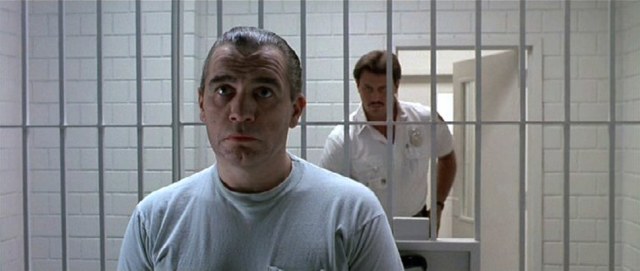
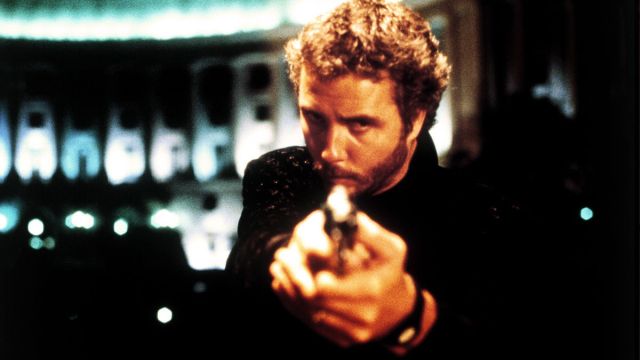
Brian Cox plays Hannibal Lecktor (as it is spelt in the credits). It’s a masterful performance, but “Lecktor” is a minor character who is a foil for the protagonist, Will Graham (played by a young William Petersen, later the star of CSI), rather than a menacing and cannibalistic presence. In fact, Hannibal does not appear until 23 minutes into the film, and then there is no mention of his gustatory predilections. This Hannibal is a simple monster, a serial killer, and is played by Brian Cox as a rendering of the Scottish serial killer Peter Manuel. As Cox says in an interview, “Real evil is something that is so scarily normal”. The back story is that Will was the first to recognise that Hannibal was the serial killer that the FBI was seeking. The book Red Dragon, if not so much this film version, is the fertile soil from which sprouted most of Bryan Fuller’s TV series Hannibal. Also, of course, the Anthony Hopkins version of Red Dragon in 2002, which was a bit jarring, in that Hannibal had visibly aged, despite it being supposedly a prequel to Silence of the Lambs.
I’ll get to that one. As Hannibal likes to say: “All good things to those who wait”.
Brian Cox in his lonely cell
So, Cox’s Hannibal is normal, urbane, brilliant and uncomplicatedly “evil”. This approach makes sense: Hannibal can understand the Tooth Fairy (the psychotic killer who is the actual villain of the film – Hannibal is in a cell the entire film). The Tooth Fairy believes he is becoming a higher form of life. He writes to Hannibal:
“You alone can understand what I am becoming. You alone know the people I use to help me in these things are only elements undergoing change to fuel the radiance of what I am Becoming. Just as the source of light is burning.”
Hannibal, in his lonely cell, enjoys collecting articles about disasters, particularly those in which churches collapse and kill worshippers. He deduces from this, as he tells Will, that killing must feel good to God:
“It feels good, Will, because God has power. And if one does what God does enough times, one will become as God is.”
Hannibal believes in a maleficent god, one who enjoys the power of killing. So does he, and so does the Tooth Fairy. Hannibal offers to help Will find the TF, but only because he seeks revenge – he finds out Will’s home address, and passes it on to the TF with instructions to “kill them all”. These are not simple projects when you’re in solitary in a high security mental asylum. He is not just brilliant (and evil) but very resourceful.
Will before he became Gil on CSI
John Lithgow, Mandy Patinkin, Brian Dennehy and even the director William Friedkin were considered for the part of Hannibal, but Brian Cox got the part, and played it brilliantly. He has on numerous occasions denied feeling cheated that Anthony Hopkins got the sequel (and the Oscar) in Silence of the Lambs. Well, he’s either telling the truth or a very great actor (he’s both).
Brian Cox and Anthony Hopkins as telephonic manipulator Hannibal Lecter/Lecktor
Hannibal’s main scene is below:
Cox did express an opinion that, after Silence of the Lambs, Hannibal had “lost his mystery”. You may have seen Cox not that long ago as General Kutuzov in the BBC production of War and Peace, or as Churchill, in the movie of the same name.
In 1986, the idea of some sort of homoerotic relationship between Hannibal and Will was pretty much unthinkable – that had to wait for Bryan Fuller’s masterful television prequel Hannibalsome quarter of a century later. Nonetheless, Will Graham gets the best line in this film. As Lecktor waxes lyrical about the way Will has managed to get a journalist killed during the investigation, Will blurts out:
“I’m sick of you crazy sons of bitches!”
But the rest of us are not, Will. We enjoy cannibals, even if they are as modest about their eating habits as Hannibal Lecktor. They remind us that we are not gods, but edible animals.
If you like my blog, please feel free to recommend it (with discretion) to friends on social media.
If you have any questions or comments, you can use the tag, or email me on cannibalstudies@gmail.com




















 The Cannibal Guy