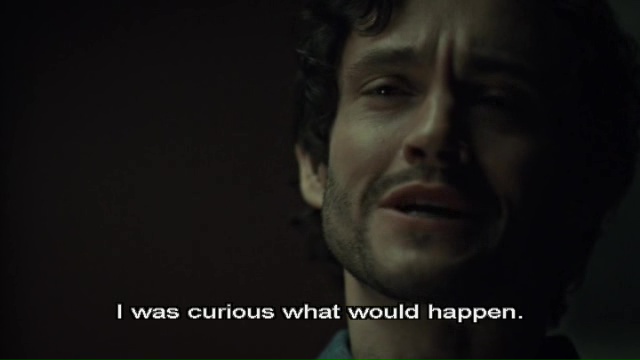
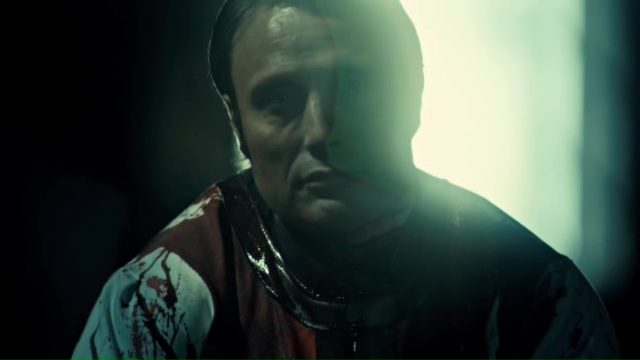
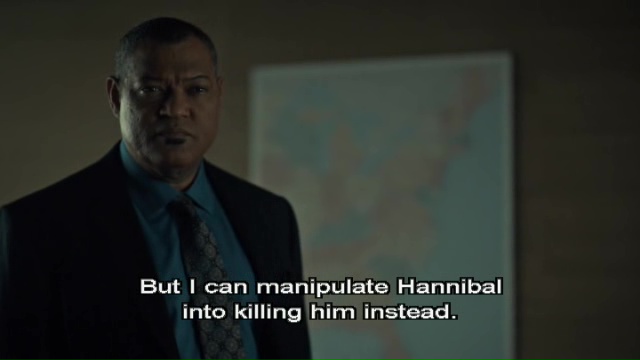
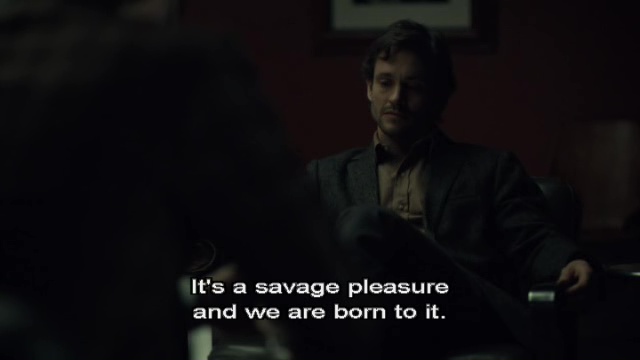
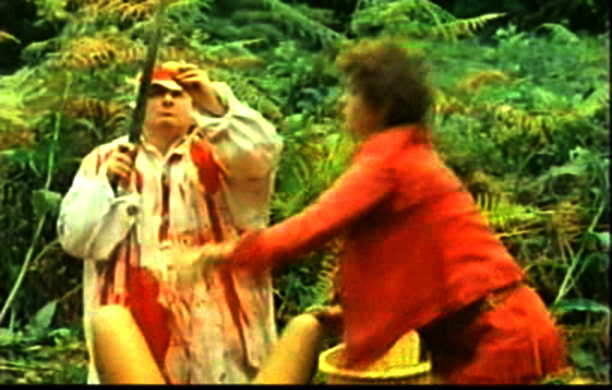
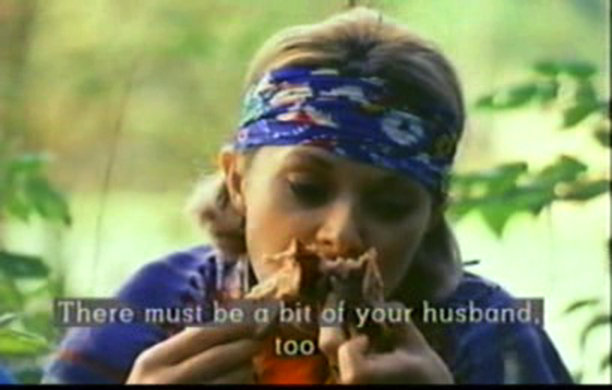
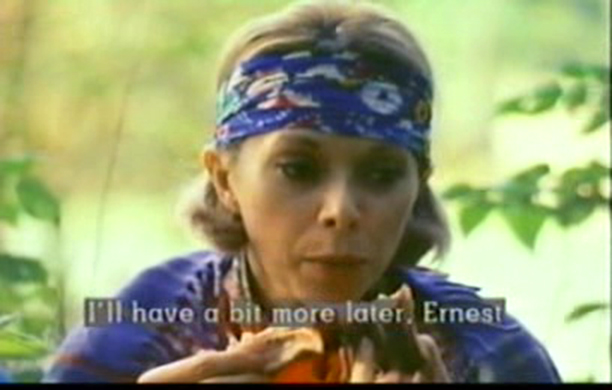
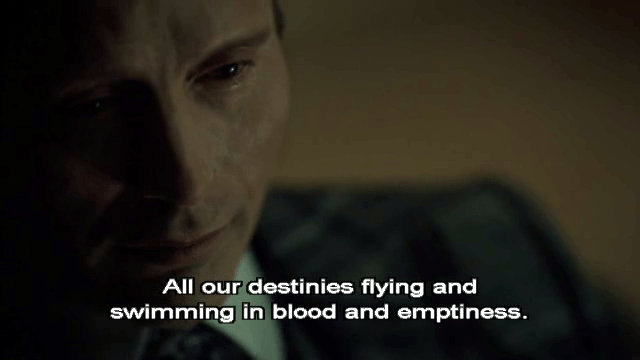
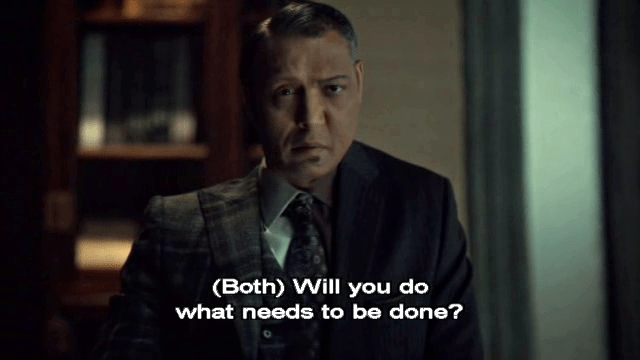
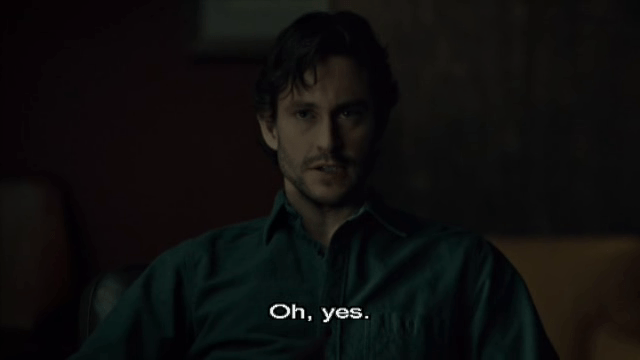
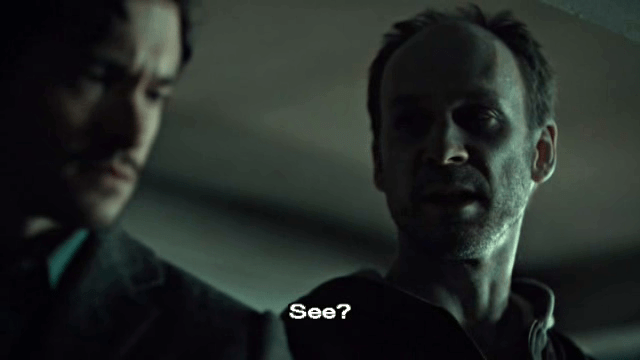
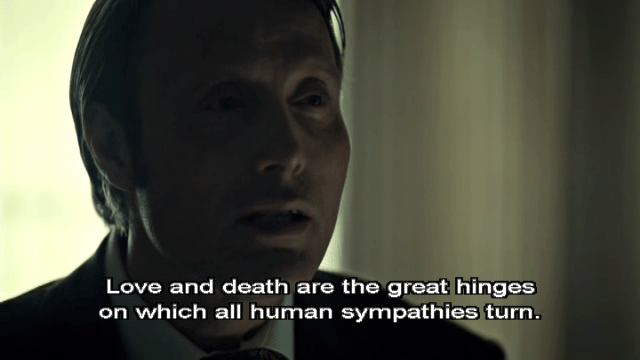
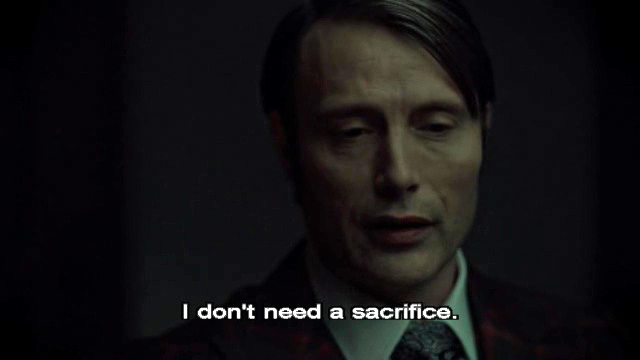
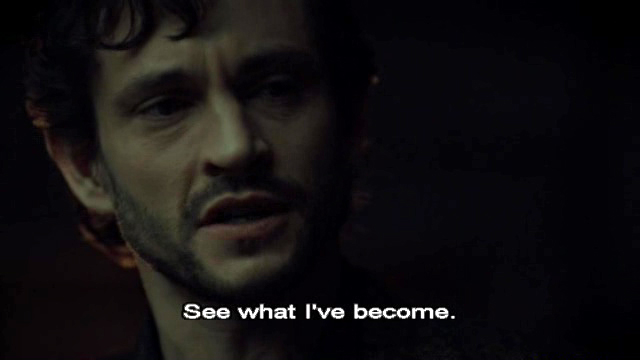
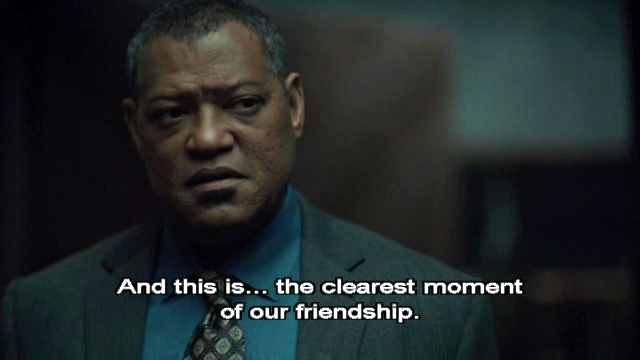
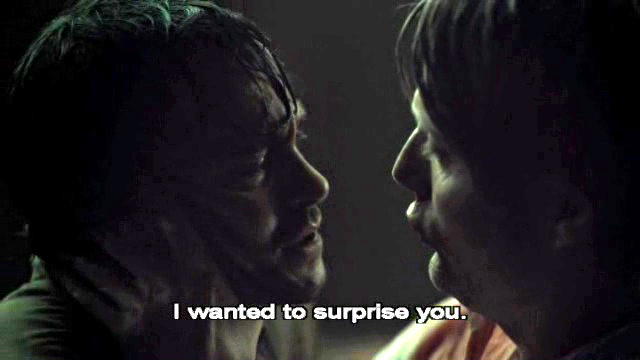
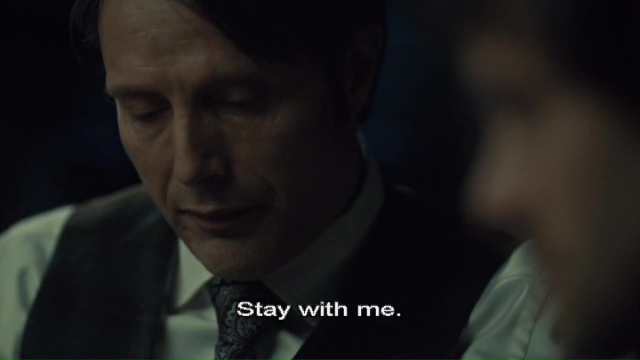
“…power over life and death” HANNIBAL Season 2 Episode 11 “Ko No Mono” (Fuller, 2014)

Pic-00168.jpg

“This is my design”.

It’s Will Graham’s favourite line. But he is wrong. Everything that has happened and will happen in the build-up to the giant brawl (of which we saw a preview in episode one) is in fact Hannibal Lecter’s design. Jack and Will think they are playing him (and Will is not too sure), but he is at least a dozen steps ahead of them all the way.

This episode is all about DEATH AND REBIRTH. This is a fundamental theme in most religions: the sacrifice of the innocents, and the rebirth (Moses in the bulrushes, Jesus’ resurrection, the birth-rebirth cycle of Hinduism and Buddhism).

Pic-00143.jpg

The episode starts with a birth. The Wendigo (stagman) is watching a creature born from the earth – tearing its way free from the birth membrane and gasping for breath. It is the birth of a new Wendigo, and it is Will Graham. It is his dream.

Pic-00004.jpg

Then there is death, and death precedes life, because we kill to eat. For some of us it’s plant based, for others a sentient creature, slaughtered in our name. For Hannibal, it’s all of the above, and always dramatic. Last week was a baby pig, this week it’s a couple of songbirds. This scene is taken from the book Hannibal. He is serving dinner to Will. We see a bird in a glass case; we see wine being poured in. Surely not.

“Among gourmands, the ortolan bunting is considered a rare but debauched delicacy.”

Pic-00009.jpg

“Preparation calls for the bird to be drowned alive in Armagnac. It is then roasted and consumed whole in a single mouthful.”

Will points out that ortolans are endangered.

Pic-00014.jpg

The tradition in this fearful ceremony is to wear a shroud over the diners’ heads, under which they hide from God.

Pic-00018.jpg

Hannibal witnesses Will eat his ortolan, as do we, in extreme close-up.

Pic-00022.jpg

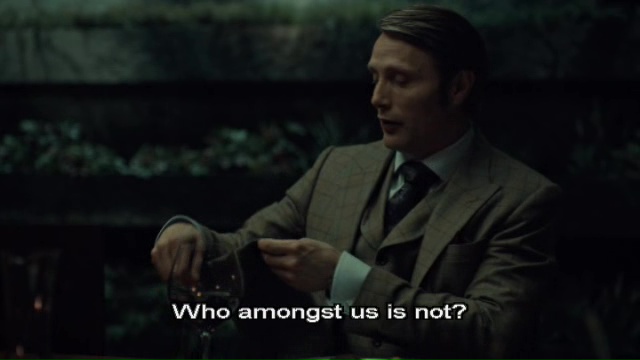
Hannibal tells Will that after his first ortolan he was “euphoric”.

Pic-00029.jpg

Pic-00030.jpg

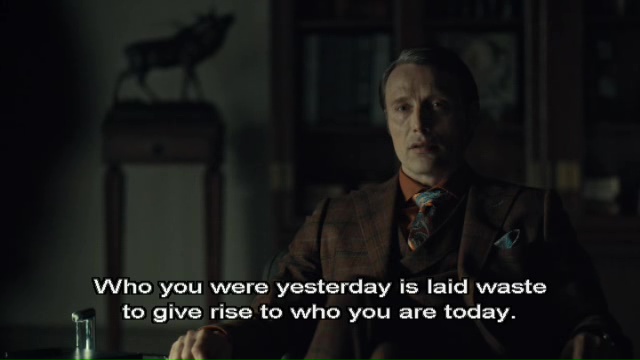
Haha! Good one Will! See you and raise you, in a high stakes game, or so we suspect, and which is confirmed to us later in the episode. Will is (or thinks he is) trapping Hannibal. Yet, as his dream portends, he is not fully in charge of this narrative, and may in fact be turning into his own version of the Wendigo, even as he pretends to be following Hannibal’s tuition, graduating to murder and cannibalism. Hannibal tells him

Pic-00034.jpg

His choices are affecting the physical structure of his brain. Killing is changing the way he thinks. Then Hannibal uses some dialogue from Red Dragon, in which Hannibal is encouraging Francis Dolarhyde, (whom we don’t meet in this series, although there is some speculation that he was the killer in Season 1 Episode 1).

“You must understand that blood and breath are only elements undergoing change to fuel your radiance. Just as the source of light is burning.”

The creation of the Wendigo, or the Übermensch, is a chemical process, a “becoming” which requires the destruction, the burning, of lesser beings, just as humans like to believe that the destruction of “lower” animals is required for their continued existence (or so the Verger marketing campaigns tell them). Will can only grow into his destiny by killing and burning people. And such is the impression he hopes to give Hannibal.

Pic-00043.jpg

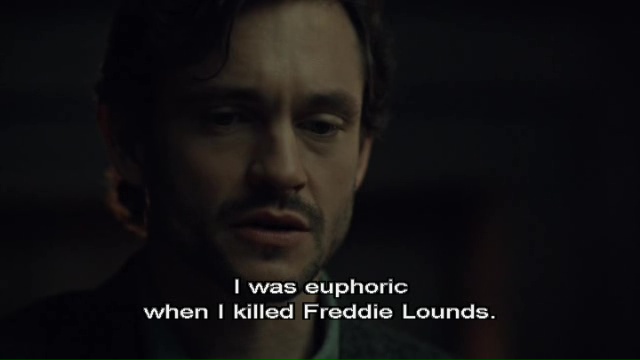
In the book and films of Red Dragon, Freddy Lounds (a male reporter) is glued to Dolarhyde’s grandma’s wheelchair, set alight, and rolled into his parking garage. In this reimagination, we are led to believe that Freddie Lounds has met that fate, after the removal of some meat (her psoas muscles) for the meal Hannibal and Will enjoyed at the end of the previous episode. They continue their metaphysical conversation over her (?) charred corpse, in front of the clueless Jack Crawford. Hannibal observes that the burning was sacred. Will replies:

“Freddie Lounds had to burn. She was fuel.
Fire destroys and it creates. It is mythical.
She won’t rise from the ashes. But her killer will.”

Oh yeah. And we’re not leaving the metaphor there. It’s the circle of life, as Elton keeps reminding us. Life ends in death, death engenders new life. Nietzsche spoke of amor fati – the love of fate, the acceptance that what has happened could not have happened any other way, and will happen again, and again. Bit like Australian politics.

Yet Hannibal continues to hope that somehow his own agency can alter the cycle of eternal recurrence, reverse time and repair the loss, particularly of his sister. He is obsessed with Stephen Hawking’s description of entropy as proof of the “arrow of time” – we “know” that time only flows one way because a shattered teacup does not gather itself back together. Hannibal really likes Hawking’s early theory that, when the universe stops expanding and starts contracting, time will reverse and entropy mend itself; the teacup will mend, Mischa will be whole again, Abigail will be returned to Will. He has something of the sort already planned out, but I’m getting ahead of myself.

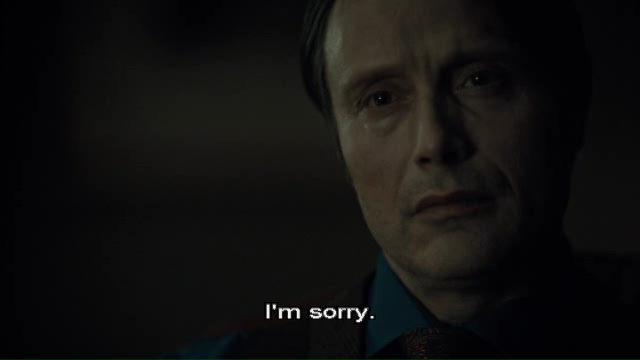
Apologising to Will for killing Abigail, he says:

“Occasionally I drop a teacup to shatter on the floor. On purpose. I’m not satisfied when it doesn’t gather itself up again. Someday perhaps a cup will come together.”

Pic-00052.jpg

Meanwhile, we get to know Mason Verger, and find out why Margot hates him, Hannibal increasingly dislikes him (now he is in his therapy room) and we are going to really detest him. Mason has a cute recipe for cocktails: he likes to make children cry and add their tears to, presumably, gin and vermouth. He’s into orphans, which got him into trouble in his youth.

Pic-00060.jpg

Pic-00065.jpg

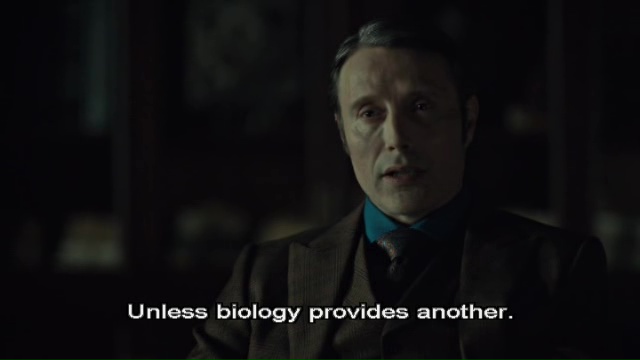
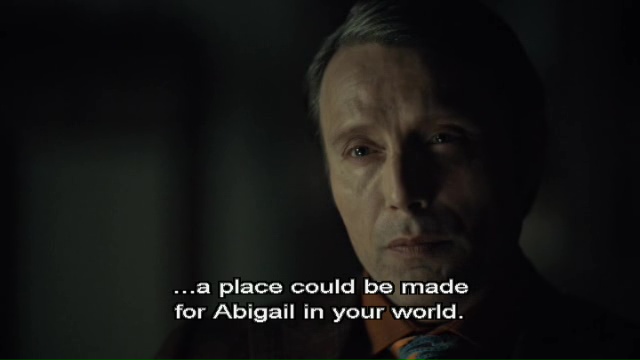
Hannibal’s therapy is never pointless. He has been treating Margot; a rather unorthodox therapy in which he encourages her to have a child so that she can inherit the Verger fortune when she kills Mason. Now he drops the hint to Mason: that she may be expecting a child.

Pic-00085.jpg

Pic-00086.jpg

Now, in case we have somehow overlooked the birth, death, rebirth theme, someone (yeah, of course it’s Hannibal) has dug up Freddie and a few other corpses and made a Shiva effigy in the graveyard.

Pic-00061.jpg

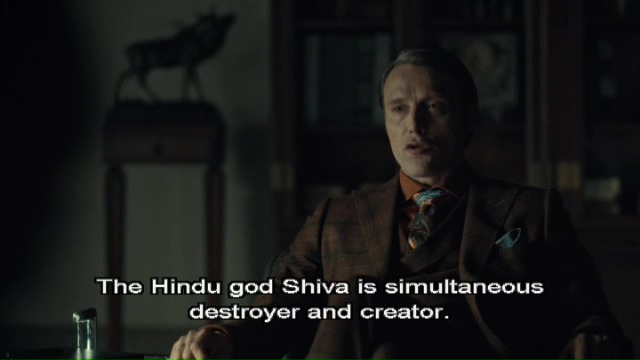
Shiva is known as “The Destroyer” within the Trimurti, the Hindu trinity, but he is also the God who creates, protects and transforms the universe. Hannibal sees a similar role for himself in the human universe. Not surprising that he likes the Hindu gods, because there can be many of them, and he is hoping Will, or one of his protégés, will become like him. He tells Will that every creative act has its destructive consequences.

Pic-00142.jpg

Pic-00143.jpg

Will tells Alana that the killer of Freddie must have a benefactor, and

Pic-00129.jpg

But Will is befuddled over Margot, and her revelation that she used him to get pregnant. Fatherhood was not was he was expecting, but he quite likes the idea. He asks Hannibal if he has ever been a father.

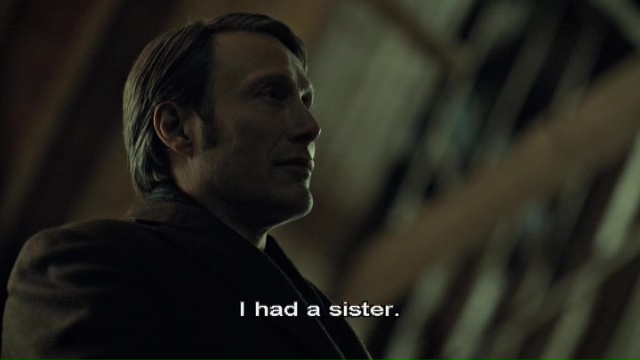
“I was to my sister. She was not my child, but she was my charge. She taught me so much about myself.”

Pic-00104.jpg

Now, in the books Hannibal and Hannibal Rising, Mischa was a toddler who was torn from Hannibal’s little arms by Nazi collaborators in WWII and cooked, and Hannibal was given some of the resulting stew, which, we are supposed to swallow, turned him into a cannibal. Well, that is how you become a wendigo apparently. No such revelations in the TV series though. For one thing, this Hannibal is much younger, and was born decades after the Nazis were defeated. We don’t know how old Mischa was in this new universe, or the circumstances of her death and ingestion. Perhaps we’ll find out in Season 4:

#bringbackhannibal

Please?

We do know that Abigail reminded him of Mischa, which means she might have been a bit older than a toddler when eaten. So Will, who is still mighty pissed off about Hannibal killing Abigail and forcing her ear down his throat, asks

Pic-00107.jpg

Pic-00108.jpg

Pic-00109.jpg

Amor fati.

Will talks of his dreams, in which he is teaching Abigail to fish. And just to confound anyone who claims Hannibal is a psychopath, he says (and this pretty rare)

Pic-00114.jpg

Pic-00116.jpg

Pic-00117.jpg

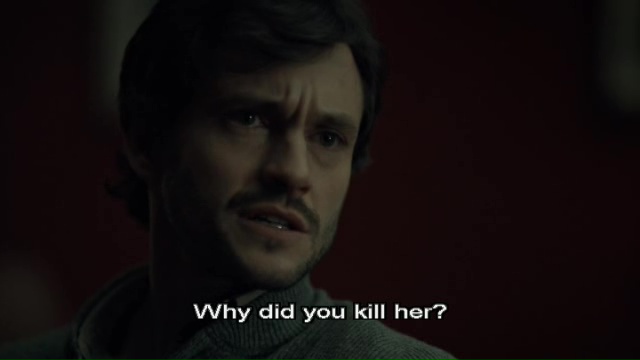
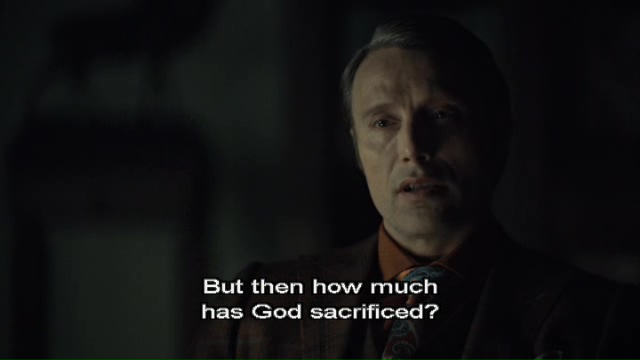
So why did you kill Abigail? Will wants to know. You sacrificed her!

Pic-00150.jpg

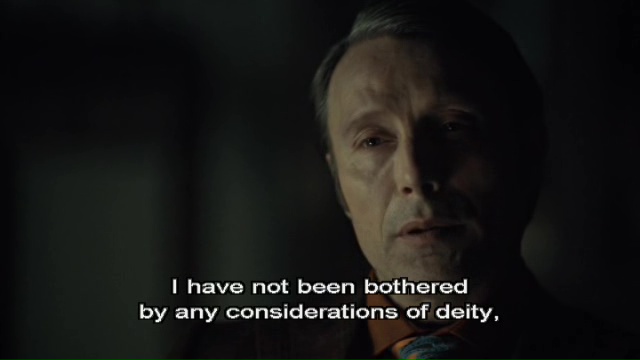
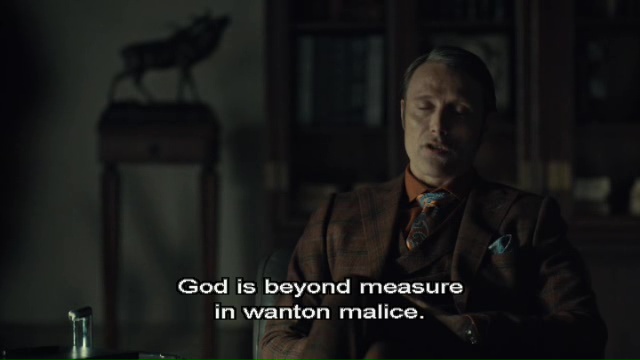
Now Hannibal often quotes God, which bothers many in the audience, including, at this point, Will. What God does Hannibal pray to? Well, he doesn’t pray, we are not awfully surprised to learn. He’s just impressed by disasters, particularly church collapses.

Pic-00153.jpg

Pic-00154.jpg

Pic-00155.jpg

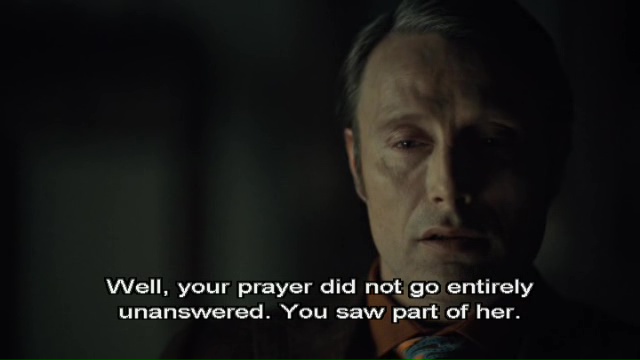
Will retorts that he prayed to see Abigail again, and Hannibal, who has a sharp wit, points out

Pic-00158.jpg

Yes, her ear, barfed up in Will’s kitchen sink. Put up your hand (nobody’s watching) if you laughed at that line! But Hannibal has a plan, which he puts in obscure, metaphysical terms, which don’t much help the terribly practical Will:

“Should the universe contract, should time reverse and teacups come together…”

Pic-00161.jpg

Well, he is, supposedly, going to be father to Margot’s baby.

Pic-00165.jpg

Pic-00166.jpg

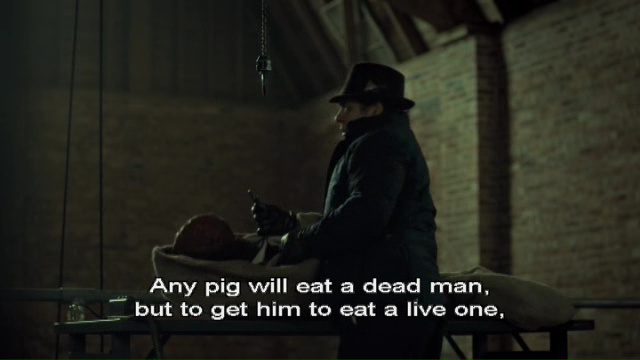
Mason is now annoying everyone – at his farm, where he is teaching pigs to eat living humans, and in Hannibal’s rooms, where he is boasting of the way his father would stab pigs at the shows, just to see how fat they were.

Pic-00134.jpg

Mason arranges a car accident for his sister, followed by a hysterectomy, to remove her temptation to kill him. Without an heir, all the money would go to the Southern Baptist Church. And no one wants that. Except, I guess, the Southern Baptist Church.

Pic-00210.jpg

We finally find out the truth about Freddie Loundes’ murder – there wasn’t one. She’s sitting in an FBI office, part of Jack and Will’s plot to entrap Hannibal.

Will is not impressed with Mason’s mutilation of Margot, and the loss of yet another child (he’s keeping count: Abigail, 1; fetus, 2). He punches Mason in the mouth, pulls a gun on him, and tells him that all of them have been pawns in Hannibal’s game.

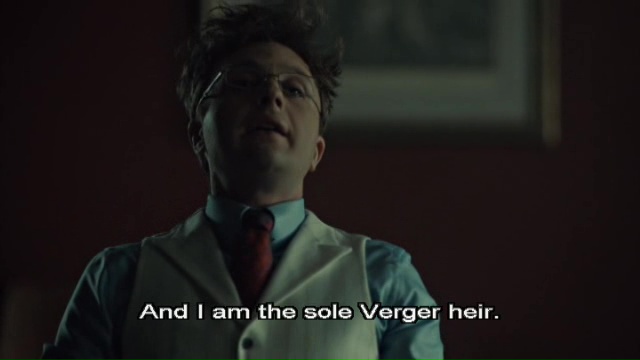
“Do you think it was Margot’s idea to have an heir?
You think it was your idea to take it from her?
My idea to come here and kill you?
The only thing that you, your sister and I have in common – is the same psychiatrist.”

Pic-00237.jpg

Oh, there is a reckoning coming. In two more episodes.


“Man’s flesh is delicious” THE LAST CONFESSION OF ALEXANDER PEARCE (Rowland, 2008)

Alexander Pearce was, as far as we know, Australia’s first cannibal. Although the Indigenous people of Australia were regularly accused of cannibalism, the evidence is suspiciously absent, and clearly such accusations were extremely useful in the British colonial campaigns of subjugation and genocide.

But Alexander Pearce was the real thing.

The film is mostly set in Hobart Jail, where Pearce (Irish actor Ciarán McMenamin) is waiting to be hanged, and has requested a priest to hear his confession. Somewhat unwillingly, an Irish priest named Father Philip Connolly (Adrian Dunbar) listens to Pearce’s story.

In 1824, the British penal colony of Van Diemen’s Land was a living hell, where vicious floggings were regular punishments.

Pic-00025.jpg

Pearce had been transported to Australia for stealing a pair of shoes, and continuing law-breaking saw him eventually transferred to Sarah Island, which was surrounded by sea on one side and wilderness on the other.

Pic-00010.jpg

Eight convicts made their escape, and headed off into the bush with enough food for four days. After eight days, weak with hunger, they start discussing cases where sailors lost at sea have engaged in cannibalism to survive, and realise they will have to do the same. They nominate Dalton the one member of their gang they all hate, a man who volunteered to be the “flogger” and who has whipped all of them. He probably should have kept his day job at Sarah Island.

Pic-00020.jpg

Three of the others turned back, but “took their share of Dalton”. Every time they run out of food, another man is killed. They see new potential meat – kangaroos and emus – and vow brotherly love – never to kill another of their own, but then discover how fast kangaroos and emus can run. Soon there are four, then just three, and Pearce realises that he is next, because the other two are friends. Luckily for Pearce, one of them gets bitten by a snake, develops gangrene and well… once more they have brotherly love. The priest is dismissive of such protestations of virtue, and Pearce answers:

Pic-00028.jpg

“A Full Belly is prerequisite to all manner of good! Without that, no man will ever know what hunger will make you do.”

Soon there are only two, and neither dares sleep. Pearce wins the game, and the last meal, but is interrupted by a local.

Pic-00031.jpg

After three months, Pearce made it, alone, to Jericho, in the centre of Tasmania, over 150km away from Sarah Island. The magistrate sent him back to Sarah Island, because he did not believe the story of cannibalism. He thought it was a cover for his friends, to disguise the fact that they were still at large, bushranging.

Pic-00033.jpg

“He’s a thief. He’s a forger. A recalcitrant Irish… but I didn’t credit him with being a savage”.

It was also impossible to hang him for murder, since there were no bodies – a legal benefit of cannibalism.

At Sarah Island, Pearce was viciously flogged and chained to a rock.

Pic-00035.jpg

He escaped again, perhaps at the urging of another young convict, whom he killed eight days later, while they still had provisions. He was apparently enraged when he discovered the boy couldn’t swim, a real disadvantage when escaping from an island. Pearce signalled the first passing ship, confessed his actions and showed the authorities the body. So this time, they could hang him.

Pic-00034.jpg

“The man’s a monster. He cut that young man in half, and devoured him for meat, and this while he himself still had bread and cheese lining his pockets”.

At the governor’s table, all merrily chewing on some other unfortunate animal, they discuss Pearce’s fate: to be hanged, and his body dissected.

Pic-00036.jpg

“Quite an irony, I imagine, a cannibal being dissected… see what breeds such savagery”.

Asked by the governor’s wife why he is giving comfort to Pearce, the priest replies “I do it for fear… Fear of what we all might become, here at the end of the world.”

Pic-00037.jpg

Pearce was hanged at the Hobart Jail at 9am on the 19th July 1824.

“whoever sheds the blood of man, by man shall that man’s blood be shed, for in his own image, God made human kind.”

Pic-00041.jpg

“The world is always easier understood held at a distance with tales of monsters and the like. This is how Alexander is remembered. Not as a man. Yet few truer words have ever been spoken: A full belly is prerequisite to all manner of good. Without that, no man will ever know what hunger will make him do.”

The film was nominated for the 2010 Rose d’Or, Best Drama at the 6th Annual Irish Film and Television Awards, Best Drama at the 2009 Australian Film Institute Awards, won Best Documentary at the 2009 Inside Film Awards and the director Michael James Rowland was nominated in the Best Director (Telemovie) category in the 2009 Australian Directors Guild Awards.
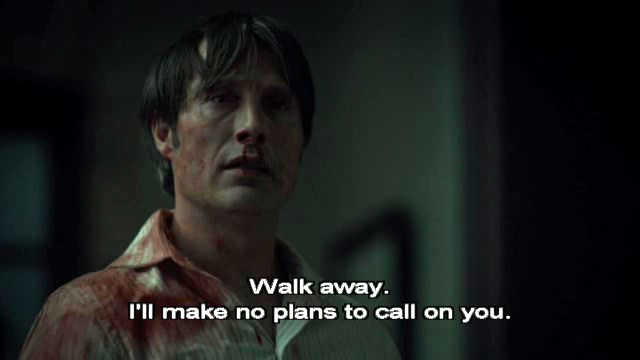
Pic-00023.jpg

Pearce is supposed to have said just before his execution:

“Man’s Flesh is Delicious. It Tastes Far Better Than Fish or Pork.”

This line does not appear in the film, and is probably apocryphal.

“It was… intimate” HANNIBAL Season 2 Episode 10 “Naka-Choko” (Fuller, 2014)
Pic-00094a~.jpg

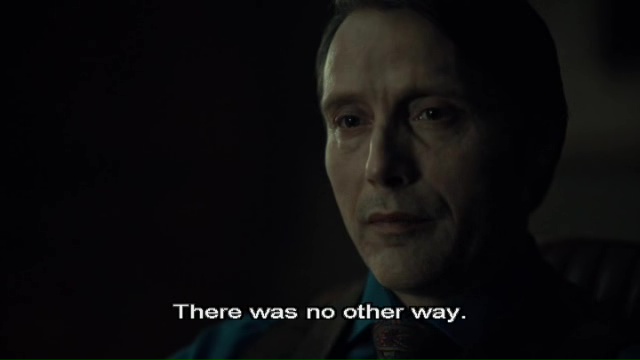
Intimate is the word for this episode. And hey, this is a cannibal blog, so all the sex going on might seem a bit out of scope, but stick with me, it makes sense. It’s all sex and death today. Sigmund Freud would have loved this episode.

Pic-00021.jpg

Everything Hannibal does has a purpose – a plan or, as Will would say, a “design”. He is always a dozen steps ahead of the chess game he is playing with Jack Crawford, which explains the huge punch-up that’s going to happen (we saw some of it at the start of episode 1 of this season).

What motivates Hannibal is what motivates us all. When we pad out to the fridge in the middle of the night, or he abducts a rude person on a dark road, we are concerned with two things: appetite and power. We are hungry, and we have the power to open a packet of instant noodles. Hannibal is hungry, and has the power to kill and cook people. Just a matter of opportunity, and belief. This hunger and lust for power is motivated, Hannibal believes (and I’m not going to argue with him, because that would be rude), by death.

Pic-00012.jpg

Pic-00013.jpg

Pic-00014.jpg

According to anthropologist Ernest Becker, most of us are motivated by a fear of death, and fill our time with convoluted ways to distract us from thinking about it.

Hannibal, and increasingly Will, are fascinated by it. Hannibal is a psychiatrist, so he is very familiar with Freud’s “death drive”. Freud had always assumed that humans are driven by the “pleasure principle” – we like things that make us feel good. Sure, but later, in “Beyond the Pleasure Principle”, he suggested another drive which, he felt, explained why we revisit unpleasant and traumatic memories, both in dreams and often in our compulsive behaviours. This is the death drive, which is in a way more primal, since life itself comes from the inanimate, and must perforce return there. While the sex-drive pressures us toward extending or prolonging life, the ego-drive pressures us toward death. Death, then, becomes a driving force in our unconscious.

Pic-00019.jpg

Pic-00020.jpg

Will has seen this death drive from the start of the story, was repelled by it, then started to recognise it as personified in Hannibal. Will pictures death as the stag-man, or as @BryanFuller calls him, the Wendigo. The Wendigo is a figure from North American Algonquin folklore. He is a giant cannibal figure, who gathers strength from feeding on human flesh, but the flesh makes him grow larger, and so his appetite can never be satisfied.

The Wendigo bite will infect the victim and turn him into a Wendigo too. Just what Hannibal is hoping to do to Will.

Pic-00002.jpg

For much of this season, and at the start of this episode when Will kills the cave-bear dude, he has fantasised the Wendigo – when he pummels the guy, he visualises beating Hannibal.

Pic-00001.jpg

When Will cracks the guy’s neck, we see him twisting the Wendigo’s antlers. He is trying, symbolically, to kill both the Wendigo that is Hannibal, and the Wendigo growing inside him.

Pic-00018.jpg

Violence brings intimacy for Hannibal and Will. Will points out that they are now even – both have sent someone to try to kill the other. Hannibal tenderly bandages Will’s torn knuckles, raw from the beating he gave – whoever he thinks he was beating. Hannibal mutters:

Pic-00015.jpg

Will replies:

Pic-00016.jpg

They are not just even now, they are almost equal. Will has tasted blood, he seems to be becoming what Hannibal wants him to become. His vision at the crime scene is not his usual recreation of the crime (since he did it) but, instead, the dead guy telling him: “this is my becoming”

Pic-00037.jpg

Will replies:

Pic-00038.jpg

There seems to be, finally, a genuine love developing between Hannibal and Will – a Nietzschean love. Nietzsche wrote in Thus Spake Zarathustra:

“In your friend, you should possess your best enemy. Your heart should feel closest to him when you oppose him.”

They have been enemies. Now they are ready to be friends, to feel love.

But Bryan Fuller doesn’t let us off that easy. Nothing is ever that straight forward in Hannibal. We suddenly get lots of sex, but it’s not our Übermensch lovers – it’s decidedly heterosexual, and Will and Hannibal are each shown in bed with, respectively, Margot and Alana, who will end up in a lesbian relationship with each other (sorry if that was a spoiler). There’s even an ironic view of Hannibal and Alana doing the pottery scene from Ghost, but with a theremin instead of a wheel.

Pic-00072.jpg

The sex is long and graphic, there is lots of groaning and sweating and some ecstatic expressions, but it is all exploitation.

Pic-00088.jpg

Hannibal is using Alana as his alibi for his nightly outings, as we will see. Margot Verger wants a male heir so she can kill her brother and still get her inheritance (an idea nurtured by her psychiatrist – one Doctor Lecter).

Pic-00052.jpg

Pic-00053.jpg

Pic-00054.jpg

Hannibal and Will morph in and out of each other, and at one stage both are in bed with Alana. And, never far away, is the wendigo.

Pic-00091.jpg

And we finally get to know Margot’s brother, Mason Verger, who, unlike the 1999 book and 2001 movie of Hannibal, has a face (at the moment). Mason is heir to a hog empire, and is busy breeding a pig that is willing to eat living humans.

Pic-00062.jpg

Pic-00063.jpg

He intimidates Margot with these pigs (not hard as he has had her clothes filled with meat to tempt the porkers). He invites Hannibal, who is not easily intimidated, and knows as much about pigs as Mason:

“A resourceful feeder and an opportunistic omnivore”

Pic-00107.jpg

We find out something else too, something which becomes central to the attempts in the later books and movies to find a causality to Hannibal. They discuss Margot, and Mason asks if Hannibal has a sister.

Pic-00115.jpg

Mason is impressed with the visit, and Hannibal goes home with a new client and a suckling pig, which he serves to Alana and Will.

Pic-00124.jpg

He got the pig, he tells them, from a friend. “A friend of yours. Not a friend of the pig’s” Will comments snarkily. Hannibal’s reply is a veiled threat:

Pic-00128~.jpg

Pic-00129.jpg

Pic-00130.jpg

A fascinating discussion of Will and Hannibal’s relationship follows, complicated by the fact that Alana and Hannibal are both psychiatrists and can’t leave their work at the office. Alana points out that “it’s hard to know where you are with each other.” Will replies that “We know where we are with each other. Shouldn’t that be enough?” Hannibal summarises this triangle as he gazes into his wine glass:

Pic-00138.jpg

Pic-00139.jpg

We’re back to interpreting Hannibal as Satanic. Not my preferred reading, but Fuller hands out no obvious explanations in a plot that is up there with Greek Tragedy.

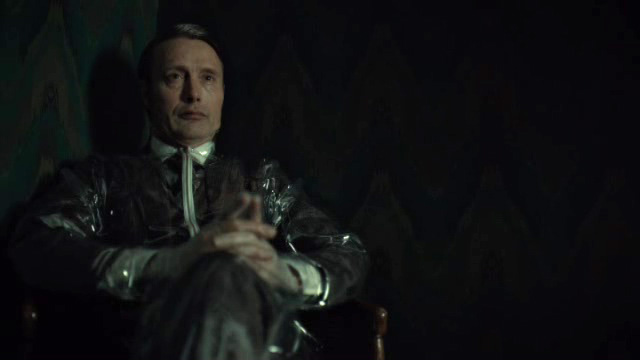
Anyway. Enough of the sex and exploitation and dead baby pigs. It’s time for the blood bond of the Übermenschen. Hannibal has heard about the Will Graham interviews, and waits, wearing his killing suit, for Freddie Lounds to come home to a nice surprise.

Pic-00140.jpg

But Will already has Freddie in his remote shed, where she has found bits of the cave-bear dude. Now it’s time for dinner. We finally get some cannibal talk! Will is apprentice cannibal, Hannibal the master chef. Will says

“I provide the ingredients. You tell me what we should do with them.”

Pic-00148.jpg

Pic-00149.jpg

Now Hannibal gets the rules of the game. “Veal? Pork perhaps?”

Pic-00153.jpg

Hannibal offers to make a Peruvian dish called lomo saltado, and hands Will a sharp knife to cut up his meat, a definite gesture of trust, or maybe a tease. Now they are playing with the thin red line between pleasure and pain, eros and death drive.  As they eat, Hannibal analyses the meat: it has notes of citrus. It tastes “frightened”. Will asks “what does frightened taste like?”

Pic-00169.jpg

Pic-00173.jpg

Pic-00174.jpg

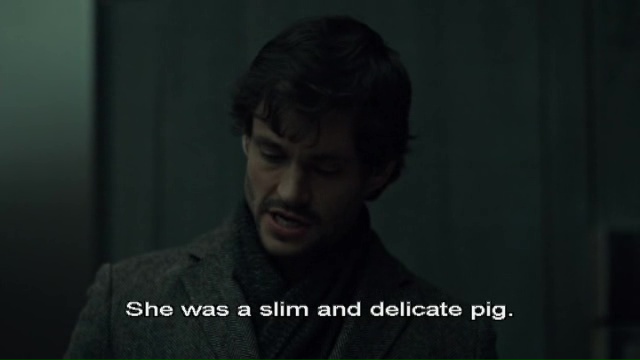
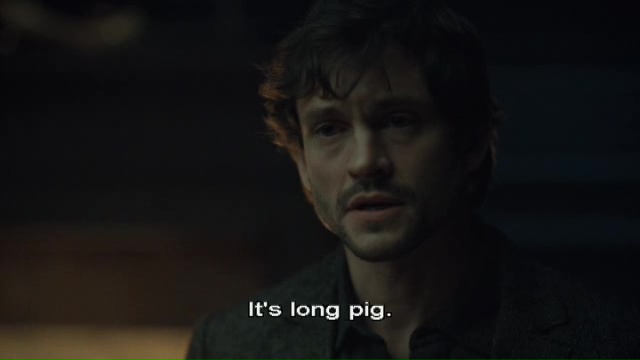
Look up “long pig” – it is widely used as a term for human meat, supposedly coined in the cannibal Pacific islands, and probably a mistranslation. Good enough for Hannibal, though, to know what Will is claiming. They are eating Freddie. Will is claiming he has swapped sides and is the cannibal’s apprentice. He reverses a speech Hannibal makes in Silence of the Lambs, where he chides Clarice for her insistence on trying to find what happened to make him the way he is.

“Nothing happened to me, Officer Starling. I happened. You can’t reduce me to a set of influences. You’ve given up good and evil for behaviourism…. You’ve got everyone in moral dignity pants – nothing is ever anybody’s fault. Look at me, Officer Starling. Can you stand to say I’m evil?”

Will turns it around: he says “I’m not the product of anything”.


Pic-00177.jpg

Will has, he is claiming, given up good and evil, gone where the universe has taken him. And that is to Hannibal’s dinner table. They discuss the nature of evil – Will says it’s destructive. In that case Hannibal argues (again from the Silence of the Lambs) storms must be evil. And fire, and hail. Or what underwriters call “acts of God”.

Pic-00185.jpg

Not gods. Übermenschen.


IF YOU LIKE MY BLOG, PLEASE FEEL FREE TO RECOMMEND IT (WITH DISCRETION) TO FRIENDS ON SOCIAL MEDIA.
IF YOU HAVE ANY QUESTIONS OR COMMENTS, YOU CAN USE THE TAG, OR EMAIL ME ON CANNIBALSTUDIES@GMAIL.COM.


“I wonder who the real cannibals are” CANNIBAL HOLOCAUST (Deodato, 1980)

This movie is a big deal, in cannibal studies.

When you hear terms like “video nasties” or “grindhouse”, Cannibal Holocaust tends to be high on the list of titles mentioned. The film’s violence was extreme in 1980, although it has certainly been exceeded since then, with the “benefit” of CGI special effects. The scenes of death and cannibalism were enough to get the director, Ruggero Deodata, arrested for suspected murder, as he had arranged for the actors to go underground to give the impression that, just maybe, he had gone for the ultimate in cinéma vérité: a snuff movie. Where the film remains at the cutting edge (sorry) of extreme cinema even today was in its presentation of authentic animal cruelty, in the midst of fictional human deaths. For this it was widely condemned, even by those who otherwise enjoyed the film, and it was banned in several countries, including Italy and Australia. The best part of the film is probably Riz Ortolani’s stunning soundtrack. But in the end, I must grudgingly say that Cannibal Holocaust is a film more relevant than ever – because it is a direct indictment of “fake news”.

Pic-00001.jpg

At a time when news stories were increasingly becoming sensationalist beat-ups, and the American failure in the Vietnam war was still being blamed on the ubiquitous media coverage of the gruesome results of that conflict, Deodato is asking the question: “what can we believe”? Or, as the protagonist of the film, anthropologist Harold Monroe (Robert Kerman) asks in the last few frames

“I wonder who the real cannibals are?”

Pic-00008.jpg

This is the question that every cannibal film or TV show asks, in its own way. Hannibal Lecter denies he is a cannibal in season 3 of Hannibal (I’ll get to it in a couple of months) when he tells a victim, whose leg they are both eating:

“This isn’t cannibalism, Abel. It’s only cannibalism if we’re equals”.

Cannibalism is about power and appetite. Those we accuse of cannibalism, in this case the indigenous peoples of the Amazon, were in all probability never cannibals. The imperialists who came in search of gold, like Columbus, or oil or timber or news footage were the real consumers – of humans who had been transformed into commodities and resources. Cannibal Holocaust asks us to think about what, in the panorama of abuse, death and torture that surrounds us, is real?

Pic-00022.jpg

This wasn’t the first Italian cannibal film: that was Man From Deep River. It wasn’t even Deodato’s first cannibal film, which was Last Cannibal World (Ultimo Mondo Cannibale). He had gratuitous animal cruelty in that one too. But Cannibal Holocaust asked new questions about the media in which it was made, about the motivations of the documentary, and about what Deodato himself was doing.

Pic-00033.jpg

The film is told from the viewpoint of an anthropologist, Monroe, who is asked to go to the Amazon, to the area frequented by cannibal tribes and known as the “Green Inferno” (a name that spawned a tribute movie 33 years later). His mission is to find out what happened to four young American film-makers who disappeared there without a trace. Well, guess who came to dinner?

Pic-00039.jpg

The first half of the film is Monroe negotiating with the locals, watching a rape and murder, helping eat an adulterer, shooting several natives, and finding and recovering the cans of film that have survived the whole sordid adventure. And yes, making friends, but not enjoying dinner with the cannibals.

Pic-00043.jpg

The second half of the film purports to show that recovered film, which a television network wants to show uncut to the public to sensationalise their deaths. This part is often referred to as the forerunner of the “found footage” movies that became enormously popular later with Blair Witch Project. In fact, Punishment Park (Watkins, 1971) was probably the first found footage film, claiming that its story of anti-war protesters being dumped (and filmed) in the California desert is actual newsreel. But in that period, what was genuine newsreel footage was on television every night, and showed dead American soldiers, burning Vietnamese civilians, and Kent State University students being gunned down by the National Guard. The difference between real and fake news was becoming opaque, years before the time of Trump (in fact, when he was still busy avoiding the draft). Deodato said he believed a lot of the news reports of Red Brigade terrorism in Italy had been staged for the cameras. In any case, even in unvarnished reporting, the framing of the camera and choice of which shots to use make the concept of real, impartial news unattainable.


Who were the cannibals? The ones depicted as real savage cannibals in Cannibal Holocaust were described by Francesca Ciardi, who played Faye, one of the lost American filmmakers, as:

…perhaps the sweetest people I have ever met. The cannibals were just local people. They put wigs on them but in real life they were very clean people: they worked in offices and they wore well-pressed shirts”.

The most controversial legacy of this film is the appalling animal cruelty. Deodato juxtaposes brutal violence on humans (rape, murder, cannibalism) through special effects, while filming live and in gory detail the killing of a coatimundi, a giant turtle, a monkey (whose brains are eaten while still alive), a tarantula, a snake and a pig. When their guide gets bitten by that snake, we get “live action” of them chopping up the snake, then chopping off the man’s leg. The team make sure the camera is rolling before wielding the machete.

Pic-00055.jpg

What is he trying to achieve through this collision of fake human and actual animal deaths? Is it simply to try to extend the illusion that, just perhaps, these shaky images were indeed real footage, and the actors were dead? Well that didn’t last past his murder trial, where he had to produce them in the court in order to be exonerated.

Critic and media academic Calum Waddell points out that this movie shows vile and debased behaviour on both sides – the ‘savage’ natives and the ‘civilised’ Westerners. But the Americans are punished for it – they are eventually killed and eaten for their troubles. The natives? A few get shot or burned, but there is no judgement. Waddell calls this a “fascist perspective”, because white people shouldn’t act like this, and so get punished, but the “savages” – well, that’s just the way they are. We can’t expect better of them, and in fact the Americans, when they first land, young, strong and white, are the picture of gung-ho adventurers, seemingly invincible. Then they regress into savagery, as they trek deeper into the green inferno.

Pic-00057.jpg

They (the savages) are cannibals by nature, and we (the civilised) risk becoming like them. The civilised whites lose their humanity as they enter the inhuman world of the cannibals, just as American troops in Vietnam lost theirs as they became enmeshed in that jungle war and started to massacre villagers. The film crew set fire to the native village so they can film an imaginary war between tribes. They capture a young girl and rape her just for fun, then film her body, impaled on a stake for losing her virginity.

Pic-00085.jpg

Cannibal Holocaust documents the loss of belief in the inevitable progress of humanity, usually told through the invincibility of white privilege.

Pic-00093.jpg

The Americans film everything, even their own death at the hands of the infuriated natives. The interlopers act as imperialists always have, but now they get eaten for it.

Pic-00099.jpg

To complicate the question of truth or simulation, we are shown a series of clips that the Americans are said to have recorded earlier in their careers, which we are told were staged for the cameras. These were clips of actual executions and abuses that Deodata presents here as fake news, created to be sensationalist newsreels.

Pic-00046.jpg

So now we have Deodato playing with our heads: real human executions are presented as fake, while fake rape and killing is presented as real. Real animal abuse, insisted upon by the director, is accompanied by gallons of human gore and agony which we know is fake.  Monroe is told: “Today people want sensationalism.”

Pic-00061.jpg
The subtitles did not use spell-checking

Yet the roller-coaster of fact and fake does not really work. Did Deodato really expect people to file out of the cinema (when it was finally shown after years of censorship) scratching their heads and saying “those guys really did get eaten! Damn shame.” The scenes of actual vicious killings of animals seem meant to drive home the point that, just maybe, the deaths of the young Americans are real too. But, as Waddell points out, the coatimundi is killed in the first half, which is unequivocally a fictional presentation (or at best re-enactment) of the expedition to find the lost tapes. So that creature’s death is totally gratuitous.

Pic-00014.jpg

Or is it? Deodato seems to be saying: don’t swallow anything you see on screen.

Here’s the thing. Real atrocities go on, but usually in the dark, or behind walls, at least not near any cameras. The Americans catch and chop us a giant turtle who continues to move as his head is removed and he is disembowelled.

Pic-00051.jpg

We can be squeamish at the death of that beautiful turtle – Faye is filmed throwing up as they chop the animal’s head off, but then we see her biting into the cooked meat soon afterwards.

Pic-00053.jpg

The turtle died totally unnecessarily for the sake of a cheap movie shot. We can also be sickened by the scenes of rapes and murders of humans, which are fake, but look pretty real. But every moment, as we reach for the remote and gratefully turn off the movie, real atrocities are continuing everywhere, in wars and domestic abuse and abattoirs and laboratories. Real animals quiver in their death throes, millions of them every second, while we turn our faces away from the dying turtle. We are not filming those abuses, but very often we are paying for them, through our taxes or our shopping. Like Faye, the cruelty repels and nauseates us, but the appetite makes us forget. This film, perhaps, helps us to remember.

Pic-00118.jpg

If you like my blog, please feel free to recommend it (with discretion) to friends on social media.
If you have any questions or comments, you can use the tag, or email me  on cannibalstudies@gmail.com.

“I know that babies taste best”: SNOWPIERCER (Bong Joon-ho, 2013)

download.jpg

Verschlimmbesserung: a word I found in the Urban Dictionary. It means an attempted improvement, which just makes things worse.

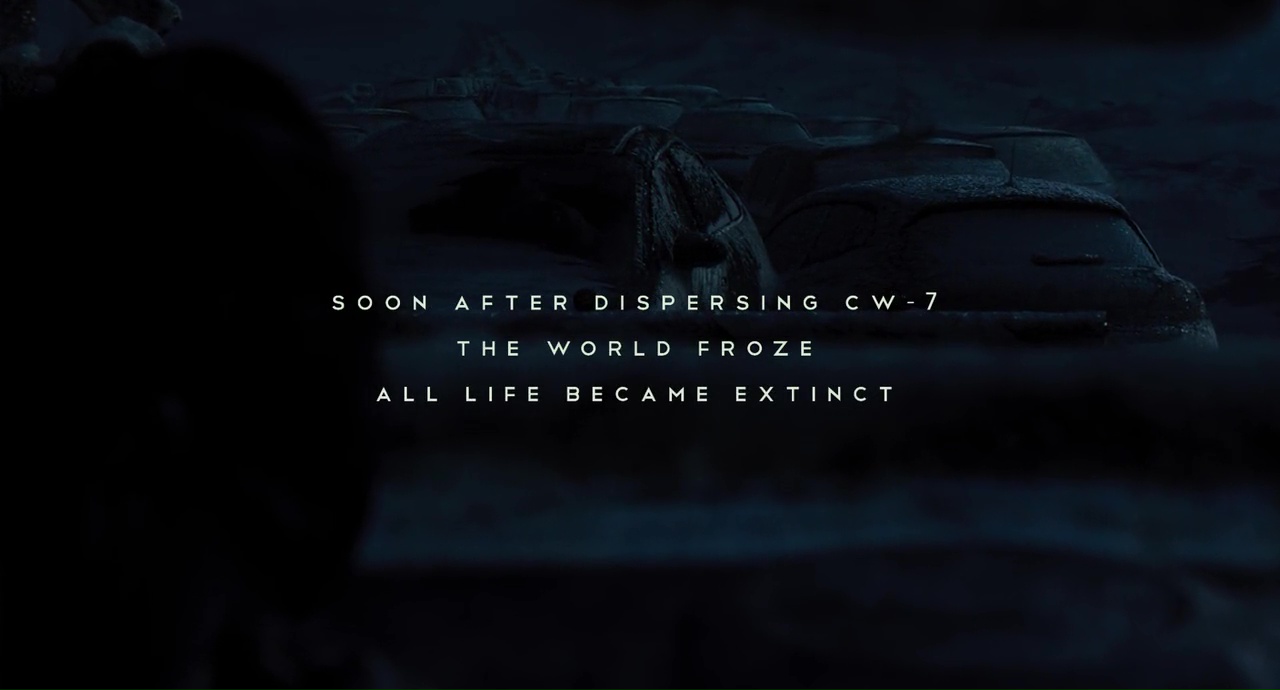
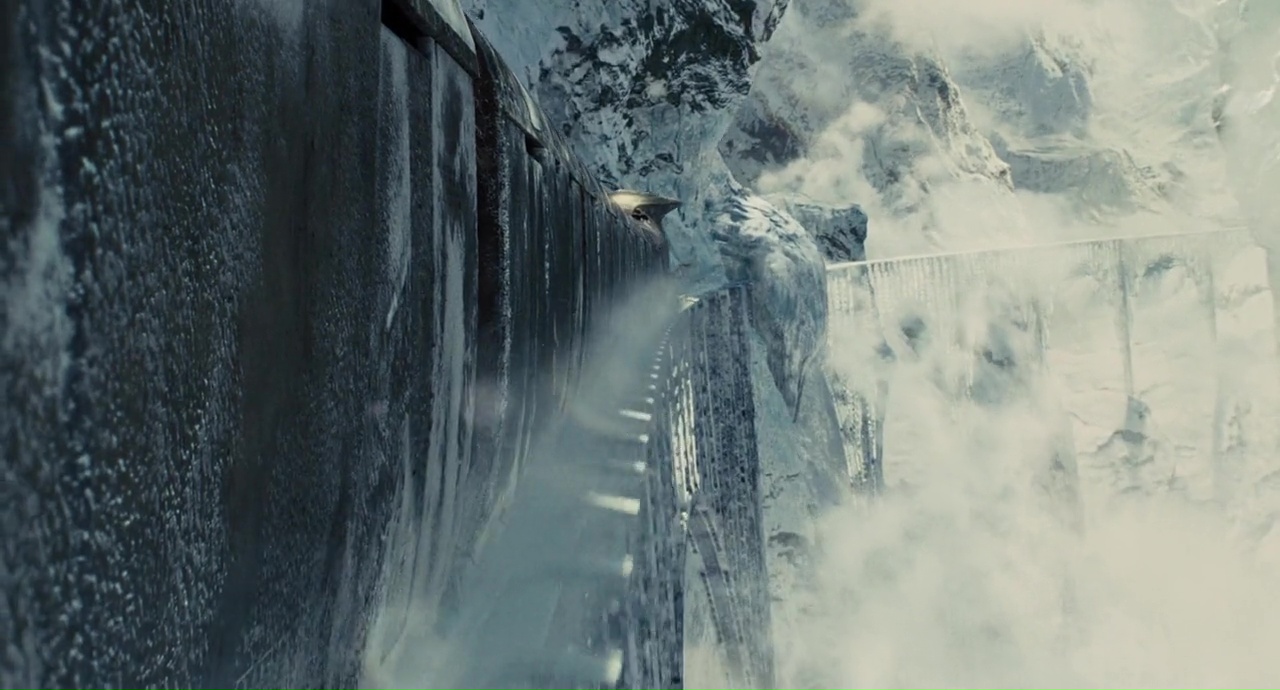
How can we make the frightening prospects of global catastrophe due to climate change even worse? Well, apparently the best way is to come up with a half-arsed way of fixing it. In Snowpiercer, a corporation has come up with a substance, CW-7, which is sprayed into the atmosphere to deflect the sun’s rays and cool the planet. It succeeds brilliantly:

Pic-00001.jpg

The only humans left alive are on a train, the SNOWPIERCER, which dashes through the snow, circumnavigating the earth once a year. The grateful survivors form a happy band of brothers who work together to survive.

Just kidding!

Pic-00002.jpg

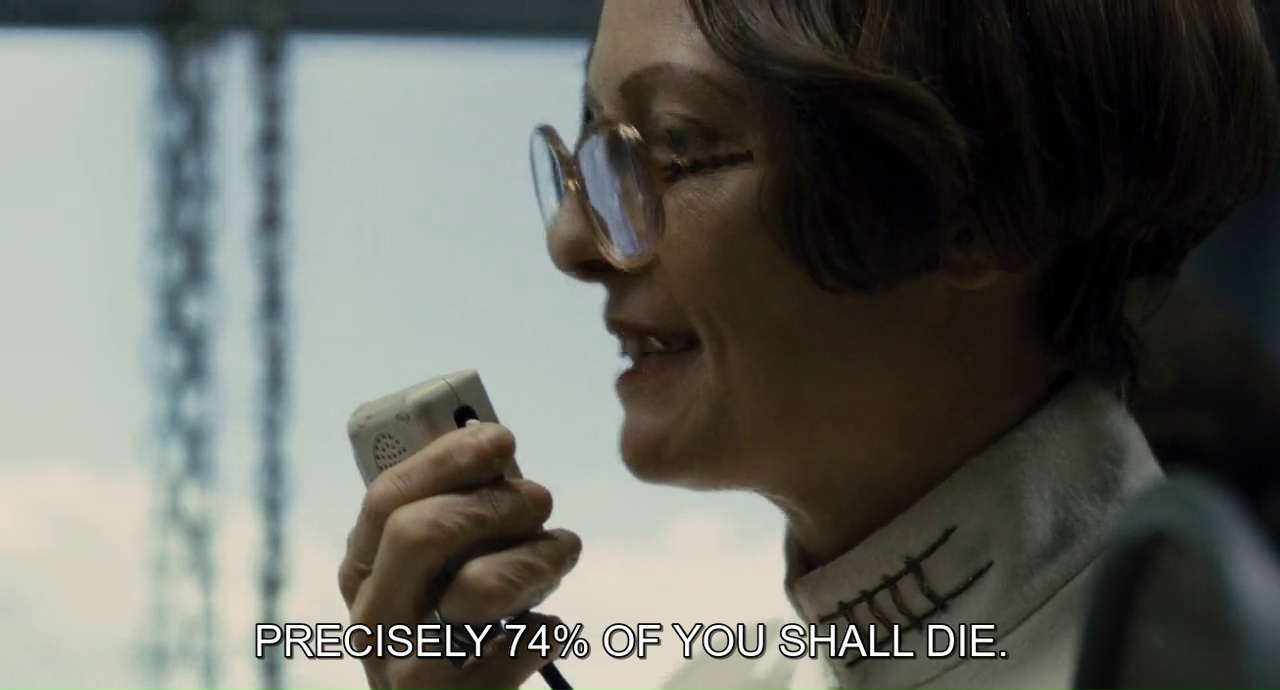
There is, as in all human society, a strict hierarchy of power and privilege. It’s the year 2031. The rich, including the train’s inventor Wilford (Ed Harris) live in luxury at the front of the train, the “scum” live at the back in squalor, beaten and tormented by armed soldiers and fed a mysterious protein bar made of what?

Pic-00008.jpg

There is revolution brewing though, led by Curtis (Chris Evans, in a far meatier role than Captain America ever offered him).

Pic-00012.jpg

There’s a lot to like in this movie – the plot is interesting, the action plentiful, the cast are stellar (including also John Hurt, Octavia Spencer, Song Kang Ho, and Tilda Swinton, as well as Paul Lazar, who played a nerdy scientist in Silence of the Lambs) and the photography, particularly of the frozen world and the train, is superb.

Pic-00004.jpg

Pic-00015.jpg

Bong Joon-ho is one of the most exciting filmmakers working today. Metacritic has ranked him one of the 25 best film directors of the 21st century, and he recently became the first Korean director to win the top prize at Cannes – the Palme d’Or, for his 2019 film Parasite, which also explores class and social divisions. Parasite went on to win four Oscars at the 92nd Academy Awards for Best Picture, Best Director, Best Original Screenplay and Best International Feature Film.

The film between Snowpiercer and Parasite was Okja, an animated piece that was also nominated for a Palme d’Or but was voted down, perhaps because it was released on Netflix. Okja crossed the anthropocentric line of privilege, featuring cruelty to a giant pig specially bred for human consumption (like so many animals today) and the horrors she faces in the slaughterhouse.

Pic-00020.jpg

Snowpiercer also explores some fascinating ethical issues to do with leadership, biopolitics, class privilege, revolution, violence, the Holocaust, our reliance on technology and yes, finally, cannibalism.

Pic-00023.jpg

Wilford explains to Curtis: “You’ve seen what people do without leadership.”

Pic-00074.jpg

Look, this is a pretty recent movie and got a woeful cinematic release, so you may still be planning to see it. Therefore, I won’t disclose the ending. But you need to know the cannibalism angle, because you are, after all, reading this blog on cannibal films and TV shows.

There are hints in the first half of the film, discussions about the number of arms people have, and then more food references as they march their prisoner Mason (Tilda Swinton), who previously lectured them on their place at the bottom of society, through the front cars. First they go through a greenhouse, then an aquarium, and we hear Bach’s Goldberg Variations, a tribute (one hopes) to Silence of the Lambs.  At the front of the aquarium, ecological balance is maintained by eating the fish twice a year as sushi. They sit down for this elite meal, but make their captive eat the protein bars that are the only food given to the “scum”.

Pic-00032.jpg

Curtis and his dwindling band of fighters go through a butchery, then a school, where the children are taught that tail-enders

Pic-00034.jpg

And that we, the pre-trainers,

Pic-00035.jpg

There are dentists, tailors, hairdressers, a fancy dining-car, an aquatic centre, a disco, a drug lounge – all the things that make up decadent, modern society.

Pic-00036.jpg

We are socially and culturally determined in large part by what we eat. The food is always better in first or business class. The higher classes eat beautifully prepared, gourmet tidbits. The lower classes, the starving and the deranged eat what they are given, or what they can hunt.

Just before the showdown, Curtis reveals what it was like when they first boarded the train: “A thousand people in an iron box. No food, no water.”

Pic-00042.jpg

“There was a woman. She was hiding with her baby. And some men with knives came. They killed her and they took her baby.”

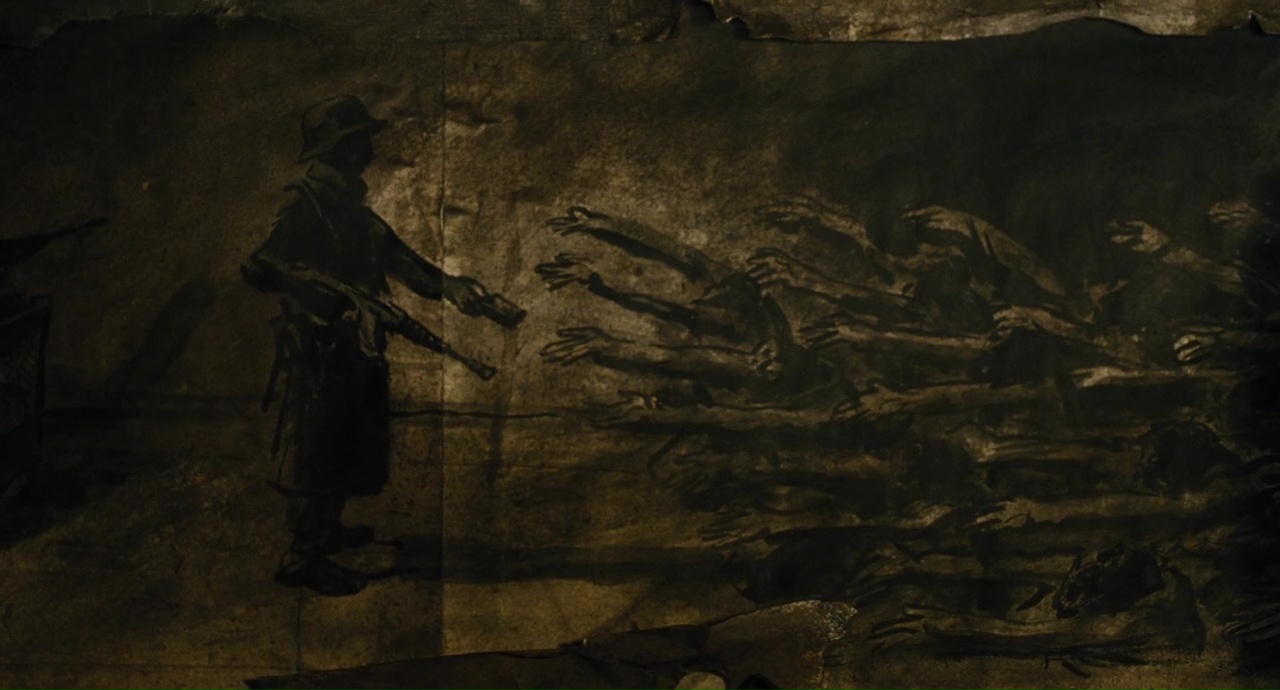
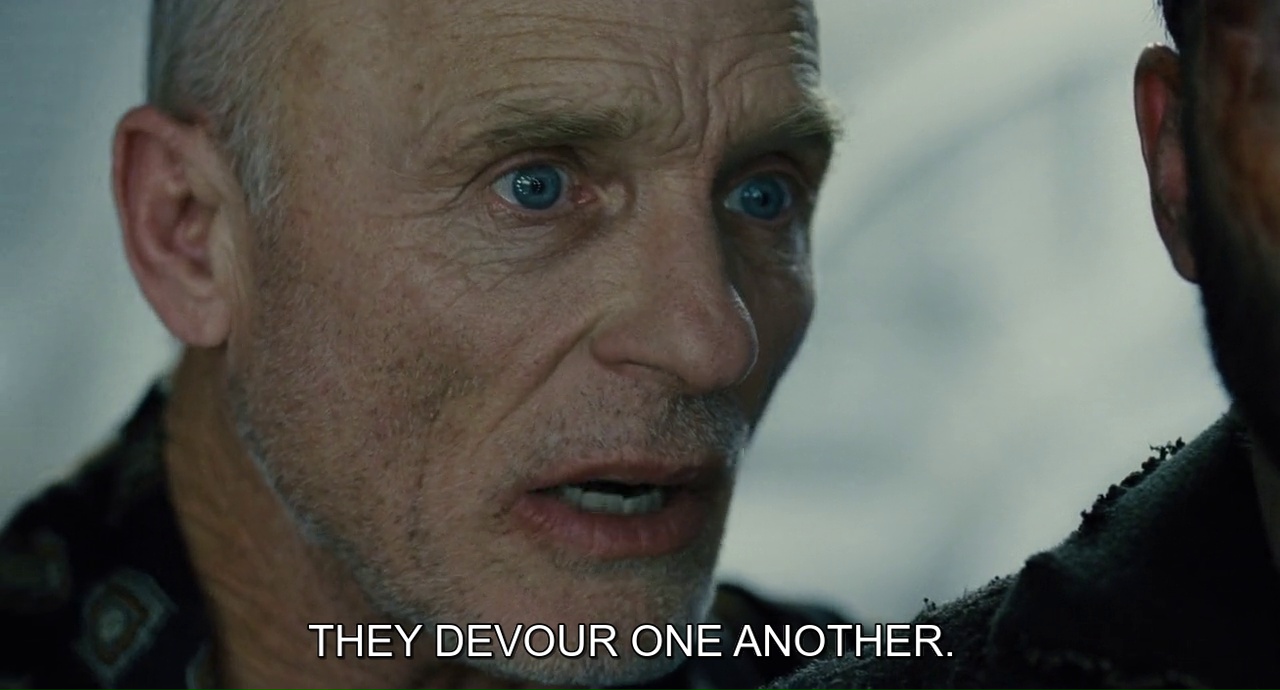
Then an old man took the knife and cut off his own arm, offering them that as food, to save the baby. Then others started doing the same. Sacrificing to the cannibals to save the next generation. Then the rich started sending through protein bars. And we thought they were going to be the cannibals!

Things Curtis hates about himself:

Pic-00044.jpg

Pic-00045.jpg

Well, there’s a lot more to the story, and a lot more to like, but you can find out by watching the movie. It’s worth it.

Here’s the trailer:

IF YOU LIKE MY BLOG, PLEASE FEEL FREE TO RECOMMEND IT (WITH DISCRETION) TO FRIENDS ON SOCIAL MEDIA.
IF YOU HAVE ANY QUESTIONS OR COMMENTS, YOU CAN USE THE TAG, OR EMAIL ME ON CANNIBALSTUDIES@GMAIL.COM.

We are all Nietzschean fish: HANNIBAL Season 2 Episode 8 “Su-zakana” (Fuller, 2014)

When Jacques Derrida pointed out that the binary of inside/outside is “the matrix of all possible opposition”, he was apparently not referring to this episode of Hannibal, not even to cannibalism particularly. But he was big on deconstructing binary oppositions, and his opinion that the core binary, the binary to end (or start) all binaries, is that between inside and outside, is particularly apposite to this episode.

vlcsnap-00078.jpg

Will and Jack are fishing through a hole in the frozen ice of a river, but the prey they are planning to capture is not piscine – it’s Hannibal. Yes, Jack finally got the message; they are no longer discussing whether Hannibal is the Ripper, now it’s about the tactics that might entrap him. They are outside of Hannibal’s world of gourmet human flesh, and their way through it is via his table. Live bait, to lure a predator.

vlcsnap-00003.jpg

IMHO this is one of the key episodes of the series, smack in its middle (although who knew that the blinkered, Philistine network would cancel after three seasons?), and it features the line that for me is the core of the whole Hannibal mythology:

vlcsnap-00011.jpg

vlcsnap-00012.jpg

One of Nietzsche’s most quoted aphorisms is “That which does not kill me makes me stronger” and that, for Hannibal, is precisely the role of a true friend. One should be, to a friend, “an arrow and a longing for the Übermensch” (the superman). This is to what Hannibal was referring when he said that the struggles with Will (including, of course, his attempted murder of Hannibal) would change them – that they were “all Nietzschean fish”.

vlcsnap-00009.jpg

Will has brought along a wild-caught trout, from his icy rendezvous with Jack. Hannibal has prepared it as truite saumonee au bleu, and the trout seems to be regurgitating his own tail.

vlcsnap-00027.jpg

You thought “turducken” was some brilliant 21st century idea? Nup. The Tudors were doing it in the 16th century, and it was called “engastration” meaning “stuffed up the gastric passages”. Their specialities included pie from a whole turkey stuffed with a goose, who was stuffed with a chicken, then a partridge, which was stuffed with a pigeon. This poor trout has his own tail in his mouth, but he is the very totem of cannibalism: humans eating humans; we eat ourselves.

They dine to the Piano Concerto 1 in C Major by Ludwig Van Beethoven, or at least that is what we, the audience get to consume, while they enjoy the fish and the banter. Will is being a smartarse, implying that he still suspects, or knows, that Hannibal is the cannibal, and implying he might be joining up with him.

vlcsnap-00013.jpg

Jack is quick to dispel the idea that they might have doubts about Hannibal, but alludes instead to:

vlcsnap-00016.jpg

Hannibal is ready for that. He has a whole Nietzschean weltanschauung to share with his admiring friends:

“We need to move past apologies and forgiveness. We will absorb this experience.”

vlcsnap-00019.jpg

This could have almost come out of Thus spake Zarathustra, in which “man is overcome and the concept Übermensch becomes the greatest reality”. Hannibal, as we know, spends his time helping the region’s many serial killers and tormented psychotics to “become” their greater selves. As a leading forensic psychiatrist, he is familiar with, and often therapist to, most of those who will be pursued by the FBI. Like Nietzsche, who said that “Zarathustra, as the first psychologist of the good man, is perforce the friend of the evil man”, Hannibal is drawn to these violent individuals, not to cure them but to see if they can become a higher form – an Übermensch.

vlcsnap-00020.jpg

Now we get into the episode’s killing time and, again, there is engastration involved. This time, a vet examining a dead horse finds she was not pregnant, but has a dead woman sewn inside her. Now, that’s worth calling the FBI for.

vlcsnap-00029.jpg

Hannibal is still acting as murderer-interpreter, despite having said he was retiring last episode. He sees that the woman is inside the horse for a reason:

vlcsnap-00032.jpg

vlcsnap-00035.jpg

Yeah, where have we heard that before? Ah yes, Jame Gumb (Buffalo Bill) in Silence of the Lambs, who put a moth chrysalis into the throat of each victim, as they ‘gave’ their skin to assist his becoming a woman.  But what was this woman supposed to become? She’s pretty dead.

Look, this whole woman in horse plot is a bit silly, so we get to meet another really important character family: the Vergers. We don’t see Mason yet, who will be the main antagonist later, but we hear him as he rapes his sister, Margo, saying

vlcsnap-00039.jpg

Since we’ve all read the book or seen the film Hannibal, we know that Mason used to give poor kids chocolate at his father’s poor-kids’-camps, just before he abused them. So, Margo has changed (in the book she is a weight-lifting lesbian, who would be less prone to submit to Mason’s perverse desires, but the bodybuilding lesbian is such a stereotype). Now she is very cute, and we figure someone is going to fall for her, and that someone’s gonna be Will, because we suddenly see a filmy love scene, apparently inspired by the impressionistic sex scene in the film Fight Club, which turns out to be Alana and Hannibal. Is Hannibal bi, or just using her? Best not to talk about it.

vlcsnap-00044.jpg

Hannibal has his own hopes for Margo Verger, including a course of Übermensch 101, which is – get them to kill someone. In this case, her abusive and filthy rich brother.

vlcsnap-00042.jpg

Alana really likes to talk about stuff in bed, much to Hannibal’s obvious distaste.

vlcsnap-00045.jpg

vlcsnap-00046.jpg

The woman in the horse’s uterus is on the slab, very dead, giving the BAU (Behavioral Analysis Unit) guys a chance to get some cannibal talk in.

vlcsnap-00054.jpg

vlcsnap-00055.jpg

But hey, there’s a heartbeat! Is this the birth that Hannibal predicted? They open her up, crack apart the ribs, and a bird flies out. Birth, resurrection, growth, all basic issues in Hannibal and the rest of Western literature.

vlcsnap-00056.jpg

And we’re not finished with inside/outside dualisms and engastration. The bird in the woman in the horse was meant to be her rebirth, and Hannibal points out to Will:

vlcsnap-00064.jpg

Will has found out that “doing bad things to bad people makes you feel good”, a truth that Hannibal emphasises to him, and also to Margo, who has been dehumanised by her brother, and since then by her family, who consider her weird. She’s come to the right analyst here:

vlcsnap-00077.jpg

But does Will still want to kill Hannibal?

vlcsnap-00071.jpg

Oh, yes, the sub-plot. The psychopath killing people is the social worker of the guy who sewed the woman into the horse, hoping for a rebirth. Those two, of course, must have their confrontation. It results in one of the great lines of the show:

vlcsnap-00087.jpg

He’s certainly in there, but he’s not dead, and tears his way out of the horse’s uterus just as Hannibal is bonding with a sheep, a nod to the original theme of Silence of the Lambs.

vlcsnap-00090.jpg

Will wants to kill the dude, but Hannibal stops him. Killing people is 101, and Will is way past that, so Hannibal sticks his thumb in the gun’s hammer just as Will is about to blow the killer away. Killing this random psychopath will not move Will onto a higher level of evolution.

vlcsnap-00096.jpg

But Hannibal is impressed as hell at Will’s progress from wimpy FBI trainer to willing executioner. With dialogue quoted straight out of Hannibal’s thoughts about Clarice at the end of the book Hannibal, he tells Will:

vlcsnap-00097.jpg

“I can feed the caterpillar, and I can whisper through the chrysalis, but what hatches”:

vlcsnap-00102.jpg

As the great Derridean and Nietzschean philosopher Dr Seuss once said: “Inside, Outside, Upside Down”.

vlcsnap-00103.jpg


IF YOU LIKE MY BLOG, PLEASE FEEL FREE TO RECOMMEND IT (WITH DISCRETION) TO FRIENDS ON SOCIAL MEDIA.
IF YOU HAVE ANY QUESTIONS OR COMMENTS, YOU CAN USE THE TAG, OR EMAIL ME ON CANNIBALSTUDIES@GMAIL.COM.

Slapstick cannibals: BE MY KING (Lane, 1928)

Lupino Lane Be My King 1928.jpg

A short movie from Lupino Lane, who was the most famous of the English Lupino family, until eclipsed by his cousin Ida Lupino, one of the only female filmmakers working during the 1950s in the Hollywood studio system, and the first woman to direct a film noir with The Hitch-Hiker in 1953.

Lupino Lane stars in this short silent movie with his brother Wallace Lupino, who plays an older authority figure, despite being some years younger than Lane. The Lupino brothers later shot to fame with a show called Me and My Girl in the 1930s, which inflicted the song “The Lambeth Walk” onto an unsuspecting public.

vlcsnap-00001.jpg

Lane is a cabin boy, shipwrecked with Wallace on an island, where they come across the obligatory foot print (think Robinson Crusoe).

vlcsnap-00002.jpg

Lane sets off to find signs of civilisation. Various animals cross his path – a chimp, a lion, a leopard, even an elephant, none of which he notices, until he is frightened by a rabbit. Wallace is captured by cannibals (male) while Lane is accosted by the females, who takes a bite at him.

vlcsnap-00004.jpg

He is captured by the male cannibals and taken to the – yes – cooking pot that was so much part of the myth of primitive cannibalism.

vlcsnap-00009.jpg

In fact, the trope of the sad-eyed missionary or sailor in a cooking pot surrounded by fierce savages with bones in their noses is perhaps the first image most people conjure up when (if) they think about cannibalism. There is, of course, no evidence that this ever happened anywhere, but there is some speculation that the story was spread by missionaries, as it did wonders for their fund-raising efforts.

Lane is rescued by the love of the chief’s daughter (think Man from Deep River) – and dressed for the wedding, while Wallace is fattened up for the feast. In fact, there are many precursors to the later cannibal movies in this absurd little piece.

vlcsnap-00014.jpg

This is a very early celluloid version of the white man in the cooking pot, which is why I have included it here. The movie is mostly very silly, but funny in parts, in that early Chaplin-esque slapstick way.

vlcsnap-00015.jpg

But there is a sinister aspect – this dismissal of ‘savage’ races as unquestionably cannibals was useful not just for mission fund-raising but also as a pretext for the invasion, conversion, subjugation and often extermination of the indigenous peoples of the lands that Europeans wanted to exploit. The uncritical acceptance by Western audiences of this image of the native as cannibal construed colonised peoples as racially degenerate, and made the appalling atrocities of colonialism somehow less bothersome, particularly to its beneficiaries.

This Youtube link below is actually not a trailer, but the complete movie.

IF YOU LIKE MY BLOG, PLEASE FEEL FREE TO RECOMMEND IT (WITH DISCRETION) TO FRIENDS ON SOCIAL MEDIA.
IF YOU HAVE ANY QUESTIONS OR COMMENTS, YOU CAN USE THE TAG, OR EMAIL ME ON CANNIBALSTUDIES@GMAIL.COM.

Cannibalism and the limits to appetite: THE COOK, THE THIEF, HIS WIFE AND HER LOVER (Greenaway, 1989)

Michel Montaigne wrote, back in the sixteenth century, that savagery is not all on the side of the cannibal:

There is more barbarisme [sic] in eating men alive, than to feed upon them being dead; to mangle by tortures torment a body full of lively sense… than to roast him after he is dead”.

vlcsnap-00001.jpg

Peter Greenaway’s The cook, the thief, his wife and her lover (1989) is the perfect representation of the savage cannibal within our own civilisation, even though the actual act of cannibalism does not occur until the closing minutes of the film. The film however is replete with images of physical and metaphoric incorporation and abjection: eating, corpses, excrement, violence and humiliation. This is such a perfect representation of abjection that the Reelviews reviewer was “at a loss” to find anything disgusting that had been left out.

vlcsnap-00003.jpg

The film is almost entirely set inside the upmarket restaurant Le Hollandais which has been bought by gangster Albert Spica (Michael Gambon) who torments and humiliates the patrons, staff, his men and his wife Georgina (Helen Mirren). Crystal Bartolovich describes this process as “making everyone around him miserable in ways that depend upon the alimentary canal”. Another reviewer observed that the restaurant metaphorically presents a reversed alimentary canal: the back door with its dog-shit is the anus, the stomach is the kitchen where the food is processed and finally the dining room is the mouth, the site of cultured discrimination, but also of abuse.

vlcsnap-00016.jpg

While Spica eats and belches and spouts abuse and absurd bon mots, Georgina escapes, in brief interludes, to have a sexual and then a loving relationship with the very refined bookshop owner Michael (Alan Howard), with the connivance of the cook, Richard Borst (Richard Bohringer). The world of the restaurant is surreal, with each room coloured differently and the costumes of the protagonists changing to match as they move between them. Tables in the kitchen and the dining room are groaning under the bodies of dead birds and mammals. Spica shows little distinction between his three pet subjects: food, excrement and sex. The pleasures of sex and eating and the abjection of excretion are important messages from Greenaway’s film: Spica sums up “the naughty bits and the dirty bits are so close together, that it just goes to show how eating and sex are related”.

vlcsnap-00008.jpg

He forces an enemy to eat dog-shit, his men gorge on the fine dining and vomit on the table, and his wife reveals that sex for him involves only violence and degradation. Spica’s favoured method of torture is force feeding: he feeds excrement in the opening scene to a man who owes him money, he feeds buttons to the kitchen boy, and when he discovers the love affair, he promises to catch the lover, kill him, and eat him. He and his men kill Michael by making him eat one of his books.

vlcsnap-00024.jpg

Georgina persuades Borst to cook Michael’s body; in a ceremonial scene, she reverses his force-feeding tactic and at gunpoint forces him to make good his earlier threat to eat the lover, suggesting he starts with Michael’s cock: “it’s a delicacy, and you know where it’s been”.

vlcsnap-00067.jpg

As she kills Spica with another phallic symbol, his own gun, she hisses at him (while looking at us, the viewers) the single, final word of the film: “cannibal!”

vlcsnap-00072.jpg

The film’s alterity focuses on the criminal crew against polite society. It was made toward the end of the long period known as Thatcherism, in which Britain was hugely polarised between followers of “libertarianism” and their opponents who felt that money and power were crushing all vestiges of civil society. The film has widely been interpreted as a protest about the politics of that time, with the thief as Thatcher and her greedy plutocrats and the lover as the ineffectual left opposition, the cook as the civil service and the wife as the people, being alternately wooed and abused. Roger Ebert saw a more universal message about an entrepreneurial class that is raping the earth and its environment while the “timid majority” finds distraction in romance and escapism. The New York Times felt that Greenaway was asking the question: what happens when “the most crass and sadistic people” gain power? Greenaway himself said that his use of cannibalism was a metaphor of consumer society: “once we’ve stuffed the whole world into our mouths, ultimately we’ll end up eating ourselves”.

vlcsnap-00068.jpg

Some critics, however, sees Greenaway’s message as elitist: consumption is only an issue when the “wrong” people are doing it. Spica and his crew debase the high culture of Le Hollandais with their ignorance, crudity and violence. Georgina (whom Spica insists on calling “Georgie” as if trying to alter her gender), Michael and Borst are refined, aesthetic and vulnerable, like the high culture which the thieves despise and aspire to at the same time. Greenaway seems to be accusing the “low culture” thieves, and his audience, of the same “voracious hunger” that colonialism cited to calumniate the natives they wanted to subdue.

vlcsnap-00070.jpg

Greenaway is exploring these “limits to appetite” in his scenes of sex, food and excrement; the contemporary cannibal demonstrates a new and uncertain relation to commodities. The cook is a film about abjection, but also desire. Cannibalism reduces the human to a roast dinner, but at the same time questions the limits we increasingly need to put on our meals, as we overconsume our share of natural resources.

Related image

“An act of dominance: HANNIBAL Season 2 Episode 6 “Futamono” (Fuller, 2014)

Why do cannibals eat people? This episode looks at that question, and demonstrates that they do it for the same reason that anyone eats anything. Appetite and power. Hunger and dominance. They want to, and they can. Isn’t that why people eat other animals?

Hannibal had a near death experience in the previous episode and, as this one starts, he is playing harpsichord. As he explains to Alana Bloom, who is also a psychiatrist and into this stuff:

vlcsnap-00001.jpg

He is growing. Becoming, as he hopes Will is growing and becoming – becoming a killer and cannibal like him.

vlcsnap-00059.jpg

Well, Will is already a cannibal – as he says to Jack Crawford:

vlcsnap-00002.jpg

vlcsnap-00003.jpg

Look, people as a rule don’t like cannibals much. Will tells Jack that he (Will) has “contempt for the Ripper, contempt for what he does”. What does he do? Jack asks.  In a piece of dialogue straight out of the interview between Clarice and Hannibal in Silence of the Lambs, Will tells us:

vlcsnap-00006.jpg

vlcsnap-00007.jpg

If Will was Hannibal, he’d quote Marcus Aurelius. But this is close enough. Jack points out that the killer harvests organs. That’s what he does, sure, but why? Why does he need to do it?

vlcsnap-00010.jpg

vlcsnap-00013.jpg

vlcsnap-00014.jpg

Will is quick to point out that Hannibal is not like Hobbs, who honoured the animals (human and other) that he killed and ate. He uses the word “sounder” (a collective noun for hogs) deliberately.

vlcsnap-00017.jpg

vlcsnap-00020.jpg

Well, Hannibal is certainly thinking gastronomically. He is cutting up and skewering the pieces of a heart – human, probably. Alana is helping him, analysing him, working on a definition of humanity as they prepare the heart:

vlcsnap-00022.jpg

…and the things that make us human. Good and bad, love and ache.

Hannibal has not recovered from the murder attempt on himself.

vlcsnap-00026.jpg

vlcsnap-00027.jpg

And when Hannibal goes shopping, it’s not random. He has a method. A list of rude people, and a wonderful, hand-written recipe card base.

vlcsnap-00029.jpg

vlcsnap-00030.jpg

The latest victim has been grafted onto a tree in a carpark, his organs replaced with poisonous flowers. All except for his lungs.

vlcsnap-00031.jpg

Jack realises why: This is a judgement.

vlcsnap-00032.jpg

vlcsnap-00033.jpg

Jack wants to tell Hannibal about the latest case, but he won’t listen.

vlcsnap-00041.jpg

vlcsnap-00043.jpg

How is he going to do that?

vlcsnap-00044.jpg

Well, Will told Jack that if people were being killed, then Hannibal was planning a dinner party. Is this all still too subtle for Jack?

vlcsnap-00052.jpg

But now, Will is not alone. Abel Gideon knows about Hannibal, and so does Chilton, who records all their conversations. Jack asks Chilton if he knows what he is accusing Hannibal of? Oh yes.

vlcsnap-00050.jpg

vlcsnap-00049.jpg

Chilton is a believer, now that his life is at stake. He analyses Hannibal as psychopath:

Jack, he fits the profile. He is attracted to medical and psychological fields because they offer power over man. Cannibalism –

vlcsnap-00053.jpg

Hannibal eats people because he wants to, and because he can. He shows his dominance, and he dispenses justice. The dude grafted into a tree had, Jack observes, “paved paradise and put up a parking lot.” It had been an important nesting habitat for endangered songbirds.

Hannibal is picking victims for his dinner party. The recipes and victims are chosen and prepared carefully, to a Strauss “love song waltz”.

This slideshow requires JavaScript.

Hannibal’s party is splendid, with liveried footmen serving the dishes he planned during the sequences above. Chilton and Jack watch the well-heeled, well-fed guests tuck in to the fare.

vlcsnap-00083.jpg

vlcsnap-00086.jpg

Jack rudely takes a plate of delicacies home with him. Or back to the lab.

vlcsnap-00087.jpg

But Hannibal is one step ahead – the food was made of animals other than humans – goose, pig, cow.

vlcsnap-00116.jpg

But Hannibal has new dinner plans. He drugs Alana, who becomes his alibi as he goes to the asylum and kidnaps Abel Gideon, the man who attempted to steal his identity by claiming to be the Chesapeake Ripper.

vlcsnap-00092.jpg

Gideon, now crippled by the asylum guards, will be both guest of honour and main course: Hannibal has amputated his “useless” leg and prepared it as Roti de cuisse: clay-roasted thigh with canoe-cut marrowbone.

vlcsnap-00106.jpg

vlcsnap-00107.jpg

vlcsnap-00109.jpg

Gideon is a little unsure of the etiquette of the guest / meat.

vlcsnap-00112.jpg

Then, there are more tributes to the earlier books/movies:

Silence of the Lambs

vlcsnap-00095.jpg

vlcsnap-00096.jpg

And Hannibal Rising

vlcsnap-00098.jpg

And Silence again – the girl in the pit.

vlcsnap-00118.jpg

Hannibal has finished his composition. This was his design.

vlcsnap-00119.jpg

“Truly living with nature” – CANNIBAL TOURS (O’Rourke, 1988)

Cannibal Tours is a documentary by Australian director and cinematographer Dennis O’Rourke. The scenes in it are presented without comment, but its irony and disquiet at the nature of ‘cannibal tourism’ is blindingly obvious.

The soundtrack of the film is a mixture of music, sounds of nature, and a symphony of camera shutters.

20 smile for the cameras.JPG

The film follows European and American tourists as they travel the middle Sepik River in Papua New Guinea. Most of the villages in the film are inhabited by the Iatmul people. The tourists enjoy bargaining for local handcrafts such as woodcarvings and baskets, snap endless photos of the colourful savages, hand out cigarettes, watch dance performances, and offer naive comments about native people and how they live in harmony with nature.

10 sepia photo.JPG

It intersperses the scenes of the tourists with black-and-white photographs from the era of German colonialism of New Guinea.

38.JPG

The pervasive ethnocentrism of the tourists casts them as the savages, as they dehumanise and exoticise Sepik River life.

60.JPG

Some of the tourists’ observations are reproduced below without comment, just as O’Rourke does on camera.

German tourist: I heard that German colonists were very popular!
Where have they killed the people? Here?
Local: At those stones we would dance and cut off heads.
German tourist: Now I need a photograph!

An Italian tourist observes:

They are truly primitive. I wonder though if their way of life is better than ours. Truly living with nature. Not really living, more like vegetating. The experts assure us they are satisfied. Happy and well fed. Nature provides them with the necessities of life. And they don’t have to worry about thinking of tomorrow.

Local: The previous generation saw the Germans arrive by boat and thought their dead ancestors had returned. Now, when we see tourists, we say about them ‘the dead have returned!’

42.JPG

There are lengthy scenes of tourists bargaining for carvings and masks.

Native woman – tourists come and look but never buy. You white men have all the money! We village people have no money!

Talking about the Spirit House, one local person recalls:

The Germans, the English and Australians took all the sacred objects. The missionaries destroyed all the most powerful symbols kept in the spirit house. The missionaries threw them out saying “It’s the devil! Get rid of it!”


German tourist [into his tape recorder]: Now we see the remains of a house where, in the past, cannibalism was practised.

44.JPG

…for reasons of survival. And custom too, I think. It was symbolic. I think cannibalism was a cultural practice, not a necessity. Because wildlife must have been plentiful.

Local: We sit here confused while they take pictures of everything. We don’t understand why these foreigners take photographs.

Italian: we must try to help them advance in the world, bringing to them some values and convictions. Naturally, this will involve going into their villages as the missionaries do to teach them. To educate and stimulate them to behave differently.

45.JPG

… living in a world completely overwhelmed by nature. They are also human.

47.JPG

even though our evolution could still be disputed by some.

There is much hilarity when the tourists find a phallus for sale.

50.JPG

Back on their boat, the tourists wear native warpaint and play at being savages.

55.JPG

Maggie Kilgour wrote that

“the figure of the cannibal was created to support the cultural cannibalism of colonialism, through the projection of western imperialist appetites onto the cultures they then subsumed “.

The imperialists now have cameras rather than guns. The film really asks – who are the cannibals?

70.JPG

The film is available (at time of writing) on YouTube:

IF YOU LIKE MY BLOG, PLEASE FEEL FREE TO RECOMMEND IT (WITH DISCRETION) TO FRIENDS ON SOCIAL MEDIA.
IF YOU HAVE ANY QUESTIONS OR COMMENTS, YOU CAN USE THE TAG, OR EMAIL ME ON CANNIBALSTUDIES@GMAIL.COM.