“You draw the line there?”: DOLORES ROACH episodes 7 & 8

The climax. The denouement. The final two episodes of this quite brilliant podcast that became a Broadway show that became a television series about an untrue true crime, and includes podcasts and Broadway shows. If you need to catch up on the earlier episodes, I would suggest watching them, but if you can’t wait, here are my earlier blogs.

Episode 1

Episode 2 & 3

Episode 4

Episode 5

Episode 6

And here is the very brief synopsis.

  • In episode 1, Dolores has just been released from prison after 16 years – she took the fall for her boyfriend, who has since disappeared. She heads back to Washington Heights New York. but it’s all gentrified now, except for Empanada Loca, the shop of her old friend Luis, who offers her a room and sets her up as a masseuse, a skill she learnt in jail.
  • In episodes 2 and 3, Dolores kills the landlord who has been harassing Luis for his overdue rent, which he can’t afford because the neighbourhood is now fancy, and people don’t buy empanadas much. Luis creates a new empanada, MUY LOCO. It is hugely successful, because it contains, yep, human flesh, in this case, the landlord, Mr Pearlman, whose son, Jonah, appears in the shop at the end of episode 3, with two cops behind him.
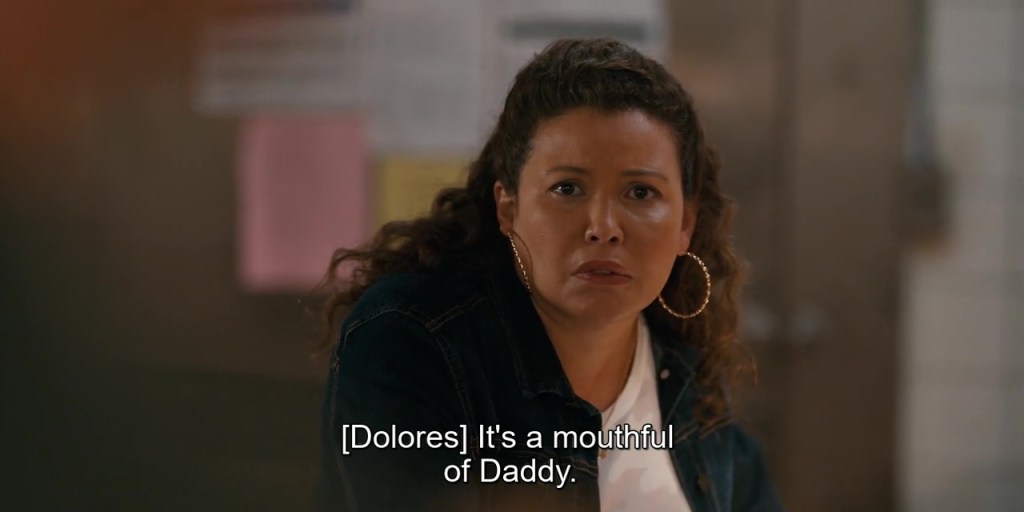
  • In episode 4, Dolores is shocked to find what Luis has done with the body of the landlord she murdered, and disgusted by the secret contents of the muy loco empanadas—Mr Pearlman. She is particularly horrified when Luis offers Jonah an empanada to try, a muy loco, which she knows is a “mouthful of daddy”. Meanwhile, the local drug dealer, Marcie, has pissed off Dolores, and now she is also in Luis’ fridge, and bits of her are now in the empanadas.
  • In episode 5, Dolores hires a private eye called Ruthie, played by Cyndi Lauper, to trace her ex, who cheated on her and let her take the fall in a drug bust. Ruthie’s motto (or perhaps mission statement) is I NEVER DON’T FIND THEM. But the last thing Dolores wants is for Ruthie to find Mr Pearlman.
  • In episode 6, we see cannibalism as a business. Luis has been clear-eyed about this all along – he gets rid of the annoying landlord, he thoroughly destroys the evidence (in customers’ stomachs) and he makes money from the meat, which is apparently delicious and hugely popular, while saving money by not buying the flesh of other animals from the food-services man, Jeremiah, the only sympathetic character in the story so far.

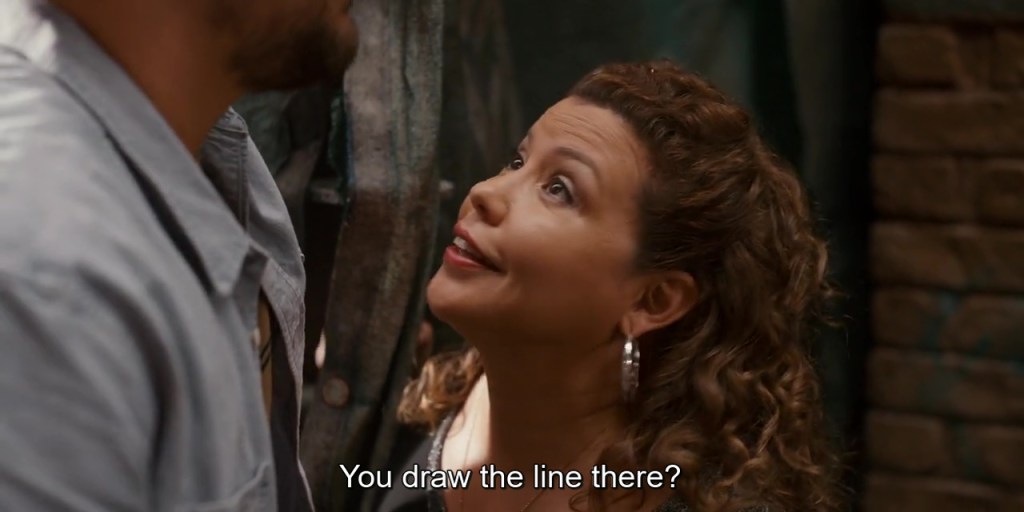
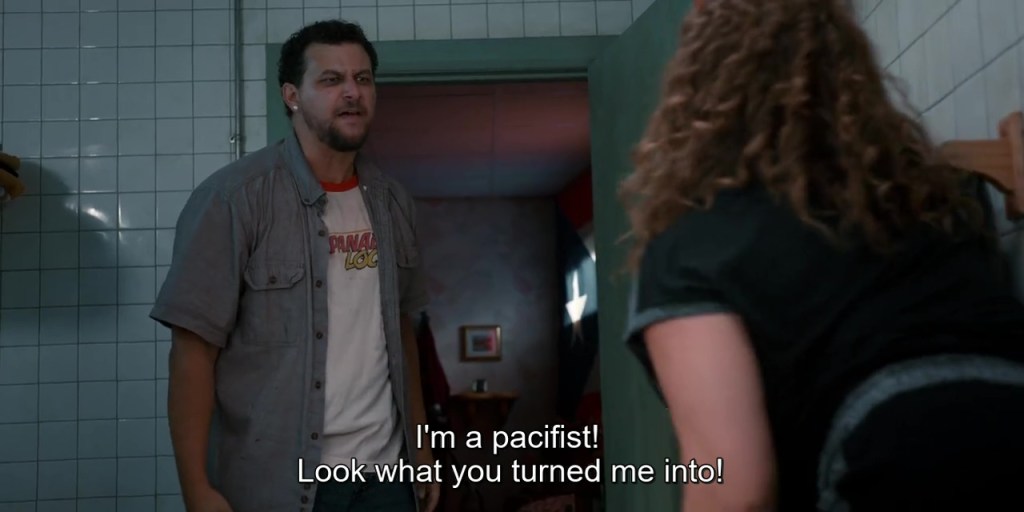
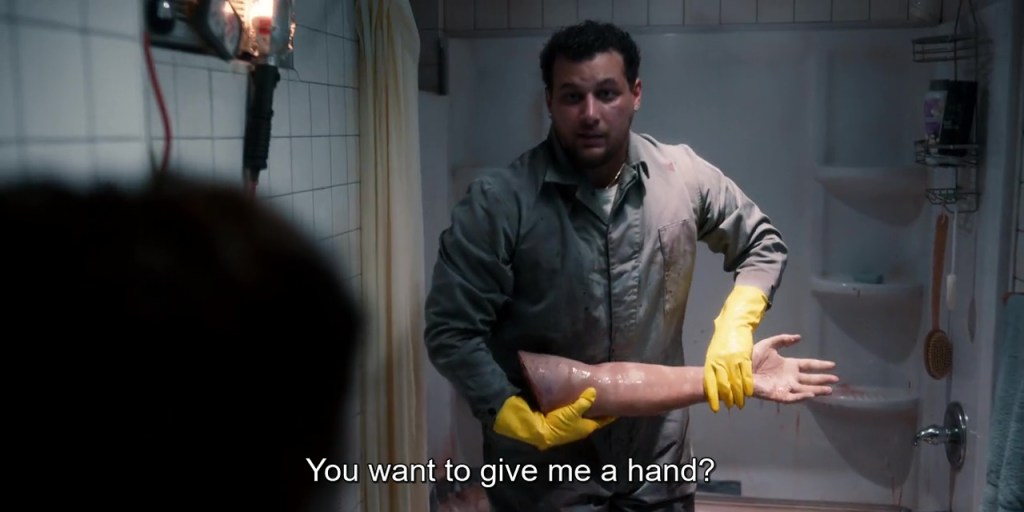
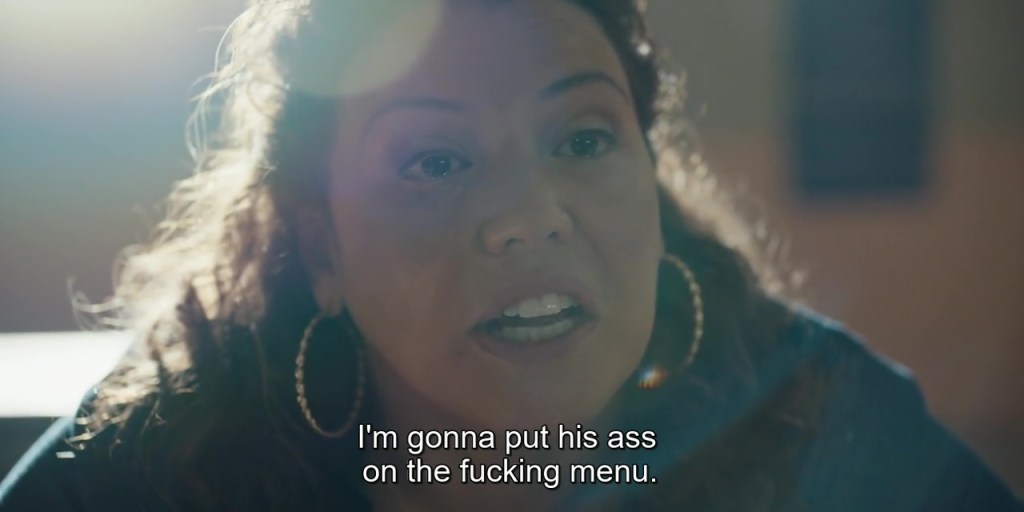
Not a lot of human flesh being eaten in these final two episodes, because everything is turning to shit, largely due to the impulsive plans of Luis, and the tendency of Dolores to snap the neck of anyone who annoys her. Police are looking for the drug dealer Dolores killed back in episode 4, and threatening to call in the DEA. Luis is still chopping up the bodies of Dolores’ victims to fill his empanadas, but he doesn’t want anyone to find the marijuana he is growing. THAT would be incriminating. Dolores points out that his fridge and apartment are full of chopped up bodies, and asks him the question that defines all ethical discussions.

 She’s much more upset about the cannibalism than the increasing number of corpses she is leaving all over the shop. Odd that. Luis sees meat as his business, and Dolores’ steady body count as his (very reasonably priced) supplier. He’s not too fussed about all the killing, as long as he doesn’t have to do it – like customers in a butcher shop. When he finally kills a man, he is upset: “Look what you made me do!”

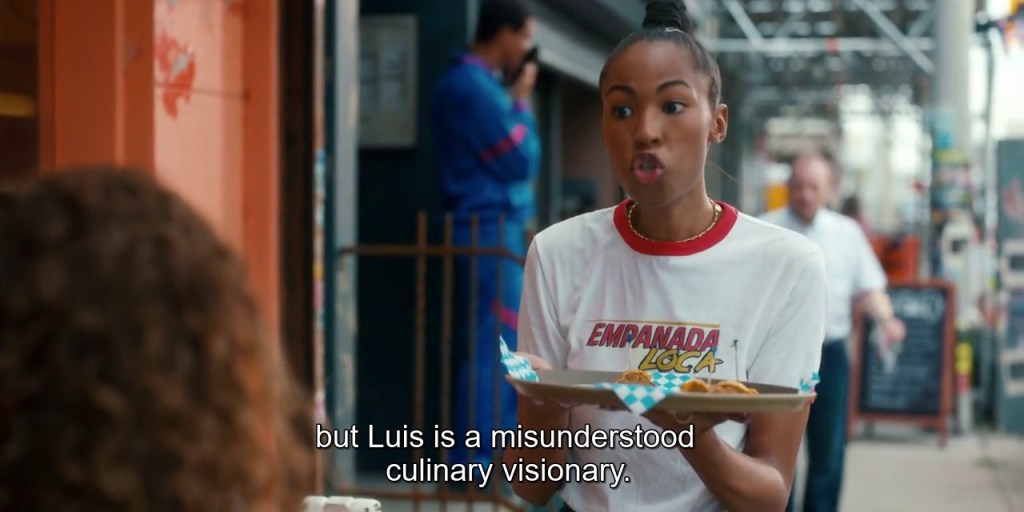
Luis cracks some of the best jokes in this show, in the middle of the street (much to Dolores’ fury) about the “fat fuck” she killed last episode, and how he is going to use the body fat in his pastry.

And some of the worst.

Lots of interesting Freudian things going on here – in earlier episodes, they discussed the difference between edible and Oedipal, and then there’s the whole thing with Luis only wanting to give Dolores cunnilingus, not penetrative sex, even though she has her period. She considers that eating her menstrual blood makes him a cannibal, even though he has been snacking on human empanadas all through the show, so it shouldn’t really be a surprise.

And his pet name is Mami. It’s apparently the Spanish equivalent of “baby” or “darling”, but is also used for, yep, mother. Freud said the two primary taboos are incest and cannibalism, and Luis definitely has an edible complex.

We find out why Luis doesn’t want sex – he fell in love with his father’s girlfriend when he was 12, had sex with her (so now we have another taboo covered) and then tried to castrate himself in punishment. He couldn’t cut through his penis (Meiwes and Brandes found it was much harder than you might think) and poured hot oil on the wound, leaving him horribly disfigured. Yes, Dr Freud, the threat of castration can be as big a motivation for mental illness as you thought.

Dolores just thinks she is a monster. But one of the fascinating things about cannibalism is that unlike other horror movie tropes, they are not supernatural or even particularly superhuman. And they really exist.

“I’m a monster. Worse, I’m real.”

Luis ends up “deep fried, like everybody else” in one of the most dramatic scenes, and Dolores escapes:

She goes looking for the showrunner of the play, a nice piece of postmodern complication as he clearly represents the creator of the show we are watching, Aaron Mark.

He is accused of humanising a serial killer, but hey, Dolores is very human, just like Macbeth and Oedipus and every tragic protagonist in literature. She’s not even a cannibal; in the whole eight episodes, we have not even seen her eat a human empanada! She’s just a misunderstood serial killer.

As she says, you have to draw a line somewhere.

She forces the showrunner to take her to a house where, he says, someone knows the whereabouts of the man who betrayed her and left her to rot in jail. When the door opens, she roars with laughter, and then pounces, but at whom? All we know is that, like Georgina in The Cook, The Thief, she is directing her invective at us, the audience! We may not know where her ex is living. But we do know that cannibalism starts at home.

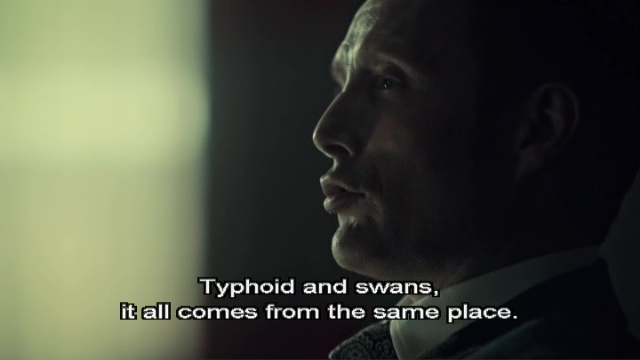
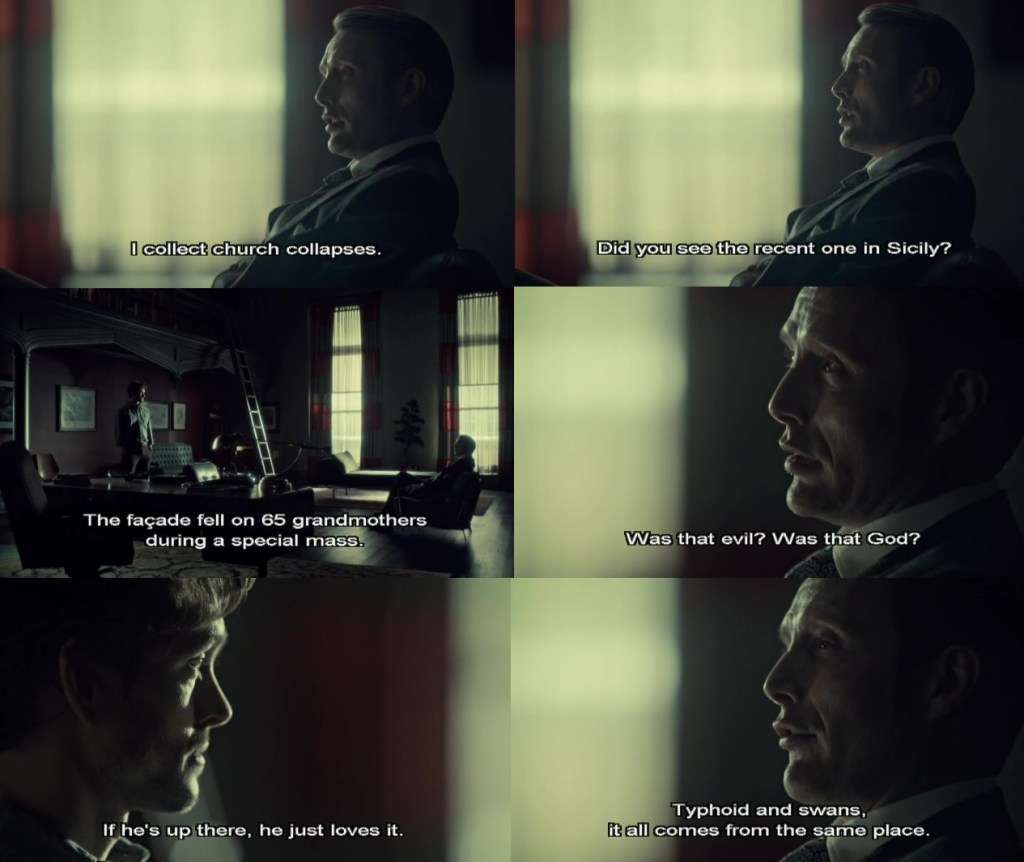
Hannibal’s scrapbook: “I collect church collapses”

Last week’s doomscrolling offered a story about a church roof collapsing during Sunday Mass in a northern Mexican city, killing at least nine people and injuring 40.

I know, it’s awful, but it immediately reminded me of Hannibal, Season 2, Episode 9, “Shiizakana”.

Hannibal and Will are talking about God, as you do when discussing the art of killing people with your psychiatrist.

Will: what do you think about when you think about killing?
Hannibal: I think about God.
Will: Good and evil?
Hannibal: Good and evil has nothing to do with God.

As Hannibal says, God kills lots of people, and are we not made in his image?

In the movie Red Dragon, the dialog is similar:

Why shouldn’t it feel good. It does to God. Why, only last week in Texas he dropped a whole church roof on the heads of 34 of his worshippers just as they were grovelling through a hymn. He wouldn’t begrudge you one journalist.

Or consider what Hannibal Lecktor (they spelled it differently) played by Brian Cox said about the joys of murder in the movie Manhunter:

It feels good Will because God has power. And if one does what God does enough times, one will become as God is.

More (lots more) Hannibal at thecannibalguy.com/2020/07/08/hannibal-film-and-tv-blogs/

“Do not contaminate my meat!”: DELORES ROACH episode 6

Delores is still killing people, Luis is still chopping them up to fill his empanadas. It’s becoming an industry, but Delores still gets queasy, and not real happy about the killings, but she’s much more upset about the cannibalism. Odd that.

If you haven’t read my blogs on the earlier episodes, here is a brief summary. In episode 1, Delores has just been released from prison after 16 years – she took the fall for her boyfriend, who has since disappeared. She heads back to Washington Heights New York. but it’s all gentrified now, except for Empanada Loca, the shop of her old friend Luis, who offers her a room and sets her up as a masseuse, a skill she learnt in jail. In episodes 2 and 3, Delores kills the landlord who has been harassing Luis for his overdue rent, which he can’t afford because the neighbourhood is now fancy, and people don’t buy empanadas much. Luis creates a new empanada, MUY LOCO. It is hugely successful, because it contains, yep, human flesh, in this case, the landlord, Mr Pearlman, whose son, Jonah, appears in the shop at the end of episode 3, with two cops behind him. In episode 4, Delores is shocked to find what Luis has done with the body of the landlord she murdered, and disgusted by the secret contents of the muy loco empanadas—Mr Pearlman. She is particularly horrified when Luis offers Jonah an empanada to try, a muy loco, which she knows is a “mouthful of daddy”. Meanwhile, the local drug dealer, Marcie, has pissed off Delores, and now she is also in Luis’ fridge, and bits of her are now in the empanadas.

In episode 5, Delores hires a private eye called Ruthie, played by the wonderful Cyndi Lauper, to trace her ex, who cheated on her and let her take the fall in a drug bust. Ruthie’s motto (or perhaps mission statement) is I NEVER DON’T FIND THEM. But the last thing Delores wants is for Ruthie to find Mr Pearlman.

In this episode, number 6, we see cannibalism as a business. Luis has been clear-eyed about this all along – he gets rid of the annoying landlord, he thoroughly destroys the evidence (in customers’ stomachs) and he makes money from the meat, which is apparently delicious and hugely popular, while saving money by not buying the flesh of other animals from the food-services man, Jeremiah, the only sympathetic character in the story so far. It’s a win-win-win for Luis.

But now Delores has two more victims for him – the drug dealer, Hector, who has an allergic reaction to her massage oil, and Ruthie, who sees what is going on. Delores has “doubled the body count”.

Luis is pretty happy about the situation. “Mami’s been busy” he says, as he finds the bodies.

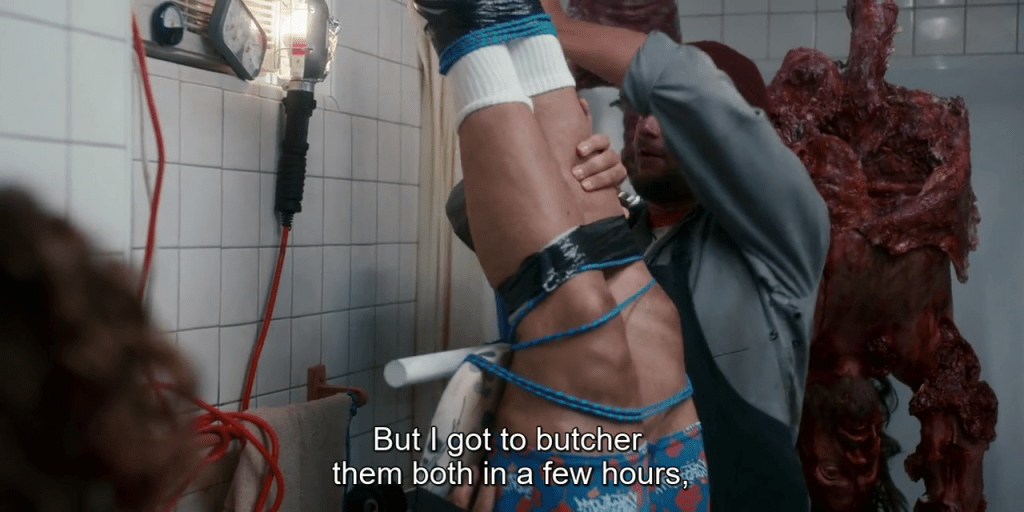
We finally get to see Luis’ artistry. He needs to butcher both bodies before they start to decompose, reproaching Delores:

“You could have spread these two out. Cause this is going to be, like, a challenge, even for me!”

We see him slit Hector’s throat in graphic detail, exactly as happens millions of times a week to other animals in abattoirs, fisheries and farms. But Delores, who was OK killing them, gets pretty nauseous at the sight of blood; apparently there are eight quarts (7.6 litres) in a body the size of Hector, Luis tells her, and we see it gurgling down the drain.

He orders Delores to leave, because he’s a conscientious butcher, telling her,

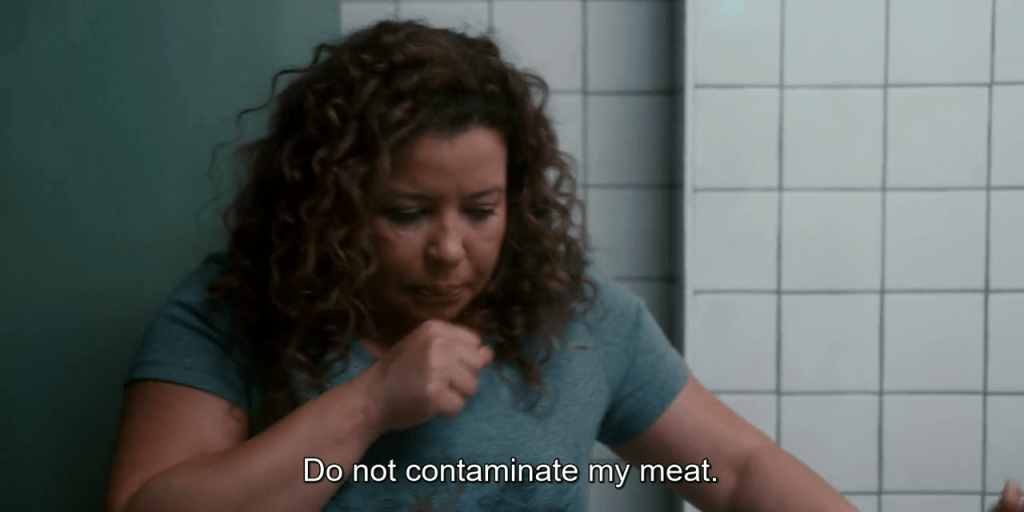
“This is a food prep space, OK? Do not contaminate my meat!”

She runs into Jeremiah (actually, her runs into her), the nice, normal food services delivery man, who tells her he knows what’s going on.

“You’re not back here a week, before the landlord goes missing. Food services like mine are getting squeezed out.”

Jeremiah isn’t interested in her conscience or her legal position, he has people to whom he owes money, and he’d like them disappeared too, please.

This is modern commodity capitalism. Everything, everyone, is assessed by monetary value, everything, everyone, is a commodity. To Luis, the victims are just meat to be butchered and sold in empanadas, to Jeremiah, they are creditors who are making his life difficult. For both, they are just ‘livestock’.

The basic precept of capitalism, as film critic Robin Wood warns in his paper “Return of the Repressed” is that “people have the right to live off other people”. In Washington Heights, thanks to the ready temper of Delores Roach, that is exactly what they are doing.

“He bit my thigh!”: THE HORROR OF DELORES ROACH, episode 5

Intertextuality is a term used to explain the way that similar or related texts influence, reflect, or differ from each other. In the start of this series, we heard the Stanley Holloway song “Sweeney Todd the Barber”, which this series clearly relates to, in that Sweeney would kill his hairdressing clients and send them down a trapdoor to the basement where his partner, Mrs Lovett, would fillet them into meat pies. The 2007 version of Sweeney differed from earlier versions by being a musical (!) and also giving Sweeney a motive—revenge—rather than just being, you know, batshit crazy. Intertexually, Delores turned a lot of this upside down: she was downstairs killing people; Luis was upstairs turning them into empanadas. The serial killer was female instead of male, the pastry cook male instead of female. The victims were not random people who needed a shave, but people who had pissed Delores off.

If you haven’t read my blogs on the first episodes, you might want to do that first. In a nutshell, in episode 1, Delores has just been released from prison after 16 years. She heads back to Washington Heights NY but it’s all gentrified now, except for the Empanada Loca shop of her old friend Luis, who offers her a room and sets her up as a masseuse, a skill she learnt in jail. In episodes 2 and 3, Delores kills the landlord who has been harassing Luis for his overdue rent, which he can’t afford because the neighbourhood is now fancy, and people don’t buy empanadas much. Luis creates a new empanada, MUY LOCO. It is hugely successful, like the chocolates in a recent blog, because it contains, yep, human flesh, in this case, the landlord, Pearlman. Whose son, Jonah, appears in the shop at the end of episode 3, with two cops behind him.

But in episode 4, it turned out Jonah didn’t know his dad is missing, and the cops are just waiting for their empanadas. But Delores is horrified by the idea of cannibalism (although, funnily, not so much the fact that the meat came from the body of the landlord she murdered) and disgusted by the secret contents of the muy loco empanadas—Mr Pearlman. She is particularly horrified when Luis offers Jonah an empanada to try, a muy loco, which she knows is a “mouthful of daddy”. Meanwhile, the local drug dealer, Marcie, has pissed off Delores, and now she is also in Luis’ fridge, and bits of her are in the empanadas.

So the link in the first half of the series was to Sweeney Todd, killing people and putting them in pies. But this story goes back well beyond Sweeney, to a new intertextual link, and the common thread now (besides pies) is revenge! Delores is intent on finding her ex who, she has discovered, set her up to take the fall when the drug police moved in, and who had been cheating on her all around town, including with Marcie. She is determined to put him in an empanada.

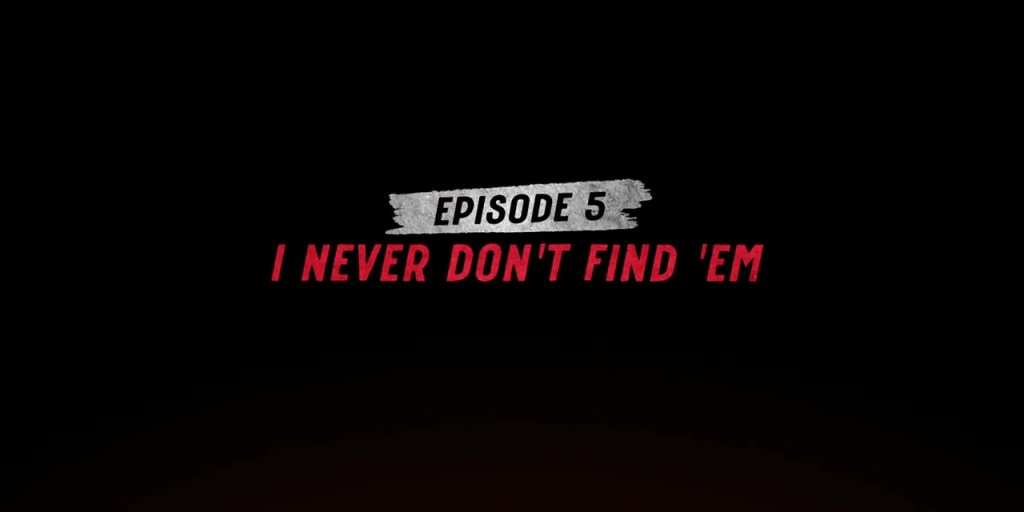
For this purpose, she goes looking for a friend of a friend, a Private Investigator called Ruthie, played by the wonderful Cyndi Lauper. Ruthie’s motto (or perhaps mission statement) is the title of this week’s episode:

I NEVER DON’T FIND THEM

Ruthie doesn’t like getting involved in drug issues (too dangerous), and warns Delores not to get her tangled in any such wars.

Ruthie also has a passion for the theatre, and is currently an usher in the Broadway production of Shakespeare’s Titus Andronicus, starring Jamie Lee Curtis. The production was invented for this series, which is a shame, as I would have flown to New York to see that!

Now, this link to Titus merits some unpacking…

Ruthie gives Delores tickets to see Titus Andronicus, which is all about a Roman general, Titus, who kills and cooks his enemy’s sons into a pie, which he then serves to the unwitting mother.

Shakespeare would have been well aware of the many Greek legends of revenge, particularly that of Thyestes, as told in Seneca’s play of the same name. Thyestes unknowingly ate the flesh of his sons, served by his brother, Atreus. Shakespeare used the trope in this, his first tragedy, which was filmed in 1999 as Titus, with Anthony Hopkins in the title role, again serving human flesh to his unsuspecting guests, eight years after winning his Oscar for doing just that as “Hannibal the Cannibal” in The Silence of the Lambs.

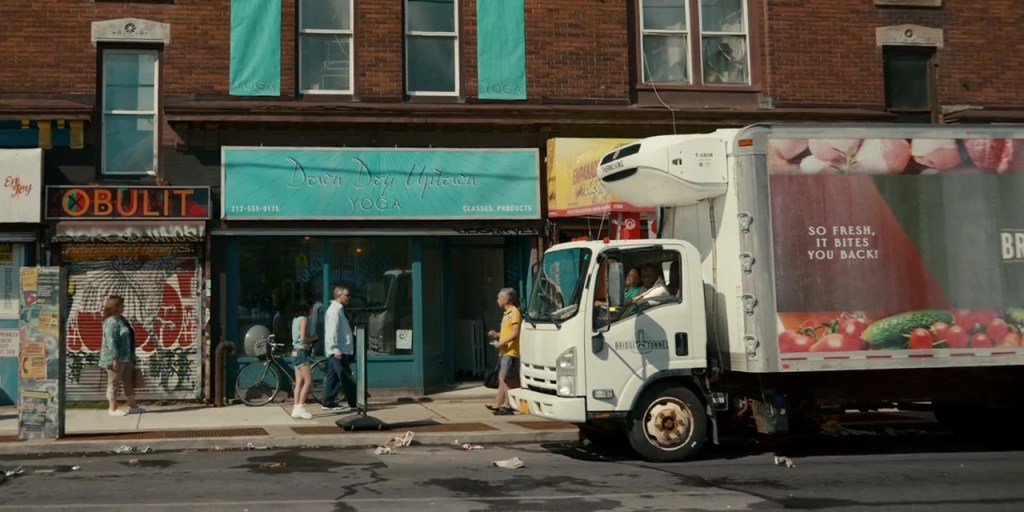
There are lots of other nice little touches, like the delivery guy, Jeremiah (named after the Old Testament Prophet of doom) asking why Luis doesn’t buy meat off him any more. “Doesn’t need to”, is what Delores doesn’t dare reply. Jeremiah’s truck has the slogan “SO FRESH, IT BITES YOU BACK”:

Then there’s the drug pusher who works (or worked) for Marcie, or as Delores calls her “cunt face”. Marcie is currently supplying filling for the latest batches of Muy Loco empanadas, but this dude doesn’t know that yet and is enjoying a Marcie empanada.

There’s problems ahead though. Jonah is now actively looking for his dad, who was Delores’ first murder victim. And he has run into Ruthie, who has promised him:

But Delores doesn’t want anyone to find him. She knows where Mr Perlman (and Marcie) are, and when she stumbles into Luis’ bathroom, she certainly finds them!

Delores is painfully aware that she can hardly be judgemental at what Luis has done to her victims.

“Maybe I didn’t chop these people up, but I did this.”

She makes up with Luis, who throws Jonah off the scent by sending a fake message from his father’s phone, and pledging that he will look after her, take the full blame if their crimes ever come out. They finally (five episodes in) head for the bedroom, where Luis performs cunnilingus, about as close as most humans come to cannibalism, and even crosses that line a little when he gets excited and bites her thigh.

Gynophagia, the fetish involving killing, cooking and eating women, is described by psychobiologist Clarence Herrick as a “morbid expression” of the universal desire to hug, often too violently, the object of our affection or desire, an extreme form of the grandmother painfully pinching a grandchild’s cheek or the child hugging to death a favourite kitten. So biting or in extreme cases eating women is perhaps rough love, an extended form of cunnilingus.

The thin red line between eating humans and eating other species has well and truly been crossed by the time Luis finally mounts Delores at the end of this episode.

“It’s a mouthful of daddy”: DELORES ROACH episode 4

This is such a great show. I was going to blog a couple of episodes at a time, but there is so much content in the short episodes that I had to do this one, the fourth, in splendid isolation. Also, I’m uploading it on father’s day (in Australia and probably some other places), and having a character eat some of his father just seems so pertinent!

If you haven’t read my blogs on the first episodes, you might want to do that first. In a nutshell, in episode 1, Delores has just been released from prison after 16 years. She heads back to Washington Heights NY but it’s all gentrified now, except for the Empanada Loca shop of her old friend Luis, who offers her a room and sets her up as a masseuse, a skill she learnt in jail.

In episodes 2 and 3, Delores kills the landlord who has been harassing Luis for his overdue rent, which he can’t afford because the neighbourhood is now fancy, and people don’t buy empanadas much. Luis creates a new empanada, MUY LOCO. It is hugely successful, like the chocolates in last week’s blog, because it contains, yep, human flesh, in this case, the landlord. Whose son, Jonah, appears in the shop at the end of episode 3, with two cops behind him.

All caught up, and now we’re at episode 4. It turns out Jonah does not know his dad is missing, and the cops are just waiting for their empanadas. But Delores does not want to go back to jail, having just got out after sixteen years, so you might think that finding Luis destroying (or actually cooking and selling) the evidence should be good news, but (call her old fashioned) she is horrified by the idea of cannibalism (although, funnily, not so much the murder she committed) and disgusted by the secret contents of the muy loco empanadas.

This dissonance between getting rid of the evidence of her rather serious crime and disgust at the fact that the evidence is being fed to an enthusiastic clientele is aggravated when Luis offers Jonah an empanada to try, a muy loco, reminding us of the lyrics of the old Stanley Holloway song about Sweeney Todd, on whom this story is based:

“For many a poor orphan lad
The first square meal he ever had
Was a hot meat pie made out of his dad
From Sweeney Todd the Barber”

Luis tells Jonah “the meat’s locally sourced” which is particularly true for him. Jonah loves the taste, asks if the meat is duck.

No, it’s no duck. We hear Delores’ thoughts:

Furious at Luis for feeding the landlord to his son, Delores takes the rest of the meat and sets fire to it, putting the muy loco off the menu. Luis is furious, and cannot see what the problem is, and then comes one of the great double entendres of the cannibal genre –

Luis barks at her:

“Hey, it’s edible! Like the Greek myth.”

Now we’re getting to the meat of the cannibalism debate!

Quick refresher: Oedipus was a mythological figure depicted in the play Oedipus Rex written by Sophocles some 2500 years ago. Oedipus became king of Thebes after unwittingly fulfilling a prophecy that he would kill his father, Laius (the previous king), and marry his mother, Jocasta (whom Oedipus took as his queen). It was more a case of mistaken identity and road rage than some deep psychosexual drive, but Sigmund Freud used it as the basis of what he called the Oedipus complex. This referred to a child’s sexual desire for the opposite-sex parent and hatred for the same-sex parent which, if not reconciled, leads to neurosis. Freud wrote that,

“It is the fate of all of us, perhaps, to direct our first sexual impulse towards our mother and our first hatred and our first murderous wish against our father. Our dreams convince us that this is so.”

Oedipus didn’t eat his father, but Freud believed that cannibalism is a foundation of the human unconscious. He asserted that cannibalism is one of the two original prohibitions of humankind, the other being incest. Freud’s conception was that the origin of human civilisation was an act of incestuous patricide and cannibalism by a group of pre-sapien savages, which became the origin of cooperative civilisation. In Totem and Taboo, he speculated that a prehuman group of brothers in a “primal horde” had come to resent their father’s monopolisation of the tribe’s females (common among primates) and conspired to kill the father and take their mothers and sisters for themselves. “Cannibal savages as they were, it goes without saying that they devoured their victim as well”. A later wave of remorse led these conspirators to create “out of their filial sense of guilt the two fundamental taboos of totemism”, the proscription of cannibalism and incest. This father/son guilt, he argued, corresponds with the Oedipus complex, which he called “the nuclear complex of the neuroses”.

So Jonah, like Oedipus has unwittingly eaten human flesh, the flesh of his father, not knowing what it was. If Luis had said it was duck, he would have believed him, and accepted that contentedly, because social conventions say we can eat ducks, but not dads. Yet the taste is so close that he couldn’t tell the difference. And since his dad was already dead, was this worse than deliberately killing a living, sentient duck?

Meanwhile, the local drug dealer, Marcie, accuses Delores of selling drugs and stealing her customers, because of the long queues of people waiting for muy loco empanadas. Delores tries to persuade her she is running a massage business and takes her downstairs for a massage, where Marcie starts to vandalise her room looking for drugs, and mocks her for protecting her old boyfriend, revealing that he cheated on her and eventually turned her in to the DEA to save his own hide. They fight, and Marcie becomes the new supply for the next batch of muy locos.

Delores is determined to find the cheating boyfriend. When she does, she promises,

“Just Darwin and shit”: THE HORROR OF DELORES ROACH episodes 2&3

I’m spreading this out, one or two episodes at a time rather than binge-watching the whole eight, because I want to savour them, also because that would be like watching a four-hour movie, which I usually only do if Peter Jackson is involved. And I’m trying to finish my thesis, so no four-hour movies for this old student!

If you haven’t read my blog on the first episode, you might want to do that first, as it makes more sense if you know that Delores has just been released from prison after 16 years. Just click here.

Delores is living in the basement of an empanada shop run by Luis, but he is a dreamer, and is quickly going broke. The whole neighbourhood has been gentrified, and people don’t buy empanadas like they used to. Luis keeps inventing new flavours, but none have caught on.

Episode 2 is the setup for the cannibalism to come in episode 3. We know it’s coming, but Delores doesn’t.

Luis is feuding with his landlord, Gideon Pearlman, played by the wonderful comedian Marc Maron (the cranky entrepreneur from the TV show GLOW). Delores plays peacemaker, takes him downstairs and gives him all her money, which turns out to be negligible amount, due to the massive gentrification that has happened in Washington Heights in the last sixteen years while she was in the pokey. He sees her massage table and she offers him her “magic hands”, which of course he misinterprets as an offer of a hand-job. But Delores has learnt self-defence in jail.

“Got to break the C2 or C1 to kill somebody”

Which she does. Not knowing what to do with the body, she runs to the shop and buys spades, saws, gaffer tape and, to be inconspicuous, a whole load of birthday balloons. It really is a dark comedy!

When she comes back, she finds Nellie, who works in the empanada shop, giving away samples of the new taste sensation, MUY LOCO. What’s in it?

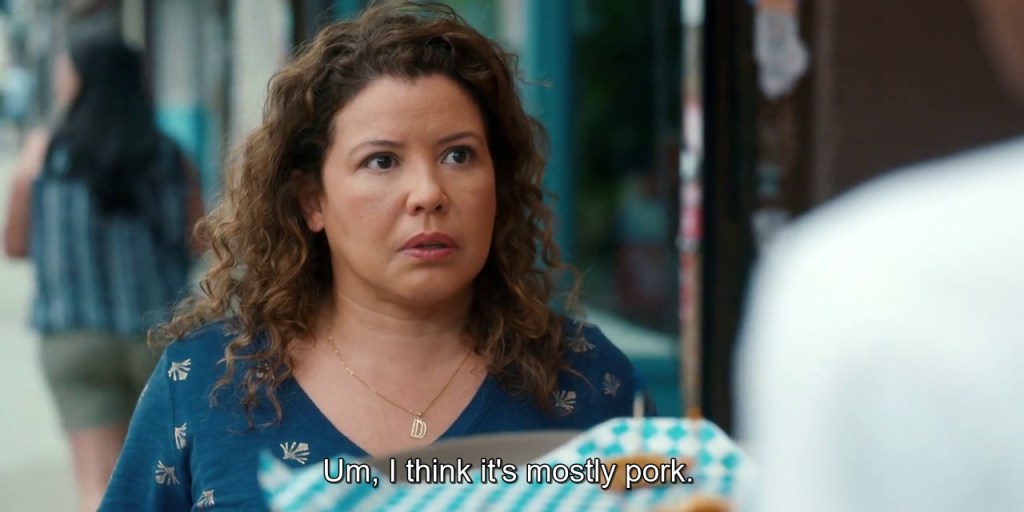
Yeah, it’s not pork, it’s long pig, and when she confronts Luis, he tells her he “took care of it”.

Luis is suddenly a huge business success. Everyone loves Muy Loco, including the local cops. And he wants to give Delores the credit, whereas all she wants to do is barf.

But you, my Delores, you just changed the game for me. You have led me to a pantheon that very few of us who are called to this art are ever privileged enough to touch.
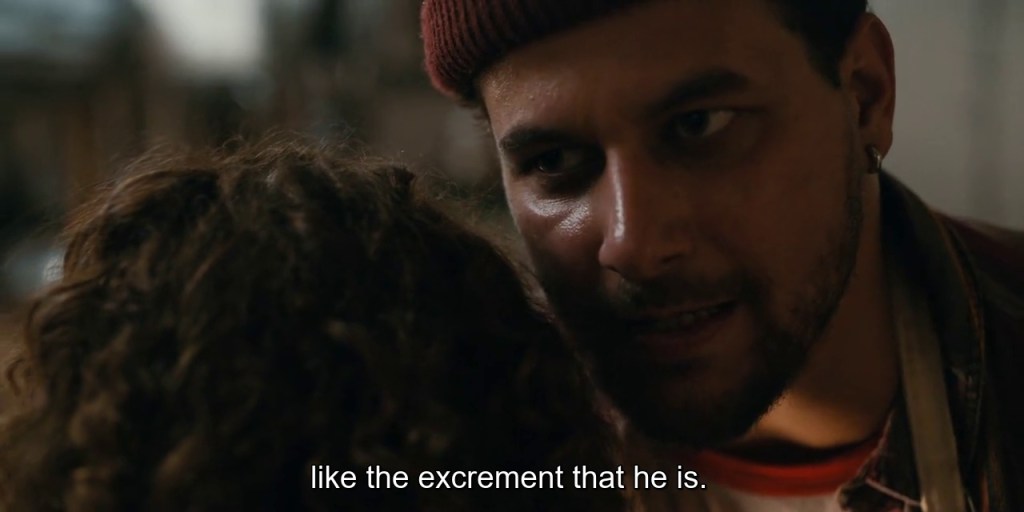
So now, that greedy son of a bitch will get chewed up, shat out and flushed down the toilet.”

The other reason I didn’t want to go past episode three is that Luis and Delores engage in a fundamental philosophical discussion that is key to Cannibal Studies, which we might summarise as “meat is meat”. When Delores refuses to taste Muy Loco because “it’s human fucking flesh in an empanada!”, Luis responds:

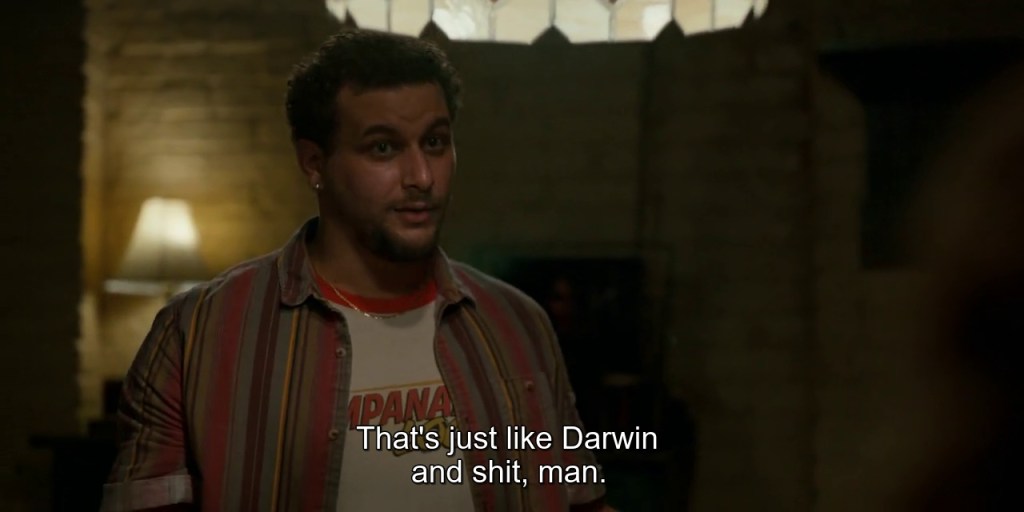
“Delores. Meat is meat. Flesh is flesh. The only reason that we eat a pig, or a cow or a lamb, like whatever, is because we are more powerful than them. So we get to feed off them. That’s how we survive, because we are carnivores. That’s just like Darwin and shit, man”

We’re actually not carnivores – that name is reserved for the true predators – tigers, sharks, that sort of animal. We are scavengers, like anchovies, or pigs.

We’re treated to lots of close-ups of meat being chopped, meat being cooked, meat being gobbled up. Viewers may at this point be consoling themselves by saying “it’s not human”, but it’s red meat, it’s from some mammal, and what difference does it make which species?

Luis has taken care of the body, removed the evidence, and become a successful business owner, all with one radical idea. The only problem is,

MIRACLE MEAT (yes, it’s baby cannibalism)

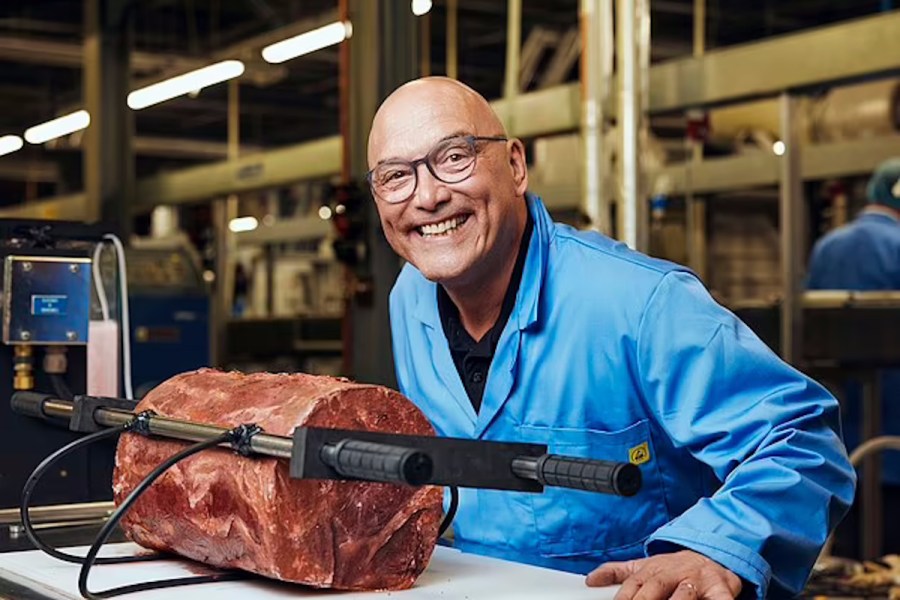
Gregg Wallace is arousing the fury of the Internet for hosting a show in which human meat is grown for human consumption. Yes, engineered cannibalism.

If you haven’t heard of Gregg Wallace (I plead guilty), he is a host of the UK version of MasterChef, a reality show where people have to cook flesh in a way that – I don’t really know, I don’t watch it.

This show is called The British Miracle Meat, and is quite obviously a satirical documentary, set in a factory which purportedly manufactures ‘engineered human meat’.

Following its debut, 408 people complained to the broadcasting regulator. The majority of complainants objected to the theme being the consumption of human meat. Which is, IMHO, pretty rich coming from people who tuned in to a show about meat.

It seems to have been inspired by a work written in 1729 by Jonathan Swift (the author of Gulliver’s Travels), which was called:

A Modest Proposal For preventing the Children of Poor People From being a Burthen to Their Parents or Country, and For making them Beneficial to the Publick

Swift suggested that the Irish could be relieved of their destitute states by selling their children to the Landlords who “have already devoured most of the parents”:

A young healthy Child, well nursed, is at a Year old, a most delicious, nourishing, and wholesome Food; whether Stewed, Roasted, Baked or Boiled; and I make no doubt, that it will equally serve in a Fricasie, or Ragout

Since the British Empire was sucking the Irish populace dry and leaving them to starve, why not eat them as well? Satire has remained a popular form of political action ever since, and is used extensively, particularly in American politics (watch any late-night show).

Wallace is shown visiting a heavily guarded processing plant in Lincolnshire, which houses a production line and clinical facilities. He is told that, for the last eight months, they have been producing meat made from human cells. Line manager Mick Ross explains that it is a relatively new process. “Under EU law we couldn’t possibly operate machines like this.”

We see little shavings of flesh hanging in a nutrient-rich vat and quickly developing into huge slabs of meat. Wallace interviews ‘donors’ who sell their flesh to fictional firm ‘Good Harvest’ as a solution for cash-strapped families. One 67-year-old retired receptionist said she had agreed to have flesh taken from her buttock and thigh in order to fund two weeks’ energy bills. The flesh is then shown growing in labs into larger slabs of meat – which can be used to make steaks, burgers and sausages.

These can yield up to one hundred steaks, which— according to taste tests carried out with men and women in the street by co-presenter Michelle Ackerley—are remarkably fine substitutes for beef, and at a fraction of the price. Is this the answer to the cost of living crisis?

“Why human meat, why not animal meat?” asks Wallace, and Ross explains that we know more about humans, we have centuries of medical and scientific knowledge, so can more easily manipulate it.

Good Harvest’s chief executive revealed the firm’s premium range comes from the flesh of children aged six and below – with a promotional video which billed the womb as ‘nature’s oven’. Well, we already know from watching Snowpiercer that babies taste best. And Gregg – let’s try to remember that humans ARE animals, yes?

But apparently many of the British viewing public did not get Gregg Wallace’s joke. The show gave no warning ahead or during the broadcast to indicate that it was fictional. That was supposed to be, in British parlance, bleedin’ obvious. Interviewed after the show aired, Wallace said:

It’s satire – so I suppose that was the point. Everybody was an actor. I was acting. None of it was real… While it was a complete fantasy, we wanted to raise important questions about the nation’s relationship with food and what those struggling with the cost of living are being asked to do in order to stay afloat.

A Channel 4 spokesman said:

This “mockumentary” is a witty yet thought-provoking commentary on the extreme measures many people are being forced to take to stay afloat in our society during the cost-of-living crisis. Channel 4 has a long and rich history of satire and has often used humour as an accessible way to highlight society’s most important issues.

The problem was, it was not clear what the point was. Lab meat can be grown from any animal cell. Find a readable chain of DNA and it may be possible to try whale, dodo or dinosaur flesh. Of course, the easiest cells to source are human ones – we routinely hand them to pathologists and crime scene investigators. When clean meat becomes commercially viable, there is no reason (other than administrative) to assume we could not grow human steaks, livers or sweetbreads. The eating of lab-grown flesh from celebrities is the starting point of the film Antiviral. Eating human meat grown in a lab would technically be cannibalism, but it would not, as with traditional cannibalism, involve cruelty, murder or despoiling of corpses.

The show concentrates on the cost of living crisis, and clearly cheaper food prices would help. Would people sell their own flesh, and would other people eat steaks grown from it? A better point might have been to point out that humans currently breed and slaughter some eighty billion (that’s 80,000,000,000) land animals every year to eat their flesh, not counting sea animals, whose numbers can only be estimated but might be about three trillion. Although most people prefer not to see the appalling conditions of the factory farms or the brutal deaths in the abattoirs, they tune in by the millions to watch cooking shows like MasterChef which treat the consumption of this flesh as unremarkable, and often the butt of crude humour.

So why not add one more animal to the conveyor belt?

As Herbert M. Shelton said in his book Superior Nutrition:

The cannibal goes out and hunts, pursues and kills another man and proceeds to cook and eat him precisely as he would any other game. There is not a single argument nor a single fact that can be offered in favor of flesh eating that cannot be offered with equal strength, in favor of cannibalism.

I wonder if Jonathan Swift would have recognised the plagiarism of his book? His brand of satire is usually called “Menippean” and is characterised by attacking mental attitudes and beliefs.

The joke is not that Wallace pretended to visit a factory that pretended to pay willing donors for flesh. The real belly laugh is that over 400 people complained about that, while probably tucking in to the corpse of an animal who really did not want to die.

Deep tissue cannibalism: THE HORROR OF DELORES ROACH Episode 1 (Aaron Mark, 2023)

This is not only a fabulous story, but possesses a proud heritage in the field of Cannibal Studies, and is not afraid to flaunt it. Delores Roach is a young woman in a basement in Washington Heights Manhattan, who gives massages for a living, occasionally killing her clients and delivering their bodies to Luis, who runs the struggling empanada store above, to use as meat. Yes, it is unapologetically the offspring of the legend of Sweeney Todd, the “Demon Barber of Fleet Street”, who killed his customers instead of shaving them and then dropped them through a trapdoor to his colleague and perhaps lover, Mrs Lovett, who turned them into delicious meat pies. There is some controversy over whether or not Sweeney was a real person who was publicly hanged outside Newgate Prison in 1802 or just an urban legend of early capitalism. In any case, Sweeney appeared in a number of movies; in 1936 he was just plumb crazy, while in 2007 Tim Burton made him an honest man wronged by a corrupt power establishment. Burton’s film is based on a Sondheim musical that played interminably on Broadway and around the world.

In this version, Delores (Justina Machado) turns everything upside down; it’s Sweeney through the looking glass. We’re in New York instead of London, with a female serial killer instead of a male, and a male pastry chef instead of a female. Delores is downstairs killing people for Luis who is upstairs cooking them, again turning the Sweeney legend upside down. Like Sweeney, at least in the Tim Burton musical version of the story, Delores has returned from a long and unjust term of incarceration.

She finds her shabby neighbourhood, Washington Heights, gentrified after 16 years in the slammer, to the extent that she doesn’t even recognize any of the shops. A lot of the reviews seem to focus on gentrification as the main crime in this story.

Except for her favourite fast food store, Empanada Loca, run by Luis (Alejandro Hernandez), the son of the man who used to make the empanadas. He has a soft spot for Delores, who used to pay him in cash and spliffs when he delivered her lunches. Luis offers her accommodation, for old time’s sake, and maybe the odd massage.

There are plenty of stories based on butchers serving human meat to unwitting customers, turning them into innocent cannibals. Among them are Hitchcock’s Speciality of the House, Mielche’s The Butchers, Yau’s The Untold Story, Jensen’s The Green Butchers, Stjernswärd’s The Farm and Eboué’s Some Like it Rare. And of course our old friend Hannibal, who tells his guests “Nothing here is vegetarian”.

Burton’s Sweeney Todd was based on a Broadway musical, but Delores is a generation later, and so now her Broadway show is based on a more contemporary form of popular culture, the TRUE CRIME podcast.

Of course, it’s not true, but in the postmodern age, a true crime podcast needs a true crime, which is also confected for our narrative pleasure.

The podcast becomes a Broadway play, with the actor Jessica Pimentel (Orange is the New Black) playing Flora who is playing Delores in the play (stay with me here). Her performance is a triumph; in her final soliloquy she is covered in blood and holding a human heart.

The performance of the play, and the episode we are watching, both end with a song: Stanley Holloway’s “Sweeney Todd the Barber”:

“Sweeney Todd the barber,
by gob he were better than the play
Sweeney Todd the barber,

I’ll polish them off he used to say
and many’s  the poor young orphan lad
had the first square meal he ever had
a hot meat pie made out of his dad
from Sweeney Todd the barber”

For those of us who have been waiting for this series, or those who just saw the advance publicity, we are now in the omniscient position of knowing what is going to happen. We have seen the newspaper headline of the “real” murder and the review of the “real” true crime podcast, and seen the full house audience cheering the performance. In case we aren’t sure, a couple of friends pour drinks in Flora’s dressing room, chatting about the play and its reflection in the “real” world.

“…the café in Taipei serving human flesh dumplings?”
“Yes, yes, yes, yes and the human bone marrow in that bistro in Paris!”

Then the “real” Delores appears in the dressing room after the friends leave. No, not to murder Flora for impersonating her, but to tell her the true story.

“I’m gonna tell you shit you could never un-know.”

So now, we have a dramatisation of a fake true crime podcast about an actual crime that doesn’t exist, and the dramatisation is being applauded for creating a wave of actual cannibalism events (that also didn’t happen). They concern a female serial killer who is based on a male serial killer who also probably didn’t exist. An actor playing the (unreal) serial killer is telling her story to the actor playing the actor who is playing that serial killer. It plays (sorry) with the mind.

So does cannibalism. Except for a few rare cases where the cannibal is prepared to admit all his or her activities, such as Albert Fish, Jeffrey Dahmer and Issei Sagawa (who laid out the whole project in a manga), cannibalism narratives are very difficult to nail down. Some like Ottis Toole over-confess, leading to speculation that they are making it all up, helped by police who want to clear the cold case log. Others deny everything. And some just disappear and are never found, like Jack the Ripper. Cases of cannibalism are so sensationalised that the reports of the popular press are dubious in their accuracy.

But what we do know is that cannibalism is real, and is one of the primal drives among every type of animal from comb jellies to humans. Freud and Abrahams called the first six months of an infant’s life “the cannibalistic stage”. We all have a cannibal inside; it just comes out more readily for some people than others.

The series is a Blumhouse production on Prime Video and is so good that I am spreading this blog over all the episodes. Among the many great names to appear in future will be Cyndi Lauper as a detective.

Cannibals just wanna have fun.

SPECIALITY OF THE HOUSE (“Alfred Hitchcock Presents” – S5 E12, 1959)

https://m.ok.ru/video/3150069697230

We’re heading back into the early days of Cannibal Studies with this one! The TV anthology Alfred Hitchcock Presents aired on CBS and NBC between 1955 and 1965. Produced and presented by the great auteur himself with a humorous introduction and postscript, the stories covered mysteries, thrillers and dramas. It remains timeless; in 2021, Rolling Stone ranked it 18th on its list of “30 Best Horror TV Shows of All Time”. Hitchcock was called “The Master of Suspense” and is considered one of the most important figures in cinema history. His films garnered 46 Academy Award nominations, including six wins.

The production team he put together for the TV series was a lot cheaper than a film crew, and he used them often to make his movies. A year after Specialty of the House, Hitchcock used his TV crew to make the film Psycho, a seminal film in the horror genre and in Cannibal Studies. Psycho’s story was itself adapted from the case of the so-called “Butcher of Plainfield”, Ed Gein, who would dig up bodies and use the bones and skin to make masks, accessories and furniture. Gein would make women suits out of human skin (which inspired Jame Gumb – “Buffalo Bill” – in Silence of the Lambs) so he could dress up as his mother (which inspired Psycho). His facemasks, made out of human faces, inspired the character Leatherface in The Texas Chain Saw Massacre and its many sequels.

This week’s 1959 TV show was also an adaptation, from Stanley Ellin’s short story “The Speciality of the House” about gourmet chef Sbirro, whose exclusive restaurant offers a “warm haven in a coldly insane world”. Sbirro serves a specialty called “lamb Amirstan, which turns out to be the flesh of patrons who had enquired too deeply into the mysteries of his kitchen. Ellin’s story was first published in Ellery Queen’s Mystery Magazine in 1948.

This production is fairly true to the short story. The wonderful Robert Morley is Laffler, a well-heeled import-export businessman, who has invited his protégé, Costain, to the very exclusive club/restaurant. They meet some of the other diners, including a rich Singaporean businessman (as if to show us that American elitism is not entirely white, but ironically played by Japanese actor Tetsu Komai) and another very cantankerous diner whose regular eating-partner has apparently resigned, immediately after becoming a life member. Laffler is astonished, because his three obsessions are lamb Amirstan, which all the members crave, a longing to become a life-member of the club, and a yearning to “see the kitchen where these miracles are performed”.

On their first two visits, lamb Amirstan is not served, much to Laffler’s disappointment. The dishes that are served are always superb, but there is no menu, no choices offered.

“My dear boy, when you’ve studied the art of fine eating as long and as vigorously as I have, you won’t trouble with menus…. Here at Spirro’s we have no doubts, we ask no questions, we only know that there is a genius in the kitchen!”

Spirro (the spelling in the story changed, for reasons not explained) makes an appearance while Laffler is complaining about not being allowed into the kitchen. Unlike the short story, in which women were not welcomed into the club, in the Hitchcock show Spirro is a woman (played by Spivy), very much in the style of the “monstrous-feminine” who, we are all subconsciously afraid, will reabsorb us into the feminine form from which we emerged. She puts a hand of Laffler’s meaty shoulder and announces, “I think we will be having the speciality of the house very soon, my friend.” She is looking at Costain; we realise by now that Laffler has become a nuisance to her and is likely soon to become lamb Amirstan. The next night, when lamb Amirstan is finally to be served, Laffler is very rude, refusing to sit with Costain, demanding to be served first, and insisting on more food on his plate.

Unlike Laffler, Spirro says of Costain, “He has very nice manners, your friend.” Manners, the rule of laws and language referred to by Michel Foucault as “the symbolic” are the basis for civilised, patriarchal societies. Rudeness is appalling, and you will perhaps recall Hannibal Lecter, decades later, saying “discourtesy is unspeakably ugly to me.” Laffler has been discourteous, intrusive, and so is destined to become a “life member”. When he makes a fuss about no more lamb Amirstan on the following night, he is delighted to find Spirro inviting him into the kitchen, to “meet the chef”. Chef is clearly ready for the meeting.

Cannibalism here is presented as addictive. All the members crave not the superb cuisine served every night but specifically the “specialty of the house” which turns out to be the latest life-member. It is a myth that cannibals only want human flesh once they have tasted it; in fact, all the evidence seems to indicate that we don’t taste that much different to pigs. But the myth is enduring – think of the many stories of the Wendigo, a figure from Algonquin stories who becomes addicted to human flesh which makes him grow larger and therefore inevitably hungrier. Or the recent movie Bones and All, where the two Romeo and Juliet lovers are united not only in their affection for each other but their recurring fascination with human flesh. Or Cannibal Apocalypse, where Vietnam vets are infected with the wendigo bug.

Like many cannibal stories, the victim’s life is envisaged as being absorbed by the eaters. “Life member” is, therefore, an apt description for one whose life has been taken and now lives only in metabolisation into the body of the cannibal. These members are what are sometimes described as “innocent cannibals” – they love to eat meat, but are not aware from what animal it has been carved. Think of the appreciative consumers of the meat pies in Sweeney Todd.

But are any of us really innocent, if we know that some sentient animal has died to be on our plate? It might be a rare breed of lambs from the Ugandan border, or it could be a rude businessman. Ethics, as Hannibal once told us, become aesthetics. If it tastes great, if a person of authority and good taste places it before us, it is at least aesthetically, if not ethically, proper. As the new life member, soon to be lamb Amirstan, told us earlier in the show:

“My mother used to say – we eat what’s set before us, and we like it.”

The episode is available on line, the link is at the top of this blog.

“You guys eat people!” Gannibal (Shinzô Katayama, 2023)

Gannibal is a new seven-episode television series set in present day, rural Japan. The show is based on a Manga series (comic or graphic novel) which appears to be available on-line.

In the first episode, we see a policeman raging outside a house, accusing the occupants of cannibalism. He soon comes to a sticky end.

Police officer Daigo Agawa becomes Chuzai (residential police officer) at the Kuge village, accompanied by his wife Yuki and daughter Mashiro, after the previous Chuzai mysteriously went missing (the same officer seen being killed in the opening). Daigo has caused some incident in his previous posting, which has led to his transfer to this remote and eerie (but very beautiful) village.

The daughter, Mashiro, seems to have no fear, but also refuses to speak, which Daigo believes is his fault. On his first day, Daigo is summoned by the Goto family, who seem to run the small forestry village, like a local crime family.

They have found the body of their grandmother, Gin Goto, the head of the family. They insist she was attacked by a bear, and pull out firearms when Daigo points out that the tooth marks on her arm are human.

Meanwhile the little girl Mashiro wanders away from home, and meets up with a large blind guy who seems only able to snarl.

Showing no fear, she offers him a sugar candy, and in turn comes home with a human finger.

Problem: the finger is not from Gin Goto. Lots of people are, apparently, getting dismembered.

Daigo accompanies the Goto family on a hunt to find the bear that they claim ate Grandma, and is then attacked by a bear, who turns out to have granny’s specs in his stomach.

In a scene that could almost define carnivorous virility, the men gather around the bear and eat his flesh, a ritual that is supposed to keep Grandma within them.

This is what we call, in Cannibal Studies, “essentialism, the idea that the spirit or strength of a person lives on by eating them, even if only via the bear that ate her (even though that’s clearly not what happened).

In the following episodes, Daigo slowly unravels the truth about cannibalism in the village.

Gannibal is directed by Shinzô Katayama, the director of the horror-thriller Missing. Reviews have been glowing, stressing how ‘gross’ and unsettling the show is. One tweet said:

Except for the opening, which is over the top in Japanese anime style, the acting is great, the suspense interesting without jump scares, the music eerie, and the photography beautiful. If you like a good suspense show and don’t mind subtitles, this one is highly recommended.

Gannibal started streaming December 28 on Hulu. Also available on Disney+.