A keen-eyed Cannibal Studies student spotted this sign on the Interstate 80 in California recently.
The lake is named after the Donner Party, a group of Midwestern pioneers who were forced to spend the winter of 1846–47 in the Sierra Nevada mountain range. They became snowbound in the bitter winter that year, and famously turned to cannibalism to survive. Only 48 of the original 87 members of the party endured and made it to California.
The best part of the sign is the symbol below it of a knife and fork. One presumes this was meant to advise weary travellers that there were restaurant facilities at the Lake, but it has caused some hilarity on Facebook where the poster tagged the picture,
Nicely played CalTrans, nicely played..
Many of the comments (and there are well over 3,000 of them when last checked) gloried in the cannibalism theme:
California Department of Transportation public information officer Steve Nelson said that there are 38 restaurants past the exit, “so the sign is appropriate to notify motorists, but [we] also understand the irony and that it may be considered insensitive.”
Well, the sensitive can always drive straight past the Donner Lake exit. But if they drive 8 miles beyond this sign, and take exit 188, they’ll see this one instead,
Nothing improves the appetite like a picnic in the snow.
I’m spreading this out, one or two episodes at a time rather than binge-watching the whole eight, because I want to savour them, also because that would be like watching a four-hour movie, which I usually only do if Peter Jackson is involved. And I’m trying to finish my thesis, so no four-hour movies for this old student!
If you haven’t read my blog on the first episode, you might want to do that first, as it makes more sense if you know that Delores has just been released from prison after 16 years. Just click here.
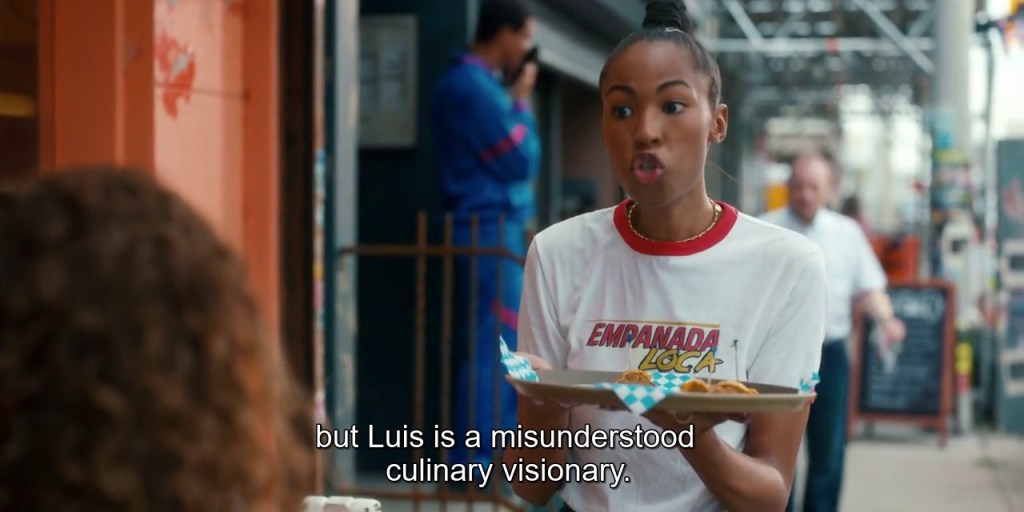
Delores is living in the basement of an empanada shop run by Luis, but he is a dreamer, and is quickly going broke. The whole neighbourhood has been gentrified, and people don’t buy empanadas like they used to. Luis keeps inventing new flavours, but none have caught on.
Episode 2 is the setup for the cannibalism to come in episode 3. We know it’s coming, but Delores doesn’t.
Luis is feuding with his landlord, Gideon Pearlman, played by the wonderful comedian Marc Maron (the cranky entrepreneur from the TV show GLOW). Delores plays peacemaker, takes him downstairs and gives him all her money, which turns out to be negligible amount, due to the massive gentrification that has happened in Washington Heights in the last sixteen years while she was in the pokey. He sees her massage table and she offers him her “magic hands”, which of course he misinterprets as an offer of a hand-job. But Delores has learnt self-defence in jail.
“Got to break the C2 or C1 to kill somebody”
Which she does. Not knowing what to do with the body, she runs to the shop and buys spades, saws, gaffer tape and, to be inconspicuous, a whole load of birthday balloons. It really is a dark comedy!
When she comes back, she finds Nellie, who works in the empanada shop, giving away samples of the new taste sensation, MUY LOCO. What’s in it?
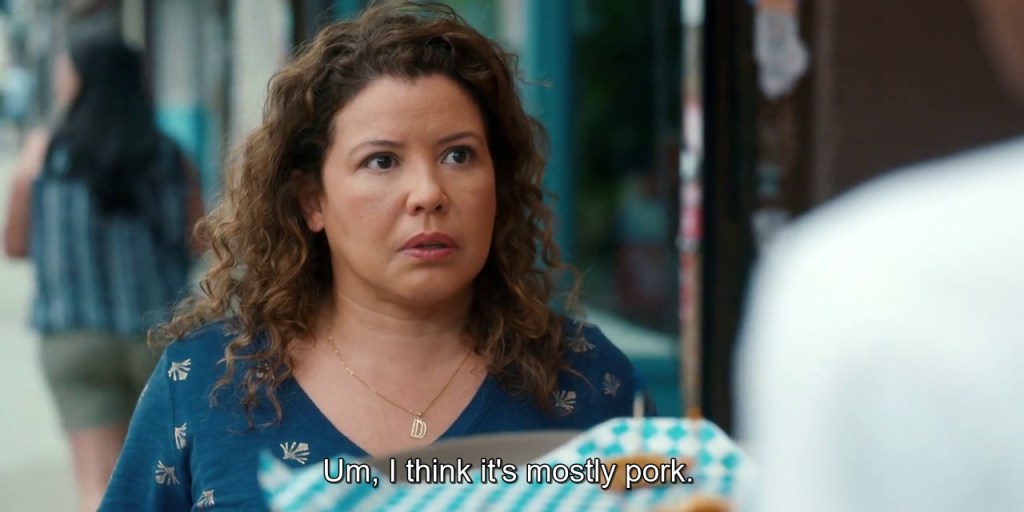
Yeah, it’s not pork, it’s long pig, and when she confronts Luis, he tells her he “took care of it”.
Luis is suddenly a huge business success. Everyone loves Muy Loco, including the local cops. And he wants to give Delores the credit, whereas all she wants to do is barf.
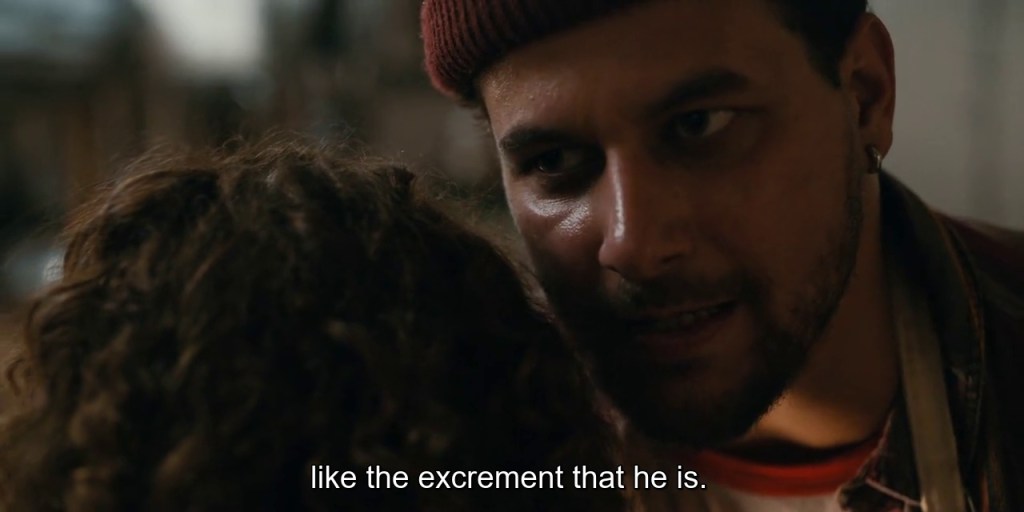
“But you, my Delores, you just changed the game for me. You have led me to a pantheon that very few of us who are called to this art are ever privileged enough to touch. So now, that greedy son of a bitch will get chewed up, shat out and flushed down the toilet.”
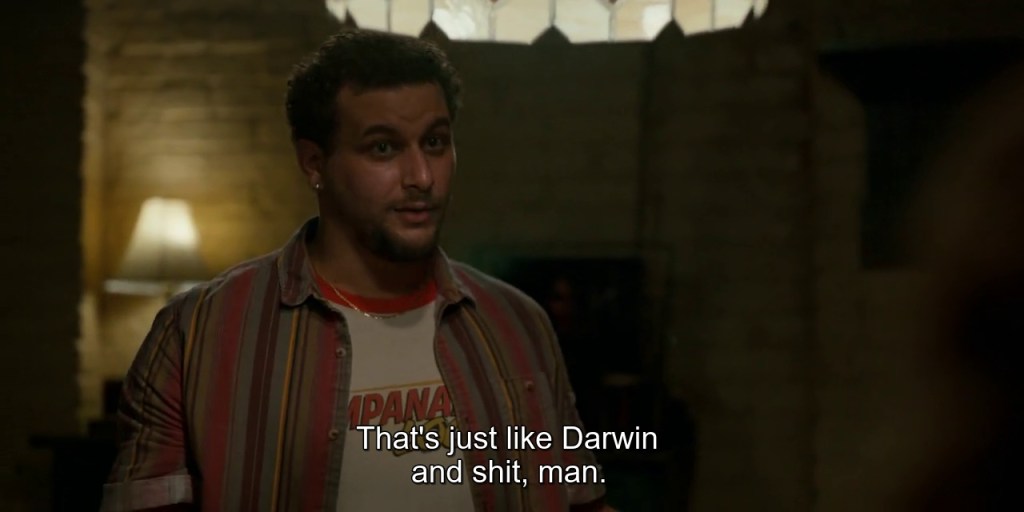
The other reason I didn’t want to go past episode three is that Luis and Delores engage in a fundamental philosophical discussion that is key to Cannibal Studies, which we might summarise as “meat is meat”. When Delores refuses to taste Muy Loco because “it’s human fucking flesh in an empanada!”, Luis responds:
“Delores. Meat is meat. Flesh is flesh. The only reason that we eat a pig, or a cow or a lamb, like whatever, is because we are more powerful than them. So we get to feed off them. That’s how we survive, because we are carnivores. That’s just like Darwin and shit, man”
We’re actually not carnivores – that name is reserved for the true predators – tigers, sharks, that sort of animal. We are scavengers, like anchovies, or pigs.
We’re treated to lots of close-ups of meat being chopped, meat being cooked, meat being gobbled up. Viewers may at this point be consoling themselves by saying “it’s not human”, but it’s red meat, it’s from some mammal, and what difference does it make which species?
Luis has taken care of the body, removed the evidence, and become a successful business owner, all with one radical idea. The only problem is,
This is not only a fabulous story, but possesses a proud heritage in the field of Cannibal Studies, and is not afraid to flaunt it. Delores Roach is a young woman in a basement in Washington Heights Manhattan, who gives massages for a living, occasionally killing her clients and delivering their bodies to Luis, who runs the struggling empanada store above, to use as meat. Yes, it is unapologetically the offspring of the legend of Sweeney Todd, the “Demon Barber of Fleet Street”, who killed his customers instead of shaving them and then dropped them through a trapdoor to his colleague and perhaps lover, Mrs Lovett, who turned them into delicious meat pies. There is some controversy over whether or not Sweeney was a real person who was publicly hanged outside Newgate Prison in 1802 or just an urban legend of early capitalism. In any case, Sweeney appeared in a number of movies; in 1936 he was just plumb crazy, while in 2007 Tim Burton made him an honest man wronged by a corrupt power establishment. Burton’s film is based on a Sondheim musical that played interminably on Broadway and around the world.
In this version, Delores (Justina Machado) turns everything upside down; it’s Sweeney through the looking glass. We’re in New York instead of London, with a female serial killer instead of a male, and a male pastry chef instead of a female. Delores is downstairs killing people for Luis who is upstairs cooking them, again turning the Sweeney legend upside down. Like Sweeney, at least in the Tim Burton musical version of the story, Delores has returned from a long and unjust term of incarceration.
She finds her shabby neighbourhood, Washington Heights, gentrified after 16 years in the slammer, to the extent that she doesn’t even recognize any of the shops. A lot of the reviews seem to focus on gentrification as the main crime in this story.
Except for her favourite fast food store, Empanada Loca, run by Luis (Alejandro Hernandez), the son of the man who used to make the empanadas. He has a soft spot for Delores, who used to pay him in cash and spliffs when he delivered her lunches. Luis offers her accommodation, for old time’s sake, and maybe the odd massage.
Burton’s Sweeney Todd was based on a Broadway musical, but Delores is a generation later, and so now her Broadway show is based on a more contemporary form of popular culture, the TRUE CRIME podcast.
Of course, it’s not true, but in the postmodern age, a true crime podcast needs a true crime, which is also confected for our narrative pleasure.
The podcast becomes a Broadway play, with the actor Jessica Pimentel (Orange is the New Black) playing Flora who is playing Delores in the play (stay with me here). Her performance is a triumph; in her final soliloquy she is covered in blood and holding a human heart.
The performance of the play, and the episode we are watching, both end with a song: Stanley Holloway’s “Sweeney Todd the Barber”:
“Sweeney Todd the barber, by gob he were better than the play Sweeney Todd the barber, I’ll polish them off he used to say and many’s the poor young orphan lad had the first square meal he ever had a hot meat pie made out of his dad from Sweeney Todd the barber”
For those of us who have been waiting for this series, or those who just saw the advance publicity, we are now in the omniscient position of knowing what is going to happen. We have seen the newspaper headline of the “real” murder and the review of the “real” true crime podcast, and seen the full house audience cheering the performance. In case we aren’t sure, a couple of friends pour drinks in Flora’s dressing room, chatting about the play and its reflection in the “real” world.
“…the café in Taipei serving human flesh dumplings?” “Yes, yes, yes, yes and the human bone marrow in that bistro in Paris!”
Then the “real” Delores appears in the dressing room after the friends leave. No, not to murder Flora for impersonating her, but to tell her the true story.
“I’m gonna tell you shit you could never un-know.”
So now, we have a dramatisation of a fake true crime podcast about an actual crime that doesn’t exist, and the dramatisation is being applauded for creating a wave of actual cannibalism events (that also didn’t happen). They concern a female serial killer who is based on a male serial killer who also probably didn’t exist. An actor playing the (unreal) serial killer is telling her story to the actor playing the actor who is playing that serial killer. It plays (sorry) with the mind.
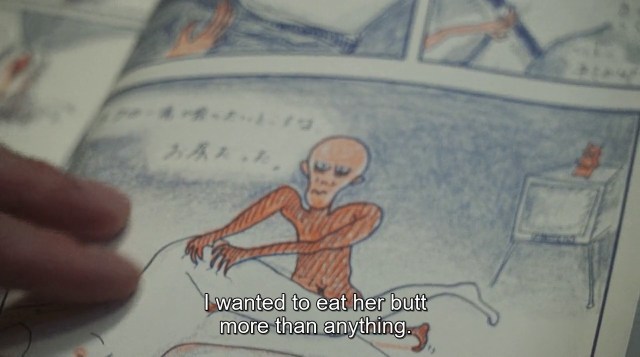
So does cannibalism. Except for a few rare cases where the cannibal is prepared to admit all his or her activities, such as Albert Fish, Jeffrey Dahmer and Issei Sagawa (who laid out the whole project in a manga), cannibalism narratives are very difficult to nail down. Some like Ottis Toole over-confess, leading to speculation that they are making it all up, helped by police who want to clear the cold case log. Others deny everything. And some just disappear and are never found, like Jack the Ripper. Cases of cannibalism are so sensationalised that the reports of the popular press are dubious in their accuracy.
But what we do know is that cannibalism is real, and is one of the primal drives among every type of animal from comb jellies to humans. Freud and Abrahams called the first six months of an infant’s life “the cannibalistic stage”. We all have a cannibal inside; it just comes out more readily for some people than others.
The series is a Blumhouse production on Prime Video and is so good that I am spreading this blog over all the episodes. Among the many great names to appear in future will be Cyndi Lauper as a detective.
On May 17, 2023, The Indiana Supreme Court in Indianapolis upheld the life sentence without parole for a 41-year-old Indiana man convicted of killing his ex-girlfriend and dismembering her body before partially eating several of her internal organs.
Joseph Oberhansley was convicted in September 2020 of murder and burglary in the slaying of 46-year-old Tammy Jo Blanton in Jeffersonville in September 2014. Clark Circuit Judge Vicki Carmichael sentenced Oberhansley to life in prison without parole, based on the jury’s recommendation.
Oberhansley’s legal team filed a brief for an appeal in June 2022. It is available at this link. His attorney, Victoria Casanova, argued before the court in April 2023 that her client’s mental health was not taken into consideration and that the jury did not return a proper verdict form in weighing aggravating and mitigating circumstances.
The opinion, written by Justice Christopher Goff, said the jury made “the necessary weighing determination.” Three other justices concurred and Justice Geoffrey Slaughter agreed in part.
The body of Blanton, 46, was found at her home the morning of Sept. 11, 2014, badly mutilated with more than 25 sharp force injuries and multiple blunt force injuries.
Jeffersonville Police reported that at approximately 9:30 a.m. on the morning of Sept. 11, 2014, officers responded to a call requesting a welfare check at Blanton’s home. Several hours earlier, Blanton had called 911 because an angry Oberhansley was upset about the end of their relationship—refusing to leave her home until ordered by several police officers.
Upon arriving at Blanton’s home, officers knocked on the door and Oberhansley answered. A detective on the scene noticed a cut on Oberhansley’s hand and searched him, finding in his pocket a brass knuckle and a knife that appeared to have hair and blood on it.
Investigators obtained a warrant for the home and inside the bathroom found a “big bloody mound of something in the bathtub.” It was Blanton’s body. She had been stabbed 25 times in the head, neck, and chest.
The body had also been extensively mutilated. The front portion of her skull, a portion of her brain, lung, and most of her heart had been removed. Further investigation revealed that parts of her organs were found on a dinner plate next to a frying pan, bloody knives, and a pair of tongs that had blood on them.
During a subsequent interview with police, Oberhansley “revealed to the detectives that he ate Tammy’s brain” and that he also “tried to pull the ‘third eye’ out with tongs,” police wrote. He also admitted to eating the organs that he removed from Blanton. Oberhansley was originally charged with murder, abuse of a corpse (because cannibalism is not a crime in 49 US states) and breaking and entering.
Oberhansley testified that two men had been at the victim’s home when he arrived around 4 a.m. that morning and said they were responsible for Blanton’s death. He said the men had knocked him out and that he awoke when police arrived.
Clark County Prosecutor Jeremy Mull told jurors Wednesday during opening statements in Oberhansley’s murder trial:
“Joseph Oberhansley butchered Tammy Blanton like you wouldn’t kill a livestock animal. But this lady died with dignity.”
Mull said Blanton locked herself in a bathroom before Oberhansley kicked a door down and attacked her — just one week after holding her captive and raping her. Oberhansley told police during a videotaped interview that Blanton “really wasn’t all that scared, surprisingly,” as if she knew she was about to die, Mull recalled. “In her last moments, she wasn’t going to give him the pleasure of seeing her scared,” the prosecutor said.
A psychologist testified at trial that Oberhansley was “the most severely mentally ill person whose case she had reviewed,” Oberhansley’s defence attorney Cara Schaefer Wieneke wrote:
“It would be easy to look at the horrors visited upon Tammy and conclude they were simply the actions of a monster. But doing so would be reductive, and this Court’s 7(B) review must look deeper. This Court must consider his actions in the context of his profound mental illness. There is also no question that Oberhansley was suffering from a severe mental illness when he committed this crime. What there is a question about, however, is whether Tammy would be alive today if Oberhansley were not so severely mentally ill. There are reasons to believe that she would. Because of that, Oberhansley asks this Court to find his sentence of life without parole is inappropriate.”
Oberhansley’s mental state was a recurring complication in the court process, in which he was found at different times competent and incompetent. For example, in 2017, his defence wrote that their client believed they were working for the devil, according to The Courier-Journal.
The case was originally declared a mistrial after witness testimony put forth information about Oberhansley’s past that parties had stipulated would not be introduced during the proceedings. For example, it was not specified in court that the defendant had spent a 12-year stint in a Utah prison for manslaughter because—while he was jealous and high on meth—he shot and killed his girlfriend Sabrina Elder, and shot his own mother (who later forgave him).
Oberhansley’s sister had grabbed his and Elder’s infant son. He shot at them, but missed. Then Oberhansley shot himself in the head. He survived, but a psychiatrist wrote he’d given himself a “partial lobotomy.” He pleaded guilty to a manslaughter charge, down from murder. His family was reluctant to take the stand, prosecutors said.
In his first trial over Blanton’s death, Oberhansley’s defence asserted that their client’s mental state was a major factor. Lawyer Bart Betteau cited horrifying details of the murder, saying that jurors would hear that Oberhansley believed Blanton was going to kill him and that she could hear his thoughts.
“Think about the process and say to yourself, is this someone who’s thinking right? His thought was that someone was after him.”
Oberhansley’s attorneys couldn’t mount an insanity defence, however. They lost their ability to do so in return for the state declining to seek the death penalty. The attorneys’ previous attempt to lodge an insanity defence was thwarted when Oberhansley filed a motion to withdraw it. He denied living with a mental illness.
Oberhansley is incarcerated at the New Castle Psychiatric Unit of the Indiana Department of Correction.
The most interesting part of this extended legal battle (nine years) from the point of view of Cannibal Studies is the statement from the prosecutor about the victim being “butchered… like you wouldn’t kill a livestock animal.” Philosophers struggle with the inconsistency of our social customs – we cherish dogs and cats, protect whales, but accept the butchery in mind-boggling numbers of cattle, sheep, pigs, chickens, and others. We know about the horrendous suffering in the slaughterhouse, but close our minds to it. We know that on top of its appalling cruelty, the meat industry is one of the largest sources of greenhouse emissions as well as a cause of several severe human health problems such as hypertension and colon cancer. Yet the meat industry remains exempt from much of the environmental and health debate that surrounds other issues. Stanley Cavell states that becoming part of a social contract requires becoming “conspirators”, agreeing implicitly what will be acceptable, disregarding its ethical conundrums. Such “perpetual failure of justice invites the threat of madness”.
Cannibals are routinely described as insane, as if their capricious psychotic episodes fully explain both their choices and the appalled revulsion of the rest of society. Oberhansley’s appeal described him as “detached from reality”. But the persistent portrayal of cannibalism as unthinkable and cannibals as insane relates to their refusal of the fissure between reality and the language able to describe it. The cannibal personifies ruthless attempts to satisfy voracious human appetites, while realising the animality of fellow humans; he puts the unthinkable into reality through the flesh and blood of his victim. His madness arises in the gap between the carefully expurgated language of the social contract and the reality of the world as a giant slaughterhouse.
Dreams (夢, Yume) is a 1990 magical realist anthology of eight stories, written and directed by Akira Kurosawa, inspired by his recurring dreams. An international co-production of Japan and the United States, Dreams was made with assistance from George Lucas and Steven Spielberg.
Akira Kurosawa (Japanese: 黒澤 明, March 23, 1910 – September 6, 1998) was a Japanese filmmaker and painter who directed thirty films in a career over fifty years. Kurosawa directed around one film per year throughout the 1950s and early 1960s, including a number of classics which were often adapted by other directors. These included Rashomon (1950), Ikiru (1952), Seven Samurai (1954) – which was remade in 1960 by John Sturges as The Magnificent Seven, Throne of Blood (1957), Yojimbo (1961) and High and Low (1963). He is widely considered one of the most important and influential filmmakers in the history of cinema.
Kurosawa’s bold, dynamic style was strongly influenced by Western cinema, yet distinct. In 1990, the year Dreams was released, he accepted the Academy Award for Lifetime Achievement.
Dreams is his most personal work, taken from his own life and unconscious mind. He addresses themes such as childhood, spirituality, art, death, and the mistakes and transgressions made by humans against nature. The episodes within Dreams do not have a single narrative, but are the fragmentary adventures of a “surrogate Kurosawa” (often recognizable by the character wearing Kurosawa’s trademark hat) through eight different segments, or “dreams”, each one with a title. Each is more a fairy tale than a dream in the filmic sense.
A child sees a forbidden fox wedding ceremony and is told he must suicide, another weeps as he witnesses the spirits of a peach orchard that has been cut down by his family, reflecting the human war on nature.
The fear of nature fighting back is a bleak dream of men struggling through a mountain blizzard. The horror of war is demonstrated as a Japanese officer is confronted by the ghosts of his annihilated platoon.
Our understanding of nature is questioned in “Crows”, the only dream not made in Japanese, where Vincent van Gogh is portrayed by American filmmaker Martin Scorsese, with a broad New York accent, and the protagonist travels through the images that fill van Gogh’s tortured imagination.
Our abuse of nature comes to its logical conclusion as we see nuclear power points explode behind Mount Fuji, human ingenuity able to create but not control these forces; in the end, all they can do is colour the toxic pollution so people know what is killing them.
“The Weeping Demon” is the seventh dream, and of particular interest in Cannibal Studies. It shows the aftermath of nuclear devastation, a fear that has haunted us all for eighty years, particularly the Japanese, who were the first and only people to experience nuclear weapon attacks.
A man is wandering around a misty, bleak mountainous terrain. He meets an oni(demon or ogre), who is a mutated human with a single horn on his head. Oni are known for indulging in murder and cannibalism when they get the chance. They are typically portrayed as hulking figures with one or more horns growing out of their heads, massive teeth, and occasionally a third eye in the centre of the forehead.
The demon tells him that there was a nuclear conflagration, which resulted in the destruction of nature and animals, the growth of dandelions taller than humans, and horns sprouting on the heads of those humans left. The horns cause them to feel excruciating pain each evening; but they cannot die, so they howl in agony all night. Many of these demons were formerly millionaires and government officials, who are now suffering through a hell befitting their sins.
Even in this apocalyptic post-war world, the social hierarchies continue to oppress – the demons with two or three horns eat those with only one.
“There’s no food! We feed on ourselves. The weak ones go first. It’s about my turn now. Even here we have grades. One-horn demons like myself always get eaten by those who have two or three horns. Before they were powerful and pretentious. And now they still throw their weight around as demons.”
The demon that the man meets is waiting to be eaten, seeing this as an escape from his agony and nagging hunger, but also as a punishment – before the wars, he was a farmer who poured milk into the river and buried vegetables to maintain market prices. He warns the man to flee, but when the man asks where he should go, the demon just asks if he too wants to become a demon. The terrified man runs away with the demon in pursuit.
The film finishes with a meditation on death, the final and irrevocable return to nature. Laying down our technology, our appetites and our bodies is celebrated – peace at last.
Condemned as disjointed by some critics, the film has a logic to it, a dream logic, in which things are out of place yet seem quite natural. It starts with a little boy witnessing the wedding procession of the foxes, a slow funereal procession that is forbidden for human viewing, and finishes in a village that has spurned technology and progress in favour of clean air and water and long, peaceful lives, where we witness a funeral procession that is pure colourful celebration.
Dreams is a sumptuous, thoughtful, dramatic, film from which I found it hard to look away. Although it is one of Kurosawa’s last films, it shows him at the height of his power and creativity, and offers a glimpse into his mind, just as he glimpses the mind of van Gogh.
Dreams is now a classic, as are all Kurosawa’s works, but it currently has only 66% fresh rating on Rotten Tomatoes, proving that a lot of people can’t be bothered listening to (or even watching) other people’s dreams. The New York Times critic called it:
“…a collection of short, sometimes fragmentary films that are less like dreams than fairy tales of past, present and future”
But dreams, like the evening news, are always fragmentary – narratives jump from tragedy to kitsch to humour. Dreams often reflect and amplify our repressed emotions and fears, and fairy tales are mythic versions of dreams. Many, perhaps most, fairy tales include cannibalistic giants, wicked step-parents, witches and ogres, such as Little Red Riding Hood, Hansel and Gretel or The Juniper Tree. Children wander, lost and hungry, through brooding forests and come across strange and fantastic creatures. Dreams reveal our repressed fears about the human attacks on nature and each other, the struggles and conflicts that lead to monsters or demons.
In dreams, we lose our rational sense of causality – anything can happen. We get lost, like in fairy tales, in forests or snowstorms or in the mind of Vincent van Gogh, seeing the world the way he had to, consuming it and reimagining it before he could paint it. We meet ghosts of people who don’t know they are dead. Nuclear power plants explode, a fear on everyone’s mind in 1990, four years after The Chernobyl disaster. In dreams, ethics become aesthetics, to quote from Hannibal. Dreams, like fairy tales, are episodic and disjointed, and the film captures this brilliantly.
Although fairy tales date back centuries, they remain ever popular, with new versions or completely new stories released to reflect the fears of each historical period. In our modern period, the growing and changing presence of media makes us all aware of the bloodshed on the battlefields and in the death camps and slaughterhouses of modern industrial societies, images that we desperately try to forget or repress. It is no wonder that dreams are full of cannibals.
Winnie-the-Pooh is a much-loved (but sometimes intensely disliked) fictional bear who evolved from the childhood stories told to his son (Christopher Robin) by A. A. Milne, the author of a series of books first published almost a century ago. The original Pooh was an actual toy bear bought in Harrods in 1921. Other toys belonging to the little boy, Piglet, Eeyore, Kanga, Roo, and Tigger, were incorporated into Milne’s stories as friends of Pooh, who was presented as “a bear of very little brain”. Pooh and his friends lived in the 100 Acre Wood, where they got into all sorts of scrapes.
The anthropomorphic bear, his name now without hyphens, was licensed by the Disney company in 1961 for a very successful series of features that became one of their most popular franchises. I loved the books as a child, and hated what the cartoons had done to him, but maybe that’s just me.
Anyway, Milne’s U.S. copyright in Winnie-the-Pooh expired at the end of 2021, 95 years since publication of the first story. The character therefore entered the public domain in the United States, with Disney no longer holding exclusive rights. Independent filmmaker Rhys Frake-Wakefield seized on this opportunity to create a horror film titled Winnie-the-Pooh: Blood and Honey.
The premise, told through a cartoon opening, is that Winnie and Piglet feel betrayed and abandoned by Christopher, who has grown up and moved on to big-boy things like college and sex. (For a wonderful discussion of the difference between being “lost” and being “abandoned”, I recommend Hayley Singer’s new book, Abandon Every Hope). They have gone feral.
During a particularly cold winter, they are starving, and decide to kill and eat their old friend Eeyore the donkey, which drives them to detest humanity. They make a pact:
“they renounced their humanity and returned to their animalistic roots, swearing never to talk again.”
When Christopher comes to the 100 Acre Woods with his fiancée Mary five years later, he looks for his old friends, telling her “It’s going to be OK, alright, I promise.” Only of course it isn’t. Pooh and Piglet kill her and capture him, and chain him up in their old house, where he can see his (late) fiancée hanging defleshed (eaten?) from a meat-hook, while Pooh flogs him with the late Eeyore’s tail.
Pooh and Piglet then proceed to hunt and kill a group of women students who have come to a holiday house in the woods to help one of them recover from a stalking incident (clever poetic irony) and then Pooh kills some men who try to help them. There is a lot of extreme violence involved including strangling, crushing with cars, mauling (by piglet of all people), insertion into a wood-chipper, and bludgeoning with a sledge-hammer.
At this point, I need to come clean and admit that I am having trouble classifying this as a cannibal film. Lots of people get killed (it’s definitely a slasher), and toys eat another toy at the beginning, which is a sort of cannibalism (but only in the way that Woodstock from Peanuts is a cannibal for eating turkey on Thanksgiving). I don’t know that toys are a discrete “species”, but if not then even a real pig and bear eating a donkey is nowhere near cannibalism. But the introduction says they “renounced their humanity”, so I’m taking that as a licence to include this in a cannibalism blog; they were anthropomorphically human when they ate the human donkey, right? Hey, even Princess Fiona from Shrek wasn’t really human (she was a secret ogre) but we wrote up her exploits, eating brave knights who came to save her. So we have some fun ontological challenges like “what is cannibalism?” what is “eating?” and “what is human?” Apparently they believe that not talking is the way to renounce humanity, which both bolsters anthropocentric arguments about human superiority (we are often described as the only species with a language, to the annoyance of the whales), but also raises some interesting questions for the voiceless, or those who choose not to talk. Does a vow of silence mean a renunciation of humanity? A question for another time and, hopefully, a different blog.
But from a Cannibal Studies point of view, there are some other interesting ideas in the back-story. It starts with starvation cannibalism (if we allow that name) in that, like survivors of plane crashes, shipwrecks, or ill-considered trips across the Sierra Nevada, Pooh and Piglet are driven to eat their friend Eeyore through extreme deprivation. But then we move to a new motivation – social degeneration, where the formerly very civilised, polite toys become psychotic murderers, much like the feral humans in Texas Chain Saw Massacre, The Hills Have Eyes or Death Line. Look, we don’t really see them eat humans, although we see a skull and jars of blood, and hear reports of mutilated bodies being found in the woods, so there is a certain implication. But they are not human, so that’s OK. They’re not even officially animate, although you wouldn’t say that if they were swinging a sledge-hammer toward your head. And just when did they learn to drive cars?
The film has had almost universally awful reviews, collecting a woeful 4% “fresh” on Rotten Tomatoes, with The Times critic saying:
“Rhys Frake-Waterfield cloddishly desecrates your childhood, and AA Milne’s beloved classic, with a dimly written, shoddily realised, sub-standard slasher whose artistic aspirations never reach beyond making a fast buck.”
The Guardian was even less impressed, describing the film as:
“…a terrifying combination of not-scary and not-funny, and a cast of Love Island types on Xanax apparently reading the dialogue off an optician’s chart held up behind the camera.”
Look, it’s not that bad – the woods look nice but also somewhat ominous, and while some of the acting is wooden, they all have great death scenes, and the violence is enough to attract any gorehound. Anyway, the film was a big success on its release in January (in Mexico) and February (US, UK). As of 23 February 2023, Winnie-The-Pooh: Blood and Honey had grossed $1.8 million in the United States and Canada, and $2.4 million in other territories, including over $1 million in Mexico, for a worldwide total of $4.2 million. The budget was apparently less than $100,000, making it proportionally one of the most profitable films ever made, surprising even the film-maker.
Is it surprising though? Fan fiction has been rewriting classic stories for a while now (have you seen what sexual gymnastics some Fannibals have created for Hannibal and Will?), while stories of the perils of civilisation being brought down by thoughtless dedication to progress and neo-liberalism are the zeitgeist. Winnie-The-Pooh is our abandoned childhood, coming back to haunt us.
Francis Wolke, 30, was found guilty on March 2, 2023 of first-degree murder for killing 62-year-old Kathleen Anderson in her Menlo Park bedroom in December of 2018, and sentenced on April 5 to a term of 26 years to life in prison.
San Mateo County prosecutors stated that a friend of Anderson found her body while the killer was still inside the house. The friend called the Menlo Park Police Department and detained Wolke at knifepoint until police arrived.
When the trial opened on Tuesday, February 14, Wolke’s attorney, Connie O’Brien, had declared, in a rather unusual opening statement, that her client was driven to murder by a desire to engage in cannibalism. She stated that Volke believed that, if he committed cannibalism, he would “stay young forever” and join the “1%” of people who eat human protein to become rich.
Anderson had never met Wolke, 30, before the murder. “There was no known relationship or contact between defendant and victim, nor a known motive for the crime,” prosecutors said. Wolke lived in Cincinnati, Ohio and had arrived in the San Francisco Bay Area just days before the murder. He was also wanted in Santa Clara County for prowling and drug possession. According to the Palo Alto Daily Post, Anderson worked as the City of Atherton’s arborist for two decades.
In 2020, Wolke had pleaded not guilty due to insanity. The trial jury deliberated for three days before finding him guilty, and then reconvened to consider the insanity issue, which could have seen Wolke sentenced to state hospitals, instead of state prison. The jury handed down its ruling on March 8 2023 in San Mateo County Court in Redwood City, finding that Wolke was sane at the time of the murder.
Defence lawyers had argued the insanity defence based on Volke’s belief that he had to commit cannibalism in order to join “the 1%” and stay young forever. They testified that Wolke said he wanted to join an elite group of wealthy people whom he believed killed humans and ate their flesh to become “protein harvesters” and that he, too, would enjoy wealth and eternal youth after consuming human stem cells.
Deputy District Attorney Tricia Povah argued the case for Wolke’s intent to murder. Povah laid out in graphic details the injuries that Wolke inflicted during multiple attempts to take the life of Anderson, including attempted strangulation.
Wolke was accused of stabbing Anderson in the eye with a pencil, hitting her brain. The allegation that Wolke used a deadly and dangerous weapon in this act was also accepted by the jury.
Wolke also attempted to behead Anderson, which his defence lawyers alleged was due to his intention to engage in cannibalism. Wolke reportedly told investigators he:
“wasn’t very good at (it) because (he’d) never done it before.”
Wolke, according to court testimony, had a history of heavy methamphetamine use, but did not test positive for any drugs at the time of the murder. According to defence attorney Connie O’Brien, he was experiencing psychosis in the form of auditory hallucinations while on the bus ride from his family’s home in Cincinnati to the Bay Area, with voices telling him that he had to commit sins to join the 1%.
Despite Wolke’s hallucinations, the prosecution argued that Wolke had an understanding of the morals surrounding murder and that he was aware of his actions as he committed the killing. Dr George Wilkinson, a forensic psychiatrist and expert witness for the prosecution, testified that Wolke understood his actions.
“He was well aware of what he was doing, in fact, it would have been necessary to fulfil the delusions.”
Povah argued that he showed awareness of his situation. When police officers went to enter the house to investigate, Wolke told them where to find Anderson, saying:
“The body’s in the basement. I have a mental problem. I very seriously killed that woman.”
Lots of interesting Cannibal Studies issues are raised by this case. Cannibals are almost routinely labelled as psychotic, on the anthropocentric assumption that human flesh is sacred and inviolable. But to be found insane, as Wolke discovered, a murderer has to prove that he (or she) did not know what he was doing, or that it was wrong. Hannibal Lecter, in the books, movies and TV series, was not executed for his crimes because the jury found him insane. He strongly denied this.
An intention to achieve social status through the ingestion of human flesh seems to show a clear understanding of (some rather dubious) causality. That is, he knew what he was doing, even though he was doing something that would seem to most people irrational.
Or is it? The mythology of the Wendigo tells of cannibals who gain strength, size and often healing powers or long life through eating the flesh of other humans, but also develop an insatiable appetite for ever more of the stuff. What appetites distinguish and define the so-called “1%”, that tiny group of uber-rich who absorb around a quarter of the nation’s income and own 40% of the wealth? Psychiatrists will happily tell you that those who achieve huge fortunes or high office are often psychopaths, immune to fear of failure, or empathy for those they exploit. The accumulation of capital, whether by imperialists or corporate raiders, is metaphorically a form of cannibalism, feeding on the flesh of others in a zero-sum game, that is supposed to gain them enormous wealth and eternal life (or a botox version of it).
A part of Wolke’s mind must have worked out that he was not made of such stern stuff, and told him that, to get there, he would need to cultivate his inner cannibal.
We’re heading back into the early days of Cannibal Studies with this one! The TV anthology Alfred Hitchcock Presents aired on CBS and NBC between 1955 and 1965. Produced and presented by the great auteur himself with a humorous introduction and postscript, the stories covered mysteries, thrillers and dramas. It remains timeless; in 2021, Rolling Stone ranked it 18th on its list of “30 Best Horror TV Shows of All Time”. Hitchcock was called “The Master of Suspense” and is considered one of the most important figures in cinema history. His films garnered 46 Academy Award nominations, including six wins.
The production team he put together for the TV series was a lot cheaper than a film crew, and he used them often to make his movies. A year after Specialty of the House, Hitchcock used his TV crew to make the film Psycho, a seminal film in the horror genre and in Cannibal Studies. Psycho’s story was itself adapted from the case of the so-called “Butcher of Plainfield”, Ed Gein, who would dig up bodies and use the bones and skin to make masks, accessories and furniture. Gein would make women suits out of human skin (which inspired Jame Gumb – “Buffalo Bill” – in Silence of the Lambs) so he could dress up as his mother (which inspired Psycho). His facemasks, made out of human faces, inspired the character Leatherface in The Texas Chain Saw Massacre and its many sequels.
This week’s 1959 TV show was also an adaptation, from Stanley Ellin’s short story “The Speciality of the House” about gourmet chef Sbirro, whose exclusive restaurant offers a “warm haven in a coldly insane world”. Sbirro serves a specialty called “lamb Amirstan, which turns out to be the flesh of patrons who had enquired too deeply into the mysteries of his kitchen. Ellin’s story was first published in Ellery Queen’s Mystery Magazine in 1948.
This production is fairly true to the short story. The wonderful Robert Morley is Laffler, a well-heeled import-export businessman, who has invited his protégé, Costain, to the very exclusive club/restaurant. They meet some of the other diners, including a rich Singaporean businessman (as if to show us that American elitism is not entirely white, but ironically played by Japanese actor Tetsu Komai) and another very cantankerous diner whose regular eating-partner has apparently resigned, immediately after becoming a life member. Laffler is astonished, because his three obsessions are lamb Amirstan, which all the members crave, a longing to become a life-member of the club, and a yearning to “see the kitchen where these miracles are performed”.
On their first two visits, lamb Amirstan is not served, much to Laffler’s disappointment. The dishes that are served are always superb, but there is no menu, no choices offered.
“My dear boy, when you’ve studied the art of fine eating as long and as vigorously as I have, you won’t trouble with menus…. Here at Spirro’s we have no doubts, we ask no questions, we only know that there is a genius in the kitchen!”
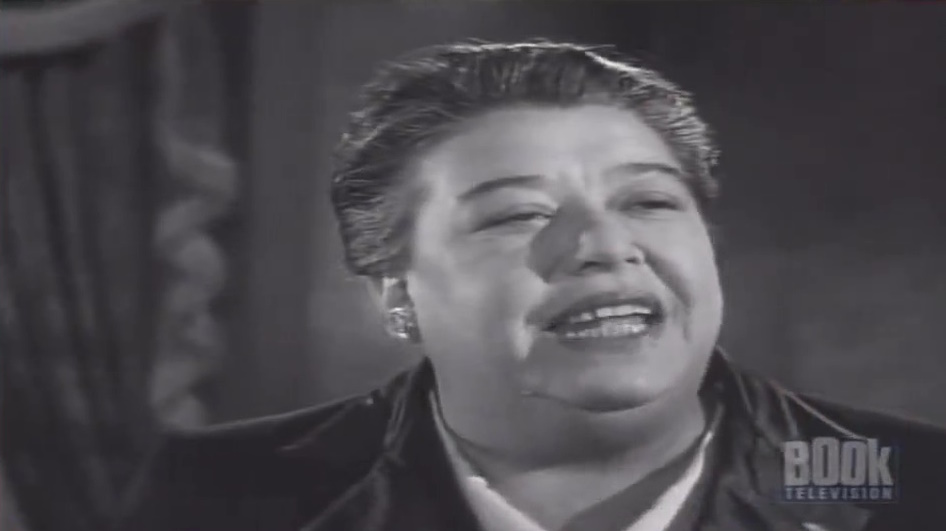
Spirro (the spelling in the story changed, for reasons not explained) makes an appearance while Laffler is complaining about not being allowed into the kitchen. Unlike the short story, in which women were not welcomed into the club, in the Hitchcock show Spirro is a woman (played by Spivy), very much in the style of the “monstrous-feminine” who, we are all subconsciously afraid, will reabsorb us into the feminine form from which we emerged. She puts a hand of Laffler’s meaty shoulder and announces, “I think we will be having the speciality of the house very soon, my friend.” She is looking at Costain; we realise by now that Laffler has become a nuisance to her and is likely soon to become lamb Amirstan. The next night, when lamb Amirstan is finally to be served, Laffler is very rude, refusing to sit with Costain, demanding to be served first, and insisting on more food on his plate.
Unlike Laffler, Spirro says of Costain, “He has very nice manners, your friend.” Manners, the rule of laws and language referred to by Michel Foucault as “the symbolic” are the basis for civilised, patriarchal societies. Rudeness is appalling, and you will perhaps recall Hannibal Lecter, decades later, saying “discourtesy is unspeakably ugly to me.” Laffler has been discourteous, intrusive, and so is destined to become a “life member”. When he makes a fuss about no more lamb Amirstan on the following night, he is delighted to find Spirro inviting him into the kitchen, to “meet the chef”. Chef is clearly ready for the meeting.
Cannibalism here is presented as addictive. All the members crave not the superb cuisine served every night but specifically the “specialty of the house” which turns out to be the latest life-member. It is a myth that cannibals only want human flesh once they have tasted it; in fact, all the evidence seems to indicate that we don’t taste that much different to pigs. But the myth is enduring – think of the many stories of the Wendigo, a figure from Algonquin stories who becomes addicted to human flesh which makes him grow larger and therefore inevitably hungrier. Or the recent movie Bones and All, where the two Romeo and Juliet lovers are united not only in their affection for each other but their recurring fascination with human flesh. Or Cannibal Apocalypse, where Vietnam vets are infected with the wendigo bug.
Like many cannibal stories, the victim’s life is envisaged as being absorbed by the eaters. “Life member” is, therefore, an apt description for one whose life has been taken and now lives only in metabolisation into the body of the cannibal. These members are what are sometimes described as “innocent cannibals” – they love to eat meat, but are not aware from what animal it has been carved. Think of the appreciative consumers of the meat pies in Sweeney Todd.
But are any of us really innocent, if we know that some sentient animal has died to be on our plate? It might be a rare breed of lambs from the Ugandan border, or it could be a rude businessman. Ethics, as Hannibal once told us, become aesthetics. If it tastes great, if a person of authority and good taste places it before us, it is at least aesthetically, if not ethically, proper. As the new life member, soon to be lamb Amirstan, told us earlier in the show:
“My mother used to say – we eat what’s set before us, and we like it.”
The episode is available on line, the link is at the top of this blog.
Gannibalis a new seven-episode television series set in present day, rural Japan. The show is based on a Manga series (comic or graphic novel) which appears to be available on-line.
In the first episode, we see a policeman raging outside a house, accusing the occupants of cannibalism. He soon comes to a sticky end.
Police officer Daigo Agawa becomes Chuzai (residential police officer) at the Kuge village, accompanied by his wife Yuki and daughter Mashiro, after the previous Chuzai mysteriously went missing (the same officer seen being killed in the opening). Daigo has caused some incident in his previous posting, which has led to his transfer to this remote and eerie (but very beautiful) village.
The daughter, Mashiro, seems to have no fear, but also refuses to speak, which Daigo believes is his fault. On his first day, Daigo is summoned by the Goto family, who seem to run the small forestry village, like a local crime family.
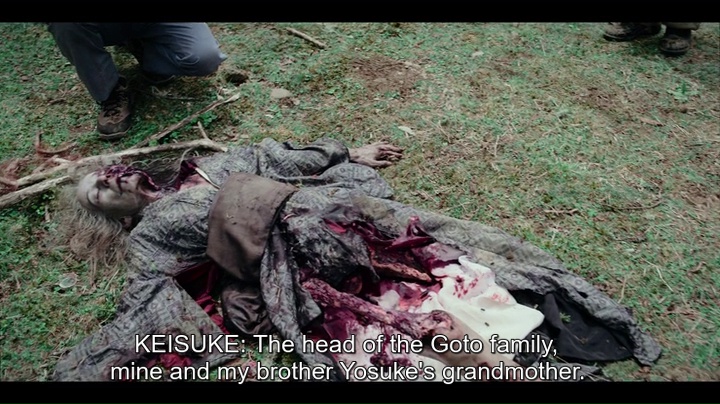
They have found the body of their grandmother, Gin Goto, the head of the family. They insist she was attacked by a bear, and pull out firearms when Daigo points out that the tooth marks on her arm are human.
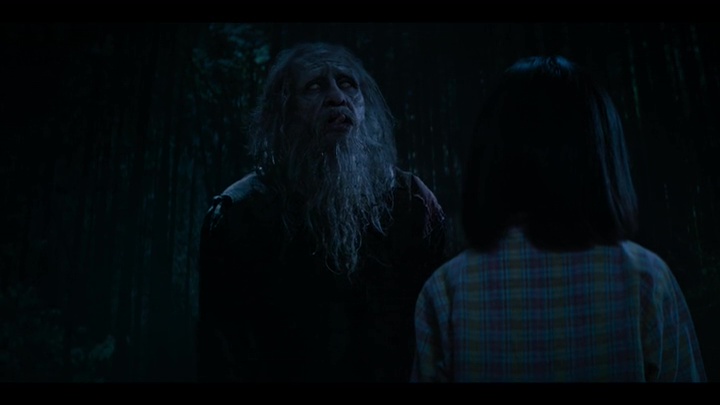
Meanwhile the little girl Mashiro wanders away from home, and meets up with a large blind guy who seems only able to snarl.
Showing no fear, she offers him a sugar candy, and in turn comes home with a human finger.
Problem: the finger is not from Gin Goto. Lots of people are, apparently, getting dismembered.
Daigo accompanies the Goto family on a hunt to find the bear that they claim ate Grandma, and is then attacked by a bear, who turns out to have granny’s specs in his stomach.
In a scene that could almost define carnivorous virility, the men gather around the bear and eat his flesh, a ritual that is supposed to keep Grandma within them.
This is what we call, in Cannibal Studies, “essentialism”, the idea that the spirit or strength of a person lives on by eating them, even if only via the bear that ate her (even though that’s clearly not what happened).
In the following episodes, Daigo slowly unravels the truth about cannibalism in the village.
Gannibal is directed by Shinzô Katayama, the director of the horror-thriller Missing. Reviews have been glowing, stressing how ‘gross’ and unsettling the show is. One tweet said:
Except for the opening, which is over the top in Japanese anime style, the acting is great, the suspense interesting without jump scares, the music eerie, and the photography beautiful. If you like a good suspense show and don’t mind subtitles, this one is highly recommended.
Gannibal started streaming December 28 on Hulu. Also available on Disney+.
What a year! These are some of the cannibalism stories, films and songs that arrived in 2022, with links back to the original reports, so that you can look up the ones that catch your interest, and so that this blog does not take all of 2023 to read.
January
A German man dubbed by the press the ‘cannibal teacher’ was convicted of murder and sentenced to life in prison. Stefan R., a 41-year-old maths and chemistry teacher, had apparently searched on the dark web for terms such as “long pig” and “fatten and slaughter people”. The man claimed his victim died of natural causes after a (presumably vigorous) sexual tryst, and he had removed the man’s penis “since my DNA could still have possibly been present due to the oral sex I performed”. In other words, he didn’t mind a bit of mutilation and perhaps cannibalism, but was concerned not to be “outed” as gay.
Djalma Campos Figueiredo, 46, was arrested in Brazil. He had been sentenced by the Court of Justice of Rondonia in the city of Porto Velho to 42 years in prison for several counts of aggravated murder but had escaped custody. The Civil Police alleged he would eat his victims’ eyes and ears and drink their blood.
Meanwhile, the Zamfara (NW Nigeria) State Police Command arrested a 57-year-old man, Aminu Baba, for allegedly eating and selling human body parts. Baba and three others were arrested after the murder of a nine-year-old boy. The Police Commissioner reported that Baba had “confessed that he usually ate the body parts and identified the throat as the most delicious part. He also sold some of the human parts to his customers.”
February
A war between rival cartels in the Mexican state of Zacatecas graduated from the normal torture and beheadings to systematic cannibalism, with new sicarios (cartel assassins) being required to eat parts of their rivals before being allowed to graduate (or remain alive).
In Afghanistan, we discovered that the Taliban were rounding up drug addicts and putting them in rehabilitation centres to detox, which is a nice thought, except that they gave them little or no food (“cold turkey” does not count), so they apparently resorted to cannibalism.
In the Indian state of Assam, a man who had had perhaps more than a few drinks smelt cooking meat in a crematorium in a Hindu cremation ground. He helped himself to a few portions of the body, but was caught by villagers and handed over to police; but not before he had eaten about half of his purloined flesh.
May
A man calling himself The Chinese Zodiac Killer was arrested by the FBI in Jefferson County, New York for sending letters to media outlets, government offices including the White House, and other organisations, claiming he killed people and ate their flesh, and that he plans to kill more. He seems to have based his story on the Zodiac killer who terrorised California in the late 1960s. The original Zodiac Killer (who was not accused of cannibalism) was never caught, but this one was easily found, posting his threatening letters (what century is this again?) at the same letterbox he had previously used.
June
The case against James David Russell (see above in April) went to preliminary trial. Sadly, the judge threw out the charge of cannibalism, saying there was insufficient evidence to pursue it, and went with the rather more mundane offence of first-degree murder. Since this has a life sentence attached, the practical effect of dropping the cannibalism charge is negligible, but as the first cannibalism case in the USA, it would have been fascinating.
A rumour swept the Internet that the actress Anne Hathaway was a cannibal, based on a cryptic Tweet saying “police didn’t find human remains and evidence of cannibalism in her LA home that she sold in 2013.” We were all later astonished to discover the whole thing was a hoax.
The effects of the war in The Ukraine were starting to be felt in Europe and the UK (whose people often do not think it’s part of Europe). The Russians fell gladly on a statement from one Jeremy Clarkson (a car enthusiast) that “Hunger makes people eat their neighbours” to predict that the British will soon be a nation of cavemen feeding off each other. Of course, if you’ve ever been to a soccer match…
industrial/electronic music duo SKYND released their tenth song, called ARMIN MEIWES, about the German man who killed and ate a willing volunteer.
The New York Times raised the temperature of the culture wars with its review of several books, movies and TV shows about cannibalism, culminating in the (somewhat tongue in cheek) statement that “Cannibalism has a time and place… that time is now.” The right-wing press predictably jumped on the story accusing the NYT of everything from irresponsibility to Satanism.
Also in New York, Steven Spielberg whipped out his cell phone to record Marcus Mumford singing his new work, a haunting song called “CANNIBAL“. The song might be about love and lockdown, or it could involve child abuse.
DISCOVERY+ launched a three-part series called HOUSE OF HAMMER. The series explored allegations from various girlfriends of the actor Armie Hammer that he was a cannibal, or had at least threatened them with cannibalism. It also examined his relatives, many of whom seemed to be presented as even worse specimens than Armie.
Russia discovered the war was not going well in Ukraine, and started recruiting murderers and rapists to be sent to the front as reinforcements. Also – one cannibal, Yegor Komarov, whose man-eating exploits we learned about in December 2021.
October
In the Indian state of Kerala, there were allegations that a couple who ran a massage centre were bringing women home not so much for massages, but for human sacrifice and ritual cannibalism.
In the US state of Michigan, Mark David Latunski, who had been arrested in 2019 for killing and eating his Grindr date, finally came to trial and entered a plea of guilty.
November
Issei Sagawa, the “Kobe Cannibal”, died of pneumonia at the age of 73. Sagawa had killed and eaten a young Dutch fellow-student in Paris in 1981. He was found insane and sent back to Japan, where he was released and lived free ever since, making movies, writing books, and even becoming a restaurant reviewer.
Rapper Comethazine released Bawskee 5, the 12th song on which was called “CANNIBAL“.
Back in Brazil again! A patient in the Municipal Hospital of Nuovo Hamburgo in the state of Rio Grande do Sul attacked other patients, screamed and spat at people, and eventually chewed off his own fingers and toes. A witness said “while he was chewing his own meat, you could hear the crackling of bones in his mouth”.
December
Mark Latunski, 52, was sentenced to life in prison without the possibility of parole on December 15 for the murder of his Grindr date three years previously. Kevin Bacon, 25, had been killed and mutilated by Latunski on December 24, 2019 at Latunski’s Bennington home. Latunski pleaded guilty in September to killing Bacon and eating one of his testicles, after stabbing him in the back and slitting his throat. In a victims’ impact statement, the victim’s father said “Evil does exist, and it touched us.”
On the screen
The big news on streaming television this year was Jeffrey Dahmer, the “Milwaukee Cannibal”, who took Netflix by storm with not one but two titles, despite having been killed by a fellow prisoner in 1994.
Ryan Murphy and Ian Brennan’s docudrama called “MONSTER: THE JEFFREY DAHMER STORY“, which logged nearly two hundred million hours of watching in its first week of release
Joe Berlinger’s third series of CONVERSATIONS WITH A KILLER, featuring previously unheard defence attorney tapes of interviews with Dahmer.
Lots of new cannibalism feature films in 2022, some of which I will catch up with next year:
Luca Guadagnino’s BONES AND ALL, featuring Timothée Chalamet and Taylor Russell as teenage cannibals in a tender and gory road movie, has been getting heaps of publicity.
Mimi Cave’s FRESH is a charming romcom, until the knives come out. A fascinating insight into ultimate consumerism.
Leatherface came back (again!), this time older but no wiser. This is the ninth (!) instalment of the TEXAS CHAINSAW MASSACRE franchise, and went straight to Netflix.
John Ainslie’s DO NOT DISTURB depicts a couple renewing their romance by taking peyote, but finding that this particular variant of the drug awakens a taste for human flesh.
Leatherface came out to play again, this time as a fan-film prequel called THE SAWYER MASSACRE. Made on a shoestring but arguably superior to the other sequels and prequels.
Liam Regan’s EATING MISS CAMPBELL, in which a vegan, goth student falls in love with her new English teacher and develops a taste for human flesh.
Sean Patrick Flanery’s enjoyable road movieFRANK AND PENELOPE, in which a couple take on a cannibal cult in the wilds of Texas.
Timo Vuorensola’s JEEPERS CREEPERS REBORN, the umpteenth take on a supernatural tale of the demon who eats people and incorporates their bodies, but only every 23 years.
Fred Olen Ray’s PIRANHA WOMEN offers a totally believable story of women who turn into man-eaters because of an anti-cancer treatment.
THE MENU has Ralph Fiennes as a demented chef and Anya Taylor-Joy as the fly, as it were, in his menu plan. There is no obvious cannibalism involved in the movie, but there is some speculation on-line about the final cheeseburger.
‘Ted Lasso goes cannibal’ in Adam Leader & Richard Oakes’ FEED ME, a jolly rant in which a grieving man wants to die, and a nearby cannibal wants to help him, but by instalment.
And now for something completely different
From out of the future, we have some new AI software of which Shital Shah, a senior research engineer at Microsoft, said:
ChatGPT was dropped on us just bit over 24 hours. It's like you wake up to the news of first nuclear explosion and you don't know yet what to think about it but you know world will never be the same again. Here some interesting snapshots of this "explosion"🧵:
ChatGPT is “a large language model that has been trained to generate human-like responses to text input.” In other words, you can ask it questions and receive (often) intelligent answers, rather than a series of links, like Google. You can try it for free (at the moment) here.
Naturally, I asked it questions such as “is meat murder” and it replied:
“Ultimately, whether or not eating meat is considered murder is a matter of personal belief and moral judgement.”
So, I barked back, like a prosector out for a conviction, “Where does that leave the cannibal?”
“Whether or not eating other humans is considered murder would also be a matter of personal belief and moral judgement. Most people would consider cannibalism to be morally reprehensible, as it involves the killing and consuming of another human being. However, there may be some individuals who do not see it that way, and their personal beliefs and moral judgement would dictate their view on the matter.”



































 The Cannibal Guy