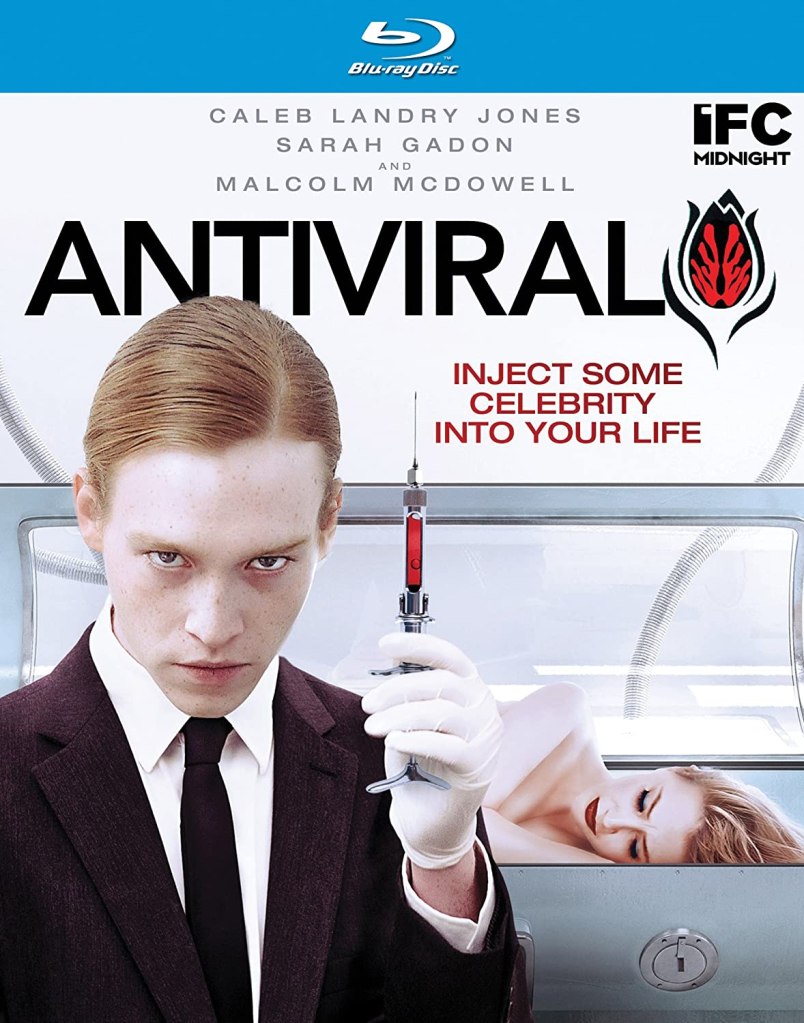
“From the perspective of the virus, the human being is irrelevant” – ANTIVIRAL (Brandon Cronenberg, 2012)

I have in my (admittedly odd) library a title called The In Vitro Meat Cookbook. It has a series of recipes, none of which you can cook yet, because they require as their main ingredient meat grown in the laboratory rather than cut from the quivering corpse of an animal who probably lived her whole life in horrendous conditions. When this lab meat becomes commercially available, it will doubtlessly be great news for the billions of animals who die in terror for our plates each year, but these recipes go beyond the meats you might see at a butcher shop, to such suggested dishes as Dodo Nuggets and Dinosaur Leg and, yes, Celebrity Cubes:

“Forget autographs and posters. Prove that you’re the ultimate fan of a celebrity by eating him or her.”

Pop stars in whiskey glaze. If that isn’t intimate enough, how about “IN VITRO ME”? Yep, it’s grown from your own stem cells, and it’s “best shared with a lover as the ultimate expression of unity”.

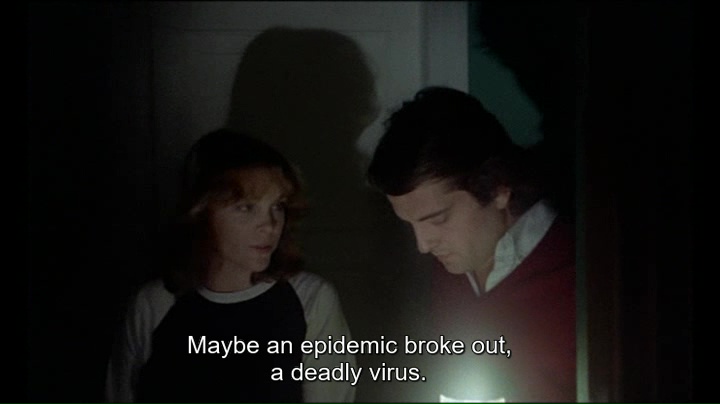
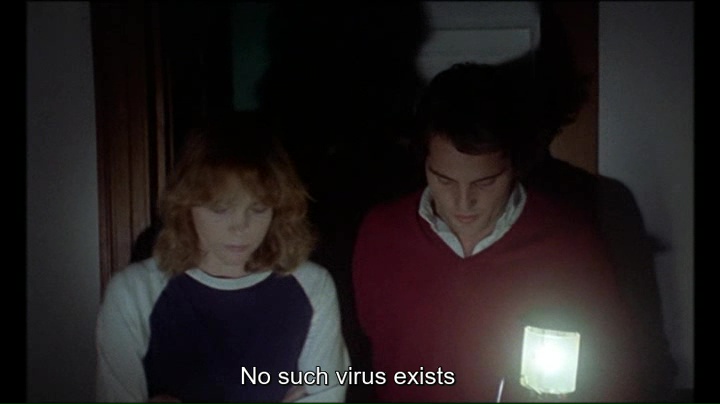
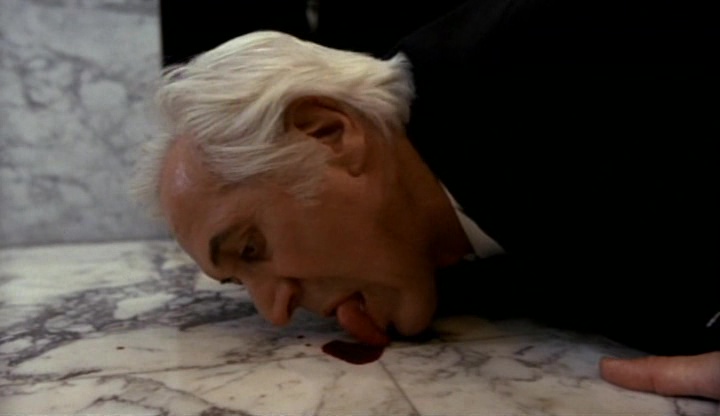
I digress, but it is relevant to this week’s movie. Antiviral is a film even more relevant now than when it was released a decade ago. For a start, the daily news speaks of little else than viruses and antivirals, and when they do turn to other issues, these usually involve celebrities. This film covers both. It is set in an alternative present, where the obsession with celebrities has moved past adulation and stalking (and occasional cannibalism) to a lucrative business – selling their diseases. For a lot of money, you can suffer the same symptoms and weeping, bleeding pustules as your favourite star!

The movie is the first work by Brandon Cronenberg, the son of body-horror pioneer David Cronenberg (The Fly, The Dead Zone, A History of Violence, etc), sometimes known as “the King of Venereal Horror” or “the Baron of Blood”. Quite a legacy to live up to, but Brandon Cronenberg does it brilliantly in this work, which features cannibalism among its panoply of abjection. The imagery is stunning – bleak scenes in monochromes, then a flash of crimson – blood or lipstick. Needles sticking in arms and gums, lumps of meat grown from celebrities and sold to customers desperate for a touch and a taste of their favourite star.


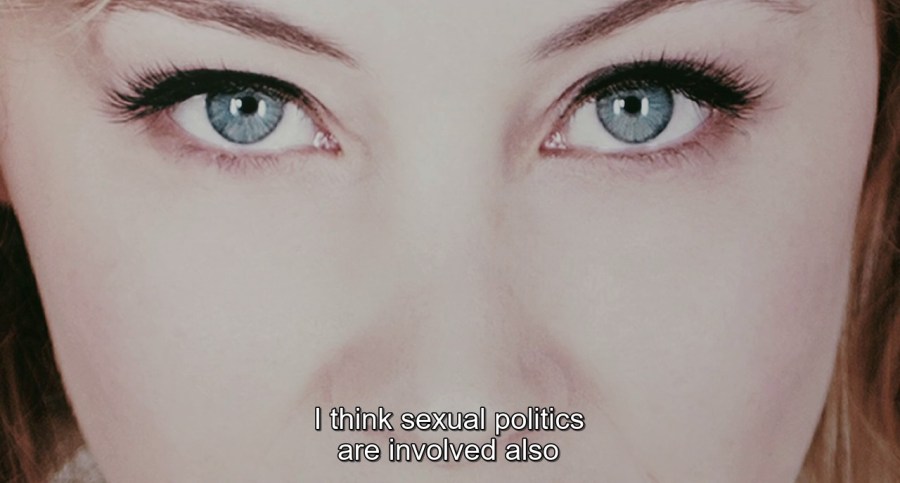
The protagonist of the film is Syd (Caleb Landry Jones from Get Out, Nitram etc), an employee of the Lucas Clinic. Syd sells customers the dream of being close to their favourite celebrity. What does the avid fan do after already seeing all the movies, reading the magazines, collecting the images? In this world, they pay to get the same diseases as the celeb. Syd knows how to sell, he talks a fan into a dose of herpes simplex, collected by his employer from the superstar Hannah Geist, whom he describes as “more than human”. She had the pus-filled blisters on the right of her mouth, so you really want to be infected on the left, because
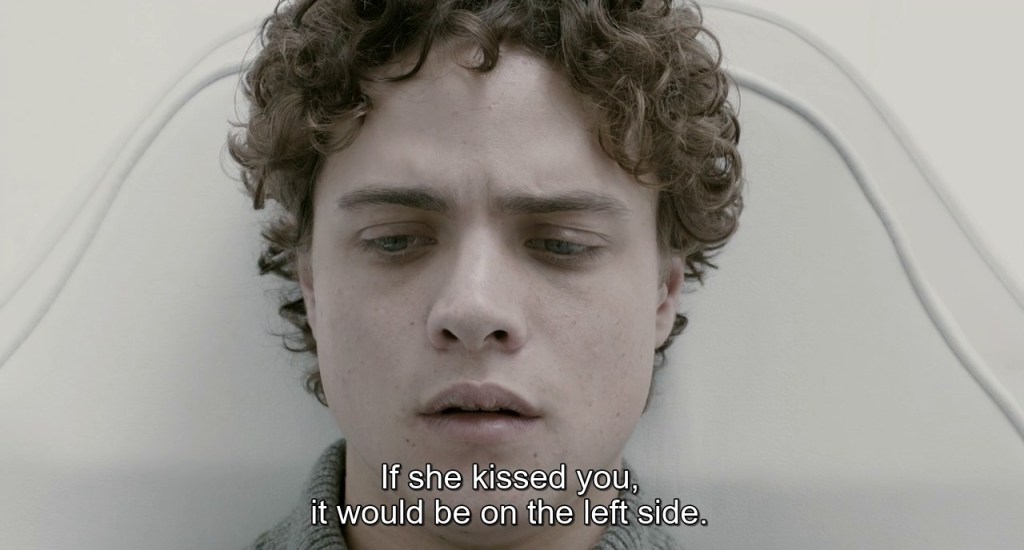
Syd is a trusted employee of Lucas (where the archivist is played by Lara Jean Chorostecki, who played Freddie Lounds in Hannibal!), but he is ambitious, hoping to sell the virus that is killing Hannah on the black market. He takes some of her blood (Lucas Clinic has exclusive rights to Hannah’s diseases) and infects himself, then waits, taking his temperature, doing things with cotton probes that we all now understand.

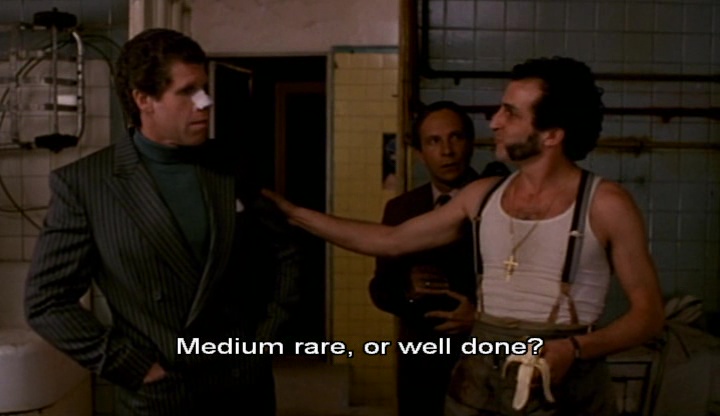
He is hoping to sell the new virus through the specialist butcher Arvid (Joe Pingue), whose business Astral Bodies does a thriving trade in celebrity cell steaks – edible flesh grown from the cells of celebrities.

Syd tells Arvid “I don’t understand how this is not considered cannibalism”. Arvid is more philosophical. What does it mean to be human, he asks – is the human “found in its materials” or is it something more religious, as the law currently tends to assume – a soul perhaps?

“But we’ll see what happens when we go from growing celebrity cell steaks to growing complete celebrity bodies.”
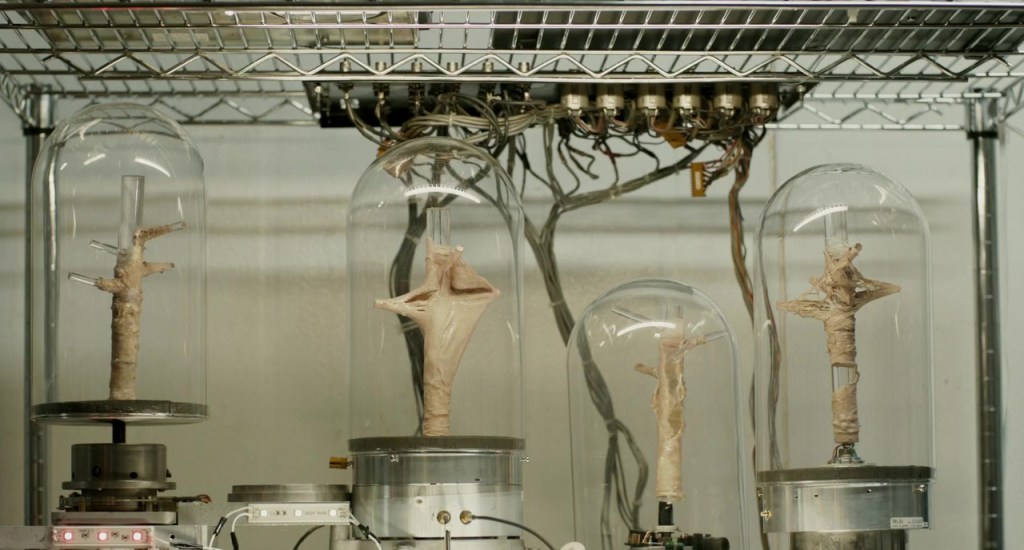
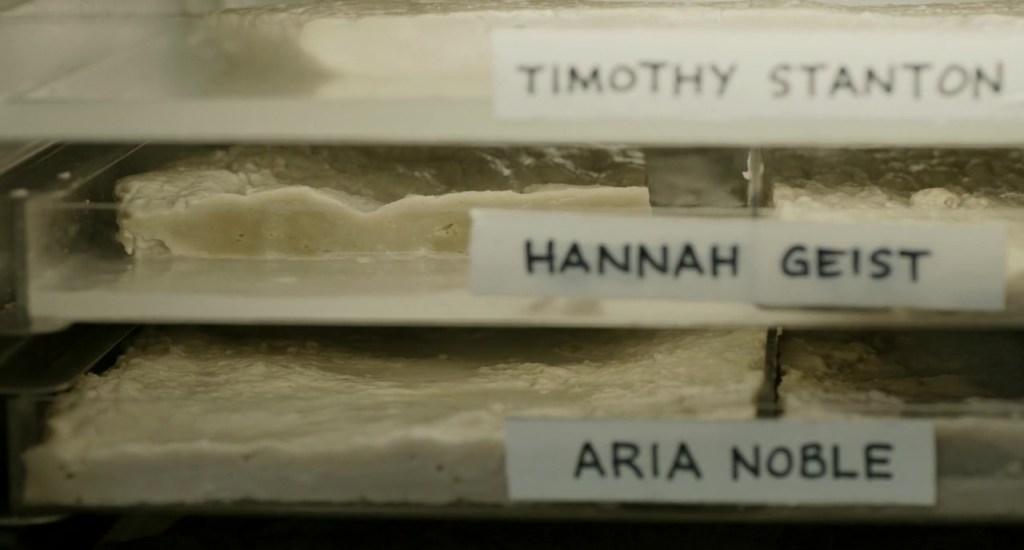
When Hannah’s death is announced, Syd’s diseased blood is suddenly in demand – those who have already eaten Hannah now want to either watch him die the way she did, or buy the virus and die along with her. Syd has to escape the virus coursing through his body, and the various business types who want it.
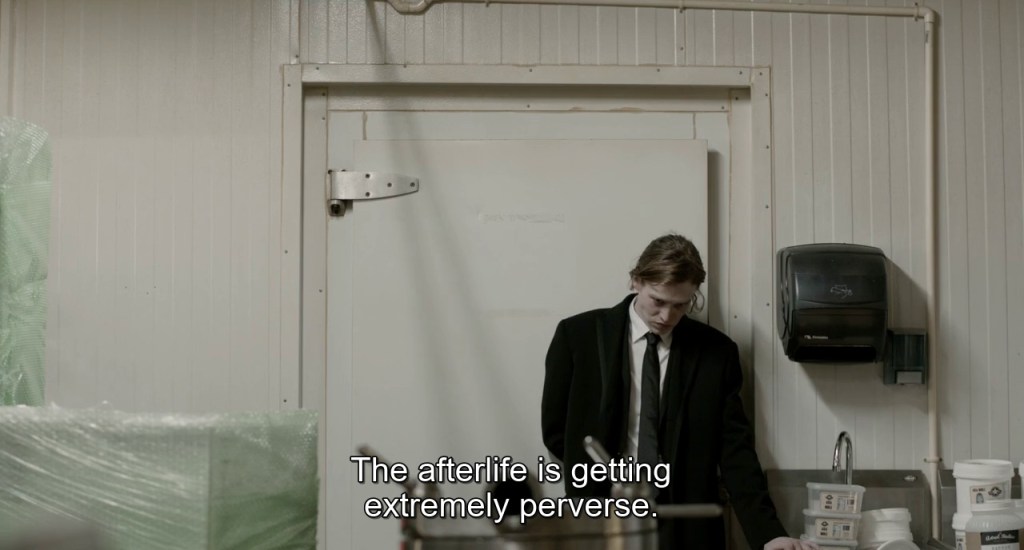
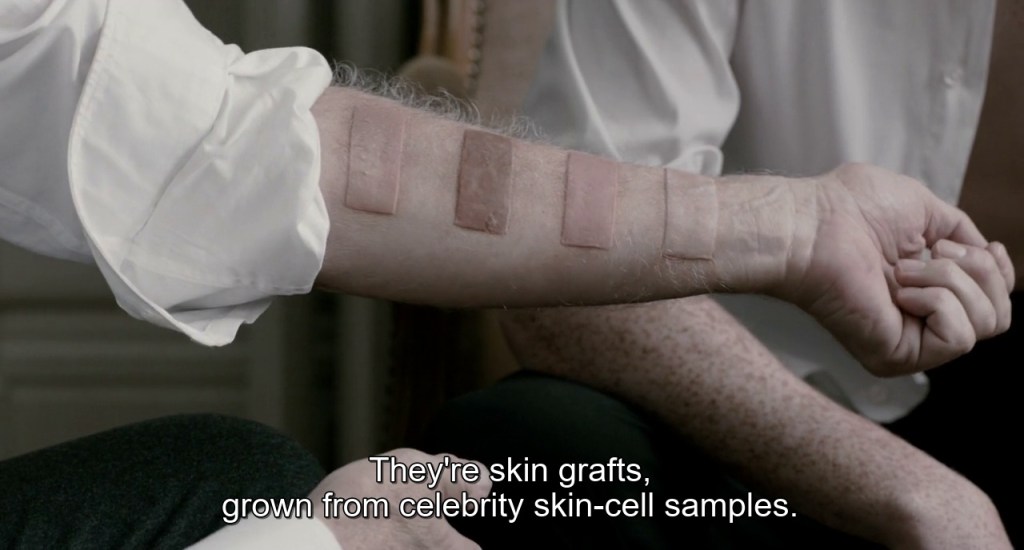
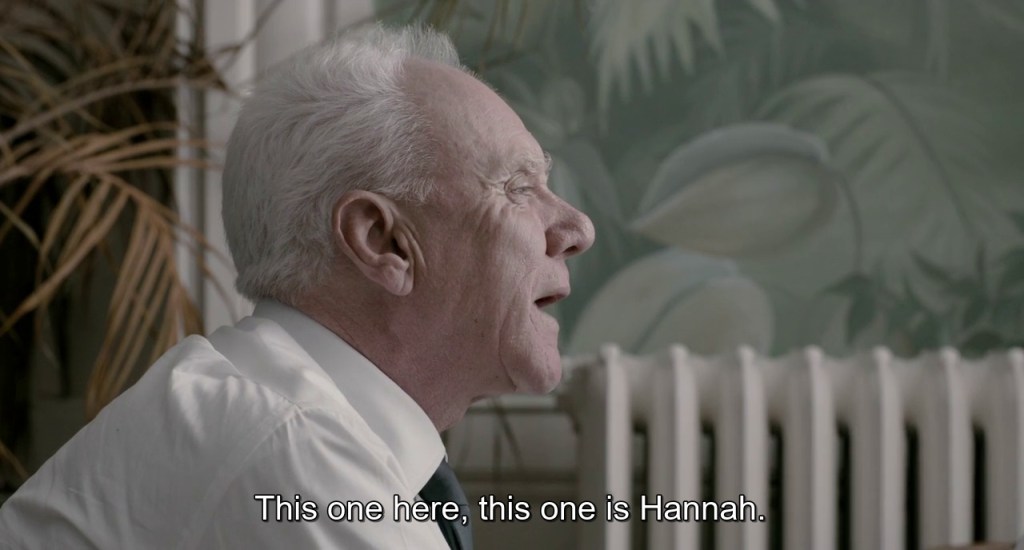
Anything related to a celeb is valuable. Lucas Clinic is even planning to sell ringworms from Hannah’s dog. Or if you don’t want a disease, you can get a skin graft from your favourite celebs, as Hannah’s doctor, Dr Abendroth (played by the magnificent Malcolm McDowell) shows Syd.
What does it mean to “go viral”? This humble blog has gone viral (a very mild, non-toxic one) in that it is viewed thousands of times a month, presumably because wonderful readers like you share it (please?) on social media, or perhaps (socially distanced) word of mouth. But a celebrity who goes viral has his or her impact measured not in the thousands of views but in the millions. Celebrity becomes the message in itself; as the head of Lucas Clinic says, when asked if the current crop of celebs deserve to have the levels of mania surrounding them,

“Anyone who’s famous deserves to be famous. It’s more like a collaboration that we choose to take part in. Celebrities are not people. They’re group hallucinations.”

Hannah’s doctor Abendroth is more metaphysical, musing that

“there is a power, something in the thrall of the collective eye, that can be consumed and appropriated.”

Certainly we devour our celebrities, with the paparazzi as the hunters and the rest of us sitting with a magazine or a tablet and consuming them – think of Marilyn Monroe, Princess Diana, Amy Winehouse, Michael Jackson and many, many more. Unlike most of us mere mortals, the celeb who has gone viral remains consumable after death, perhaps more so. So it is with Hannah.
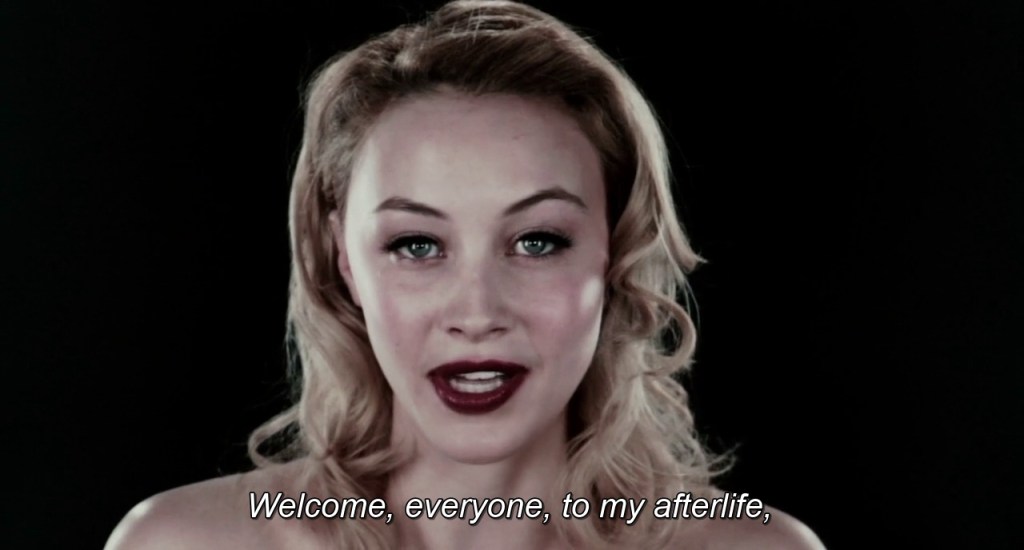
The marketing of Hannah’s “afterlife” expresses the vulnerability of humans, the paragon of animals, to a virus, a type of genetic code so tiny that we are not even agreed on calling them “alive”.

“From the perspective of the virus, the human being is irrelevant. What matters is the system that allows it to function. Skin cells, nerve cells, the right home for the right disease.”
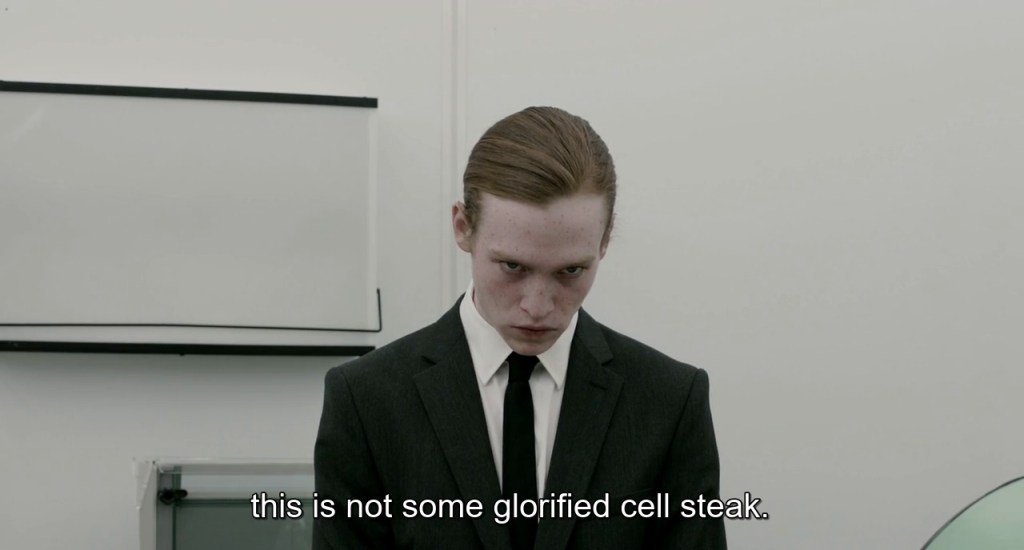
But no spoilers – go get this one out and watch it (if you’re not the squeamish type) – it is well worth it.
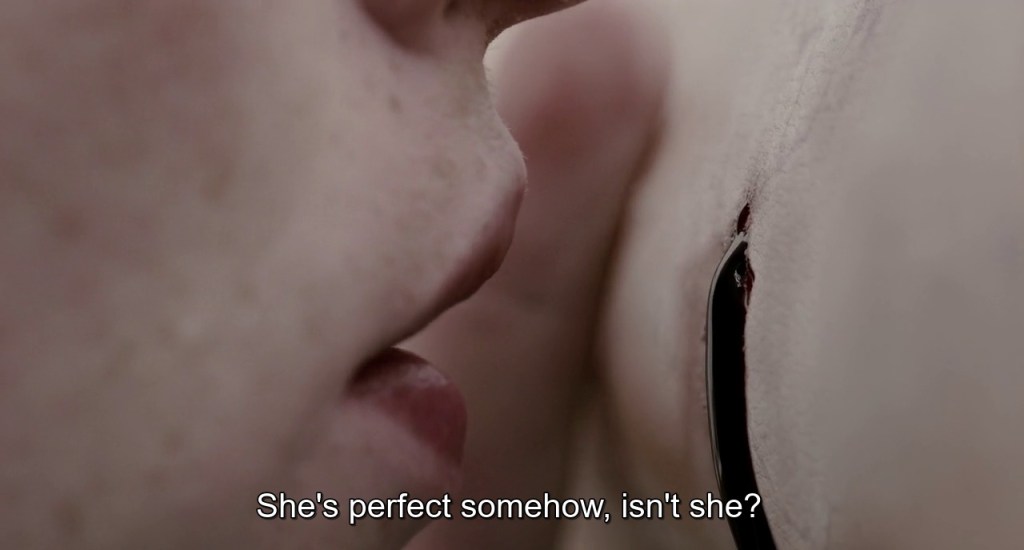
We long for connection. Cronenberg mentioned a moment of inspiration:

“A friend of mine said he was watching Jimmy Kimmell one night and Sarah Michelle Gellar was on the show. She said she was sick and if she sneezed she’d infect the whole audience, and everyone just started cheering.” 

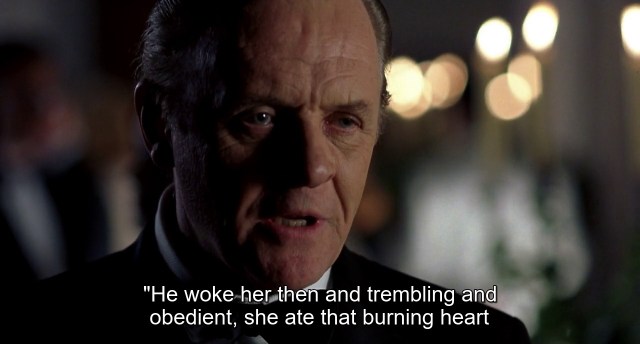
The philosopher Blaise Pascal said that there was, in every human, an “infinite abyss [which] can be filled only with an infinite and immutable object”. He suggested that this infinite and immutable object should be God. Humans are big on eating gods – Dionysus was torn apart and reborn by means of his mother eating his heart, which made her pregnant. Christians eat the Eucharist – the body and blood of Jesus, according to John 6:55-66

“For my flesh is meat indeed, and my blood is drink indeed. He that eateth my flesh, and drinketh my blood, dwelleth in me, and I in him.”

We live vicariously, by eating our gods. But in our culture, the celebrity is god. The viral, consumable, more-than-human celebrity.
What’s your favourite cannibal movie?

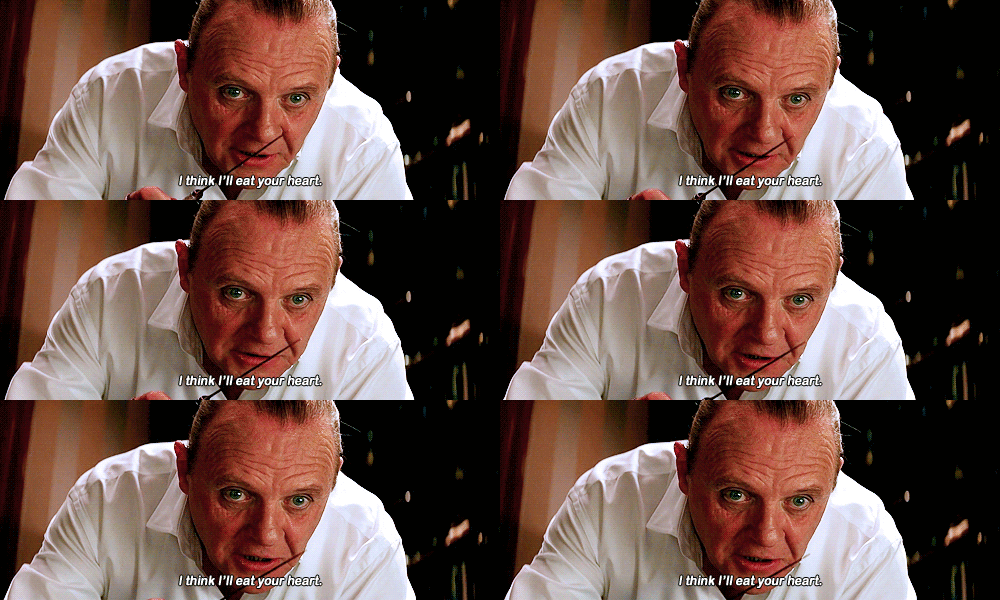
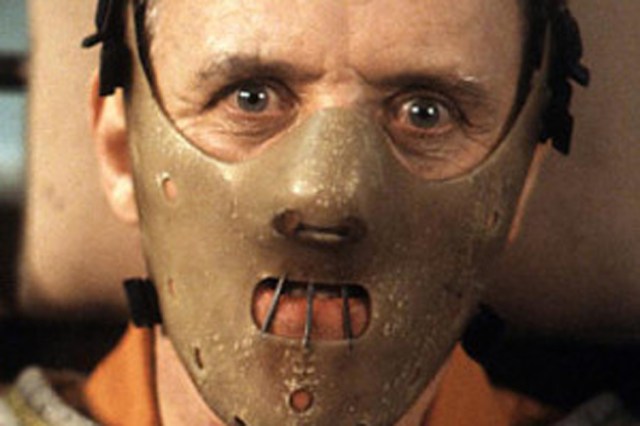
Of all the (sometimes) wonderful cannibal movies and shows I have reviewed in this blog, my personal favourite is still The Silence of the Lambs with Anthony Hopkins as Hannibal the Cannibal. It was the first film I reviewed on this blog (does that mean I liked the others less each time? Not at all), and interestingly, it does not actually feature any cannibalism, although we hear a lot about it.

Fun fact!

So I was pretty chuffed to find that The Silence of the Lambs is the favourite horror movie of the State of Utah, according to the Horrornews.net website. They used information from Rotten Tomatoes and Google Trends, and partnered with Mindnet Analytics, to analyse how interest in horror movies varied in each US state and the District of Columbia (DC). The results are presented on their website:

Best Horror Movies: Which Does Each US State Love Most?

This survey covers all horror, whereas in this blog we concentrate on the cannibal, so please let us know your favourite cannibal film (or TV show, but if it’s a series, your favourite episode) either in the comments at the bottom of the page (after a few suggestions) or at cannibalstudies@gmail.com. I’ll let you know the results.

The “vampire of Hanover” – DEATHMAKER (Der Totmacher, Romuald Karmakar, 1995)

I expected this to be either graphically violent or else painfully dull, but it was neither. It is quite different from any cannibal movie I have reviewed on this blog.

Deathmaker (German: Der Totmacher) is a re-enactment of the transcripts of the interrogation of the serial killer and cannibal Fritz Haarmann who killed and ate parts of at least 24 homeless boys between the end of the Great War in 1918 and his eventual capture and execution in 1924-5.

Haarmann became known as the “Vampire of Hanover” for killing his victims with a “love bite” that went right through their windpipes. He made a living selling the victims’ clothes and flesh (marketed as “pork”) on the black market to grateful customers who were barely surviving the collapse of the German economy after the war.

There are no flashbacks or re-enactments of violent incidents, just three men sitting in a room, and only two of them speak. Imagine it as a play that has been recorded to film. Or think Louis Malle’s My Dinner with Andre mixed with In Treatment. The great German film maker Ulli Lommel had made a re-enactment of Haarmann’s killing spree some twenty years earlier called The Tenderness of Wolves (Die Zärtlichkeit der Wölfe). The two films are a wonderful glimpse into the mind of a cannibal, although the characterisation is so different as to be almost unrecognisable

Almost the whole film is set in one room in an asylum, with psychology professor Ernst Schultze (Jurgen Hentsch) interviewing mass-murderer and cannibal Fritz Haarmann (Götz George, who won best actor at Venice Film Festival for this role) to determine if he is sane, or at least lucid enough to be tried and executed. Except for entrances and exits and the occasional visiting doctor, no other people are present, and the only other member of the cast is the stenographer (Pierre Franckh) – whose notes of the meetings this film used as its script – he is variously terrified, fascinated and sympathetic to Haarmann, all depicted entirely in his face, as he never says a word.

The Director, Romuald Karmakar, is known for producing thoughtful films that often follow perpetrators who are responsible for their own downfall. The professor asks unexpected questions about maths or geology, while Fritz plays the clown, but as the questions close in on his life and sexuality, he becomes more lucid, trying to justify his actions, and trying to win the sympathy of his interrogator. The professor has full control over the hulking Fritz, who is soon describing exactly how he killed the boys and young men during sex, with graphic details of how he dismembered them and disposed of the body parts.

“Took out the bowels. And threw them in a bucket. Dumped them in the toilet. It’s all rumpled up. I cut them up and threw them away.”

Haarmann’s boyfriend, Hans, would acquire the boys, sometimes just because he wanted their clothing, and knew he would get it after Fritz finished with them.

The professor, unlike modern psychs, pours scorn on Fritz, contemptuously condemning his homosexuality and violence and dismissing his claim that he will be allowed into Heaven to meet his mother. Would Haarmann have acted as he did if his homosexuality had been accepted? We can’t know that, but we do know that German laws against homosexuality were made more draconian after Haarmann’s case in 1924.

The boys won’t be able to testify against him to the heavenly judge, Haarmann says, because he caved their heads in, and he demonstrates how he did it, smashing his fist into his hand repeatedly.

He laughs, he boasts, he complains, and eventually he cries as he realises that his rampages, which he at first maintained were not his fault, will surely have him condemned to the guillotine.

The subject of cannibalism is barely mentioned, even though that is about all that Haarmann is remembered for now.

The professor tells him there is plenty of evidence that Fritz fried shrimps in human fat, made bouillon, sausages and brawn

We are told that he stripped the flesh from his victims and sold their clothes, and finally we get a quick reference to “Haarmann’s sausages”, almost as a double entendre joke. The ethical debate between the professor and Fritz is not about cannibalism but about the families who lost their sons, and his response each time is that they were just “joy-boys”.

The basis of exploitation, killing and eating others is objectification. A cow or pig can be “just an animal” and a homeless boy can be “just a joy-boy”. Just words, but powerful enough to allow the most despicable acts, as they strip all moral value from the intended victim. Haarmann claimed he did not remember killing them, they would just be lying next to him, dead, next morning. And of course, once they were dead, they were no longer “just joy-boys” and were instead now just meat. Our ability to objectify does not necessarily stop at the species line.

The film received several awards and nominations from the Deutscher Filmpreis in 1996 including Best Feature Film, Best Direction and Best Actor. Götz George is simply superb in the role, for which he also won the Volpi Cup at the Venice Film Festival. Deathmaker was chosen as Germany’s official submission to the 69th Academy Awards for Best Foreign Language Film, but did not manage to receive a nomination.

It is not a film for everyone, both because of the descriptions of the dismemberment of human bodies, as well as the fact that, if you don’t speak German, following the dialog in subtitles can be wearing for some people. But it is quite brilliant, and if you can’t find it on a streaming service, it is available on DVD. Well worth the effort.

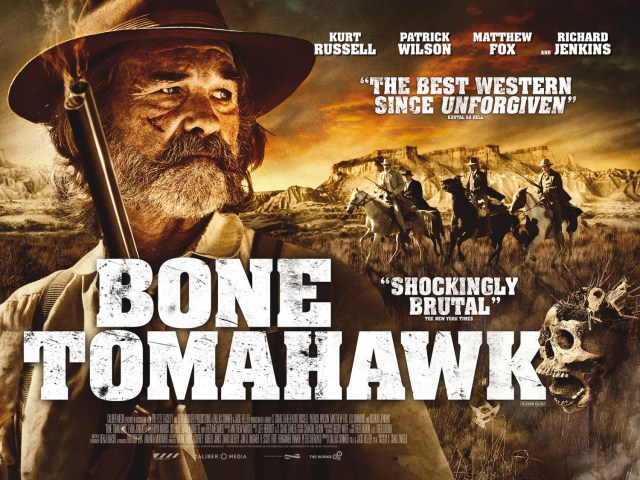
“A spoiled bloodline of inbred animals”: BONE TOMAHAWK (S. Craig Zahler, 2015)

This is a cannibal film, also a Western and a horror movie, so it has something for (almost) everyone. Although a low budget work by a first-time film-maker, the film has been widely recognised for the excellence of the script and direction, and the characterisation by a team of top actors. And the graphic nature of its climax.

Bone Tomahawk is set in a small town in the last days of the Old West, a frontier society held together by a sheriff, Franklin Hunt, played by Kurt Russell (who managed to fit in a starring role in Tarantino’s The Hateful Eight that year as well), with an understated calm and a brooding power. A drifter comes into town and Hunt shoots him when he tries to run from the saloon, necessitating Samantha (Lili Simmons from Banshee), who practices medicine, to treat him in the jail. She, the drifter and a deputy are all abducted during the night – the only evidence is an arrow in the wall, and a dead African-American stable boy. Who could have done that?

We assume ‘Indians’, but a Native American they trust, “the Professor” (Zahn McClarnon, from Longmire and Fargo), tells them these are not the ‘Indians’, or at least the ones with whom the American invaders have been at war. They are a tribe with no name, no language (i.e. less than human). The local Indians call them “troglodytes”, cave dwellers,

The Sheriff, his “back-up deputy” and comic relief, Chicory (Richard Jenkins from Six Feet Under and Shape of Water), the mysterious Indian-fighter Brooder (Matthew Fox from Party of Five and Lost) and Samantha’s husband Arthur (Patrick Wilson from Fargo) with a broken leg that is fast turning gangrenous, set out in pursuit. Most of the film, until the climax when they meet the trogs, is more a road movie than a Western or a cannibal horror film. It’s four cowboys against the elements. On the long ride out to the land of the trogs, they come across two Mexicans and Brooder kills them, suspecting that they are scouts for a bandit gang. Chicory explains,

“Mr Brooder just educated two Mexicans on the meaning of manifest destiny”.

Manifest destiny was a widely held cultural ideology that proposed that the culturally and racially superior American settlers were destined to expand across North America. Inferior, backward, savage peoples were meant to get out of the way, or be exterminated. Even the horses were supposed to be racially intolerant. When the rest of the gang comes in the night and steals their horses, Brooder is incredulous that his horse would allow a Mexican to ride her.

Discrimination, be it racism, speciesism, ageism, ableism or any other, is never all-encompassing. Most racists don’t hate everyone, or at least not equally. The settlers in areas like the old West hated the ‘Indians’ for defending their lands, which the white men wanted. Even in the era when this movie is set, sometime in the late nineteenth century, some Native Americans like the Professor were accepted as, if not equals, at least semi-civilised negotiating partners, while others, who maintained their resistance, were considered bloodthirsty savages, and portrayed as killers, rapists and sometimes cannibals.

In this film, this second group is distilled into a people so inhuman that they do not even have language, which is often the first thing quoted in defining the supposed gulf between humans and other animals. They are accused of raping and killing their mothers and, worse yet, abducting and raping white women, requiring the gallant sacrifice of heroes such as those depicted here. One of the party, Brooder, boasts of having killed more Indians than all the rest of the town put together. When pressed, he admits that not all were men, as Indian women and children can also handle an arrow or a spear, and he tells of losing his mother and sisters to an Indian massacre when he was ten. For Brooder, white vs red, civilised vs savage is no different to good vs evil. He is an absolute racist, but for what he considers good reasons.

Yet even these less-than-human troglodytes are racists – they left the black stable-boy behind, because “they don’t eat Negroes”. No explanation is given, and it makes no sense since, under the skin (of whatever colour) we are all red meat. Yet their refusal to eat black people paints the white supremacism of the others as less vile somehow – look, these brutal savages must be exterminated – and they’re racists too, so it’s OK for us to discriminate against them.

Of course, those we wish to destroy must be dehumanised, vilified, and preferably accused of vile crimes, of which cannibalism usually seems to be the leading contender. But there is little evidence of Native Americans indulging in the flesh of their victims, whereas only fifty years before the demise of the Old West, the Donner Party had tucked into the remains of the members of their party who had died in the bitter winter snows of the Sierra Nevada in 1846-47. When they ran out of corpses, they murdered and ate their Native American guides.

The film is written and directed by S. Craig Zahler who also wrote the music with Jeff Herriott. It is a tour de force, a modern film that manages to bring to life the Western, a genre that, like its heroes, does not ever seem to die. American Frontier scholar Matthew Carter points out that this story is

“informed by one of white America’s oldest and most paranoiac of racist-psychosexual myths: the captivity narrative

In these narratives, civilised society is threatened by an evil outside force, and something precious (usually a woman, seen as a possession) is stolen and must be recovered. In Bone Tomahawk, traditional narratives are challenged to some extent – the women are not passive, Brooder’s prejudice is challenged, the savages are motivated by the drifters desecrating their burial ground. But the heroes are white men, the story is told from their perspective, the fear of the outsider or alien (remember this is only a few years after 9/11) offers a stark binary which equates civilised with good and savage with evil. It is the myth that was used to justify manifest destiny and the genocide of the Native American tribes. The trogs are barely human – they are covered in white mud which disguises their humanity and they have whistles implanted in their throats instead of having voices, so they cannot be engaged in rational discussion. We see a prisoner scalped and then cut open while alive, to establish their monstrosity.

Their own women, we see at the end, are heavily pregnant, blinded and their limbs removed, so they are simply breeding machines for more warriors, a reference, intentional or not, to the way anti-Islamic propaganda depicts Moslem women as blinded by fundamentalist controls and their burqa.

But perhaps the Professor is the most interesting character. In Westerns, there were ‘good Indians’ who were assimilated into the dominant culture, often assisted in spreading ‘civilisation’ (think Tonto in The Lone Ranger).

Then there were the ‘bad Indians’ – the outsiders, vicious and merciless, uninterested in accommodating the invaders on their land, and often (although not always) portrayed as cannibals.

Vietnam vets and cannibals: CANNIBAL APOCALYPSE (Antonio Margheriti, 1980)

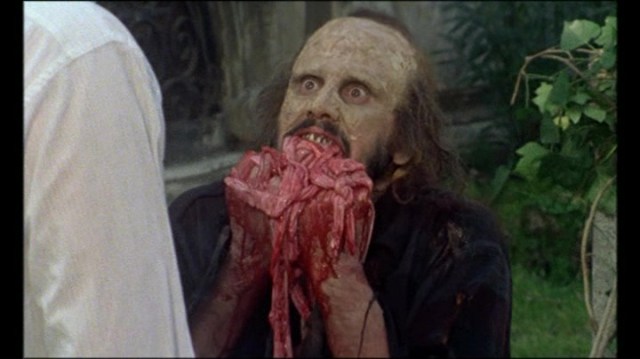
This is one of those horror flicks that’s a bit hard to categorise. It’s an Italian “cannibal boom” film in the tradition of Ruggero Deodato’s classic Cannibal Holocaust which came out the same year, as well as earlier efforts such as Deodato’s Last Cannibal World, Joe D’Amato’s Black Emanuelle films, and the one that started the Italian cannibal boom, Umberto Lenzi’s The Man from Deep River. But Antonio Margheriti, using his alias Anthony M. Dawson, turned the genre on its head. The cannibal boom movies were usually set in the jungle, where tribes of primitive savages killed and ate Western interlopers, who richly deserved their fate. In other words, the archetypal colonialist cannibal story with a post-colonial twist (revenge!)

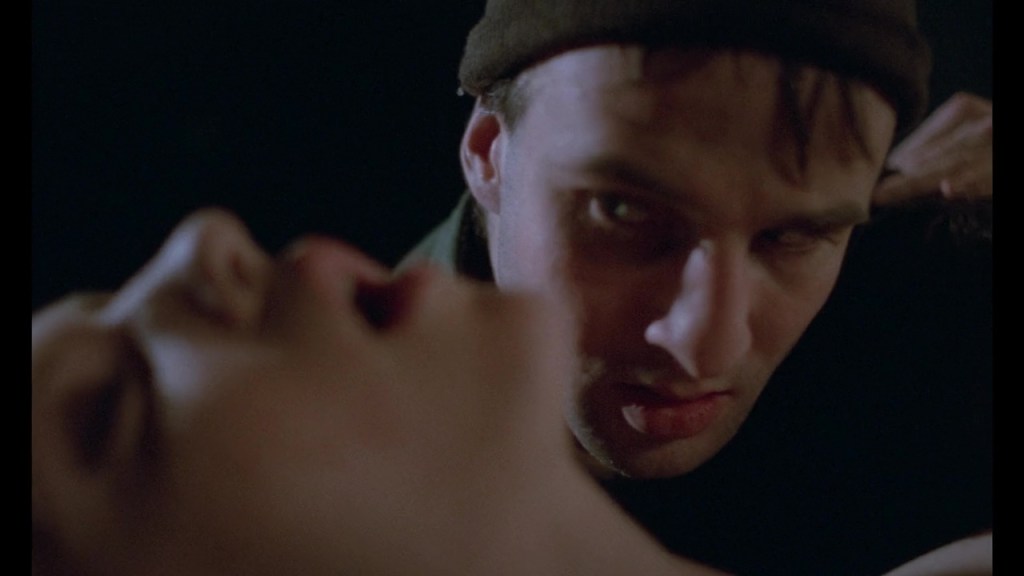
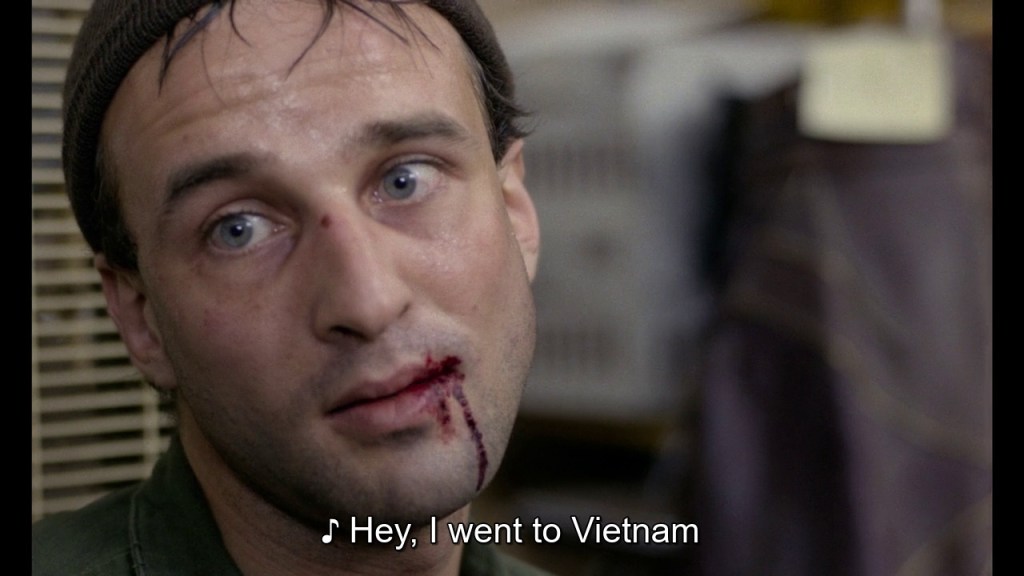
This one starts in the jungle too, but it’s a jungle in Vietnam, and the Western interlopers are American soldiers prosecuting the disastrous and eventually futile Vietnam War. A squad led by super-macho Norman Hopper (John Saxon from Nightmare on Elm Street) lands in a village and torches the place, after getting blown up by a dog (yeah, it gets worse). They find some POWs captured from their squad, Tommy Thompson (Tony King, who is now head of security for the hip-hop group Public Enemy) and Charlie Bukowski – a intertextual reference to the poet Charles Bukowski I guess, although the link seems tenuous. Bukowski (the soldier, not the poet) is played by John Morghen from Cannibal Ferox, an actor who pretty much always dies horribly in every movie he’s been in, and this is no exception.

They have somehow caught a virus (?) which makes them crave human flesh. That makes it sound more like a zombie movie than a cannibal one (think 28 Days Later), but let’s give it a cannibal pass by referencing the Wendigo films like Ravenous or Eater. Or you could claim, as the doctor says to Norman, it’s a “form of rabies.”

No, it isn’t. He really should have gone with Wendigo, a mythical figure – giant, fierce and cannibalistic, who gathers strength from feeding on human flesh, but the flesh makes him grow larger, and so his appetite can never be satisfied. He is sometimes protective (like Norman), and sometimes a figure of revenge (like Charlie and Tommy). The Wendigo gets inside people who are weak, hungry, or filled with rage.

Anyway, the squad is using flamethrowers to fight the Vietcong (and their women and small children) and one burning woman falls into the pit where the POWs are confined, making for a cooked meal. No home delivery jokes please.

Back in the States, Norman is having nightmares of being bitten by the POWs as he rescued them from their meaty pit. He realises something is wrong with him (the virus from getting bitten maybe?) and stares in horror and fascination at a bleeding lump of flesh in the fridge. Why is there flesh left to bleed in the fridge – isn’t that a health hazard?

One of the rescued POWs, Bukowski, suddenly phones him – he’s on day release from the “Hospital for Nervous Disorders”, or what the cops call a “loony bin”. Norman can’t meet him because the teenage neighbour is lasciviously pointing a hairdryer at him, and he is drawn to her lower regions, but for someone infected with the cannibal virus, ‘eating her out’ means something different to what she expects. She drops by later to tell him that she enjoyed being bitten. What do you know.

Meanwhile, Charlie has gone to see a war movie, as you do when you’re been treated for months for severe PTSD. It’s Umberto Lenzi’s From Hell to Victory, a lovely in-joke among amici, with lots of explosions and deaths. But no one is watching the war.

In front of him, a couple are doing oral things – exchanging saliva and sucking on boobs, erotic cannibalism, but Charlie joins in by taking a healthy bite of the girl’s neck as she leans back in her seat. He runs, there’s a shootout, he kills and eats a bikie and a security guard – it’s all downhill from here. The Atlanta police chief wants to know about him, not his name (despite it’s fascinating intertextuality):

Is he a subversive, a queer, a black, a commie, or a Moslim fanatic?

No, he’s a clean cut all-American (Italian) Vietnam vet, who wants to eat people.

Lots of people get bitten or scratched – a cop, a nurse, who then bites off the doctor’s tongue, and of course there’s that wanton teenager from next door (what horror film would be complete without promiscuous teenagers?), who was infected by Norman’s bite, even though he thought he could overcome the craving for meat.

Point is, they all have the cannibal virus, and the cannibals end up in the sewers (apparently hoping to hoof it to the airport and hop on a flight back to Vietnam), where they are chased by men with guns and flamethrowers; it’s really just like Nam, but now they have become the enemy.

The movie was one of 39 films to be prosecuted in Britain during the 80s as a ‘video nasty’. The acting sometimes leaves a little to be desired, but the main characters, Saxon and Morghen, are great. The special effects are by the legendary Giannetto De Rossi and are, like most of his work, spectacularly abject. The music is a mix of elevator and disco, creating what TV Tropes calls “soundtrack dissonance” – it’s either disturbing or just annoying, I’ll leave that up to you to decide.

In his commentary on the film, the director Antonio Margheriti proudly states that this film was Quentin Tarantino’s favourite of his movies. Tarantino referenced the film a couple of times: in Inglourious Basterds, Donnie Donowitz uses an alias “Antonio Margheriti”, while in Once Upon a Time in Hollywood, Leonardo DiCaprio character goes to Italy in 1969 to star in Spaghetti Westerns and also one Bond-type spy thriller supposedly directed by Margheriti titled Operazione Dyn-o-mite.

But video nasty or not, Cannibal Apocalypse has some interesting things to say about the fallacies and phalluses of war and cannibalism. The cannibal virus comes back to the USA with Vietnam veterans, a group who were sent to fight a vicious and often brutal war, often against civilians, and returned to abuse or neglect, with far more veterans dying from suicide than died in that war. They also brought back with them, on top of their trauma, exotic diseases, drug habits, and acute psychological damage. Many went as conscripts, and came back as severely damaged killing machines, metaphorically lusting for human flesh and spreading the anger and violence to all those near to them. It’s happened over and over in every war – a culture of killing leads to a spiral of violence. Even when you think the nightmare is over and all the cannibals dead, there’s still the teenager and her little brother to consider (hey, it’s been over forty years – where is the sequel this seems to promise?)

Probably not.

The drive to kill and to eat flesh are closely linked in human history. Consider the words of Isaac Bashevis Singer in the forward to the book Vegetarianism, a Way of Life, by Dudley Giehl:

As long as human beings will go on shedding the blood of animals, there will never be any peace…

If you think Cannibal Apocalypse sounds interesting but you’re short of time, most of the good (gory) bits are covered fully in the review by Mike Bracken, AKA The Horror Geek (@horrorgeek). Mike’s vodcasts are always very entertaining, but this review had me guffawing out loud, which is a bit weird when you’re watching with headphones, in apparent silence, and pretending to be writing an academic thesis. In fact, Mike’s review is much better than the film, IMHO.

Eat your heart (ETC) out: ANTROPOPHAGUS (Joe D’Amato, 1980)

Joe D’Amato was a prolific director of around 200 films in a wide range of genres, but is best known for his horror and erotic ones. Antropophagus is not one of his ‘best’ (if that word even means anything in these genres) but has developed a cult following in the forty years since its release. D’Amato did not make many cannibal films for some reason – we have previously reviewed his Black Emanuelle film Emanuelle and the Last Cannibals, and we still need to look at (eventually) a few more including Emanuelle’s Revenge, Papaya Love Goddess of the Cannibals, Beyond the Darkness, Orgasmo Nero and the sequel to this one, directed under the pseudonym Peter Newton, Antropophagus II. Looks like we’re going to be here for a while, folks!

Joe D’Amato’s cameo appearance in the Athens cable-car scene

The lost travellers encountering savage or insane cannibals is one of the favourite tropes of cannibal stories. Odysseus and his men getting gobbled up by the Cyclops would be an early version (assuming a guy with only one eye in the middle of his head and a god-father is “human” which is pretty important for the definition of cannibalism). But ancient tales loved to dwell on the semi-human monsters outside civilisation eating unwary travellers, as did the lurid tales told by explorers and missionaries in colonial times. Robinson Crusoe is part of the tradition, although he was on his own until he met Friday (whom he saved from, yep, cannibals).

In films, the defining moment for sexed up teens in faulty cars getting slaughtered and eaten by crazed cannibals was Tobe Hooper’s The Texas Chain Saw Massacre in 1974, where the cannibals were rust-belt hillbillies killing tourists to replace the closure of the slaughterhouses and loss of their usual victims, and The Hills Have Eyes where the cannibals were mutants created by atomic testing in the desert. The killers got progressively weirder with such offerings as Wrong Turn which was sort of Deliverance with a meat department, but the prize for weirdest demented cannibal probably goes to this one: Antropophagus.

Instead of driving around or breaking down in dodgy areas of derelict states to run into cannibal tribes, this lot are touring the Greek Islands on a yacht. Well, if you’re going to get killed and eaten, do it in style. We start off with a couple of German tourists relaxing on probably the most uncomfortable beach you’ve ever seen, the girl going for a swim because apparently Jaws hadn’t been released in Germany five years before this movie was made?

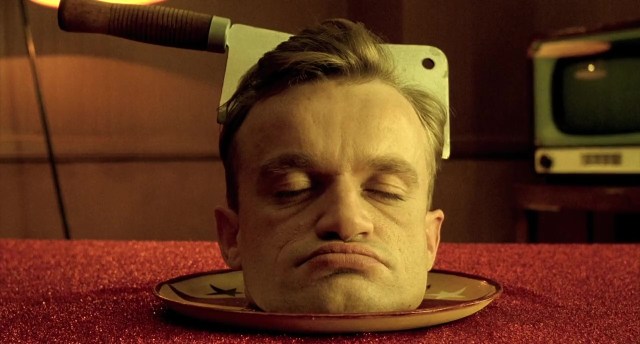
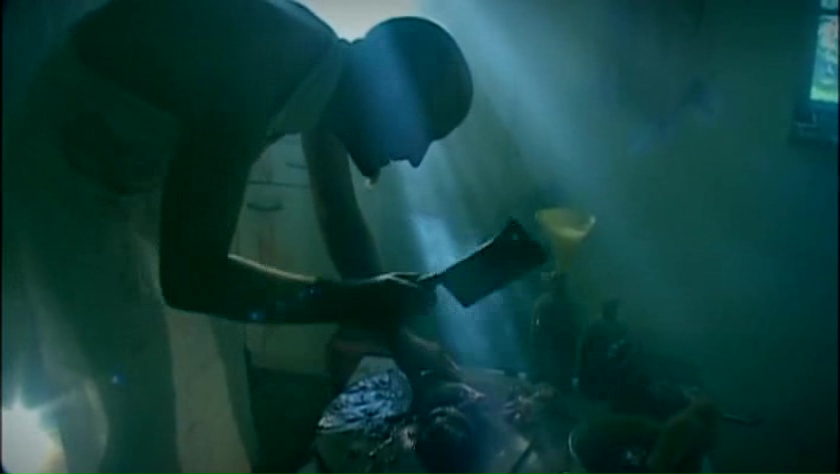
Her boyfriend, relaxing on some sharp lava, has a rude awakening involving a meat cleaver through his head.

We immediately switch to our jetsetting tourists on a cable car in Athens. One of the tourists is heavily pregnant, so sailing around the islands is an even weirder choice when you think about it, and leads to the most famous cannibal scene involving a fetus in any movie (not many directors other than D’Amato have dreamed of getting away with anything like that).

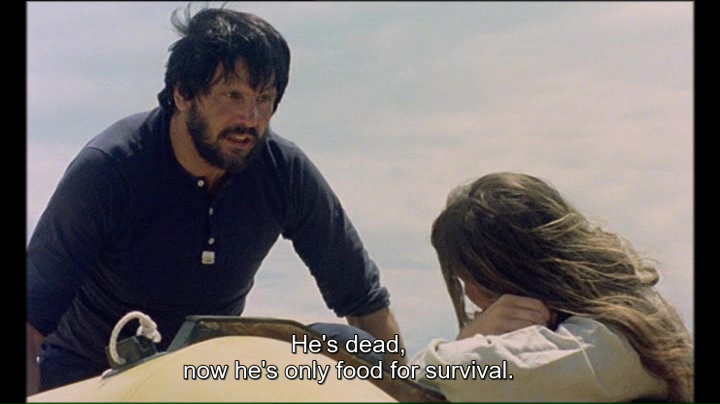
Antropophagus was written by D’Amato and George Eastman (born Luigi Montefiori), the incredibly tall villain of heaps of Italian B-movies and Spaghetti Westerns as well as several of D’Amato’s other movies. In this one, Eastman plays the slasher, who (it turns out from a journal he left lying around on the island) was driven mad when he and his family were shipwrecked and he ended up eating the wife and child to survive. So now he kills and eats people who come to his island. Everyone needs a hobby. And the role of the cannibal has always been to explore the limits of humanity, and the extremes of inhumanity.

Look, it’s a slasher, and they are not to everyone’s taste, in fact a version of the film without most of the gore was released in the US and UK under the title The Grim Reaper. The acting is pretty awful, ranging from wooden to way over the top. But D’Amato was a talented director (as well as prolific) and the scenes of Athens including the changing of the Guard at the Tomb of the Unknown Soldier, and the Greek Islands, are glorious, and accompanied by suitably cheerful bouzouki music.

The team head for an island which turns out to be ‘almost’ deserted (because everyone’s dead of course). They can’t understand it and ask, forty years too early:

Well, they’ll laugh about that one when they tell the story to their grandkids in 2020 or so. The “final girl” (there’s usually a final girl who survives the slasher) is played by Tisa Farrow, little sister of Mia Farrow, and daughter of Maureen O’Sullivan. Quite a lineage. She’s supposed to be there to look after a blind girl, who doesn’t know where her parents are, but can still tell when the antropophagus is lurking.

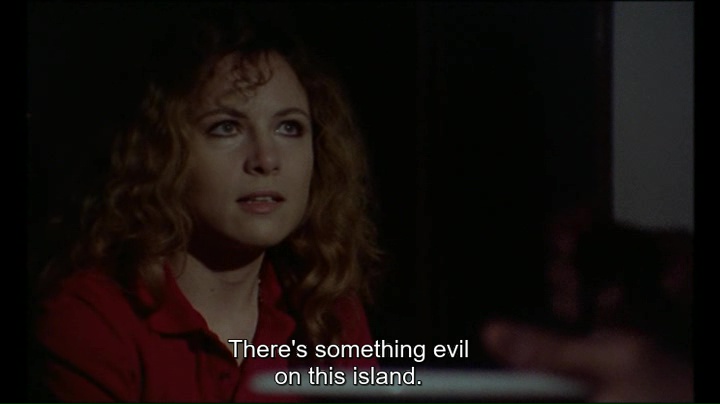
The middle section of the film follows the mystified tourists as they explore an apparently deserted town on a remote island, but it’s not really dull, more atmospheric, establishing the existence of evil, a malevolent presence that smells of blood.

Besides the blind girl with the supernose who can smell blood (but can’t apparently smell a room full of corpses), there is Carol (Zora Kerova from Cannibal Ferox) who can read Tarot cards and sense evil vibes.

There’s an electrical storm worthy of King Lear. A scene in a cemetery (of course). A mysterious woman who leaves threatening messages. A blind girl who attacks them with a knife. A whole lot of rooms full of bodies, which surprisingly are discovered by pulling off their shrouds rather than by smelling their decomposition. A seemingly inexhaustible packet of Marlboro (product placement maybe?) A lot of pointless relationship arguments. But, if you’ve bought a ticket to see the gore, then as one critic wrote on IMDB,

“The movie starts with a brutal meat cleaver scene then becomes very slow n downright tedious. The last twenty mins contains the two nasty scenes coz of which this film earned the video nasty label.”

I liked the way the violence is mostly presented from the point of view of the cannibal, rather than the victim. At the beginning we see forward movement, drops of blood, a meat cleaver. Later there is a view of the boat through metal palings and some guttural breathing. When one of the men has his throat torn out, we see the throat, before we finally see the antropophagus with his bloody mouth, bad haircut and poor dental hygiene, but that’s already fifty minutes into the film.

So the scenes of the “normal” people are intentionally dull – there’s pretty scenery, with the occasional interruption for carnage and slaughter. Something for everyone. Makes a nice contrast with the depraved cannibal, who we eventually find out (by flashback!) was a shipwreck survivor and accidentally killed his wife when she wouldn’t let him eat their dead son. Domestic cannibal in domestic dispute.

So – the famous last twenty minutes. Pregnant lady is found by her pretty useless husband in a crypt where rats with red eyes (hungover? Late flight?) are eating corpses.

The antropophagus stabs the guy, who dies slowly enough to watch him pull the fetus from her body and, yep, eat it (turns out it was a skinned rabbit, as if that makes us feel better).

Then in the climax, he gets disembowelled with a pickaxe, and in the last moments of the film, starts to chew on his own intestines.

Yep, both of those scenes were left out of The Grim Reaper. The full film is still banned in England according to The Horror Geek, because they thought it was a real fetus. Read Wikipedia before making censorship decisions, guys!

Antropophagus is available in Blu-ray from Amazon, or the full movie is (or was when I checked) on YouTube – but has Czech subtitles, which some may find distracting. Or you might learn some Czech, and you never know when that may prove useful.

If you can’t / don’t want to watch the whole movie, you can get a comprehensive and extremely funny summary together with some priceless Gilligan’s Island references on the YouTube site of the Horror Geek. Highly recommended.

“This thirst is consuming me”: CRONOS (Guillermo del Toro, 1993)

Cronos is the first feature film of Guillermo del Toro, better known for his later mind-bending fantasies Pan’s Labyrinth and The Shape of Water. Del Toro was originally chosen by Peter Jackson to direct The Hobbit trilogy, but couldn’t do it, due to extended delays. So he’s a top tier director, an auteur, as the French say. He was only 29 when he made Cronos, yet it has been hailed as one of the greatest horror films and one of the best Spanish language films, and has a rating of 91% “fresh” on Rotten Tomatoes. Empire Magazine called it a “unique, terrifying mini-masterpiece.”
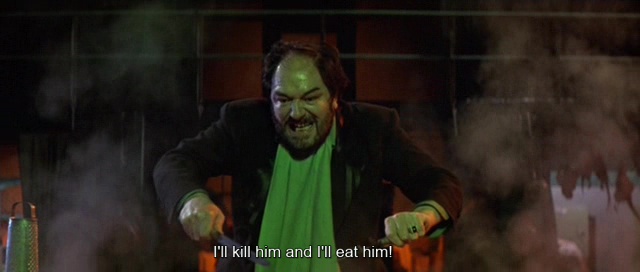
At this point I need to admit that it is less a cannibal film than a vampire one. Now I have nothing against vampires, some of my best friends are vampires (probably), but a cannibal should really be alive rather than undead, IMHO. This one is so good, though, that I’m giving it a run on the cannibal blog. Apologies to the cannibal purists.

There is also a link to #cannibalism, because the undertaker (yes, even immortals sometimes need undertakers) is Tito (Daniel Giménez Cacho), in a prequel role for the great cannibal movie We Are What We Are, in which he was the coroner who found a finger in the dad’s stomach. You’d have to watch it – it’s worth it.

Anyway. Gothic movies usually start off a few centuries in the past, because old magic is just – better. This one has a 14th century alchemist inventing a device which looks like a Faberge egg with claws. The device sticks its claws into whomever happens to pick it up and an insect inside (species yet to be determined) injects something (IDK – vitamin C? Testosterone?) which makes the person immortal. Centuries later – in the present – an earthquake reveals the dead alchemist. Well, he was immortal, but the earthquake caused a stake to pierce his heart, which is not ideal if you’re a vampire (or anyone else really). The egg is in a statue of an archangel, which is the first of a string of religious symbols (hey, it’s Spanish, OK?)
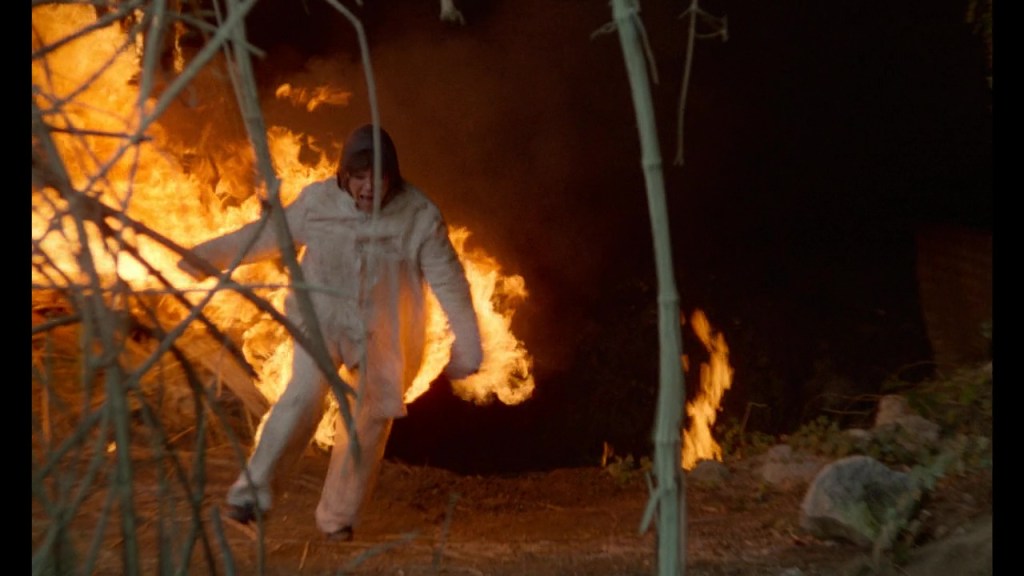
The statue ends up with antique dealer, Jesús Gris (played by the wonderful Federico Luppi who was one of Guillermo del Toro ‘s favourite actors and was also in The Devil’s Backbone and Pan’s Labyrinth). Gris and his granddaughter Aurora (Tamara Shanath) extract the egg, wind it up and it plunges its stingers into him.

There’s some blood and pain, sure, but he finds he is getting younger, and heals much faster. You laugh a little, you cry a little, but then there’s another problem – he develops a longing for human blood.

There’s also a dying businessman (Claudio Brook, The Exterminating Angel and several other films of Luis Bunuel) who really wants the Cronos Device. His American nephew (Ron Perlman, Hellboy and Sons of Anarchy) is brought in to seek out the device by any means necessary (some of which are quite nasty). He puts up with his uncle, because he is named in the will, but wait, if uncle is immortal…

What would you do to defeat death, to live forever?

As Roger Ebert observed, there are some real religious issues explored here – the battle of good and evil, love (for Gris’ wife and granddaughter) being more powerful than greed, and particularly the unshakeable belief in divine afterlife. What happens to that hope if you never die? And what if that extended life requires eating flesh and drinking blood? Would you risk hell to avoid going to heaven? When little Aurora cuts her hand, Jesus has to decide if his thirst is really worth drinking his granddaughter’s blood.

Of course, that assumes that drinking blood is somehow essentially evil. Tell that to a mosquito.

Jesus Gris is, like any good vampire, likely to start smoking ominously if he finds himself in the sunshine. But can his goodness overcome the vamp issues? Well he dies and comes back to life, reborn in a glowing white skin, he takes many savage beatings, saying that he can handle the pain, then he smashes the egg, declaring

Jesus Gris – translates to English as “the Grey Jesus”. He is the suffering servant, who died and came back to life. There is a lot of that in Spanish films, but this one has an added twist:

Yes, he wants blood. Could that be a backhander to the Church? Religion can motivate good deeds, or suck the blood of the devotees. The Eucharist is all about transubstantiation – the wine and wafer are believed (by some) to be literally the blood and body of Christ. Hannibal is full of it, particularly the resurrection of Mason Verger and his attempt to eat Hannibal. It’s the eternal paradox.

Cronos won the grand prize in the Critics’ Week at the 1993 Cannes Film Festival, and nine Mexican Academy Awards, including best picture and director. It has an enviable 91% “fresh” on the Rotten Tomatoes website. The Criterion Blu-ray edition is available at Amazon. The soundtrack is superb, by the acclaimed Mexican composer Javier Álvarez. Highly recommended.

NEXT WEEK: One of the most controversial cannibal films of all time: Joe D’Amato’s Antropophagus.

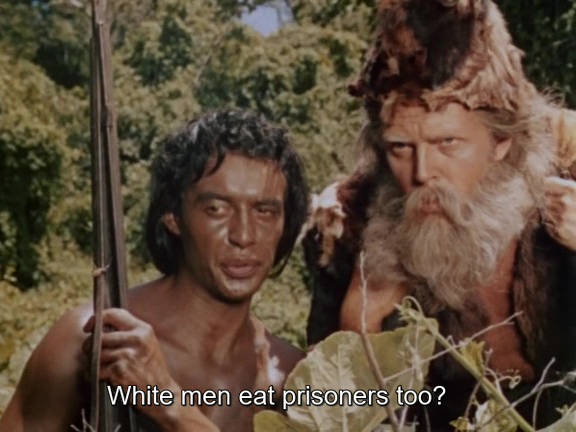
It is said they eat the dead: THE 13th WARRIOR (John McTiernan, 1999)

This film should have been a corker. It has a good pedigree – it is based on the novel Eaters of the Dead by Michael Crichton (Jurassic Park, ER, Westworld, Coma, etc, etc – the man was a prolific author of books and films and TV series). The story is based on Beowulf, one of the great classics of Old English literature. It was directed by one of the doyens of thriller films John McTiernan (Predator, Die Hard, Hunt for Red October, Last Action Hero) and final edits and extra shots were done by Crichton himself. It starred such luminaries as Antonio Banderas and (briefly) the late, great Omar Sharif.

But it bombed at the Box Office, big time, reputedly losing $100,000,000. Omar Sharif was so disgusted by the final output that he quit acting for a few years, calling it “a film so bad that it is not even worth exploring”. Nonetheless, explore it we shall, because, you know, it has cannibals. If you’re interested in what went wrong, Collider has a thorough and forensic dissection.

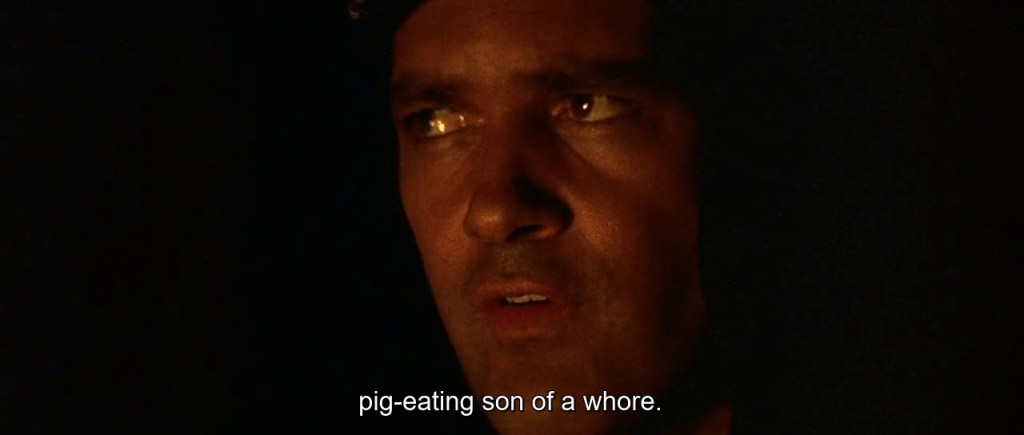
The story centres around Ahmad ibn Fadlan (Banderas), an actual historical figure – he was a Moslem travel writer from the tenth century. He gets exiled from Baghdad for fancying the wrong woman (the king’s wife) and ends up among the Vikings, who find him pretty funny, because he keeps telling them he’s not a warrior, which is rather important to Vikings. Anyway, a Viking boy appears from another kingdom telling of an ancient evil that even the bravest warriors dare not face, so of course they really, really want to go and face it, but their resident soothsayer says sooth, they need a 13th warrior, and, to make it interesting, he can’t be a Viking. So Ahmad becomes the thirteenth, thus the title. He learns their language by listening to them, proving, in his grasp of vocabulary, the superiority of the civilised man.

After this, their language somehow morphs into accented English, since audiences do not want to spend an action movie reading subtitles.

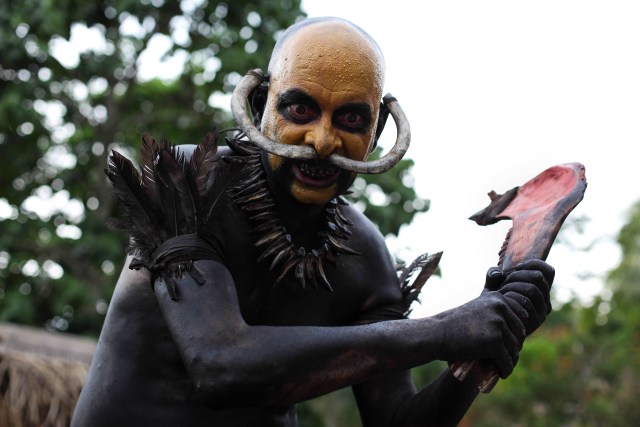
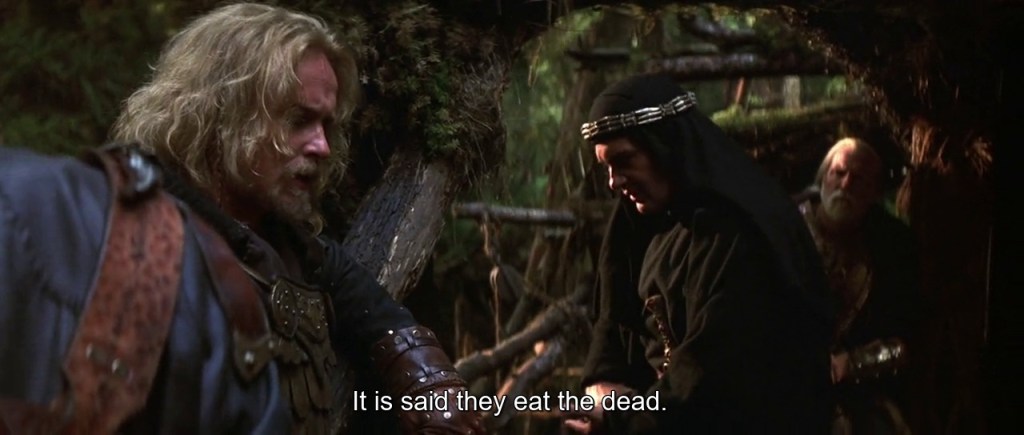
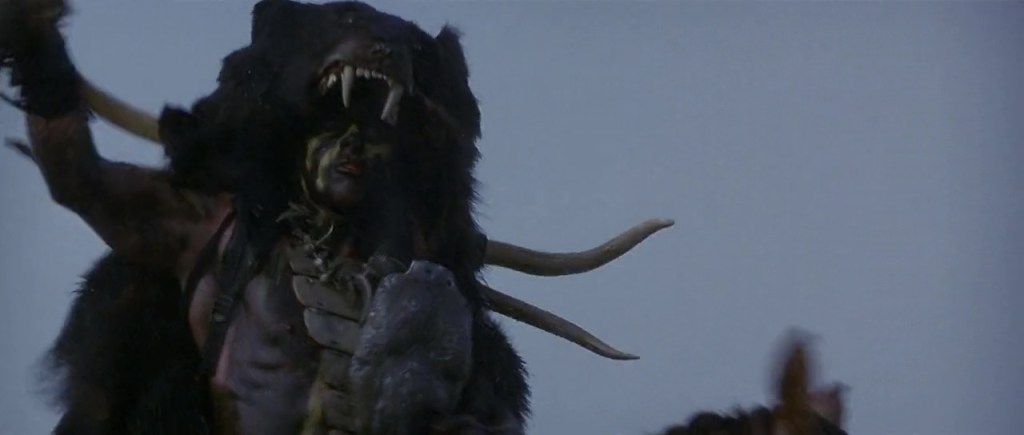
Anyway, (spoiler alert) they eventually find that the Wendols (sounds like Grendel from Beowulf, doesn’t it) are cannibals clothed to look like bears; they live like bears, and consider themselves bears. With teeth like a lion, but that’s OK, because good monsters are usually some sort of hybrid. But these are also human, -ish, bit like orcs. Dark skin, by coincidence, useful to tell the difference from the very Aryan Norsemen.

These dudes gnaw on their victims, and take the heads home to mother, whose calling card is an ancient fertility statue. Some humans prefer to eat legs, some breasts; these guys’ mum likes heads.

In the book, they turn out to be Neanderthals, but the movie does not go into detail of their species (just as well, because if they aren’t sapiens, they can’t so easily be accused of cannibalism). Of course, like Beowulf, the mother is the chief monster, and the Vikings are told they have to kill her. Their crazy old Völva (a much more appropriate name for a seer) tells them to find her under the earth – in a cave, like a bear.

So, the big plot point is that the mother of the Wendols eats people. So do the kids, but she is cannibal number one. She is what Barbara Creed calls

“the archaic mother… the parthenogenetic mother, the mother as primordial abyss.”

Our mother, who carries us, can seem, in what Freud called our infantile oral-sadistic or cannibalistic phase, just as easily able to reincorporate us. The archaic mother also has, or may appear to have, a phallus – in this movie, it’s a bear claw dipped in poison. Not a lot of use against a Viking broadsword, but she gives it a shot.

Roger Ebert said in his review “With a budget said to be more than $100 million, it displays a lot of cash on the screen, but little thought” and suggested it was designed just to showcase the special effects, with the story “shoehorned” in whenever there was a pause in the action.

Rotten Tomatoes gave it a measly 33% rating, and Time Out said “At its best, this achieves the beauty and grandeur of a Kurosawa epic – at its worst, however, it feels like a Python remake of The Vikings.”

There are some real political problems, not least that Banderas is a Spanish actor playing an Arab, which sounds a bit like Hollywood saying “they’re both not quite white, so that’s all right.” The bad guys are pretty black, and the good guys very white (you know, Viking). The big climax, the battle with the mother, is over in seconds, as is a second climax that got added probably as a filler, with her son in his QAnon horns (still trying to figure out why a bear with lion teeth has horns). Other plot points also fizzle out without much resolution.

When we get that hat and bear mask off, the chief dude is clearly painted like a savage. Lucky the white dudes were there to kill him.

QAnon Shaman: 'I regret entering that building with every fibre of my body'  - BBC News
Where are the Vikings when you need them?

Beowulf of course killed Grendel, and then had to worry about a very angry Grendel’s mother, so this retelling is totally upside down – they kill the mum, then the chief turns up. That’s about all there is for plot twists.

But the scenery is superb, the action scenes are spectacular, the actors playing Vikings are great; their accents – one seems to be Irish – are a bit distracting, but who is going to watch a film entirely in Norse? If you’re looking for a cannibal film with lots of swordplay and arms and legs (and sometimes heads) flying through the air, you might even enjoy this, as the Vikings hack away at the unending stream of orcs or bears or whatever.

It’s kind of like Zulu, or The Magnificent Seven – Vikings beating off hordes of Wendol bear-men instead of British soldiers shooting Africans or cowboys shooting Mexican bandits. These films always end with the white saviours, or the few who survive, riding (or sailing) off into the sunset.

The film has had a bit of a reassessment since its disappointing start, as Vikings have become more fashionable. I admit to quite enjoying it despite its obvious problems, but I probably wouldn’t have bothered with it if it didn’t have cannibals, and I just wish those cannibals could have had a bit more character depth. I was hoping that the dark skin of the cannibals was because the filming was done in some exotic location where the extras were cheap, but turns out it was filmed in British Columbia in Canada. So I guess we’re back to the earliest colonial myths of the black savage cannibal being enlightened, dispossessed or exterminated by the civilised white man. I would also appreciate an explanation of why the morally questionable Vikings, who think nothing of hacking off someone’s head, are so gobsmacked when someone else chooses to eat that same body part.

Mom, why do you like heads so much?

Six dead(ish) serial killers: THE BUTCHERS (Steven Judd, 2014)

If you could somehow bring a dead serial killer back to life, let me ask you this:

  1. What question would you ask him?
  2. Why the hell would you bring him back to life??

This movie was called The Butchers in some markets and Death Factory in others, but didn’t exactly set the world alight in either case. The “plot” (sic and sick) concerns a bunch of misfits reciting a spell that returns to life some of the more notorious recent serial killers, who are featured in a bizarre museum called The Death Factory: Albert Fish, John Wayne Gacy, Jack the Ripper, Jeffrey Dahmer, Ed Gein, and the Zodiac Killer. Wait – that doesn’t make sense? Well, enjoy the ride.

 Before the ride, though, a flashback – Simon (Damien Puckler – Grimm) is having a nightmare about when he was a little boy and killed his father with a golf club. First we get to sit through the father killing a neighbour and Simon’s mother, in grisly detail. Yeah, Simon has serious issues. So did I after watching a woman have her teeth knocked out.

He’s on a bus with his brother (who reads Dante’s Inferno, as you do) and a bunch of misfits representing various stereotypes of America, heading for the Grand Canyon, but the bus breaks down and so they hoof it the Death Factory.

Meanwhile, a lawyer from Africa comes to visit the Factory, gets a guided tour of the killers (for the sake of the audience rather than him I rather think) and sees the vials of blood collected from them (how the hell did they get blood from Jack the Ripper?) and then kills the owner.

He has a big antique book, which we just know is going to be full of magic spells. The Goth couple from the bus find it and recite the spell of resurrection (you know, just for fun), and all hell breaks loose. No, really, it’s all a Satanic plot. Say the words, and the drops of blood form columns of fire and the dead butchers are resurrected.

But keep your disbelief suspended – it gets worse. When they get killed, they return to dust and smoke and enter the one who killed them. Confused? So were the writers I fear.

Of course, no slasher film is complete without the impending victims arriving from a broken-down vehicle at a sinister and run-down gas station / diner.

But the interest in this script is not so much in the bus passengers but the six born again killers who stalk them. From the point of view of a cannibalism blog, we only really care about four of them (the cannibals) and there are some real plot problems here. For a start, Albert Fish was ostensibly a harmless old man, unless you were a young child (he used to kidnap children, flog them, murder them and eat them), but he was clearly not up to a fist fight, unless you were under eight years old. Here is the movie Fish, and the real one. Not a bad likeness, but a scary monster?

Jack the Ripper was never identified (nor was Zodiac come to that) so this one wears an old person mask and talks with an English accent. But we have a revelation when Jack takes off the mask! Yes, Jack the Ripper turns out to be a lesbian, who finds out what little girls are made of (with the help of a cut-throat razor). Well, glad they sorted out that mystery anyway. Any clues on who killed JFK while you’re there?

Ed Gein was technically not even a serial killer since he only killed a couple of people, preferring to source his body parts from gravesites, and he was also pretty decrepit, an unlikely partner for hand-to-hand combat. Not even trying for a likeness here – just a scary Fred Flinstone.

That leaves Jeffrey Dahmer who was certainly a serial killer, but his M.O. was to drug his victims then drill holes in their heads when they were unconscious, hoping thereby to keep them around as zombie boyfriends. So, Dahmer was a lover, not a fighter.

Dahmer does, however, have the best line in the movie; after biting one dude:

“33% of Caucasians are A positive… I prefer A negative.”

Another great line is when Simon and the bible thumping lady find a series of pentagrams and vials of serial killer blood (curiouser and curiouser). She has some expertise here, which turns out to be as useless as it sounds:

“I wrote a paper on the psychological dysfunction of fanatical religious behaviour. At Emory.”

But most of the dialog consists of people saying to other people “stay here, I’ll go check it out.” You just know that’s not going to end well. Several times (yawn).

This is a pretty awful movie, garnering a handsome 12% on Rotten Tomatoes. If you like gore, that is well done and you might enjoy it, if you can get past all the metaphysical nonsense of pentagrams and life force transfers. If, however, you are a student of cannibalism, you will be mystified by their portrayals of these murderers. Have these people never heard of Wikipedia?

More importantly, how did they decide on these six as the world’s worst serial killers, and why were four of them (67%) best known for their cannibalistic behaviour? Our fear of death is notorious – watch a group of people flee from a loud noise like a flock of pigeons. The primal part of our brain, like that of the pigeon, takes over when survival seems to be at issue. Cultural anthropologist Ernest Becker argued that our terror of death is the basic motivation of human behaviour.

But the enormous interest in cannibalism indicates that there is something even more terrifying than dying: being eaten. Dramatic headlines announce the victim of the latest shark or crocodile attack, while meanwhile hundreds die unremarked, in more mundane incidents taking place all around them. We build mausoleums or place immense marble slabs over our graves to keep out marauders, we pour chemicals into the veins of our corpses to preserve them from worms and bacteria. The worst terror, though, is incorporation into the body of another human. Theologians write learned pieces on God’s options for restoring the body on the day of judgement; if we have been absorbed into another body, to whom would the restored flesh belong? Ed Gein is included in the canon of cannibals not for the numbers he killed but because he used the body parts to make furniture and lampshades.

Cannibalism feeds our darkest fears – that we are not made in the image of God (however that is interpreted) but that we are edible animals, no different to the millions of other animals we slaughter every day: for their flesh like Dahmer and Fish, for their skins and bones like Gein, or just to see what’s inside, like Jack.

“I did it… Meiwes!” CANNIBAL (Marian Dora, 2006)

Cannibal was the directorial debut of the German director Marian Dora in 2006, and is basically a re-enactment of the famous case of Armin Meiwes (pronounced like the Sinatra song “I did it my way”), the so-called ‘Rotenburg Cannibal’. Meiwes was a German computer technician who was into “vorarephilia” (sexual attraction to eating, or being eaten by, another). He advertised on the Internet for a man who was willing to be killed and eaten, and ended up doing both of those things to an engineer named Bernd Jürgen Brandes whose greatest desire was to be eaten. Unlike most crime re-enactments, this one was easy to research, because Meiwes videotaped most of the killing, butchering and eating of Brandes. We’ve met Meiwes in a couple of earlier blogs: in Grimm Love an American researcher (Keri Russell) searches for the videotape and then freaks out when she gets hold of it. The documentary Copycat Killer covered the famous case with lots of dramatic music and comparisons to Hannibal Lecter, which was absurd. The Australian comedy Rake also did a great simplified version of it with the wonderful Hugo Weaving as both an economics professor and a cannibal (which is more terrifying?).

Marian Dora is a pseudonym used by a film-maker whose real name is shrouded in mystery. Probably for good reason – his first two releases were included in anthologies of short films named Blue Snuff 1 and Blue Snuff 2, the latter of which was withdrawn due to its extremely graphic content. He then went on to work with Ulli Lommel on a number of crime/slasher films.

This film was assigned to Dora by Lommel, but proved too rich for Lommel’s taste, and Dora ended up releasing it himself, direct to video. Really? Too rich for Ulli Lommel, whose grisly bio of Fritz Haarmann we reviewed earlier this year? Well, that’s promising. Lommel went on to make his own version of the Meiwes story, with the protagonist changed to female for some reason. This was also called Cannibal at first, then changed to Diary of a Cannibal, and has graced the “Bottom 100” lists of Yahoo and IMDB ever since. We… might get to it one day. Maybe.

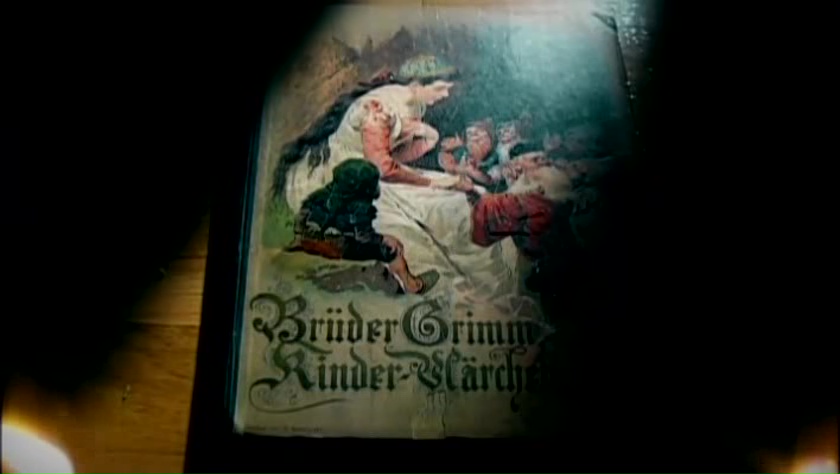
Meiwes and Brandes are not named in this film – the eater is just called “The Man” and the eaten “The Flesh”. There is very little dialogue, except for the Man’s mother reading him Hansel and Gretel at the beginning (when he was presumably called the Boy), presumably turning him into a cannibal (didn’t that happen to everyone who read the Brothers Grimm?)

We then Get To See A Selection Of The Man’s preferred reading matter: cannibal art by Hieronymus Bosch and Hans Staden, books on Jeffrey Dahmer, and some interesting texts on anatomy and butchering, which he will find handy later.

We see the Man having a series of meetings with a bunch of guys (and one woman) he has contacted on internet chats, all of whom turn out to be not that serious about going through with the whole, you know, kill me and eat me thing. The woman might have been ready, but he writes, “Women are too important for the survival of mankind.” Pretty much how the dairy and egg industries operate, when they sex the calves and chicks and immediately kill the males.

He even meets up with a couple of kids, not presumably through the web, but seems to prefer his meat aged and consensual.

The Man finally meets the Flesh, who introduces himself,

“I’m your flesh”

But then adds:

“I don’t want to suffer”

Yeah, no probs, mate; the Man stops on the way home from picking up the Flesh at the railway station to buy some schnapps and some cough medicine.

Then after a game of petanque and some sweaty sex, the Flesh won’t feel a thing. Hmmm.

“You’ll become a part of me”

Seems to me to be a bit of a misunderstanding of how the alimentary system works. However.

Once they enter the house, the movie becomes very dark. Literally – one of those movies where it’s hard to see what the hell is going on. They’re going to have sex, one of them is going to eat the other, but first, a nice cuppa tea.

There’s a lot of plinky-plonky music and sex scenes which drag on interminably, and end with the Flesh anally penetrating the Man. No one was expecting that. Isn’t cannibalism supposed to be about dominance? It’s an interesting conflict. They curl up on the floor together and, when they awake, the Flesh demands the Man bite off his penis. My thoughts immediately went to Monty Python (“ergh! With a gammy leg?”) at the thought of biting his penis after anal sex; but hey, call me old fashioned. Anyway, the Flesh is not called the Teeth or even Jaws, and can’t do more than draw blood, a kind of ineffective circumcision, and the Flesh growls:

“You are too weak!”

Freud would have had an orgasm of his own at this point – we have power, guilt and of course male fears which, he said, were based around the act of castration, usually due to the fear of the father’s anger at the boy’s Oedipal desires. But this man is too weak to eat him! Perhaps because he needs to eat. They need to merge before they can merge. It’s another challenge. But as Freud said, the cannibal “only devours people of whom he is fond”, which is why, according to Brigid Brophy, Christians eat God to affirm the love of the Father. The Man is seeking the transubstantiation of the Flesh.

So anyway, the Man does what any man does when his lover is disappointed – runs for the cough medicine; let’s knock him out! But then they both fall asleep, seeming to decide that this wasn’t such a hot idea. When they wake, it seems like it’s all over, but they are a stubborn pair – a splash of water on his face and the Flesh is ready and raring to get ate. This time they pick up prescription sleeping tablets at the pharmacy – Stilnox, very popular among Australian athletes apparently, and the Flesh washes it down with a bottle of brandy.

“Castrate me, then kill me. Do it now.”

The Man sets up the video (and this is all pretty much as it happened – Meiwes did videotape the whole procedure, which helped the police considerably during the court case). He puts on a record of church music, and fetches a knife. We get to see a lengthy scene of Bobbitting (hint – don’t try amateur anaesthesia at home: the cough medicine and booze don’t work very well).

He fries the severed cock up with some garlic (yep, all true to the actual case) but they find it tough and inedible. They spit it out (in the real case they fed it to Meiwes’ dog, but the sensible dogs of Germany refused to sign up for this movie).

Then the rest of the film is the killing of the Flesh and the preparation of his flesh. The Man puts the Flesh in the bathtub to bleed out, and reads a Jerry Cotton book while he waits. This is an outrageous fictionalisation – Meiwes in fact read a Star Trek novel. Ah well, poetic licence.

When the Flesh refuses to die by the time the Man finishes his book, the Man drags him out of the bath, vomiting, urinating and defecating, and lays him out in the Schlachthof he has set up, arms outstretched like the Broken Christ, then cuts his throat.

The final twenty minutes or so of this film (if anyone is still watching) is clinical – a masterclass in butchery. The Flesh is strung up by his feet and the Man disembowels him in great detail, vomiting as he does so. The Flesh, already dehumanised, is now deanimalised too; he is simply a carcass being prepared for the meat chiller.

I loved this review from Letterboxd which complains that the movie describes:

“how a cannibal prepares his food, everything is in detail and the scene came exactly when I was going to have my breakfast fuck me it’s like the movie knew when I’m going to eat my food, this has happened quite a few times with me now and its getting creepy 😂”

Scott Weinberg of DVD Talk wrote,

“One of the sickest and freakiest movies ever to come from a nation well-known for its freaky and sick movies (Germany)”

To me, the butchery was not the most abject part of the film; it was the sort of thing you might see in an instructional video for abattoir workers, except not with the usual species of victim. The defecation and vomiting were harder to take, but I guess that is subjective. All in all, most people will find something to disgust them in this film, and perhaps that was the point. It’s disgusting, but it’s not that different to what we get minimum-pay workers in slaughterhouses to do eight hours a day to some seventy billion animals every year. Unless the special effects budget was huge (not obvious from the rest of the film), a real animal was gutted and chopped up to make this film, which is actually the sickest part of it.

The butchery is shown in loving detail and for extended time. It lets us experience what it would be like to do that (I’m guessing most of us have not butchered an animal, human or otherwise). Being his first time, the Man keeps stopping to either snack on some flesh or to remorsefully throw up; pretty sure neither would be encouraged in the industrial meat corporation.

For a real slaughterhouse worker, wielding the cleaver would be sickening the first time, then boring for the hours thereafter. We see the Flesh reduced to just meat cuts. As King Lear said, when stripped of civilisation:

“unaccommodated man is no more but such a poor, bare, fork’d animal”

If you don’t want to watch the whole thing, there is an excellent and hilarious summary by Mike Bracken “The Horror Geek” which had me laughing out loud several times, despite the content.

At the end of the film, the Man has a nice Flesh dinner (the Flesh is present at the table, short of one body), then jerks off to his home movie, and next morning is all scrubbed up, in a nice suit, and trotting off to meet his potential next sacrifice. In fact, Meiwes was eventually caught because he advertised for another victim a few months later, when he started running out of Brandes. Meiwes is still in jail in Germany, and is now apparently a vegetarian.

As I said, we know very little about the director, except that Dora is not his real name, and that he is vegetarian and works as a physician. After watching this movie, you’ll understand why he wants to remain anonymous. Perhaps also why he’s a vegetarian.