“The most violent film ever made” – CANNIBAL FEROX (Lenzi, 1981)

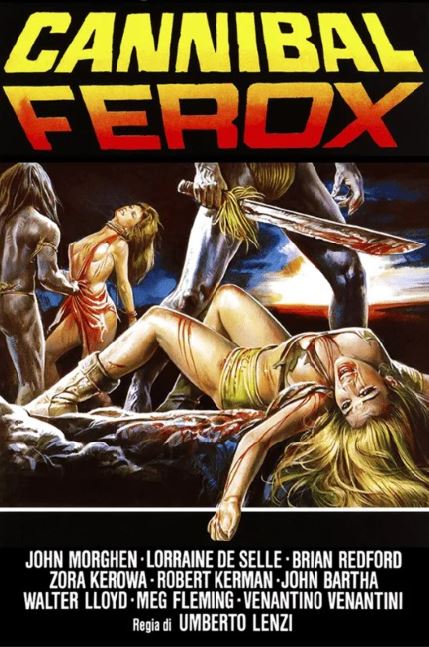
The US distributor of this film (where it was renamed Make Them Die Slowly) made the claim that it was the most violent film ever made, and had been banned in 31 countries.

Warning.JPG

Both claims are highly dubious, but it is certainly one of the nastiest of the so-called “cannibal boom” movies that came out of Italy in the 1970s and 1980s. These films depicted a savage world in which the primitive natives were merciless cannibals, while the white victims were mostly corrupt and exploitative thugs, who invariably brought on the savagery by their own greed and violence (this one involves eye-gouging and penisectomies as well as brain and intestine munching). They deserved to be killed and eaten, especially since they were aware that all primitive people are cannibals. This from the civilisation that brought you Christopher Columbus, who coined the term “cannibal” and demonised the diverse nations of a whole continent.

cfblu4_original.jpg

Lenzi’s film was made a year after the most famous of the Italian cannibal slashers, Deodato’s Cannibal Holocaust. Although Cannibal Ferox seemed to be a rip-off of Deodato’s magnum opus, let us not forget that Lenzi started the boom back in 1971 with Man From Deep River. That in turn was lifted from the Mondo films like Mondo Cane, films which showed the disturbing violence within nature and primitive societies, and pointed out that such dark forces still swirled within the well-dressed breasts of modern, cosmopolitan Europeans.

cannibalferoxhd_pub.png

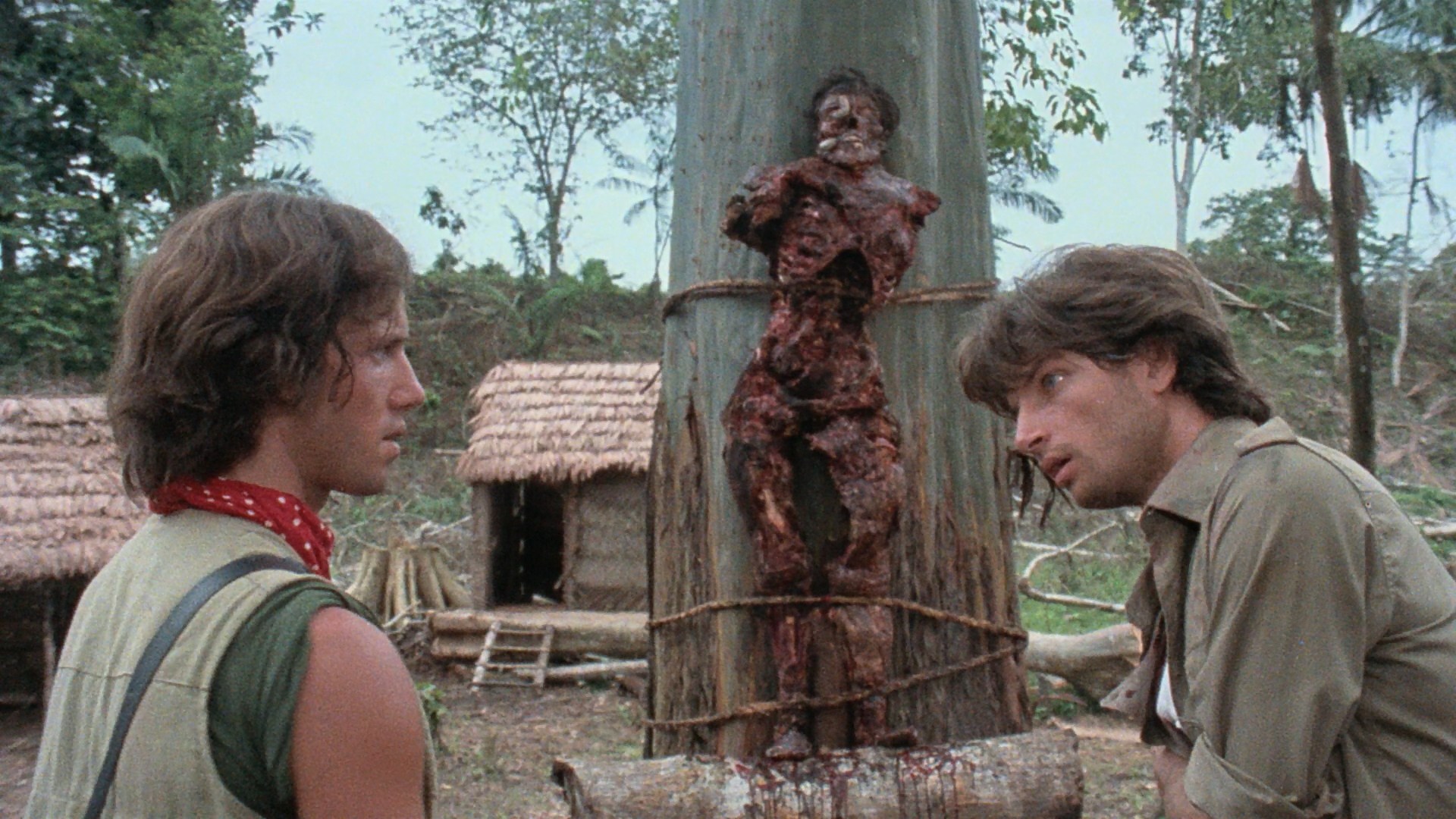
Look, I’ve been kinda avoiding reviewing this one, not because I  thought you couldn’t handle it (you are reading a cannibal blog fergoodnessake!) but more because I was wondering if I could. More gratuitously violent than Cannibal Holocaust, the scenes of torture are really all that this one is remembered for (certainly not for the plot or acting). Make up artist Gianetto de Rossi created the realistic special-effects, most infamously remembered for the scene where a woman is hoisted in the air by hooks through her breasts. De Rossi had previously worked on Emanuelle in America and Zombie II, the latter becoming famous as the goriest movie ever made.

MV5BNmVmOTkwMTctNzU0OS00YzIwLWI0MTktNWFkNDA5MWRlNGVmXkEyXkFqcGdeQXVyMjUyNDk2ODc@._V1_SX1777_CR0,0,1777,999_AL_.jpg

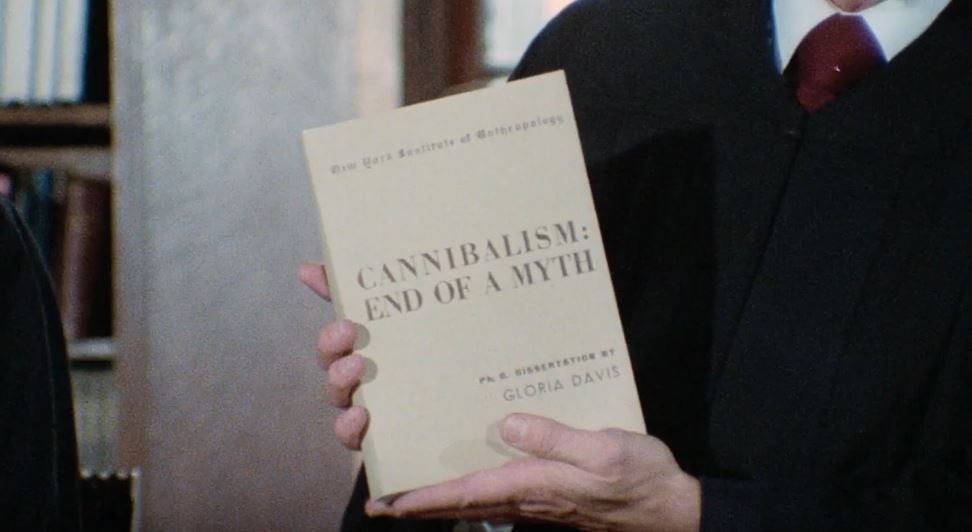
There’s a convoluted plot that you can follow on Wikipedia if you want, or even watch the movie if you must. It involves drugs, the Mafia, cannibals growing drugs for the Mafia, and cannibals eating greedy and vicious, or stupid and naïve, white people. The interesting part of the plot, from a Cannibal Studies point of view, is that the stupid, innocent Westerners who find themselves being caught up in all this (and tortured and eaten) are there on a fool’s errand – one of them, Gloria, is writing a thesis that is going to prove that cannibalism doesn’t exist and never existed. Her thesis is entitled “Cannibalism: End of the Myth”. [Holy excreted humanflesh; that’s kinda what I’m doing!] Radical as this thought is, it had actually been presented in an academic form by William Arens two years before this movie, in his book The Man-Eating Myth: Anthropology and Anthropophagy. Don’t you love coincidences like that? Wanton violence, abusive sex, torture, cannibalism and academic dishonesty – an honest portrait of the PhD process. Then there’s the invariable PhD curse – half way through your research, someone sits down with a bowl of intestines and screws up everything you’ve written.

PhD thesis.JPG

Cannibal Boom movies cannot be accused of involving any sort of academic rigour, concentrating instead on slaughter, torture, exploitative female nudity (and more torture) and cannibalism, as well as the totally gratuitous filming of real animal abuse. Italian cannibal directors love to put real footage into their stories of fake violence. Look, they say, a real animal suffered and died, so now you’ll accept that the actors were also killed. Actually, that sort of worked for Deodato, who was almost tried for murder,until he was able to get his Cannibal Holocaust actors to appear in court, to prove they were still alive.

tumblr_lhgoz0dPwo1qa4d9fo1_540
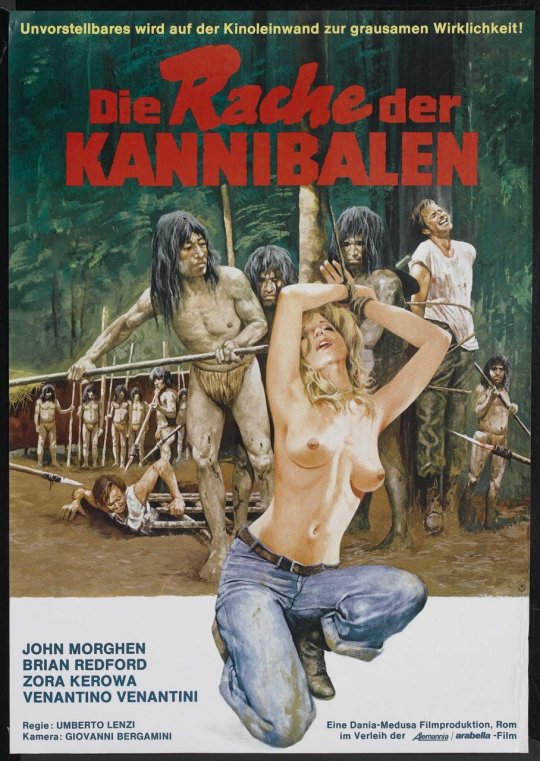
The German version was called “Revenge of the Cannibals”

Cannibal Ferox is torture-porn – it didn’t invent the genre, but it took it to new levels and laid the foundations for some of the grindhouse horror that was to follow. For example, the scene of a skull being opened and the brains eaten from it had already appeared in Deranged (Gillen & Ormsby) in 1974, and was perfected in Hannibal (Ridley Scott, 2001).

Cannibal Ferox managed to scrape together a 40% fresh rating on Rotten Tomatoes, from only five critics, one of whom summed up that “it both feeds and condemns our desire for the taboo sensations promised by its title”.

Couldn’t have put it better myself.

If you can’t be bothered watching the whole thing but would enjoy some highlights, this video review by “The Horror Geek” is hilarious!
“Cannibal Ferox” means fierce cannibals. In the US, it was renamed “Make Them Die Slowly”, and in Australia “Woman from Deep River”. Not sure if that reveals some sort of cultural distinction right there.

Capture

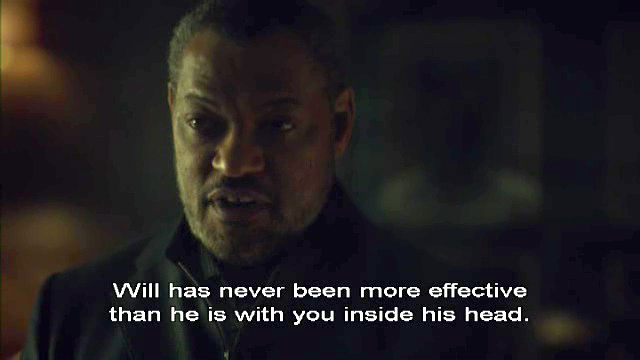
“… if you ate the brain right out of his skull” – HANNIBAL 3:09 ” (…And the Woman Clothed with the Sun)

We’ve met the Red Dragon, AKA “The Tooth Fairy”, AKA Francis Dolarhyde. We’ve seen what he does.

Will Graham has been reluctantly dragged back into the team, trying to find this new serial killer. But where’s Hannibal, and why hasn’t anyone been eaten for a while? This is a cannibal blog, after all. Well, cannibalism is about incorporation of the bodies of others, and this episode is about the way people incorporate into families, friendships or alliances. This episode is also very much a reimagining of the book that started all this, Red Dragon, and its sequels, The Silence of the Lambs and Hannibal. Much of the dialogue comes straight out of the Hannibal canon.

Three years after his arrest, Hannibal is locked up in a glass cage in the Baltimore Asylum for the Criminally Insane.  Will has come to see him, to ask for help catching the “Tooth Fairy” killer; he says he wants Hannibal’s ideas on how he picks his victims. But Hannibal sees right through that, and reminds Will of his earlier prognosis that they are just alike. All of us have the elements to make mercy, or murder.

vlcsnap-00001.jpg

“Came to get the old scent again. Why don’t you just smell yourself?”

Alana is his jailer. She has the keys. Remember that Hannibal has promised to kill her, and he always keeps his promises.

vlcsnap-00011.jpg

But he agrees to help Will. Because they are family, even after Hannibal killed their “child”, Abigail, and cut Will open.

vlcsnap-00065.jpg

Families do terrible things sometimes, but “we still help our families when we can”. Yep, it’s all about families, and how we need them, to remain sane, to torture us, or to escape reality.

vlcsnap-00018.jpg

In the age of coronavirus, we are all learning the need for connection, and the pain of not being able to access it. Hannibal has a flash back to Abigail, when she asked if he was going to kill her, and now he grants us some more detail of how he faked her death, by transfusing her blood and spraying it around the room, then cutting off her ear.

vlcsnap-00007.jpg

Will’s superpower, of course, is imagining himself in the shoes of the killer, seeing himself committing the murder. Hannibal is happy to talk him through this.

vlcsnap-00017.jpg

“Could you see yourself in their eyes Will? Killing them all?”

vlcsnap-00048.jpg

None of the families in Hannibal are terribly functional. Think of the Vergers. Think of Hannibal eating his sister! Think of Will, now with a wife and step-son, and still vainly trying to deny his love for Hannibal. Think of Alana and Margo, who have now given birth to a son, the heir to the Verger fortune, whose conception resulted from an electric shock they delivered to Mason Verger’s prostate before they killed him. Think of Reba McClane (Rutina Wesley from True Blood), who thinks she has found ‘Mr Right’ in Francis Dolarhyde, because he doesn’t pity her blindness, and she doesn’t judge his appearance (being blind helps there).
vlcsnap-00039.jpg

Think of Abigail’s dad killing (and respectfully eating) girls who looked like her, so he could control his desire to kill her. Hannibal has dug him up and preserved the body, so she can make peace with his corpse, using a sharp knife to pay back the unkindest cut he performed on her. Somewhat similar to the scene where Hannibal digs up Clarice’s dad in Hannibal (the book).

“We have a basic affinity for our family. We can detect each other from smell alone.”

Think of the murdered victim families, sleeping in their beds when Francis Dolarhyde killed them, broke all the mirrors in the house and stuck pieces in their eyes so they could be his audience as he raped the mother. Think of Will, coming apart as he tries to re-enact the murders. Just like Hannibal’s teacup, he will not come back together so easily.

vlcsnap-00051.jpg

Think of Francis as we see a flashback to him as a boy, at a table of old people with his abusive grandmother. Cuts to him now, watching movie of dead families. Think of Jack, whose wife Bella, has died; now his family is the FBI, who doubted him when he was ready to catch Hannibal. Consider Jack’s dialogue with Hannibal as he visits to discuss his use, his consumption really, of Will, in his plans to find the killer.

vlcsnap-00043.jpg

Who is eating whom here? Hannibal is sad that Will is cold and unforgiving, but he is also angry that Jack is cynically using Will as bait for the killer, who they know has seen Will in Freddie’s scandal-sheet.

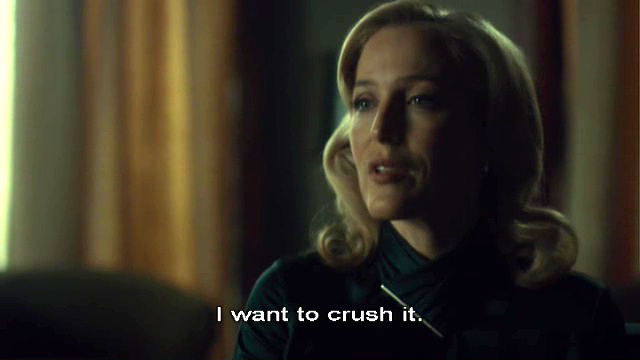
“It would be more honest if you ate his brain right out of his skull.”


vlcsnap-00054.jpg

Hannibal remembers getting ready for his new family, Will and Abigail, who hunted with her father, and now agreed to hunt with Hannibal. We find out why she defenestrated Alana.

vlcsnap-00056.jpg

vlcsnap-00057.jpg

Even Francis Dolarhyde, the serial killer that the press is calling “The Tooth Fairy”, is looking for a family to understand him and help him grow. He calls Hannibal.

“The important thing is what I am becoming. I knew you alone would understand this.”

“What are you becoming?” asks Hannibal.

vlcsnap-00062.jpg

Yes, in some very twisted ways, we are all looking for family.

vlcsnap-00052.jpg


Would you like virus with that? EBOLA SYNDROME (伊波拉病毒) (Herman Yau, 1996)

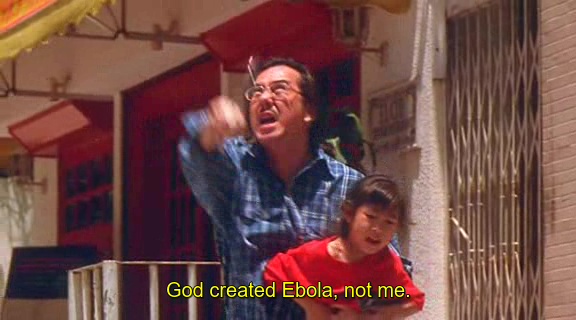
Director Herman Yau has made a bit of a career from telling stories of “innocent cannibalism”, in which diners in restaurants unknowingly eat human flesh. His 1993 film The Untold Story was based on the “Eight Immortals Restaurant murders” of a family of ten, which took place in August 1985 in Macau. Portions of the bodies were never found, leading to speculation – yeah, you got it.

Following Gordon Gecko’s statement that “greed is good!” in Wall Street (1987), the 1990s saw a spate of films about entrepreneurs selling human flesh for fun and profit. Beside The Untold Story, Untold Story II and Ebola Syndrome from Hong Kong, we saw Delicatessen from France, Aranyak from India, The Deathmaker from Germany, Perdita Durango from Mexico, while the Americans contributed Ice Cream Man and Fried Green Tomatoes.

You see what I’m up against, trying to update you on all these masterpieces?

vlcsnap-00015.jpg

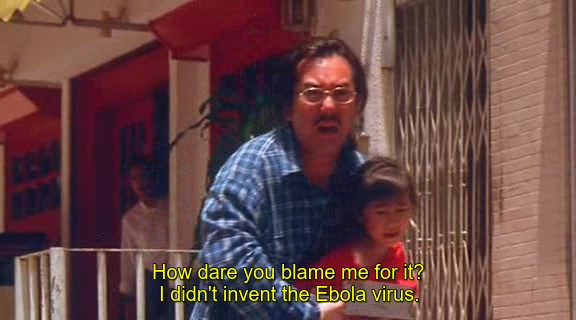
This film gets even weirder, because there is also a pandemic involved – Ebola, the so-called “flesh-eating” disease. Ebola never really got the public going like COVID-19, maybe because it only affected people in places like the Congo and so did not keep the rest of us awake at night. Also, it spreads much more slowly but, if you do get it, you have a 50-90% chance of dying, and it isn’t “just” pneumonia – it is haemorrhagic, meaning that you can bleed out “through your wazoo”, as they say in Last Man on Earth.

“People with Ebola first have symptoms of influenza, but within 72 hours after infection, the virus will dissolve the internal organs”

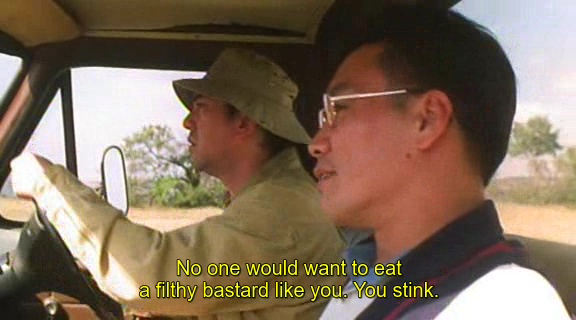
Ah Kai (Anthony Wong) is an escaped criminal from Hong Kong who bolts to South Africa after killing his former boss, his boss’s wife and another employee. Here is an image showing Hong Kong industrial relations in action.

vlcsnap-00014.jpg

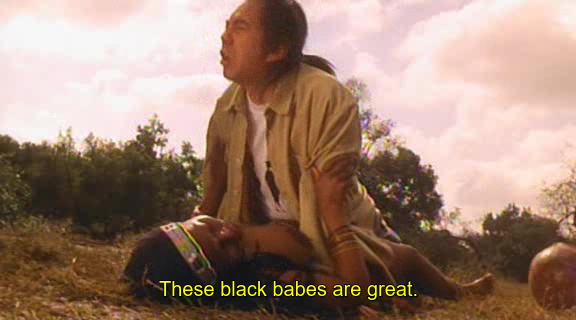
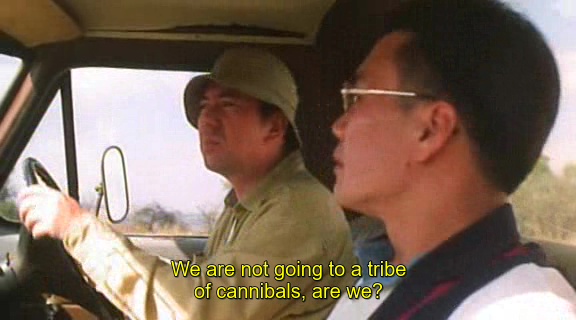
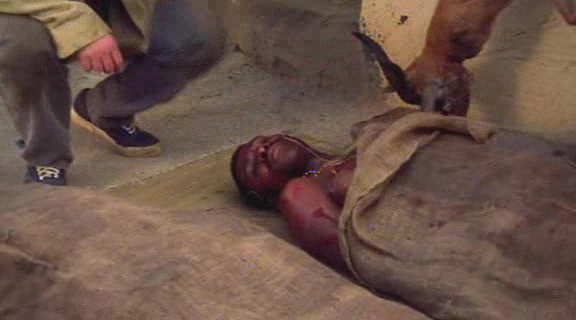
In South Africa, he works at a Chinese restaurant and one day travels with his boss to a Zulu tribe that is infected with the Ebola virus [NOTE: there is no record of Ebola among the Zulu]. He comes across a woman dying of the disease, and decides to rape her – he’s that sort of guy.

vlcsnap-00047.jpg

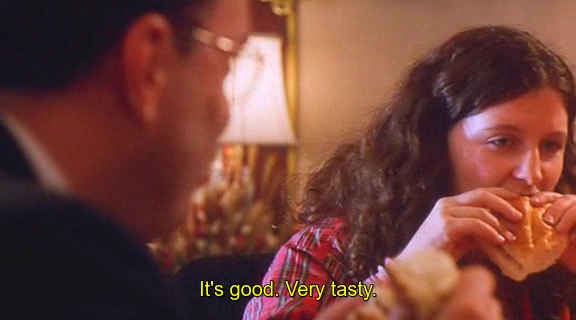
He is immune to the effects of the virus, so becomes a living carrier, spreading the disease to others through his bodily fluids. He kills his new boss and his boss’s wife and cousin (seems to be becoming a habit), but he has already given the virus to them, so when he cuts up their corpses and serves them as hamburgers in the restaurant, he spreads the virus all over South Africa.

vlcsnap-00064.jpg

vlcsnap-00068.jpg

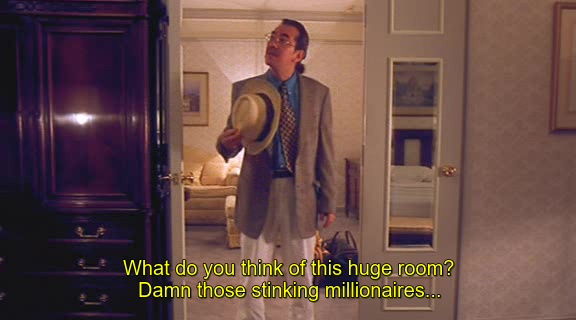
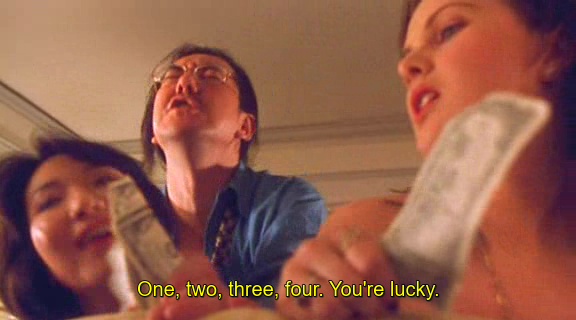
He heads back to Hong Kong with the boss’ cash and moves into a fancy hotel, where he proceeds to spreads the virus to the prostitutes he hires, and everyone else he encounters – dramatic music accompanying each new infection.

vlcsnap-00077.jpg

vlcsnap-00082.jpg

Cannibalism as a carrier for pandemics seems apposite right now. Cannibalism and incest, Freud said, were the two great taboos of civilisation, but their prohibitions also define civilisation, so it is not unreasonable to expect at least one of them to pop up in a civilisation-wide disaster. COVID-19 hasn’t been spread by cannibalism yet, or incest (as far as we know) but this movie looks at more than just crime and disease as social disrupters. Ah Kai is aggressive and violent to anyone whom he believes bullies him, usually the rich people who take advantage of his fugitive status. In South Africa (not a place known for Ebola), he is subject to casual racism from the whites, including prostitutes who refuse him their services. The whites, he complains, treat him like a black, and the blacks treat him like a white. He and his victims are dehumanised, which is a precondition for cannibalism – humans are animalised, animals are objectified and become meat.

vlcsnap-00018.jpg

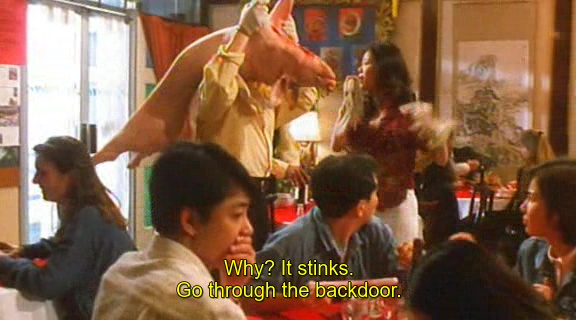
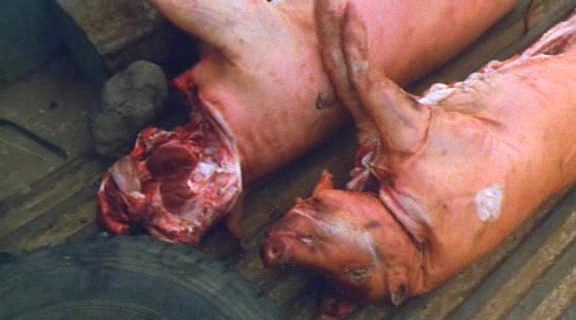
Chinese restaurants, where he works, use a lot of pork, and several scenes problematise the close proximity of pigs to humans in the way they look and, according to some informants, the way they taste. The Ebola is caught at a Zulu camp where multiple people are dying from it; Kai and his boss are there because the racist white butcher is charging too much for pigs.

vlcsnap-00034.jpg

vlcsnap-00035.jpg

When they go to pick up their purchases, Kai uncovers human bodies instead, before he finds the pig corpses.

vlcsnap-00040.jpg

vlcsnap-00043.jpg

Is there really such a difference between corpses? More than 75% of emerging diseases originate in other animals. COVID-19 is said to have originated at a fish market, where close contact between humans and live animals in a small space made it easy for the virus to jump species. Other coronaviruses, such as severe acute respiratory syndrome (SARS) and Middle East respiratory syndrome (MERS), not to mention bird flu and swine flu, all spread due to the human appetite for flesh.

We used to assume that exotic diseases came from wilderness areas where they had been hosted in exotic animals, which then, like the dying Zulu, were used and abused by humans. But a lot of current research seems to indicate that it is actually our destruction of habitat and biodiversity that causes the spread of diseases like Ebola and COVID-19.

“We invade tropical forests and other wild landscapes, which harbor so many species of animals and plants — and within those creatures, so many unknown viruses. We cut the trees; we kill the animals or cage them and send them to markets. We disrupt ecosystems, and we shake viruses loose from their natural hosts. When that happens, they need a new host. Often, we are it.”

David Quammen in the New York Times January 28, 2020

vlcsnap-00086.jpg

vlcsnap-00088.jpg

Really?

Dread Central summed up the movie:

“The horrid acting and paper thin story are forgivable only for the hilarity with which it’s presented.”

That’s a bit harsh! Chinese movies are not as a rule exemplars of subtlety, but Anthony Wong as the virus super-spreader gives it all he’s got, and a bit more too. It’s a rollicking yarn, and it asks some serious questions too. I was surprised to find I quite enjoyed it.

The full movie has been removed from YouTube, but you can still watch the always delightful review by THE HORROR GEEK, Mike Bracken.

Batman and the cannibal: BATMAN: GOTHAM KNIGHT (2008)

Batman: Gotham Knight (バットマン ゴッサムナイト, Battoman Gossamu Naito) is a 2008 anthology animated superhero film consisting of six shorts, supposedly set between the films Batman Begins (2005) and The Dark Knight (2008) although the narrative connection is tenuous.

vlcsnap-00006.jpg

So, of course it has a cannibal in it! Killer Croc, who has been a Batman villain since the 1980s, although getting a grenade down his throat in this episode might, you would think, slow him down a bit. But no, he was back in the computer-animated TV series Beware the Batman in 2013-14. In that one, he bites Batman and boasts that he tastes like chicken. Perhaps a subtle insult rather than a gastronomic judgement. Anyway, that was a prequel, so let’s not give up on grenades just yet.

Batman is looking for a large, scaly monster. He finds some homeless dudes in the “ghost stations” under Gotham and asks them if they’ve seen the monster. In one of the great lines of all Batman stories, they answer:

vlcsnap-00009.jpg

Ain’t it the truth.

Killer Croc’s real name is Waylon Jones, and he is a cannibalistic serial killer. The urban legend goes that he was an infant born with the disfiguring skin disorder epidermolytic hyperkeratosis and that his mother abandoned him in the sewers of Gotham City.

vlcsnap-00011.jpg

Probably having scaly skin and looking like a croc didn’t do much for his self-image either. As an adult, he files his front teeth into points to complement the reptilian appearance of his skin and became a circus sideshow performer. Later, he changed his name to Killer Croc and went on a killing spree that eventually landed him in Arkham Asylum. There, his homicidal impulses intensified during “fear aversion therapy”. Croc escaped from Arkham and fled to the sewers with a handful of escaped Arkham inmates. There, he had fear toxin injected into parts of his body. When Scarecrow orchestrates the kidnapping of Cardinal O’Fallon, Croc infiltrates the church and carries him down into the sewers. Batman comes to investigate, but Croc ambushes him, biting and infecting Batman with the fear toxin that is coursing through Croc’s own body.

vlcsnap-00017.jpg

Well, of course Batman works through pain, as he tells the cops. But why did the underground monsters kidnap the cardinal?

vlcsnap-00025.jpg

Yeah, they’re mighty cranky with that Cardinal.

vlcsnap-00020.jpg

Batman: Gotham Knight is the first animated Batman film to be rated PG-13.

cover.jpg

“I’m not insane” HANNIBAL S03E08: “The Great Red Dragon”

Aficionados of Hannibal will remember that the good Doctor Lecter was introduced to the world in the book Red Dragon in 1981. That book became the first Hannibal movie Manhunter in 1986 with Brian Cox as Hannibal, and was then remade under its original title with Anthony Hopkins in 2002, years after he had made Hannibal (in)famous in The Silence of the Lambs. A lot of the characters, plots and dialogues of Red Dragon were used by Bryan Fuller in making the television series Hannibal, but the main plot, Will Graham trying to track down the serial killer Francis Dolarhyde, only comes to the television screen in this, the eighth episode of the final season. The rest is all prequel.

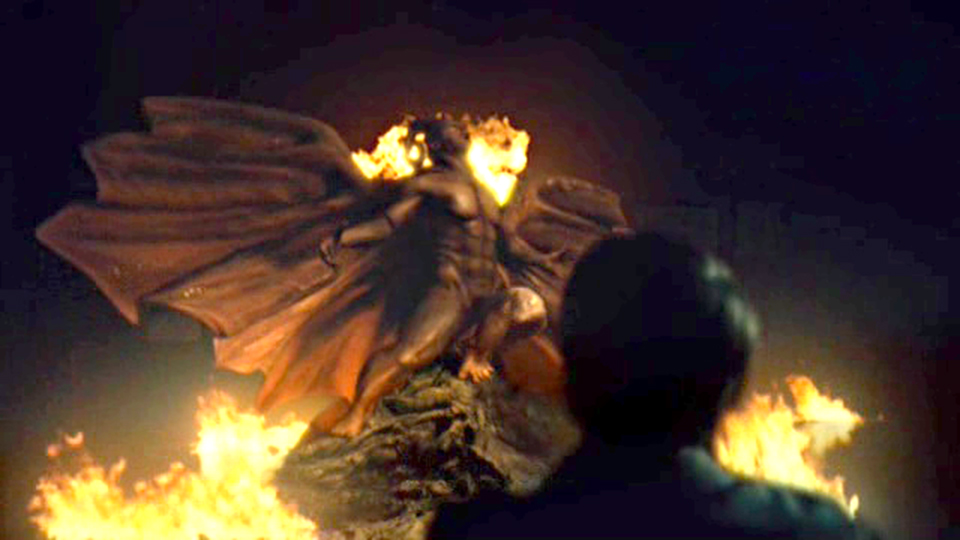
We’re not going to get an origin story for Hannibal here, except – he ate his sister, but he didn’t kill her. That’s all we get, and it’s all we need. We get one right at the start of this episode, though, for Francis Dolarhyde (Richard Armitage, who also played Thorin Oakenshield, the Dwarf Prince in The Hobbit). Dolarhyde is slightly disfigured – a cleft palate that has been repaired but is still visible, and gives him problems with his speech, and a major case of social anxiety. He sits alone, OK, he’s a loner (sometimes called “rugged individual”), and he reads Time Magazine, OK, he’s a loser. No wait – there’s an article on the cover about William Blake and his extraordinary 1805-10 watercolours of the “Great Red Dragon”. He heads off to his gym to work on some already pretty beefy musculature. He gets a huge tattoo of the Dragon. He gets some dentures made, snaggly-toothed ones. It’s a cannibal show – so people are going to get bitten. He’s going to become that Dragon, or more accurately, the Dragon is going to become him. On the full moon, he sacrifices to the Dragon, by murdering “perfect” American families. As Frederick Chilton puts it in a visit to Hannibal:

vlcsnap-00047.jpg

The press call him the “Tooth Fairy” because he likes to bite his victims.  We see him dripping blood into the snow. It’s all super-gothic.

vlcsnap-00024.jpg

Three years after his surrender, Hannibal is locked in an asylum – at least, his body is, but his mind wanders freely through his memory palace – we see him in church listening to a young boy singing Hallelujah, while in fact he is being processed and incarcerated. Then he’s talking to Alana, in his office, drinking Montrachet, but really he’s in his painfully white cell in the asylum, and she is his jailer. He has been spared the death sentence everyone expected after his trial for the murder of a dozen people.

vlcsnap-00003.jpg

Hannibal and Alana were friends, lovers at one point. He asks her if she still prefers beer to wine.

vlcsnap-00009.jpg

Hannibal is the trickster. Not what, “who” he corrects her. She had people in her beer.

vlcsnap-00017.jpg

Will doesn’t want anything to do with the FBI or, apparently, Hannibal; he is living a peaceful life with Molly and Walter (her son).

vlcsnap-00053.jpg

But Jack Crawford comes looking for him. No one can profile serial killers like Will. Will he go with Jack? He reads a letter from Hannibal, with a cutting about the Tooth Fairy, warning him that Jack will come knocking, and cautioning him not to accept.

“We have all found new lives. But our old lives hover in the shadows. Soon enough Jack will come knocking. I would encourage you as a friend not to step back through the door that he holds open.”

vlcsnap-00054.jpg

Will goes though, and visits the crime scenes, where he recreates the crime in his mind, with the swinging pendula, just the way he did in the first season, that we all miss so much.

vlcsnap-00058.jpg

vlcsnap-00061.jpg

Will figures that he (as serial killer) would take his gloves off to touch his victims. The team is thus able to get a partial thumb-print from the victim’s eyeball. And then there’s a piece of cheese that he bit. And the victim that he bit. They have his (or his denture’s) toothprints.vlcsnap-00066.jpg

Dolarhyde is assailed by roars and high pitched tones as he tries to watch his home movies of his murders. Where are they coming from? Ah yes, the false teeth. Dolarhyde is being taken over by the Dragon, becoming the Dragon. He is, to his own tortured psyche, becoming more than human, an Übermensch like Hannibal. He will need to absorb the essence of Hannibal to become the superman. Will has to do the same to identify and stop him.

There’s only one way to get into the mind of a biter.

vlcsnap-00072.jpg

vlcsnap-00073.jpg

Walt Disney: eating children: ROBOT CHICKEN S1E2 “Nutcracker Suite”

Robot Chicken is a stop-motion television series which started in 2005 on Adult Swim, the “adult” channel of Cartoon Network. It is created and produced by Seth Green and Matthew Senreich along with co-head writers Douglas Goldstein and Tom Root.

The show takes a sometimes sardonic look at popular culture. This episode, the second ever shown (and it’s now in its tenth season!) took on the rumour circulating on social media that Walt Disney’s head had been frozen after his death in 1966, in the hope that he could be revived later (there is a huge industry of cryogenics).

vlcsnap-00001.jpg

vlcsnap-00002.jpg

It’s not true, just BTW.

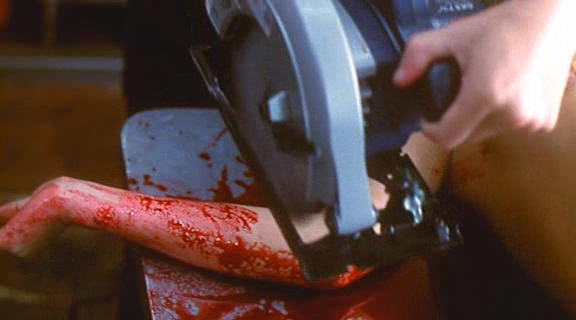
In this reimagining of the Disney legend, Walt is not the lovable avuncular figure that (older) readers may remember from black and white TV. The episode starts by rehashing the old story about his antisemitism, then we see his head being cut off with a chainsaw for freezing. Under the Matterhorn, later, his head is thawed out and grafted onto a steel spider frame, reminiscent of War of the Worlds. He has death rays in his eyes, and he HUNGERS!

vlcsnap-00017.jpg

vlcsnap-00014.jpg

He’s in this cannibal blog because he’s, well, become a cannibal, eating children to keep his monstrous form alive. They are brought to him by his minions.

vlcsnap-00005.jpg

“Bring in the first human child!”

vlcsnap-00006.jpg

He builds a theme park in Florida, so that he can access lots of children, and keep his appetite satiated. But then, “one fateful day”, he sees on television the story of Elián González, the little Cuban boy was was involved in a huge custody battle which became an international incident between the US and Cuba.

He hungers for Elián and decides to invade Cuba. As he begins his attack on Cuba, the Cuban standing at the monitor can be heard yelling the same Spanish phrases as the popular cartoon character Speedy Gonzales.

Disney causes havoc, knocking planes out of the sky à la King Kong. Poor Elián appears on the shore, offering to sacrifice himself to save his beloved Cubans, but then Fidel arrives!

vlcsnap-00018.jpg

vlcsnap-00020.jpg

Look, it’s a satire on American imperialism of course, but it has a lot to say about the cannibalistic nature of capitalist consumerism and the voracious appetite of corporates who look to eat up the culture and the cash of their target audience. Imperialism is not just via planes and tanks and giant spiders with frozen heads on top. Cuba has been embargoed from receiving the benefits of American culture for decades, and some of them seem to like it just fine that way.

vlcsnap-00009.jpg

Cannibalism costs an arm and a leg: THE BAD BATCH (Ana Lily Amirpour, 2017)

What do we do when dystopian stories start to look like the daily news? This film was made in the first year of the Trump presidency, which, you will remember, was partly won on the promise to build a “big beautiful wall” to keep criminals and rapists out of the USA. But what do you do with the criminals already inside the big beautiful wall? “Non-functioning members of society” are, in this dystopia, exiled, quarantined as “bad batch”.

Arlen (Suki Waterhouse) is bad batch number 5040, a number which is tattooed behind her ear, similar to the way Holocaust victims were stripped of their names and their humanity and became just numbers. She is then sent through the wall into a vast desert with little more than a sandwich and a bottle of water.

vlcsnap-00002.jpg

She is almost immediately captured by the cannibals, the “bridge people”, who live in crashed planes and work out like Muscle Beach.

vlcsnap-00012.jpg

The two women who caught Arlen hacksaw her leg and arm off, cauterise the stumps with their frying pan, presumably to keep the rest of her fresh, and go off to cook the limbs.

vlcsnap-00008.jpg

Arlen escapes on a skateboard, pushing with one arm and one leg, and, just as she is about to be eaten by crows, is found by a hermit (an unrecognisable Jim Carrey!)

vlcsnap-00028.jpg

The hermit takes her to Comfort, a settlement which seems to be a continuous rave club, run by a charismatic cult leader, The Dream (Keanu Reeves), who throws the parties and has his own harem of pregnant young women. In Comfort, they seem to prefer to eat noodles and rabbits (and lots of drugs) to human flesh, but – who knows? Like the bad bunch people, the camp structures are the rejects and wreckage of society – yet there never seem to be serious shortages of anything, particularly drugs. And The Dream lives in luxury, on the proceeds of the drugs, which are the currency of Comfort.

The folks at Comfort have given Arlen a prosthetic leg, but she still misses her arm. But one hand is enough to handle a gun. Is there some symbolism here that is even more Freudian than Trumpian?

vlcsnap-00019.jpg

Meanwhile, back at cannibal HQ, the leader, Miami Man (Jason Momoa- you might remember him as Aquaman), is killing and carving up a woman for dinner.

vlcsnap-00016.jpg

Is this going to be a simple good (rabbit eaters) vs evil (human eaters) story?

vlcsnap-00040.jpg

Not quite. How can there be good and evil, when everyone is on the wrong side of the wall? Miami Man turns out to be a devoted Dad; he has a cute little daughter, and you know how much kids eat, right? Some of his tribe collect rubbish from the tip, others collect humans for dinner – is there a difference in a world where value is only assigned to those deemed worthy of being on the right side of the big, beautiful wall?

Arlen is gunning for revenge. She comes across the little girl and one of the bridge people women who kidnapped her, foraging for plates.

vlcsnap-00022.jpg

She shoots the woman and takes the girl back to Comfort, buys her a rabbit. But then Arlen takes drugs, handed out at the party like Eucharist wafers, and wanders into the desert, to wonder at the glories of the galaxy, as you do when you take psychedelics (or so I hear).

vlcsnap-00038.jpg

Well, we know there is going to be a meeting and a reckoning with the cannibal king. It’s hard to tell, though, who are the good guys in a world where everyone is an exile, and maybe a cannibal? As Arlen says to MM:

“Here we are in the darkest corner of this Earth, and we’re afraid of our own kind.”

The film is loosely based on a true story: the so-called “Cannibal Island”, a small island called Nazino in Siberia to which Stalin deported around 4,000 people declared to be “declasse and socially harmful elements” including political dissidents, disabled or impoverished people and criminals. They were dumped on the island with no food except some raw flour, which gave them dysentery. Before long, they turned to cannibalism. Two thirds of the deportees were killed or died of hunger and disease.

Cannibal Island.jpg

It makes Comfort look positively comfortable.

The Vancouver North Shore News said “The Bad Batch could as easily be described as “a Futuristic Cannibal Spaghetti Western,” a dystopian genre mash-up.” It has a disappointing 44% on Rotten Tomatoes, and is admittedly a bit slow in parts (and a bit daft in others), but the cast is great, the photography often superb, and the political timing spot-on. Walls lead to wars, and the phrase “dog-eat-dog” should really be “human-eat-human”. Eating rabbits, eating humans.

vlcsnap-00045.jpg

Because when it all hits the fan, whether it’s outside the wall or sleeping in the streets eating Soylent Green, humans are usually only one species barrier away from cannibalism. Expelled from under the thin camouflage of civilisation, we are all bad batch cannibals.

Poster.jpg

Dawkins won’t eat it, but can’t say why…

OK, this is a film and TV blog, but Richard Dawkins is always show biz, so let’s consider him briefly. He’s just posted a new Tweet in response to an article about the booming market for real meat, but grown in a laboratory instead of being cut from a living, sentient animal.

The Christians aren’t buying it, saying that we can’t eat people because people are made “in the image of God” (whatever that means).

But if you are not a believer in immortality and the sacred soul, then why should it be OK to eat an animal that wanted to live, but not to eat a dead human (who didn’t care) or a lump of flesh grown painlessly in the lab from any species? Richard Dawkins can’t say.

Interested in hearing your feedback. The comments on the Twitter page range from the sublime to the ridiculous.  What do you think?

Don’t play with your food… HANNIBAL Season 3 Episode 7, “Digestivo”

Pigs and people. Are they identically different, like Hannibal and Will?

vlcsnap-00001.jpg

Why do we consider pigs uncontroversially edible, and yet are so shocked at Hannibal or Mason eating human? [If you have the answer to that, please let me know – I’m up to 65,000 words and still haven’t come to a conclusion]. We use them in gruesome experiments because they are like us, but then justify it by saying they are not really like us at all. This episode is all about pigs and people interchangeably being used, abused, and prepared for dinner.

Pigs of course are remarkably similar to humans – have you ever seen a butcher carrying a pink corpse into the shop and wondered for a moment who he has killed? Geneticists have proved the similarity:

“We took the human genome, cut it into 173 puzzle pieces and rearranged it to make a pig. Everything matches up perfectly. The pig is genetically very close to humans.”

The episode is called Digestivo, which in Italian is an after-dinner drink, usually a liqueur or bitter, which is meant to settle the stomach. We have, in this episode, finished consuming the plot of the book and movie Hannibal, which follows Mason’s quest for revenge. Next episode, we go to the central plot of Red Dragon, which of course pre-dated the other books but, by the brilliance of Bryan Fuller, is readily reimagined as a later time in this new universe.

Mason always carries a little knife that belonged to his father. Perhaps it’s the same one that he used to slice off his face. His father would test the depth of fat on a pig’s back by poking him or her with this knife, something neither the pig nor farmer found terribly acceptable. Now he is doing it to Hannibal. It’s clear that he is planning to turn Hannibal into a pig before he eats him.

vlcsnap-00013.jpg

vlcsnap-00014.jpg

Of course, there’s many a slip, as they say, or as Nick Cave says:

“If you’re gonna dine with the cannibals, sooner or later baby you’re gonna get eaten”.

Or as Alana warns:

vlcsnap-00019.jpg

To the sublime tones of the Mozart Piano Concerto 21, Hannibal and Will are dressed and brought to Mason’s table. In the opulent dining room of Muskrat Farm, Mason tells Hannibal that “I snatched Will Graham right out of your mouth.” He is referring to Hannibal’s plan to eat Will’s brain, foiled by the arrival of the Italian police, who were in Mason’s pay.

vlcsnap-00024.jpg

Hannibal and Mason compare their depth of reading, as Hannibal reminds Mason of the biblical story of Jezebel, who was, like Mason’s face, eaten by dogs. Mason in return spouts a news story he read about “that German cannibal” (he can’t remember the name of Armin Meiwes?) who advertised on the Internet for someone who wanted to be eaten.

The cannibal and the intended meal ate the man’s penis together before the latter died and was packaged up in the freezer. Mason’s assistant, Cordell, arrives hilariously at that moment with some pork sausages, thus emphasising the human/pig parallels.

vlcsnap-00033.jpg

“Go to all that trouble to eat a friend and you overcook his penis. They ate it anyway, they had to, they committed. But they didn’t enjoy it.”

vlcsnap-00038.jpg

Mason reveals part of his plan – he likes Will’s face, and intends to graft it onto Hannibal before he eats him. The rationale is that Will and Hannibal were both there watching as the dogs ate Mason’s face. They banter pleasantly (Hannibal shows no fear) about the order in which Mason will eat the various parts of Hannibal’s body. Everyone loves to chat about cannibalism! Will’s banter is a little less polite, as he takes a healthy bite of Cordell’s cheek, much to Hannibal`s amusement, and is left with a bloody chin, reminiscent of Anthony Hopkins in Silence of the Lambs. Will has become at least a functional cannibal.

vlcsnap-00062.jpg

vlcsnap-00064.jpg

Cordell sews up his own face, then advances on Hannibal with the Verger branding iron. He brands Hannibal with the Verger emblem.

vlcsnap-00071.jpg

Hannibal is being turned into an edible pig, because as Mason admitted, he did not really fancy eating human flesh. Much easier to eat the animal that daddy made his fortune exploiting, than to eat the man who consistently outsmarted him.

“Mason would have preferred to brand your face. He fought bravely, and with his own funds, against the humane slaughter act, and managed to keep face-branding legal.”

vlcsnap-00078.jpg

Part of what supposedly makes us superior to other animals is the power of speech. Pigs can grunt and scream eloquently, but they can’t form their words into either maxims or complaints. The tongue is crucial, and Cordell tells Hannibal he intends to

“…boil it, slice it very thin, marinate it in olive oil, garlic, parsley and vinegar.”

vlcsnap-00083.jpg

Cordell describes the rest of his plans, in something almost out of a cooking show. But looking down appreciatively, he adds

vlcsnap-00087.jpg

“Every day I’ll feed Mason some new part of you. And don’t you worry Dr Lecter, you will always be cooked to perfection.”

Anyway, we know that nothing like that is going to happen, because we still have six episodes to go. AND SEASON 4 [please?] The rescue involves Alana and Margo, who find that Mason kept Margo’s eggs and that there is a surrogate having her baby.

vlcsnap-00153.jpg

A pig, of course. Not too successfully; the baby is dead, which makes her fighting mad. They head off to kill Mason. First, they release Hannibal, because he has to save Will (about to have his face cut off without anaesthetic). Alana knows that Hannibal promised to kill her at the end of Season 1. But she has no other choice if Will is to survive.

“You’re the only one who can save Will. Promise me you’ll save him?”

vlcsnap-00127.jpg

vlcsnap-00128.jpg

The “abyss” that Heidegger described between human and animal is further breached as Mason is eaten by his pet eel. Or chokes as he eats the eel. All lines are crossed.

vlcsnap-00166.jpg

Having saved Will, Hannibal finally meets up with Chiyoh. She is willing to watch over him, but not in a cage: “Some beasts shouldn’t be caged.” Her obsessive hunt, she tells him, was motivated not by his plight or hers, but Mischa’s.

vlcsnap-00177.jpg

“Yes,” says Hannibal, “but I did not kill her”.

We see the broken teacup that has bothered Hannibal throughout the books, movies and this TV series. Can time reverse? Can we undo what has been done?

vlcsnap-00185.jpg

As he waits for Will to recover and awake, Hannibal is working on some higher level calculus, presumably still trying to work the maths on how to reverse time.

vlcsnap-00187.jpg

But Will is having none of it.

vlcsnap-00190.jpg

“I miss my dogs. I’m not going to miss you. I’m not going to find you. I’m not going to look for you. I don’t want to know where you are or what you do.”

vlcsnap-00203.jpg

vlcsnap-00204.jpg

“You delight. I tolerate. I don’t have your appetite.

Goodbye Hannibal.”

vlcsnap-00211.jpg

The digestivo here is a bitter drink – look at Hannibal’s face. Takes a hell of an actor to portray strong emotion so simply. Will has divorced Hannibal. But Hannibal is not giving up – he never does. He escapes before the FBI arrive, but then returns and surrenders.

vlcsnap-00220.jpg

vlcsnap-00222.jpg

Next episode, Will takes on the Red Dragon, but – can he do it without Hannibal? Silly question really, don’t know why I bothered asking it.

The last CANNIBAL on Earth — (“Last Man on Earth” Season 4, episodes 9-11, Will Forte)

The Last Man on Earth was a four-season American post-apocalyptic comedy series that showed on Fox from 2015-17. The protagonist (Will Forte, who also created the series) is Phil (or Tandy as everyone calls him – long story). Phil believes he is the only survivor of a mysterious virus (not coronavirus, but hard not to think about it while watching) that has killed off humanity and most other animals. He travels around the USA leaving signs on billboards asking other survivors to contact him in Tucson, but gradually goes crazy from loneliness.

Then he starts meeting other humans. As it’s a comedy, they are (nearly) all nice, friendly, peaceable people, who bicker but generally don’t bite. Until season 4, when he meets Karl (Fred Armisen), a serial-killer cannibal. In a flashback to before the virus, Karl is being socially inept, disgusting his dinner date with recollections of a boil he had just had lanced.

vlcsnap-00005.jpg

vlcsnap-00008.jpg

The art of cannibalism stories is to disgust the viewer. Otherwise, where’s the conflict?

Karl’s modus operandi is to invite his prospective victim in for a sitting where he paints their portrait (a skill in which he is almost as deficient as his romantic conversation), then reach for his

vlcsnap-00024.jpg

When his model goes looking for a refreshing drink in the fridge, Karl has to run.

vlcsnap-00025.jpg

He flees to Mexico and sets up the same artistic practice, but is soon arrested and sent to a maximum-security prison, where he starts painting the other inmates, with designs to convert them into his next meal.

vlcsnap-00026.jpg

Karl is also somehow immune to the virus, but has been unable to escape the prison in which he was confined for the four years after everyone else died. Karl has killed the only other virus survivor, a guard, and is wearing his uniform, to hide his status as prisoner/cannibal. Karl is nice too. Except for being a serial killer cannibal.

vlcsnap-00033.jpg

Karl has an unexplained compulsion to eat human flesh, and is powerless to defy it, despite his desperate efforts to do so.

vlcsnap-00027.jpg

He is obsessively drawn to a used Band-Aid, which is stained with the flesh of a burnt finger.

vlcsnap-00032.jpg

He is unmasked when he is followed to a cemetery, where he hopes to satiate his longings with some well-rotted corpse-flesh, much to the disgust of the observers.

vlcsnap-00049.jpg

vlcsnap-00051.jpg

What makes a cannibal? We have looked in this blog at several motivations such as savageism, starvation, revenge, psychopathy and entrepreneurship, and particularly at the figure of the wendigo, the mythical Algonquin spirit that inhabits the lost and drives them to an ever-escalating hunger for human flesh. Bryan Fuller implies in Hannibal that the good doctor Lecter is such a spirit, appearing as a figure with antlers, often disturbingly dressed in suit and tie. Traditionally, the cannibal required no explanation. In Classical stories, he (and cannibals were usually male) was a super-human or else hybrid figure, monstrous in appearance and easily identified as an ‘other’. In colonial times, they were tribes of savages, whose ignorance of the morals of Europe required the intervention of the conquistadors to ensure they were re-educated, which would usually involve the appropriation of their lands and the enslavement or extermination of the ‘cannibals’.

The contemporary cannibal is often typified by his inconspicuousness – acquaintances of cannibals like Jeffrey Dahmer, Albert Fish or Armin Meiwes often spoke of how normal and prosaic they seemed. Karl fits exactly into this model of the contemporary cannibal – the others like him, and can hardly believe it, even when he admits to his addiction, as if it was an AA meeting.

vlcsnap-00024.jpg

vlcsnap-00025.jpg

There are many ethical issues raised in this apparently light-hearted comedy. Everything in the world before the virus was about voracious appetite and power, and things have not changed that much. Now of course there is no money, and the stores are full of whatever you could want, but it’s all starting to go bad, even the tins. The few animals they have found alive have usually come to a sticky end – the cow whose milk they took died, her calf was left behind when they left for Mexico, the bull was killed and eaten. They found crickets and ate them. They catch a fish with a hook, much to their surprise. Phil threatens to eat a little dog’s butt at one point. Anthropocentrism, sometimes called speciesism or human narcissism, is now the supreme ideology, even though it has apparently led to the extermination of almost all life on Earth.

The main question of this brave new world, then, is: are there any ethical constants? The survivors are mostly besotted with the idea of having babies and repopulating the world with humans: is that a great idea? And while they are satisfied to smash down shop doors and take whatever they need, they are shocked at the cannibal doing the same. To Karl, to all of us, morality is simply relative to his immediate needs. Certainly not a view confined to cannibals.

Karl suggests they all go to bed, and discuss the problem in the morning. They will have questions for him. He will have questions for them too! His morality is straight out of Trump at Charlottesville:vlcsnap-00031.jpg

vlcsnap-00032.jpg

As Dostoevsky said in the Brothers Karamazov:

“…there was no law of nature that man should love mankind, and that, if there had been any love on earth hitherto, it was not owing to a natural law, but simply because men have believed in immortality…. if you were to destroy in mankind the belief in immortality, not only love but every living force maintaining the life of the world would at once be dried up. Moreover, nothing then would be immoral, everything would be lawful. even cannibalism.”

Karl exemplifies what Aristotle called the “rational principle”.