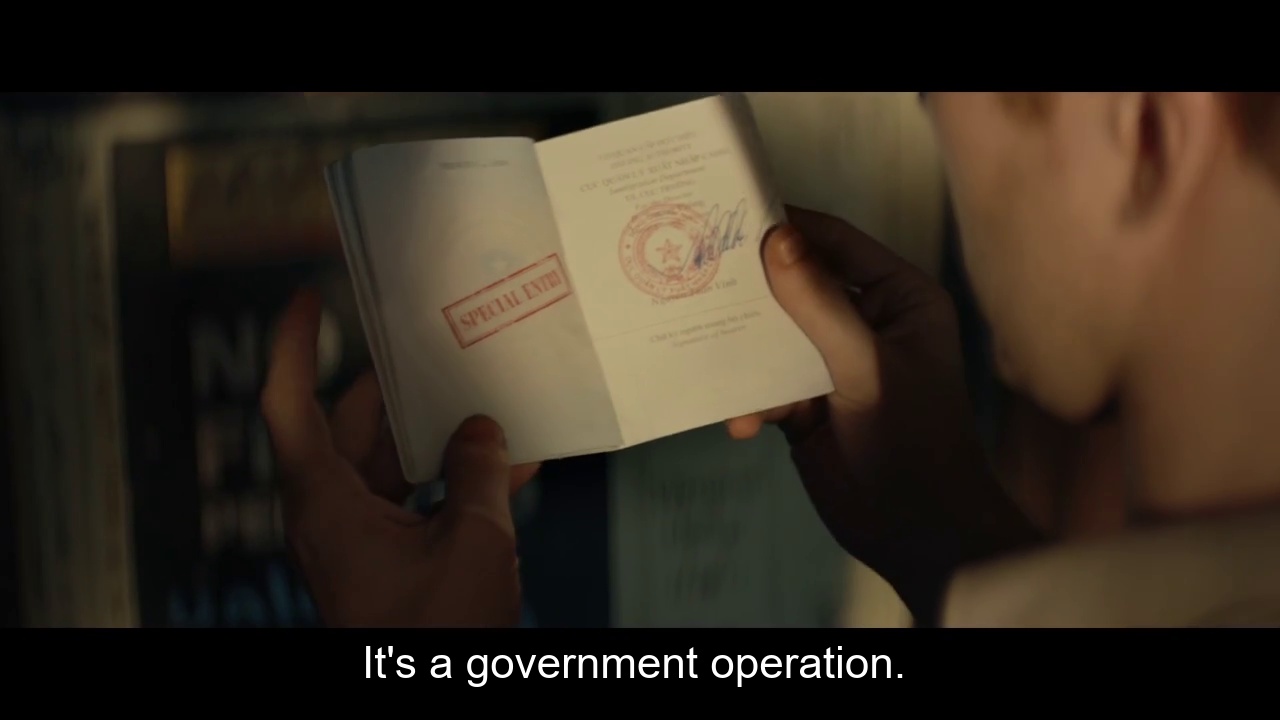
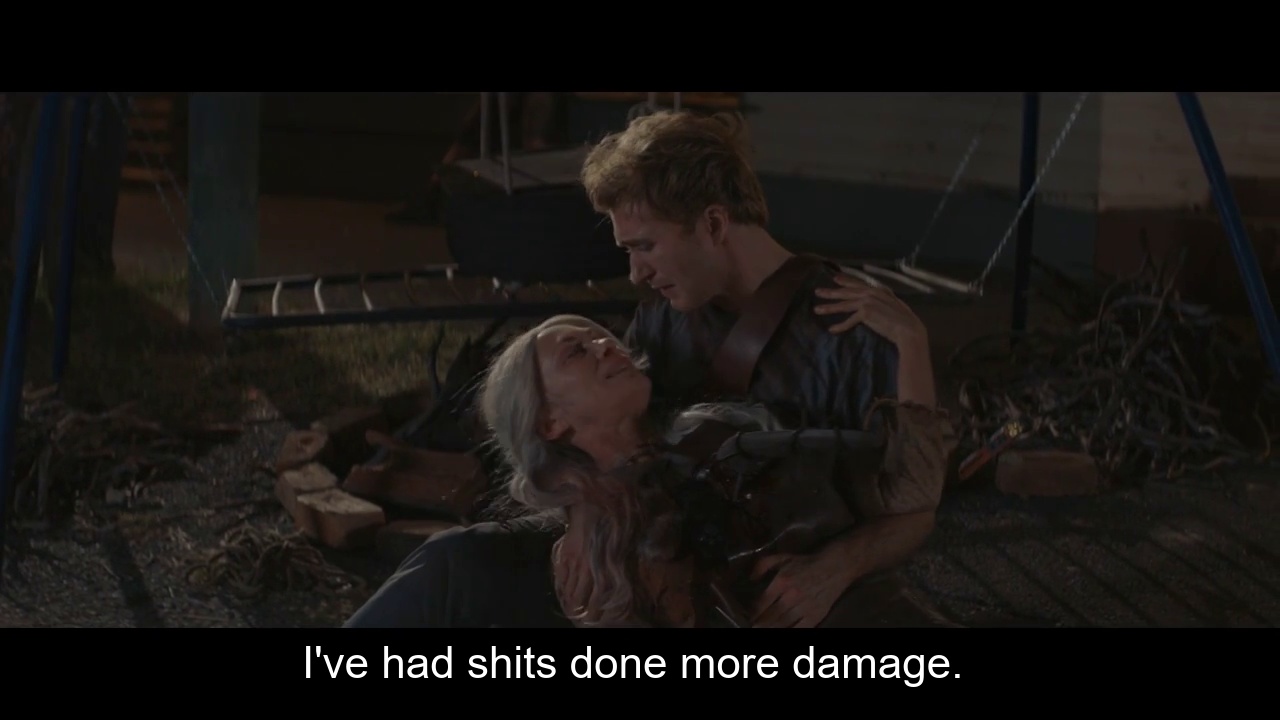
Eat the imperialists: HOW TASTY WAS MY LITTLE FRENCHMAN (Como Era Gostoso o Meu Francês) – Nelson Pereira dos Santos, 1971

Let’s get this out of the way – there is nudity. Lots of it and throughout the movie. Well, it’s set in pre-colonial Brazil, and the Indigenous peoples did not bother with a lot of clothes, so it’s historically accurate. To ensure authenticity, the actors and the crew were all naked, so that nudity would become natural. If that bothers you, please read the blog but skip the movie.

While it was refreshingly authentic, the nudity was also a problem. First, because the authenticity is somewhat diminished, as The New York Times critic pointed out, by the fact that the natives are “middle-class white Brazilians… stripped down and reddened up for the occasion”. Secondly, the film was refused entry to the Cannes Film Festival because of all the swinging dicks. In Brazil, the censors were eventually persuaded that the natives indeed did walk around naked, but remained vehemently opposed to the nude Frenchman, a telling comment on the racist distinction that the film was intending to expose.

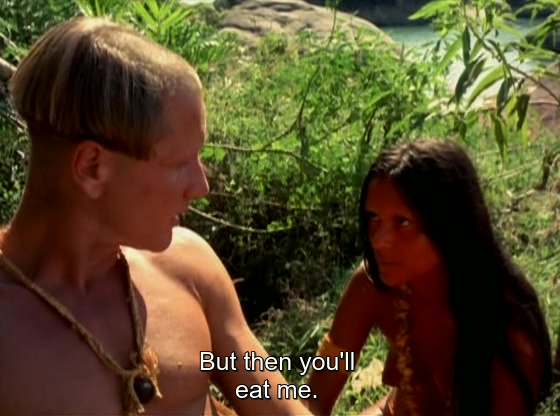
So, the plot in a nutshell: the French and the Portuguese are fighting to control the rich lands of South America. Each has allied with local tribes who are at constant war with each other, often involving (so the European narrative goes) capturing and eating each other’s warriors.  The Tupinambás are allied with the French, while the Tupiniquins are allied with the Portuguese. The Frenchman of the title escapes his own command, is captured by the Portuguese, and is then captured by the Tupinambás, who are allies of the French, but believe him to be Portuguese, so intend to eat him. Got all that? – there will be a test.

Tupi custom involved bringing the captive into the community, feeding and homing him, and even finding him a wife, then eventually killing him in a ceremony that will allow them to capture his essence, bravery, speed, and so on.

This wide-spread belief about the Tupi comes from a European who was captured but then escaped in 1554, came back to Europe and wrote a book. His name was Hans Staden, and he was actually a German who was trying to get to India. But since it was the French who were invading South America at the time, the director changed his nationality.
De Bry’s engravings of Tupi cannibalism were “eaten up” by the Europeans.

Tupi cannibalism has a whole literature explaining it or denying it – William Arens claimed the ‘evidence’ was mostly based on Staden’s account, which contained several contradictions, and had been continually retold as if it had happened to new re-tellers. Other anthropologists such as Rene Girard explained Tupi cannibalism as a seamless explanation for the way culture and religion have evolved. The universal violence of the human species is redirected toward the outsider, who is taken into the tribe, but remains foreign enough to be killed as a scapegoat, to release the social pressure that would lead to endless internal revenge feuds. For many, Jesus became the ultimate scapegoat under this theory, even to the extent of insisting that his followers eat and drink wine and bread transubstantiated into his “blood and body” in the Eucharist ritual.

For my flesh is meat indeed, and my blood is drink indeed.

John 6:55

The Brazilian anthropologist Eduardo Viveiros de Castro proposed a ‘post-structural anthropology’ in his book Cannibal Metaphysics. De Castro sought to ‘decolonise’ anthropology by challenging the increasingly familiar view that it was ‘exoticist and primitivist from birth’, denying that cannibalism even existed, and so transferred the conquered peoples from the cannibalistic villains of the West into mere fictions of colonialism. Arguing that the ‘Other’ is just like us is to deny any separate identity and to return the focus of anthropology to that which interests us: ourselves. Rather than deny the existence of cannibalism, which allows a reclassification of the Amerindian peoples as like the colonialists, de Castro examines the details of Tupinamba cannibalism, which was ‘a very elaborate system for the capture, execution, and ceremonial consumption of their enemies’. This alternative view of Amerindian culture rejects the automatic assumption of the repugnance of cannibalism, which serves to either confront it or deny its existence.

Well, that’s pretty much where this film planned to go. Pereira dos Santos challenges the Eurocentric perspective which insists on a superior civilisation overcoming a primitive one. It is true that Tupi civilisation was destroyed by the slavery, smallpox and slaughter of the Portuguese who, the film tells us at the end, also wiped out their allies the Tupiniquins. The Tupi peoples are now a remnant, confined to small areas and currently being decimated by COVID-19.

But the chief, in the killing ceremony which promises the Frenchman’s body parts to his relatives (his wife will get his neck), tells the story as a mirror image:

“I am here to kill you. Because your people have killed many of ours, and eaten them.”

So the film asks: who were/are the cannibals? It does not fully succeed in telling this story, because the audience gets involved with the Frenchman’s story, instead of his captors. Pereira dos Santos lamented that the public:

“…identified with the French, with the coloniser. All spectators lamented the death of the hero. They did not understand that the hero was the indigenous, not the white, so much were they influenced by the adventures of John Wayne.”

Nonetheless, the binary of the colonised and the powerless occupied victims is so deeply embedded in our cultural stories that it is refreshing to see this mirror image version, where the indigenous win the battle, if not the war.

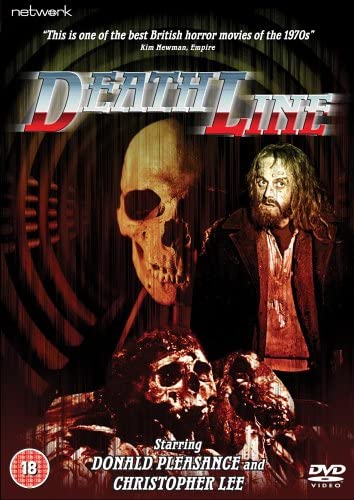
“Mind the door” [and the cannibal]: DEATH LINE (RAW MEAT) – Gary Sherman, 1972

You know you’re on a good film when the trailer promises “ultimate terror so fearful that no additional scenes can be shown in this preview”. I mean, you have to watch it after hearing that, right?

Actually, DEATH LINE is a really great picture, with the fabulous Donald Pleasance as the London police inspector making a complete hash of his investigation. Terence Pettigrew in his book British Film Character Actors says Pleasence has “the kind of piercing stare which lifts enamel off saucepans.”

The polite British title Death Line was a little too tame for American grindhouse cinema, and it was retitled Raw Meat and disguised as a zombie movie in the USA. The plot involves the last descendants of a dozen railway construction workers who were trapped in a cave-in in 1892 between Russell Square and Museum stations, and have survived in the abandoned tunnels, cut off from civilisation – the last survivors now live by catching and eating commuters on the Underground platforms.

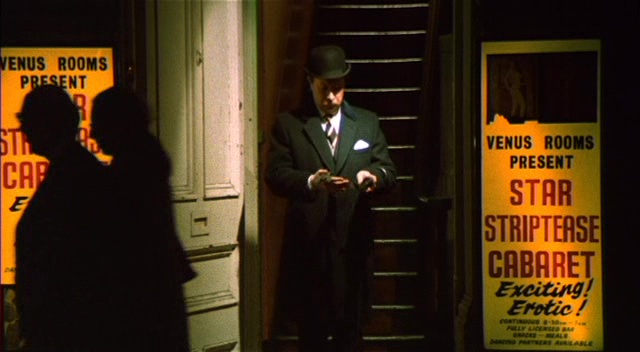
Fortunately, the British are famously reticent on public transport and, once seated, would not even look up from their papers if someone was being eaten next to them. However, a couple of students find a man collapsed on the station steps and report him to the police, but he’s gone when they investigate. Of course, horror movies are morality tales, and the man is a VIP, an important civil servant, who has just come from a strip club and then propositioned a woman on the Russell Street tube station platform. Cannibals, in movies, tend to eat rude people.

Demented cannibals, cut off from civilisation and preying on unsuspecting travellers, hark back to the story of Sawney Bean and his incestuous family, who allegedly murdered and cannibalised more than a thousand men, women and children in 16th century Scotland. Of course, the idea goes back much further than that into antiquity, when anyone outside the centres of civilisation was assumed to be a monster, and probably a cannibal. Maps in the age of exploration would simply have the word “cannibals” written on any parts not yet charted. It’s an evergreen trope, seen over and over in films like Texas Chain Saw Massacre, The Hills Have Eyes and the interminable number of Wrong Turn movies (we’ll get to those one day).

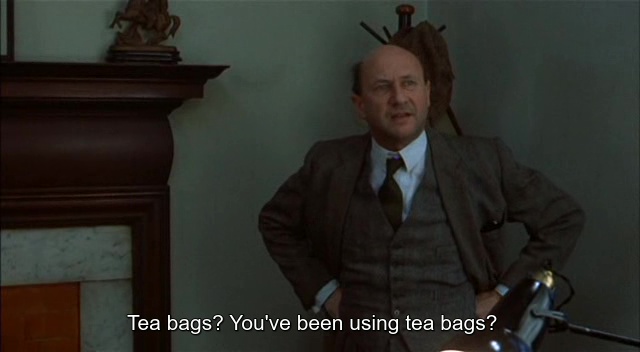
Being a British movie, it’s replete with class struggle. Donald Pleasance (no stranger to horror, having been in five Halloween movies and Prince of Darkness) is Inspector Calhoun, who feels he is lord of the manor in his neighbourhood, bullies his Detective Sergeant (Norman Rossington, the Beatles’ manager ‘Norm’ in Hard Day’s Night), drinks interminable cups of tea, and hates the students on sight.

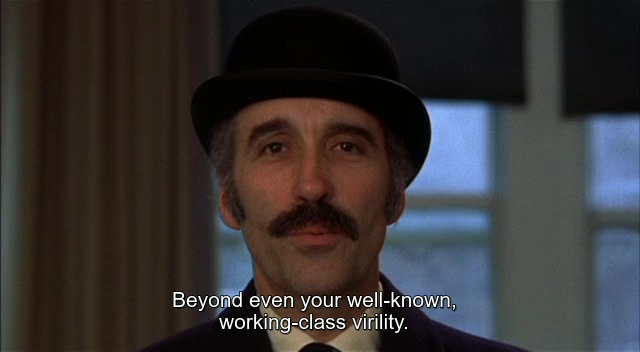
Calhoun is told to stick to his greengrocers and dentists and leave the investigation of the rich and powerful to MI5, by the elegant figure of Christopher Lee (Dracula and, yes, Saruman from Lord of the Rings!) who reportedly took the part because he admired Pleasance and wanted to be in a film with him, but then they never appeared together, due to their height difference. The scene in which they clash, though, is a highlight of the film.

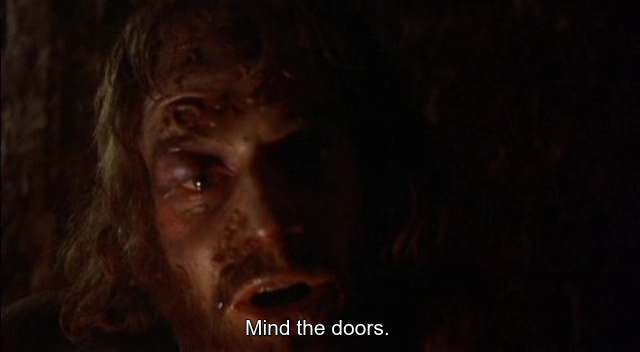
The cannibal/monster, credited as “The Man”, (a masterful performance by Hugh Armstrong) is dirty, diseased and aphasic (unable to speak – his only vocabulary is “Mind the door” which is what you hear interminably on the London Underground trains), but he is able to express a world of different emotions with these three words, including anger, enquiry, soothing and sorrow. He also has septicaemic plague, which for some reason does not feature much in the plot. Marlon Brando was going to take the role originally, but pulled out for family reasons.

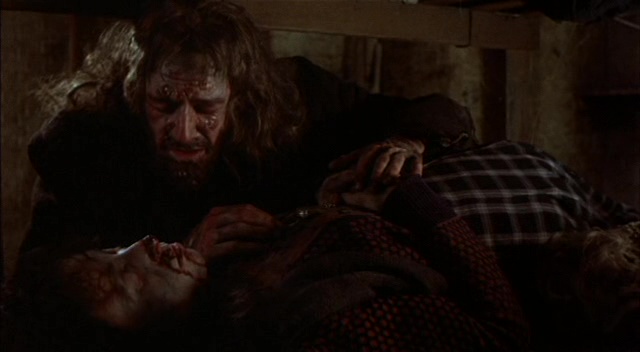
The Man’s first appearance is when he has freshly killed the important guy and is trying unsuccessfully to revive the second-last cannibal – the last female of his clan. He finds a fob watch on his victim and places it tenderly on her chest, as he has done for all the other dead cannibals who are strewn around the abandoned station. His weeping and moaning, his gentle stroking and rough shaking, the blanket he wraps her in as he weeps, his despair and sudden, futile hope that she is still alive – well, it reminded me of King Lear, and also Boris Karloff in Frankenstein.

Foucault in Abnormal : Lectures at the Collège de France 1974-1975 spoke of the “popular monster” – the cannibal who eats the rich, as happened quite a lot during the French Revolution. Foucault specifies two kinds of monster: “the cannibal (the popular monster) and the incestuous (the princely monster)“. The princely monster, the sexually deviant civil servant, is eaten by the popular monster, “The Man”. Yet this film challenges the paradigm, because The Man, the popular monster, is also the prince of his domain (the abandoned tunnels) and presumably the product of the incestuous unions of his predecessors among the descendants of the construction workers. He is both kinds of monster, and still totally relatable and sympathetic – perhaps the most human of all the characters.

Of course, it is the rich who eat the poor most of the time, and so this story fits into the reality of class warfare. The film critic Robin Wood divided horror films into progressive or reactionary, depending on whether the monster is a sympathetic character or not – on that basis, this film about downtrodden and abandoned workers taking revenge on the hierarchies of snobbery above them is, well, revolutionary. The Man may eat the rich guy in the bowler hat (and a few maintenance workers), but he cannot win that war, mainly because the rich don’t take trains.

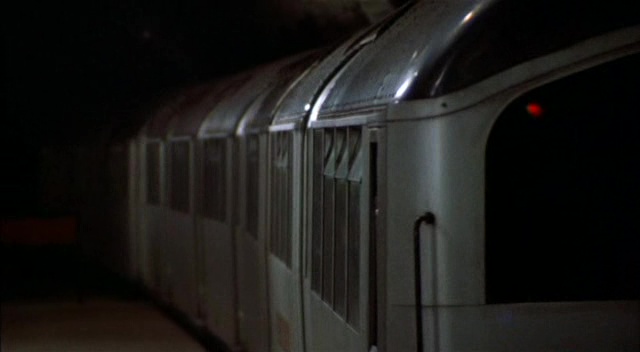
 Indeed, the real monster in this film is the Underground train system with its interminable corridors and flights of steps, its dark, satanic tunnels and its squalid carriages, imbued with despair. Train stations, the dark tunnels and the impersonal screeching of the train itself are all terrifying.

The cinematography by Alex Thompson, who later shot Alien 3, is outstanding, and the film scored a very creditable 91% fresh rating on Rotten Tomatoes, with one reviewer stating:

“Yes, it’s a cannibal film, but it’s also a startlingly tender film about a literal underclass abandoned by the world above, a story that roils in class division.”

Virus apocalypse – 28 DAYS LATER (Danny Boyle, 2002)

A highly contagious virus, originating in human exploitation of captive animals, leads to the complete collapse of society. Pretty far-fetched, huh?

Do you remember back in the good old days, let’s say 2019, when “post-apocalyptic” was just a genre, a metaphor, rather than a feature of every evening news bulletin? The Director, Danny Boyle, reveals in his movies glimpses of different worlds, or rather our world, but disfigured by our appetites. In his debut film, Shallow Grave, it was money, in Trainspotting it was heroin, in Steve Jobs it was recognition. In this film, what we consume and vomit out is rage.

Chimp learning rage.

The film starts with a brief explanation of how zoonotic diseases originate; often that happens in a laboratory. In the opening scene, a chimp is tied to a bed and made to watch videos of rage: lynchings, riots, shootings.

The chimps have been infected with an inhibitor that triggers overwhelming rage. It is carried in a virus, and a highly contagious one. When a group of animal liberationists break in to free the tormented primates, the virus is unleashed as well. There is no cure; the infected humans become killing machines.

If they break your skin or their blood enters your bodily fluids, you are then infected too. The cities are evacuated, the affected killed with no warning.

Like the hero of The Day of the Triffids, the protagonist wakes in a hospital. Jim (Cillian Murphy) is a bicycle courier who has been in a coma for 28 days after a run-in with a car.

He wanders the empty streets, and the rest of the movie revolves around his efforts to avoid the infected and find those who are still, well, human. Which means they have slightly less rage.

28 Days Later is a horror thriller, but much more than that. Yes, you will jump when infected people with bright red eyes leap through the window at you, but it also portrays a profound appreciation of loss, particularly when Jim finds his parents, who have suicided, and is informed he is “lucky”. There is also plenty of humour, and some stunning scenes revealing the beauty of a world, how it could be without humans busily killing each other and poisoning nature.

Danny Boyle captures perfectly the imagery of Rainer Maria Rilke:

“Let everything happen to you
Beauty and terror
Just keep going
No feeling is final”

Jim and his survivor friends find a platoon of soldiers who have varying views of the virus. The Sergeant (Stuart McQuarrie) is a Nietzschean, who sees humanity as a temporary blip on the smooth course of evolution:

“So if the infection wipes us out, that is a return to normality.”

But the Major in charge (Christopher Eccleston) is more Hobbesian, and sees us as creatures of the jungle.

“Which to my mind puts us in a state of normality now”.

But what’s “normal”? What occurs around us, or the global scene? Perhaps it is only their country (it’s set in the UK) that is affected and locked down?

Made in 2002, the film seems very prophetic. COVID-19 is not exactly the zombie apocalypse, but the themes of the attack on nature, the unintended consequences of animal exploitation, the distrust of the authorities, the fear of infection and the pain of quarantine make this movie even more timely now.

And it’s not portraying the zombie apocalypse, because the film is not really a zombie movie. Zombies, after all, are dead, or at least undead, but this lot are living, although ravaged by the virus and prone to uncontrollable snarling and biting. Roger Luckhurst, in his cultural history of zombies, states that zombies are

“a contagion, driven by an empty but insatiable hunger to devour the last of the living… the Rapture with rot”.

Zombies are supposed to shuffle along, with bits falling off. There was an uproar when this film came out – zombies that can run! Fast zombies. Or sick cannibals?

I try to limit this blog to authentic cannibals, living humans who eat or otherwise incorporate body parts of other humans, living or dead. Once I start including the undead, well, it becomes a never ending feast – a lot of fun, but out of scope. Maybe when I run out of cannibal films and TV shows – which is looking increasingly unlikely – we can start on zombies.

The thing about zombies is they don’t actually exist (as far as we can determine). Whereas cannibals – oh yes, they are out there. But who are the cannibals – the contagious, the ones who deliberately developed the virus, or the authorities who use it to their political advantage?

Stephen King and the cannibal: THE OUTSIDER (2020) S01.E01 “Fish in a Barrel”

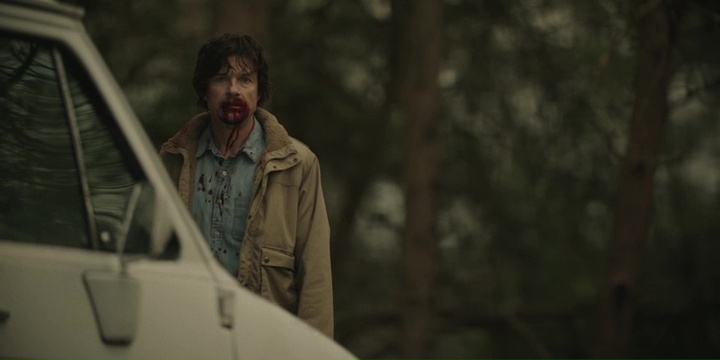
The Outsider is a mini-series (ten episodes in the Season) based on a STEPHEN KING novel – ‘nuff said? Well, actually there’s a lot more to be said. Richard Price is the Writer and Executive Producer; he adapted the novel for screen. Price is known for a lot of good stuff, including The Wire, The Deuce, The Night Of and Child 44, which had a similar theme – mutilated and chewed children. The stuff that nightmares are made of.

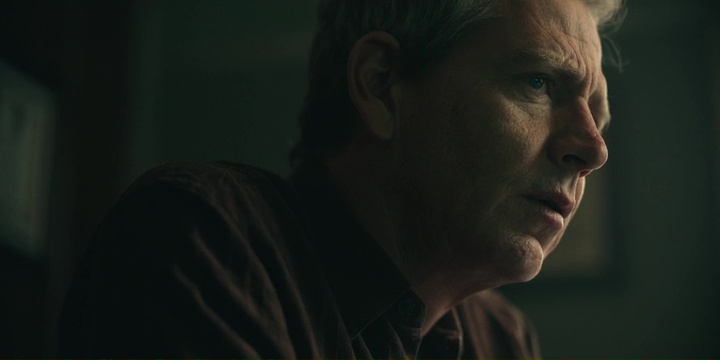
In Cherokee City, Georgia, detective Ralph Anderson (Ben Mendelsohn from Animal Kingdom and Bloodline) is called to a case which affects him greatly – a child has been murdered, a child about the same age as his kid, who died of cancer a while ago.

vlcsnap-00018.jpg

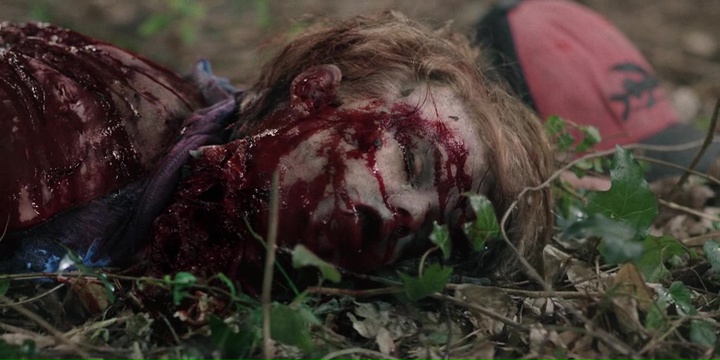
A man walking his dog finds the mutilated corpse in a park. It is covered in saliva and human bite marks.
There’s teeth impressions around the edges.
Animal?
No.

vlcsnap-00002

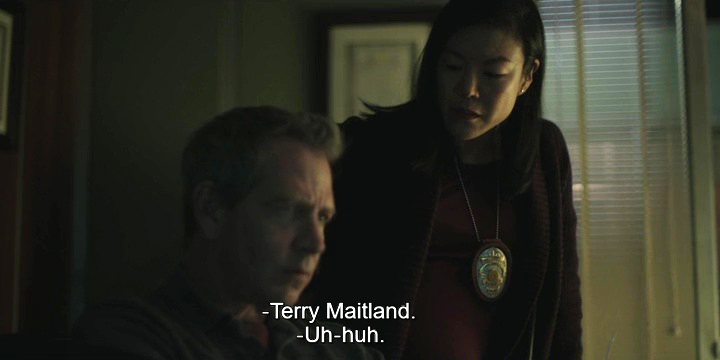
Ralph quickly finds heaps of evidence including security camera footage, as well as witnesses who identify teacher and Little League coach Terry Maitland (Jason Bateman from Arrested Development and Ozark, who also directed this episode).

Ralph, enraged, has Terry arrested very publicly at a Little League game.

vlcsnap-00016

It seems like an open and shut case, until footage turns up from another town miles away of Terry asking questions at a conference, at the time of the murder. There is conclusive evidence of both his guilt and his innocence.

vlcsnap-00019.jpg

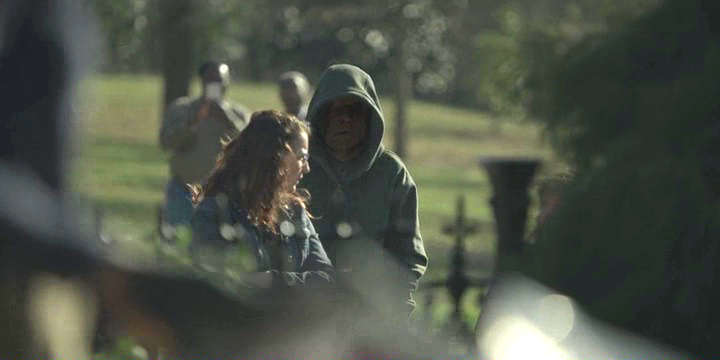
Normally nope, but in a Stephen King story? A hooded figure is standing outside the little boy’s house, and Terry’s daughter is having wakeful nightmares, of a man in her room telling her “bad things”.

vlcsnap-00024

The plot is taut and intriguing, and the cast is outrageously good: besides Bateman and Mendelsohn, fans of Hannibal will be delighted to see Hettienne Park, who played forensic investigator Beverly Katz in that show, until she went too far with Hannibal.

vlcsnap-00020.jpg

The cannibalism is a bonus – I wanted to watch this show, and now I can blog it too!

It asks a key question of cannibal studies – who is the outsider? In classical literature, anyone outside the polis was an outsider, likely to eat you. In colonial times, the conquistadors were outsiders, enslaving or exterminating the indigenous populations of the lands they coveted, and in turn painting those tribes as outsiders, by accusing them of being, yes, cannibals. In recent times, the cannibal outsider has been hidden within our cities, chomping his or her way through fellow humans, but often, like Jeffrey Dahmer, considered by his neighbours, in shocked voices,  as a quiet loner and unremarkable. Like Terry Maitland. Who is the outsider in Cherokee City – the quiet teacher who is evidently both innocent and guilty, the mysterious hooded stranger who visits children in their waking dreams, or the traumatised cop who is trying to suppress his rage?

vlcsnap-00012

The first episode is available for watching for free (if you’re in the US or have a VPN) at:

https://www.hbo.com/the-outsider

If not, there’s still a great interview there with Stephen King, Richard Price, Ben Mendelsohn and others.

You can also watch the opening scene, with the ravishing Mozart Piano Concerto 23 as the soundtrack, here.


Immigrants and cannibals: TWO HEADS CREEK (Jesse O’Brien, 2019)

The thread that runs through cannibalism texts, from Homer’s Cyclops to Harris’ Hannibal Lecter, is the social outsider. It is a theme that never seems to age, since humans love to form cliques, united by an irrational hatred of those who don’t belong, even if it’s just because they dress differently or support a different sporting team. The most obvious example at the moment, and for most of modern history, is the immigrant.

Norman is played by Jordan Waller who also wrote the script – you may have seen him appear in the TV series Victoria. He runs his mother’s Polish butcher shop in Slough (it’s a real place, although there is definitely a pun in there). It’s post-Brexit Britain, and the locals scream abuse and paint his windows with dog-shit.

vlcsnap-00005.jpg

He’s English, but his shop sells Polish meats, so he is the hated outsider. His twin sister Anna (Kathryn Wilder) is the assertive one, and is totally uninterested in his butcher shop.

vlcsnap-00014

When they discover at their mother’s funeral (held in the butcher shop) that they were adopted, they find a postcard from their mother, postmarked from a small Australian town: Two Heads Creek. Not sure if this is international invective, but in Australia, “two-heads” is pretty much a synonym for “inbred”, and is used to denigrate rural people. The outsider does not need to come from outside – just a different region will do.

vlcsnap-00008.jpg

Norman is named after his mothers’ favourite singer, the Australian pop star Normie Rowe, who was enormously popular in the sixties, until the government decided to conscript him to the war in Vietnam as a publicity stunt. Normie’s oeuvre is featured heavily in the soundtrack. Nevertheless, the twins know nothing of Australia as they sell the butcher shop and head “Down Under” to seek their birth mother, except for clichéd English convict stereotypes, so when the customs agent asks if he has a criminal record, Norman answers “is that a prerequisite?” They travel ten hours to the outback town with a group of Asian immigrants, on a bus driven by an Indigenous man, Apari (Gregory J. Fryer) who is treated like dirt by their guide.

This is a blog about movies involving cannibalism, so it’s probably not a big spoiler to mention why the immigrants are being sent to Two Heads Creek.

pic-00009pic-00010

Australian governments of both parties have a long-standing practice of locking up refugees in offshore detention and leaving them there to rot or go mad. So far, they have not considered cannibalism as a solution, so we have to hope they don’t see this movie.

There are lots of explicit cannibalism scenes, as well as some cute intertextual references, e.g.

pic-00011.jpg

19vlcsnap-00019.jpg

The movie is far from subtle in its treatment of jingoism, racism, sexism and various other discriminatory practices popular in Australia and elsewhere.

pic-00032

But an important thing to realise about cannibalism is that it is an ultimate equaliser – although only certain groups may be chosen as victims, once skinned and cooked, we are all the same. Our differences are, literally, skin deep.

pic-00015pic-00016pic-00019

The scenes of cannibalism are accompanied by another soundtrack, this one the Aussie group Skyhooks, with their big hit “Horror Movie” which, in the song, turned out to be about watching the evening news, and so is just as relevant now as ever. Perhaps more so.

pic-00024.jpg

They do get to meet (and almost eat) their mother, yes, she is named Mary (the wonderful Kerry Armstrong from Lantana, Seachange and so much more), who perplexes them by describing their father as “a good man”.

pic-00042

The final act is a climax of gore, wildly over the top and full of people being stabbed in the crotch, presumably for the 14-year-old-boy market. The main antagonist, Apple (Helen Dallimore) gets shot with an arrow and goes into the giant meat-mincer with her middle finger the final part to be ground up, while screaming the theme of the movie:

pic-00054pic-00056

The best line of the film is from their mother, who is hit in the neck by a lethal boomerang studded with nails, but dismisses it as “only a flesh wound”

pic-00068.jpg

Apari, a descendant of the original inhabitants of the land, is left to clean up the blood and corpses that litter the town. With some justification, as he watches the Australians and the English hobble off, he says:

pic-00058

This well-crafted film is only the second feature from Australian director Jesse O’Brien. He said of the setting, the mining town of Cracow in the Banana Shire, 500km northwest of Brisbane, that

“I think that myth of the outback being ‘a scary place’, which isn’t always true, does fit rural Queensland really well.”

pic-00044.jpg

The cast is great and the film is fresh, funny and still manages to ask some interesting questions about differences and about appetites. It has a 90% fresh rating on Rotten Tomatoes. Film Threat described it as:

“A deliciously deranged horror-comedy, overflowing with blood and wit.”

The movie is available on Amazon Prime.


Cannibals and Cops: “EATER” (Fear Itself S1E5, 2008)

“Eater” is the fifth episode of season one of the TV horror series Fear Itself, an American horror/suspense anthology television series shot in Canada. This episode, “Eater”, aired on NBC on Thursday, July 3rd, 2008. A later episode featured a Wendigo, and was reviewed last year.

vlcsnap-00002.jpg

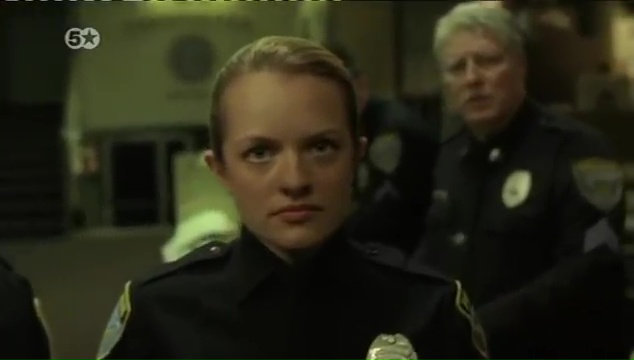
Officer Danny Bannerman (Elisabeth Moss from Mad Men, Handmaid’s Tale and Invisible Man) is a rookie cop assigned to watch a new prisoner in the Chesterton police holding cell.

pic-00001

The prisoner, Duane Mellor (Stephen R. Hart), is an “eater” who has murdered 32 people in five different states, killing the men outright but torturing the women before finally killing and eating them, not necessarily in that order.

pic-00010.jpg

In his wardrobe, they found garments made from the skins of his victims. “Just like Hannibal Lecter” says slob cop Marty (Stephen Lee), but Bannerman (her name is straight out of several Stephen King stories) puts them straight – it was Buffalo Bill of course. Hannibal just liked the flesh. As a keen fan of horror, she asks to see the arrest report.

pic-00008.jpg

The Sergeant (Russell Hornsby) warns her: “Hannibal the Cannibal is make believe. This guy isn’t.” Except he is, and rather derivative too – he deconstructs the binary of gustatory (Hannibal) and sartorial (Bill) cannibalism. How postmodern can you get?

Mellor, it turns out, is Cajun, so of course there’s going to be voodoo. He starts chanting in his cell, the lights flicker, and Marty gives her a lecture on Cajun culture and cannibal theory:

pic-00012.jpg

“Down on the Bayou, the Cajun, they use every part of their kill. They’ll take a big, ol’, fat ‘gator, they’ll eat all the flesh, they’ll take the hide, use it for shelter, for clothing, they’ll take the bones, use them for utensils, weapons. I think Mellor’s doing the exact same thing, just doing it with human beings, that’s all… Waste not, want not.”

They discuss the key questions of cannibal studies: why does he do it? “Sexual turn-on” suggests Bannerman, making Marty go all sweaty and silent. Until he sneaks up behind her as she tries to ask the killer about such things, and asks “have you ever wondered what it tastes like… human flesh?”

She replies “just like any other meat I guess”.

“No. I think it’s the power that gets them off… There’s an old voodoo saying that if you cut a man’s heart out and eat it before it stops beating, not only do you gain his strength, but you gain his spirit”.

Marty goes off to investigate a strange noise, Bannerman fetches the keys to the cell (which oddly I found the most disturbing part of the show) and goes to open the cell, and finds the cell unlocked, but the other cop, Mattingly (Pablo Schreiber from The Wire) tells the scared rookie “Stop being such a… woman”. Yes, fear is a female thing, apparently, or at least admitting to it. But shape-shifting – that’s a guy thing, in voodoo at least, and all the men are really Mellor. Maybe all men are eaters?

pic-00017

The story is tight and taut, and the cast is superb. Elisabeth Moss, like Jodi Foster in Silence of the Lambs, is young and small enough for her vulnerability to engage our sympathy, but also smart, tough, resourceful and brave. Since being kidnapped in West Wing, Moss seems to have making a career in TV and movies where women take on vicious, violent men. This one is as vicious and violent as most of her Gilead mates. Scott Tobias of AV Club said: “If there’s ever been a gorier, nastier hour of network television, then I certainly can’t recall it”.

Now there’s a recommendation.

Director of this episode, Stuart Gordon, also did play about Armin Meiwes, the Rotenburg Cannibal, on the LA stage.

Eater is available (in four parts for some reason) on Youtube.

A complete listing of my Hannibal blogs can be accessed here.

HANNIBAL: a complete listing of my Hannibal film and TV blogs

Movies

“Manhunter” (Mann, 1986)

https://thecannibalguy.com/2018/07/29/hannibal-the-cannibal/

Brian-Cox-Signed-Manhunter-11x14-Photo-FSC-COA-PristineAuction.com

“The silence of the lambs” (Demme, 1991)

https://thecannibalguy.com/2018/03/04/1991-the-silence-of-the-lambs/

image

“Hannibal” (Scott, 2001)

https://thecannibalguy.com/2019/03/17/hannibal-scott-2001/

vlcsnap-00128.jpg

“Red Dragon” (Ratner, 2002)

https://thecannibalguy.com/2018/09/09/what-a-dragon-it-is-getting-old-red-dragon-ratner-2002/

Anthony-Hopkins-sir-anthony-hopkins-40879414-500-200

“Hannibal Rising” (Webber, 2007)

https://thecannibalguy.com/2019/09/22/hannibal-rising-2007/

vlcsnap-00040.jpg

And a spoof, just for fun:

“The Silence of the Trumps” (Colbert Late Show, 2017)

https://thecannibalguy.com/2018/05/10/the-silence-of-the-trump/

Television

Season 1

  1. https://thecannibalguy.com/2018/10/07/very-hard-to-catch-hannibal-episode-1-aperitif-fuller-2013/
  2. https://thecannibalguy.com/2018/10/21/amusing-the-mouth-hannibal-season-1-episode-2-fuller-2013/
  3. https://thecannibalguy.com/2018/11/04/hiding-the-bodies-hannibal-season-1-episode-3-potage-fuller-2013/
  4. https://thecannibalguy.com/2018/11/11/happy-families-hannibal-season-1-episode-4-oeuf-fuller-2013/
  5. https://thecannibalguy.com/2018/11/25/inside-the-shell-hannibal-season-1-episode-5-coquilles-fuller-2013/
  6. https://thecannibalguy.com/2018/12/09/who-is-the-ripper-hannibal-season-1-episode-6-fuller-2013/
  7. https://thecannibalguy.com/2018/12/16/nothing-here-is-vegetarian-hannibal-season-1-episode-7-fuller-2013/
  8. https://thecannibalguy.com/2018/12/30/i-see-a-possibility-of-friendship-hannibal-season-1-episode-8-fuller-2013/
  9. https://thecannibalguy.com/2019/01/06/i-know-what-monsters-are-hannibal-season-1-episode-9-fuller-2013/
  10. https://thecannibalguy.com/2019/01/20/the-very-air-has-screams-hannibal-season-1-episode-10-fuller-2013/
  11. https://thecannibalguy.com/2019/01/27/madness-can-be-a-medicine-hannibal-season-1-episode-11-fuller-2013/
  12. https://thecannibalguy.com/2019/02/10/im-so-sorry-jack-releves-hannibal-season-1-episode-12-fuller-2013/
  13. https://thecannibalguy.com/2019/02/24/savoureux-hannibal-season-1-episode-13/

Season 2

vlcsnap-00017.jpg

  1. https://thecannibalguy.com/2019/03/31/i-never-feel-guilty-kaiseki-hannibal-season-2-episode-1-fuller-2014/
  2. https://thecannibalguy.com/2019/04/07/you-are-dangerous-sakizuke-hannibal-season-2-episode-2-fuller-2014/
  3. https://thecannibalguy.com/2019/04/21/merely-the-ink-from-which-flows-my-poem-hannibal-season-2-episode-3-hassun-fuller-2014/
  4. https://thecannibalguy.com/2019/05/05/death-is-not-a-defeat-hannibal-season-2-episode-4-takiawase-fuller-2014/
  5. https://thecannibalguy.com/2019/05/19/he-is-the-devil-he-is-smoke-hannibal-season-2-episode-05-mukozuke-fuller-2014/
  6. https://thecannibalguy.com/2019/06/02/an-act-of-dominance-hannibal-season-2-episode-6-futamono-fuller-2014/
  7. https://thecannibalguy.com/2019/06/16/hannibal-season-2-episode-7-fuller-2014/
  8. https://thecannibalguy.com/2019/06/30/we-are-all-nietzschean-fish/
  9. https://thecannibalguy.com/2019/07/14/typhoid-and-swans/
  10. https://thecannibalguy.com/2019/07/28/hannibal-season-2-episode-10/
  11. https://thecannibalguy.com/2019/08/11/hannibal-season-2-episode-11/
  12. https://thecannibalguy.com/2019/08/25/hannibal-season-2-episode-12/
  13. https://thecannibalguy.com/2019/09/08/hannibal-season-2-finale/

Season 3

vlcsnap-00120.jpg

  1. https://thecannibalguy.com/2019/10/13/the-eating-of-the-heart/
  2. https://thecannibalguy.com/2019/11/03/hannibal-season-3-episode-2/
  3. https://thecannibalguy.com/2019/11/24/how-did-your-sister-taste/
  4. https://thecannibalguy.com/2019/12/15/hannibal-season-3-episode-4/
  5. https://thecannibalguy.com/2020/01/05/in-the-belly-of-the-beast-hannibal-season-3-episode-5-contorno/
  6. https://thecannibalguy.com/2020/01/26/hannibal-season-3-episode-6/
  7. https://thecannibalguy.com/2020/02/16/hannibal-season-3-episode-7/
  8. https://thecannibalguy.com/2020/03/08/im-not-insane-hannibal-s03e08-the-great-red-dragon/
  9. https://thecannibalguy.com/2020/03/29/hannibal-309/
  10. https://thecannibalguy.com/2020/04/19/murder-and-cannibalism-are-morally-acceptable-hannibal-310/
  11. https://thecannibalguy.com/2020/05/17/hannibal-3-11/
  12. https://thecannibalguy.com/2020/06/07/hannibal-312/
  13. https://thecannibalguy.com/2020/07/05/hannibal-s3e13/

vlcsnap-00044.jpg

“Meat’s back on the menu”: HANNIBAL S3E13: “The Wrath of the Lamb”

The grand finale of Hannibal.

#savehannibals4

Finales have an obligation to tie up loose ends, answer questions, bury the bodies. It’s the showdown, the shootout, the denouement. But they don’t have to spell it all out too clearly, particularly for the more discerning audience who watch artistic masterpieces like Hannibal. Hannibal Lecter always leaves us thinking.

vlcsnap-00011vlcsnap-00012

Yes, Dr Lecter, we will think about you. What you have to teach us about lots of things, not just about cuisine.

In the first episode of Season 1, the serial killer and cannibal Garrett Jacob Hobbs kills his wife and slits his daughter’s throat because Hannibal has warned him that the FBI “knows” about him. Will shoots him several times, but as he dies, or even as he lies there dead, he smiles at Will at asks:

you-see

Each episode of this extraordinary show has had a theme that can be teased out – some more obvious than others. The theme of this one is multifaceted; it is about life, death, growth, conspiracy and betrayal. The plot is convoluted: the serial killer Francis Dolarhyde has faked his death but has revealed that he wants to meet, greet and eat Hannibal. Hannibal is locked up in The Baltimore Asylum for the Criminally Insane because of his own cannibalistic serial killing events. You will perhaps remember Hannibal gave himself up at the end of episode 7, so that Will would always know where he is. That, my friends, is love, Hannibal-style. But he is not enjoying the rigors of asylum living:

vlcsnap-00063

The FBI wants them both dead, and conspire to “fake” Hannibal`s escape to lure the Dragon.

Will doubts that he will survive this conspiracy and betrayal

vlcsnap-00108vlcsnap-00109

Everyone else is terrified of Hannibal really escaping and coming for them. Hannibal`s former psychiatrist and, well, housemate, Bedelia, is convinced this is a terrible idea. She quotes Goethe’s Faust, a work much loved by Hannibal as well:

vlcsnap-00032vlcsnap-00033

Will has no sympathy. He knows Hannibal will also come for Bedelia if (when) he escapes, because she is on his menu.

vlcsnap-00043vlcsnap-00044

Alana knows Hannibal is going to kill her, because he has promised to do so, and reaffirms that promise:

This slideshow requires JavaScript.

vlcsnap-00095

Will knows The Dragon will free Hannibal, and then try to kill him, change him, absorb him, as cannibals are so often accused of doing to their victims. We absorb the nutrition of our food, why should cannibals not absorb the strength, spirit and experiences of their victims? And Hannibal is willing to play along, as long as Will asks nicely:

vlcsnap-00088vlcsnap-00089

The climax is at Hannibal`s house overlooking the “roiling Atlantic”, where the Dragon takes on Hannibal and Will takes on the Dragon. Who has conspired with whom, and who is being betrayed?

vlcsnap-00101vlcsnap-00102vlcsnap-00104

Will replies:

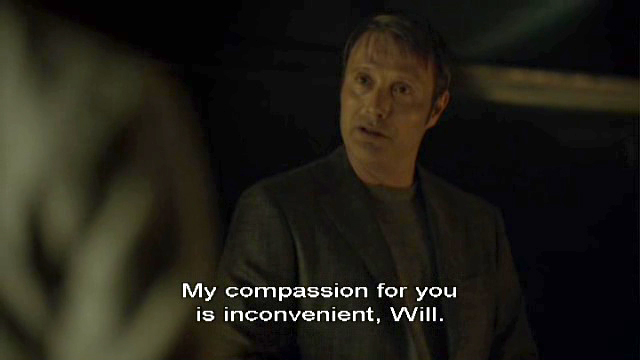
“If you’re partial to beef products, it is inconvenient to be compassionate towards a cow”.

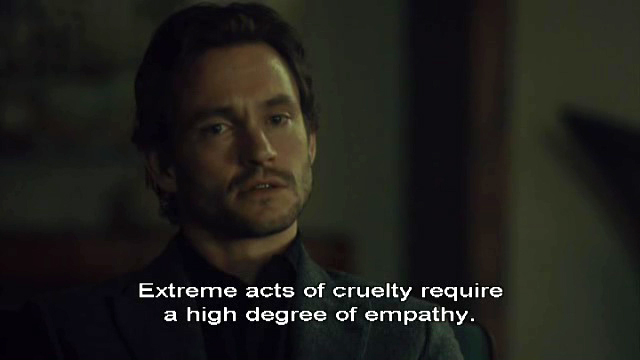
The battle is epic, brutal and bloody, and we expect no less. Will learns his lesson at last, that blood really does look black in the moonlight, as Hannibal told him in episode 9. That life and death are not opposite or even separate but part of the “becoming”. That his extreme empathy and Hannibal’s cruelty are one and the same.

vlcsnap-00040vlcsnap-00037

That murder and mercy, as Thomas Harris told us at the end of Red Dragon, are just human constructions, and mean nothing to nature, “the Green Machine”, which is indifferent to who lives and dies, and to conceptions of right and wrong. When we inevitably die, someone will eat us, and nature cares not a whit the species of the eater or eaten. Natural selection means that the Dragon, with the gun and the knife, will kill and absorb Hannibal. The Green Machine doesn’t care. This is what Hobbs was trying to tell Will in the first episode, and what Hannibal has shown him, 38 episodes later.

vlcsnap-00130

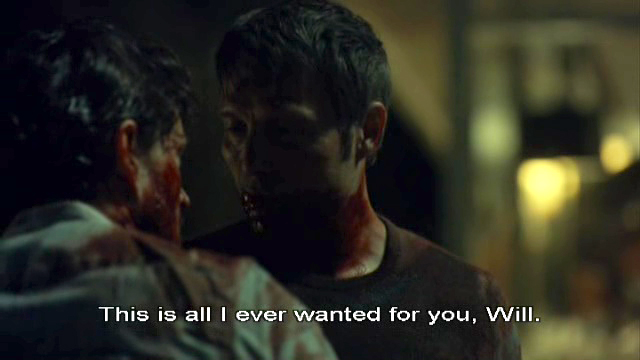
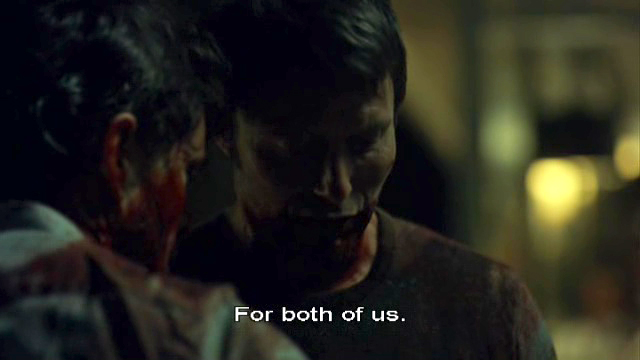
But then, there’s love and compassion, the emotion that makes a rat fight a snake to protect her young. Will and Hannibal – together at last, covered in blood, cut to ribbons, but feeling the love.

vlcsnap-00131vlcsnap-00132vlcsnap-00133vlcsnap-00135

Is Hannibal dead?

vlcsnap-00136

The Death of Sherlock Holmes | Conan Doyle Info

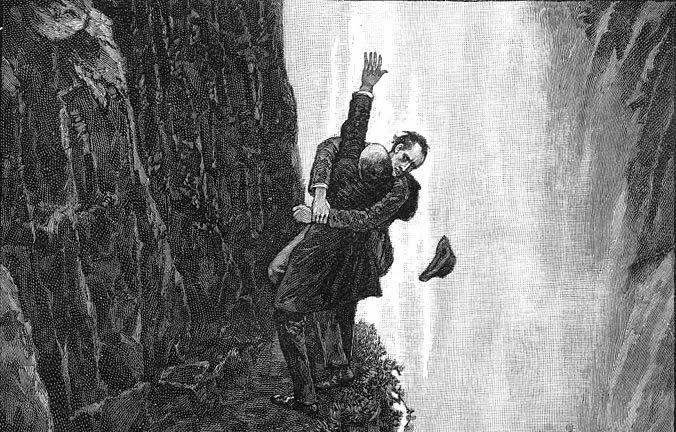
Remember how Sherlock Holmes and Moriarty fell to their deaths into the Reichenbach Falls in 1891, causing a massive public outcry among their avid fans, only to see Sherlock reappear in 1894, explaining that he had faked his death to fool his enemies? Well, Bryan Fuller has given us a pretty great clue, as in the final scene we see Bedelia sitting at a table with three settings, about to enjoy a sumptuously prepared meal, the centrepiece being her leg, roasted to perfection.

vlcsnap-00141vlcsnap-00142

Who’s doing the cooking?

We hope, we conspire, we betray, we demand Season 4. Remember that this whole story, the three seasons, has been a prequel to the book and film that made Hannibal famous, The Silence of the Lambs. There is plenty of material in there with which to continue the story, or reimagine it as Fuller does so very well, perhaps, as he suggested, with “Margot Verger taking down the meat industry as a hot, powerful lesbian” and turning them over to PETA.

Hugh Dancy, when asked about another season, suggested it might take five years. Well guess what, Season 3 finished in 2015…

vlcsnap-00013


Next week I’ll publish, for ease of reference, a complete listing of my Hannibal blogs.

Cannibalism as a delineator of civilisation

Exchanges: The Interdisciplinary Research Journal has just published:

A ‘horrid way of feeding’: Pervasive, aggressive, repulsive cannibalism

Abstract

Cannibalism both fascinates and repels. The concept of the cannibal has changed and evolved, from the semi- or in-human anthropophagi of Classical texts to the ‘savage’ cannibals of colonial times, whose alleged aberrations served as a justification for invasion, conversion and extermination, to the contemporary cannibal driven often by psychosexual drives. Cannibal texts typically present the act as pervasive, aggressive and repulsive. If these parameters are admitted, alleged cannibals immediately fall outside normative European humanist morality. This paper examines cannibalism as a major delineator of the civilised human. Cannibals offer social scientists a handy milestone to confirm the constant improvement and progress of humanity. The idea that colonised peoples were not savage, degenerate cannibals threatens the concept of the ‘Great Chain of Being’, which was assumed to show an inexorable progress from plants to animals to humans, and upward toward the divine, led by enlightened Western civilisation. But cannibal mythology, factual or imaginary, offers an opportunity to re-evaluate the assumptions of human supremacism and see ourselves as edible, natural beings.

The full paper is at:

https://exchanges.warwick.ac.uk/article/view/456

vlcsnap-2018-06-06-14h51m44s265
The Boy – The Road

Pregnant and hungry: INSEMINOID (HORROR PLANET), Norman J. Warren, 1981

We’ve looked at some great cannibal movies in this blog, and we’ve also checked out some duds. Inseminoid (called Horror Planet in the US) unfortunately falls pretty much into the latter category, proving that cannibalism alone is not sufficient to make a great film. But hey, it raises some interesting philosophical and psychological questions. Not including “who thought this was a good idea?” and “who wrote dialogue like this?”

Holly: Get your ass up here on the double!
Gary: I know what I’d like to do with her arse.

There’s a group of English and American archaeologists and scientists excavating an ancient tomb on a seemingly uninhabited planet. Uninhabited, but not uninhibited. A couple of them find some glowing rocks, there’s an explosion, then the rocks come to life when Mark (Robin Clarke) and Sandy (Judy Geeson from To Sir With Love) make out in the room where the rocks are kept.

pic-00006.jpg

pic-00007

How many horror stories start with illicit sex and end up with what looks a lot like religious retribution? Think of the Scream movies – sex happens, then slashers.

After much fighting in dim lights and dark caves, Sandy is captured and raped by perhaps the least scary monsters since the Creature from the Black Lagoon.

pic-00020.jpg

pic-00021

Immediately two months pregnant (we know because she vomits in a bin), she starts killing her colleagues and eating their flesh.

pic-00030

Also blowing up what appear to be their pinball machines.

pic-00029.jpg

Like vampires when transformed, Sandy has become immensely strong, but can be brought down by, yep, a punch in her pregnant stomach. One critic summed up:

“…in what has to be a new low, even for extraterrestrial-horror films, all the men end up punching this pregnant woman in the stomach.”

vlcsnap-00001

Besides some wooden acting and clunky lines, the film also suffered from being released not long after Ridley Scott’s brilliant movie Alien, which also showed an alien rape and birth, although that movie had the novelty value of having a man going through a very traumatic labour (yes, if men had to give birth…). Inseminoid was immediately criticised as a knock off of Alien, which the director denied, although there were plenty of other knock-offs being released around that time, including Contamination (1980) and Scared to Death (1981).

But intentional knock-off or not, Inseminoid did not compare well with Scott’s film, one critic saying

“imagine Alien without the fantastic sets, convincing special effects and literate dialogue, and you have a picture of Horror Planet.”

Inseminoid (1981) - IMDb

Alien was, in the words of film studies Professor Barbara Creed, an articulation of the archaic mother – the mother as “primordial abyss”, the place we all came from, and to which we fear we will return. Unlike Freud’s insistence that boys are terrified of what they see as their potential castration when they perceive their mother’s genitals as “a lack”, the monster in Alien, and to some extent Sandy in Inseminoid, represent not a castrated but a castrating feminine. The many shots of teeth seem to refer back to the classic tales of the vagina dentata – the toothed vagina.

pic-00046.jpg

Although Sandy is eventually brought down by the square-jawed all-American hero, he is no match for her twin human-alien hybrids, who are just so cute, until they get hungry.

pic-00051

But Inseminoid had one advantage over Alien: it had a cannibal, and a female one at that. Praise be.

pic-00036.jpg

Next week’s blog: the final episode of Hannibal ever (or until they make a new season).